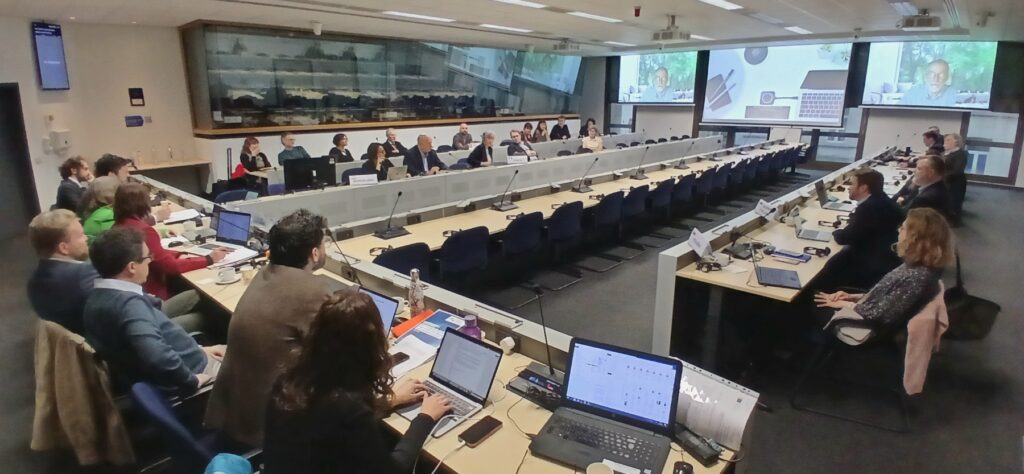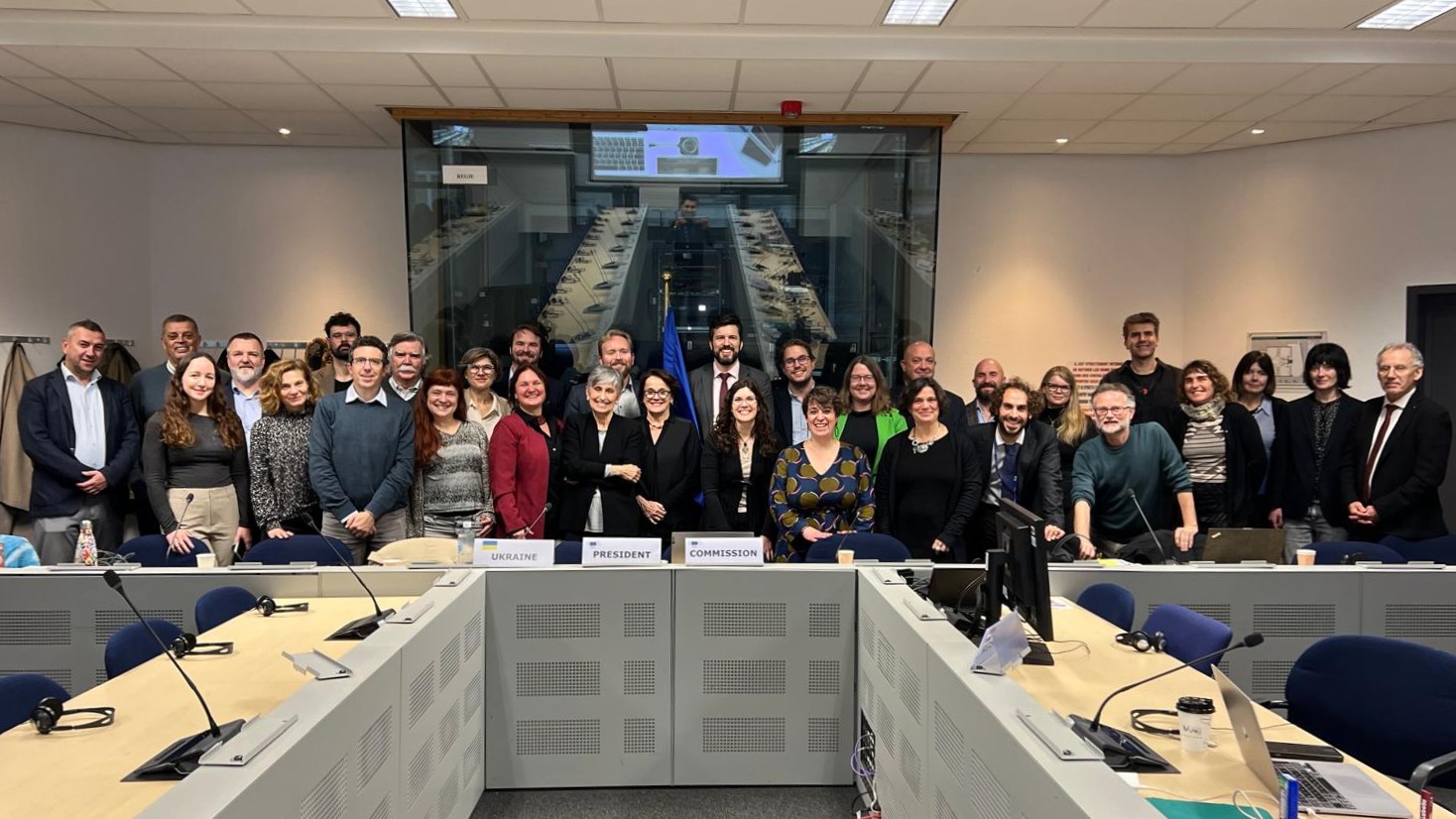
DPNSEE participated in the EU Civil Society Forum on Drugs (CSFD) meeting held in Brussels on 8 and 9 December. Our Executive Director Milutin Milošević, who is a member of the CSFD Core Group, joined colleagues working on drug policy from across Europe for two days of exchanges with the European Commission (DG HOME, DG SANTE, DG JUST, DG HERA and DG ENEST).
The key topic of the agenda was the new EU Drugs Strategy, presented only 4 days before the meeting. The Forum contributed to the strategy on several occassions during the year. 40% of our recommendations were accepted, including the one on basing the Strategy on the European Union values which was the DPNSEE proposal.
CSFD members commented that even though the Strategy is a solid document, concerns remain that it remains unbalanced, with a strong focus on supply reduction, security, and crime prevention, which risks sidelining health- and human-rights-based approaches. We also raised our concerns about the Strategy placing harm reduction under the heading of preparedness, health, security, harm, international cooperation, and EU coordination and partnerships, rather than recognising it as a core public health intervention.
DPNSEE signed a joint letter coordinated by the International Drug Policy Consortium (IDPC), published on 10 December 2025, together with 83 other civil society organisations. The statement urges EU Member States to:
- Reprioritise harm reduction, restoring it as a strategic priority under the Health pillar of the Strategy.
- Adopt a comprehensive Action Plan covering all aspects of drug policy, instead of focusing solely on combating ‘drug trafficking’.
- Integrate human rights guidance across all pillars of the Strategy, drawing on international frameworks such as the UN System Common Position on Drugs, the International Guidelines on Human Rights and Drug Policy, and OHCHR recommendations.
- Include a strategic priority on policy innovation, allowing Member States to explore alternatives to criminalisation and punishment.
For DPNSEE, a very important session was the one on Co-Operation in the Field of Drugs with the Candidate Countries and Challenges in EU Accession Process. DG ENEST presented their work, which, when we talk about Western Balkans, was exclusively on drug supply reduction. DPNSEE presented positions of the CSFD, indicating again the nees for balanced approach and the need to re-define the accession acquis in the area of drugs.
Several other important issues were at the agenda:
- DG JUST presented the EU Civil Society Strategy. We discussed its relevance in times of shrinking civic space.
- The EU Drugs Agency (EUDA) again presented only ideas about a civil society engagement plan. We provided feedback that meaningful participation should go beyond the development of a digital platform (CONNECT) for exchange and that it takes too long time to define the way that EUDA and civil society will frame out co-working actions.
- CSFD member organisations discussed and agreed on priorities for upcoming activities
On the second day, CSFD members met with the Horizontal Working Party on Drugs, representing all EU Member States. Discussions with Member States and the European Commission included the EU Drugs Strategy, drug services in prisons, shrinking civic space in Europe, upcoming dialogues with third countries, and international drug policy. The Danish Presidency and the incoming Cypriot Presidency also delivered specific inputs.
The meeting was important for continuing civil society engagement and contributing our perspectives on health-, harm reduction-, and human-rights-based approaches in EU drug policy discussions.
CSFD strongly indicated that:
- The new EU Drugs Strategy raises concerns regarding the prioritisation of supply reduction, security, and crime prevention over health, harm reduction, and human rights.
- Civil society participation needs to remain an important avenue for providing feedback on EU drug policy.
- Ensuring meaningful involvement of civil society is crucial both within the EU and in cooperation with candidate countries.