The Youth Network of Montenegro, with the financial support of the Ministry of Sports and Youth of Montenegro, is implementing the Youth Exchange and Mobility Program, within which four study visits will be implemented.
The Network was founded by 35 youth organizations, organizations that work with and for young people, as well as youth associations and unions. Its mission is to represent the rights and interests of young people, create and advocate solutions for systemic challenges, connect youth policy actors and strengthen the capacities of members.
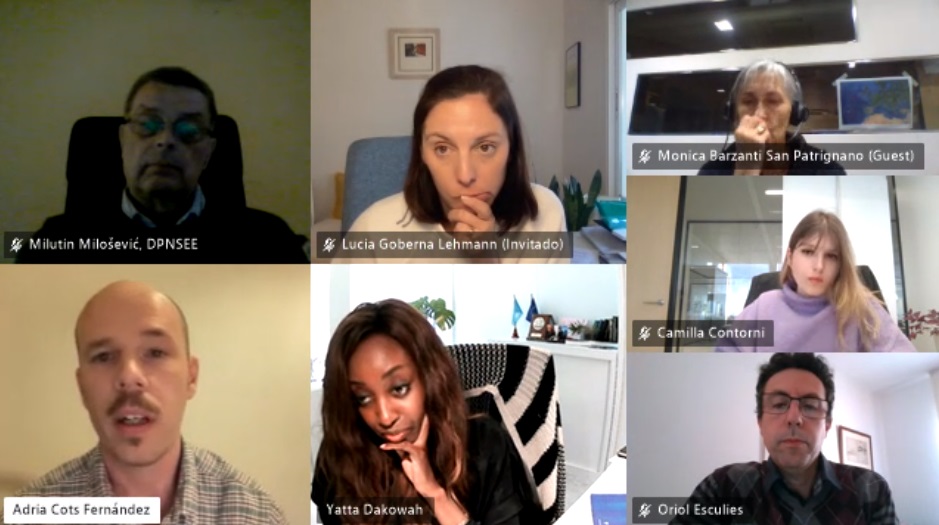
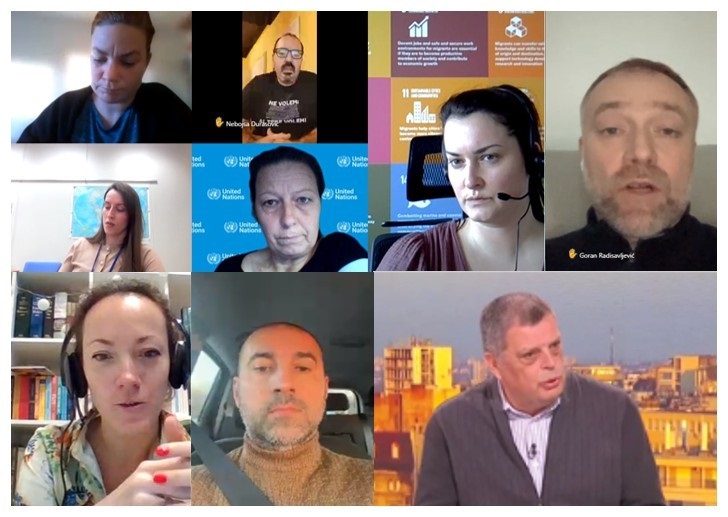
As part of this program, a study visit was made to Serbia, during which young people from Montenegro visited DPNSEE office. DPNSEE President Nebojša Đurasović introduced DPNSEE and had a warm and interesting discussion about young people in risk and our respond to their needs.
The European AIDS Treatment Group (EATG) invited us to the SCOPE project community consultation held on 20 October 2022 with representatives from other key population network organisations on HIV combination prevention standards of care. Board member Marija Mijović represented DPNSEE at the consultations.
The SCOPE project is implemented with the aim to strengthen community engagement at local and regional levels and to reduce the gap in access and use of HIV combination prevention interventions by populations that are most affected by HIV, but which remain inadequately served by the health system and which are underrepresented in policy and public debate.
The purpose of this research was to identify a community consensus working definition of “HIV combination prevention” and develop population-specific standards of care indicators for the delivery of effective HIV combination prevention services in the WHO European region.
During the meeting, the participants had the opportunity to provide feedback on the research process, to ensure that population-specific prevention needs are incorporated and that the proposed prevention standards of care are acceptable and usable for future community monitoring.
In the framework of the EU-funded Technical Assistance to Civil Society Organisations in Western Balkans and Turkey (EU TACSO 3) project, we were invited to participate in the Strategic Mentoring Learning Workshop held on 19 – 20 October 2022 in Pristina, Kosovo.
The Strategic Mentoring Learning Workshop was envisaged as a regional-level activity aiming to consolidate learning from the EU TACSO 3 experience of this capacity development process so far and to provide practical guidance for future activities to the EU TACSO team and other actors involved.
The workshop was organised for 20 representatives of CSOs and CSO networks from the Western Balkans and Turkey who participated in the mentoring process as beneficiaries. DPNSEE President Nebojša Đurasović and Executive Director Milutin Milošević were among participants.
The workshop lasted 1,5 days during which participants have discussed expectations, experiences and learning insights of the strategic mentoring process. The final output of the workshop is a list of recommendations for future similar capacity-building interventions.
The event also presented a networking opportunity since participants represented supported organisations from the region. DG NEAR representatives also participated in the event.
The Global Initiative Against Transnational Organized Crime (GI-TOC) announced the fourth edition of the Resilience Fellowship, which for 2023 will have human rights as its theme. Fellows will use their diverse perspectives to collaborate on a range of outputs based around this theme. As Resilience Fund Ambassadors, Fellows will also raise awareness on how organized crime contributes to human rights violations and advocate for better responses to these violations.
The Fellowship builds a platform for cross-sectorial, global and interdisciplinary collaboration between civil society actors, human rights activists, journalists, artists, scholars, policymakers, grassroots community leaders and others working to counter the effects of organized crime.
For the year 2023, a total of 10 Fellows will be selected. Applicants should have a background in any of the following fields: journalism and media; activism; advocacy and community mobilization; the creative arts (artists, writers, filmmakers, and others); community leaders (religious, cultural, youth leaders); academia (researchers, consultants, and scholars), human rights practitioners working directly with affected communities, and the public sector (policymakers).
Each fellow will receive US$15 000 (divided in three payments of US$5 000) to be executed with no other limitation than the principles of professionalism, integrity and transparency.
The Fellowship is part of the GI-TOC’s flagship Resilience Fund, which provides grants and support to civil society individuals and organizations working to counter the impacts of criminal governance and violence across the world.
US President Biden on 6 October 2022 announced that he is taking executive action to pardon people convicted of simple marijuana possession under federal law and D.C. statute.
The pardons will be done through an administration process to be developed by the Justice Department, senior administration officials told reporters on a briefing call, and will cover citizens and lawful permanent residents.
“Sending people to prison for possessing marijuana has upended too many lives and incarcerated people for conduct that many states no longer prohibit,” Biden said in a statement.
More than 6,500 people were convicted of simple possession between 1992 and 2021 under federal law, and thousands more under D.C. code, the officials said. Biden had promised the action during his campaign.
However, most convictions happen at the state level, leaving those pardons up to each governor.
In addition to the executive order, Biden is urging all governors to take similar action in their states. He is also asking Health and Human Services and the Justice Department to review whether marijuana should still be classified as a Schedule 1 substance under the Controlled Substances Act.
4 years after we have applied, the UN Economic and Social Council (ECOSOC) granted special consultative status to DPNSEE. Consultative status for an organization enables it to engage in a number of ways with ECOSOC and its subsidiary bodies, the Human Rights Council and, under specific conditions, some meetings of the General Assembly and other intergovernmental bodies, as well as with the United Nations Secretariat.
For us, the most important is the opportunity to easily, with our own identity, participate in the UN Committee on Narcotic Drugs meetings and other meetings from our area of work.
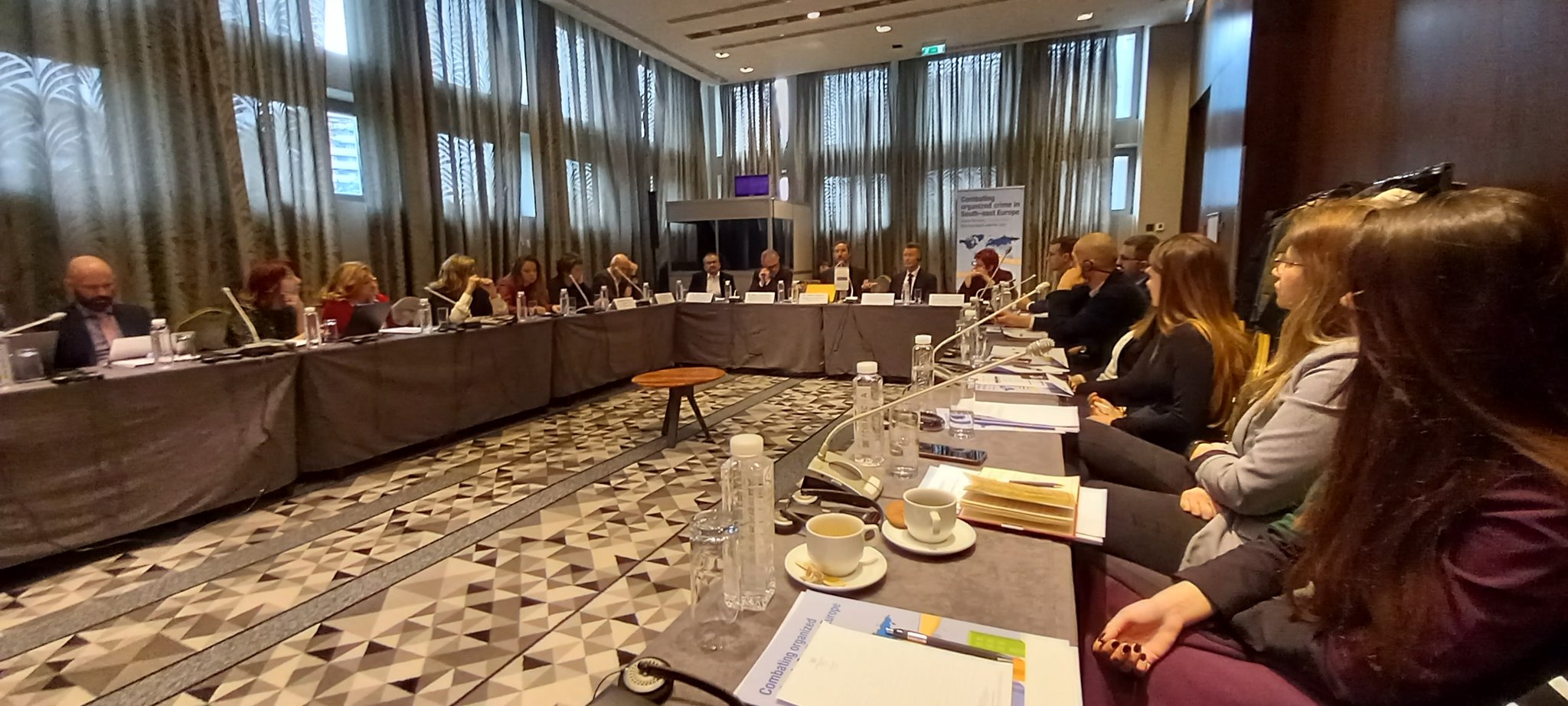
The Belgrade Centre for Security Policy (BCSP) published their research focuses on the six European Union (EU) accession candidates from the Western Balkans (WB6): Albania, Bosnia and Herzegovina, Kosovo, Montenegro, North Macedonia and Serbia. Its objectives are to map the phenomenon and main characteristics of organized crime groups (OCGs) in the region. The analysis is based on the research of both primary and secondary data, using expert interviews, police announcements, official statistics, national SOCTA documents, etc.
The study finds that OCGs from some countries such as Albania, Montenegro and Serbia developed largely international networks with 30 and more members. These OCGs represent the main actors and leaders of organized crime (OC) in the region. Other OCGs which have fewer members (from 3-4 to around 15), perform mainly on a national level or as facilitators of bigger OCGs. Male gender is the most common (in about 90% of the cases). Women are engaged in logistic activities, although there are individual cases where they are higher in the criminal group hierarchy. The age of the members can vary between 20 and 50 years old, depending on the activity and territory. The estimated average is around 35, but there are cases of members aged 65 and over. The nationalities and ethnicities of the OCGs follow the patterns of their regions, having solid bonds with their families and traditions. However, differences in background do not stop OCGs to cooperate and make criminal networks.
The main criminal activities performed by the OCGs in WB6 are the illicit drug trafficking and migrant smuggling. At the same time, illegal firearms and explosives trafficking and money laundering serve as facilitators of the major activities. Less frequent crime types are organized property crimes, where smuggling of goods is the most prominent activity. Trafficking in human beings has recently been much-evoked in public, mainly by large migration going through the Balkans and creating opportunities for illegal migration and human trafficking. Still, it seems like the authorities currently do not identify big OCGs in the trafficking of human beings. In addition, cybercrime represents an incremental trend, but there also seem to be no prominent OCGs which perform it as a core activity.
Harm reduction has become increasingly influential in drug policy and practice, but has developed primarily around adult drug use. Theoretical, practical, ethical and legal issues pertaining to children and adolescents under the age of majority – both relating to their own use and the effects of drug use among parents or within the family – are less clear.
The document created by a group of experts proposes a sub-field of drug policy at the intersection of harm reduction and childhood which we refer to as ‘child-centred harm reduction’. It provides a definition and conceptual model, as well as illustrative questions that emerge through a child-centred harm reduction lens.
Many people in different countries are already working on these kinds of issues, whose work needs greater recognition, analysis and support. In beginning to name and define this sub-field we hope to improve this situation, and inspire further international debate, collaboration, and innovation.
Migration has had an increasing impact on European policymaking over the past decade, in the wake of what has been called the ‘refugee migration peak’. In addition to an influx of refugees, European countries have experienced relatively new intra-European migration flows, while health and social disparities persist among populations with longer-established migration patterns.
This publication “Responding to drug-related problems among migrants, refugees and ethnic minorities in Europe”, produced by the European Monitoring Centre for Drugs and Drug Addiction (EMCDDA), presents the available prevalence studies of illicit substance use among migrants and ethnic minorities and discusses their limitations, as well as looking at prevalence and risk factors for substance use among refugees.
Two subsections focus on specific issues among non-refugee third-country nationals and Roma. Section 2 of this paper summarises risk and protective factor mechanisms in an ecosocial framework, while sections 3 and 4 are the core of this paper, and focus on social responses targeting migrant and ethnic populations in prevention, treatment and harm reduction, as well as highlighting broader responses which support these interventions. Finally, sections 5 and 6 conclude the report with a discussion of major challenges in addressing drug-related problems among these populations and examine some possible implications for policy and practice.
In advance of the Global Fund Seventh Replenishment Conference to be hosted by President Biden in New York on September 19, 2022, the Network of People who use Drugs (INPUD), the Eurasian Harm Reduction Association (EHRA) and Harm Reduction International (HRI) developed key harm reduction messages for the Global Fund Replenishment Conference, implementation of the new Global Fund Strategy and the Global Fund’s New Funding Model (NFM4) cycle.
Harm reduction investment from international donors and governments in low and middle-income (LMI) countries totalled US$131 million in 2019 – just 5% of the US$2.7 billion UNAIDS estimates is required annually by 2025 for an effective HIV response among people who inject drugs. The Global Fund is the largest donor for harm reduction, providing at least 60% of all international donor support. The outcome of the replenishment will have significant consequences for harm reduction. The protection and scale-up of harm reduction programmes in low- and middle-income countries requires a fully funded Global Fund. An underfunded Global Fund will result in service closures, a reversal of gains made in HIV prevention among people who use drugs and ultimately, lives lost.
INPUD, EHRA and HRI urge the Global Fund and the wider donor community to be proactive in protecting harm reduction within all replenishment scenarios, in implementation of the Global Fund Strategy 2023-2028 and during the NFM4 cycle. Their recommendations centre on the following five areas:
Harm reduction funding must be protected from any replenishment shortfall
Catalytic investments for harm reduction and key populations must continue regardless of replenishment outcome
Funding for community-led responses must be prioritised within NFM4, both for harm reduction and pandemic preparedness and responses
Funding for efforts to increase domestic investment in harm reduction, and broader key population programming must be increased
Funding for harm reduction in crisis must be protected and prioritised
The document with full explanation of the recommendation is available following this link>>>.