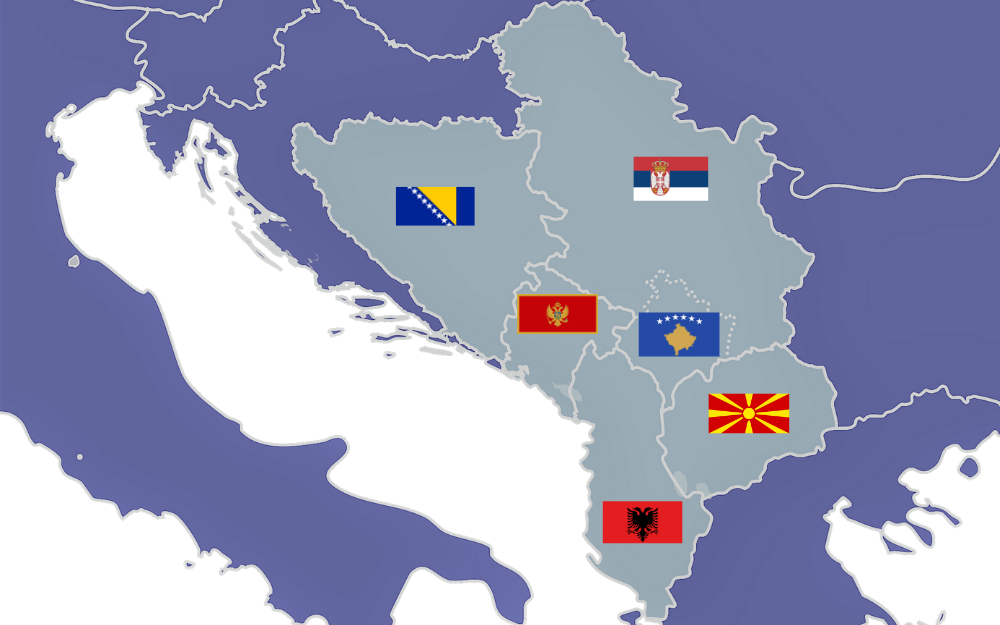
Western Balkans Civil Society Presents Analysis of the EU Drugs Strategy 2026 – 2030

Civil society organisations from the Western Balkans have published a health- and human rights-based analysis of the EU Drugs Strategy 2026 – 2030, examining its relevance and implications for South East Europe, including both EU Member States and EU candidate countries.

The analysis is developed from the perspective of organisations working on public health, harm reduction, human rights, and social inclusion, and aims to contribute constructively to policy dialogue at national, regional, and EU levels. It highlights the importance of treating drug policy primarily as a health and social issue, rather than a punitive or security-led one.

Key messages from the analysis

The document underlines that the EU Drugs Strategy 2026 – 2030 provides an important opportunity to strengthen evidence-based, humane, and rights-centred drug policies across South East Europe. Civil society organisations emphasise in particular:

  • The central role of the right to health, human dignity, and non-discrimination in drug policy
  • The need to recognise harm reduction as an essential pillar, including access to services such as opioid agonist therapy, needle and syringe programmes, and overdose prevention
  • The importance of addressing stigma and discrimination, which remain major barriers to accessing healthcare and social services
  • Ensuring continuity of care, especially in prisons, detention settings, and during transitions back into the community
  • The value of meaningful participation of civil society and people with lived experience in policy design, implementation, and monitoring

Relevance for South East Europe

The analysis stresses that drug-related challenges are cross-border and shared across South East Europe, making regional cooperation essential. The EU Drugs Strategy offers a common framework that can help reduce policy fragmentation, strengthen public health systems, and promote closer cooperation between EU Member States and candidate countries.

For EU candidate countries in the Western Balkans, the Strategy also supports alignment with EU standards in the areas of public health, human rights, and governance, contributing to accession-related reforms. For EU Member States in South East Europe, it reinforces health-centred approaches, supports more effective use of resources, and helps reduce pressure on criminal justice systems.

A call for balanced implementation

Civil society organisations underline that the impact of the EU Drugs Strategy will depend on its implementation. The analysis calls for a comprehensive and balanced Action Plan that translates strategic commitments into concrete measures, with adequate funding, clear health-focused indicators, and strong human rights safeguards.

The analysis is intended as a contribution to ongoing discussions with policymakers, EU institutions, and regional partners, and as a tool for advocacy, dialogue, and cooperation in building more inclusive, healthier, and safer societies across South East Europe.


The analysis is available here>>>.
 

The new EU Drugs Strategy

On 4 December 2025 the European Commission presented a new EU Drugs Strategy and an Action Plan against drug trafficking. The Commission states that the two documents set out a comprehensive EU response to the security, health, social and environmental challenges linked to the trafficking and use of illicit drugs.

The EU Drugs Strategy takes a multi-dimensional and whole-of-society approach, focused on 5 key areas:

  • Enhancing preparedness and response to drug related threats, with improved data collection, monitoring, early warning and rapid response measures at EU and national level. The EU Drugs Agency (EUDA) with its new, stronger mandate, will play a key role in supporting Member States by identifying new psychoactive substances, issuing rapid alerts, and assessing the risks posed by highly potent synthetic opioids.
  • Protecting public health, by strengthening prevention, treatment and reintegration measures, including under the Healthier Together initiative. The EUDA will support Member States with practical guidance and awareness-raising activities.
  • Strengthening security, with stricter rules against organised crime and an evaluation of the existing Framework Decision on drug trafficking by 2026. Key actions include strengthening public-private cooperation to improve the detection of drugs smuggled through postal and parcel delivery services into the EU, as well as a new EU Ports Strategy to enhance the security and resilience of our ports and supply chains against drug trafficking.
  • Measures to prevent drug-related harm focused on protecting young people from recruitment into organised crime (e.g. through a new EU toolbox and a new EU action plan on protecting children against crime), as well as reducing harm caused to society, local communities and the environment, including support from the EUDA on harm reduction intervention and crime prevention measures.
  • Stronger partnerships with third countries to reinforce and expand international alliances, and increase operational cooperation, technical assistance and capacity building. Global cooperation is essential to tackle trafficking networks that operate across borders and rapidly adapt their routes and methods. The Commission and Member States will also step up engagement with civil society and the private sector.

The EU Drugs Strategy 2026–2030 represents a progressive framework grounded in health, human rights, and evidence. However, the operational focus of the EU Action Plan against Drug Trafficking risks overshadowing the broader, balanced objectives of the Strategy.

The position of the civil society organisations working in drug policy is that in order to fully realise the Strategy’s objectives, the EU should develop a comprehensive Action Plan that:

  • Integrates all pillars of the Strategy: health, human rights, prevention, treatment, harm reduction, research, and coordination.
  • Ensures balanced resource allocation: funding and attention should support both supply reduction measures and public health initiatives.
  • Promotes multi-stakeholder engagement: including civil society, local authorities, health professionals, and community organisations.
  • Strengthens evidence-based approaches: ensuring that interventions are guided by research, data, and continuous evaluation.
  • Maintains human rights safeguards: enforcement and public health measures must adhere to rights-based standards, preventing disproportionate or discriminatory impacts.

A balanced Action Plan would ensure that drug policy remains people-centred, equitable, and effective, addressing both the public health and security dimensions without privileging one at the expense of the other.

To access the new EU Drugs Strategy follow this link>>>.

The EU Action Plan against drug trafficking is available here>>>.