Transnational Tentacles

From the Global Initiative webpage

While the Western Balkans is often portrayed as a hotspot of illicit activity, the region is a relatively small market for organized crime.  The big money is made elsewhere. This report shows why and how groups from the Western Balkans have become engaged in organized crime abroad, particularly in South Africa, Turkey, Australia as well as in some countries of Latin America and Western Europe.

The report shows that criminal groups from the Western Balkans operating abroad are modern, dynamic and entrepreneurial. They have demonstrated an ability to adapt and innovate and use technology to their advantage: for example, using encrypted forms of communication; exploring new routes and means of trafficking, such as ‘narco-jets’; and laundering their money through cryptocurrencies, offshore havens and into their home countries.

The report suggests that there is not a ‘Balkan Cartel’ per se, although groups from the region sometimes work with each other, and there are also instances of multi-ethnic groups.

The report calls for more effective law enforcement cooperation, tracking and seizing of assets, and the sharing of information, not least since perpetrators tend to use multiple identities. It also stresses the need to reduce demand for the goods and services provided by criminal groups from the Western Balkans.

To read the Report in various languages follow these links

English>>>

Albanian>>>

Macedonian>>>

BHCS>>>


An expert on Technical support services for NGOs and stakeholders needed

СO 100 PERCENT LIFE, in the framework of the project “Sustainability of services for key populations in the region of Eastern Europe and Central Asia” with financial support from the Global Fund to Fight AIDS, Tuberculosis and Malaria, is looking for an expert on

Technical support services for NGOs and stakeholders in Serbia, Bosnia and Herzegovina, Montenegro, Romania and Northern Macedonia on budget advocacy, implementation of transition and development plans, implementation of policies and mechanisms for providing services for treatment, prevention and support of HIV patients, related to the SoS project tasks, as well as providing general administrative support.

Applicants must provide their CV and completed forms that are in the application. The information in the documents should clearly reflect the competencies of the candidate required to perform these tasks. The price offer includes the cost of services and all expenses that are necessary to complete the tasks.

The announcement and tender documentation can be found in the application or following this link>>>.

Deadline for submission of proposals is 13. 08. 2020 ’till 17:00 (UTC+02:00). Questions about the tender are accepted ’till 11. 08. 2020 ’till 17:00 (UTC+02:00).


Donors conference for vulnerable populations

The coronavirus outbreak has a devastating effect on general population around the world as well as on people who use drugs and other connected vulnerable groups – homeless people, sex workers, LGBTI, women and young people who use drugs, men who have sex with men, people living with HIV and many others. These populations generally have limited or no access to health services, social benefits, clean water and food. Current situation multiplies these obstacles and add new ones.

Since February, the Drug Policy Network South East Europe and our member organisations were primarily engaged on providing support dedicated to the practical strengthening of the health, social, economic and mental resilience of the vulnerable groups of citizens. That included harm reduction and treatment services, fighting stigma and discrimination, providing legal and social advices and responding to a variety of additional needs these groups now have.

During the Conference on protection of vulnerable populations in South East Europe, held on 23 April 2020 and the Conference Social, mental and economic consequences of the coronavirus pandemic to the vulnerable populations in SEE: Do we know them and how to recognise and respond to them? held on 17 July 2020, DPNSEE learned that it is time to invite wider donors’ community, from national, regional to international level, to ensure universal, efficient, sustained funding and coordination respond to the needs of the vulnerable populations in the region.

The global pandemic requires a global response, and that response has to cover all.

The aim of the Conference is to present the needs and potential projects of vulnerable populations in South East Europe and establish better communication, coordination and cooperation between service providers and public and private funding programmes. The Conference will strengthen cooperative ties between potential project implementers from different sectors, increase knowledge of available public and private funding sources and improve strategic coordination between project ideas and funding structures.

South East Europe is usually side-lined in international support to key populations. We sincerely hope that vulnerable groups we serve deserve more attention and support.

The Conference will include plenary presentations from the region and donors, and work in two separate discussion rooms:

Group 1:        Sustainability of services for vulnerable populations

  • Quality assurance in service providing
  • Bridging funds for emergency situations (COVID and wider)
  • Children living in families with drug abuse history and young people who use drugs

Group 2:        Emerging needs of key populations

  • Respond to the economic consequences of coronavirus pandemic (empowering, rapid assessments and surveys, practical support on housing, food, clean water supply, etc.)
  • Involvement of key populations in designing and monitoring of the services for them

The Conference will be held on Thursday 6 August 2020 starting at 13:00 CET (14:00 EEST) via Zoom at the following link https://us02web.zoom.us/j/89837901957. The conference would last for a maximum of 90 minutes.

Access to the Conference will be open. We would appreciate that you apply using following link https://forms.gle/bmDW7q25Ge15o2wW6 and indicate in which small group you would like to participate. If we don’t receive that information, we shall have to make the choice for you.

The Conference will be recorded in audio and visual format. The recording will be used for reporting only.


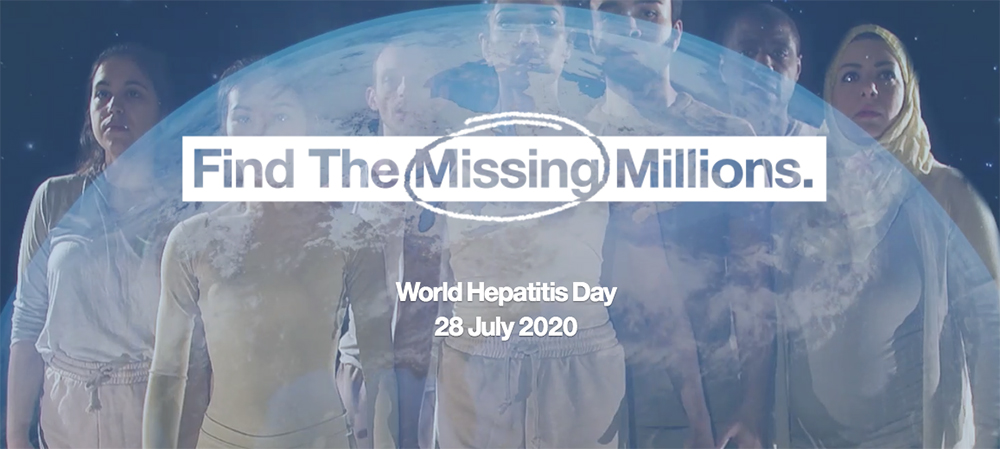
World Hepatitis Day 2020

Worldwide, 290 million people are living with viral hepatitis unaware. Without finding the undiagnosed and linking them to care, millions will continue to suffer, and lives will be lost.

World Hepatitis Day (WHD) takes places every year on 28 July bringing the world together under a single theme to raise awareness of the global burden of viral hepatitis and to influence real change. In 2020 the theme is ‘Find the Missing Millions’. Have a look at the promotional video of the campaign in 2020

WHD is a day for the world’s hepatitis community to unite and make our voices heard. It’s a day to celebrate the progress we have made and to meet the current challenges. It’s also an opportunity for us to increase awareness and encourage a real political change to jointly facilitate prevention, diagnosis and treatment.

WHD is a great opportunity for us to raise awareness of the importance of knowing your hepatitis status and to spread the word about treatment.

Whether you have one minute or an hour, there are plenty of ways you can get involved in World Hepatitis Day. Find out how to join following this link>>>.


The WHO Regional Office for Europe published Compendium of good practices in the health sector response to viral hepatitis in the WHO European Region. It includes 34 practice examples from 18 Member States in the European Region authored by various actors in the collective response to viral hepatitis, including government and national viral hepatitis programmes, academia and public health institutes/research institutes and NGOs and CSOs. The Compendium is available for free download following this link>>>.


To inspire and challenge you with its essential stories, our colleagues from Correlation – Harm Reduction Network collected and published Good Practice Examples of hepatitis C interventions which is the first of its kind with a focus on civil society organisations in Europe.

Addressing HIV and TB in Prisons, Pre-Trial Detention and Other Closed Settings

From EECA Regional Platform for Communication and Coordination

The new technical brief describes how HIV and TB interventions for people in prison and other closed settings can be incorporated into funding requests to the Global Fund to Fight AIDS, Tuberculosis and Malaria. The Global Fund supports evidence- and rights-based interventions aimed at ensuring access to HIV and TB prevention, treatment, care, and support for key populations, including people in prison.

Global Fund resources should be used to fund interventions that are in line with internationally agreed standards and technical guidance and have a significant impact on the HIV and TB epidemics in a country. Global Fund policy requires upper-middle income countries to focus 100% of their funding on programs benefiting key and vulnerable populations, lower middle income countries must demonstrate that 50% of funding is focused on the same. Low-income countries are also strongly encouraged to target resources to those at highest risk. Global Fund resources can also be used to advocate for laws and policies that enable an effective human-rights-based HIV and TB response and the removal of policies and laws that present obstacles to this.

  • Section 1 of this brief outlines the vulnerability of people in prison to HIV, TB, viral hepatitis and other infectious diseases. 1 UNAIDS (2015). UNAIDS Strategy 2016-2021. 2 WHO (2016). Global Health Sector Strategy on HIV, 2016-2021. 3 WHO (2015). WHO End TB Strategy. 4 Global Fund (2015) Global Fund Support for Co-morbidities and Co-Infections
  • Section 2 outlines guiding principles for designing and implementing programs.
  • Section 3 outlines the comprehensive package of interventions for HIV, TB, and other health issues recommended by WHO, UNODC, and other partners.
  • Section 4 describes approaches to incorporating prison harm reduction programs within funding proposals, and the health components and strategies for an enabling environment that should be included.
  • Section 5 offers examples of promising practices from around the world.
  • Section 6 lists further publications that may be of assistance in compiling proposals, as well as for technical support in programming. Publications on specific areas are also mentioned throughout this brief and referenced in the footnotes.

The technical brief is available following this link>>>.

COVID-19 Law Lab

The COVID-19 Law Lab initiative is a joint project of United Nations Development Programme (UNDP), the World Health Organization (WHO), the Joint United Nations Programme on HIV/AIDS (UNAIDS) and the O’Neill Institute for National and Global Health Law at Georgetown University. It gathers and shares legal documents from over 190 countries across the world to help states establish and implement strong legal frameworks to manage the pandemic.

The goal is to ensure that laws protect the health and wellbeing of individuals and communities and that they adhere to international human rights standards. Well-designed laws can help build strong health systems; evaluate and approve safe and effective drugs and vaccines; and enforce actions to create healthier and safer public spaces and workplaces.
The COVID-19 Law Lab is a database of laws that countries have implemented in response to the pandemic. It includes state of emergency declarations, quarantine measures, disease surveillance, legal measures relating to mask-wearing, social distancing, and access to medication and vaccines. It will also feature research on different legal frameworks for COVID-19. These analyses will focus on the human rights impacts of public health laws and help countries identify best practices to guide their immediate responses to COVID-19 and socioeconomic recovery efforts once the pandemic is under control

The COVID-19 Law Lab is accessible following this link>>>.

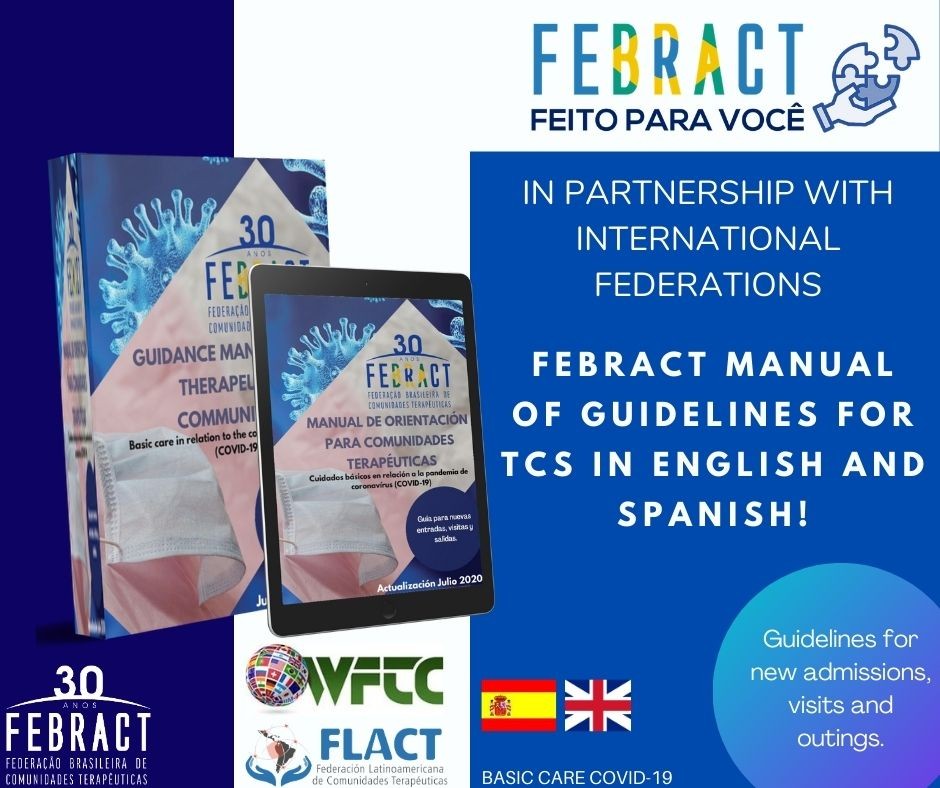
Guidance manual for therapeutic communities

Unfortunately, COVID-19 will last indefinitely among all of us, so the Therapeutic Communities (TCs) need to organize themselves to carry out the new reception procedures, especially considering that the public served by the TCs has great chances of being contaminated with COVID- 19 due to their social vulnerability. TCs that have structure, trained human resources, guarantee of adequate personal protective equipment (PPE), notification flow with the municipality’s Health Department and contingency plan, will be able to carry out the quarantine process (14 days) within the organization itself.

For this reason, Federação Brasileira de Comunidades Terapêuticas (FEBRACT) published the Guidance manual for therapeutic communities “Basic care in relation to the coronavirus pandemic (COVID-19)“. This guide for new entries, visits and outing is prepared in accordance with the guidelines of the PUBLIC TECHNICAL NOTE Nº 01/2020 of National Agency for Health Surveillance – ANVISA.

To download the Manual, follow this link>>>


A successful campaign in new circumstances

Following a good result in coordination of the campaigns in 2017, 2018 and 2019, The International Drug Policy Consortium and The Drug Policy Network South East Europe agreed on continuing cooperation on organising the campaign in 2020.

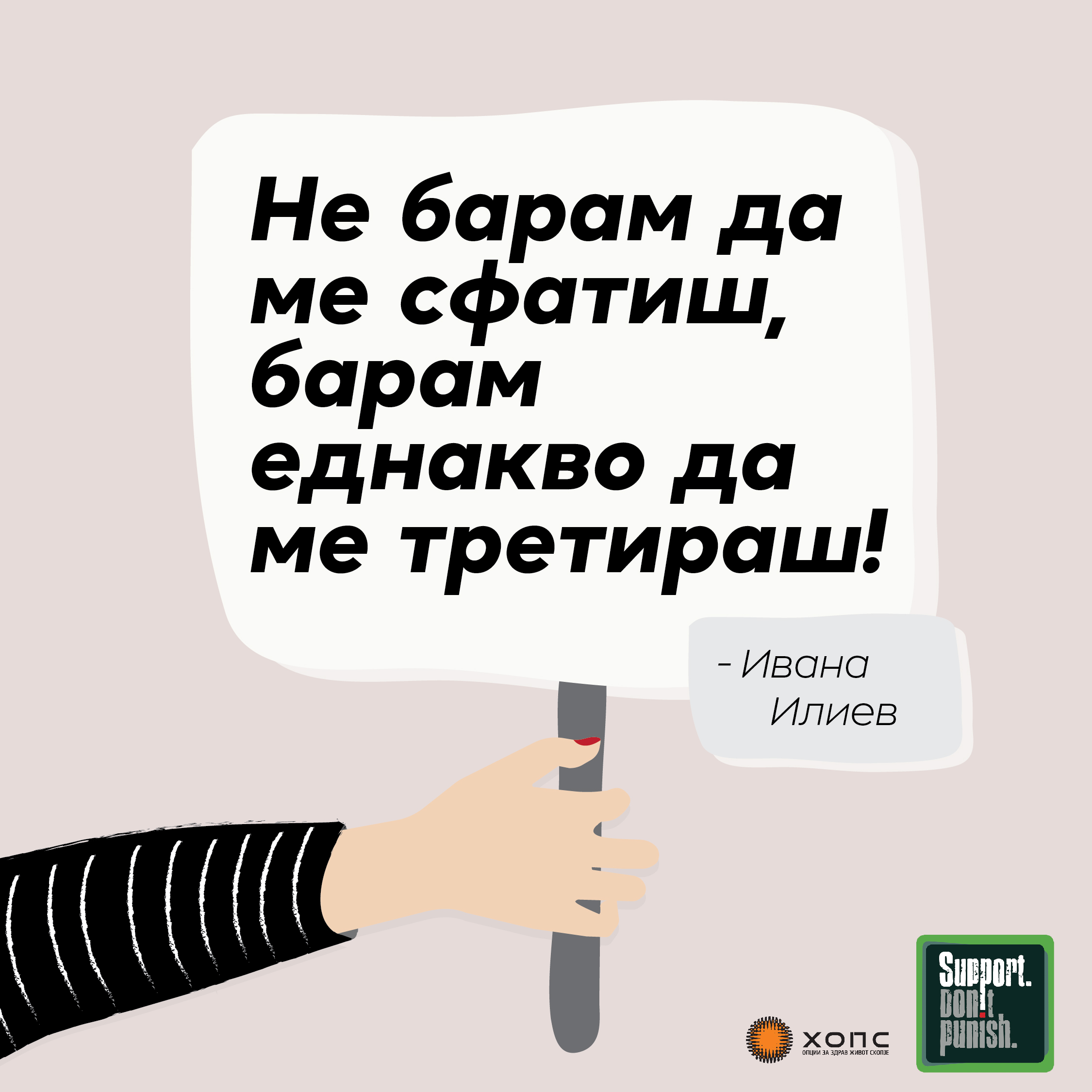
The Support. Don’t Punish 2020 campaign was held in very difficult circumstances, but participating organisations managed to find a way to hold activities and continue contributing to achieving its goals.

The campaign in South East Europe had

For the first time, DPNSEE haven’t organised a Kick-off event to launch the campaign due to the situation caused by the coronavirus pandemic. Instead, and as a specific way of promoting the campaign and achieving its goals, DPNSEE organised a regional campaign using social media to spread messages around. We prepared a set of up to 20 messages with combination of quotes from Kofi Annan’s speeches and appropriate photographs, ready for use in Facebook, Twitter and Instagram.

The DPNSEE staff collected and published articles alongside with photos of the involved organisations in the Network during the campaign on Internet page www.dpnsee.org and social media FacebookInstagram and Twitter.

The report from the campaign is available following this link>>>.


A realistic insight into the consequences of COVID-19 to vulnerable populations

DPNSEE held the Conference “Social, mental and economic consequences of the coronavirus pandemic to the vulnerable populations in SEE: Do we know them and how to recognise and respond to them?” with support of the European Monitoring Centre for Drugs and Drug Addictions and Correlation – Harm Reduction Network.

39 representatives of civil society organisations, national drug agencies, international organisations and agencies and donor community participated.

Initial results of the EMCDDA study on Impact of COVID-19 on people who use drugs and drug services in the Western Balkans, as well as Correlation’s approach to collecting data from the point of view of civil society which can be of use in establishing our indicators and method of collecting them. Our colleagues gave us a very realistic view on the situation in their countries and efforts they made to provide services needed.

We hope to produce and distribute the report from the Conference in the next few days.

The presentations from the Conference are ready to download:

  • Kateřina Škařupová, PhD, Scientific analyst on health at the IPA project, European Monitoring Centre for Drugs and Drug Addiction (EMCDDA): Initial results of the study on Impact of COVID-19 on people who use drugs and drug services in the Western Balkans following this link>>>
  • Roberto Perez Gayo, Project Officer at the Correlation – Harm Reduction Network: Results of the harm reduction response to the epidemic in Europe following this link>>>
  • Marija Radović, Coordinator of the department of direct assistance to people who use/inject drugs, sex workers and prisoners at Juventas, Montenegro: The influence of the COVID19 on the social and economic status of persons who use/inject drugs following this link>>>


Update on the 5th European Harm Reduction Conference

From the Correlation webpage

The unexpectedly prolonged uncertainty in the future of international events and meetings caused by COVID-19 pandemic has slowed down our preparations of the Conference as well. However, the epidemic also made the significant role of our work focus, harm reduction, even more strongly certain.

 The 5th European Harm Reduction Conference now aims to serve as the platform where all the vital exchange of our “pandemic” experiences takes place, as well. Currently, we are busy fine-tuning the Conference, with a couple of adjustments such as ensuring the necessary social distancing and enabling video streaming opportunities just in case.

We have almost finalised the Conference programme and speaker list.

“Objects or subjects? Youth in drug policy and harm reduction services”
“Migrant sex workers right to health, safety and protection”
“New Psychoactive Substances, Drug Injecting and Sex”
 and
“Sustainability and accessibility of OAT Programs in the Context of COVID-19 and Transition” are only a couple of the highlights from the Conference programme.

The complete list of sessions and their details are HERE

 If the Conference cannot take place on the envisaged dates, we plan to organise virtual conference sessions between 4 – 6 November and to postpone the face-to-face Conference to 2021.

Your registration is valid for the postponed event as well, but if you wish, your registration fee could be refunded too.

Please be aware that hotel and flight bookings can be refunded in almost all cases.

You can check out the Conference website for updates HERE or subscribe to our newsletter, so we send them to your inbox.