Ready for COVID-19?

In December 2019, a novel coronavirus (2019-nCoV) was first isolated from three patients with pneumonia, connected to the cluster of acute respiratory illness cases from Wuhan, China. Coronaviruses are zoonotic, meaning they are transmitted between animals and people. More about the virus is available in the video bellow.

According to the latest epidemiological data on 25 February, the total number of COVID-19 cases has reached 80,407 globally, and 2,708 people have died from the virus, which puts the mortality rate at nearly 3.4%. This is an emerging, rapidly evolving situation with ongoing outbreak investigations. More about the virus is available at the World Health Organisation webpage following this link>>> and at the webpage of the European Centre for Disease Prevention and Control.

Outbreak of the epidemic in Italy, neighbouring country to our region, saw 322 cases in a very short period of time, with 11 deaths, while cities of Cremona and Brescia turned into quarantine. First cases were also reported in Croatia, Romania, North Macedonia and Greece and also in Austria. It is pretty realistic that they will appear in other South East European countries.

In the exchange which the DPNSEE Board had, we expressed concern that the health systems may not have fully in their sight the key populations we are supporting (and people with substance use disorder, especially heroin users, are usually in a weak health conditions), that these populations, being side-lined in the community, may not be well informed about the threat and measures they should take to protect themselves and that our organisations, especially those who provide services to people who use drugs and other connected vulnerable groups should also play they role in overall efforts to fight the problems caused by this epidemic.

DPNSEE invited its member organisations to act locally but also to act together, share experiences, actions and results they achieve.

We see our role in three dimensions:

  1. While the coronavirus is still a threat, you may participate in calming the situation and avoiding panic which may occur, inform people you are supporting about the protective measures against the coronavirus and make all necessary steps internally to be prepared for possible dark scenarios.
  2. If COVID-19 cases appear in your country, you may intensify communication and advising the key populations, activate full spectrum of protection measures for your staff and establish close cooperation with authorities, especially national and local public health authority to advice on necessary steps.
  3. If you find yourself locked in a quarantine area, please fully respect all necessary advices and make sure that your people are safe, but also offer services other than your ordinary actions to support overall efforts of overcoming the critical situation.

DPNSEE invites authorities to pay specific attention to vulnerable populations, which may remain invisible in situations when major efforts are needed for an effective respond to the crisis.

The corona virus COVID-19 is a serious treat, but not more dangerous than usual influence we face every winter. With good preparations and respecting necessary prevention measures, its effects may be reduced and minimised. DPNSEE wants to ensure that people we serve, our staff and societies in general are prepared to fight this challenge.

To read the letter that DPNSEE sent to its member organisations follow this link>>>

Depenalisation, diversion and decriminalization: A realist review

Alternatives to criminalization for the simple possession of illicit drugs are increasingly of interest to policy makers. But there is no existing theoretically based, empirically tested framework that can inform development and evaluation.

The European Journal of Criminology paper “Depenalisation, diversion and decriminalization: A realist review and programme theory of alternatives to criminalization for simple drug possession” presents a realist programme theory of such alternatives.

It bases this on a realist review decriminalization, which followed the Realist and Meta-narrative Evidence Syntheses: Evolving Standards (RAMESES). It describes the systematic process of searching the literature in English on nine relevant countries (Australia, Czech Republic, Denmark, Germany, Jamaica, Netherland, Portugal, the UK, the USA) for information on alternative measures in three categories: depenalisation, diversion and.

It shows how these measures – in theory and in practice – combine with pre-existing social conditions and institutional contexts to trigger mechanisms across three causal pathways (normative, criminal justice and health and social services). It shows how some posited causal processes are more empirically supported than others.

Alternative measures can reduce harms imposed by criminal justice processes without increasing drug use or related health and crime harms, but this depends on specific combinations of contexts, mechanisms and outcomes.

To read full paper, follow this link>>>

SEE government – civil society dialogue on drugs

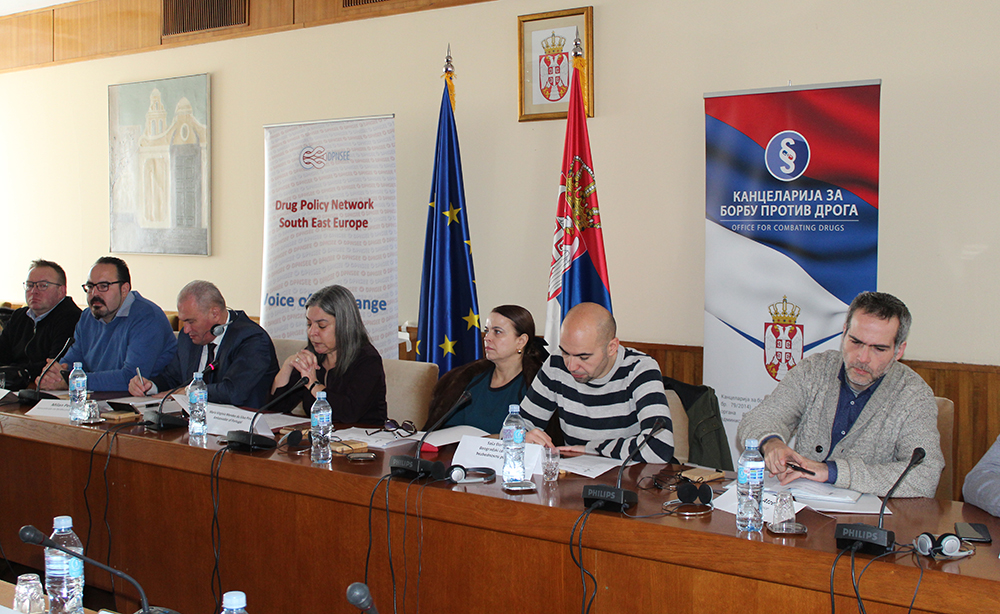
Following the success of the first dialogue between national authorities and civil society organisations held in 2018, the Office for Combating Drugs of the Government of the Republic of Serbia and Drug Policy Network South East Europe organised the second South East Europe government – civil society dialogue on drugs on 21 February 2020. The meeting was held in Belgrade, in the Palace of Serbia.

The aim of the meeting was to discuss about issues of importance for drug policy and reflect on the cooperation between authorities and civil society organisations at the national and regional level and perspectives of future cooperation.

The key topics for this meeting were:

  1. Decriminalisation of drug consumption and possession for personal use – challenges and experiences
  2. Role of civil society in drug policy

38 participants from all 11 countries of the region and 3 guest countries participated in the Dialogue.

The Dialogue was an excellent opportunity to hear various experiences from the region and wider and exchange ideas and comments.

You can download presentations from the panelists at our web page with publications following this link>>>.


Report from the dialogue is available following this link>>>.


Regular DPNSEE General Assembly

The DPNSEE General Assembly was held on 20 February 2020 in the Palace of Serbia in Belgrade. Representatives of 18 out of 24 member organisations with the voting right and one associate member organisation were present.

The Assembly adopted minutes from the previous Assembly, operational rapport and information about the financial situation and Action plan for 2020 and discussed the situation in the countries of the region.

DPNSEE continued enlarging with new member organizations. Organization HELP from Split, Croatia, was granted ordinary membership. Also, the organisation Čovekoljublje (Philanthropy) from Belgrade, Serbia was granted the status of associate member.

Unfortunately, the Assembly decided that membership of the organisation 4 Life will terminate because of inactivity and failure to pay the ordinary member’s annual fee for the last three years. This organisation is invited to consider applying for associate membership in the Network.

The Assembly elected two new members of the Board: Ilinka Serdarević from Terra, Rijeka, Croatia and Tomaž Koren from the Alliance of Non-Governmental Organisations for Drugs and Addictions in Slovenia. The new President of the Network is Nebojša Djurasović from Prevent, Novi Sad, Serbia, while Vice-President is Denis Dedajić from Margina, Tuzla/Zenica, Bosnia Herzegovina.

The Assembly decided that the Network opens the process of designing the new Statutes. After the member organisations send proposals for the new Statutes, the DPNSEE Board should prepare a draft new Statutes that will be adopted at the electronic Assembly after consultations among the member organisations.

In the thematic part of the Assembly, during afternoon, an external consultant Jarmila Bujak Stanko facilitated the strategic workshop to complete the strategic plan development process.

Harm Reduction @Work

Correlation – European Harm Reduction Network announced that the Fifth European Harm Reduction Conference will be held from 4 to 6 November 2020 in Prague, Czechia.

The Conference Motto is

Harm Reduction @Work

innovation, community & political leadership

The Conference will be organised by the Correlation European Harm Reduction Network in close cooperation with the Eurasian Harm Reduction Association and the Czech organization Sananim. DPNSEE supports and endorses the Conference.

The 5th European Harm Reduction Conference targets professionals from the community working in the broader area of harm reduction, policy-makers and politicians, researchers, and media representatives. Registrations are already open.

The conference will present the latest harm reduction developments and good innovative practices. It will discuss drug policy and its implications on people who use drugs and other groups, including not only sex workers but also people living with HIV.

The meeting intends to broaden the view on harm reduction while addressing related issues such as social inclusion and homelessness. Finally, the conference provides an appropriate platform to create links and synergies between national and European stakeholders.

The conference programme is currently under development. The European Network of People Who Use Drugs, the World Health Organization Regional Office for Europe, the European Monitoring Centre Drugs and Drug Addiction and other vital stakeholders from Europe are joining us in this effort.

Follow all developments about the Conference following this link>>>

HepC Conference scholarship available!

The International Network on Hepatitis in Substance Users (INHSU) is an international, not-for-profit, member-based organization dedicated to scientific knowledge exchange, education, and advocacy focused on improving health for people who use drugs, including focusing on hepatitis C prevention and care for people who use drugs.

INHSU annual conferences are a unique opportunity to connect with the global community working to improve health outcomes for people who use drugs including the prevention, treatment and care of hepatitis C. Their 9th International Conference on Hepatitis Care in Substance Users will be held 8 – 10 October 2020 in Glasgow, Scotland, UK.

Focused on supporting scientific exchange and knowledge dissemination, the conference provides delegates with access to the latest research and evidence regarding effective treatment and care to improve health outcomes for people who use drugs, with a specific focus on hepatitis C prevention, treatment and care. It provides an opportunity for those working in this area to share their research and professional expertise with leaders working in this field. It profiles cutting edge practice that links people who use drugs to prevention, treatment and care in a range of clinical, custodial and community settings.

This conference also brings together leaders engaged in the global effort to eliminate viral hepatitis by 2030.

Have a look at the conference promotional video

A number of scholarship opportunities are available for the full or partial scholarships for the Conference.

A full scholarship will include: conference registration, return economy class flights and accommodation. A partial scholarship will include conference registration.

To apply you must be currently enrolled in a BSc, PhD or Masters Degree and submit an abstract before the deadline: Sunday 15 March 2019.

For more information and to apply, follow this link>>>

Bursaries for European Drugs Summer School

The University Institute of Lisbon (ISCTE-IUL) and the EU drugs agency (EMCDDA) will be joining forces once again next summer to hold the ninth European drugs summer school (EDSS) on ‘Illicit drugs in Europe: demand, supply and public policies’. This two-week course will take place in the Portuguese capital from 29 June to 10 July 2020.

Professionals, academics and experts from the Western Balkan region* will have an opportunity to participate in the EDSS this year, thanks to three bursaries being offered through the EMCDDA Instrument of Pre-accession Assistance 7 project (IPA7), which kicked off in July 2019. The aim of the three-year project, running until June 2022, is to ensure that the six IPA beneficiaries (1) are able to participate effectively in the activities of the EMCDDA and the Reitox network upon EU accession.

The bursaries will cover flights and EDSS fees.

The deadline for applications is 26 February 2020 and successful candidates will be notified by 9 March 2020.

To get more information and apply for the bursary follow this link>>>


* The six IPA beneficiaries are: Albania, Bosnia and Herzegovina, Kosovo*, North Macedonia, Montenegro and Serbia

Watch EDSS promotional video for more information

2019 International Overdose Awareness Day Report published

The International Overdose Awareness Day, originated in Melbourne, Australia in 2001, has grown into a global campaign aimed to raise awareness of overdose and reduce the stigma of a drug-related death. It is also an opportunity to stimulate discussion about evidence-based overdose prevention and drug policy.

The campaign in2019 was the most successful yet. Their 2019 IOAD Partners’ Report shows that 874 events were organised in 39 participating countries worldwide. This is a new record, surpassing the previous high of 747 set last year. This year’s campaign brought more than 273,000 visitors to the IOAD website. Visitors to the website downloaded our online resources – posters, fact sheets, and event support kits – more than 20,000 times.

We have promoted the campaign in our news and reported about the press release we published and the activities during the IOA day held in Montenegro, North Macedonia, Romania and Slovenia. Unfortunately, only those from Montenegro and Slovenia were mentioned in the report.

To read the report follow this link>>>

Chase the virus – Call for national partners

Eurasian Harm Reduction Association (EHRA) is looking for national partners (country consortia, NGOs, community organizations and initiative groups) to develop and implement 4 national campaigns under the branding of “Chase the virus, not people!” in countries of the Eastern Europe and Central Asia region.

Aim of the campaign is to strengthen the voice and influence of national activists at the national level in articulating their advocacy priorities and drawing the attention of target audiences to the problems of key populations in relation to the catastrophic HIV/AIDS epidemic in the EECA region, in particular the impact of stigma, discrimination and criminalization on effective response measures to HIV/AIDS epidemic and mortality reduction.

EHRA is issuing 4 grants to the winners in the open competition (NGO, community organization or initiative groups, which are officially registered or have financial agents).

To get full information on this call, follow this link>>>

TripApp – guide to a safer journey

Youth Organisations for Drug Action in Europe (YODA) have released the Android version of TripApp – a mobile application designed to reduce the harm associated with drugs.

TripApp includes:

  • Rapid information system sending you alerts from the laboratories that we cooperate with, about particularly dangerous drugs (contaminated, adulterated, high potency) in your area
  • Map of over 1.200 harm reduction services across 15 European countries, such as needle and syringe programs, party-outreach projects, HIV testing, OST etc.
  • Option to submit the results of the colorimetric drug testing that you conduct, into our database, warning other people in your area about dangerous batches
  • Legal info about criminal laws on use, possession, and trafficking of drugs in 30 European countries
  • Harm reduction info

And this all in 16 languages.

More information is available at http://tripapp.org/
Android download here https://play.google.com/store/apps/details
iOS download is expected soon.

Have a look at more