We lost Ivica

It is with our deepest sorrow that we learned of passing of Ivica Cekovski, the Executive Director of HOPS, North Macedonia.

It was a joy to work with Ivica. He was calm, nice, organised and eager to give a helping hand. He was a wonderful person who will be so sorely missed.

We join our friends from HOPS with thoughts of comfort in helping them get over the immense void left behind by the loss of our beloved colleague Ivica. Words cannot express our sorrow. Ivica will be missed.

2020 Global Day of Action – Getting ready!

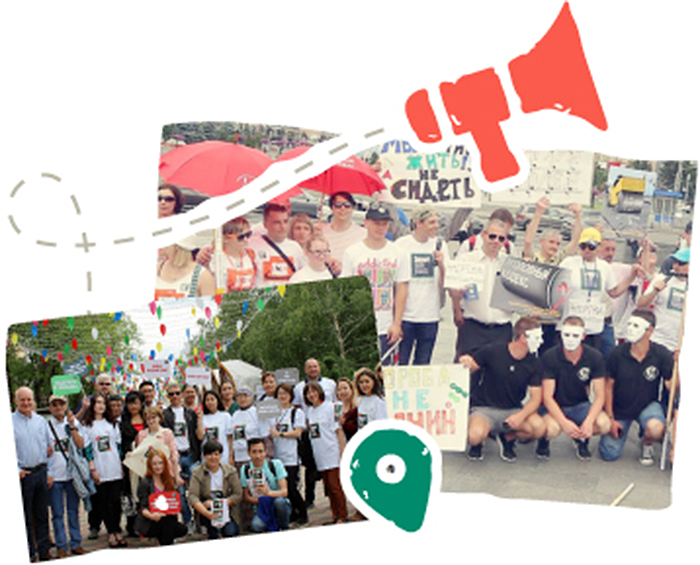
Last year, thousands of activists in 261 cities of 92 countries joined arms to promote policies and practices that centre solidarity, reduce harm and protect human rights. The 2020 Global Day of Action is all about accelerating momentum for reform. And, to do so, we need each other.

The International Drug Policy Consortium (IDPC) have launched the 2020 Support. Don’t Punish Global Day of Action’s “Call for Expressions of Interest”. If you’re thinking about joining the 2020 Global Day of Action, fill the form available online or in Word format and apply.

As DPNSEE will coordinate activities of the campaign in South East Serbia, it would be great if you would also send us the information about your plans.

Should you need inspiration or guidance, check out the repository with hundreds of activities organised in previous years.

The deadline for submissions is Friday, 17 April 2020.

An important information:

At the moment of drafting, over 150,000 cases of COVID-19 have been detected across the globe. It is impossible to accurately estimate how the pandemic will evolve in the coming weeks and months, but we know it will disproportionately affect many of the populations at the heart of the Support. Don’t Punish campaign. We believe we have a responsibility to do our best to keep ourselves and others healthy. When completing the form, we invite you to consider alternative plans in case the pandemic impedes the realisation of your initially-planned activities.

More information is available from the Support. Don’t Punish webpage following this link>>>.


Tool for Gender-Responsive Harm Reduction Services for Women who Use Drugs

The International Network of People who use Drugs (INPUD) and the International Network of Women who use Drugs (INWUD), in collaboration with the United Nations Office of Drugs and Crime (UNODC) HIV/AIDS Section and Koalisi Satu Hati, a community advocacy group in Indonesia, developed On the A-Gender: Community Monitoring Tool for Gender-Responsive Harm Reduction Services for Women who use Drugs. It aims to be a resource for community advocates to begin documenting, evidencing and addressing this state of play. The tool acknowledges the diversity and intersectionality of women who use drugs – including sex workers, lesbian and transwomen.

Worldwide, women who use drugs are vastly underserved within health and social services and programmes. National and international research, services, guidelines, and training programmes are either gender-neutral or male-focused. As harm reduction services are primarily tailored to men, women who use drugs often find their specific needs being unacknowledged and unaddressed, leading to non gender-responsive harm reduction services.

This resource can be a useful and a practical first step towards developing advocacy strategies to introduce and scale up gender-responsive harm reduction services in various settings around the world. In this way, the right to health of women who use drugs can be respected and better promoted.

To read full and download the tool, follow this link>>>

Instructions on coronavirus in Serbian

Together with our member organisations Prevent and Re Generation, DPNSEE have prepared information and instructions for protection against coronavirus in Serbian for people in risk from vulnerable populations we support. We used several sources: INPUD, Leafly, Crew and BesD.

The instructions are printed in 500 – 2.000 copies to share to the key populations.

These instructions will be available in various institutions and civil society organisations in Serbia. We expect that they will be adjusted to local languages in some other countries of South East Europe.

General harm reduction tips for people who use drugs
General prevention measures against coronavirus COVID-19
Instructions for people who take drugs snorting
Instructions for people who use cannabis
Instructions for people who go clubbing
Instructions for sex workers

Together against coronavirus

On the initiative from civil society organisations, following the DPNSEE Public appeal to protect vulnerable groups from coronavirus COVID-19, a meeting was called by the Office for Combating Drugs of the Government of Republic of Serbia to discuss the measures to protect people who use drugs and other connected vulnerable groups. The meeting was held on 13 March with representatives of the Office, Ministry of Health, Special Hospital for Addictions and four civil society organisations.

All participants agreed that vulnerable groups need to be supported for their personal and protection of the entire society. Conclusions include

  • By noon on Monday 16 all service providers will send estimations of their needs for materials they need to protect the key populations they serve and their staff. The Office for Combating Drugs will collect them and send a joint request to the Ministry of social affairs. Once they are provided, they will be distributed to the organisations.
  • The Office will also request for an information about the needs of the shelters for children, young people and elderly and try to organise support to them.
  • Funds for the additional support will be requested from the project supported by the Global Fund and Ministry of Health, at least for the staff supporting the key affected populations.
  • Civil society organisations are preparing specific instructions for people who use drugs and other vulnerable populations and share them both through social networks and printed materials.


Javni poziv za zaštitu ranjivih grupa od korona virusa COVID-19

The Public appeal to protect vulnerable groups from coronavirus COVID-19 which DPNSEE issued on 2 March 2020 was translated into Croatian, Montenegrin and Serbian and circulated across the region.

Here are these versions:

European Testing Week 2020

European Testing Week is a European campaign that encourages partner organisations – in community, health care and policy institutions – throughout Europe to unite for one week twice a year to increase testing efforts and promote awareness on the benefits of earlier hepatitis and HIV testing. This initiative has progressed since its start in 2013 and has grown to be a widely recognised European event with hundreds of organisations participating every year.

European Testing Week offers partners across Europe the unique opportunity to unite to increase awareness of the benefits of early HIV and hepatitis testing among those who are at risk and promote increased access to testing. In 2019, more than 750 organisations from across 49 countries took part in ETW and thousands more people are now aware of their HIV and hepatitis status.

What once started as an annual event has now become a biannual event with two ETWs occurring each year in Spring (May) and Autumn (November). Each organisation volunteers their own time to organise their Testing Week activities and create incredible displays of a united effort to increase testing awareness at all organisational levels.

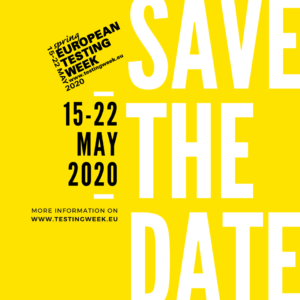
Now in its eighth year, the European Testing Week initiative will hold its third Spring European Testing Week from 15 – 22 May 2020.

The aim of the Spring and Autumn ETWs remain the same: to unite partner organisations throughout Europe for one week to increase access to testing and promote awareness on the benefits of earlier hepatitis and HIV testing.

There are many activities that an organisation can do for ETW. They can include activities such as:

  • Outreach testing activities for HBV/HCV/HIV
  • Awareness raising and/or advocacy initiatives
  • Engaging with HBV/HCV/HIV ambassadors or celebrities
  • Training/capacity building
  • Media campaigns and so much more!

For more information, ideas and tools to participate in the campaign, follow this link>>>

Hep C robust prevalence estimates

The European Centre for Disease Prevention and Control published their new Toolkit to support the generation of robust estimates of hepatitis C prevalence. This toolkit supports EU Member States in generating robust prevalence estimates for hepatitis C.

The overarching aim of this toolkit is to gain a better understanding of the HCV epidemiology in the EU/EEA.

European surveillance data show on-going transmission of viral hepatitis across the European Union and European Economic Area (EU/EEA). The available notification data however, do not provide a clear epidemiological picture of hepatitis C in Europe. Prevalence data from population surveys are a key source of information to complement the surveillance data for hepatitis C due to the limitations of surveillance for hepatitis: the infection is often asymptomatic and notifications are strongly influenced by local testing practices.

This toolkit offers:

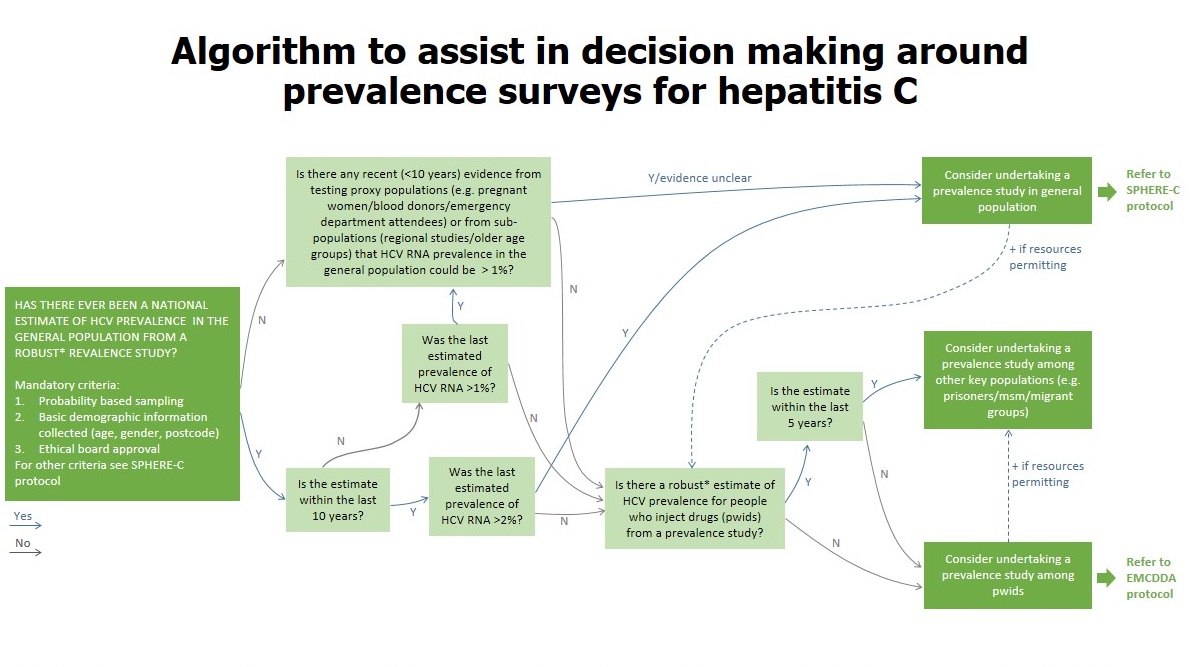
  • An algorithm to assist EU/EEA Member States in their decision-making around selecting the type of HCV prevalence survey that should be undertaken
  • The technical protocol for conducting hepatitis C prevalence surveys in the general population
  • Modelled estimates of the national burden of viral hepatitis C in EU/EEA countries

To read and download the Protocol, follow this link>>>

CND Recap

The 63rd session of the Commission on Narcotic Drugs (CND) was held from 2 to 6 March 2020 in Vienna, Austria. The CND is a functional commission of the United Nations Economic and Social Council (ECOSOC) and is the central drug policy-making body within the United Nations system. It monitors the world drug situation, develops strategies on international drug control and recommends measures to address the world drug problem.

Delegations from Member States, young people, scientists, civil society representatives (some 370 of us), and representatives from 17 international and regional organizations – nearly 1.500 people from more than 130 countries – met like every year in March to discuss the complexities and contexts of the world drug problem and to find joint solutions.

As expected, the meeting started with an information on the coronavirus outbreak. Austrian Health Authorities have mandatory reporting cases – no travel restrictions currently, 1.826 tests in Austria, 15 confirmed.

New UNODC Executive Director Ghada Waly was presented and actively participated in the meeting.

Croatia spoke on behalf of EU as it holds EU presidency in the first half of the year. Our colleagues from their Office for combating drugs were very active in preparations and hold a lot of meetings and events during the event.

At plenary, country representatives spoke about issues of their interest and achievements they made while at the Committee of the Whole (comprised of representatives of CND member countries) texts of the resolutions were discussed and agreed.

The UNODC Executive Director, in her closing speech, presented the results of the meeting as:

  • Pledge to expand opportunities for the meaningful participation of youth in drug prevention
  • Call for increased support of comprehensive alternative development programmes
  • Recognition that education and training are required to ensure access to and the availability of controlled substances for medical and scientific purposes
  • Emphasis on the importance of partnerships with the private sector to secure an affordable and safe supply of controlled substances for licit purposes
  • Adoption of the revised Annual Report Questionnaire to support the international community to improve the evidence base and ensure that World Drug Report can draw on the best available data possible

CND adopted 5 proposed resolutions:

  • Promoting efforts by member states to counter the world drug problem
  • Promoting efforts by Member States to address and counter the world drug problem, in particular supply reduction-related measures, through effective partnerships with private sector entities
  • Promoting awareness-raising, education and training as part of a comprehensive approach to ensuring access to and the availability of controlled substances for medical and scientific purposes and improving their rational use
  • Promoting the involvement of youth in drug prevention efforts
  • Promoting alternative development as an inclusive and sustainable development-oriented drug control strategy

In the margins of the 63rd Session of the CND, UNODC convened 45 youths and 27 parents and guardians from 33 countries for the Youth Forum 2020 held from 2 to 4 March, to involve them in efforts to address the world drug problem and to strengthen their voices on the global level.

DPNSEE was represented by Ivana Vujović from Juventas and Executive Director Milutin Milošević, In addition, Board member Marios Atzemis (representing EATG), Vlatko Dekov and Bogdan Kolev from HOPS and Ana Gavrilović from ReGeneracija (who participated in the Youth Forum 2020), were present at the CND 2020.

During the event, we had a lot of small informal and some formal meetings including those with Alexis Goodeel, Director of EMCDDA, Dr Christos Koumitsidis, Greek Drug Coordinator, State secretary in the Ministry of Health of Croatia Tomislav Dulibić and several members of their Office for combating drugs, national drug coordinators from Bosnia Herzegovina, Montenegro, North Macedonia and Serbia, Katrin Prins-Schiffer, Coordinator of Correlation, representatives of the Trimbos Institute, representatives of IDPC, the European Citizens’ Initiative to change regulation on cannabis among others.

In a consultative meeting with Jamie Bridge from IDPC, we explained critical situation with harm reduction in South East Europe and expressed disappointment that none of the projects from the region was supported by the Radian Fund. Jamie informed us that there may be a kind of a donor meeting around the World AIDS Conference this July in San Francisco and Auckland where we may jointly bring the case to the agenda and ask for more attention to the problem.

IDPC invited organisations active in the “Support. Don’t Punish” campaign for a meeting to discuss developments and the upcoming 2020 Global Day of Action. The International day of action will be celebrated for the eight time. The call for expression of interest will be issued on 16 March and opened for a month. The process will be the same as recent year(s).

Some general observations

  • Every year presence of governments increases, especially those with restrictive approach to drugs. And, strange enough, they organise side events on critical issues, probably trying to present and protect their views.
  • Governments use CND to promote their successes. There is no confirmation that all of them they are real. On contrary, we observed cases of false achievements.
  • More presence from SEE
  • Less and less community members
  • A lot of attention was given to human rights, following publishing of the Guidelines on Human Rights and Drug Policy by the International Centre on Human Rights and Drug Policy, UNAIDS, WHO and UNDP in 2019.
  • Strong presence and a lot of activities of Croatia, which holds EU presidency in the first half of 2020.
  • Discussion and adoption of the World Health Organization (WHO) recommendation that would remove cannabis and cannabis resin from Schedule IV of the 1961 Convention while still keeping it in Schedule I should have been at the agenda (postponed from 2019), but this will not happen in 2020. This is the second time the CND has refused to vote on the recommendations, which the WHO first presented in January 2019.
  • Some countries have decided to not send their delegates to avoid contract coronavirus and many CSOs have either done the same.

Daily overviews from the CND are available at the DPNSEE webpage:


The departure day

This page will be updated during the day, as the events happen

Side events

Human rights tools: Incorporating international justice and targeted sanctions into drug policy

Organized by DRCNet Foundation and Forum Droghe Associazione Movimento per il Contenimento dei Danni

The event was about the situation in The Philippines where rights of drug users are violated. There were more than 30.000 acknowledged and 20.000 unofficial killings recently and extended attack on political opposition and media.

Also, situation in Bangladesh, where people are killed for both sex and drug crimes.

Good practices in cross-sectoral cooperation: Civil society involvement in policymaking in Europe

Organized by Finland and Spain, and Civil Society Forum on Drugs in Europe, Correlation – European Harm Reduction Network, European Union, Foreningen for Human Narkotikapolitikk, International Drug Policy Consortium, Rights Reporter Foundation and Youth Organisations for Drug Action

Civil Society Forum on Drugs members are selected by the European Commission. CSFD representative presented a variety of activities they had.

Elina Kotovirta, Finish representative talked about cooperation with CSFD in 2019, when they held the EU presidency – in preparations for the Ministerial segment last year. Both sides evaluated cooperation as a very good one.

The representative of Norway Carl-Erik Grimstad, member of the Parliament, started his presentation raising the shirt with message “Nothing about us without us”. The civil society representatives gave a significant contribution in defining a new drug policy. He underlined that the key change needed is de-stigmatisation. Decriminalisation that is about to be adopted is a step in that direction. He encourages community organisations to take the lead in this process.

Arild Knutsen, leader of the Norwegian Association for Humane Drug Policy, drug user almost all his life. He was recently seen as a garbage of the society, but now he finds himself a source of the society. He spoke about the process of changes and spoke so positive about cooperation they have with politicians, parliamentarians and ministries. “Our drug policy is just humane!”

Milutin asked two questions:

  • Is it OK that EU institution decides about who will be civil society representatives in the CSFD?
  • Do you work with candidate countries? Acquis have only a narrow view on the issue of drugs – almost exclusively drug supply.

The Finish representative explained process of electing CSFD members and promised to propose finding a model of involving the civil society itself in that process. She also mentioned some ways of cooperation with accession countries (cooperation with EMCDDA, twinning projects) and agreed that most of the relation is on supply demand.


Meetings

Civil society organisations had informal dialogues with CND Chair, Director of UNODC and INCB Chairman.

Informal meeting of the European Citizens’ Initiative to change regulation on cannabis was held at the CND. The text of the initiative is in the final stage. The main challenge is how to collect million signatures in EU.

IDPC invited organisations active in the “Support. Don’t Punish” campaign for a meeting to discuss developments and the upcoming 2020 Global Day of Action. The International day of action will be celebrated for the eight time. The call for expression of interest will be issued on 16 March and opened for a month. The process will be the same as recent year(s). There was a call for projects in October 2019 where 84 projects were submitted but IDPC had resources to support only 6 of them.