Launch of the NextGen Harm Reduction Online Learning Platform

Our colleagues from Re Generation are pleased to invite you to the regional online workshop dedicated to the launch and presentation of the digital learning platform developed within the NextGen Harm Reduction (NEHRD): Tackling the Challenge of Emerging Psychoactive Drugs project, implemented in partnership with organizations from GAT from Portugal, ARAS from Romania, HOPS from North Macedonia, and Re Generation from Serbia, under the Erasmus+ programme.

This regional event is organized in cooperation with Drug Policy Network South East Europe, reflecting both the strong involvement of the project partners within the network and our shared commitment to strengthening regional and European cooperation in the field of harm reduction, drug policy, and community-based responses to emerging drug trends.

The online platform was developed as a response to the growing need for accessible, evidence-informed, and practice-oriented educational resources focused on harm reduction and new psychoactive substances (NPS). While NPS continue to reshape drug markets and patterns of use across Europe, many professionals and frontline workers still lack access to structured training adapted to rapidly changing realities on the ground.

The platform therefore aims to support capacity building among multidisciplinary professionals and stakeholders working in health care, social protection, outreach and peer support services, education, youth work, research, policy development, and civil society. It also serves as an accessible learning space for students and young professionals entering the field.

The course consists of six thematic modules covering:

  • foundations and principles of harm reduction
  • emerging psychoactive substances and contemporary drug trends
  • harm reduction interventions and service models
  • ethics, communication, and non-stigmatizing approaches
  • policy frameworks, sustainability, and advocacy
  • practical tools and resources for everyday professional practice

The platform allows participants to learn at their own pace, access additional resources and practical materials, exchange knowledge, and receive a certificate upon course completion.

During the workshop, participants will have the opportunity to learn more about the NEHRD project and its regional cooperation framework, explore the structure and educational content of the online learning platform, and receive a live demonstration of the platform and registration process. The workshop will also create space for discussion on current regional challenges related to new psychoactive substances (NPS) and harm reduction responses, while encouraging participants to exchange experiences, recommendations, and ideas for future collaboration, dissemination, and capacity building across the region.

Event details

Date: 27 May 2026

Time: 15:00 CET

Platform: Zoom

Preliminary Agenda:

  • Irena Molnar, Re Generacija – Opening remarks and introduction to the NEHRD project and its activities
  • Stefan Pejić, Re Generacija – Presentation of the online learning platform and curriculum modules
  • Milutin Milošević, Drug Policy Network South East Europe (DPNSEE) – Regional cooperation and the role of DPNSEE in strengthening harm reduction responses
  • Open discussion: emerging challenges, regional perspectives, and future needs
  • Networking and next steps for collaboration

Registration link: https://us02web.zoom.us/meeting/register/MeaA9QGwRv6-f79NTFQriQ

(Zoom access details will be shared with all registered participants.)

Feel free to share this invitation within your networks and with colleagues who may be interested in strengthening their knowledge and practice in the field of harm reduction and emerging psychoactive substances.

We look forward to welcoming you to this exchange and discussion.

Assessment of gender sensitivity of the drug harm reduction program for youth in Serbia

This gender analysis of harm reduction services for young people who use drugs (PWUD) “Assessment of gender sensitivity of the drug harm reduction program for youth in Serbia“, published by our member organisation Prevent from Novi Sad, was conducted within the Erasmus+ regional project “Creating Gender-Based Programs for Young People Who Use Drugs,” with the aim of identifying gender-related barriers, gaps, and opportunities in existing programs. The study places a strong focus on the needs and lived experiences of young PWUD, including those of diverse gender identities and sexual orientations, while assessing the level of gender sensitivity and inclusiveness of current services. In 2025, the harm reduction landscape in Serbia is marked by the absence of an updated national strategy, weakening multisectoral cooperation, and the exclusion of civil society organizations (CSOs) from policymaking processes. Existing policies only partially recognize harm reduction and lack gender-specific or transformative approaches, while the legal framework remains repressive and discourages service access. Additionally, there is a significant lack of gender-disaggregated data and gender analysis in public systems, alongside documented discrimination against women, trans, and LGBTQAI+ individuals. Despite these challenges, CSOs continue to play a crucial role as primary service providers, offering essential support such as sterile equipment, testing, counselling, and safe spaces, though they face limited funding, administrative barriers, and declining international support, putting especially gender-sensitive and youth-focused services at risk of closure.

The findings highlight that women – particularly sex workers, Roma women, and trans and non-binary individuals – face multiple and intersecting forms of marginalization, compounded by the lack of gender-responsive services and systemic exclusion from public institutions. There is a clear need for more inclusive, gender-sensitive, and accessible approaches, including mobile and night outreach, integrated legal and healthcare support, and safe shelters. While CSOs are actively developing anti-stigma protocols, gender-neutral spaces, staff training, and protection mechanisms, their efforts remain constrained by unstable funding. Accordingly, the recommendations emphasize the urgent need to integrate a gender perspective into public policies, ensure sustainable institutional funding for CSOs, reform punitive legal frameworks, and enable meaningful participation of both CSOs and young PWUD in decision-making. At the organizational and programmatic levels, priorities include diversifying funding sources, strengthening partnerships, preserving core services, expanding peer-led and gender-sensitive programs, improving outreach and communication, addressing violence, and investing in continuous monitoring and staff capacity building. Overall, a coordinated and gender-responsive systemic shift is essential to ensure equitable, sustainable, and effective harm reduction services in Serbia.

The report, in Serbian, is available following this link>>>.

Prevent also published a comparative report which is the result of collaboration between civil society organizations from three countries: Prevent from Novi Sad, HOPS from Skopje, and Sananim from Prague. It provides a comprehensive overview and comparison of three national gender analyses of harm reduction programs conducted in Serbia, North Macedonia, and the Czech Republic during 2025, using a shared methodology. The main objective was to identify gender-related barriers, gaps, and opportunities within existing harm reduction services, with a particular focus on the needs and experiences of young people who use drugs, including individuals of diverse gender identities and sexual orientations. The report examines the extent to which services are gender-sensitive, inclusive, and responsive to the specific needs of users, taking into account the influence of gender norms, identities, and structural inequalities on both access to and quality of services.

The analysis combines two key components: a desk review of existing strategies and policy frameworks, and qualitative insights gathered through semi-structured interviews with organizations working directly with marginalized communities, including people who use drugs, sex workers, LGBTI+ individuals, and youth. To ensure a standardized and evidence-based assessment, the evaluation of programs and policies was conducted using the World Health Organization’s Gender Responsive Assessment Scale (GRAS), which enabled the identification of levels of gender responsiveness as well as critical gaps across the three national contexts. This comparative approach not only highlights shared challenges but also provides a foundation for developing more inclusive, gender-responsive harm reduction policies and practices across the region.

The report is available in Serbian following this link>>>.

Gender sensitivity of programs to reduce harm from drug use among young people

How gender-sensitive are drug harm reduction programs in North Macedonia, Serbia and the Czech Republic? How gender-specific and gender-transformative are national policies in these countries? Find the answers to these and many other questions in the comparative report “Gender Sensitivity of Drug Harm Reduction Programs for Youth in North Macedonia, Serbia and the Czech Republic”.

In Macedonian here, in Serbian and in Czech.

The report is part of the Project – Creating Gender-Based Programs for Youth Who Use Drugs funded by the European Union (ERASMUS+ program).

The main goal of the project is to build the capacities of civil society organizations working with youth who use drugs to develop gender-sensitive drug harm reduction programs.

Guide for developing gender-sensitive harm reduction programmes

The Guide for developing gender-sensitive harm reduction programmes, prepared by our member organisations HOPS from North Macedonia, offers practical tools for organizations working with young people, women, LGBTI individuals, Roma communities, sex workers, and other vulnerable groups.

The document outlines how to identify barriers, how to establish safe and inclusive spaces, how to collect gender-disaggregated data, and how to design services that genuinely meet the diverse needs of service users.

The Guide is concise, practical, and focused on real systemic change – a shift from “what is the problem” to “how do we solve it.”

To access the Guide, follow this link>>>.


Training for local advocacy

Six organisations that will implement local advocacy project that won the support throught a BOOST call for proposals gathered for a workshop in Budapest, Hungary on 13 and 14 June. Workshop aims and objectives were to:

  • Provide a comprehensive understanding of key advocacy concepts and the nuances of advocacy within the harm reduction field.
  • Familiarize participants with the BOOST project’s aims, objectives, and activities, including the Advocacy Strategy.
  • Review and improve local advocacy plans, emphasizing the community’s role in shaping and implementing these plans.
  • Provide tools and resources for the development and implementation of advocacy

Our colleagues from ARAS (Romania) and HOPS (North Macedonia) were among them, together with BerLUN (Germany), HuNPUD (Hungary), R3 (Portugal) and XADUD (Spain).

Besides inputs on the BOOST project, Advocacy, How to engage communities developing and implementing communities, and Media advocacy, participants had the opportunity to present their projects and work with mentors to fine-tune their projects and plans for their implementation.

ARAS plans to use the Electoral Year 2024, which in Romania includes elections on different levels, to ensure long term political support for harm reduction funding at all levels.

HOPS prepared a project to ensure the financial sustainability of Harm Reduction Programs in North Macedonia. It is important because last years the Ministry of Health cut the budget for harm reduction programs by about 40%.

Participants and regional network representatives were interviewed about their advocacy projects by the Right Reporter Foundation, Budapest based organisation that is an expert in video advocacy. The video they shall produce will be disseminated via BOOST project and partners’ communication channels.

Summer school on drug addictions

HOPS – Healthy Options Project Skopje organizes for the eighth time a “Summer School on Drug Addictions”, which this year will be held from June 21 to 28 in Strumica.

The seven-day school will offer a multidisciplinary approach to learning about drug addictions that will take into account social, medical, and political issues.

The aim of the summer school is to educate young professionals to work in the field of drug addiction.

The school will specifically focus on drug policy models, evidence-based addiction treatment, harm reduction, psychosocial support and programs for resocialization and integration, and the concept of human rights. A visit to the addiction programs that exist in Strumica, where the school will be held, is also planned.

Graduates or students from the final years of studies in the field of social work and social policy, legal studies, medical studies, security, police and detectives, psychology, as well as postgraduates from the mentioned fields and young professional associates, under the age of 30, have the right to participate.

Interested candidates for participation in the summer school should send a letter of motivation and a short biography to vlatkod@hops.org.mk no later than June 12, 2024. All costs for the summer school are provided by the organizer.


Evaluation of the National Strategy for Drugs

Our member organisation HOPS – Options for a healthy life Skopje published the “Evaluation of the National Strategy for Drugs 2021-2025 and the Action Plan for Drugs 2021-2023 of the Republic of North Macedonia“.

The purpose of this evaluation was:

  • To measure the relevance of the goals of the Strategy for Drugs 2021-2025 and the Action Plan for Drugs 2021-2023 in relation to the situation with the drug problem in North Macedonia;
  • To measure the impact of the Drug Strategy 2021 – 2025 and the Drug Action Plan 2021 – 2023 in relation to the national response to the drug problem;
  • To determine the degree of implementation of the measures from the Action Plan for Drugs 2021-2023,
  • To detect the obstacles and barriers that appeared in the implementation of the action plans, but also to determine the support systems or resources in the implementation of the measures from the action plans;
  • To define directions and priorities that should be observed in creating the new Action Plan for drugs 2024-2025.

This evaluation was carried out and published within the framework of the project “Improvement of the National Drug Policy in the Republic of North Macedonia” coordinated by HOPS and supported by the regional project SMART Balkans – Civil Society for a Connected Western Balkans implemented by the Center for the Promotion of Civil society (Centar za promeno členni društva – CPCD), by the Center for Research and Policy Making (CIKP) and by the Institute for Democracy and Mediation (IDM), financially supported by the Ministry of Foreign Affairs of the Kingdom of Norway.

The Evaluation is available (in Macedonian) following this link>>>.


By youth for youth

The safety of young people in the nightlife, a topic of extreme importance for most young people, is often neglected. NGO Re Generacija, which has been putting this topic in the focus of its projects and programs aimed at a systemic approach to this topic for many years, invites to the event to promote the report on the results of the research and the Handbook for participation in public policies for organizations working with youth involved in nightlife and marginalized youth.

The event will be held on 25 January 2024 at the premises of the Office of Combating drugs, Palata Srbija, starting at 10:00. The event is organized with project partners Terra from Croatia and HOPS from North Macedonia and with the support of DPNSEE.

More about the event is available (in Serbian) following this link>>>.


Supporting women who use drugs victims of gender-based violence

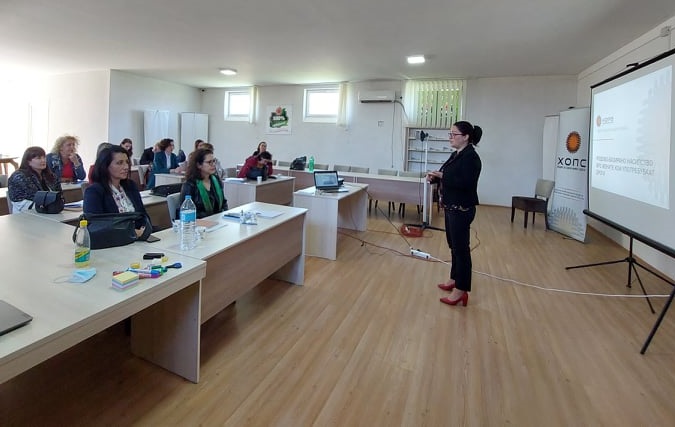
Our member organisation HOPS – Options for Healthy Life Skopje, in the period from the 13th to the 15th April 2022, realized three one-day trainings in three different cities: Strumica, Bitola and Skopje on the topic: “Treatment of women victims of gender-based violence who use drugs“, intended for professionals working with victims of gender-based violence.

On April 13, the training was held in the Therapeutic Community “Pokrov” – Strumica, which was attended by a total of 13 representatives: 8 representatives from the Centers for Social Work in Sveti Nikole, Strumica, Kočani and Štip and 5 representatives from other non-governmental organizations: Educational – humanitarian organization “EHO” – Štip, Youth Club of the Red Cross Strumica, Women’s Action Radoviš, Sky Plus Strumica and the therapeutic community Pokrov Strumica.

On April 14, the training was held at the hotel “Millennium Palace” Bitola, which was attended by a total of 12 representatives, of which: 3 representatives from the Centers for Social Work in Prilep and Resen, 2 representatives from PHI Health Center Bitola and PHI General Hospital Prilep, 1 representative from PHI Psychomedica Bitola and 6 representatives from non-governmental organizations: Center for Human Rights AMOS – Bitola, Via Vita – Bitola, Station 5 – Prilep and Association for Social Action, Prevention Education EASP Prilep.

On April 15, the training was held in the hotel “City Park” Skopje, which was attended by a total of 13 representatives, as follows: 4 representatives from the Centers for Social Work in Skopje, Veles and Tetovo, 2 representatives from PHI General Hospital Kumanovo and 7 representatives by non-governmental organizations: Macedonian Young Lawyers Association, Association for Health Education and Research HERA Skopje, Civic Initiative for Women Sveti Nikole, National Network against Violence against Women and Domestic Violence and the Red Cross of the Republic of Northern Macedonia.

The trainings were led by prof. Dr. Liljana Ignjatova from the Medical Faculty Skopje, Department of Psychiatry and Hajdi Sterjova Simonovic – Executive Director of the Association HOPS. The purpose of these trainings is to sensitize the professionals who work with women who use drugs in cases when they are victims of gender-based violence.

The participants evaluated all three trainings extremely positively, both from the aspect of high quality and level of theoretical and practical knowledge of the trainers, as well as from the aspect of interaction established between the participants and the trainers and the possibility for exchange of information and experiences.

The experience from the held trainings showed us that there is a huge interest in this topic and the need to conduct such trainings in the future.

The trainings are organized by the Association HOPS, supported by the Eurasian Harm Reduction Association (EHRA), as part of the project “Access to comprehensive care for women who use drugs in cases of violence” funded by COVID-19 Response Mechanism (C19RM) of the Global Fund to Fight AIDS, Tuberculosis and Malaria as part of the regional project “Sustainability of services for key populations in Eastern Europe and Central Asia region” (#SoS_project) implemented by the Alliance for Public Health.

HOPS closed their harm reduction center

From the HOPS webpage and the Radio MOF news

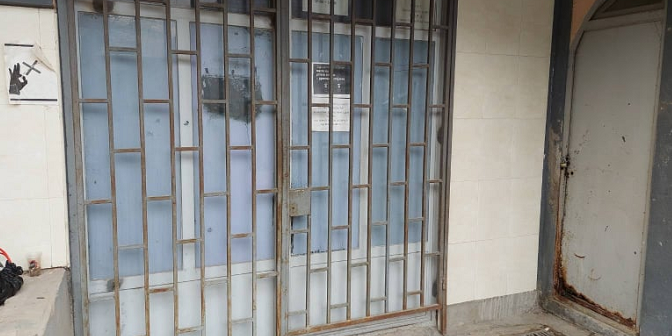
The Association HOPS – Options for Healthy Life Skopje announced that yesterday, on World Health Day, and in just a day before today’s International Roma Day, after 15 years of existence, they had to close the daily harm reduction center Šuto Orizari – a Skopje suburban municipality with a Muslim Romani people majority.

They point out that the reason for closing the day center is the reduction of funds for HIV prevention programs from the national budget.

“This center opened in 2007, with funds from the Global Fund, and from then until yesterday was the only place where Roma who use drugs and their families had easy access to all services that provide HIV prevention, but also harm reduction from drug use. In this center our customers received basic (and often unique) medical care, received information and support for their social and legal problems, could wash their clothes, warm themselves in winter, eat when they are hungry, drink coffee or tea in a friendly, non-stigmatizing and non-discriminatory atmosphere,” said HOPS.

During the coronavirus pandemic, HOPS managed harm reduction centre was one only contact with the system drug users and their families in Šuto Orizari had.

“When they were isolated and had no therapy, when they had health problems, when they survived all forms of violence, including gender-based violence, when they were given criminal warrants for violating curfew because they went out to find food, goods or therapy – they only received help from our team,” states HOPS. In addition, they say that access to health services, which has already been difficult for these people, has multiplied during the pandemic.

The association says that although in 2017 with the transition of funding from the Global Fund of the Government they merged two other centers, just to keep the center in Šuto Orizari. Now, as they say, they have been put in a position to close the busiest and most visited center in Kisela Voda or to close the “much needed” center in Šuto Orizari.

“From today, the lives of people who use drugs in Šuto Orizari and the surrounding area will not be the same, but HOPS will do its best within its financial means to continue its activities for prevention of HIV and other infectious diseases.” said HOPS.

At the same time, they announced that three times a week, their field team consisting of a social worker and a field worker will visit the users in their homes, dwellings or temporary residences, and that twice a week a medical person will visit them with their vehicle.