Entry into force of the EU4Health programme

The new EU for Health program (EU4Health 2021-2027) is the new a vision for a healthier European Union. It is EU’s response to COVID-19, which has had a major impact on medical and healthcare staff, patients and health systems in Europe. EU4Health will make a significant contribution to the post-COVID-19 recovery by making the EU population healthier, supporting the fight against cross-border health threats and boosting the EU’s preparedness and capability to respond effectively to future health crisis, as part of a future strong European Health Union.

By investing €5.1 billion, therefore becoming the largest health programme ever in monetary terms, EU4Health will provide funding to EU countries, health organisations and NGOs

Today’s entry into force of the EU4Health programme follows the Council adoption on 17 March and the vote on the programme by the European Parliament on 9 March.

The EU4Health Programme is an ambitious and dedicated funding programme for 2021-2027 to ensure a high level of human health protection in all Union policies and activities in keeping with the One Health approach. The Programme, proposed by the Commission on 28 May 2020, is the EU’s response to COVID-19, which has had a major impact on medical and healthcare staff, patients and health systems in the EU.  EU4Health is the largest EU health programme ever in monetary terms and will provide funding to EU countries, health organisations and NGOs.

EU4Health aims to:

  • Improve and foster health in the Union;
  • Protect people in the Union from serious cross-border threats to health;
  • Enhance the availability, accessibility and affordability of medicinal products, medical devices and crisis-relevant products;
  • Strengthen health systems, their resilience and resource efficiency.

One of the specific objectives of the program defines that:
in synergy with other relevant Union actions, supporting actions for disease prevention, for health promotion and for addressing health determinants, including through the reduction of damage to health resulting from illicit drug use and addiction, supporting actions to address inequalities in health, to improve health literacy, to improve patient rights, patient safety, quality of care and cross-border healthcare, and supporting actions for the improvement of the surveillance, diagnosis and treatment of communicable and non-communicable diseases, in particular cancer and paediatric cancer, as well as supporting actions to improve mental health, with special attention given to new care models and the challenges of long term care, in order to strengthen the resilience of the health systems in the Union.

Also, actions meeting the objectives include:

Supporting actions to complement measures of Member States in reducing damage to health due to illicit drug use and addiction, including information and prevention.

The first work programme for 2021 will be adopted and rolled out by the Commission following consultation with Member States in the EU4Health Steering Group as set out in the EU4Health Regulation. The programme will be implemented by a new executive agency, the Health and Digital Executive Agency.

The EU for Health program is available in all languages of the EU member countries following this link>>>.
 

New global AIDS strategy

From the UNAIDS press release

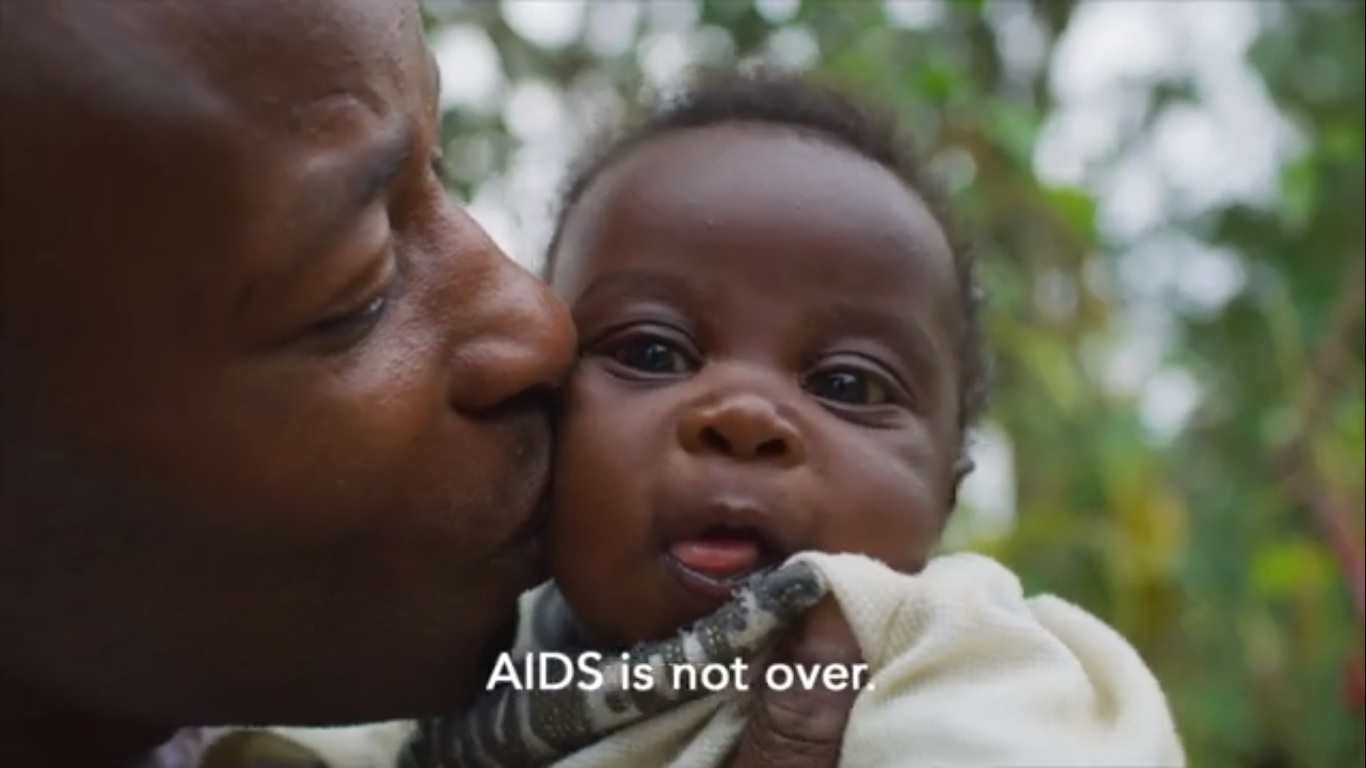
The UNAIDS Programme Coordinating Board (PCB) has adopted by consensus a new Global AIDS Strategy 2021–2026 to get every country and every community on track to end AIDS as a public health threat by 2030. The strategy was adopted by the PCB during a special session, chaired by the Minister of Health of Namibia, held on 24 and 25 March 2021.

The Global AIDS Strategy 2021–2026, End Inequalities, End AIDS, uses an inequalities lens to close the gaps preventing progress to end AIDS and sets out bold new targets and polices to be reached by 2025 to propel new energy and commitment to ending AIDS. The UNAIDS Secretariat and its 11 Cosponsors worked to develop the new strategy, which received inputs from more than 10 000 stakeholders from 160 countries.

The strategy puts people at the centre and aims to unite all countries, communities and partners across and beyond the HIV response to take prioritized action to transform health and life outcomes for people living with and affected by HIV. The three strategic priorities are to:

  1. Maximize equitable and equal access to comprehensive people-centred HIV services;
  2. Break down legal and societal barriers to achieving HIV outcomes; and
  3. Fully resource and sustain HIV responses and integrate them into systems for health, social protection and humanitarian settings.

If the targets and commitments in the strategy are achieved, the number of people who newly acquire HIV will decrease from 1.7 million in 2019 to less than 370 000 by 2025 and the number of people dying from AIDS-related illnesses will decrease from 690 000 in 2019 to less than 250 000 in 2025. The goal of eliminating new HIV infections among children will see the number of new HIV infections drop from 150 000 in 2019 to less than 22 000 in 2025.

HIV prevention for key and priority populations receives unprecedented urgency and focus in the strategy, which calls on countries to utilize the full potential of HIV prevention tools, especially for adolescent girls and young women in sub-Saharan Africa, sex workers, people who inject drugs, gay men and other men who have sex with men, transgender people and people in prison settings.

The strategy is based on human rights, gender equality and dignity, free from stigma and discrimination for all people living with and affected by HIV, and is the result of extensive analysis of HIV data and an inclusive process of consultation with countries, communities and partners.

Achieving the goals and targets of the new strategy will require annual HIV investments in low- and middle-income countries to rise to a peak of US$ 29 billion by 2025. The total resource needs for lower-income- and lower-middle-income countries is around US$ 13.7 billion. Donor resources are mainly needed for low-income and lower-middle-income countries, while in upper-middle-income countries, which account for 53% of the investments needed, domestic resources are the predominant source of funding.

The priority actions for Eastern Europe and central Asia include:

  1. Urgently expand access to combination HIV prevention, including PrEP and harm reduction. This calls for focused steps to ensure a sound, seamless and sustainable transition of prevention programmes from donor to domestic funding. Gender-responsive harm reduction programmes for people (including adolescents and young people) who use stimulant drugs or other new psychoactive substances must be introduced and scaled up.
  2. Close gaps in the testing and treatment cascade by rolling out the treat-all approach fully, with particular attention to linkages to care and rapid initiation of treatment for all people with new or previous HIV diagnosis. Testing and treatment scale-up for key populations must be prioritized.
  3. Institutionalize community-led services into national health care and HIV prevention systems, ensuring that community-led services account for at least 30% of HIV service delivery.
  4. Remove discriminatory and punitive laws, policies and structural barriers (HIV transmission, exposure, barriers to treatment for migrants, laws criminalizing key populations, including adolescents and young people), strengthen the capacity of the judiciary to promote and protect human rights in the context of HIV, and reduce stigma in medical settings, legislative and educational institutions, and law enforcement practices.
  5. Transform harmful gender norms and reduce gender-based violence, including through the use of digital technologies to improve access to services for all in need.

To read the Strategy, please follow this link>>>.


Decades of Delusion

On the 30th of March, to mark the adoption of the UN Single Convention on Narcotic Drugs back in 1961, DPNSEE published a set of visual with the message Decades of Delusion.

We think that despite the continued re-launch of the war on drugs, States have been unable to reduce or contain the presence of psychoactive substances all over the world. The Single Convention, amended in 1972 and the other Conventions adopted in 1971 and 1988, have virtually had no effect on the world drug market-creating widespread and systematic human right violations at the trans-national level.

The full set of visuals is available on our webpage following this link>>>.


Civil Society Perspective on Harm Reduction in Europe

Europe represents one of the regions of the world with the greatest number of harm reduction services.

There is no other region in the world where more than 90% of the countries have at least one NSP or OST site, and more than 90% of the countries reference harm reduction in their national drug policies. Nevertheless, stigma and discrimination against people who use drugs continue to exist, and much is needed in terms of supporting and securing access to services and human rights to all different groups of people who use drugs.

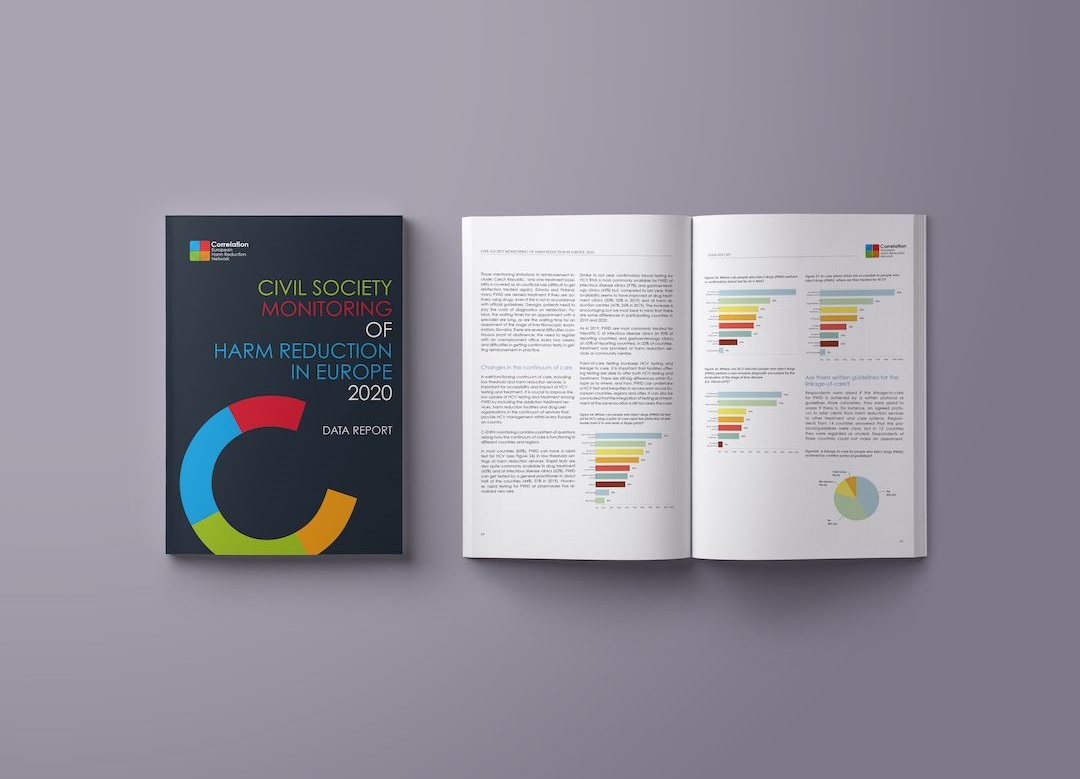
More such data can be exclusively found in the second civil society-led monitoring of harm reduction report The Civil Society-led Monitoring of Harm Reduction in Europe 2020 published by the Correlation – European Harm Reduction Network. With more than one hundred contributors and Focal Points from 34 European countries involved, the report aims to make a necessary and useful contribution to the development of drug policy in the region.

Compared to 2019’s report, the information provided in 2020, brings to the forefront of the situation in particular cities or regions showing the experiences of harm reduction providers on the ground. It also bring direct perspectives of people who use drugs. This significant approach will hopefully provide an understanding of the successes and challenges of drug policy and harm reduction implementation.

To read the Report, please follow this link>>>.

National Consultant Opening with UNMIK/UNODC

The United Nations Interim Administration Mission in Kosovo (UNMIK) invites qualified applicants in the relevant occupational group to apply for the vacancy opening for the National Consultant in Kosovo* for the position of Drug Demand Reduction Evaluation and Reporting Officer.

The Consultant will closely work with the UN Office on Drugs and Crimes (UNODC) Regional Project Manager (Belgrade) and UN Office on Drugs and Crimes (UNODC) Rule of Law (RoL) Advisor (Pristina) in facilitating following tasks:

  1. Communicate with the UNODC Regional Project Manager (Belgrade) and UNODC RoL Advisor (Pristina) to agree on the work plan
  2. Communicate with the International Consultant on the reporting requirements
  3. Prepare the WHO/UNODC substance use disorder treatment facility survey (cultural adaptation and expert proofreading)
  4. Prepare the COVID-19 impact assessment questionnaire on drug treatment services (cultural adaptation and expert proofreading)
  5. Run the approved questionnaires with the selected facilities/organisations to test the applicability and clarity of questions (cognitive/pilot testing)
  6. Modify the questionnaire based on the received comments from testing phase
  7. Facilitate the implementation of surveys with treatment facilities and organisations (nominated by the Ministry of Health),
  8. Provide statistical analysis of collected data
  9. Submit the processed data along with the narrative (in English language) to International Consultant for further processing

The deadline for applications is 02 April 2021.

To read the Terms of reference follow this link>>>.


Budget Advocacy Guide

From the HRI webpage

How money is collected and distributed through public budgets influences the lives of millions of people in every country in the world. Those decisions might ensure food and shelter for many, or deprive others from essential healthcare services. Budget advocacy, which is a tool to influence those decisions, can make an impact on millions of lives.

Essential healthcare includes harm reduction services for people who use drugs. These services – such as needle and syringe programmes (NSP), opioid agonist therapy (OAT), drug consumption rooms (DCRs), overdose prevention with naloxone, and drug checking – protect against HIV, TB and hepatitis C (HCV) and save lives. Not only are they effective, they are cost-effective and cost-saving, and they have a positive impact on individual and community health.

Yet, the provision of these services is critically low. Only 1% of people who inject drugs live in countries with high coverage of both NSP and OAT. The harm reduction response to stimulant use remains underdeveloped, drug checking services are scarce and DCRs only formally operate in 12 countries, all of them located in the Global North. In 2020, only 15 countries permitted peers of people who use drugs to distribute naloxone.

Meanwhile, HIV infections among people who inject drugs continue to rise, accounting for almost half of new infections in Eastern Europe and Central Asia, and the Middle East and North Africa in 2019. Prevalence of HCV among people who inject drugs is 50-times higher than among the general population, overdose deaths have skyrocketed in many countries around the world and stimulants use in Asia and sub Saharan Africa is increasing.  Despite the fact that many low- and middle-income countries (LMICs) include harm reduction in their national policy documents, few of them actually invest domestic resources in these life-saving services, even where the need is great. This is often due to the criminalisation of people who use drugs, stigma and discrimination. At the last count, only US$188 million was invested in harm reduction in LMICs – just over one tenth of the US$1.5 billion UNAIDS estimates is required for an effective HIV response among people who inject drugs. The majority of this funding comes from international donors.

The Harm Reduction International published a new resource for harm reduction advocates. This guide provides civil society and communities representatives with an introduction to budget advocacy and some tools and strategies to support advocacy for sustainable harm reduction funding.
To read the Guide, follow this link>>>.


A great insight into the new EU Drugs Strategy

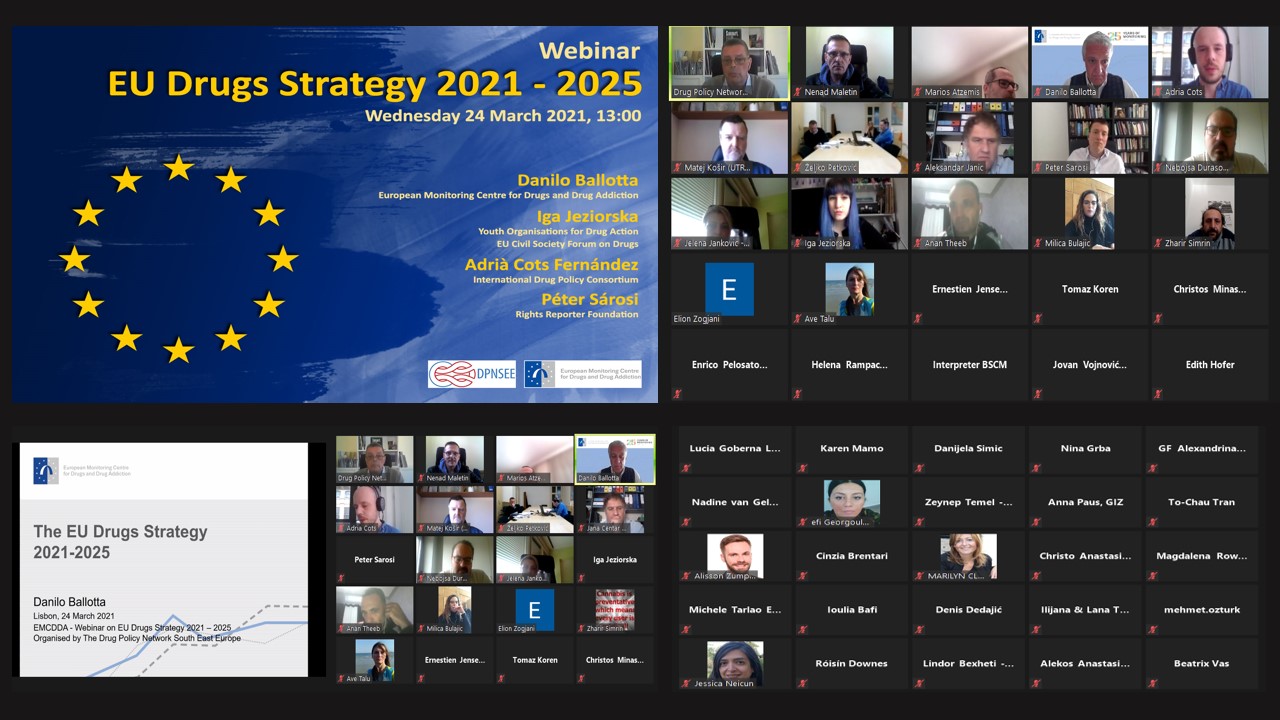
DPNSEE hosted the Webinar on EU Drugs Strategy 2021 – 2025 on Wednesday 24 March 2021. The Webinar was supported by the European Monitoring Centre for Drugs and Drug Addiction (EMCDDA).

The webinar was supposed to serve as a source of inspiration to support all those involved process of design, implementation and evaluation of drug strategies.

The EU Drugs Strategy 2021 – 2025 was presented by Danilo Ballotta, Coordinator – Institutional relations at the EMCDDA (link to Danilo’s presentation>>>).

Iga Jeziorska, from Youth Organisations for Drug Action, Chair of the Working Group on the EU Action Plan at the EU Civil Society Forum on Drugs (link to Iga’s presentation>>>) and Adrià Cots Fernández, Research and Advocacy Officer, International Drug Policy Consortium spoke about the civil society involvement in the process of designing the Strategy.

A more critical view on the Strategy was offered by Péter Sárosi from the Rights Reporter Foundation (link to Péter’s presentation>>>).

Discussions in three separate discussion rooms followed on three main pillars of the Strategy: Reducing supply (facilitated by Željko Petković, Assistant Director, Service for Combatting Drug Abuse at the Croatian Institute of Public Health), Reducing demand (facilitated by Matej Košir, Deputy Chairperson, Vienna NGO Committee on Narcotic Drugs, UTRIP Institute, Slovenia) and Harm reduction (facilitated by Marios Atzemis, DPNSEE Board member, European AIDS Treatment Group Greece).

More than 70 representatives of governmental organisations, both on national and local level, academia, civil society organisations, international organisations and donor community participated.

The Webinar offered a comprehensive and interesting insight into the Strategy and caused an interesting discussion and exchange of views.

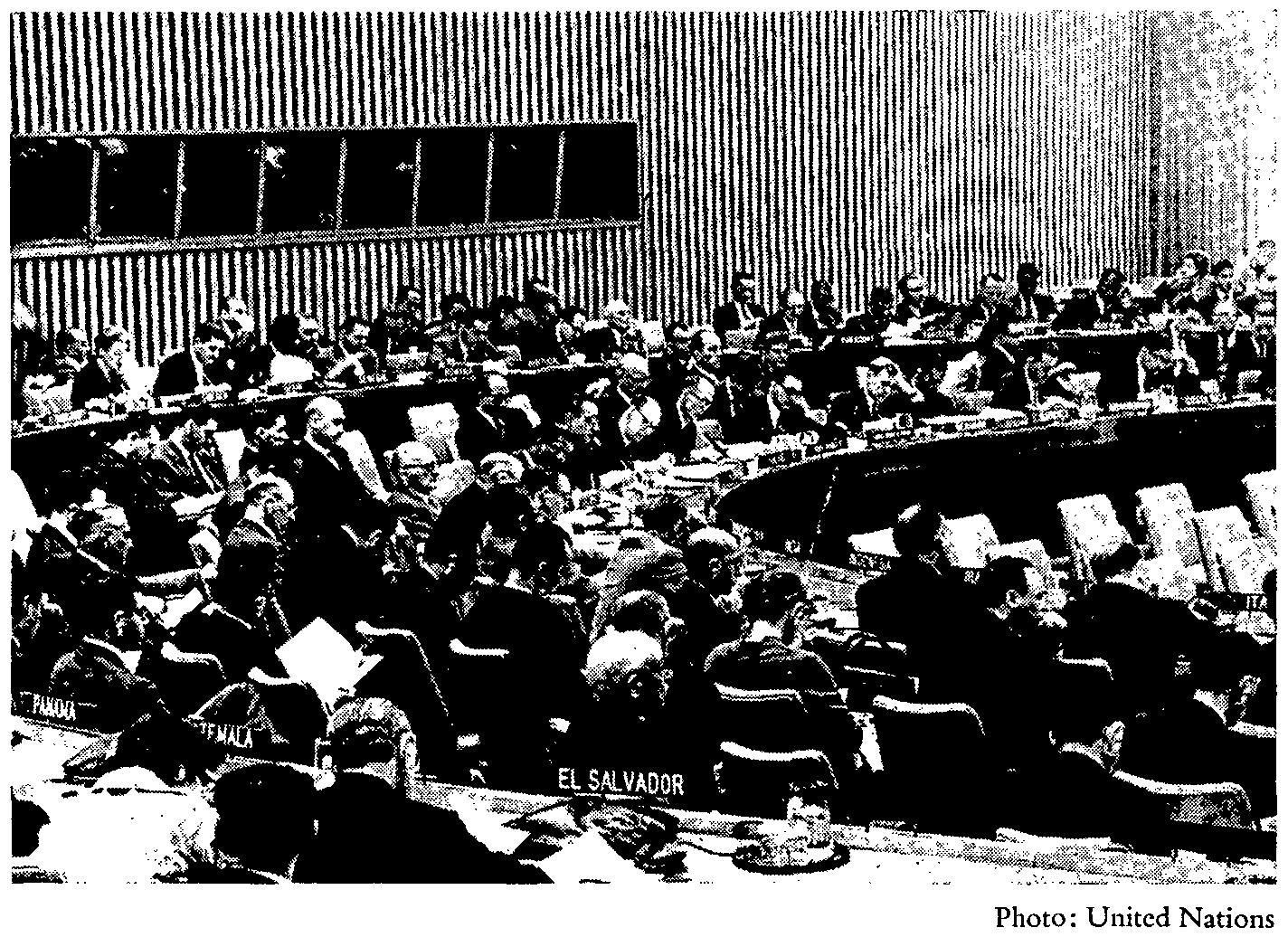
The 1961 Single Convention on Narcotic Drugs: Sixty Years of an Epic Fail?

In 1961, the Member States of the United Nations set themselves a goal to eliminate illegal opium production by 1979 and that of cannabis and coca by 1989. In 1998, they proclaimed to be ready to achieve a world without drugs within 10 years.

Meanwhile, the use of illicit substances has increased at twice the rate of the world population, and today production and trafficking of drugs are completely out of control.

Sixty years of prohibitionist policies and the War on Drugs have caused more damages than those caused by the substances themselves in sanitary, social, criminal, environmental and economic terms.

Science for Democracy organises a webinar on 30 March, from 6 to 8 pm CET to mark the 60th Anniversary of the adoption of the 1961 UN Single Convention on Narcotic Drugs.

The webinar will address the historical background of the UN Conventions on narcotics and will look at the future of drug policy with experts and activists from around the world.

To register, please follow this link>>>.


Guide to Buying Marijuana Online in 2021

The recreational use of cannabis was legalized in Canada on 17 October 2018. It is legal for both recreational and medicinal purposes.

As of January 2019, online sales of cannabis for recreational use were well underway across Canada, via the provincial or territorial governments. Most provinces also had storefront operations selling cannabis, either operated by the government or private enterprise. The number of retailers is likely to remain limited, largely due to insufficient supply of legal cannabis from licensed producers.

Mom Canada (Mail Order Marijuana) are one of the earliest online dispensaries that sell quality medical and recreational cannabis products in Canada. The have been shipping their top quality THC and CBD weed edibles, seeds, treats and other goodies to our Canadian customers for quite some time now.

Mom Canada published their Complete Guide to Buying Marijuana Online in 2021.

The Guide is available following this link>>>.

For more information, contact Laura Minor – laura@collaborationmail.com.