New Psychoactive Substance use in Eastern Europe

From the EHRA webpage

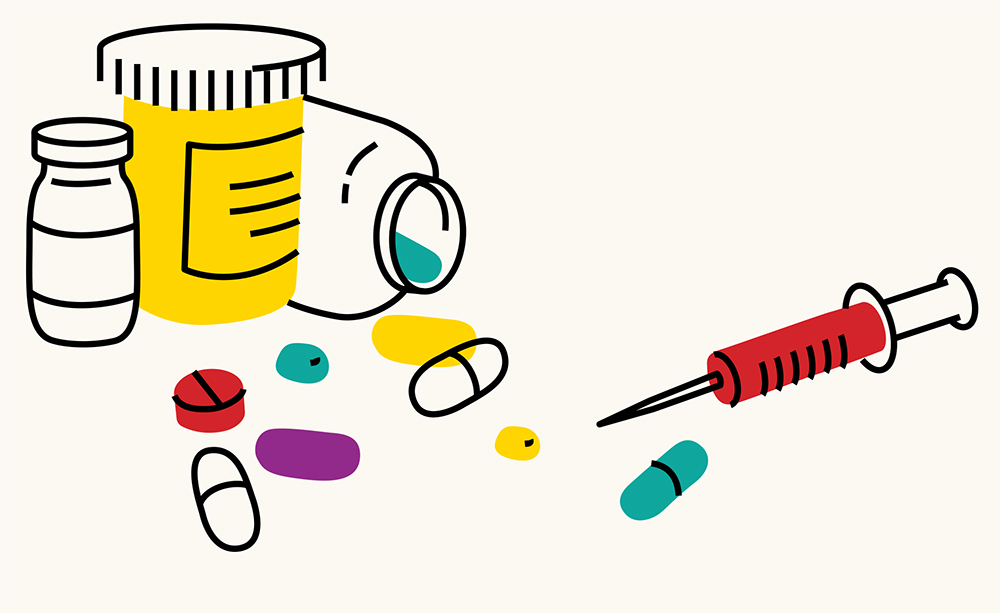
The phenomenon of new psychoactive substances (NPS) started decades ago with the growth and production of drugs that replicate the effects of controlled drugs (such as amphetamines, cocaine, cannabis and heroin) but avoid legislative control based on different chemical structures.

In recent years, the increasing use of NPS has led to new threats for health of people who use drugs (PWUD) – including overdose, psychotic reactions, high HIV risks due to multiple injections and increased number of sexual contacts. However, in many countries service providers such as harm reduction, drug treatment programs and ambulance services are not prepared to provide PWUD with quality support and counselling to reduce risks of NPS.

In the Central and Eastern Europe and Central Asia (CEECA) region the situation with NPS is truly alarming and has become one of the major challenges for the national public health systems, local NGOs, communities PWUD.

The Eurasian Harm Reduction Association (EHRA) in partnership with School of Law, Swansea University undertook the project “New Psychoactive Substance Use in Moldova, Belarus, Kazakhstan, Kyrgyzstan, Georgia, and Serbia” to generate a more accurate picture of the use of new psychoactive substances (NPS) and to assess harm reduction and law enforcement responses to the emerging issues related to use of NPS. Results from this project will supplement scarce international data on the use of NPS in these countries, present a more accurate picture of their use, and provide information to national civil society organizations (CSOs) for political advocacy.

Irena Molnar, a researcher from the non-governmental organization Re Generation (the only CSO that conducts activities aimed at dealing with NPS in Serbia, DPNSEE member organisation), prepared the report for Serbia, the only country involved in the project from South East Europe. Here is a brief overview of it:

The appearance of NPS in Serbia is not a new phenomenon, but their market share is very small. NPS have been talked about for a whole decade, although scientific research and answers to their appearance in the form of special services aimed at ensuring the health and well-being of users, but also the whole society, have not progressed at all.

Among other things, the report examines in detail the actions taken by the state in the context of this issue and formulates recommendations for improvement. For example, in order to improve the response to problems related to the emergence and use of NPS, greater state involvement is needed in terms of adapting to rapid market changes. This means not only putting substances on the banned list, for which Serbia is very up to date, but also improving the entire system.

To read the reports, follow this link>>>.
 

Joint input into the Global Fund Strategy Development from CEECA region

On September 1st the document named “Joint input into the Global Fund Strategy Development from key affected communities and civil society from CEECA region” was send to the Global Fund in a response to an earlier invitation from the Global Fund to join the Open Consultation to Inform the Development of its new Post-2022 StrategyStrategy.

Discussions were organized by the Eurasian Harm Reduction Association (EHRA) and involved key regional networks that unite key affected communities and civil society organizations working in the Central and Eastern Europe and Central Asia (CEECA) region. Initial focus-group discussion was held on June 25th during the Regional Partners’ coordination call organized by the Regional Civil Society and Community Support, Coordination and Communication Platform – Eastern Europe and Central Asia (EECA).

The resulting draft document was circulated for comments during August 2020 among the leaders of the following nine regional networks and organizations of civil society and key affected communities that unite hundreds of national community-based entities as well as civil society groups in 29 countries of the region:

  • Eurasian Harm Reduction Association (EHRA)
  • Eurasian Coalition on Health, Rights, Gender and Sexual Diversity (ECOM)
  • TB Europe Coalition (TBEC)
  • Center for Health policies and Studies (Center PAS)
  • Alliance for Public Health (APH)
  • Eurasian Key Populations Health Network (EKHN)
  • AFEW International
  • Regional Expert Group on Migration and Health
  • Sex Workers’ Rights Advocacy Network (SWAN)
  • Eurasian union of adolescents and young people Teenergizer

 You may find the resulted document following this link: https://eecaplatform.org/en/joint-input/.

Open letter on the proposed EU Drugs Agenda

A sign-on letter of the International Drug Policy Consortium’s (IDPC) members, raising our very serious concerns regarding the new EU Agenda and Action Plan on Drugs, recently published by the European Commission was prepared and sent to the German presidency of the EU Horizontal Working Party on Drugs.

We have serious concerns regarding both the process for its development as well as with the substance of the document and urge the German Presidency to propose to the EU Horizontal Working Party on Drugs (HDG) that this draft cannot be accepted, and to outline an appropriate and inclusive strategic development process for the next EU drugs strategy.

The new EU Agenda proposes a drastic and negative change in EU drug policies that could also end up impacting funding priorities and national policies.

  • It puts a disproportionate focus on supply control,
  • It deprioritises public health and harm reduction,
  • It reduces the role of civil society and people who use drugs
  • And it risks weakening EU support for balanced, evidence-based, and rights-compliant drug policies in global drug debates.

The 2021-25 EU Drugs Agenda appears to be the result of a hasty, opaque and non-participatory policy-making process, and represents a drastic departure from agreed EU policies. It also comes within a deeply troubling stigmatising frame, as it was published in a press release together with EU strategies on child abuse and firearm trafficking.

The key flaws in the draft Agenda we identified include:

  • Losing the balanced approach
  • Deprioritising human rights and public health
  • Dropping support for key international documents
  • Reducing the space for civil society and people who use drugs
  • Weakening the external dimensions of drug policy
  • Deprioritising scientific evidence
  • A stigmatising document

The letter has now been sent to Germany as the Council Presidency, inviting them to take political leadership and encourage the HDG to reject the draft proposed by the European Commission.

An advocacy campaign follows. The first event is the meeting of EU Member States on Wednesday 9 September 2020! We encourage you to share the letter with your government contacts, so that they are aware of our concerns ahead of this important meeting.

The letter is available following this link>>>. Don’t hesitate to distribute it freely.


5th harm reduction conference postponed

The Fifth European Harm Reduction Conference, planned for 4 to 6 November 2020 in Prague, Czechia, is finally postponed.

The organiser of the Conference Correlation – European Harm Reduction Network made a lot on preparations, including exploring different options for holding it. Unfortunately, they had to postpone it for the next year. Here is their message:

In regard of the still unstable situation around COVID-19 and our discussions with main partners, we decided to postpone the conference to 2021. We waited as long as possible for this decision because we think face to face meetings are crucial and important also under this threat, but the disadvantages are too strong to neglect.  

We aim to organise the meeting at the earliest (safe) opportunity in 2021 and come back to you with more information soon. We hope you continue to stay with us during the new process of preparations.


Call for nominations

The Robert Carr Fund is pleased to announce a call for nominations for both International Steering Committee Civil Society Members and Program Advisory Panel Members
 

ISC Civil Society (CS) Members

The ISC civil society members are elected in their individual capacity, and do not formally represent particular constituencies or organizations. However, they are encouraged to consult with and draw upon the skills, knowledge and experience of their respective constituencies or organizations. There is on the International Steering Committee an equal number of seats for civil society members and donors. The number of civil society members enables a proper mix that reflects different types of networks, inadequately served populations and regions.

New Members will be nominated through an open call for nominations. The selection criteria focus on diverse representation and gender balance, to ensure that there is a strong representation from high HIV burden countries and inadequately served populations, including people living with HIV.

For more information on the membership and how to apply, please check out the RCF website.


Program Advisory Panel (PAP) Members

The Program Advisory Panel (PAP) reviews grant proposals and makes recommendations for funding to the ISC, and also provides on-going programmatic advice to the Robert Carr Fund about opportunities for funding, grantee capacity building and technical support, and monitoring and evaluation.

PAP members will be nominated through an open call for nominations. The nominations will be reviewed and comparatively scored by a subcommittee of members of the ISC. The ISC decides on a final list of PAP members. The Chair and Vice-Chair will be nominated by majority vote by the PAP at the beginning of each three-year governing term. The ISC appoints the PAP Chair and Vice-Chair.

For more information on the membership and how to apply, please check out the RCF website.


Deadline for applications is 20 September 2020.

Is the new EU Drugs Agenda a disappointment?

The European Commission has published draft of its new EU drug strategy (now called the Drugs Agenda), which is part of a wider Security Union strategy entitled “Delivering on a Security Union: initiatives to fight child sexual abuse, drugs and illegal firearms.”

Péter Sárosi, the executive director of the Rights Reporter Foundation, sees this document as “a disappointment for civil society organisations that have been advocating for a sensible, balanced approach in drug policies. He listed 4 reasons for this statement:

  1. War on Drugs language & framework
  2. Not reflecting some key evaluation findings – and the reality
  3. Lack of measurable indicators
  4. Limited civil society involvement

Read the full article at Drug Reporter following this link>>>.

HIV Research for Prevention Conference

The International AIDS Society (IAS) has decided that, in light of the COVID-19 pandemic, the HIV Research for Prevention Conference (HIVR4P) will be held virtually.
The conference, now named HIVR4P // Virtual, will take place over four days: Wednesday, 27 January 2021, and Thursday, 28 January, and then will continue on Wednesday, 3 February, and Thursday, 4 February.

HIVR4P // Virtual will enable delegates to access the latest in biomedical HIV prevention research and implementation, presented in a new format and accessible from around the world. The conference will focus on today’s fast-changing HIV prevention paradigm, incorporating cutting-edge science on COVID-19.

The decision was informed by guidance from leading global health authorities and in view of the situation in South Africa, where the conference was originally set to take place.

While IAS regret losing the personal contact that has always been an important part of this conference, they are excited to offer global access to HIVR4P // Virtual engaging and innovative programme.

The review of submitted abstracts and scholarship and fellowship applications received to date continues without change. A new reduced fee structure for delegates will be announced in October and registered delegates will be contacted directly with further information. More updates and details will follow in the coming months.

To get more information about the Conference follow this link>>>.

New ties, new opportunities

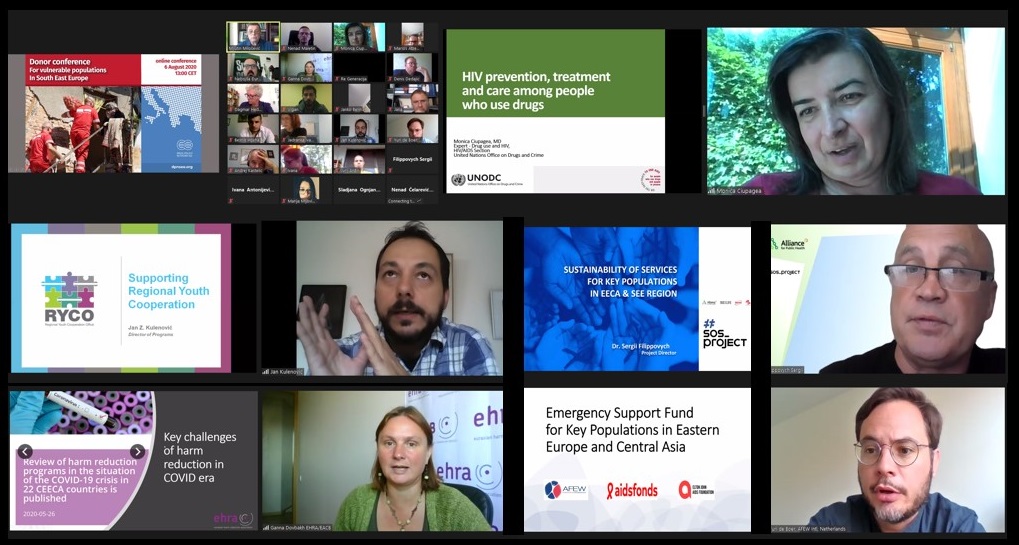
DPNSEE hosted the Donor conference for vulnerable populations in South East Europe on Thursday 6 August 2020. The aim of the Conference was to present the needs and potential projects of vulnerable populations in South East Europe and establish better communication, coordination and cooperation between service providers and public and private funding programmes.

The Conference included plenary presentations from the region and donors and work in two separate discussion rooms: Sustainability of services for vulnerable populations and Emerging needs of key populations.

47 representatives of civil society organisations, international organisations and donor community participated.

We hope to produce and distribute the report from the Conference in the next few days.

The presentations from the Conference are ready to download:

  • Monica Ciupagea, Expert – Drug use and HIV, HIV/AIDS section, United Nations Office on Drugs and Crime: HIV prevention, treatment and care among people who use drugs following this link>>>.
  • Jan Zlatan Kulenović, Director of Programs, Regional Youth Cooperation Office (RYCO): Supporting Regional Youth Cooperation following this link>>>.
  • Sergii Filippovych, Project Director, Alliance for Public Health, Ukraine, coordinator of the regional #SOS_project supported by the Global Fund to Fight AIDS, Tuberculosis and Malaria: Sustainability of services for key populations in EECA & SEE Region following this link>>>.
  • Ganna Dovbakh, Executive Director, Eurasian Harm Reduction Association: Key challenges of harm reduction in COVID era following this link>>>.
  • Yuri de Boer, Senior Program Manager, AFEW International: Emergency Support Fund for Key Populations in EECA following this link>>>.


Transnational Tentacles

From the Global Initiative webpage

While the Western Balkans is often portrayed as a hotspot of illicit activity, the region is a relatively small market for organized crime.  The big money is made elsewhere. This report shows why and how groups from the Western Balkans have become engaged in organized crime abroad, particularly in South Africa, Turkey, Australia as well as in some countries of Latin America and Western Europe.

The report shows that criminal groups from the Western Balkans operating abroad are modern, dynamic and entrepreneurial. They have demonstrated an ability to adapt and innovate and use technology to their advantage: for example, using encrypted forms of communication; exploring new routes and means of trafficking, such as ‘narco-jets’; and laundering their money through cryptocurrencies, offshore havens and into their home countries.

The report suggests that there is not a ‘Balkan Cartel’ per se, although groups from the region sometimes work with each other, and there are also instances of multi-ethnic groups.

The report calls for more effective law enforcement cooperation, tracking and seizing of assets, and the sharing of information, not least since perpetrators tend to use multiple identities. It also stresses the need to reduce demand for the goods and services provided by criminal groups from the Western Balkans.

To read the Report in various languages follow these links

English>>>

Albanian>>>

Macedonian>>>

BHCS>>>


An expert on Technical support services for NGOs and stakeholders needed

СO 100 PERCENT LIFE, in the framework of the project “Sustainability of services for key populations in the region of Eastern Europe and Central Asia” with financial support from the Global Fund to Fight AIDS, Tuberculosis and Malaria, is looking for an expert on

Technical support services for NGOs and stakeholders in Serbia, Bosnia and Herzegovina, Montenegro, Romania and Northern Macedonia on budget advocacy, implementation of transition and development plans, implementation of policies and mechanisms for providing services for treatment, prevention and support of HIV patients, related to the SoS project tasks, as well as providing general administrative support.

Applicants must provide their CV and completed forms that are in the application. The information in the documents should clearly reflect the competencies of the candidate required to perform these tasks. The price offer includes the cost of services and all expenses that are necessary to complete the tasks.

The announcement and tender documentation can be found in the application or following this link>>>.

Deadline for submission of proposals is 13. 08. 2020 ’till 17:00 (UTC+02:00). Questions about the tender are accepted ’till 11. 08. 2020 ’till 17:00 (UTC+02:00).