Webinar on decriminalisation

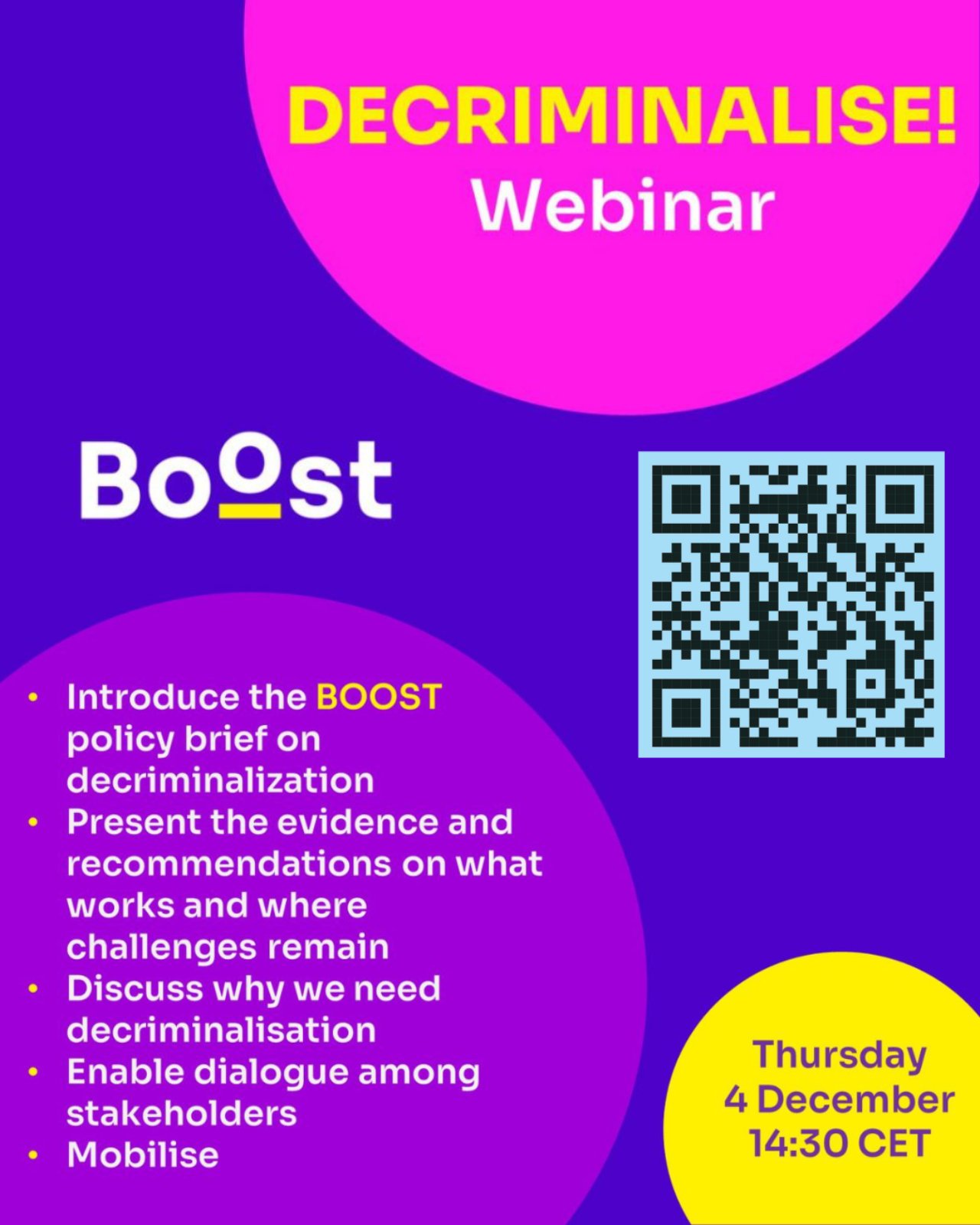
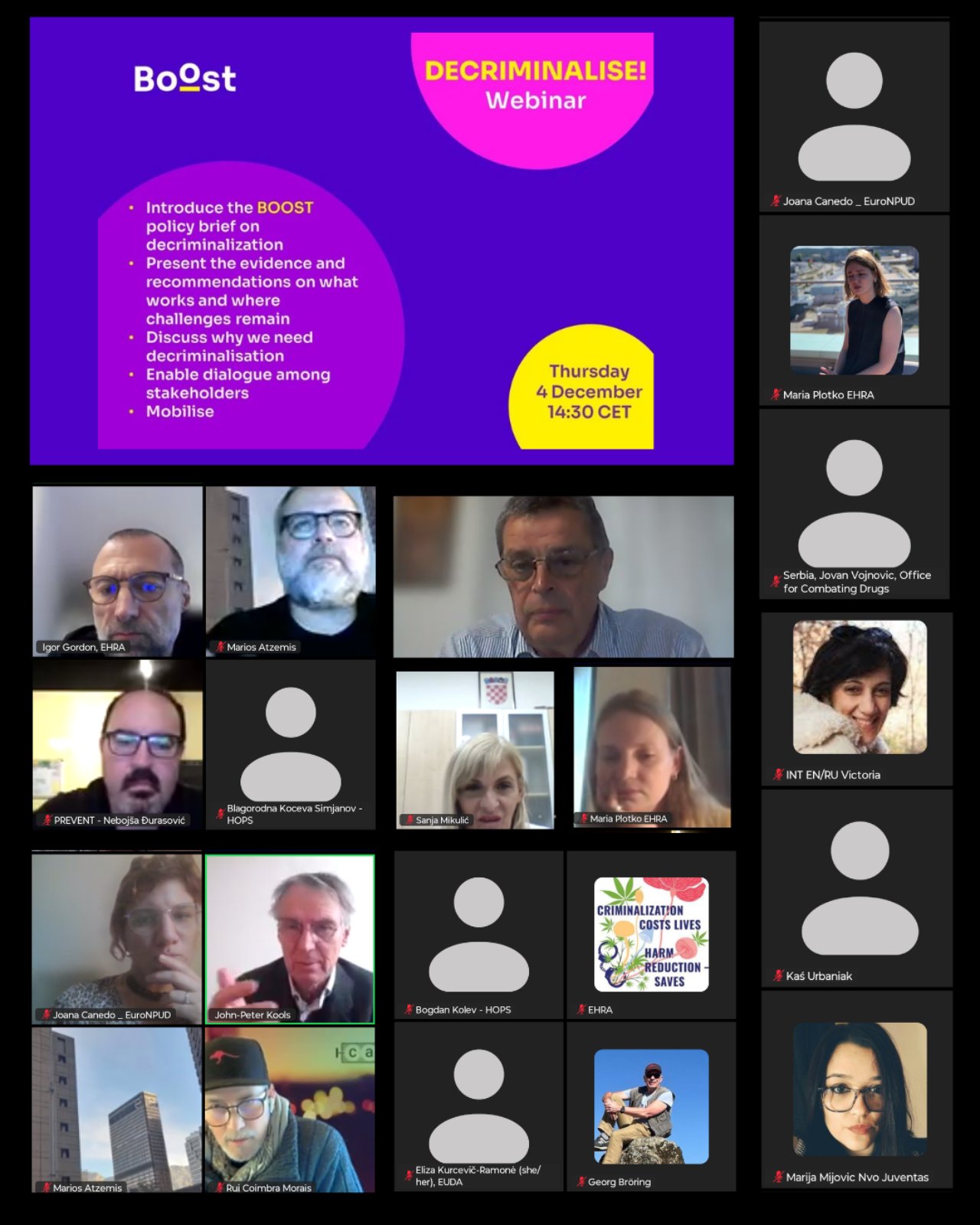
Policy Webinar under the BOOST Project

4 December 2025 | 14:30–16:00 CET

Registration link | https://us02web.zoom.us/j/89055986872

Languages: English and Russian


Background and Rationale

Decriminalisation is defined as the removal of criminal sanctions for certain activities related to drug use and possession for personal use. Several actors in the field of drug policy have indicated that a punitive approach is counterproductive to achieving the health and welfare of humankind. There is no evidence that criminalisation of use, possession for personal use, and other related behaviours has positive impacts in terms of reducing both drug demand and supply.

Purpose and Objectives

  • Introduce the BOOST policy brief on decriminalisation to stakeholders across Europe: policymakers, community-led organisations, practitioners, funders
  • Present the evidence and recommendations on what works and where challenges remain when discussing about and adopting decriminalisation
  • Discuss why we need decriminalisation and what arguments can help and how to achieve this goal?
  • Enable dialogue among stakeholders decriminalisation: barriers, enablers, local contexts
  • Mobilise institutions, experts, communities and civil society networks to use the brief as an advocacy tool

Programme

Time Segment
14:30 – 15:37 Opening & overview – Milutin Milošević, DPNSEE Executive Director, Moderator
14:38 – 14:45 The BOOST project: General information and advocacy interventions – Igor Gordon, Program Team Lead, EHRA
14:45 – 14:55 The BOOST policy paper “Decriminalize! drug use and possession for personal use” – Marios Atzemis, DPNSEE Board member
14:55 – 14:05 Presentation of the new documents related to decriminalisation and human rights violations – Ganna Dovbakh, Executive Director and Maria Plotko, Senior Program Officer, EHRA

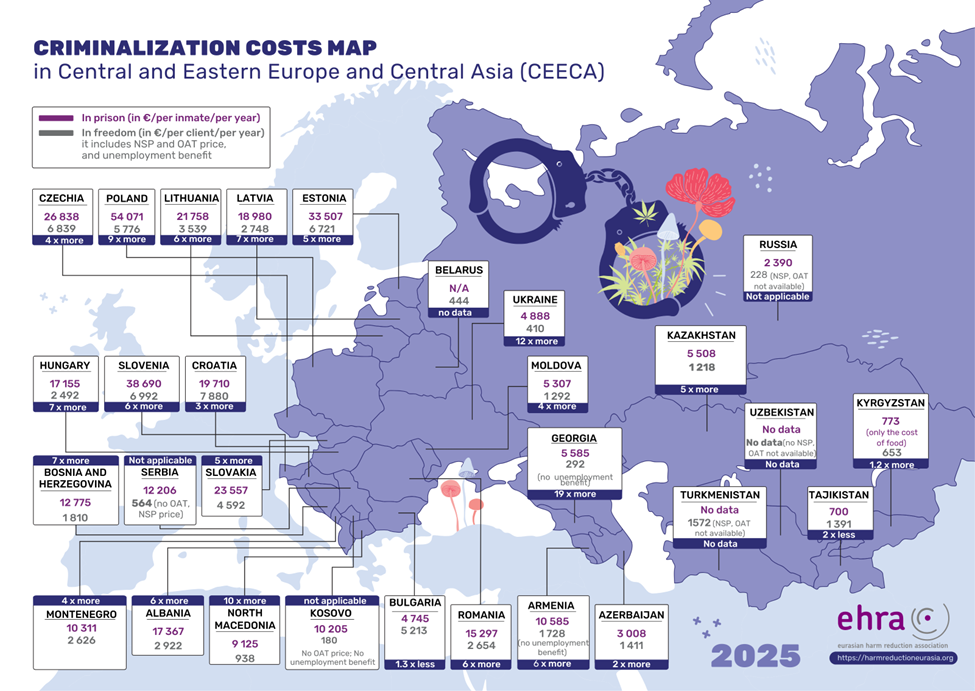
·      Updated Criminalisation Cost country profiles and regional comparison for CEECA

·      Regional CEECA report on CESCR rights violations of people who use drugs

15:05 – 15:15 Experts from countries implementing decriminalisation – John-Peter Kools, Trimbos institute, The Netherlands
15:15 – 15:22 Experts from countries implementing decriminalisation – Sanja Mikulić, Institute for Public Health, Croatia
15:23 – 15:30 Experts from countries implementing decriminalisation – Joana Canêdo, Portugal
15:30 – 15:38 Experts from countries implementing decriminalisation – Dr. Jana Michailidu, Czechia
15:40 – 15:55 Questions and answers
15:55 – 16:00 Closing – Ganna Dovbakh, EHRA Executive Director and EU Civil Society Forum on Drugs Chairperson


Struggle and Hope Beyond the Numbers

On 25 November 2025, the Eurasian Harm Reduction Association (EHRA), together with Correlation – European Harm Reduction Network (C-EHRN) and the Drug Policy Network South East Europe (DPNSEE), hosted a webinar to launch the new regional report “Beyond Numbers: Harm Reduction across South-Eastern Europe” (prepared by Irena Molnar et al) within the framework of the EU-funded BOOST project. The discussion brought together regional experts, practitioners, and community voices to examine the current state of harm reduction across 11 countries in South-Eastern Europe, with a strong focus on the Western Balkans.

Why “Beyond Numbers”

Speakers highlighted that regional data remain uneven, fragmented, and often outdated, making evidence-informed planning and advocacy difficult. The report responds to this gap by combining available quantitative sources with qualitative insights from service providers, peers, and people with lived/living experience, translating “coverage” into the realities of access, continuity, and quality on the ground.

Key findings presented from the report

In her presentation, Irena Molnar outlined a new comparative framework developed for the report, assessing each country across four domains:

  • Service provision (e.g., OAT/OST, NSP, HIV/HCV testing, overdose prevention, prison-based interventions),
  • Policy and financing (legal and funding environment, integration into health systems, community participation),
  • Epidemiology (availability and recency of key indicators), and
  • Data and monitoring (regular reporting, surveillance, transparency).

The findings reveal wide disparities in harm reduction system maturity across the region. While some countries maintain more comprehensive approaches, others face severe service gaps and closures—particularly after the withdrawal of external donor support, with shrinking coverage of needle and syringe programmes (NSP) and outreach in several settings. Across the region, services are frequently concentrated in capitals and larger cities, leaving rural areas and smaller communities with limited or no access. The report also underlines persistent challenges related to stigma and discrimination, weak institutional financing, and insufficient community involvement in policy design.

Country reflections: Slovenia, Bulgaria, North Macedonia

Country representatives echoed the report’s main messages and provided practical reflections:

  • Slovenia noted that strong scores can mask implementation gaps: certain interventions exist “on paper” but remain inconsistently available in practice (e.g., wider access to take-home naloxone; delayed implementation of drug consumption rooms).
  • Bulgaria highlighted progress driven largely by civil society innovation, municipal engagement, and crowdfunding—but warned about fragile sustainability when services depend on a very small number of organisations and lack systematic health-sector funding.
  • North Macedonia described a dramatic reduction in national NSP coverage following donor withdrawal, leaving only limited outreach capacity and uncertainty about continuity—illustrating how funding instability translates directly into increased health risks and reduced access to care.

EU and regional perspectives: future opportunities

On the panel, the European Union Drugs Agency (EUDA) representative recognised major disparities in harm reduction coverage across Europe, including persistent gaps in take-home naloxone availability in parts of the region. EUDA highlighted its role in strengthening evidence and systems through capacity building, training, and improved monitoring, and announced plans to start mapping harm reduction services in the Western Balkans to better understand gaps and inform future programming.

EHRA emphasised that strong language in strategies must be matched by implementation, and pointed to the EU enlargement process as a potential lever to push for sustainable harm reduction and broader health responses in candidate countries. The discussion also acknowledged the difficult broader context—shrinking civic space and shifting political priorities—while stressing the urgency of coordinated advocacy and community-led monitoring.

The webinar concluded with a shared message: harm reduction in South-Eastern Europe continues to survive largely through civil society resilience and community leadership, but sustainable progress requires political commitment, stable financing, and stronger integration of harm reduction into public health systems.

The report is published at the EHRA webpage here>>>.

The report launch event is available online
https://youtu.be/TbkH6KfqHfI


Advocacy in Action

The Drug Policy Network South East Europe hosted the side event “Advocacy in Action: Advancing Comprehensive Health and Harm Reduction Services” at the 68th UN Commission on Narcotic Drugs, held from 10 to 14 March 2025 in Vienna.

This side event was organized with the support of Czech Republic, Pompidou Group, UNITE Parliamentarians Network for Global Health, Correlation – European Harm Reduction Network, Eurasian Harm Reduction Association, European Network Of People Who Use Drugs, Re Generation, Villa Maraini, ISGlobal, Fondazione LILA Milano, Asociación Bienestar y Desarrollo, Free Clinic, Spolecnost Podane ruce, and Knowmad Institute.

The session illustrated key advocacy strategies and actions which highlight successful community-led interventions and policy reforms that address barriers such as stigma, legislative hurdles, and funding gaps.

The speakers presented the BOOST Project 2023-2025 (Katrin Schiffer, Correlation), Advocacy Strategy for Comprehensive Health and Harm Reduction Services for People Who Use Drugs in Europe (Ganna Dovbakh, EHRA), Scaling up community involvement for an integrated, responsive and sustainable Harm Reduction (Ligia Parodi, EuroNPUD), and Decriminalization and regulation (Marios Atzemis, DPNSEE). A recorded message from Hon. Halldóra Mogensen, parliamentarian from Iceland, was presented.

Discussion after the presentations included contributions from Czech Republic, Juventas, and Pompidou Group.

Call for applications for external evaluation

The BOOST project is calling for applications for external evaluation of the project. The evaluation is crucial in assessing the progress of BOOST, the effectiveness of the partnerships, and the overall impact on harm reduction services.

With respect to the scope of work, the external evaluator will:

  • Review relevant project documents (e.g., project proposals, work plans, progress reports, internal M&E database).
  • Conduct interviews with key stakeholders, including project partners, project beneficiaries, peers, mini-lighthouses and mentees, among others.
  • Analyse project progress against the planned outcomes, using data collected by the internal M&E team, including baseline, process, output and outcome indicators.
  • Conduct an outcome harvest to identify policy and practice changes, as well as other relevant outcomes attributed to the project’s actions.
  • Provide an evaluation of the process, including:
    • How effectively the activities were implemented.
    • How well the consortium collaborated and communicated.
    • The overall impact of the project activities on harm reduction services.

If you are interested in applying, please take a look at the Terms of Reference (ToR) and submit a brief proposal outlining your approach to the evaluation and the corresponding budget.


BOOST’s Peer-to-Peer Capacity-Building Webinar Series

As part of the BOOST Project, a series of webinars will be held in November for harm reduction organisations that are currently providing or planning to offer services in the fields of HIV and viral hepatitis.

The webinars aim to enhance the knowledge and skills of community-based and community-led organisations, helping them apply good practice models, tools, and methods to scale up integrated screening, testing, treatment and care for communicable diseases across Europe. Below are the sessions, dates and registration links.

Community-led approaches to HIV/VH/STIs screening, testing, treatment and care for people who use drugs

November 6th, 2024 | 16:00h CET

https://us02web.zoom.us/meeting/register/tZwsd-iqrTwjE9z9iIbtFYOyuWbBspWo6qF-

Optimising data collection: a guide to COBATEST standardised data collection tools

November 13th, 2024 | 16:00h CET

https://us02web.zoom.us/meeting/register/tZcvc-6srT0qE9B6Qb0cjTND6fW9C8s-nROi

Current best practices on community-based HIV/VH/STIs services

November 20th, 2024 | 16:00h CET

https://us02web.zoom.us/meeting/register/tZYrd–sqTkjHNPfQAKCa40Eediiygpyhi-h

Improving linkage to care in harm reduction settings

November 27th, 2024 | 16:00h CET

https://us02web.zoom.us/meeting/register/tZwtf-uhrjIqE9QiGDx6GveFV66wzWfmiQ3m


5-5-5 – We Won’t Be Left Behind!

During the AIDS 2024 Conference (Munich, July 21st-July 25th), the European Harm Reduction Network (Correlation), the European AIDS Treatment Group (EATG) and AIDS Action Europe (AAE), hosted the 5-5-5 Networking Zone at the conference’s Global Village.

The aim of the 5-5-5 zone was to address gaps and solutions in achieving the UNAIDS 2030 95% targets and propose strategies to reach the remaining 5%. It focused on horizontal and integrated approaches and how to address the multiple needs that people from the most affected and inadequately served populations face.

The three organisations arranged a diverse series of talks, networking opportunities, mutual learning sessions, and presentations. A blend of intimately personal life stories and the sharing of research results resulted in an engaging environment over the 5 days of the Global Village.

Each day focused on a different theme: HIV & Mobility, Sex-Positive Approaches, Well-Being and Quality of Life, Drugs and Harm Reduction and Blind Spots in the HIV response.

C-EHRN hosted the day program dedicated to Drugs and Harm Reduction, which included a Round Table on the Advocacy Strategy of the BOOST Project. This event was moderated by Katrin Schiffer (C-EHRN), Ganna Dovbakh (EHRA), Tuukka Tammi (THL), Aleksei Lakhov (EuroNPUD) and DPNSEE Executive Director Milutin Milošević.

Milutin presented advocacy priorities in South East Europe and activities we take in the region, and emphasizes cooperation between four European networks working on drug policy.

Training for local advocacy

Six organisations that will implement local advocacy project that won the support throught a BOOST call for proposals gathered for a workshop in Budapest, Hungary on 13 and 14 June. Workshop aims and objectives were to:

  • Provide a comprehensive understanding of key advocacy concepts and the nuances of advocacy within the harm reduction field.
  • Familiarize participants with the BOOST project’s aims, objectives, and activities, including the Advocacy Strategy.
  • Review and improve local advocacy plans, emphasizing the community’s role in shaping and implementing these plans.
  • Provide tools and resources for the development and implementation of advocacy

Our colleagues from ARAS (Romania) and HOPS (North Macedonia) were among them, together with BerLUN (Germany), HuNPUD (Hungary), R3 (Portugal) and XADUD (Spain).

Besides inputs on the BOOST project, Advocacy, How to engage communities developing and implementing communities, and Media advocacy, participants had the opportunity to present their projects and work with mentors to fine-tune their projects and plans for their implementation.

ARAS plans to use the Electoral Year 2024, which in Romania includes elections on different levels, to ensure long term political support for harm reduction funding at all levels.

HOPS prepared a project to ensure the financial sustainability of Harm Reduction Programs in North Macedonia. It is important because last years the Ministry of Health cut the budget for harm reduction programs by about 40%.

Participants and regional network representatives were interviewed about their advocacy projects by the Right Reporter Foundation, Budapest based organisation that is an expert in video advocacy. The video they shall produce will be disseminated via BOOST project and partners’ communication channels.

BOOST Project Progress and Future Steps

The BOOST Project, running from 2023 to 2025, is nearly halfway through. This was the perfect time for meeting with all project partners to review achievements and plan the remaining project period.

At the partner meeting that took place in Antwerp on 27 – 28 May, Correlation staff, as coordinators of the project, provided an overall overview of the current state of affairs. The picture is very positive: all milestones and deliverables due so far have been achieved, indicating that the project is well on track.

Following this, all work package leaders reported on their respective areas. The first project period focused on collecting and compiling information through monitoring, surveys, and focus group discussions. Now, this information will be translated into follow-up activities such as mentoring programs.

An important element of BOOST – creating awareness and supporting advocacy efforts – will also be a focus in the next project period, supported by intensified communication and dissemination activities.

Overall, meeting with colleagues involved in the project was very inspiring. Participants emphasized that the meeting provided a better overview of the project’s different elements and improved the synergies created by the project.

The meeting concluded with a visit to the local NGO Free Clinic, co-host of the meeting. This was another inspiring experience facilitated by Free Clinic staff and volunteers.


Local grant awarded

The Correlation-European Harm Reduction Network (C-EHRN), the Eurasian Harm Reduction Association (EHRA), the Drug Policy Network South East Europe (DPNSEE), and the European Network of People Who Use Drugs (EuroNPUD) are proud to announce the recipients of grants from the recent call for proposals under the BOOST project. This initiative supports local advocacy efforts aimed at enhancing access to comprehensive, people-centered health and harm reduction services for people who use drugs in European countries.

The awarded organizations, each receiving a grant of €3,000, are:

  • ARAS – Romanian Association Against AIDS, Romania
  • XADUD, Xarxa de Dones que usen drogues (cat) – Network of Womxn Using Drugs (en), Spain
  • HuNPUD – Hungarian Network of People Who Use Drugs, Hungary
  • HOPS-Healthy Options Project Skopje, North Macedonia
  • R3 – Riscos Reduzidos em Rede, Portugal
  • BerLUN – Berliner und internationale Gemeinschaft der drogenkonsumierenden Menschen, Germany

The competition for these grants was notably high, with 22 organizations submitting applications. We are particularly pleased to see an overwhelming interest in the advocacy grant, with nearly half of the applications coming from community groups of people who use drugs. While many applications were of high quality, funding limitations allowed for only six awards.

The selection process was rigorous, with a panel comprising representatives from EHRA, C-EHRN, DPNSEE, and EuroNPUD, who assessed proposals based on their alignment with advocacy priorities, quality, potential impact on harm reduction services, and organizational experience.

These organizations have demonstrated a strong commitment to developing and implementing robust local advocacy plans that align with one or more of the priority areas of our Joint European Advocacy Strategy for 2024-2028. The strategy focuses on increasing political will and financial sustainability for community based and community-led harm reduction, promoting community-driven solutions tailored to diverse needs of people who use drugs, ensuring access to essential health services, and achieving universal access to comprehensive care for people who use drugs.

In addition to financial support, the grantees will benefit from ongoing mentorship, participation in an advocacy training workshop, and assistance in organizing policy dialogue meetings and events at the local level. These efforts are part of the broader BOOST project, funded by the EU, which aims to strengthen the capacity of community-based and civil society organizations in their critical work.


Call for proposals

The Correlation-European Harm Reduction Network (C-EHRN), the Eurasian Harm Reduction Association (EHRA), the Drug Policy Network South East Europe (DPNSEE), and the European Network of People Who Use Drugs (EuroNPUD) are pleased to announce a call for proposals.

This initiative aims to support local advocacy efforts of community-led and civil society organizations in Europe, enhancing access to comprehensive, people-centered health and harm reduction services for people who use drugs in European countries.

Applicants must be based in eligible countries, and proposed activities should align with the advocacy priorities stated in this call.

The Application form should be completed ONLINE.

Awarded grantees will receive ongoing mentorship support, the opportunity to participate in advocacy training, and a small grant of €3,000 for organizing advocacy-related activities, including policy dialogue meetings and events at the local level.

More information and application form are available at the BOOST webpage following this link>>>.