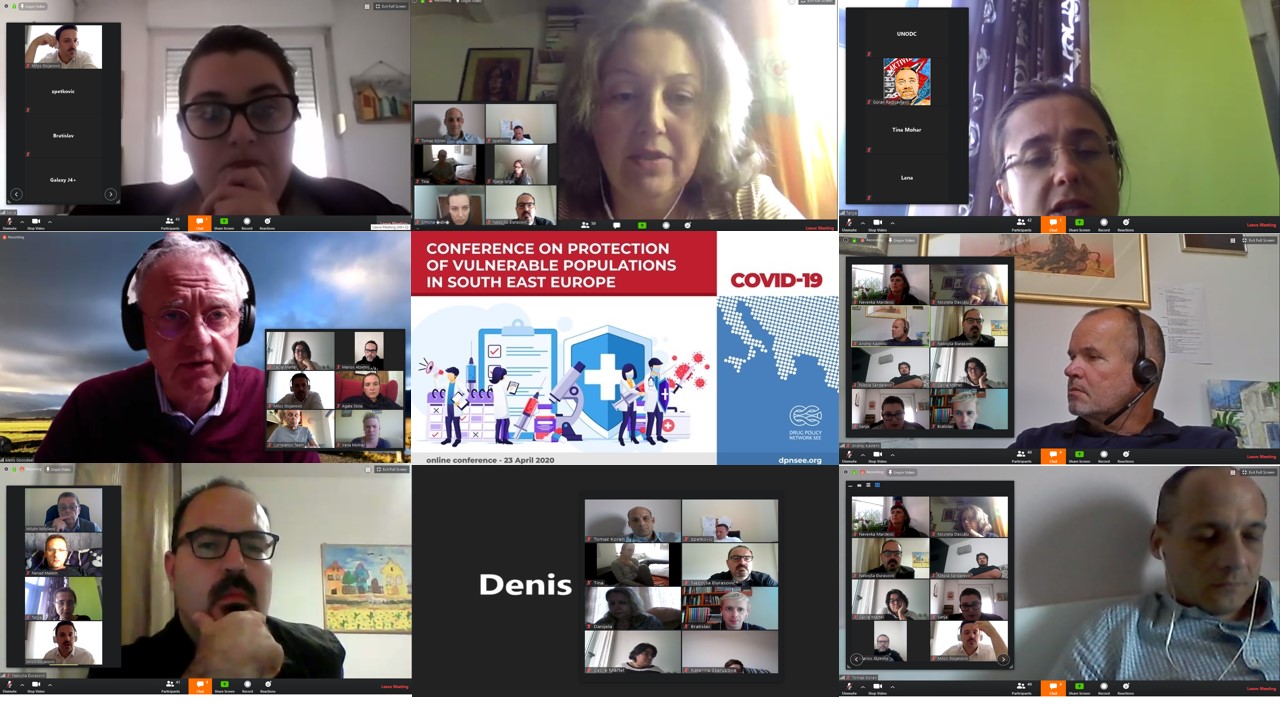
DPNSEE held today the on-line Conference on protection of vulnerable populations in South East Europe, with support of the Service for Combatting Drug Abuse at the Croatian Institute for Public Health and the United Nations Office on Drugs and Crime – UNODC Programme Office in Serbia.
More than 60 representatives of civil society organisations, national drug agencies, international organisations and agencies and donor community participated.
We heard a lot of good stories about work done in the region on supporting vulnerable populations and several interesting ideas for actions to ensure that harm reduction services are sustainable during and after the COVID’19 epidemic.

DPNSEE prepared background documents for the Conference which are available at the recent news on our website>>>.
Here are updated documents, with some fresh information from countries, and the Minutes from the Conference.
- Overview of the situation with coronavirus COVID-19 in SEE with two annexes (available here>>> with both annexes or here>>> as a separate document):
- Annex 1 – Information received from countries of South East Europe during conference calls (available here>>>)
- Annex 2 – DPNSEE activities during the coronavirus outbreak (available here>>>)
Minutes from the Conference are available here>>>.
Presentation from Mr Miloš Stojanović, Regional Project Manager at UNODC, Head of Programme Office in Serbia is available here>>>.


 The International Drug Policy Consortium (



 You can download the Appeal
 In the exchange which the DPNSEE Board had, we expressed concern that the health systems may not have fully in their sight the key populations we are supporting (and people with substance use disorder, especially heroin users, are usually in a weak health conditions), that these populations, being side-lined in the community, may not be well informed about the threat and measures they should take to protect themselves and that our organisations, especially those who provide services to people who use drugs and other connected vulnerable groups should also play they role in overall efforts to fight the problems caused by this epidemic.
 To read the letter that DPNSEE sent to its member organisations