Montenegro: Benchmarking sustainability of the HIV response among Key Populations in the context of transition from Global Fund support to domestic funding

The Eurasian Harm Reduction Association (EHRA) published document “Benchmarking sustainability of the HIV response among Key Populations in the context of transition from Global Fund support to domestic funding” within the framework of the regional project ‘Sustainability of Services for Key Populations in Eastern Europe and Central Asia’. This publication was prepared by Mr. Vladan Golubović, EHRA Consultant

The aim of this analysis is to assess the fulfillment of the commitments given by the Government of Montenegro aimed to ensure the sustainability of the HIV response among KPs in the context of the country’s transition from Global Fund support to national funding. The results of the assessment are expected to be used to assist CSO’s, key affected communities and partners to remain more informed and engaged in the monitoring of the transition process from donor to domestic funding and to thereby advocate for the implementation of activities that will lead to the sustainability of the national HIV response.

This assessment was conducted using the Methodological Guide and Transition Monitoring Tool (TMT) developed by EHRA. A number of national commitments contributing to ensuring sustainability of the HIV response were identified and prioritised and subsequently analysed based on available data, as well as information from key informants. The assessment was conducted and led by two national reviewers with the support of local HIV experts and representatives of affected communities from organisations involved in advocacy and service delivery for KAPs and PLHIV (the national reference group).

The analysis is available following this link>>>.
 

Taking stock of budget advocacy efforts in EECA

The Eurasian Harm Reduction Association (EHRA) presented the mapping report „Taking stock of budget advocacy efforts in Eastern Europe, South-Eastern Europe and Central Asiа“ summarising budget advocacy efforts, funding and impact during the period 2018-2021 in CEECA countries. The focus of the assessment is on the role of civil society in budget advocacy, while acknowledging that government leaders, UN and technical partners play important roles as well. The assessment describes key budget advocacy initiatives and HIV donor support for them.

The report zooms in the four result areas of advocacy: civil society capacity to advocate; influencing HIV funding levels from national and local public sources; increasing efficiencies in spending; and contracting and funding for NGOs to deliver services. Without offering a comprehensive review, one of the final sections of the report shines light on efforts to influence budgets beyond HIV including in the fields of TB and health systems.

Regional overview is based on eight country case studies (including three fro Sout East Europe) exploring national experiences with budget advocacy, emerging challenges, and best practices. Kyrgyzstan, Moldova and Ukraine (lower middle-income countries), Georgia, Kazakhstan and Montenegro (upper middle income countries receiving donor support), and Bulgaria and North Macedonia (post-Global Fund countries) were selected for analysis.

To keep the mapping manageable and focused, this assessment has not attempted to assess neither the impact of the ongoing COVID-19 pandemic on HIV budget advocacy and fiscal space for health financing nor potential savings from reducing criminalization of population behaviours.

Analytical report «Taking stock of budget advocacy efforts in Eastern Europe, South-Eastern Europe and Central Asiа» has been prepared by EHRA in partnership with Open Society Foundations, The Global Fund to Fight AIDS, Tuberculosis and Malaria Sustainability, Transition and Efficiency Strategic Initiative and EECA regional team in cooperation with ECOM – Eurasian Coalition on Health, Rights, Gender and Sexual Diversity and Eurasian Women’s Network on AIDS (EWNA) as partners in the Eurasian Regional Consortium withing project “Thinking outside the box: overcoming challenges in community advocacy for sustainable and high-quality HIV services” supported by the Robert Carr Fund for civil society networks. Information was provided by country, regional and international partners. We are grateful to all our partners, members of Regional Advisory Group on Sustainability, interviewees and reviewers for their time and effort in work on this report.

To read the report, follow this link>>>.


Fulfilment of HIV-related sustainability commitments given by the Government of Serbia

The Eurasian Harm Reduction Association (EHRA) have published the report Republic of Serbia: Benchmarking Sustainability of the HIV Response in the Context of Transition from donor to domestic funding.

The aim of this analysis is to assess the fulfilment of HIV-related sustainability commitments given by the Government of Serbia in the context of the country’s transition from Global Fund support to national funding and uses the EHRA methodology, Benchmarking Sustainability of the HIV Response in the Context of Transition from Donor Funding which seeks to evaluate the achievement of the commitments by the Serbian Government to ensure the sustainability of HIV programmes. As a part of this study, the government’s commitments have been identified and prioritised and data collected to inform the extent to which those commitments have been fulfilled as planned.

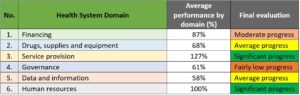
Overall, the Government of the Republic of Serbia has shown moderate progress in fulfilling its transition and sustainability-related commitments. During the assessment, the commitments made by different health system domains have been reviewed, as well as the status of commitments made by different HIV programmatic areas. Out of 6 health system domains, significant progress was achieved in service delivery and human resources; average progress in drugs, supplies and equipment, and in data and information; while moderate progress has been made in health financing; and fairly low progress in governance.

With respect to programmatic areas, significant progress has been made concerning human rights, while substantial progress has been made in the fulfilment of the commitments related to prevention, treatment and support.

This publication was prepared by Maja Stošić, MD, PhD, EHRA Consultant.

The publication was published within the framework of the regional project called “Sustainability of Services for Key Populations in Eastern Europe and Central Asia” which is carried out by the Alliance for Public Health, in a consortium with the 100% Life (All-Ukrainian Network of PLWH), the Central Asian HIV’ Association and the Eurasian Key Populations Health Network with the aid from the Global Fund to Fight AIDS, Tuberculosis, and Malaria.

To access the report, follow this link>>>.

EHRA will hold a Webinar to present the assessment framework, methodology and results following by the discussion with webinar participants on Thursday 21 September at 14:00 Belgrade time. If interested, please register at  https://us02web.zoom.us/meeting/register/tZAtd-ivrzkqH9xWxSzIjWS3Gbh8n361iNqI.


COVID Technical Assistance Directory

Known as C19RM, the COVID-19 Response Mechanism supports countries to mitigate the impact of COVID-19 on programs to fight HIV, TB and malaria, and initiates urgent improvements in health and community systems.

All countries, including regional/multi-country recipients, that are currently receiving funding from the Global Fund, are eligible to receive C19RM funding.

More about the COVID-19 Response Mechanism is available following this link>>>.

The Eurasian Harm Reduction Association (EHRA), being the host of the EECA Regional Platform for Communication and Coordination supported by the Global Fund to Fight AIDS, Tuberculosis and Malaria (the Global Fund), has collected information concerning the availability of HIV, TB and COVID-related technical support (TS) for non-governmental (NGOs) an community-based (CBOs) organizations in the region of Eastern Europe and Central Asia (EECA).

Information presented in this document was provided, and confirmed, by the organizations included and collected between February and April 2021.

To read this technical assistance directory, follow this link>>>.


Denis elected to the EHRA Steering Committee

During May 24 – June 6, 2021 Eurasian Harm Reduction Association (EHRA) conducted online General and Regional members’ meetings in Russia and South-Eastern Europe to elect new Steering Committee members.

In total the South East Europe region has 26 official EHRA members, who were eligible to vote. From those 26 members – 10 participated in the meeting and cast the vote for their candidate, which means, that quorum was met, because 38,46% of members from the region participated in the elections of the SC member.

DPNSEE Vice-President Denis Dedajić, proposed by his organisation Margina from Bosnia Herzegovina, is elected for 3 years term as EHRA Steering Committee member to represent South-Eastern Europe region.

We congratulate Denis and hope this will improve the cooperation we have with EHRA.

Letter of support for the decriminalization in Lithuania

Eurasian Harm Reduction Association asks you to help us urge the Members of the Parliament – the Seimas of Lithuania – to support the drug policy changes (decriminalization project) in Lithuania and sign the attached letter.

Until January 2017, possession of psychoactive substances in small amounts in Lithuania was considered an administrative offence, regulated by the Code of Administrative Offences and as a criminal offence, regulated by the Criminal Code. There were so-called legal collisions (conflict of laws).

In January 2017, procurement and possession of a small amount of an illicit drug with no intent to distribute became an offence punishable by community service, restraint of liberty, a fine or arrest. The same offence involving more than a defined small amount, became a criminal offence punishable by up to two years in prison.

Over the past 3 years alarming indicators have shown that drug policy in Lithuania is focused only on criminalization of people who use drugs and possess small amounts of drugs without intent to distribute them. For example, possession of illicit substance in small quantities without intent to supply accounted for 77% of all drug related offences committed in 2019. 63 % of the offenders were under the age of 29. Between 2014 and 2019 there was an increase by 53,9% of drug laws related offences without intent to distribute. Each year, about 750 people are serving a custodial sentence in prisons, which costs Lithuania around 10,5 million Euro per year. In 2019, 21,7% of all inmates were officially diagnosed with mental and behavioral disorders due to drug use. While in prisons there are no harm reduction services, and limited access to OST.

At the moment, the Seimas of Lithuania is considering decriminalization of small amounts of drugs without intent to distribute them. Civil society from Lithuania is looking for an international community support.

If your organisation wishes to support the letter, please fill in this form before 9th May (by midnight, Vilnius time). The letter will be sent to the Members of the Seimas before the final hearings.

Feel free to share this email with other organisations which may be interested in supporting the initiative!

In case you have any questions, do not hesitate to contact eliza@harmreductioneurasia.org.


Let’s talk about drugs

Taken from the IDPC webpage

In June-July 2020 Rights Reporter Foundation, YODA, Re Generation, Young Wave and Center for Humane Policy conducted an assessment of drug education in Bulgaria, Hungary, Lithuania, Poland, and Serbia based on the methodology developed by EHRA within the LEt’s Talk about drugs – new MEthods of communication with youth – LET ME project funded by the European Commission (ERASMUS+ program). The goal of the study was to assess existing drug education and its effectiveness, look at what information on drugs is available and how it is perceived by young people, examine the methods and tools used by different actors to talk about drugs with youth, and gather best practices.

The stakeholders interviewed—young people and representatives of harm reduction, prevention, and youth organizations—all agree that existing drug education is ineffective and fails to address the needs and patterns of drug use among young people.

The report will be used to design and create the manual, but also for the advocacy activities related to the promotion of prevention and harm reduction services in the youth work.

The reports are available in English and all national languages following this link>>>.


Use of new psychoactive substances in WB/SEE – challenges, needs and opportunities

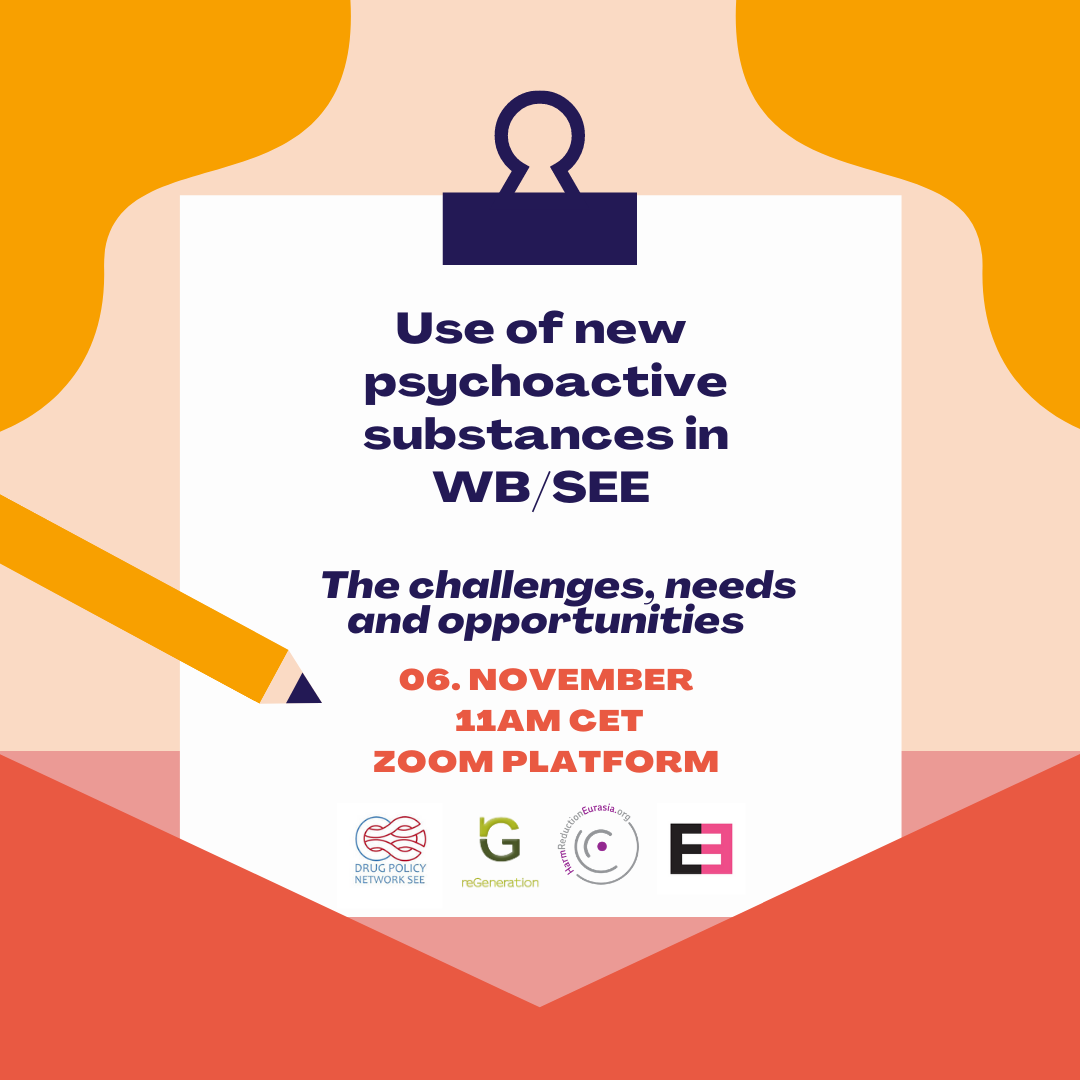
Our member organisation NGO Re Generation, with support of Eurasian Harm Reduction Association, ERA – LGBTI Equal Rights Association for Western Balkans and Turkey and DPNSEE, invite you to participate in an online meeting “Use of new psychoactive substances in WB/SEE – challenges, needs and opportunities”.

This year, EHRA and the School of Law, Swansea University undertook the project “New Psychoactive Substance Use in Moldova, Belarus, Kazakhstan, Kyrgyzstan, Georgia, and Serbia” aiming to generate a more accurate picture of the use of new psychoactive substances (NPS) and to assess harm reduction and law enforcement responses to the emerging issues related to use of NPS. In addition, EHRA funded project #DAZNAMŠTARADIM implemented by NGO Re Generation. Both of the actions generated a more detailed picture on what are the specific issues related to NPS in Serbia. We believe that these issues should be communicated and discussed among CSOs in the Western Balkan/SEE region that work with and represent affected communities.

The meeting will be held via Zoom on Friday 06 November 2020 starting at 11:00 CET. The meeting will last approximately two hours. You can access it by following link: https://us02web.zoom.us/j/86130730814.

The invitation for the meeting with more details is available following this link>>>.

Webinars on Human Rights Violations Data Gathering

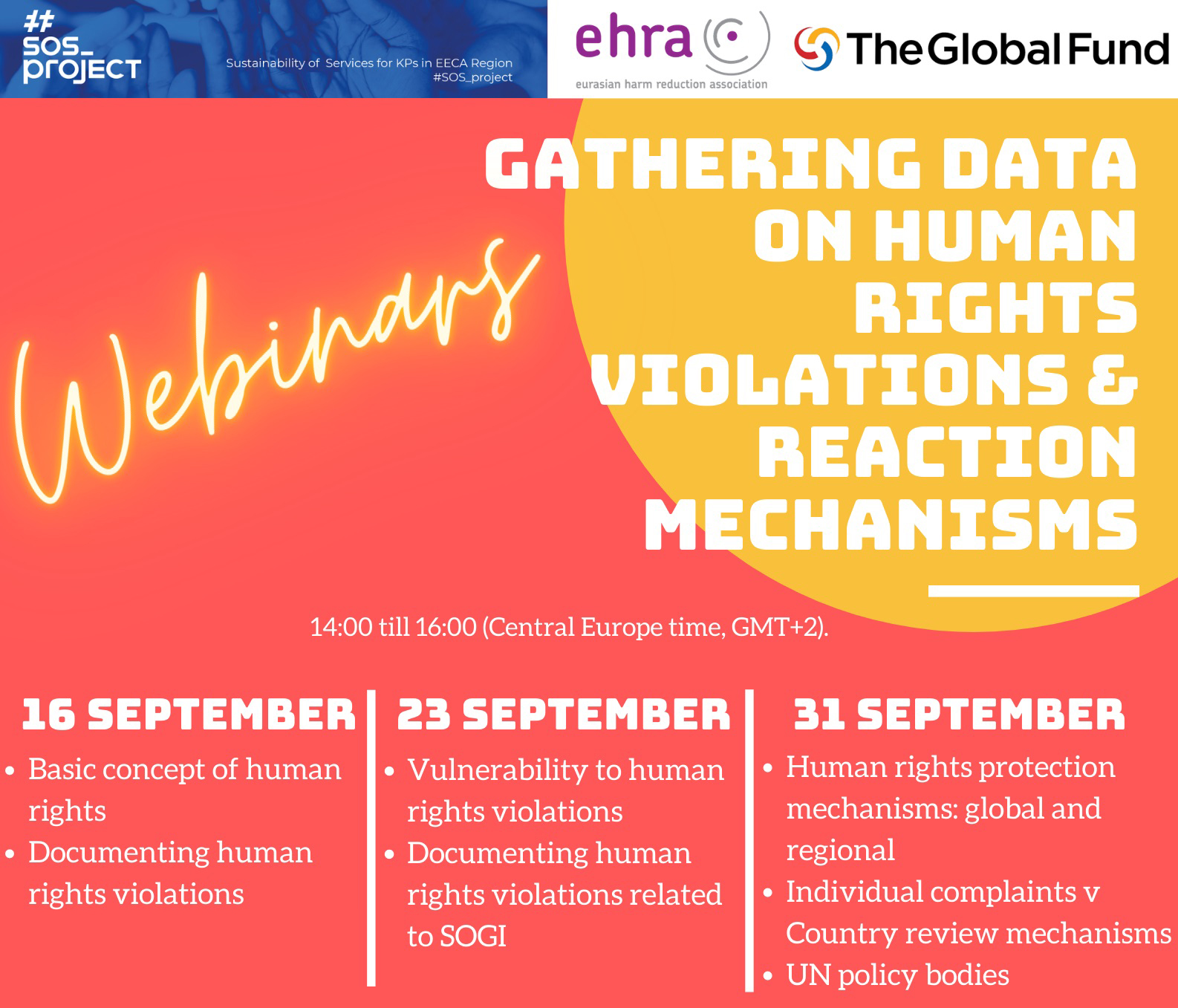
The Eurasian Harm Reduction Association (EHRA) planned to conduct a 2-day regional workshop for activists and professionals from South East Europe countries “Gathering data on human rights violations and reaction mechanisms” on 18 – 19 March 2020, in Belgrade, Serbia. Unfortunately, due to coronavirus pandemic, the workshop was postponed for better times.

The organiser finally decided not to wait for better times and provide the opportunity to take part in a series of 3 short webinars in a new exciting format.

The webinars will be organized in zoom on September 16, 23 and 31 and will last for 2 hours each from 14:00 till 16:00 (Central Europe time, GMT+2).

Goal of the workshop is to equip activists and professionals in South East Europe countries with knowledge on principles and mechanisms of data collection on human rights violations against key populations and follow-up reaction.

Facilitators of the workshop will be Mikhail Golichenko, International Legal Consultant, Canadian HIV/AIDS Legal Network, and Maria Plotko, Program Officer, Eurasian Harm Reduction Association (EHRA).

Prior to each webinar you will be provided with 1-hour thematic videos/podcasts of experts dialogues, which you will examine beforehand, and during webinars we will jointly discuss them, answer your questions and work in interactive way.

Webinars will be open to all – number of participants is not limited!

The registration form will be published closer to the date of the first webinar. Please, follow the EHRA website for more information.


New Psychoactive Substance use in Eastern Europe

From the EHRA webpage

The phenomenon of new psychoactive substances (NPS) started decades ago with the growth and production of drugs that replicate the effects of controlled drugs (such as amphetamines, cocaine, cannabis and heroin) but avoid legislative control based on different chemical structures.

In recent years, the increasing use of NPS has led to new threats for health of people who use drugs (PWUD) – including overdose, psychotic reactions, high HIV risks due to multiple injections and increased number of sexual contacts. However, in many countries service providers such as harm reduction, drug treatment programs and ambulance services are not prepared to provide PWUD with quality support and counselling to reduce risks of NPS.

In the Central and Eastern Europe and Central Asia (CEECA) region the situation with NPS is truly alarming and has become one of the major challenges for the national public health systems, local NGOs, communities PWUD.

The Eurasian Harm Reduction Association (EHRA) in partnership with School of Law, Swansea University undertook the project “New Psychoactive Substance Use in Moldova, Belarus, Kazakhstan, Kyrgyzstan, Georgia, and Serbia” to generate a more accurate picture of the use of new psychoactive substances (NPS) and to assess harm reduction and law enforcement responses to the emerging issues related to use of NPS. Results from this project will supplement scarce international data on the use of NPS in these countries, present a more accurate picture of their use, and provide information to national civil society organizations (CSOs) for political advocacy.

Irena Molnar, a researcher from the non-governmental organization Re Generation (the only CSO that conducts activities aimed at dealing with NPS in Serbia, DPNSEE member organisation), prepared the report for Serbia, the only country involved in the project from South East Europe. Here is a brief overview of it:

The appearance of NPS in Serbia is not a new phenomenon, but their market share is very small. NPS have been talked about for a whole decade, although scientific research and answers to their appearance in the form of special services aimed at ensuring the health and well-being of users, but also the whole society, have not progressed at all.

Among other things, the report examines in detail the actions taken by the state in the context of this issue and formulates recommendations for improvement. For example, in order to improve the response to problems related to the emergence and use of NPS, greater state involvement is needed in terms of adapting to rapid market changes. This means not only putting substances on the banned list, for which Serbia is very up to date, but also improving the entire system.

To read the reports, follow this link>>>.