Full speed CND

Side events

The media, a key actor in the field of drugs

Organized by Canada, and Association Proyecto Hombre, Canadian Centre on Substance use and Addiction, Dianova International, The Interest Organisation for Substance Misusers and Turkish Green Crescent Society.

Role of social networks to take action is to:

  • Reach bigger audiences
  • Promote initiatives
  • Mobilize support
  • Organize campaigns to end stigma
  • Fund more research
  • Authorities should monitor for dangerous content
  • Encourage influencers to promote a healthy life style

An interesting source is Addictionary, produced by The Recovery Research Institute.

Kristina Stankova presented “The role of social networks and alternative media in the field of drugs”. The threats identified include misleading information and fake news, peer pressure, the influence of advertisement in social networks, famous people and influencers promoting unhealthy lifestyle as fun and cool, etc. Tips on how to use social networks and alternative media in a positive way include use of social networks as a tool to access information for research, use them as a tool to raise awareness and promote a healthy lifestyle, reach hidden populations, to end stigma, to spread accurate and understandable information, etc. Studies have found that as many as 75% of teens felt pressured to drink alcohol and use drugs after seeing their friends post these activities online.

Communities at the centre: Barriers and opportunities for community led interventions

Organized by International Drug Policy Consortium, International Network of People who use Drugs, Joint United Nations Programme in HIV/ AIDS, Office of the High Commissioner for Human Rights and UNODC HIV/AIDS Section.

Since 2018, only one new country started needle exchange programme, while no new country started OST – despite all evidence base that these are important services for people who use drugs.

Mick Matthews from INPUD: We are not the enemy, work with us.

11 million people in the world inject drugs. Every eight has HIV, every second Hep C. 84% of those who have HIV also have Hep C. UNAIDS is clearly ready to work with and for people who use drugs (and they introduced this denomination to UN documents).

Harm reduction and rehabilitation program for inmates in prisons with mental and behavioral disorders due to use of psychoactive substances
Organized by Spain and Ukraine and European Union

Spain and Ukraine presented a cooperation project implemented in the context of EU cooperation program. Both countries used it to implement measures planned by their drug strategies.

Spain performs a survey on health services in prisons every 5 years. 75% inmates used illegal substances in their life. “Incarceration is an opportunity to improve health of inmates”.

Drugs are present in prisons in Spain and make serious problems resulting in fights between internal gangs.

Relapse after treatments in Spain is at 31,5%, while at those who go through treatments in prisons it is around 16%.

In Ukraine, with the support from the Global Fund, condoms are shared free of charge in prisons. There was a programme to evaluate syringe exchange programme. Results of the programme are discussed now, but the measures shall wait for the reform on the prison system. Civil society organisations are involved in the programme and discussion.

Unfortunately, a few Ukrainian CSOs were very critical and presented completely different view.

Shared responsibility in addressing the cocaine threat along the supply chain

Organized by European Union, UNODC CRIMJUST, UNODC Regional Office for West and Central Africa and UNODC Research and Trend Analysis Branch

Chloé Carpentier, Chief of the UNODC Drug Research Section in her presentation mentioned that the “new kids on the block” in the cocaine trade chain in Latin America are the Balkan cartel which holds 34% of the transfer of cocaine from Latin America to Europe and almost all street distribution! Production of cocaine is on the historical maximum, there are more organised criminal groups and purity is very high. More regional and international cooperation is needed to fight the problem.

UNODC-WHO Community Management of Opioid Overdose – initial results from the S.O.S. study
Organized by Australia, Kyrgyzstan and the United States of America, and UNODC Prevention, Treatment and Rehabilitation Section, Vienna NGO Committee on Drugs and World Health Organization

Representatives of UNDC and WHO expressed their dissatisfaction that we have to fight for Naloxone, as this is a medication that has no controlled substance. Stigma associated with opioid use disorders is so potent that it extends to naloxone itself. Every day, week, year of inaction means that persons are dying due to opioid overdose when there are medicines that could save their lives. Naloxone is officially registered as a medicine across 51% of all countries, but most countries don’t provide data on the availability of Naloxone.

The research they prepared and showcased by this event also serves as an assessment of the WHO’s own Guidelines on Community Management of Overdose Overdose.

The WHO-UNODC S.O.S. programme (S.O.S. for Stop Overdose Safely) is a peer-distribution programme in which we attempt to provide take home naloxone to likely witnesses of overdoses. The goal at the launch of the SOS Initiative in March 2017 was to have 90% of those likely to witness an overdose are trained to implement Naloxone; 90% of those trained to provide naloxone are provided with a supply; and having 90% of provided with Naloxone are actually carrying it with them.

Meetings

Ms Leigh Toomey, member of the UN Working Group on Arbitrary Detention attends the 63rd session of the Commission on Narcotic Drugs. For the occasion, she was willing to meet with selected IDPC members and partners to discuss the Working Group’s activities, including its upcoming report on the use of arbitrary detention in drug policy.

Cases presented to Ms Toomey mainly came from countries which have harsh approach to drugs. DPNSEE Executive Director added a couple of issues from the region.

We participated in the Vienna NGO Committee Annual General Meeting. Half of the Board have been elected, all from recovery organisations which have obviously well prepared for the elections.

A day for side events

While plenary session was open for governmental speeches and the Committee of Whole worked on texts of resolutions, the second day of the CND 2020 was for civil society organisations mainly dedicated to side events.

Side events

Young people use drugs – Bridging the gap between Human Rights and Key Affected Populations

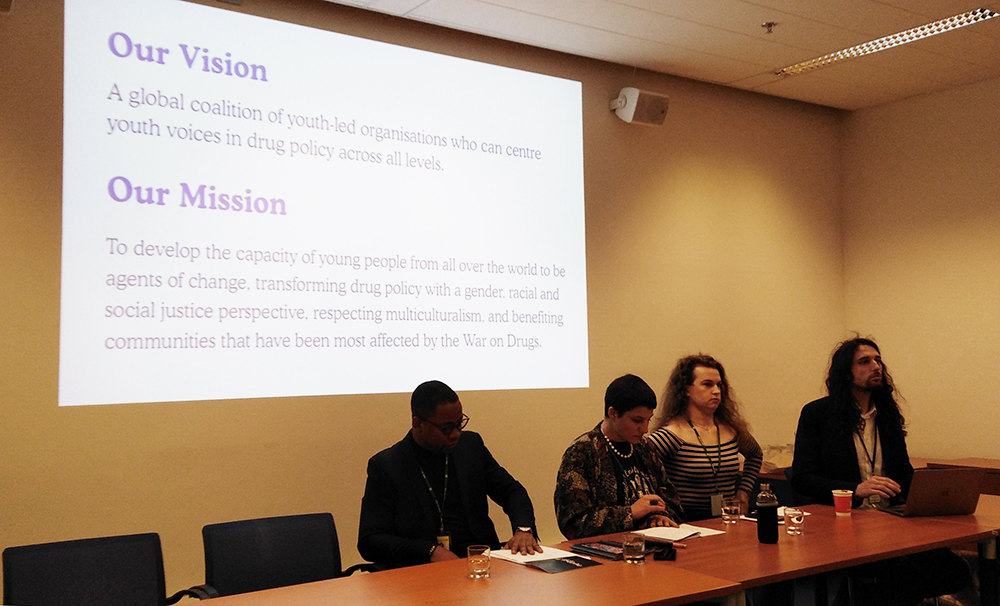
Organized by Students for Sensible Drug Policy

International guidelines on human rights and drug policy, produced by UNODC, have a just a few paragraphs on children who have right to protection from drugs and women who use drugs which human rights should be protected, but don’t have reference on young people who use drugs.

The Barcelona declaration (which “declares that the War On Drugs is a war on Womxn Who Use Drugs”), Par4digma coalition of youth lead organisations from across the world transforming drug policy and Youth and Incarceration/Forced Treatment (rehabilitation) in Nigeria, where this method is employed to patients that are treated as “harmful”, were presented. Presenters also called that the sanctions against drug use should be based on the economic situation of the user.

Improving outreach and multidisciplinary approach towards people who use drugs and people in recovery in Western Balkan countries

Organized by Serbia, and Association Izlazak, Preporod/Rebirth, Proslavi Oporavak/Celebrate Recovery and World Federation Against Drugs

Results of the regional project “Choose Recovery” which is a joint cooperation between World Federation Against Drugs and three civil society organisations in the Balkan region: Izlazak, Celebrate Recovery and Preporod, were presented. The three organisation are working within the recovery field and providing support services to active users, individuals in recovery and members of their families, and they are actively involved in shaping drug policies in their countries.

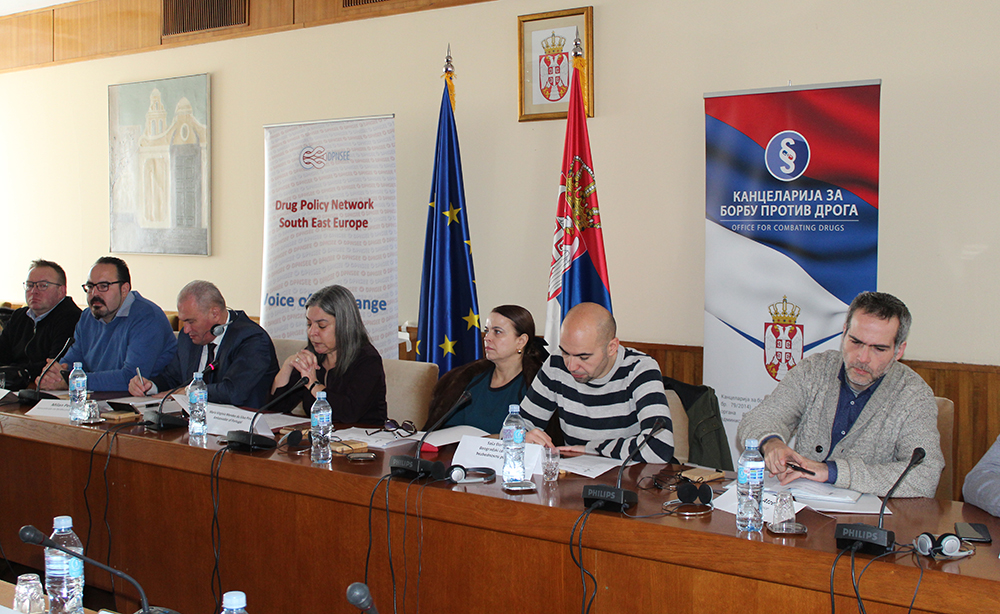
Also, The Office for Combating Drugs of the Government of the Republic of Serbia presented their work, emphasizing partnership with the civil society as one of the successes of their work.

Comprehensive and evidence-based approach in tackling the world drug problem

Organized by Croatia, and European Union and UNODC Division for Policy Analysis and Public Affairs

The slogan of the Croatian presidency “A strong Europe in a challenging world”

Croatian strongly recommends implementation of all universal conventions dealing with drugs.

After protocolled introductions from the Ambassador of Croatia and Executive Director of UNODC, State secretary in the Ministry of Health Tomislav Dulibić presented Croatian experiences in evidence-based approach to drug problem. He emphasized that Croatia introduced Minimum standards for prevention of addiction in the educational system, implemented a research project “Evaluation of drug treatment in the Republic of Croatia” and performed evaluation of treatment and distribution of substitution therapy.

Alexis Goosdeel underlined that EMCDDA cooperates with Croatia since 2002. They are an excellent experience of serious and comprehensive approach towards accession to EU in the area of drugs. EMCDDA collects data for a purpose, not for statistics.

Victor Sannes, deputy director in the Food, Health Protection and Prevention Directorate presented various projects from The Netherlands.

Gilberto Gerra, UNODC: 60% of countries of the World have health treatment of drug users under ministries of interior or justice!

Homelessness and substance use in city centres: Balanced and evidence-based policies

Organized by Greece, and Correlation – European Harm Reduction Network, Pompidou Group/Council of Europe and Santé Mentale et Exclusion Sociale – Europe

Dr Christos Koumitsidis, National Drug Coordinator, Greece: Homelessness in downtown Athens is an important challenge, exacerbated by factors such mental health conditions, substance use problems, the financial crisis and the influx of refugees fleeing war. These issues do not exist in isolation, they intersect and potentiate vulnerability. Homelessness is a common ground.

Katrin Prins-Schiffer, Correlation – European Harm Reduction Network / De Regenboog Groep: We see the same in the harm reduction and addiction sectors; usually homelessness is left behind. Only Finland has decreased homelessness. They have invested a lot in Housing First. All other countries report increases in homelessness. Part of the problem is that the housing market is under a lot of pressure, mostly because of a lack of affordable housing. We have 150,000 rent-controlled dwellings in Amsterdam; but this is not a lot for a city of 1.2 million; and it’s really hard to access these dwellings. In terms of reasons for homelessness, the majority are about impending evictions or end of renting contract, and leaving home after. There is an ‘integrated care system’ whereby local governments are responsible for housing and homeless care. In terms of the system’s main principles, it’s about focusing on the overall needs; not just drug use, homelessness or mental health. It’s a kind of self-sufficiency matrix including finances, housing, relationships, legal problems, community participation. This system is based on the needs on the individual, not on the organisation and its specific focus.

Victor Soto, SMES Europe: Why are people homeless? Policies (housing policies, health policies) and individual situations (mental conditions, traumatic events, etc.). So we need to address both dimensions. Homelessness is not a fixed category, it should be approach through different lines of action.

Pompidou Group: As the operational context was been changing, stakeholders in this field need to be flexible, in line with operational realities. Common guiding principles need to be developed and revised as practice develops. To develop these principles, we need to learn from each other: what works and what doesn’t, find common ground for cooperation and support.

Homelessness and substance use in city centres: Balanced and evidence-based policies

Organized by Greece, and Correlation – European Harm Reduction Network, Pompidou Group/Council of Europe and Santé Mentale et Exclusion Sociale – Europe

Dr Christos Koumitsidis, National Drug Coordinator, Greece: Homelessness in downtown Athens is an important challenge, exacerbated by factors such mental health conditions, substance use problems, the financial crisis and the influx of refugees fleeing war. These issues do not exist in isolation, they intersect and potentiate vulnerability. Homelessness is a common ground.

Katrin Prins-Schiffer, Correlation – European Harm Reduction Network / De Regenboog Groep: We see the same in the harm reduction and addiction sectors; usually homelessness is left behind. Only Finland has decreased homelessness. They have invested a lot in Housing First. All other countries report increases in homelessness. Part of the problem is that the housing market is under a lot of pressure, mostly because of a lack of affordable housing. We have 150,000 rent-controlled dwellings in Amsterdam; but this is not a lot for a city of 1.2 million; and it’s really hard to access these dwellings. In terms of reasons for homelessness, the majority are about impending evictions or end of renting contract, and leaving home after. There is an ‘integrated care system’ whereby local governments are responsible for housing and homeless care. In terms of the system’s main principles, it’s about focusing on the overall needs; not just drug use, homelessness or mental health. It’s a kind of self-sufficiency matrix including finances, housing, relationships, legal problems, community participation. This system is based on the needs on the individual, not on the organisation and its specific focus.

Victor Soto, SMES Europe: Why are people homeless? Policies (housing policies, health policies) and individual situations (mental conditions, traumatic events, etc.). So we need to address both dimensions. Homelessness is not a fixed category, it should be approach through different lines of action.

Pompidou Group: As the operational context was been changing, stakeholders in this field need to be flexible, in line with operational realities. Common guiding principles need to be developed and revised as practice develops. To develop these principles, we need to learn from each other: what works and what doesn’t, find common ground for cooperation and support.

Regional workshop on gathering data on human rights violations

The Eurasian Harm Reduction Association (EHRA) will conduct a 2-day regional workshop for activists and professionals from South East Europe countries “Gathering data on human rights violations and reaction mechanisms” on 18-19 March 2020, in Belgrade, Serbia.

The workshop is conducted as part of the three-year multi-country project “Sustainability of Services for Key Populations in Eastern Europe and Central Asia” (#SoS project).

Goal of the workshop is to equip activists and professionals in South East Europe countries with knowledge on principles and mechanisms of data collection on human rights violations against key populations and follow-up reaction.

Objectives

  • To discuss the most common human rights violations and gender barriers to access HIV prevention and care services.
  • To examine methodologies of data collection on human rights violations (cases).
  • To provide in-depth information on UN treaty bodies and processes of shadow reports submissions.
  • To understand the follow-up system for its systematic and effective use.

Facilitators of the workshop – Mikhail Golichenko, International Legal Consultant, Canadian HIV/AIDS Legal Network, and Maria Plotko, Program Officer, Eurasian Harm Reduction Association (EHRA).

The workshop will gather over 25 activists and professionals from NGOs, human rights and community organizations from 5 South East Europe countries – implementors of the SoS project – Bosnia and Herzegovina, Montenegro, The Republic of North Macedonia, Romania and Serbia) who are either engaged into the human rights protection work or eager to start working over cases on human rights violations and follow-up reaction on them.

First day of the CND 2020

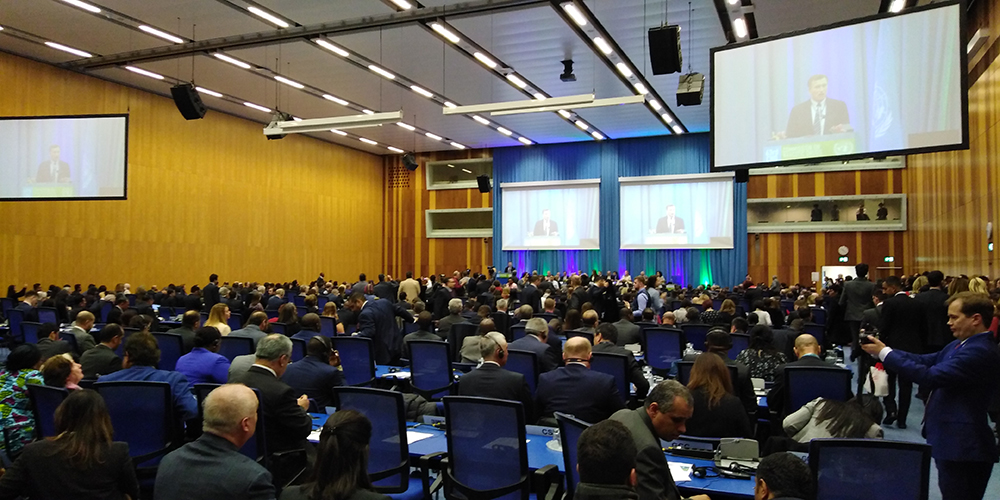
The 63rd session of the Commission on Narcotic Drugs (CND) started on 2 March in Vienna, Austria. The CND is a functional commission of the United Nations Economic and Social Council (ECOSOC) and is the central drug policy-making body within the United Nations system. It monitors the world drug situation, develops strategies on international drug control and recommends measures to address the world drug problem.

As expected, the meeting started with an information on the coronavirus outbreak. Austrian Health Authorities have mandatory reporting cases – no travel restrictions currently. 1826 tests in Austria, 15 confirmed.

New UNODC Executive Director Ghada Waly was presented. UNODC will be launching on 26 June the World Drug Report, hoping spurring dialogue and action.

INCB President: The Board expresses its serious concern with the continued reports of great human rights violations perpetrated in the name of drug control. We call for the immediate end to extrajudicial responses to suspected drug criminality and sue. When drug control measures violate international human rights standards, they also violate the drug control conventions.

Director General of WHO (video link): The increase in the use of psychoactive drugs claims hundreds of thousands of lives every year.

Croatia on behalf of EU: [a number of Balkan states are also aligned with the statement]: The situation is worsening in many parts of the World. The EU and its MS stress the importance of rebalancing the public health and human rights aspects in our responses to the problem. The health consequences of drug use are more severe and wide-spread than we thought; NPS emerging, synthetic opioids are a serious threat as is the non-medical use of painkillers. EU’s recent reports remind us of the severity of the issue but also underscore the complexity of the problem so we need a balanced and comprehensive approach. We are planning to continue to support drug-related commitments to support human rights. We need to develop policies based on evidence-based practice. Civil society contributes valuably to complement our understanding of the world drug situation and also in designing national, regional prevention and harm reduction responses.

Side events

Shanghai Cooperation Organization and the UNODC in the Fight Against the Illicit Drug Threat: Countering Drug Trafficking via Darknet

Ghada Waly, Executive Director of the UNODC: reports show half of dark net activities are associated with drugs. International operations have had some high profile successes in closing dark nets, including Silk Road, Alpha B, and Hanza. However, more spring up in their place.

Vladimir Norov, SCO Secretary-General: According to specialist evaluations, up to 60% of transactions are of narcotic drugs, instead of cash payments crypto currency is used to settle accounts. The process leads to risk of involvement of money laundering, hinders the local authorities attempt to counter narcotic drug trafficking and hinders the stability of young people and states. This business is growing – in 2018 less than 600 million US dollars, 2019 more than 800 million US dollars a year

Drug reform: From a punitive to a supportive approach – The Norwegian proposal

Minister Bent Høie, Norway: Replacing punishment by support and decriminalising drug use was an initiative prior to UNGASS 2016. It came from civil society. In 2018 the government declared we needed to transit away from punishment into assistance, treatment and follow-up. We will conduct drug policy reform to ensure better services to people who use illicit drugs, transferring the responsibility of questions of personal use from justice to health service. A government mandated committee has concluded a report, thorough and interesting, “from punishment to support”, which will be the subject of a public hearing. On the basis of this, the government will submit a proposal to the parliament in spring 2021.

Gilberto Gerra, UNODC: The Conventions, in 1988, clearly says in art 3 that the possession for personal consumption needn’t be punished; there are alternatives. UNGASS2016 reiterates this position. It is important that what has been said by Portugal and Norway; the Conventions allow this and this is not legalisation. The motto of our programme with WHO, ten years ago, nothing less than what is provided for any other chronic disease. No stigma, no discrimination, full access to healthcare.

Devora Kestrel, WHO: We support a move away from a criminal justice approach to a social support approach. To ensure support for people who use drugs. While it is recognised that one size doesn’t fit all, drug policies are moving towards a more balanced and comprehensive approach that highlights public health and development, which is consistent with the original purpose of the Conventions: promoting the health and welfare of humankind.

Mr. Zaved Mahmood, Office of the High Commissioner for Human rights (OHCHR): The criminalization of personal drug use and possession impedes realization of the human right to health. Criminalization of possession and personal use of drugs often results in disproportionate sentencing in addition to hindering persons in need of treatment for drug use from receiving such treatment. Criminalization of drug use and minor drug offenses also aggravates the stigmatization of and discrimination against people who use drugs. Evidence indicate that decriminalization, in tandem with “the provision of a continuum of support, prevention and treatment measures, can result in a decrease in overall drug use and in the drug-induced mortality rate.” Three international drug control conventions afford flexibility to introduce non-criminal responses to the possession of drugs for personal use.

Jamie Bridge, Vienna NGO Committee on Drugs: VNGOC has long held the position that greater attention needs to be given to health and human rights. This means providing evidence-based prevention, treatment, rehabilitation, social reintegration, mental health, harm reduction and recovery services. It means working closely with people who use, or used, drugs to ensure that services meet their needs and are fit for purpose.

Alexis Goodeel, EMCDDA: The idea is that higher penalties deter use. We studied the situation and found no direct link of causality. No clear impact of penalties on use. Recent research on what makes policy work suggest taking into account three levels: System (wording of the law, definition of legislation), Provider (criminal justice and health system), Client (experience and perceptions of the system). Punishment  has nothing to do with a medical or public health approach. Especially for women and minority populations that face bigger barriers to access to health and other services.

Reducing health risks of the use of NPS in EECA region

Organized by Estonia and Moldova and Eurasian Harm Reduction Association, with panellists from UNODC and Eurasian Network of PWUD.

Main message from the event is that users switch from traditional drugs to new substances, while appropriate harm reduction services are missing. The darknet plays a big role in the rise of NPS in the EECA. We need to be proactive about creating and implementing harm reduction initiatives on the dark web.

David Subeliani (ENPWUD): The states in general are not ready to respond to NPS posed problems. People reach for alternatives before the legal system can respond to the new market dynamics. If we squeeze out substances from markets, users will find ways to achieve similar effects with other means. I saw a fast change on the drug scenes in Easter European Member States – cities have moved on from traditional illegal drugs to whatever the market was able to provide. A very aggressive takeover on the market. It increased the risk of infections as the effects are wearing off maybe faster and users might need to administer more often.

Eliza Kurcevic (EHRA): We conducted a research with Swansea University about NPS use in Belarus and Moldova to collect data on use, needed services, etc. Our recommendations: periodic data collections from various stakeholders, research risks and consequences on NPSC consumption, adjust harm reduction programs and implement relevant interventions, adapt existing interventions and ensure effective work together with the affected populations, review repressive policies and redesign it based on evidence.

Health Responses to the Opioid Poisoning Crisis: On-the-Ground Experiences and International Implications

Fatal drug-related overdose is a pressing health crisis in North America. Highly potent synthetic opioids, including fentanyl and analogues, are increasingly present in the unregulated opioid supply and have contributed to unprecedented increases in overdose deaths. Several countries in Europe have also recently experienced a rising loss of lives from accidental opioid overdose. While the expanding opioid poisoning crisis has been a focus of international attention in recent years, discussions have primarily focused on supply reduction, rather than health, interventions.

Asma Fakhri, Coordinator, UNODC Opioid Strategy, presented UNODC strategy pulled together in response to opioid crisis. 5 pillars for balanced framework to respond to opioids.

  1. Early warning and trend analysis: generating evidence in support of effective policy decisions and operational responses
  2. Rational prescribing and access to opioid for medical and scientific use: promoting interagency cooperation in addressing the non-medical use of opioids
  3. Prevention and treatment programmes: strengthening and supporting prevention and treatment programmes related to opioids
  4. International law enforcement operations to disrupt trafficking: enhancing operational activities to prevent the diversion and trafficking of synthetic opioids
  5. Strengthening national and international counternarcotic capacity: raising awareness, sharing best practices and promoting international cooperation

Meetings

CND is an excellent opportunity to meet with those involved in drug policy from all around the World and from all sectors. Certainly, most of the short meetings in corridors were with those from our region, but also we had a good exchange with EMDCCA Director Alexis Goodeel.

Meeting with Dr Christos Koumitsidis, Greek Drug Coordinator

CND was an opportunity to meet with Dr Koumitsidis who, due to the professional obligations he has in the UK was not able to join the Dialogue we had in Belgrade in February.

Three main points characterise situation in Greece: homelessness, immigrants and cooperation between authorities and CSOs

There is no Drug strategy so far. Dr Koumitsidis expects that Government will adopt one this spring and the Action plan in summer.

He was interested to hear about experiences in other countries. We presented him the results of the recent SEE government – civil society dialogue on drugs 2020 and offered to organise the next in Greece.

We also expressed concern about the situation of our member organisations and other civil society organisations from the area of drug policy in Greece.

Public appeal to protect vulnerable groups from coronavirus COVID-19

To:

National health authorities and institutions

National drug agencies and responsible

National social services

Civil society organisations


The World Health Organization (WHO) has declared a public health emergency of international concern over a new coronavirus, which causes an illness officially known as COVID-19 that has killed more than 2,900 people worldwide. As of 1 March, the outbreak has affected an estimated 87,000 people in at least 30 countries globally. The key issues are how transmissible this new coronavirus is between people and what proportion become severely ill and end up in hospital.

Outbreak of the epidemic in Italy, neighbouring country to our region, brought the virus to our region. First cases were reported at the bordering cities of Trieste and Gorizia near Slovenia, but also in Austria, Croatia, Romania, North Macedonia and Greece. It is pretty realistic that they will appear in other South East European countries.

We believe that the health systems in South East Europe countries and wider are well prepared and will react efficiently, without panic but also taking situation seriously.

Still, Drug Policy Network South East Europe shares concern that the health systems may not have fully in their sight the key populations we are supporting (people who use drugs, sex workers, LGBTI and MSM, homeless, etc.) and that these populations, being side-lined in the community, may not be well informed about the threat and measures they should take to protects themselves.

Governments have to ensure that all individuals have the opportunity to remain healthy and educated. Alongside preparedness measures, countries must ensure efforts to achieve a truly inclusive universal health coverage grounded on rights-based laws, policies and procedures by prioritizing and protecting vulnerable groups.

To combat stigma and discrimination and achieve universal health coverage vulnerable populations are faced with, we must not divide ourselves further. Viruses don’t discriminate on the basis of race, religion, gender identity, lifestyle or sexual orientation.

On our side, DPNSEE and our member organisations, especially those who provide services to people who use drugs and other connected vulnerable groups, are ready to play they role in overall efforts to fight the problems caused by this epidemic. We have already started prevention activities and are preparing for situation when/if epidemics escalates.

DPNSEE is a regional network with a wealth of experience from around the region. We think that this is the situation when we all should act together, for the benefit of all members of our societies.


Drug Policy Network South East Europe

2 March 2020


You can download the Appeal following this link>>>

Ready for COVID-19?

In December 2019, a novel coronavirus (2019-nCoV) was first isolated from three patients with pneumonia, connected to the cluster of acute respiratory illness cases from Wuhan, China. Coronaviruses are zoonotic, meaning they are transmitted between animals and people. More about the virus is available in the video bellow.

According to the latest epidemiological data on 25 February, the total number of COVID-19 cases has reached 80,407 globally, and 2,708 people have died from the virus, which puts the mortality rate at nearly 3.4%. This is an emerging, rapidly evolving situation with ongoing outbreak investigations. More about the virus is available at the World Health Organisation webpage following this link>>> and at the webpage of the European Centre for Disease Prevention and Control.

Outbreak of the epidemic in Italy, neighbouring country to our region, saw 322 cases in a very short period of time, with 11 deaths, while cities of Cremona and Brescia turned into quarantine. First cases were also reported in Croatia, Romania, North Macedonia and Greece and also in Austria. It is pretty realistic that they will appear in other South East European countries.

In the exchange which the DPNSEE Board had, we expressed concern that the health systems may not have fully in their sight the key populations we are supporting (and people with substance use disorder, especially heroin users, are usually in a weak health conditions), that these populations, being side-lined in the community, may not be well informed about the threat and measures they should take to protect themselves and that our organisations, especially those who provide services to people who use drugs and other connected vulnerable groups should also play they role in overall efforts to fight the problems caused by this epidemic.

DPNSEE invited its member organisations to act locally but also to act together, share experiences, actions and results they achieve.

We see our role in three dimensions:

  1. While the coronavirus is still a threat, you may participate in calming the situation and avoiding panic which may occur, inform people you are supporting about the protective measures against the coronavirus and make all necessary steps internally to be prepared for possible dark scenarios.
  2. If COVID-19 cases appear in your country, you may intensify communication and advising the key populations, activate full spectrum of protection measures for your staff and establish close cooperation with authorities, especially national and local public health authority to advice on necessary steps.
  3. If you find yourself locked in a quarantine area, please fully respect all necessary advices and make sure that your people are safe, but also offer services other than your ordinary actions to support overall efforts of overcoming the critical situation.

DPNSEE invites authorities to pay specific attention to vulnerable populations, which may remain invisible in situations when major efforts are needed for an effective respond to the crisis.

The corona virus COVID-19 is a serious treat, but not more dangerous than usual influence we face every winter. With good preparations and respecting necessary prevention measures, its effects may be reduced and minimised. DPNSEE wants to ensure that people we serve, our staff and societies in general are prepared to fight this challenge.

To read the letter that DPNSEE sent to its member organisations follow this link>>>
Consultations on reaction to the coronavirus outbreak

Last two days, the DPNSEE Board had on-line communications, including a few experts from inside the Network, on the threat of coronavirus outbreak in South East Europe following the first cases which appeared in neighbouring Italy. The first case of the virus were also reported in Croatia. Those participating shared information about situation in their countries.

The Board agreed that if the situation in our region escalates in our countries, we need to see if the health system is ready to respond in such a way that the services we provide to key affected populations are not jeopardized. There may be issues with accessing drop-in centres, protection of users and our staff working there, distribution of substitution therapy and access to it, etc. In addition, it may be good to take measures in the drop-in centres already now to advise the users about prevention measures because they may not be informed and be cut from regular information channels through media.

A Letter to member organisations inviting them to prepare for the coronavirus outbreak with brief instructions is being prepared and will be shared as soon as possible.


Depenalisation, diversion and decriminalization: A realist review

Alternatives to criminalization for the simple possession of illicit drugs are increasingly of interest to policy makers. But there is no existing theoretically based, empirically tested framework that can inform development and evaluation.

The European Journal of Criminology paper “Depenalisation, diversion and decriminalization: A realist review and programme theory of alternatives to criminalization for simple drug possession” presents a realist programme theory of such alternatives.

It bases this on a realist review decriminalization, which followed the Realist and Meta-narrative Evidence Syntheses: Evolving Standards (RAMESES). It describes the systematic process of searching the literature in English on nine relevant countries (Australia, Czech Republic, Denmark, Germany, Jamaica, Netherland, Portugal, the UK, the USA) for information on alternative measures in three categories: depenalisation, diversion and.

It shows how these measures – in theory and in practice – combine with pre-existing social conditions and institutional contexts to trigger mechanisms across three causal pathways (normative, criminal justice and health and social services). It shows how some posited causal processes are more empirically supported than others.

Alternative measures can reduce harms imposed by criminal justice processes without increasing drug use or related health and crime harms, but this depends on specific combinations of contexts, mechanisms and outcomes.

To read full paper, follow this link>>>

SEE government – civil society dialogue on drugs

Following the success of the first dialogue between national authorities and civil society organisations held in 2018, the Office for Combating Drugs of the Government of the Republic of Serbia and Drug Policy Network South East Europe organised the second South East Europe government – civil society dialogue on drugs on 21 February 2020. The meeting was held in Belgrade, in the Palace of Serbia.

The aim of the meeting was to discuss about issues of importance for drug policy and reflect on the cooperation between authorities and civil society organisations at the national and regional level and perspectives of future cooperation.

The key topics for this meeting were:

  1. Decriminalisation of drug consumption and possession for personal use – challenges and experiences
  2. Role of civil society in drug policy

38 participants from all 11 countries of the region and 3 guest countries participated in the Dialogue.

The Dialogue was an excellent opportunity to hear various experiences from the region and wider and exchange ideas and comments.

You can download presentations from the panelists at our web page with publications following this link>>>.


Report from the dialogue is available following this link>>>.


Regular DPNSEE General Assembly

The DPNSEE General Assembly was held on 20 February 2020 in the Palace of Serbia in Belgrade. Representatives of 18 out of 24 member organisations with the voting right and one associate member organisation were present.

The Assembly adopted minutes from the previous Assembly, operational rapport and information about the financial situation and Action plan for 2020 and discussed the situation in the countries of the region.

DPNSEE continued enlarging with new member organizations. Organization HELP from Split, Croatia, was granted ordinary membership. Also, the organisation Čovekoljublje (Philanthropy) from Belgrade, Serbia was granted the status of associate member.

Unfortunately, the Assembly decided that membership of the organisation 4 Life will terminate because of inactivity and failure to pay the ordinary member’s annual fee for the last three years. This organisation is invited to consider applying for associate membership in the Network.

The Assembly elected two new members of the Board: Ilinka Serdarević from Terra, Rijeka, Croatia and Tomaž Koren from the Alliance of Non-Governmental Organisations for Drugs and Addictions in Slovenia. The new President of the Network is Nebojša Djurasović from Prevent, Novi Sad, Serbia, while Vice-President is Denis Dedajić from Margina, Tuzla/Zenica, Bosnia Herzegovina.

The Assembly decided that the Network opens the process of designing the new Statutes. After the member organisations send proposals for the new Statutes, the DPNSEE Board should prepare a draft new Statutes that will be adopted at the electronic Assembly after consultations among the member organisations.

In the thematic part of the Assembly, during afternoon, an external consultant Jarmila Bujak Stanko facilitated the strategic workshop to complete the strategic plan development process.