Drug decriminalisation interactive map

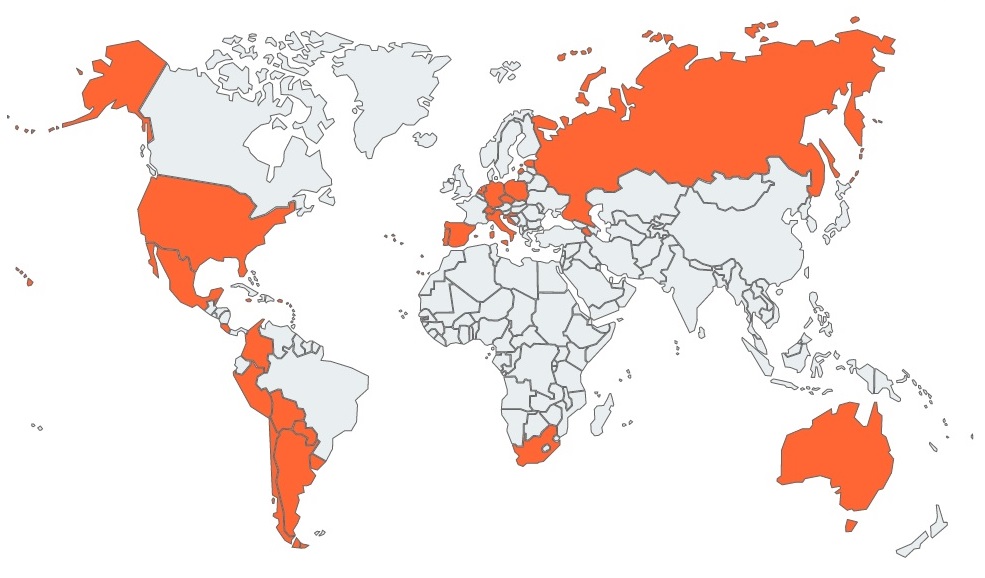
TalkingDrugs, an online platforms dedicated to providing unique news and analysis on drug policy, harm reduction and related issues around the world, published an interactive map which provides an overview of decriminalisation models, offering insights into decriminalisation laws, their implementation and impact.

The criminalisation of people who use drugs compounds drug-related challenges and worsens health and welfare outcomes. The gold standard of decriminalisation is the removal of all punishment for drug use, and the availability and accessibility of evidence- and human rights-based harm reduction, health and social services on a voluntary basis.

Across the world, there is a growing number of jurisdictions where the possession of scheduled drugs for personal use has been decriminalised. Some form of decriminalisation has been adopted in 30 countries – with significant differences and levels of effectiveness. This interactive map provides an overview of these models, offering insights into decriminalisation laws, their implementation and impact. In some countries and federal states, this has been extended to the cultivation of cannabis for personal use or the sharing of substances where there is no financial gain (also known as ‘social sharing’).

The following elements are included in the map:

  • Threshold quantities used to determine whether the activity is decriminalised (if there are no thresholds other considerations used are outlined);
  • The agency responsible for determining the activity is decriminalised;
  • The activities that are decriminalised, and for which substances;
  • The applicable administrative / civil sanctions or whether no sanctions are applied.

In South East Europe, only Croatia adopted decriminalisation of possession a ‘small quantity’ of any drug. The decriminalisation of drug consumption and possession for personal use means that the person no longer has a criminal record, so the stigma associated with people who use and/or are dependent on drugs is reduced. The law also gives more flexible treatment options. Croatia’s model of decriminalisation is codified in the country’s laws through statutory reforms and was introduced in 2013.

This map has been developed in partnership with Release, the International Drug Policy Consortium, and Accountability International, thanks to the financial support of the Robert Carr Fund and Open Society Foundations. This map will be updated regularly. If you do have any comments or feedback please contact Talking Drugs.

To see the map and all data it contains, follow this link>>>

Cannabis legalisation in the United States – Towards a regulated market?

The French Monitoring Centre for Drugs and Drug Addiction (OFDT) published a memo which describes the regulatory models that have been implemented since 2014 in the American states that have legalised cannabis, highlighting their differences and similarities. It also discusses the reform processes and common features of states that have legalised cannabis for medical and recreational use.

Author of the memorandum is Ivana Obradovic, OFDT Deputy Director.

After five full years of reform in Colorado and Washington State (2014 – 2018), first outcomes can be reported – although it is not clear whether they are directly attributable to cannabis being legalised. The most significant effects relate to the quick and large-scale industrial expansion of the cannabis supply chain. However, this economic boom has also seen the emergence of three public health concerns:

  • The substance is now aimed at all population profiles, from people who have never tried it to regular users and from young people to seniors. The increase in supply and its diversification have increased the incentives to use it, which is only made worse by marketing strategies emphasising cannabis’ “therapeutic virtues” or its dimension of socialisation.
  • The increase in the number of emergency calls and hospitalisations following acute intoxication highlights the difficulty of effectively regulating substances put on the market (particularly in terms of the concentration of active ingredients). At the same time, cannabis-related treatment demands have declined.
  • The decline in both the perceived dangerousness of cannabis and retail prices have led to it becoming more accessible and the substance being “normalised” which, according to public health stakeholders, could ultimately increase the risks and harm associated with its use (particularly among the younger generation).

To read the memo, follow this link>>>

Glossary of terms used in drug policy in Montenegrin

With the support of our member organisation Juventas, DPNSEE produced the Glossary of terms used in drug policy in Montenegrin.

The Glossary is prepared with the aim to contribute to better understanding the drug problem in more emphatic manner. Glossary is an alphabetical list of terms with definitions.

This is the fifth language in which the Glossary is published, after the original version in English and those in Spanish, Serbian and Bosnian.

To download the Glossary in Montenegrin, follow this link>>>

Summer School in Human Rights Litigation

The Open Society Justice Initiative and Central European University invite applicants for the 2020 Summer School in Human Rights Litigation, to be held in Berlin from June 8 to 12.
The summer school provides a unique opportunity for human rights professionals to build on their experience and to develop their skills to successfully bring cases to the regional human rights systems and the UN treaty bodies, and to use those cases to achieve practical change. The curriculum will combine presentations, case studies, exercises, and discussion groups with preparatory work and further reading to ensure full maximum benefit for those attending the course. Participants will be invited to provide information on their work and those concrete examples will help shape discussion.

The program is co-organised by the Hertie School’s Centre for Fundamental Rights

To get full information about the Summer school follow this link>>>

Training Material on addressing gay men and other MSM

The Training Programme for Community Health Workers (CHW) engaged in work with men who have sex with men (MSM) in Europe was developed in the frame of the EU-funded ESTICOM project. Its aim is to help increasing the quality of the services CHW provide.

The training programme addresses a wide range of topics CHW are working with and covers all main areas CHW address in their work. It consists of Face-to-Face training material for interactive workshops as well as E-Learning modules that are more knowledge based.

The Face-to-Face material is published in: English, German, French, Spanish, Italian, Polish, Greek, Romanian, Portuguese and Russian.

The material is also suitable to be used for training CHW that work with other target groups than MSM.

To download the training material, follow this link>>>

To use the training material on-line, visit this website>>>

HIV prevention services for key populations in Albania on the brink of collapse

Civil society organisations from Albania issued an open letter expressing their concerns regarding a difficult context of provision of HIV services to key populations groups in the country.

The implementation of the Global Fund grant came to an end on 31 December 2019 and the new transition grant is not still signed yet. By 1st of January, all NGOs providing services to key population run out of any kind of support. Access to the services of 1800 people who inject drugs and 380 methadone clients, 1200 MSM, 290 sex workers, 30 prisoners and up to 200 people living with HIV is being jeopardized.

NGOs are required to shut down services, cut human resources and return all assets to the principal recipient (Ministry of Health and Social Protection): computers, printers, minivans, tables, furniture and even remaining rapid tests. This is disturbing for those NGOs which are renting spaces.

There is a total lack of information from all institutions, including CCM, how the project will continue, what will be the role of each actor and how the sustainability of services will be ensured, if it will be.

Albanian NGOs appeal to the Global Fund Secretariat, CCM and Minister of Health and Social Protection of Republic of Albania requesting them not to neglect this situation but to act fast and appropriately to ensure the sustainability of HIV prevention services for key populations. The support of other donors and technical partners is also very welcomed.

DPNSEE has already, in partnership with Correlation and EHRA, raised issue of sustainability of harm reduction services in Albania, Bosnia Herzegovina, Bulgaria and Romania.

The open letter is available following this link>>>.

EU drugs strategy 2013-20 evaluation

The European Commission launched a consultation to gather stakeholders’ feedback on the EU Drugs Strategy 2013-2020 and the EU Action Plan on Drugs 2017-2020, as they are approaching the end of their cycle.

The consultation addresses all main policy areas of the Drugs Strategy, including drug demand and drug supply reduction and three cross-cutting themes, namely coordination, international cooperation and information, research and evaluation. Similar to the entire evaluation exercise, the consultation looks at the effectiveness, efficiency, relevance and coherence of the actions undertaken to cover the areas mentioned, as well as at the achieved EU added value.

The Commission seeks to gather input from a broad range of stakeholders, including public authorities and administrations at national, regional and local levels including customs and law enforcement, academia, anti-drugs and health related civil society and non-governmental organisations, chemical and medical industry representatives, practitioners involved in the drugs or health policy fields and private individuals. Anyone affected by illicit drug use is especially welcome to respond to this public consultation.

You can contribute to this consultation by filling in the online questionnaire. Questionnaires are available in some or all official EU languages. You can submit your responses in any official EU language.

The final results of the evaluation will be used by the European Commission, the European Parliament, the Council and Member States in the future decision-making process regarding drug policy.

To get more information and contribute to the consultations, please follow this link>>>

AIDS Conference Scholarship Programme

The 23rd International AIDS Conference (AIDS 2020) will take place 6 – 10 July in Oakland and San Francisco. The International AIDS Conference is the world’s largest gathering on HIV and AIDS. The biennial conference serves as a unique forum at the intersection of science, advocacy, and human rights. Each conference is an opportunity to strengthen HIV science, programmes, and policy, and advocate for an effective response.

Through the Scholarship Programme, conference organizers aim to make AIDS 2020 accessible to people actively contributing to the conference programme, living with HIV, young people and those who belong to key or vulnerable populations. This programme provides financial assistance to help people who would otherwise be unable to benefit from the conference.

The AIDS 2020 Scholarship Programme will be the largest ever, aiming to support 1.600 delegates to attend the conference in San Francisco and Oakland. Conference organizers are committed to ensuring that resource-constrained settings and individuals are represented at AIDS 2020. In prioritizing the participation in the programme of groups and individuals from these settings, the conference creates pathways for the direct dissemination of scientific knowledge and best practices from the conference to local programmes and individuals in communities where it can be actively and effectively implemented.
Scholarship applicants can request one or more of the following grants:

  • Conference registration (includes access to all sessions and exhibitions)
  • Travel (pre-paid airfare at the lowest fare available, from the nearest international airport and for the conference dates only)
  • Accommodation (shared room in a budget hotel for the conference dates only)
  • Modest daily living allowance during the conference (6-10 July 2020).

Applications will be accepted through an online platform until 23 January 2020, 23:59 Central European Time (CET).

Learn more about the scholarship from the video below. Get more information and apply following this link>>>.

European Cannabis Report

The European Cannabis Report™: Edition 4, published by Prohibition Partners, is the most extensive review to date of the European cannabis industry. It examines legislation, regulation, market size and market opportunities in 33 European countries, analysing myriad data points.
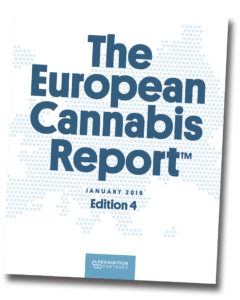
Home to more than 740 million people, a population more than double that of the United States and Canada combined, Europe is set to become the world’s largest legal cannabis market over the next five years. In the last 12 months alone, the European cannabis industry has grown more than in the last six years. Six countries have announced new legislation and over €500million has been invested in European cannabis businesses and as our exclusive research shows, Europe’s cannabis market is estimated to be worth up to €123 billion by 2028.

The European Cannabis Report™ 4th Edition examines:

  • Commercial and business opportunities in 33 European markets
  • Changing legislation and new regulatory guidelines across the region
  • Emerging trends, market forecasts and industry insights

Founded in 2017, Prohibition Partners specialise in explaining the latest legislative developments and key trends in the cannabis industry aiming to help understand the cannabis industry and its increasingly segmented sectors through authoritative research and unique strategic advice on licensing, regulatory and business opportunities. Their reports provide the most in-depth coverage of the international cannabis industry.

To obtain the report, follow this link>>>

Sex Work & HIV Training Programme

The International Committee on the Rights of Sex Workers in Europe (ICRSE) launched the call for participants for the European Red Umbrella Academy: Sex Work & HIV Training Programme. The training will take place from 19 – 22 March 2020 (location to be decided).

The Academy programme consists of coordination of a regional sex worker and HIV activists training, bringing together 24 activists from 8 countries, followed by a national one-day training for local sex workers communities on topics related to HIV. Furthermore, the project includes development of briefing papers on topics identified by the participants for advocacy and education purposes. The programme will be implemented in partnership by ICRSE and European AIDS Treatment Group.

Sex workers interested in developing their knowledge relating to sex work and HIV and HIV activists interested in developing their knowledge on sex work issues and supporting sex worker self-organisation can apply. Applicants must be based in a European or Central Asian country. Applicants can apply individually or in country-teams of up to three people. Application closing date is 31 January 2020.

ICRSE and EATG will cover all accommodation, travel and food expenses of the trainers during the whole duration of the training module.

To get a full information about the training, follow this link>>>