
Drug overdose deaths in Europe have risen for the fifth consecutive year, with a record 9 461 lives lost in 2017 (EU 28, Turkey and Norway). Reducing drug-related deaths is therefore a major public health challenge. Fighting this problem, the EU drugs agency (EMCDDA) launches today three new resources looking at drug overdoses in Europe and the interventions in place to prevent them.
Most overdose deaths in Europe are linked to the use of opioids (heroin or synthetic opioids), although cocaine, other stimulant drugs and medicines also play a role. In a new online resource, Prevention of drug-related deaths in Europe, the agency provides an overview on the issue and the risk factors involved.

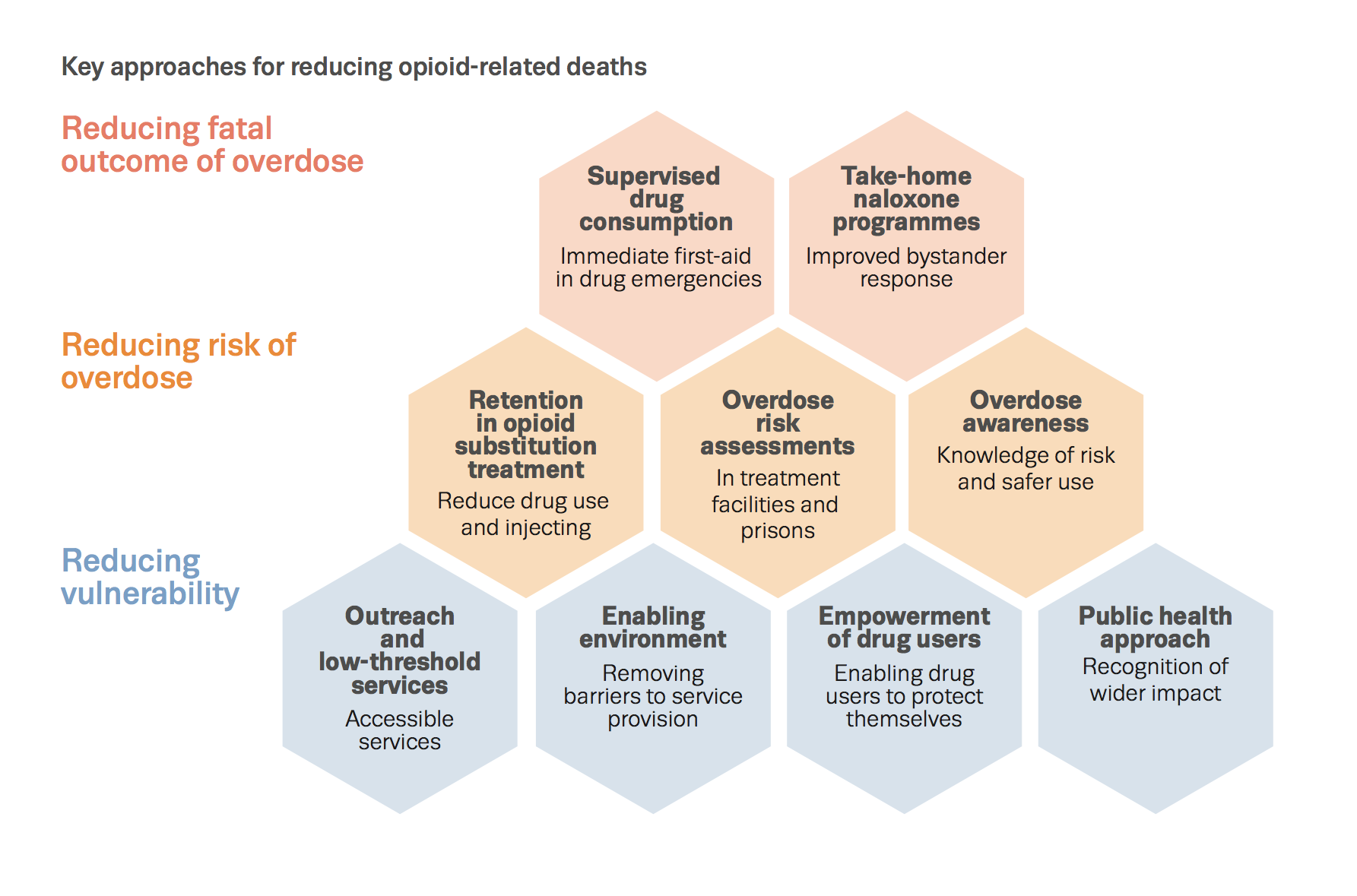
The EMCDDA illustrates how overdose prevention can be addressed on three levels: reducing vulnerability to overdose (e.g. accessible treatment and services); reducing the risk of overdose (e.g. retention in opioid substitution treatment, prison aftercare and overdose risk assessments); and reducing the likelihood of fatal outcomes (e.g. take-home naloxone policies and supervision of drug consumption). Currently, 87 supervised drug consumption facilities exist in 8 EU Member States, Norway and Switzerland providing a safer drug-using environment.
While naloxone – a medicine used to reverse opioid toxicity – has been used in hospitals for over 40 years, it is also now available in the community in many countries. The EMCDDA launched its first overview of Take-home naloxone (THN) programmes in Europe.
Practical solutions have been found to allow non-medical personnel to receive and administer injectable naloxone and enable the distribution of the medication to the homes of potential bystanders. Some countries now make the emergency medication available without a prescription to, or have lifted prescription regulations for, specific establishments or those registered as formally trained. The resource summarises the different products used in THN programmes, including naloxone nasal spray, authorised in 2017 by the European Commission for marketing in all EU countries.
Where have drug-related deaths increased most over the last 10 years? Are women and men affected equally? What are the current concerns in Europe? These are some of the questions answered in new Frequently asked questions (FAQs): drug overdose deaths in Europe published on the EMCDDA website. These present the overdose situation and trends as well as a range of maps and graphics. The EMCDDA monitors closely alerts on harms related to fentanyl and its derivatives due to the very high toxicity of these substances and their potential to result in large clusters of incidents and deaths.
Through its Strategy 2025, the EMCDDA is committed to contributing to a healthier Europe. While opioids are involved in the vast majority of overdose fatalities, other substances (e.g. cocaine, benzodiazepines, synthetic cannabinoids) also contribute to the overdose burden and should not be neglected. The resources contribute to a better understanding of drug overdoses and responses to them in Europe to support sound policymaking in this area.


 The RADIAN ‘Unmet Need’ fund will support local initiatives across the EECA region. Initiatives selected will focus on prevention and care, education, community empowerment, and novel partnerships. The programme will be implemented locally, working with key stakeholders and partners.
 Marios Atzemis was one of the Greek drug users diagnosed with HIV in 2011. He had been addicted to heroin and a regular in Athens’ open-air drug markets well before the crisis. Then in 2010, street services to help drug users stay safe lost a third of their funding. Atzemis stopped seeing the vans that used to distribute fresh syringes, even as new users were entering the scene, shooting newer, cheaper drugs.
 Through a multidisciplinary and interactive approach to the drugs problem, EMCDDA scientific experts, leading academics, guest speakers, policymakers and professionals having participated in previous rounds of the EDSS, will prepare participants to meet the complex policy challenges in this field – both in Europe and beyond. The focus of the 2020 course will be hepatitis C.
 Joint efforts of 16 Member States, led by the Polish Central Bureau of Investigation have targeted drug traffickers across Europe. These activities brought in an important hit on drug trafficking networks pulling drugs worth more than €85 million out of the illegal market. As an example, 11.3 tonnes of MAPA pre-precursor were seized, disrupting the consequent production of amphetamines. Depending on production methods, this quantity of pre-precursors would have been enough to produce 6.3 tonnes of amphetamine worth nearly €63 million on the European market. This, added to the drugs worth €85 million seized, represents a serious hit against the European drug market.
 The Alliance of Non Governmental Organisations for Drugs and Addictions in Slovenia holds its third conference on 19 November 2019 in Ljubljana under the headline “Unconditional shelter for all: Needs and housing for people with psychoactive substance disorder“.