A call for decriminalization of simple possession

The United Nations International Narcotics Control Board (INCB), which oversees compliance with the three international drug control conventions, recently issued an alert regarding policies on drug-related offenses.

In the announcement, the Board advocates for the decriminalization of simple possession, underscoring that “There is no obligation stemming from the conventions to incarcerate drug users who commit minor offences.”

In many countries, writes the Board, the “policies to address drug-related criminality, including personal use, have continued to be rooted primarily in punitive criminal justice responses,” such as prosecution and incarceration. Meanwhile, “alternative measures such as treatment, rehabilitation and social integration remain underutilized.”

The INCB also points to the discretion that is at each country’s disposal, noting that though Member States “have an obligation under the drug control conventions to establish certain behaviours as punishable offences,” that responsibility is subject to their Constitutions. Furthermore, when it comes to “minor drug-related offences including possession of small quantities of drugs for personal use . . . the conventions do not oblige States to adopt punitive responses.”

You can read the full alert following this link>>>

Source: cannabiswire.com
European Union 2018 Enlargement Country Reports

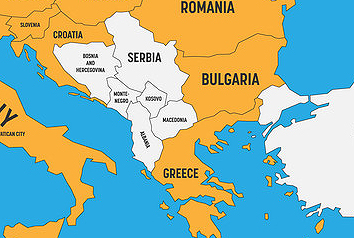
Traditionally, the European Commission adopted its annual assessment of the implementation of reforms in the Western Balkan partners and Turkey, together with recommendations on the next steps for those countries, and published its annual country reports.

Accession negotiations have been opened with candidate countries Montenegro (2012), Serbia (2014), and Turkey (2005). North Macedonia is a candidate country since 2005 and Albania since 2014. Bosnia and Herzegovina (application to join the EU submitted in February 2016) and Kosovo* (Stabilisation and Association Agreement entered into force in April 2016) are potential candidates.

The Commission’s Western Balkans Strategy of February 2018 generated a renewed engagement by the EU and its Member States and created new momentum across the region. One year on, the partner countries have made concrete progress and demonstrated commitment to the European perspective, even if the overall uptake of reforms varies.

The Commission estimated that Albania and North Macedonia have embraced the opportunity and delivered on reforms, in particular in the areas identified as crucial by the Council in June 2018. Even though, same like last year, the Commission recommended that the Council opens accession negotiations with Albania and North Macedonia, the Council still haven’t made such move.

The Commission also issued today its Opinion on Bosnia and Herzegovina’s application for membership of the European Union, together with an analytical report that reviews, for the first time, the situation in the country against all standards applicable to EU Member States. The Commission considers that negotiations for accession should be opened once Bosnia and Herzegovina has achieved the necessary degree of compliance with the membership criteria and in particular the political criteria requiring stability of institutions, guaranteeing notably democracy and rule of law.

DPNSEE extracted segments related to drugs from each of the country reports and packed them in one document. Same like in 2018, it is a pity to see that, almost exclusively, except some references to drug abuse prevention and harm reduction in Chapter 28: Consumer and health protection, the reports deal only with law enforcement related to drugs.

The document we prepared is downloadable following this link>>>
Full versions of the Commission’s documents are available following this link>>>

Coming Out of Unemployment

Youth workers from five countries: Serbia, North Macedonia, Croatia, Montenegro and Bosnia Herzegovina took part in nine days long training hosted by the Association Rainbow in Serbia (Šabac) from 8 to 16 May 2019, for obtaining adequate knowledge about social entrepreneurship and entrepreneurship in general. The concept of training was developed out of the study visit in Spain and personal years-long experience of the Association Rainbow as the project leader in this field.

Participants also learned how to transfer their knowledge as trainers from experienced trainers and now they are able to disseminate the acquired knowledge and skills further in their countries. This will lead to the domino effect where youth workers continue to transfer their knowledge and skills to others through their own trainings after this project is completed, whereas in doing so we increase the duration for which the aims of this project will be achieved.

The Erasmus + project “Coming Out of Unemployment” is related to raising capacity of youth workers with the aim of acquiring knowledge and skills and also raising their professional competence in working on the economic empowerment of the LGBT population through the development of social entrepreneurship. Populations which are not economically empowered cannot adequately nor in the long run advocate for the practicing of their human rights.

The project participants encompass six organizations from Serbia, Macedonia, Montenegro, Croatia, Bosnia Herzegovina and Spain, which want to share experiences and improve the economic position of LGBT persons and in this way secure the fight for their human rights and sustainability of LGBT NGOs in the long run. Members of these organizations will, through active work, acquire knowledge and skills for practical work and further transferring of knowledge in the field of developing social entrepreneurship, raising capacity and empowering young LGBT persons to become entrepreneurs.

One of the results of the project will be “The Manual on the Development of Social Entrepreneurship” which will provide guidelines for future trainers and help them realize their trainings, thus reaching medium-term and long-term aims of this project.

The concluding activity of the project will be a working conference taking place in Serbia. It will gather 100 participants from partner organizations, public institutions, embassies, the donor community, and the media with the aim of presenting the results of the project and influencing the state policy concerning the economic empowerment of the LGBT population.

More about the project is available following this link>>>

Research Publication on the Effectiveness of Cannabinoids on Glioblastoma

Slovenian National Institute of Biology and University Medical Centre Ljubljana, with MGC Pharma Research and Development Division, conducted the study about the treatment of high-grade brain tumours, i.e. glioblastoma with cannabinoids. The general aim of the research was to develop formulations to define the protocols for the treatment.

Study evaluated cannabinoid receptor proteins that may add to identify the most effective cytotoxic cannabinoids, known so far, e.g. CBD and THC ratios and further their possible synergistic effects with chemotherapeutic Temozolomide (‘TMZ’) with regards to the treatment of glioblastoma patients.

Conclusions of the study

Cannabinoids, especially at increasing THC concentrations, reduce the viability of glioblastoma cells.

Targeting glioblastoma stem cells (GSCs) that are more resistant to chemotherapy. GSC has so far proved to be more vulnerable to cannabinoids than were differentiated cell (publication in preparation).

At optimal concentration for each patient, the defined cannabinoids composition represents promising tool to reduce tumour burden.

Research collaboration is part of MGC Pharma’s strategy of partnering with leading research institutions to examine opportunities to develop new pharma products based on proven cannabinoid formulations in pre-and clinical studies.

The study results can be viewed on the Company’s website and will be presented by the National Institute of Biology at the 2nd International Annual Congress on Controversies on Cannabis-Based Medicines in Barcelona, Spain on 23-24 May 2019.

World Health Organisation released first guideline on digital health interventions

The World Health Organisation (WHO) released new recommendations on 10 ways that countries can use digital health technology, accessible via mobile phones, tablets and computers, to improve people’s health and essential services.

Over the past two years, WHO systematically reviewed evidence on digital technologies and consulted with experts from around the world to produce recommendations on some key ways such tools may be used for maximum impact on health systems and people’s health.

One digital intervention already having positive effects in some areas is sending reminders to pregnant women to attend antenatal care appointments and having children return for vaccinations. Other digital approaches reviewed include decision-support tools to guide health workers as they provide care; and enabling individuals and health workers to communicate and consult on health issues from across different locations.

The guideline emphasizes the importance of reaching vulnerable populations, and ensuring that digital health does not endanger them in any way.

The guideline demonstrates that health systems need to respond to the increased visibility and availability of information. People also must be assured that their own data is safe and that they are not being put at risk because they have accessed information on sensitive health topics, such as sexual and reproductive health issues.

The guidelines also makes recommendations about telemedicine, which allows people living in remote locations to obtain health services by using mobile phones, web portals, or other digital tools. WHO points out that this is a valuable complement to face-to-face-interactions, but it cannot replace them entirely. It is also important that consultations are conducted by qualified health workers and that the privacy of individuals’ health information is maintained.

This guideline represents the first of many explorations into the use of digital technologies and has only covered a fraction of the many aspects of digital health.

In 2018, governments unanimously adopted a World Health Assembly resolution calling on WHO to develop a global strategy on digital health to support national efforts to achieve universal health coverage. That strategy is scheduled to be considered at the World Health Assembly in 2020.

To support governments in monitoring and coordination of digital investments in their country, WHO has developed the Digital Health Atlas, an online global repository where implementers can register their digital health activities.

To get more information follow this link>>>

Small grants for community-led monitoring of service quality and satisfaction

The Eurasian Regional Consortium invites you to fill in forms to take part in the call for proposals to receive small grants for community-led monitoring of service quality and satisfaction. The Eurasian Regional Consortium joins the efforts of the Eurasian Coalition on Male Health (ECOM), the Eurasian Women’s AIDS Network (EWNA) and the Eurasian Harm Reduction Association (EHRA).

The call for proposals and the workshop to develop the skills and knowledge in monitoring of service quality and satisfaction are organized with financial support of the Robert Carr civil society Networks Fund (RCNF) within the project “Thinking outside the box: overcoming challenges in community advocacy for sustainable and high-quality HIV services”.

The total budget of the call for proposals is USD 35,000, with the maximum amount of one grant being USD 5,800. The following quotas are set forth for each of the communities:

  • 2 grants for the community of people who use drugs/OST participants;
  • 2 grants for the community of women living with HIV and vulnerable to HIV;
  • 2 grants for the community of gay/bisexual men/trans people.

Most SEE countries are eligible. Even if you are not a community organisation, maybe there are some leaders from the communities or OST clients who would be interested in looking into quality of OST. Only groups of people who use drugs can participate, but the grant could be managed by a harm reduction organization.

All other things being equal, preference will be given to the groups/organizations, which are active members of the Consortium: EHRA, ECOM and EWNA.

More information about the call are available following this link>>>

Hotspots of organized crime in the Western Balkans

A new report by Global Initiative Against Transnational Organized Crime has identified locations in these countries that are hotspots for organised crime.

Rather than focusing on illicit markets, flows of commodities or particular criminal groups, this report looks at places of interest: hotspots of organized crime in the Western Balkans. It looks at the characteristics of these hotspots, then provides a granular analysis of particular border crossings, intersections or regions of vulnerability. What makes these places particularly vulnerable? Why are they attractive to criminals? After discussing these questions, the report connects the dots between these locations to identify possible links and patterns that tell us more about the geography of crime in the region.

Regional illicit flows

To contextualize these organized-crime hotspots, the report provides an overview of the current situation in the Western Balkans, as well as some general information on the main illicit flows. It then looks at hotspots close to border or (internal) boundary crossings.

The other main section of the report focuses on major intersections of organized crime in the Western Balkans – mostly bigger cities (particularly capitals), coastal towns and places where major highways intersect. Maps are provided to show the hotspots as well as key traffic arteries. Amid these assessments, the report takes a deeper dive into vulnerable locations, such as Sarajevo, three ports along the Montenegrin coast, northern Kosovo as well as the triangular region where North Macedonia meets south Serbia and Kosovo.

One key observation of this report, which is important to highlight upfront, is that illicit flows through ports, cities and border crossings in the Western Balkans are enabled by a political economy of crime that is deeply entrenched in most countries of the region. The report therefore takes a look at the ecosystem of crime that creates an environment in which illicit activity can flourish. It concludes with a prognosis of potential future hotspots of crime.

The report is available in EnglishAlbanianBosnian and Macedonian

Planning for the future

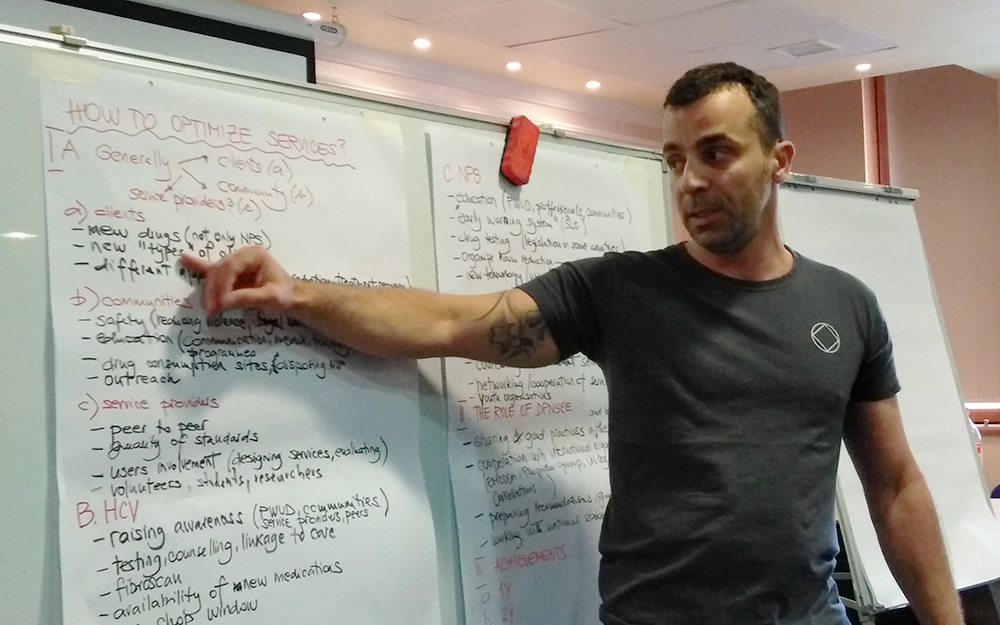
Following the proposal from the General Assembly held in last December, Drug Policy Network South East Europe held a Strategic Workshop from 14 to 17 May 2019. The workshop was held in the Student Resort on Avala Mountain, nearby Belgrade.

At the Assembly, DPNSEE has analysed achievement of aims and objectives of the strategic plan adopted in 2016 and indicated in which way and by which activities the priorities will be followed in the next years. Now, the aim of the Workshop was to continue this process and define DPNSEE strategic priorities, goals and targets for the forthcoming period.

Representatives of all member organisations were invited to participate in the Workshop. 21 participants from 9 countries of the region gathered for a three-day workshop and worked in cooperation. The consultant which helped us to design the Workshop, facilitate work and structure the outcomes was Raminta Štuikyte.

In preparations for the Workshop, DPNSEE member organisations were invited to fill in a survey to present their situation and needs. In addition, a survey was offered to a variety of partners, from national drug agencies to regional and international organisations, to help us understand better the situation and trends in a wider context. The feedback was an important input for the Workshop.

Five priority areas were identified (working titles):

  • Optimisation of services
  • Financial sustainability
  • Regulating drugs
  • Human rights
  • Strengthening the network

For each of them, small groups were discussing questions: What kind of changes you want to see? What Network could do? (types of activities, partnerships…) Which are the priority countries for the issue from the region? Which member organisations could take the lead? Which are potential sources of funding? What should we do in the first two years.

Results of the Workshop are being processed and will be offered to all the member organisations for further development. Following the Workshop, we shall continue strategic work so that the new Strategic Plan is adopted at the annual General Assembly planned for the end of 2019.

Concert for decriminalisation

“The initiative to change the cannabis legislation” – Association IRKA, together with the Social cannabis club Beograd and cannabis vlog Domaćica, organised the Concert for Cannabis Decriminalisation on 4 May 2019, if front of the National Parliament in Belgrade, Serbia. The concert was dedicated to celebration of the International day for cannabis-related protests and events, known around the World as the “Weed Day”.

IRKA is the first official association advocating cannabis legalization in Serbia, founded in August 2013. Members are patients, their family members and all the citizens who want to help them achieve the ability to legally obtain and use cannabis and the extract of cannabis flowers in order to treat their conditions.

A selection of musicians, mainly reggae and rock musicians, performed from late afternoon to the midnight for hundreds of fans and much more people passing by.

LGBT survey on happiness, sex and quality of life

The LGBT Foundation and the United Nations (UNAIDS) partnered with the Universities of Aix-Marseille and Minnesota for this quick survey on happiness, sex and quality of life. Aim of the survey is to better understand social and legal environments and amplify voices, concerns and needs of these communities.

The survey is available in 17 languages. It takes 12 minutes to complete it.

You must be at least 18-year-old to perform this survey. Your responses are completely anonymous. You can choose to skip any question you would prefer not to answer.

To contribute to the survey, please follow this link>>>>