People before politics

Ahead of the 26th Harm Reduction International conference, Harm Reduction International has launched a Call to Action on harm reduction funding and the Global Fund to Fight AIDS, TB and Malaria 6th replenishment.

Funding and political support for harm reduction is in crisis in many countries around the world. Harm reduction is evidence-based, cost effective and has a positive impact on individual and community health. While harm reduction is far broader than HIV prevention, this call to action centres on galvanising urgent action to secure a strong 6th replenishment of the Global Fund, in recognition of the significant impact of HIV and TB on people who use drugs.

The Global Fund aims to raise at least US$14 billion at its 6th replenishment, which will be invested from 2020-22. We believe that more funding is required and support the call of the Global Fund Advocates Network (GFAN) for a replenishment of $18 billion. This will enable the Global Fund to step up the fight to end HIV, TB and malaria, and we urge Global Fund donors to be ambitious in their pledges. A strong and fully-funded Global Fund is vital to the harm reduction response and to delivering on government commitments to end AIDS by 2030.

The Call is on

  • Governments, philanthropic donors and the private sector to step up and fully fund the Global Fund, to make ambitious pledges to ensure the US$18 billion target is reached.
  • Governments to put “People before politics” and ensure that people who use drugs are not left behind in the fight to end AIDS by 2030
  • The Global Fund Board to safeguard catalytic investment funds, regardless of replenishment outcome, in order to sustain life-saving services for people who inject drugs and to incentivise domestic investment in harm reduction.

You can read the Call to Action following this link>>>

You can add your organisation’s name to this call to action via the form here>>>

You can share the Call to Action with your networks/other organisations and on social media, using this tweet


Youth Studies South East Europe

The Friedrich Ebert Stiftung (FES) published reports on the experiences and aspirations of youth in Southeast Europe. The FES carried out a representative region-wide survey on a sample of more than 10.000 young people aged 14 – 29 from ten countries in Southeast Europe in early 2018.

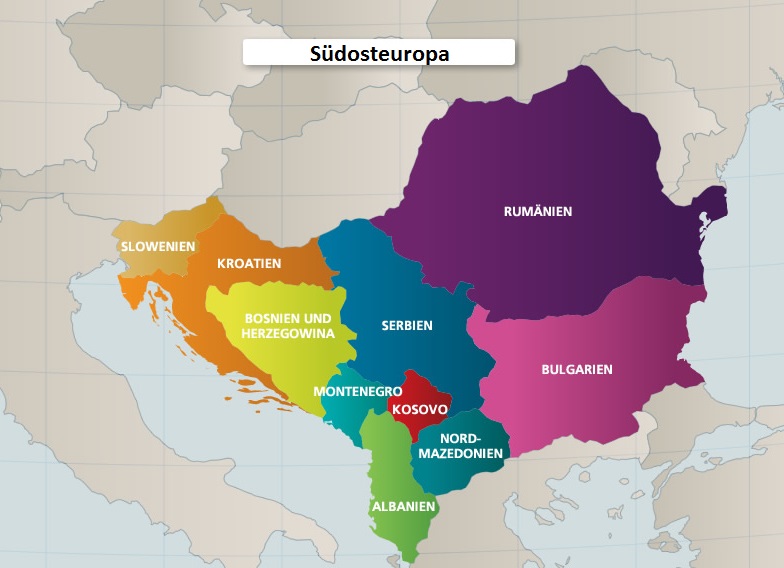
“FES Youth Studies Southeast Europe 2018/2019” is an international youth research project carried out simultaneously in ten countries in Southeast Europe: Albania, Bosnia and Herzegovina, Bulgaria, Croatia, Kosovo*, North Macedonia, Montenegro, Romania, Serbia and Slovenia. The main objective of the surveys has been to identify, describe and analyse attitudes of young people and patterns of behaviour in contemporary society.

A broad range of issues were addressed, including young peoples’ experiences and aspirations in different realms of life, such as education, employment, political participation, family relationships, leisure and use of information and communications technology, but also their values, attitudes and beliefs.

Findings are presented in ten national and one regional study and its accompanying policy papers, which have been published in both English and the respective national languages.

The most important results are grouped under headlines:

  • A wish to belong to Europe
  • Migration and mobility do not have to be zero-sum
  • Fighting corruption as a crime, not as a concept
  • Employment discourse shifting towards the quality of work
  • A different kind of ‘political’…
  • …which has to do with ‘the social’
  • Give youth a say in Europeanisation

To download the regional study and its accompanying policy papers following this link>>>

You can read the national studies at this webpage.

New Correlation Steering Committee elected

Correlation – European network on Social Inclusion and Health, held their first election of the Steering Committee after the reconstruction and enlargement they had in 2018. The Steering Committee is the primary governance and decision-making body of Correlation and consists of the two network coordinators and 6 elected representatives, including at least one community representative.

During the two weeks long open and transparent election process, members of the network had an opportunity to vote among 25 candidates from all around Europe, grouped in three geographic areas. 11 of them were from Central Europe and Balkan and 8 from DPNSEE member organisations.

The result of voting is that almost half of the Committee comes from our region: Péter Sárosi, Mariannela Kloka and Alina Bocai (from our member organisation ARAS). Other Committee members elected are John-Peter Kools, Jose Queiroz, Dirk Schaeffer and Tuukka Tammi.

We congratulate members of the Steering Committee and hope to have a good and fruitful cooperation in the future.

Conference on nightlife, substance use and related health issues

Club health Amsterdam 2019 is the 11th international conference on nightlife, substance use and related health issues, to be held in Amsterdam, 15 – 17 May 2019.

The event marks 20 years of international club health conferences. The 1st International Conference on Nightlife, Substance Use and Related Health Issues was held in Amsterdam in 1999. Club Health conferences have since been held bi-annually in Australia, North America and throughout Europe. The 11th International Conference on Nightlife, Substance Use and Related Health Issues returns to Amsterdam in May 2019. By hosting Club Health Amsterdam 2019, the partners which organise it JellinekGGD Amsterdam and the City of Amsterdam want to demonstrate how partnerships and cooperation between stakeholders can be both productive and rewarding.

The objectives of Club Health Amsterdam 2019 include:

  • To develop understanding of the impacts of nightlife activity and the necessity for creating and maintaining safe and healthy nightlife environments
  • To facilitate the implementation of effective, evidence-based policies, interventions and approaches in nightlife environments that can reduce potential harms
  • To improve knowledge and expertise about how nightlife environments and settings can be developed, managed and sustained effectively
  • To promote multi-agency partnerships and networks at local, national, European and international levels

Club Health brings together experts and stakeholders from a wide range of fields to present, meet and exchange experiences, evidence and views on the latest research, policy and practice relating to protecting and promoting health in urban night-time settings. Previous conferences have developed and/or enhanced a powerful inter-disciplinary international network of academics and practitioners, resulting in European and international research and practice collaborations.

Club Health Amsterdam 2019 will be relevant and of interest to municipal and state policy makers, public health planners, medical and nursing practitioners, drug and alcohol service providers, criminologists, local authorities, transport sector and government agencies, representatives of the various nightlife industries and citizens and customers using or affected by the night-time economy.

To get more information about the Conference, follow this link>>>

A moderate improvement in on the international drug trade in South East Europe

The 2019 International Narcotics Control Strategy Report (INCSR) is an annual report by the Department of State to Congress prepared in accordance with the Foreign Assistance Act. It describes the efforts of key countries to attack all aspects of the international drug trade in Calendar Year 2018.

Volume I covers drug and chemical control activities. Volume II covers money laundering and financial crimes.

For the third year in row, the report classifies four countries of South East Europe as “major money laundering countries” – those whose financial institutions engage in currency transactions involving significant amounts of proceeds from international narcotics trafficking.

The report notes improvement, but these countries remained on this non-popular list. Here are the resumes of the situation.

The Government of Albania made no significant progress toward thwarting money laundering and financial crimes in 2018. Albania remains vulnerable to money laundering due to corruption, growing organized crime networks, and weak legal and government institutions. The country has a large cash economy and informal sector, with significant money inflows from abroad in the form of remittances. Major proceeds-generating crimes in Albania include drug trafficking, tax evasion, and smuggling. Other significant predicates include counterfeiting, arms smuggling, and human trafficking. Smuggling is facilitated by weak border controls and customs enforcement. Albania serves as a base of operations for organized crime organizations operating in the United States, Europe, the Middle East, and South America. Recent justice reforms, vetting of judges and prosecutors for corruption and ties to organized crime, and the creation of a police task force targeting organized crime activities have created a positive trajectory for Albania to address money laundering and financial crimes. These efforts, however, are still challenged by pervasive corruption.

Bosnia and Herzegovina (BiH) has a primarily cash-based economy and is not an international or regional financial center. BiH is in the middle of the Balkans and has open borders with Croatia, Serbia, and Montenegro. A Visa Liberalization Agreement with the EU enables easy transit from Eastern Europe and the Balkans region to countries in Western Europe. BiH is a market and transit point for smuggled commodities, including cigarettes, firearms, counterfeit goods, lumber, and fuel oil.

BiH recently has made substantial progress, not only strengthening its AML regime, but harmonizing its laws across its numerous legal systems, including laws related to money laundering and asset forfeiture. BiH has a complex legal and regulatory framework with criminal codes and financial sector laws at the state and entity levels (Federation of BiH (FBiH) and Republika Srpska (RS)), and in the Brčko District (BD).

BiH completed its National Risk Assessment of Money Laundering and Terrorist Financing in the Period 2018-2022 (NRA) in September 2018, which identifies notaries and real estate agencies as the highest-risk sectors.

In 2018, Serbia made a high-level political commitment to address noted deficiencies and has subsequently made significant progress in bringing its AML regime in line with international standards, resulting in an increased number of related investigations and convictions. With assistance from donors, Serbia updated its national risk assessment (NRA) to better identify current threats or crimes associated with money laundering and methods used to launder money and finance terrorism.

Turkey is an important regional financial center, particularly for Central Asia and the Caucasus, the Middle East, and Eastern Europe. Turkey’s rapid economic growth over the past 15 years combined with its commercial relationships and geographical proximity to areas experiencing political turbulence, such as Iraq, Syria, and Crimea, make Turkey vulnerable to money laundering risks. It continues to be a major transit route for Southwest Asian opiates moving to Europe. In addition to narcotics trafficking, other significant sources of laundered funds include smuggling, invoice fraud, tax evasion, and to a lesser extent, counterfeit goods, forgery, highway robbery, and kidnapping. Recent conflicts on the southern border of Turkey have, to a small extent, increased the risks for additional sources of money laundering. In 2018, Turkey implemented new regulations on the registration and supervision of foreign exchange houses, passed a tax amnesty law, and the government underwent a restructuring, resulting in new ministries.

To read the 2019 International Narcotics Control Strategy Report follow this link>>>>

Protection of health-related data

The Council of Europe has issued a set of guidelines to its 47 member states urging them to ensure, in law and practice, that the processing of health-related data is done in full respect of human rights, notably the right to privacy and data protection.

With the development of new technological tools in the health sector the volume of health-related data processed has grown exponentially showing the need for guidance for health administrations and professionals.

In a Recommendation, applicable to both the public and private sectors, the Council of Europe´s Committee of Ministers, calls on governments to transmit these guidelines to health-care systems and to actors processing health-related data, in particular health-care professionals and data protection officers.
The recommendation contains a set of principles to protect health-related data incorporating the novelties introduced in the updated Council of Europe data protection convention, known as “Convention 108+”, opened for signature in October 2018.

The Committee of Ministers underlines that health-related data should be protected by appropriate security measures taking into account the latest technological developments, their sensitive nature and the assessment of potential risks. Protection measures should be incorporated by design to any information system which processes health-related data.

The recommendation contains guidance with regard to various issues including the legitimate basis for the data processing of health-care data – notably consent by the data subject -, data concerning unborn children, health-related genetic data, the sharing of health-related data by professionals and the storage of data.

The guidelines list a number of rights of data subjects, crucially the transparency of data processing. They also contain a number of principles that should be respected when data are processed for scientific research, when they are collected by mobile devices or when they are transferred across borders.

To read the Recommendations, follow this link>>>

International Guidelines on Human Rights and Drug Policy

Responding to the harms associated with drug use and the illicit drug trade is one of the greatest social policy challenges of our time. All aspects of this challenge have human rights implications.

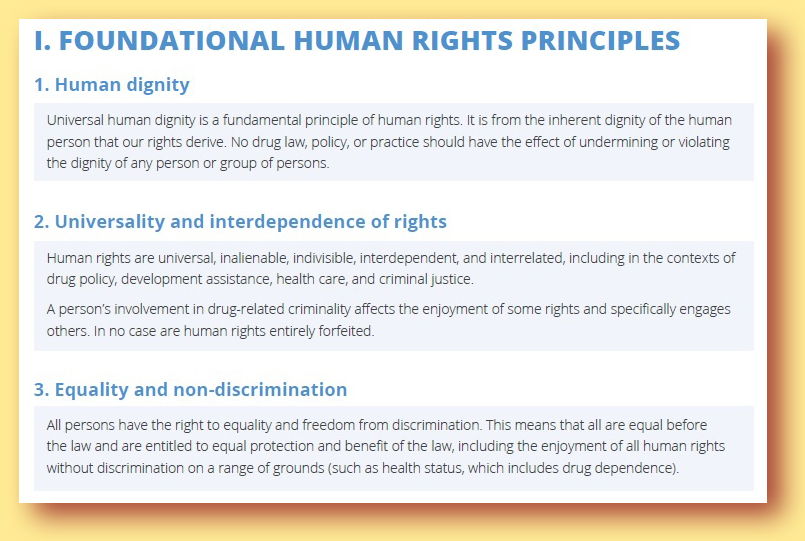
Drug control intersects with much of the 2030 Agenda for Sustainable Development. In line with the 2030 Agenda, the UNDP Strategic Plan 2018 – 2021 and the HIV, Health and Development Strategy 2016 – 2021: Connecting the Dots, the International Guidelines on Human Rights and Drug Policy provide a comprehensive set of international legal standards for placing human dignity and sustainable development at the centre of UN member states responses to illicit drug economies. The guidelines cover a diverse set of substantive issues ranging from development to criminal justice to public health.

The guidelines were developed by a coalition of UN Member States, WHOUNAIDSUNDP and leading human rights and drug policy experts. The Guidelines are an example of the support provided to practically integrate international human rights commitments into national, regional and global policy and programmes.

The drugs issue cuts across the 2030 Agenda for Sustainable Development and multiple Sustainable Development Goals, including ending poverty, reducing inequalities and, of course, improving health, with its targets on drug use, HIV and other communicable diseases. Goal 16 on peace, justice and strong institutions is particularly important, requiring attention to human rights across the Sustainable Development Goals. Since the late 1990s, UN General Assembly resolutions have acknowledged that ‘countering the world drug problem’ must be carried out ‘in full conformity’ with ‘all human rights and fundamental freedoms’. This has been reaffirmed in every major UN political declaration on drug control since, and in multiple resolutions adopted by the Commission on Narcotic Drugs.The reality, however, has not always lived up to this important commitment.

The Guidelines are based on both ‘hard law’ and ‘soft law’ sources – those that are legally binding and those that are authoritative but not binding per se. With very few exceptions, the general descriptions of rights are drawn from binding treaty provisions.

However, since very few human rights treaty provisions address drug control directly and since the application of general rights to specific groups requires a more in-depth analysis, much of the guidance presented throughout the document is based on UN resolutions and declarations, the general comments and concluding observations of UN human rights treaty bodies and the work of UN human rights Special Procedures. Findings of regional human rights courts and national courts are also cited. Such jurisprudence, which is binding for the relevant countries, is cited in the Guidelines as being persuasive of a particular application of a right.

The Guidelines are not a ‘toolkit’ for a model drug policy. The Guidelines are a reference tool for those working to ensure human rights compliance at local, national, and international levels, be they parliamentarians, diplomats, judges, policy makers, civil society organisations or affected communities.
This longer version of the Guidelines will be available on an interactive website where readers may search by specific rights, drug control themes, and other key words, as well as follow links to source material.

To read and download Guidelines on human right and Drug policy follow this link>>>

#SoS_project launched

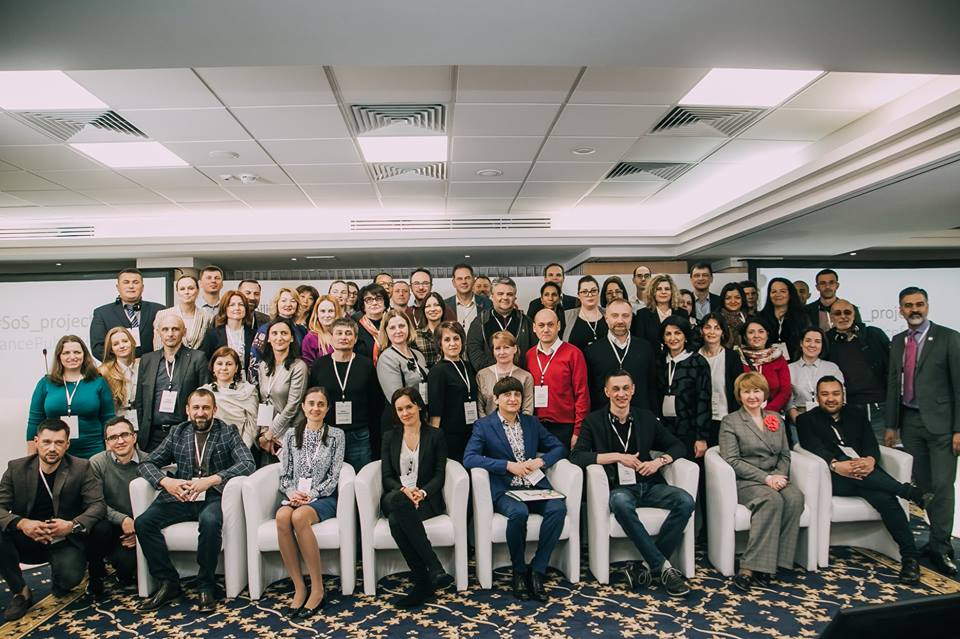
Alliance for Public Health, leading a regional consortium uniting Network of People living with HIV/AIDS 100% Life, Central-Asian PLH Association and Eurasian Key Populations Health Network (EKHN), manages the multi-country project ‘Sustainability of services for key populations in Eastern Europe and Central Asia region’, funded by the Global Fund in amount up to USD 13 million. The project will be implemented throughout 2019-2021 and aims to reduce the HIV epidemic in the Eastern Europe and Central Asia and South East Europe regions through accelerating progress on Fast-Track by 2020 and to ensure the sustainability of HIV services for key populations in 14 countries of the regions: Belarus, Bosnia and Herzegovina, Georgia, Kazakhstan, Kyrgyzstan, Moldova, Montenegro, North Macedonia, Romania, Russia, Serbia, Tajikistan, Ukraine and Uzbekistan.

The project launch meeting was held on 26 March 2019 in Kyiv, Ukraine. It gathered all implementing partners, regional and global stakeholders, donors active in the region to discuss the program approaches and plans, get strategies advise and coordinate with other regional initiatives to maximize impact of investment.

At the project coordination meeting on 27 March all regional consortium members, project sub-recipients, implementing and technical partners in the region to discuss and coordinate the concrete plans and timelines for project activities among the implementers.

To achieve the expected savings, the project will develop strategies for optimizing the cost of ART regimens, which will lead to a decrease in the average cost of first-line ART. Advocacy activities will also be carried out aimed at reducing prices for ARVs and using savings to finance the needs of prevention and care services for the Key Groups and PLHIV. In addition, work to optimize clinical guidelines for ART, a list of drugs in accordance with WHO guidelines is planned, as well as advocacy to include countries in voluntary licensing and registration of generic manufacturers.

Andriy Klepikov, the Executive Director of the Alliance for Public Health, said that almost half of these funds ($ 5.6 million) will go to the advocacy of the reduction of prices for ARV drugs and optimization of procurement mechanisms.  Another quarter of the project budget ($ 3.2 million) is planned for budget advocacy. $ 1.6 million is provided for the removal of legal barriers, the same amount for project management. Another $ 1 million will go to operational research.
“The idea is not only to throw in some initiatives, but simultaneously with such interventions to launch operational research, which will help identify and prove their effectiveness,” explained Klepikov. – “It worked, in particular, in Ukraine. But we would not want other countries to take it on faith. In each country for advocacy, before the Ministry of Health will start funding, it is important to get a serious evidence base, which is collected through operational research”.

DPNSEE member organisations Cazas and Timok Youth Centre will be sub-recipients of the project in Montenegro and Serbia, while HOPS is involved in project implementation in North Macedonia.

Nova stranka first to sign “Declaration on Sustainable National Response to HIV”

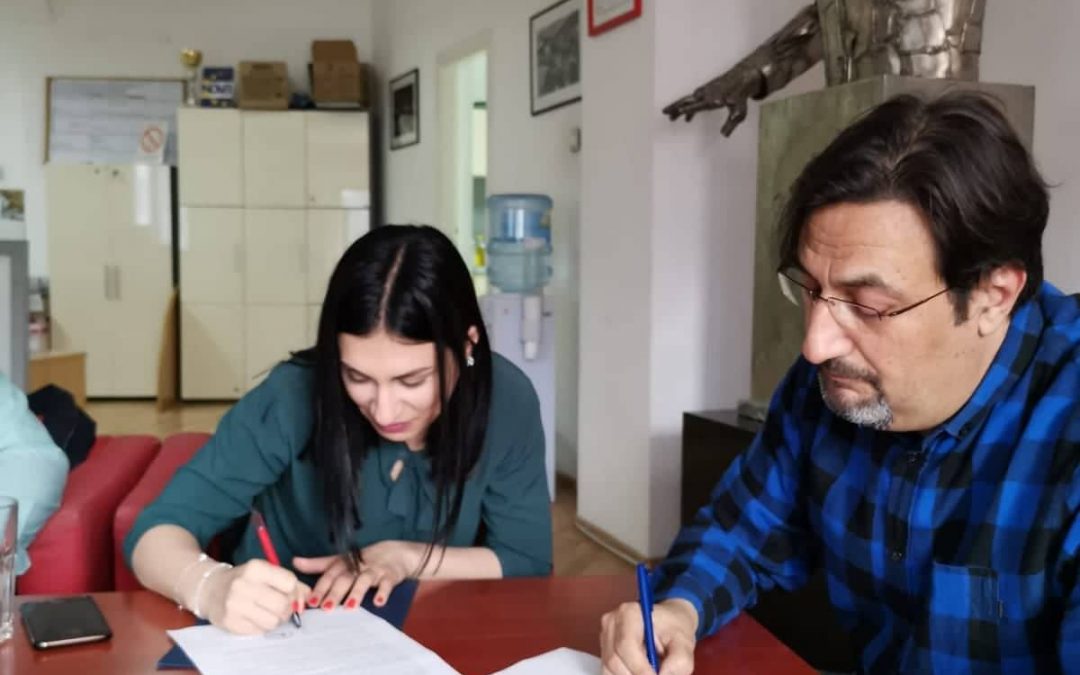
Nova stranka  is the first political party in Serbia which signed the Declaration for sustainable national response to HIV, proposed by the Group for Analysis of Public Policies (GAJP) as part of their project Political support to the harm reduction programmes. Aim of this project is to invite all political parties in Serbia to sign the Declaration that will oblige them to support harm reduction programmes and their financing from budgetary sources in their future work and participation in legislative and executive bodies.

The President of the Council of the Nova stranka, Aris Movsesian said that it is normal for the Nova stranka, as well as all other political parties, to sign this declaration.  Nova stranka is committed to joining the European Union, and the last year’s European Commission report calls for regulating the treatment of HIV patients, specifically in Chapter 28 where such measures are proposed. Nova stranka also emphasises in point 8 of their Action Plan the problem of relations with vulnerable groups of citizens.
Movsesian invited other political parties to follow our example and make such a civilization step.”

The declaration is developed in scope of the Budget Advocacy and Monitoring in South East Europe project. The project is managed by DPNSEE, and coordinated in Serbia by the Association Prevent.

To read the news from the signing of the declaration in Serbian follow this link>>>.

How have closing of services affected drug users?

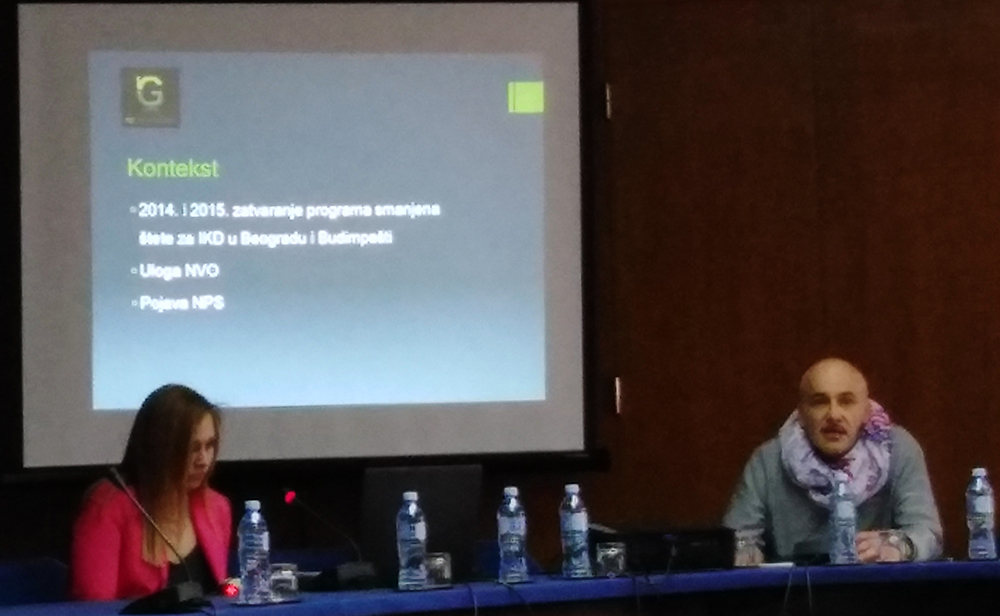
DPNSEE member organisation Re Generacija implemented the survey “Access to services of ex-users of the needle and syringe programme closed in Belgrade and Budapest” with the support of the Rights Reporter Foundation. Aim of the survey, implemented in 2018, was to analyse the consequences of closing the services and the effects that it has on risks and daily life of injecting drug users. Objectives included to reach out to the service users and learning about their current use of substances, mapping their access to services, sterile injecting equipment and analysing their perception of the closure of services and most important currently missing service. The conference was also an opportunity to discuss the current situation with recently established outreach programmes, as well as opioid substitution therapy and early warning system for new psychoactive substances.

The results of the survey were presented today at the conference organised together with the Office for Combating Drugs of the Government of Republic of Serbia. The conference was held in the Palace of Serbia, with participants coming from both governmental and civil society sectors.

Two major groups of users were approached by the survey: drug users which were using the services for a long time and Roma people. A typical drug user both in Belgrade and Budapest is male, in mid-forties, with low education and income. In Budapest, users mainly use new psychoactive substances (synthetic cathinones), while in Belgrade they mainly use opioids (heroine). One of the main conclusion from the survey is that closing the services caused even more difficulties to reach out to drug users who are usually very suspicious.

To get more information and results of the survey, please contact Re Generacija following this link>>>>.