Policy Webinar: Universal Health Coverage for People Who Use Drugs

On 10 October 2025 (World Mental Health Day), the Eurasian Harm Reduction Association hosted a regional webinar under the EU4Health-funded BOOST project.

The webinar brought together speakers from WHO Europe, regional community networks and frontline services in Czechia, Lithuania and Romania. Participants joined from across Europe and neighbouring regions, including civil society organisations, community leaders, harm reduction professionals, clinicians and policymakers.

UHC that excludes PWUD is not universal

Opening the webinar, Ganna Dovbakh, Executive Director of EHRA, underlined that UHC cannot be called universal if it systematically excludes people who use drugs. She highlighted that in many countries, people who use drugs face a combination of criminalisation, stigma, fragmented services and poverty, which keeps them at the margins of health systems even where UHC frameworks formally exist.

Stela Bivol, from the WHO Regional Office for Europe, provided the global and regional policy context. She stressed that there is “no health without mental health” and no UHC without including people who use drugs and people with mental health and substance use conditions. She outlined WHO guidance on integrating mental health and substance use care into primary care, HIV and hepatitis services, and harm reduction, including the updated mhGAP recommendations and the new WHO clinical guidance on mental health and HIV.

Stela also drew attention to gender and intersectionality: women who use drugs, migrants, sex workers and LGBTIQ+ people often experience combined stigma, violence and rights violations that further reduce their access to care. Emergencies, such as the war in Ukraine, intensify mental health needs while disrupting services, making integration and task-sharing even more critical.

Communities as essential health actors

From the perspective of people who use drugs, Ligia Parodi (EuroNPUD) described UHC as “an empty promise” when people who use drugs are excluded by design through punitive drug policies and institutional discrimination. She stressed that fear of punishment, surveillance and institutional violence keeps people away from health services, and that many deaths and harms are the direct result of political choices.

Ligia highlighted community-led and peer-led initiatives, including BerLUN in Germany, Young Wave in Lithuania, and CASU and the women’s group MUSA in Portugal, which provide navigation, mutual support and advocacy on minimal budgets. These examples show that peers are already acting as health workers and system navigators, yet remain largely invisible and underfunded in UHC plans.

She called for decriminalisation, stable funding for community-led services, and meaningful participation of people who use drugs in decision-making bodies at national and EU levels, as well as in monitoring the quality and accessibility of UHC for key populations.

Integrated models from Czechia, Lithuania and Romania

The webinar showcased practical examples of integrating harm reduction and addiction care within UHC systems.

Radek Jurnikl (SANANIM, Czechia) presented a multidisciplinary outreach and low-threshold programme in Prague that combines social work, psychological support, nursing, psychiatric input and close collaboration with hospitals. The team provides street outreach, harm reduction services and on-site hepatitis C testing and treatment, as well as “hospital outreach” to ensure that patients discharged from hospital are immediately connected to OAT, shelter and follow-up support.

From Lithuania, Giedrius Likatavičius described the work of the Republican Centre for Addictive Disorders, which combines inpatient and outpatient care and runs an OAT programme with a dedicated budget line for people without health insurance. Social workers and nurses are embedded in low-threshold services to link clients to treatment and to HIV and hepatitis services. Lithuania’s model shows how mixed funding and dedicated lines for uninsured people can improve access, although stigma and weak financial incentives still limit decentralisation of OAT to primary care.

Monica Dan (ARAS, Romania) provided a contrasting picture from a more restrictive context. ARAS has offered harm reduction and OAT for decades, but services remain underfunded and not fully free of charge. Recent cuts to health insurance pathways have reduced access to treatment for many people who use drugs. At the same time, civil society must constantly resist new punitive legal initiatives. Monica underlined that without enabling legal frameworks and sustainable financing, even strong community-based services cannot deliver true UHC.

From evidence to advocacy

In the second half of the webinar, EHRA presented the joint BOOST advocacy strategy and the new policy brief: Advancing Universal Health Coverage for People Who Use Drugs in Europe, which translate these experiences into policy demands. The brief calls for harm reduction, OAT and mental health services to be explicitly included in UHC benefit packages; for peer navigators and low-threshold models to be recognised and funded; and for EU institutions to create or adapt funding mechanisms that reach community-led organisations.

Participants discussed the risk of over-medicalisation, the need to address self-medication and trauma, and the mental health needs of outreach workers and activists themselves. There was broad agreement that integrated and community-linked models are technically feasible and cost-effective, but remain politically fragile without decriminalisation, sustainable financing and meaningful community participation.

The webinar forms part of BOOST’s broader regional work on health, harm reduction and human rights. EHRA and partners will now use the policy brief and webinar outcomes to inform advocacy towards EU institutions, national governments and donors, ensuring that people who use drugs are not left behind in Europe’s push towards universal health coverage.

The recording from the webinar is available below
https://youtu.be/TQpJ3t5 KL_s


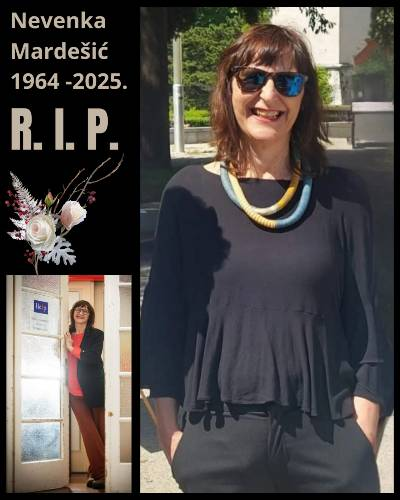
Farewell Nena

Our dear friend and colleague, president of the HELP association, Nevenka Mardešić, left us 21 September.

We will remember her for her kindness, humanity, cheerfulness and selflessness, courage and struggle, with which she enriched many lives.

Sincere condolences to the family.

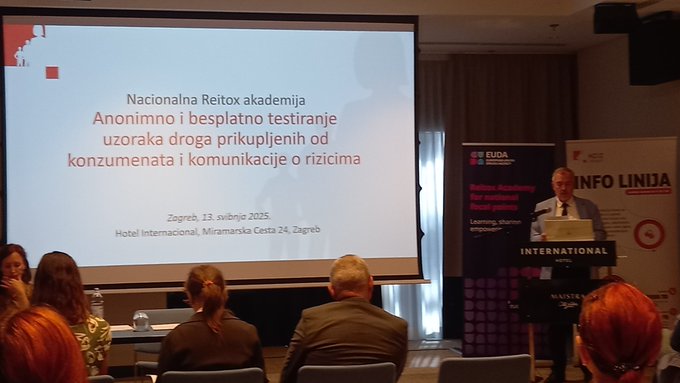
National Reitox academy in Croatia

The Croatian Institute of Public Health and the European Union Drugs Agency (EUDA) organized the National Reitox Academy on Science-Based Prevention on 16 September 2024 in Zagreb. DPNSEE Executive Director Milutin Milošević participated on the invitation from the Institute.

The aim of this expert meeting was to present the principles of science-based prevention and examples of quality prevention programs implemented in other countries, and to open a discussion on models for improving national prevention interventions.

Namely, epidemiological indicators of the prevalence of substance use in recent years show an increase in the consumption of addictive substances among young people. At the same time, the National Strategy for Action in the Field of Addiction by 2030 and the accompanying Action Plan, adopted in January 2024, emphasize that preventive activities need to be implemented through an integrated, multidisciplinary and science-based approach and coherent action of all departments at the national and local levels. The aforementioned strategic documents also emphasize the need to develop, implement, sustain and improve the availability of quality, scientifically based and proven effective projects and programs for the prevention of addiction and behavioral addictions. This is precisely why the National RTX Academy was held, which represents a continuation of the HZJZ’s investment in quality – proven effective prevention.

The meeting was opened by the representative of the European Union Agency for Drugs, Mr. Gregor Burkhart, MD, and welcoming speeches were given by the representative of the Ministry of Science, Education and Youth – Ms. Marijana Gojčeta, and on behalf of the Ministry of Health and the Croatian Institute of Public Health – Assoc. Prof. Dr. Sc. Krunoslav Capak, prim. MD, spec., Director of the HZJZ. Lectures and a panel discussion were given by experts in the field of prevention from the European Union Agency for Drugs, and from Estonia, Spain, Brazil, Germany, Austria, Bosnia and Herzegovina and Croatia.

The panel discussion discussed the challenges and key factors influencing the implementation of proven effective programmes and approaches, with particular emphasis on the importance of faithful implementation, inter-institutional cooperation, the need to align prevention strategies with previously conducted needs assessments, the need to conduct short-term evaluations as well as scientific evaluation studies, strengthening the implementation of prevention strategies in the environment, and the need to harmonize prevention systems.


New Policy Brief Out: Where There Is Fruit, There Is Seed: Scaling Up Community Involvement for Integrated, Responsive, and Sustainable Harm Reduction

This policy brief underscores the transformative potential of community-led responses in driving sustainable harm reduction strategies. It highlights the indispensable role of communities in addressing the intersecting challenges of HIV, TB, and viral hepatitis, while aligning with global targets.

By emphasizing actionability, measurable progress, and equity, this brief calls for urgent investment in community leadership to ensure no one is left behind. Scaling up community-led responses is essential to achieving sustainable and equitable health outcomes and policymakers must prioritize investment in these initiatives, ensuring measurable progress and inclusive participation.

The EU4Health BOOST project exemplifies how collective action and investment in community-led initiatives can drive meaningful change and achieve sustainable health outcomes for all. Together, we can build a future where harm reduction strategies are inclusive, responsive, and transformative.

A policy webinar focused on addressing challenges and exploring recommendations to enhance community involvement in harm reduction is scheduled for November 1st, in commemoration of International Drug Users Day (IDUD).

Read the full policy brief here >>>.


New policy brief calls for a decriminalisation model whereby all drugs are decriminalised

The criminalisation of use, possession for personal use, and other related behaviours may have negative impact on people who use drugs, local communities, and the whole society, particularly in terms of access to health and social services.

Several actors in the field of drug policy have indicated that a punitive approach is counterproductive to achieving the health and welfare of humankind and many UN agencies have reported the negative impact of criminalisation on people who use drugs and on their surrounding communities.

The decriminalisation of drug use and related activities is a policy option that is widely supported as a core component of a human rights- and health-based approach towards people who use drugs. Decriminalisation refers to the removal of criminal status from a certain behaviour or action. This does not mean that the behaviour is legal, as non-criminal penalties may still be applied. This process aims to remove the stigma against people who use drugs as well as to ensure that they have access to a broad range of support and health services, including prevention, treatment, recovery, and harm reduction.

This publication, prepared by the Drug Policy Network South East Europe, is part of the EU-funded BOOST project, which supports community-led advocacy for inclusive health systems across Europe.

Read the full policy brief here>>>.


No Health Without Rights: New Policy Brief Urges Universal Health Coverage for People Who Use Drugs in Europe

In support of the EU Drug Policy Campaign 2025, the Eurasian Harm Reduction Association (EHRA), together with the Correlation – European Harm Reduction Network (C-EHRN), the European Network of People Who Use Drugs (EuroNPUD), and the Drug Policy Network South East Europe (DPNSEE), has released a new policy brief: Advancing Universal Health Coverage for People Who Use Drugs in Europe.

The brief calls for urgent reforms to ensure equitable access to healthcare for one of the region’s most marginalized populations. It outlines how people who use drugs continue to face systemic barriers to essential services—including harm reduction, mental health care, and treatment for infectious diseases—despite longstanding EU commitments to Universal Health Coverage (UHC) and the Sustainable Development Goals.

Universal health coverage must mean everyone – especially those most often left behind,” said Ganna Dovbakh, Executive Director at EHRA. “This paper is a roadmap for the EU and governments to close the gap between policy and practice.

A policy webinar to discuss the brief’s findings and recommendations is planned for 10 October, marking World Mental Health Day.

The release of the brief aligns with the EU Drug Policy Campaign 2025, which calls on EU institutions to adopt a health- and rights-based approach in the upcoming EU Drug Strategy (2026–2030).

This publication is part of the EU-funded BOOST project, which supports community-led advocacy for inclusive health systems across Europe.

Read the full policy brief here>>>.


Policy Paper: “Harm Reduction Works! A call to invest in a European health-based drug policy”

The new policy paper outlines urgent recommendations for the EU and Member States, including

  1. Making drug use an EU health priority;
  2. Ensuring a balanced EU Drug Strategy 2026–2030;
  3. Establishing dedicated EU-level funding for harm reduction; and
  4. Prioritising decriminalisation and responsible regulation.

You can also find our “Communication Package & Advocacy Toolkit” for your use.

This toolkit supports civil society and national stakeholders to engage with policymakers at both the EU and national levels. It includes a Canva template for translating the policy paper; ready-to-use social media content and visuals; customisable email templates for outreach; and advocacy tips and ideas for national action.

Read the full policy paper here>>>.


Amending the Criminal Law in Serbia

The working group of the National Convention on the European Union for Chapter 23 held a regular session on 21 December 2023 in the Palace of Serbia, dedicated to the implementation of the obligations of the Republic of Serbia from Chapter 23 with a focus on amending the Criminal Code and the Criminal Procedure Code. The meeting was attended by members of the NKEU working groups for Chapter 23 and Chapter 24, representatives of the Ministry of Justice and the Ministry of Internal Affairs, and members of the working groups working on amendments to the laws in question.

The session began with introductory presentations by Jovana Spremo, from the Committee of Lawyers for Human Rights, coordinator of the NKEU Chapter 23 working group, and Branislav Stojanović, head of the negotiating group for Chapter 23 and assistant to the Minister of Justice. They pointed out the importance of the topic of the session, i.e. amendments to the Code of Criminal Procedure and the Criminal Code in the context of the implementation of obligations from Chapters 23 and 24. After them, Vladimir Vinš, assistant to the Minister of Justice and a member of the working groups for amendments, spoke, who informed the attendees about the work of the working groups so far. Neda Marković, senior adviser at the Ministry of Justice, presented the current direction of amendments to this important law.

During the discussion, DPNSEE Executive Director Milutin Milošević spoke about the legal regulation of drug use and advocated its decriminalization. Decriminalization means abolishing the criminal offense and treating drug use as a misdemeanour. This would lead to an end to stigmatization and discrimination, as well as reduced pressure on the police, prosecutor’s offices and correctional institutions.

The participants agreed that this type of contribution in the form of specific comments by members of the RG NKEU for Chapter 23 on the exposed drafts of the CC and the CPC is useful, and that it should be continued in a similar format, only to propose specific subtopics or parts of the law that would be discussed.

Following the meeting, as agreed with Mr Branislav Stojanović, head of the negotiating group for Chapter 23 and assistant to the Minister of Justice, DPNSEE submitted a formal proposal for amendments that include decriminalisation of drug use and the possession of drugs for personal use and discrimination and stigmatisation of people who live with HIV.