Progress of Serbia in Chapters 23 and 24 – May 2020

The Coalition prEUgovor, which consists of seven civil society organizations from Serbia with expertise in various policies under chapters 23 and 24 of the European Union accession negotiations, publishes a semi-annual independent report on the progress of Serbia in chapters 23 and 24. Today, they presented the Report on Progress of Serbia in Chapters 23 and 24 – May 2020.

PrEUgovor’s monitoring of reforms in chapters 23 and 24 and certain political criteria of EU accession process indicates that, in most fields, the tendency of deterioration has continued during the period from October 2019 to April 2020. This was further exacerbated during the COVID-19 pandemic in the last two months, especially after the state of emergency was declared on March 15.

In this prEUgovor Alarm report, special attention was given to the impact of the state of emergency – which President Vučić defined as “war against an invisible enemy” – on democracy, fundamental rights and freedoms, rule of law, and security and justice in Serbia. Controversy was raised by the very declaration of the emergency state by circumventing the Parliament, without offering proper reasoning as to why it could not convene. Preparations for the elections were suspended, but public officials continued their promotional campaign in favour of the ruling party. Public procurement rules were marginalised due to the pressuring need to “save citizens’ lives”. There was serious concern about the constitutionality of the imposed restrictive measures; however, the Constitutional Court remained silent on these issues.

Free access to information of public importance and media freedoms were de facto suspended at one point, while personal data protection was put to the test. Restricted movement and slowed-down work of institutions affected especially vulnerable groups such as women and children, victims of domestic violence or human trafficking, migrants and others.

Even political commitment to European integration suffered, from the very beginning of the public health crisis, due to statements of top officials criticising alleged lack of EU solidarity while praising and pleading help from “brotherly” China. The state of emergency ended on 6 May by the decision of the National Assembly.

To read full report, follow this link>>>.

COVID-19 Stories of Substance

Against the backdrop of the COVID-19 pandemic, being connected, joint strategising and sharing stories from the ground is as critical as ever as we collectively work to protect human rights, ensure the health and well-being of the communities most affected by the war on drugs, and end repression and punishment as instruments of drug control.

The IDPC Secretariat have been continuing to seek ways to better support information sharing and lessons learned from across the network as we face the challenges brought by COVID-19 and the responses governments are taking. In April, they launched a survey for their members (in English, Spanish, French and Thai) to capture this information. The survey remains open indefinitely for responses and previous entries can also be added to with new information. IDPC are now ready to begin sharing some of the rich information that has been provided by their members and others in the form of a new short fortnightly newsletter.

Each COVID-19 Stories of Substance newsletter will feature a couple of relevant stories and lessons shared by people who have responded to IDPC dedicated survey on COVID-19. It will also include a curated list of news and updates every two weeks, with a specific focus on the COVID19 pandemic and its various impacts on the drug market, drug policy and related advocacy, harm reduction services, community-led mobilisation/movement, funding opportunities, and many more. IDPC will also flag upcoming online events of interest, and provide links to access recordings of recent ones.

To receive this newsletter please sign up here>>>.


Support. Don’t Punish regional campaign

For the fourth year already, DPNSEE coordinates the Support. Don’t Punish global advocacy campaign calling for better drug policies that prioritise public health and human rights. The campaign aims to promote drug policy reform, and to change laws and policies which impede access to harm reduction interventions.

This year we organise a larger campaign, which will be part of our general efforts to ensure sustainability of services for people who use drugs in South East Europe – those that are under threat of being marginalised and side-lined as consequence of the coronavirus outbreak.

The DPNSEE Board decided to hold a regional campaign using social media to spread messages around. We prepared a set of up to 20 messages with combination of quotes from Kofi Annan‘s speeches and appropriate photographs, ready for use in Facebook, Tweeter and Instagram. They will be posted throughout June 2020, most frequently around 26 June, the Global Day of Action of the Support. Don’t Punish campaign and the International Day Against Drug Abuse and Illicit Trafficking.

We offered all our member organisations to share the messages through your networks. The messages will be translated in various languages and it will be simple to post and schedule their dissemination following dynamic we shall define. For the moment, 14 our organisations from 8 countries post and share the slides.

We warmly encourage all other organisations and individuals to share the messages and so contribute to the success of the campaign worldwide.


UNAIDS Strategy Beyond 2021 Development Process

Text from the NGO Delegation to the UNAIDS PCB

UNAIDS is now in the process of developing its next Strategy for 2021 and beyond. The timeline for developing the Strategy was supposed to have started early this year, but it was hampered by the COVID-19 pandemic. It has now been extended to accommodate a longer consultation period to ensure a full and more meaningful engagement of all stakeholders in the process. These details are reflected in the PCB Paper “UNAIDS Strategy Beyond 2021” which is posted to the UNAIDS website.

In order to determine the new goalposts and targets, it is important to take stock and review the existing strategy, UNAIDS 2016-2021 Strategy. This consultation process will involve interviews, focus group discussions and an online survey that will culminate in a multi-stakeholder consultation no later than September 2020.

As a first step in engaging communities and civil society more widely, we invite you to respond to the Online Survey. This 15-20 minute survey is an opportunity to obtain perspectives on how UNAIDS is reaching its goal to end AIDS as a public health threat by 2030 as part of the Sustainable Development Goals. Is the current strategy successful or not? Did it effect change? What should have been done better? Where should the next Strategy be headed? Your perspectives on these themes will help inform and shape the content of the next Strategy, so that it is more responsive, inclusive, progressive and bold in the goals and targets it will set for the global HIV response beyond 2021.

Survey Links:

English: 

Español: 

Français:

Português:

Русский:

中文:

العربية:

Impact of COVID-19 in Western Balkans

The EMCDDA has initiated a project investigating the impact of COVID-19 on people who use drugs, drug markets and challenges for drug service provision in the Western Balkans.

The  project is conducted using an adapted version of the Trendspotter methodology with the objective to increase our understanding of the impact of the COVID-19 epidemic and national containment measures on  patterns of drug use, emerging harms and challenges and adaptations of  drug service providers in the Western Balkan region, as well as identify potential national best practices in responding to  this public health challenge. We take a step-wise approach with the first investigation focusing on service provision, followed by drug use patterns and risks and security issues.

The  investigation has multiple components  – namely expert surveys and facilitated groups.

The survey is available here: https://ec.europa.eu/eusurvey/runner/Covid-19-IPA7-health. The deadline for completing it is the 12th of June.

In the second step, EMCDDA will be approaching regional experts from drug services and informed about service provision (OST, needle exchange programmes, harm reduction, treatment, drug services in prisons) in order to get a more in-depth understanding of the developments via facilitated groups.


Drug-related infectious diseases in Europe

Excerpts from the EMCDDA press release

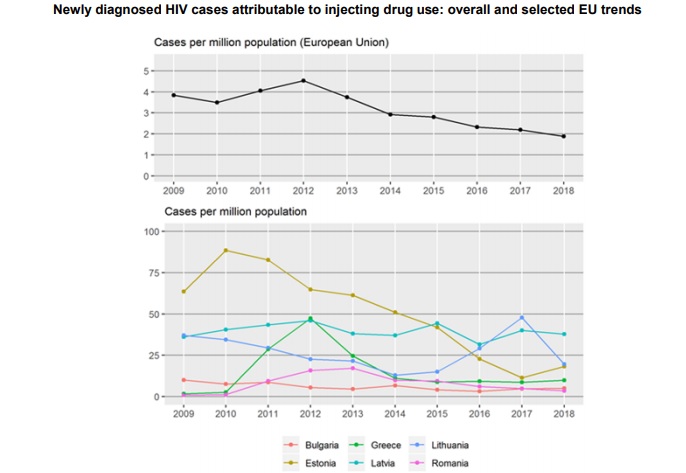
Testing for drug-related infectious diseases among people who inject drugs (PWID) is crucial if international health targets are to be met. This is among the conclusions of a new EMCDDA report Drug-related infectious diseases in Europe. The update, from the agency’s drug-related infectious disease network, stresses that early diagnosis through testing, and improving links to treatment and care, are crucial steps towards reaching global health goals.

Launched during European Testing Week (15–22 May), the report offers an overview of drug-related infectious diseases among PWID in Europe, including the prevalence and incidence of HIV and viral hepatitis. It also tracks progress on health targets and showcases successfully implemented evidence-based interventions. It underlines the need to ramp up prevention and testing and signals that European countries are lagging behind when it comes to treating hepatitis C virus (HCV) and HIV among PWID.

HIV and chronic viral hepatitis are highly prevalent among people who inject drugs, being transmitted through the sharing of injecting equipment, such as needles and syringes. Addressing the needs of this group is critical to achieve the UN Sustainable Development Goal of Good Health and Well-being (SDG 3), which calls for ending the AIDS epidemic and combatting viral hepatitis as a public health threat by 2030 (SDG 3.3).

Besides data which include SEE countries which are EU members, there is a small update from neighbouring countries within the Instrument for Pre-accession Assistance 7 and EU4Monitoring Drugs project:

The Instrument for Pre-accession Assistance (IPA) 7 technical cooperation project comprises six beneficiary countries: Albania, Bosnia and Herzegovina, Kosovo (1), Montenegro, North Macedonia and Serbia. Data on PWID and other key populations in the region are available from RDS seroprevalence studies: Albania, Kosovo and North Macedonia have conducted such surveys in the past 3 years; Bosnia and Herzegovina, Montenegro and Serbia are planning to collect data in 2020. There were no HIV-positive cases among PWID in recent surveys conducted in Kosovo or North Macedonia (Mikikj, 2017); older HIV prevalence estimates among PWID ranged between 0 % in Bosnia and Herzegovina in 2015 (Skocibusic et al., 2016) to 2 % in Serbia in 2013 (IPH Serbia, 2013). Most recent HCV infection prevalence estimates ranged from 23.8 % in Kosovo to 72 % in North Macedonia. All six beneficiaries are signatories of the Dublin Declaration.

To read full report, follow this link>>>


Protective material for vulnerable groups

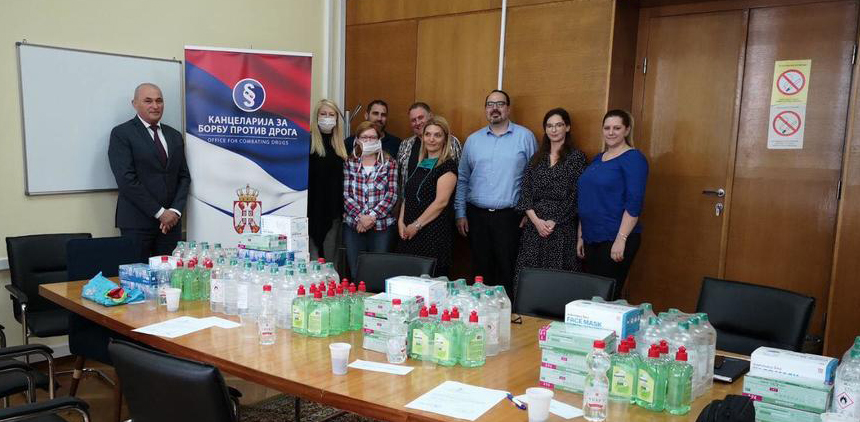
The Office for Combating Drugs of the Government of the Republic of Serbia obtained funds for protective material against coronavirus intended for vulnerable social groups.

Milan Pekić, the Director of the Office, handed out aid packages to representatives of civil society organizations that provide services for prevention, rehabilitation and resocialization of people with drug use disorder on 19 May. Taking into account the circumstances in which they find themselves, as well as the measures prescribed by the medical institutions, the representatives of these organizations received masks, gloves and disinfectants.

The Office for Combating Drugs, as a service of the Government of the Republic of Serbia, tried not to forget the members of endangered categories of citizens in this serious situation caused by the coronavirus pandemic. They must not remain on the margins of the society in this situations. In accordance with the recommendations of the Government of the Republic of Serbia, we have tried to provide the necessary assistance to those who need it the most, and these are certainly vulnerable groups in the society, including people with drug use disorder. The material was provided to civil society organizations that are in direct contact with over 400 members of vulnerable categories” said the Director of the Office.

Global Fund support for fighting COVID-19

The Global Fund, the largest multilateral funder of health systems worldwide, is providing immediate funding of up to US$1 billion to help countries fight COVID-19, mitigate the impacts on lifesaving HIV, TB and malaria programs, and prevent fragile health systems from being overwhelmed, through grant flexibilities and the COVID-19 Response Mechanism.


Grant flexibilities, announced on 4 March 2020, allow countries with current grants to: 1) use up to 5% of their current grant value if there are savings, and/or 2) reprogram up to 5% of the value of a grant to meet immediate COVID-19 response requirements. Repurposing equipment already purchased through a Global Fund grant is also an option to respond to COVID-19.

Total available funding for flexibilities is up to US$500 million. As of 5 May 2020, funding has been approved for 73 countries and five regional grants for a total of US$109 million. Among them Albania got US$80,400 of support, Kosovo EUR 91,733 and Romania EUR 316,255. This information is updated regularly through the Situation Reports on the Global Fund website. Eligibility: Countries and multi-country grants with current grants from the 2017-2019 allocation period.

Application process: For the use of savings and reprogramming, the Principal Recipient issues a request to the Global Fund’s Fund Portfolio Manager. Preferably, it is endorsed by the CCM. The Global Fund responds within five working days.

The request should include a brief budget, describe the activities to be funded, how it will fit into the national response, and outline potential consequences to and mitigants for HIV, TB and malaria programming.

Implementation: Global Fund financed activities must be implemented by an existing Principal Recipient (and/or existing Sub-Recipients). The main investment categories are (a) protecting Global Fund disease program against negative impact of COVID, (b) direct responses against COVID, and (c) address immediate gaps in health and community support systems. Guidance on eligible activities is available on the Global Fund’s website.

Funding Source: Countries can use savings or reprogram current grants, up to 10% of the grant value.

More information is available here>>>.


The COVID-19 Response Mechanism (C19RM), approved in April 2020, authorizes US$500 million in funding in addition to grant flexibilities. C19RM can be used across the three diseases and the health system, even if a country only has a single Global Fund grant for one component. The CCM will assess the most urgent needs and direct activities through one or more of the principal recipients.

Total available funding: USD$500 million, initially. Public and private donors are able to direct additional resources to the Global Fund through C19RM to scale up the COVID-19 response and support systems for health across the grant portfolio.

Eligibility: Countries with a Global Fund allocation for the 2020-2022 period can access an amount equivalent to up to 10% of their allocation. This ceiling includes the use of savings and reprogramming under existing grants.

The immediate additional amount of funds available for each country is 3.25% of the 2020-2022 allocation period, provided the country has not yet used savings and reprogramming exceeding 6.75% of this allocation.  Application Process: The application is submitted through the CCM or the regional coordinating mechanism preferably by 31 May and no later than September 2020 so that emergency funding can reach countries as soon as possible.

The funding request is divided into two parts:

  • Priority 1 for the most urgent activities. This is capped at 3.25% of the 2020-2022 country allocation. The Global Fund will respond within 10 days to this request.
  • Priority 2 for supplementary interventions. This is capped at 10% of the 2020-2022 country allocation minus the amounts already requested for C19RM Priority 1 and approved grant flexibilities/reprogramming. These supplementary requests could be awarded later if more funds are made available.
  • All applications should demonstrate that an inclusive engagement with civil society and key affected populations took place to formulate the demand. C19RM funds are additional and will not be deducted from the 2020-2022 allocation. Funding must be fully utilized by June 2021.

Instructions to apply can be found here>>>.

Implementation: C19RM funds must be implemented through an existing country grant and principal recipient, regional and multi-country grants. It can be used for three areas, to:

  1. Mitigate the impact of COVID-19 on current HIV, TB and malaria programs.
  2. Reinforce the national COVID-19 response
  3. Invest in urgent improvements in health and community systems


Impact of COVID-19 on drug services

EMCDDA press release

In a new study published today Impact of COVID-19 on drug services and help-seeking in Europe the EMCDDA reports signs of a drop in the availability of drug services during the pandemic and in the numbers of those seeking help. But the study also provides insight into how services have adapted and innovated during the fast-changing crisis in ways that could be carried forward into the future.

The report is the first in a series of briefings resulting from an EMCDDA ‘trendspotter’ study, launched in April to explore the impact of COVID-19 on the drug situation and responses to it. The agency’s trendspotter methodology explores emerging drug-related trends by rapidly collecting and triangulating data from a variety of sources to allow for timely assessments of topics of concern. Due to national emergency restrictions, the method was adapted to suit online investigation and the study designed to be carried out in successive waves (1). The findings released today stem from the first wave of the investigation which focused on drug services.

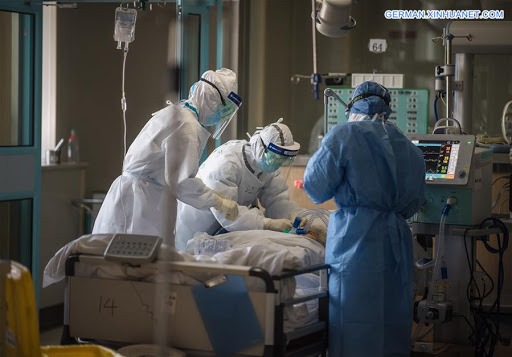
Results highlight that COVID-19 and national lockdowns have led to reduced availability and provision of treatment and harm-reduction services in most European countries. Emerging evidence suggests that, like other healthcare providers, drug services are facing a range of challenges including: staffing shortages; access to personal protective equipment; and managing infected clients and staff vulnerability to infection.

Preliminary findings from the study show that drug services are adapting and innovating during COVID-19, with similar characteristics reported across Europe. With face-to-face counselling curtailed during containment, telemedicine by phone or video has been embraced as an alternative across European drug services. Providers of opioid substitution treatment (OST) have also acted rapidly to change the way in which they provide medication (e.g. mobile OST) and respond to new treatment demands (e.g. new induction procedures), while most countries have relaxed regulations on take-home OST for stable patients (e.g. prescribing for larger quantities or longer periods).

Harm-reduction services have also been swift to adapt, playing a key role in providing frontline support during the crisis. This includes: increasing outreach work and needle- and syringe-exchange activities; providing shelter management for homeless and marginalised groups; maintaining drug consumption room services (in situ or mobile) and moving some interventions online (e.g. drug checking).

The briefing presents a snapshot of how the demand for specialised treatment evolved between January 2020 and March 2020, providing a first insight on the impact of COVID-19 on help-seeking behaviour. Data show that there was some drop in demand for treatment services during this period for reasons including closure or restricted access to treatment centres and clients’ inability to reach centres due to confinement measures. But this was partially compensated by remote technology and modified interventions.

When questioned on the ‘new normal’ for drug services in Europe post-COVID-19, many of the experts surveyed were in favour of maintaining some of the service changes rapidly introduced in recent months. The use of telemedicine was the most cited example, being seen as a useful complement to face-to-face services in the future. Coordination between public, private and non-governmental actors during the crisis was also welcomed by respondents and seen as particularly beneficial for services users.

As confinement procedures are eased, drug services will be expected to maintain a broad range of health protection measures, adapt their routines and reinforce contingency planning in case of a second wave. Negative economic forecasts for national economies raise particular concerns over potential budget cuts for drug services and greater marginalisation of certain social groups. Nevertheless, many survey respondents remained hopeful that the innovation and collaboration seen in recent months would remain positive features of drug services in Europe in the foreseeable future.

To read the study follow this link>>>

Refocus drug laws

Using extracts from the GCDP press release

The Global Commission on Drug Policy presented their report “Enforcement of Drug Laws: Refocusing on Organized Crime Elites” on 7 May 2020.

In this first report of this decade, the Commission outlines how the current international drug control regime works for the benefit of transnational organized crime. It highlights how years of repressive policies targeted at nonviolent drug offenders have resulted in mass incarceration and produced countless adverse impacts on public health, the rule of law, and social cohesion, whilst at the same time reinforcing criminal elites.

The report argues that the top layers of criminal organizations must be disempowered, through policy responses and political will. It provides implementable recommendations for the replacement of the current policy of targeting non-violent drug offenders and resorting to mass incarceration. Law enforcement must focus on the most dangerous and protected actors and primary drivers of the corruption, violence, and chaos around illegal drug markets.

The control of psychoactive substances in a rational and efficient way must be cantered on people and their needs, and on a repressive approach against criminal elites who benefit from the illegal drug markets’ proceeds and have access to high-level networks, financial and legal support as needed. Only responsible legal regulation of currently prohibited drugs, with careful implementation, has the potential to disrupt criminal organizations and deprive them of their most lucrative sources of income.

The report contains research on the prerequisites for a successful transition towards the reform of the outdated ideology-based international drug control regime, and provides cutting-edge recommendations on how to ensure that international criminal organizations are effectively disempowered by the transition towards a legally regulated drug market under the control of governments.

The overcrowding of prisons worldwide is a direct result of drug policing,” Ruth Dreifuss, former president of Switzerland and chair of the Global Commission on Drug Policy, told AFP. “These are young people, often only those who possess drugs for their own consumption, or non-violent criminals who are there generally due to a lack of other opportunities to make a living.

The report is available following this link>>>

Recording of the report presentation held on 7 May 2020 is available here>>>