Drug-related infectious diseases in Europe

Excerpts from the EMCDDA press release

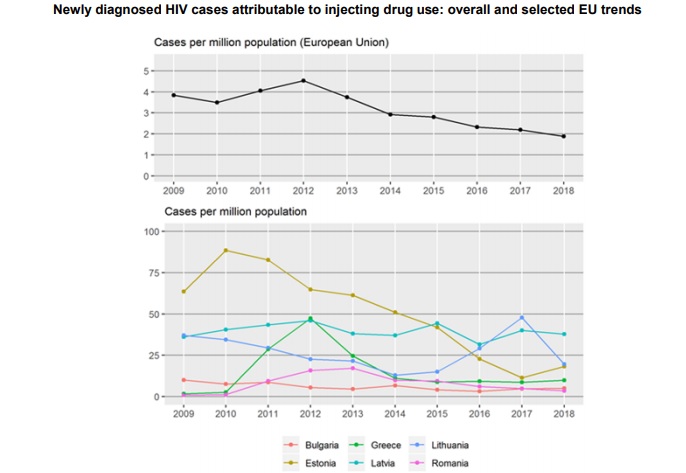
Testing for drug-related infectious diseases among people who inject drugs (PWID) is crucial if international health targets are to be met. This is among the conclusions of a new EMCDDA report Drug-related infectious diseases in Europe. The update, from the agency’s drug-related infectious disease network, stresses that early diagnosis through testing, and improving links to treatment and care, are crucial steps towards reaching global health goals.

Launched during European Testing Week (15–22 May), the report offers an overview of drug-related infectious diseases among PWID in Europe, including the prevalence and incidence of HIV and viral hepatitis. It also tracks progress on health targets and showcases successfully implemented evidence-based interventions. It underlines the need to ramp up prevention and testing and signals that European countries are lagging behind when it comes to treating hepatitis C virus (HCV) and HIV among PWID.

HIV and chronic viral hepatitis are highly prevalent among people who inject drugs, being transmitted through the sharing of injecting equipment, such as needles and syringes. Addressing the needs of this group is critical to achieve the UN Sustainable Development Goal of Good Health and Well-being (SDG 3), which calls for ending the AIDS epidemic and combatting viral hepatitis as a public health threat by 2030 (SDG 3.3).

Besides data which include SEE countries which are EU members, there is a small update from neighbouring countries within the Instrument for Pre-accession Assistance 7 and EU4Monitoring Drugs project:

The Instrument for Pre-accession Assistance (IPA) 7 technical cooperation project comprises six beneficiary countries: Albania, Bosnia and Herzegovina, Kosovo (1), Montenegro, North Macedonia and Serbia. Data on PWID and other key populations in the region are available from RDS seroprevalence studies: Albania, Kosovo and North Macedonia have conducted such surveys in the past 3 years; Bosnia and Herzegovina, Montenegro and Serbia are planning to collect data in 2020. There were no HIV-positive cases among PWID in recent surveys conducted in Kosovo or North Macedonia (Mikikj, 2017); older HIV prevalence estimates among PWID ranged between 0 % in Bosnia and Herzegovina in 2015 (Skocibusic et al., 2016) to 2 % in Serbia in 2013 (IPH Serbia, 2013). Most recent HCV infection prevalence estimates ranged from 23.8 % in Kosovo to 72 % in North Macedonia. All six beneficiaries are signatories of the Dublin Declaration.

To read full report, follow this link>>>
 

Protective material for vulnerable groups

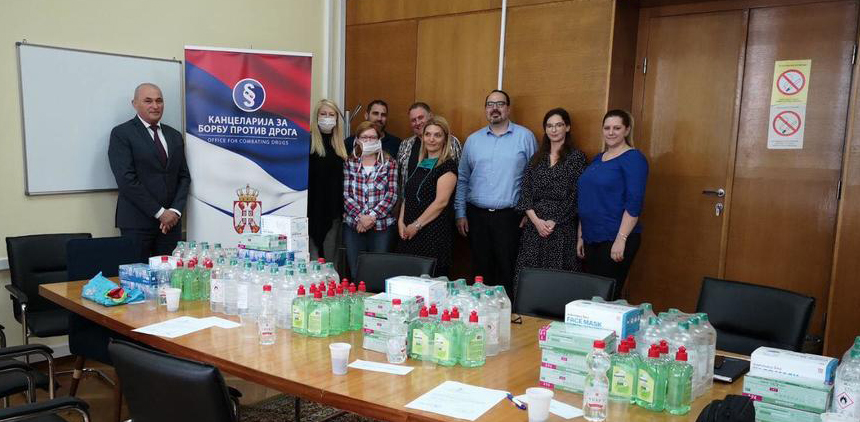
The Office for Combating Drugs of the Government of the Republic of Serbia obtained funds for protective material against coronavirus intended for vulnerable social groups.

Milan Pekić, the Director of the Office, handed out aid packages to representatives of civil society organizations that provide services for prevention, rehabilitation and resocialization of people with drug use disorder on 19 May. Taking into account the circumstances in which they find themselves, as well as the measures prescribed by the medical institutions, the representatives of these organizations received masks, gloves and disinfectants.

The Office for Combating Drugs, as a service of the Government of the Republic of Serbia, tried not to forget the members of endangered categories of citizens in this serious situation caused by the coronavirus pandemic. They must not remain on the margins of the society in this situations. In accordance with the recommendations of the Government of the Republic of Serbia, we have tried to provide the necessary assistance to those who need it the most, and these are certainly vulnerable groups in the society, including people with drug use disorder. The material was provided to civil society organizations that are in direct contact with over 400 members of vulnerable categories” said the Director of the Office.

Global Fund support for fighting COVID-19

The Global Fund, the largest multilateral funder of health systems worldwide, is providing immediate funding of up to US$1 billion to help countries fight COVID-19, mitigate the impacts on lifesaving HIV, TB and malaria programs, and prevent fragile health systems from being overwhelmed, through grant flexibilities and the COVID-19 Response Mechanism.


Grant flexibilities, announced on 4 March 2020, allow countries with current grants to: 1) use up to 5% of their current grant value if there are savings, and/or 2) reprogram up to 5% of the value of a grant to meet immediate COVID-19 response requirements. Repurposing equipment already purchased through a Global Fund grant is also an option to respond to COVID-19.

Total available funding for flexibilities is up to US$500 million. As of 5 May 2020, funding has been approved for 73 countries and five regional grants for a total of US$109 million. Among them Albania got US$80,400 of support, Kosovo EUR 91,733 and Romania EUR 316,255. This information is updated regularly through the Situation Reports on the Global Fund website. Eligibility: Countries and multi-country grants with current grants from the 2017-2019 allocation period.

Application process: For the use of savings and reprogramming, the Principal Recipient issues a request to the Global Fund’s Fund Portfolio Manager. Preferably, it is endorsed by the CCM. The Global Fund responds within five working days.

The request should include a brief budget, describe the activities to be funded, how it will fit into the national response, and outline potential consequences to and mitigants for HIV, TB and malaria programming.

Implementation: Global Fund financed activities must be implemented by an existing Principal Recipient (and/or existing Sub-Recipients). The main investment categories are (a) protecting Global Fund disease program against negative impact of COVID, (b) direct responses against COVID, and (c) address immediate gaps in health and community support systems. Guidance on eligible activities is available on the Global Fund’s website.

Funding Source: Countries can use savings or reprogram current grants, up to 10% of the grant value.

More information is available here>>>.


The COVID-19 Response Mechanism (C19RM), approved in April 2020, authorizes US$500 million in funding in addition to grant flexibilities. C19RM can be used across the three diseases and the health system, even if a country only has a single Global Fund grant for one component. The CCM will assess the most urgent needs and direct activities through one or more of the principal recipients.

Total available funding: USD$500 million, initially. Public and private donors are able to direct additional resources to the Global Fund through C19RM to scale up the COVID-19 response and support systems for health across the grant portfolio.

Eligibility: Countries with a Global Fund allocation for the 2020-2022 period can access an amount equivalent to up to 10% of their allocation. This ceiling includes the use of savings and reprogramming under existing grants.

The immediate additional amount of funds available for each country is 3.25% of the 2020-2022 allocation period, provided the country has not yet used savings and reprogramming exceeding 6.75% of this allocation.  Application Process: The application is submitted through the CCM or the regional coordinating mechanism preferably by 31 May and no later than September 2020 so that emergency funding can reach countries as soon as possible.

The funding request is divided into two parts:

  • Priority 1 for the most urgent activities. This is capped at 3.25% of the 2020-2022 country allocation. The Global Fund will respond within 10 days to this request.
  • Priority 2 for supplementary interventions. This is capped at 10% of the 2020-2022 country allocation minus the amounts already requested for C19RM Priority 1 and approved grant flexibilities/reprogramming. These supplementary requests could be awarded later if more funds are made available.
  • All applications should demonstrate that an inclusive engagement with civil society and key affected populations took place to formulate the demand. C19RM funds are additional and will not be deducted from the 2020-2022 allocation. Funding must be fully utilized by June 2021.

Instructions to apply can be found here>>>.

Implementation: C19RM funds must be implemented through an existing country grant and principal recipient, regional and multi-country grants. It can be used for three areas, to:

  1. Mitigate the impact of COVID-19 on current HIV, TB and malaria programs.
  2. Reinforce the national COVID-19 response
  3. Invest in urgent improvements in health and community systems


Impact of COVID-19 on drug services

EMCDDA press release

In a new study published today Impact of COVID-19 on drug services and help-seeking in Europe the EMCDDA reports signs of a drop in the availability of drug services during the pandemic and in the numbers of those seeking help. But the study also provides insight into how services have adapted and innovated during the fast-changing crisis in ways that could be carried forward into the future.

The report is the first in a series of briefings resulting from an EMCDDA ‘trendspotter’ study, launched in April to explore the impact of COVID-19 on the drug situation and responses to it. The agency’s trendspotter methodology explores emerging drug-related trends by rapidly collecting and triangulating data from a variety of sources to allow for timely assessments of topics of concern. Due to national emergency restrictions, the method was adapted to suit online investigation and the study designed to be carried out in successive waves (1). The findings released today stem from the first wave of the investigation which focused on drug services.

Results highlight that COVID-19 and national lockdowns have led to reduced availability and provision of treatment and harm-reduction services in most European countries. Emerging evidence suggests that, like other healthcare providers, drug services are facing a range of challenges including: staffing shortages; access to personal protective equipment; and managing infected clients and staff vulnerability to infection.

Preliminary findings from the study show that drug services are adapting and innovating during COVID-19, with similar characteristics reported across Europe. With face-to-face counselling curtailed during containment, telemedicine by phone or video has been embraced as an alternative across European drug services. Providers of opioid substitution treatment (OST) have also acted rapidly to change the way in which they provide medication (e.g. mobile OST) and respond to new treatment demands (e.g. new induction procedures), while most countries have relaxed regulations on take-home OST for stable patients (e.g. prescribing for larger quantities or longer periods).

Harm-reduction services have also been swift to adapt, playing a key role in providing frontline support during the crisis. This includes: increasing outreach work and needle- and syringe-exchange activities; providing shelter management for homeless and marginalised groups; maintaining drug consumption room services (in situ or mobile) and moving some interventions online (e.g. drug checking).

The briefing presents a snapshot of how the demand for specialised treatment evolved between January 2020 and March 2020, providing a first insight on the impact of COVID-19 on help-seeking behaviour. Data show that there was some drop in demand for treatment services during this period for reasons including closure or restricted access to treatment centres and clients’ inability to reach centres due to confinement measures. But this was partially compensated by remote technology and modified interventions.

When questioned on the ‘new normal’ for drug services in Europe post-COVID-19, many of the experts surveyed were in favour of maintaining some of the service changes rapidly introduced in recent months. The use of telemedicine was the most cited example, being seen as a useful complement to face-to-face services in the future. Coordination between public, private and non-governmental actors during the crisis was also welcomed by respondents and seen as particularly beneficial for services users.

As confinement procedures are eased, drug services will be expected to maintain a broad range of health protection measures, adapt their routines and reinforce contingency planning in case of a second wave. Negative economic forecasts for national economies raise particular concerns over potential budget cuts for drug services and greater marginalisation of certain social groups. Nevertheless, many survey respondents remained hopeful that the innovation and collaboration seen in recent months would remain positive features of drug services in Europe in the foreseeable future.

To read the study follow this link>>>

Refocus drug laws

Using extracts from the GCDP press release

The Global Commission on Drug Policy presented their report “Enforcement of Drug Laws: Refocusing on Organized Crime Elites” on 7 May 2020.

In this first report of this decade, the Commission outlines how the current international drug control regime works for the benefit of transnational organized crime. It highlights how years of repressive policies targeted at nonviolent drug offenders have resulted in mass incarceration and produced countless adverse impacts on public health, the rule of law, and social cohesion, whilst at the same time reinforcing criminal elites.

The report argues that the top layers of criminal organizations must be disempowered, through policy responses and political will. It provides implementable recommendations for the replacement of the current policy of targeting non-violent drug offenders and resorting to mass incarceration. Law enforcement must focus on the most dangerous and protected actors and primary drivers of the corruption, violence, and chaos around illegal drug markets.

The control of psychoactive substances in a rational and efficient way must be cantered on people and their needs, and on a repressive approach against criminal elites who benefit from the illegal drug markets’ proceeds and have access to high-level networks, financial and legal support as needed. Only responsible legal regulation of currently prohibited drugs, with careful implementation, has the potential to disrupt criminal organizations and deprive them of their most lucrative sources of income.

The report contains research on the prerequisites for a successful transition towards the reform of the outdated ideology-based international drug control regime, and provides cutting-edge recommendations on how to ensure that international criminal organizations are effectively disempowered by the transition towards a legally regulated drug market under the control of governments.

The overcrowding of prisons worldwide is a direct result of drug policing,” Ruth Dreifuss, former president of Switzerland and chair of the Global Commission on Drug Policy, told AFP. “These are young people, often only those who possess drugs for their own consumption, or non-violent criminals who are there generally due to a lack of other opportunities to make a living.

The report is available following this link>>>

Recording of the report presentation held on 7 May 2020 is available here>>>


COVID-19 and drug markets

UNODC press release

Measures implemented by governments to curb the COVID-19 pandemic have led to drug trafficking routes by air being disrupted, along with drastic reduction or increased interdiction in trafficking routes over land. Some drug supply chains have been interrupted and traffickers are looking for alternative routes, including maritime routes, depending on the types of drugs smuggled. These are some of the findings from a report on drug market trends during COVID-19, launched on 7 May by the United Nations Office on Drugs and Crime (UNODC).

Synthetic drugs, such as methamphetamine tend to be trafficked across continents by air more than other types of drugs. Restrictions on air travel are, therefore, likely to have a particularly drastic effect on this illegal cargo. The bulk of cocaine is trafficked by sea and large cargos have continued to be detected in European ports during the pandemic.

So far, heroin has mostly been trafficked by land. But due to the pandemic, maritime routes seem to be increasingly used now to traffic heroin as shown by seizures of opiates in the Indian Ocean.

Trafficking in cannabis, however, may not be affected in the same way as that of heroin or cocaine, given that its production often takes place near consumer markets and traffickers are thus less reliant on long, transregional shipments of large quantities of the drug.


Drug consumption trends

Several countries have reported drug shortages at the retail level. This can lead to an overall decrease in consumption, but mainly of drugs mostly consumed in recreational settings.

In the case of heroin, however, a shortage in supply can lead to the consumption of harmful, domestically produced substances – heroin shortages have been reported by countries in Europe, South West Asia and North America and some countries in Europe have warned that heroin users may even switch to fentanyl and its derivatives.

An increase in the use of pharmaceutical products such as benzodiazepines has also been reported, already doubling their price in certain areas. Another harmful pattern resulting from drug shortages is the increase in injecting drug use and the sharing of injecting equipment. All of which carry the risk of spreading diseases like HIV/AIDS, hepatitis C, and COVID-19 itself. The risk of drug overdose may also increase among those injecting drugs and who are infected with COVID-19.


Trends in drug production

Restrictions resulting from lockdown could hinder the production of opiates with the key months of harvest in Afghanistan being March to June. Due to COVID-19 labour force might not be able or willing to travel to areas where opium poppy is grown in the country, which could affect this year’s harvest.

Cocaine production also appears to be impeded in Colombia, as producers are suffering from a shortage of gasoline. While in Bolivia, COVID-19 is limiting the ability of state authorities to control coca bush cultivation, which could lead to an increase in coca production. In Peru, however, a drop in the price of cocaine suggests a reduction in trafficking opportunities. This may discourage coca bush cultivation in the short-term, although the looming economic crisis may lead more farmers to take up coca cultivation in all the major cocaine producing countries.

A decline in international trade in the current pandemic could also lead to shortages in the supply of precursors, vital for the manufacture of heroin as well as for synthetic drugs. A limited supply in Mexico, for example seems to have disrupted the manufacture of methamphetamine and fentanyl, while in Lebanon and Syria it is affecting the production of captagon. Czechia on the other hand expects a shortage of metamphetamine for the same reasons.

In the long-run, the economic downturn caused by the COVID-19 pandemic has the potential to lead to a lasting and profound transformation of the drug markets, which can be fully understood only after more research is done. The economic difficulties caused by COVID-19 may affect people who are already in position of socioeconomic disadvantage harder than others.

The COVID-19 and drug markets Report is available online here >>>

The COVID-19 Conference

In recognition of the urgent need to analyse research, review policy and exchange frontline experiences related to the COVID-19 pandemic, the International AIDS Society (IAS) will host a special one-day COVID-19 Conference with breaking COVID-19 research, policy analysis and frontline experience. The virtual COVID-19 Conference will feature a free-of-charge, stand-alone programme of plenary, invited-speaker and abstract-driven sessions.

The conference will take place on 10 – 11 July 2020, concluding AIDS 2020: Virtual. Delegates already registered for AIDS 2020: Virtual are automatically registered to attend the COVID-19 Conference.

COVID-19 abstract submissions, including exploratory studies, are now open until Monday 25 May 2020. Abstracts for the special one-day COVID-19 Conference will be considered in one or more of five tracks.
Abstracts for the special one-day COVID-19 Conference will be considered in one of the following tracks:

  • Track A: Basic science, pathogenesis, virology, immunology, inflammation
  • Track B: Clinical science, testing (RT-PCR and serologic) and diagnoses, natural history, clinical care, ARDS care, therapeutics
  • Track C: Epidemiology, transmission dynamics, prevention, vaccines
  • Track D: Public health responses including physical distancing and community level efforts, programmes, policies, lifting restrictions, modelling
  • Track E: Social, economic, political, human rights impacts of the pandemic and the response Register today and submit your COVID-19 abstract to the world’s first abstract-led conference on COVID-19 as we come together to advance the response to the COVID-19 pandemic. More information on the COVID-19 Conference can be found here.

For more information, visit this link>>>


Useful and fruitful Conference held

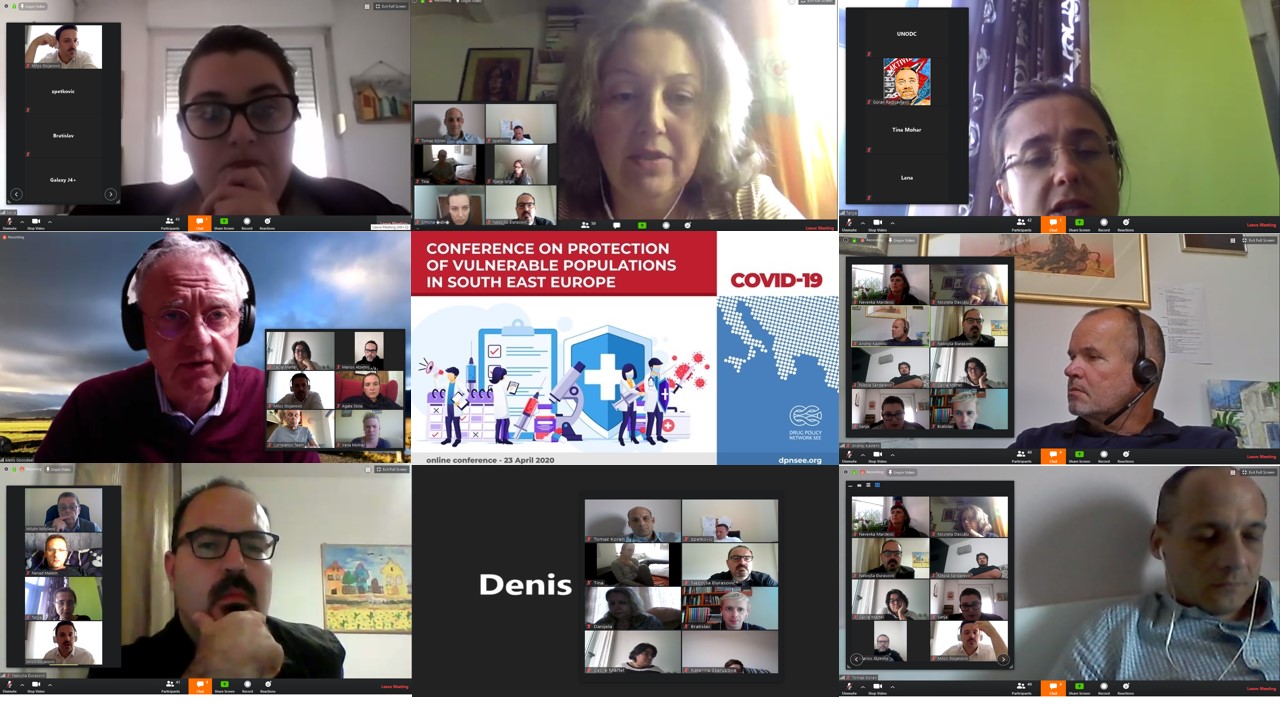
DPNSEE held today the on-line Conference on protection of vulnerable populations in South East Europe, with support of the Service for Combatting Drug Abuse at the Croatian Institute for Public Health and the United Nations Office on Drugs and Crime – UNODC Programme Office in Serbia.

More than 60 representatives of civil society organisations, national drug agencies, international organisations and agencies and donor community participated.

We heard a lot of good stories about work done in the region on supporting vulnerable populations and several interesting ideas for actions to ensure that harm reduction services are sustainable during and after the COVID’19 epidemic.


DPNSEE prepared background documents for the Conference which are available at the recent news on our website>>>.

Here are updated documents, with some fresh information from countries, and the Minutes from the Conference.

  • Overview of the situation with coronavirus COVID-19 in SEE with two annexes (available here>>> with both annexes or here>>> as a separate document):
  • Annex 1 – Information received from countries of South East Europe during conference calls (available here>>>)
  • Annex 2 – DPNSEE activities during the coronavirus outbreak (available here>>>)

Minutes from the Conference are available here>>>.

Presentation from Mr Miloš Stojanović, Regional Project Manager at UNODC, Head of Programme Office in Serbia is available here>>>.


Conference on protection of vulnerable populations in South East Europe

Spread of the coronavirus and illness officially known as COVID-19 around the world, in Europe and in the region of South East Europe has a devastating effect on general population as well as on people who use drugs and other connected vulnerable populations (homeless people, sex workers, LGBTI, MSM, people living with HIV and many others).

DPNSEE reacted early on the information about possible outbreak of the coronavirus in Europe sending a Letter to member organisations inviting them to prepare for the coronavirus outbreak with brief instructions, publishing the Public appeal to protect vulnerable groups from coronavirus COVID-19, sharing and translating instructions and advice on coronavirus and keeping contacts with our member organisations and international partners. We regularly update news from South East Europe – they are available at the News section of our website.

We held conference calls with our member organisations by countries from South East Europe last weeks. We heard a lot of good stories about their work and ideas to share.

Analysing the situation and discussing potential developments during and after the outbreak, the DPNSEE Board decided to hold the on-line Conference on protection of vulnerable populations in South East Europe. The Conference will be held with support of the Service for Combatting Drug Abuse at the Croatian Institute for Public Health and the United Nations Office on Drugs and Crime – UNODC Programme Office in Serbia.

The aim of the Conference is to contribute to ensuring the sustainability of services for key populations during and after the coronavirus epidemic. As stated in the UNODC document Suggestions about treatment, care and rehabilitation of people with drug use disorder in the context of the COVID-19 pandemic “it is important to ensure the continuity of adequate access to health and social services for people who use drugs and with drug use disorders and provide the continuum of care required as described in the International Standards for the Treatment of Drug Use Disorders (UNODC/WHO, 2020) to the best extent possible also in times of crisis”.

Besides our members and other civil society organisations from the region and wider, we invite to the Conference national drug agencies and health institutions, international organisations partners and donors.

The Conference will be held via Zoom at the following link https://us02web.zoom.us/j/86072202401 on Thursday 23 April 2020 starting at 14:00 CET (15:00 EEST). The conference would last for a maximum of two hours.

The Agenda will include two items:

  1. Overview of situation with coronavirus among vulnerable populations in South East Europe.
  2. Proposed actions to ensure sustainability of services for key populations during and after the coronavirus epidemic.

The background documents for the Conference we plan to prepare and post here in the next few days include:

  • Overview of the situation with coronavirus COVID-19 in SEE with two annexes (available here>>> with both annexes or here>>> as a separate document):
  • Annex 1 – Information received from countries of South East Europe during conference calls (available here>>>)
  • Annex 2 – DPNSEE activities during the coronavirus outbreak (available here>>>)
  • Draft list of actions and measures to ensure sustainability of services for key populations during and after the coronavirus epidemic (in progress).

In preparations for the Conference, we shall also use and refer to the documents which are also produced and promoted internationally, including those from UNODC, UNAIDS, EMCDDA and other national and international intergovernmental and civil society organisations.

We sincerely hope that you shall join us in this effort to make sure that a truly inclusive universal health coverage grounded on rights-based laws, policies and procedures is achieved by prioritizing and protecting vulnerable groups.


Crime in the Western Balkans during the coronavirus

Did organized crime groups continue with their activity at the time of Coronavirus, which trends in the criminal activities in the Western Balkans can be noticed in the first six weeks of the pandemic and which scenarios can be envisaged for the future?

Saša Đorđević

The Belgrade Centre for Security Policy published a report on criminal activities in the Western Balkans during the COVID-19 outbreak – Crime in the Western Balkans during the coronavirus – early findings. The report was prepared by their researcher Saša Đorđević.

The report states that “The region has experienced a small increase in the price of marijuana, which is still very much present on the market. The same applies to stimulant drugs” and that “People with drug and alcohol problems, persons living with HIV, those who are susceptible to stress, citizens with mental health problems, pensioners, the poor, the homeless and recently released prisoners are the biggest potential victims of crime during this pandemic crisis.”

Scenarios envisaged for the future include the one that “There will be a decline in the supply and quality of illegal drugs. The price of heroin substitutes is expected to increase. It is certain that criminal groups will find alternative ways of distributing narcotics and other illegal products in urban areas, using mobile technologies and couriers, but also corruption of law enforcement. It is possible that criminal groups will shift their manufacturing and logistics activities to smaller towns and rural areas, where they will be less visible.

With information we received from our member organisations from around the region, DPNSEE provided significant contribution to the report section that deals with Narcotics, but also general comments and proposals for recommendations.

Belgrade Centre for Security Policy (BCSP) is an independent think-tank publicly advocating human, national, regional and international security based on democracy and respect for human rights.

The report is available in English (Crime in the Western Balkans during the coronavirus – early findings) or in Serbian (Kriminal na Zapadnom Balkanu u doba korone: prva zapažanja).