Regional Platform COVID Alert System

The Regional Platforms for Communication and Coordination are engaged in assisting the Global Fund to identify COVID-related risks, opportunities, disruptions, and innovations, specific to Global Fund-supported programs.

A systemized and regularized alert tool was developed for this purpose. Recognizing that in-country stakeholders already face many challenges and are overstretched at this time, the tool is designed to be as light as possible with the focus on critical-to-know information.

The key objectives of the monitoring approach are to:

  • Trigger certain actions by the Global Fund’s CRG Department, Global Fund Country Teams, other technical partners, etc. (depending on the issue);
  • Serve as an early warning system for the Global Fund to indicate things may be going off track so that stronger actions can be taken;
  • Identify innovative and successful community-led solutions in a timely manner, sharing these so that other countries may benefit from the ideas;
  • Allow the Global Fund to compare trends over time and across countries and regions;
  • Reduce the need for ad-hoc requests for information from the Global Fund; and
  • Provide communities with a formal communication channel to report the issues/innovations they are facing with HIV, TB and malaria programs amid the COVID pandemic

EECA Regional Platform has already received through this system an information from civil society representatives on a situation in a number of EECA countries and has provided the Global Fund with it.

If you are aware about any COVID-related issues which have impacted the work of the Global Fund supported HIV and TB programs in your country, please access the tool and report, following this link>>>.


 

Expanding the mandate of EMCDDA

The European Union has published a proposal for regulation, concerning an extended mandate of the European Monitoring Centre for Drugs and Drug Addiction (EMCDDA).

The Agency was established in 1993 with the mission to provide the EU and its Member States with factual, objective, reliable and comparable information at European level on drugs and drug addiction and their consequences. The Commission undertook an evaluation of the Agency in 2018/19 which showed that EMCDDA is recognised as a hub of excellence in Europe and internationally. Although the evaluation showed that the functioning of the Agency in relation to the five evaluation criteria (coherence, relevance, effectiveness, efficiency, EU added-value) is positive, it also pointed out that further improvements would be beneficial in several areas.

The general objective of a revision of the EMCDDA Regulation would be to have an Agency, which is appropriately equipped to deal with the current and future challenges posed by drugs in the EU. The specific objectives of a potential proposal are to:

  • Increase the Agency’s capacity to react faster and in a more targeted way to new challenges in the field of drugs and addictions and related threats;
  • Deepen the monitoring and analysis of the drug phenomenon in Europe, both on the supply and demand side;
  • Better clarify the mandate of the Agency as regards what substances should be covered; and
  • Provide support to Member States in shaping and evaluating their drugs policies.

DG HOME launched an impact assessment analysis in the first quarter of 2020 to support the preparation of this initiative and to inform the Commission’s decision. The feedback period is from 4 June to 30 July 2020.

To give a feedback on this initiative, please follow this link>>>


Montenegro adopted the same-sex partnership bill

After the Parliament legalized same-sex civil partnerships on Wednesday 1 July 2020, Montenegro is the first country in the region that is not a member of the European Union to recognise gay and lesbian couples in law. It was a very narrow majority of 42 to 5 in the 81-seat chamber of MPs from the ruling Democratic Party of Socialists, DPS, the Social Democrats, the Liberal Party and the opposition Social Democratic Party.

The new law recognizes same-sex couples as legal unions but does not give them the same rights as married couples. They are still not allowed to adopt or foster children, for example, which human rights organizations say restrict LGBT rights; same-sex couples are also not recognized as families.

LGBT activists praised the decision as a historic step for society. “From today we are one step closer to full freedom and full equality. As never before, we are close to life with dignity and from today we stopped living as second-class citizens,” the advocacy group Queer Montenegro said in a press release.

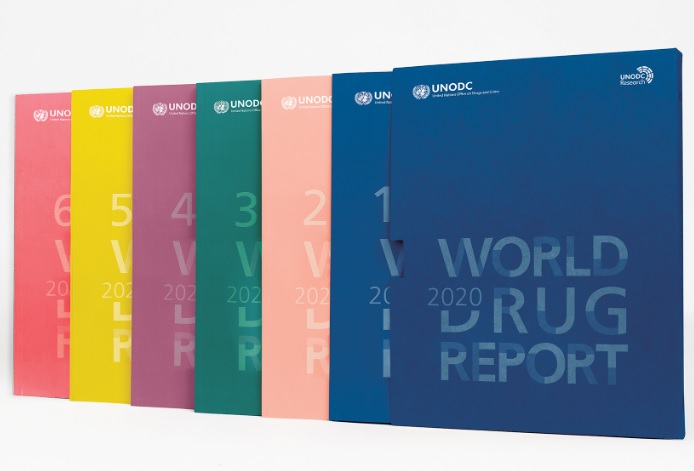
World Drug Report 2020

Around 269 million people used drugs worldwide in 2018, which is 30 per cent more than in 2009, while over 35 million people suffer from drug use disorders, according to the latest World Drug Report, released today by the United Nations Office on Drugs and Crime (UNODC). The Report also analyses the impact of COVID-19 on the drug markets, and while its effects are not yet fully known, border and other restrictions linked to the pandemic have already caused shortages of drugs on the street, leading to increased prices and reduced purity.
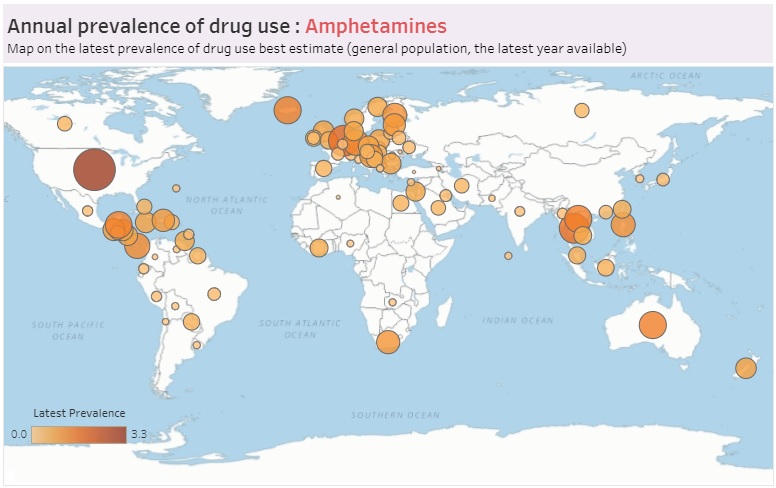
The Report provides a wealth of information and analysis to support the international community in implementing operational recommendations on a number of commitments made by Member States, including the recommendations contained in the outcome document of the special session of the General Assembly on the world drug problem, held in 2016.

To read and download the report, follow this link>>>

Support. Don’t Punish activities in 2020

Support. Don’t Punish is a global grassroots-centred initiative in support of harm reduction and drug policies that prioritise public health and human rights. The campaign seeks to put harm reduction on the political agenda by strengthening the mobilisation capacity of affected communities and their allies, opening dialogue with policy makers, and raising awareness among the media and the public.

The Drug Policy Network South East Europe coordinates activities of the campaign in South East Europe around the Global Day of Action 26 June – which is also the United Nations’ International Day against Drug Abuse and Illicit Trafficking.

The campaign 2020 shall have in South East Europe:

  • 9 countries
  • 16 cities
  • 14 organisations
  • 30+ activities
  • 33 accounts on social networks

Organisations around the region will organise raising awareness events, lectures and workshops, creating and promoting guidelines on human rights, banner and pictures campaigns, producing videos, photo exhibitions, disseminating promotional materials, meetings with the local authorities, press conferences, pub quizzes, showing movies, sharing sensitizing messages concerning COVID-19 on how to reduce stigma and other risky behaviours and much more.

Due to the COVID-19 pandemic which is still hitting the region and the world, DPNSEE will not organise the traditional kick-off event in 2020.
Instead, this year DPNSEE organises a larger campaign, which will be part of our general efforts to ensure sustainability of services for people who use drugs in South East Europe – those that are under threat of being marginalised and side-lined as consequence of the coronavirus outbreak. The DPNSEE Board decided to hold a regional campaign using social media to spread messages around.

To find out what is planned in your city or country, follow this link>>>.

To see more about the campaign worldwide, follow this link>>>

Progress of Serbia in Chapters 23 and 24 – May 2020

The Coalition prEUgovor, which consists of seven civil society organizations from Serbia with expertise in various policies under chapters 23 and 24 of the European Union accession negotiations, publishes a semi-annual independent report on the progress of Serbia in chapters 23 and 24. Today, they presented the Report on Progress of Serbia in Chapters 23 and 24 – May 2020.

PrEUgovor’s monitoring of reforms in chapters 23 and 24 and certain political criteria of EU accession process indicates that, in most fields, the tendency of deterioration has continued during the period from October 2019 to April 2020. This was further exacerbated during the COVID-19 pandemic in the last two months, especially after the state of emergency was declared on March 15.

In this prEUgovor Alarm report, special attention was given to the impact of the state of emergency – which President Vučić defined as “war against an invisible enemy” – on democracy, fundamental rights and freedoms, rule of law, and security and justice in Serbia. Controversy was raised by the very declaration of the emergency state by circumventing the Parliament, without offering proper reasoning as to why it could not convene. Preparations for the elections were suspended, but public officials continued their promotional campaign in favour of the ruling party. Public procurement rules were marginalised due to the pressuring need to “save citizens’ lives”. There was serious concern about the constitutionality of the imposed restrictive measures; however, the Constitutional Court remained silent on these issues.

Free access to information of public importance and media freedoms were de facto suspended at one point, while personal data protection was put to the test. Restricted movement and slowed-down work of institutions affected especially vulnerable groups such as women and children, victims of domestic violence or human trafficking, migrants and others.

Even political commitment to European integration suffered, from the very beginning of the public health crisis, due to statements of top officials criticising alleged lack of EU solidarity while praising and pleading help from “brotherly” China. The state of emergency ended on 6 May by the decision of the National Assembly.

To read full report, follow this link>>>.

COVID-19 Stories of Substance

Against the backdrop of the COVID-19 pandemic, being connected, joint strategising and sharing stories from the ground is as critical as ever as we collectively work to protect human rights, ensure the health and well-being of the communities most affected by the war on drugs, and end repression and punishment as instruments of drug control.

The IDPC Secretariat have been continuing to seek ways to better support information sharing and lessons learned from across the network as we face the challenges brought by COVID-19 and the responses governments are taking. In April, they launched a survey for their members (in English, Spanish, French and Thai) to capture this information. The survey remains open indefinitely for responses and previous entries can also be added to with new information. IDPC are now ready to begin sharing some of the rich information that has been provided by their members and others in the form of a new short fortnightly newsletter.

Each COVID-19 Stories of Substance newsletter will feature a couple of relevant stories and lessons shared by people who have responded to IDPC dedicated survey on COVID-19. It will also include a curated list of news and updates every two weeks, with a specific focus on the COVID19 pandemic and its various impacts on the drug market, drug policy and related advocacy, harm reduction services, community-led mobilisation/movement, funding opportunities, and many more. IDPC will also flag upcoming online events of interest, and provide links to access recordings of recent ones.

To receive this newsletter please sign up here>>>.


Support. Don’t Punish regional campaign

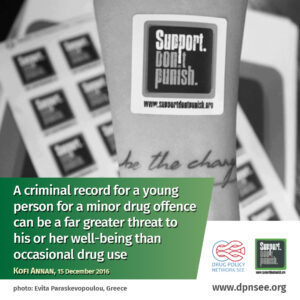
For the fourth year already, DPNSEE coordinates the Support. Don’t Punish global advocacy campaign calling for better drug policies that prioritise public health and human rights. The campaign aims to promote drug policy reform, and to change laws and policies which impede access to harm reduction interventions.

This year we organise a larger campaign, which will be part of our general efforts to ensure sustainability of services for people who use drugs in South East Europe – those that are under threat of being marginalised and side-lined as consequence of the coronavirus outbreak.

The DPNSEE Board decided to hold a regional campaign using social media to spread messages around. We prepared a set of up to 20 messages with combination of quotes from Kofi Annan‘s speeches and appropriate photographs, ready for use in Facebook, Tweeter and Instagram. They will be posted throughout June 2020, most frequently around 26 June, the Global Day of Action of the Support. Don’t Punish campaign and the International Day Against Drug Abuse and Illicit Trafficking.

We offered all our member organisations to share the messages through your networks. The messages will be translated in various languages and it will be simple to post and schedule their dissemination following dynamic we shall define. For the moment, 14 our organisations from 8 countries post and share the slides.

We warmly encourage all other organisations and individuals to share the messages and so contribute to the success of the campaign worldwide.


UNAIDS Strategy Beyond 2021 Development Process

Text from the NGO Delegation to the UNAIDS PCB

UNAIDS is now in the process of developing its next Strategy for 2021 and beyond. The timeline for developing the Strategy was supposed to have started early this year, but it was hampered by the COVID-19 pandemic. It has now been extended to accommodate a longer consultation period to ensure a full and more meaningful engagement of all stakeholders in the process. These details are reflected in the PCB Paper “UNAIDS Strategy Beyond 2021” which is posted to the UNAIDS website.

In order to determine the new goalposts and targets, it is important to take stock and review the existing strategy, UNAIDS 2016-2021 Strategy. This consultation process will involve interviews, focus group discussions and an online survey that will culminate in a multi-stakeholder consultation no later than September 2020.

As a first step in engaging communities and civil society more widely, we invite you to respond to the Online Survey. This 15-20 minute survey is an opportunity to obtain perspectives on how UNAIDS is reaching its goal to end AIDS as a public health threat by 2030 as part of the Sustainable Development Goals. Is the current strategy successful or not? Did it effect change? What should have been done better? Where should the next Strategy be headed? Your perspectives on these themes will help inform and shape the content of the next Strategy, so that it is more responsive, inclusive, progressive and bold in the goals and targets it will set for the global HIV response beyond 2021.

Survey Links:

English: 

Español: 

Français:

Português:

Русский:

中文:

العربية:

Impact of COVID-19 in Western Balkans

The EMCDDA has initiated a project investigating the impact of COVID-19 on people who use drugs, drug markets and challenges for drug service provision in the Western Balkans.

The  project is conducted using an adapted version of the Trendspotter methodology with the objective to increase our understanding of the impact of the COVID-19 epidemic and national containment measures on  patterns of drug use, emerging harms and challenges and adaptations of  drug service providers in the Western Balkan region, as well as identify potential national best practices in responding to  this public health challenge. We take a step-wise approach with the first investigation focusing on service provision, followed by drug use patterns and risks and security issues.

The  investigation has multiple components  – namely expert surveys and facilitated groups.

The survey is available here: https://ec.europa.eu/eusurvey/runner/Covid-19-IPA7-health. The deadline for completing it is the 12th of June.

In the second step, EMCDDA will be approaching regional experts from drug services and informed about service provision (OST, needle exchange programmes, harm reduction, treatment, drug services in prisons) in order to get a more in-depth understanding of the developments via facilitated groups.