Nova stranka first to sign “Declaration on Sustainable National Response to HIV”

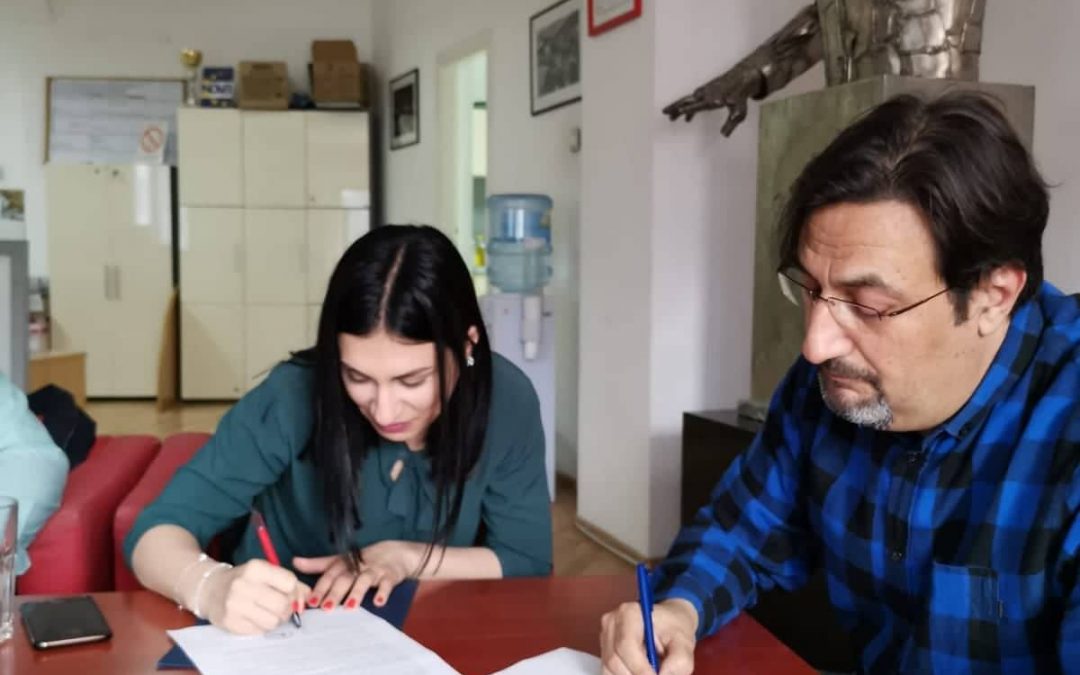
Nova stranka  is the first political party in Serbia which signed the Declaration for sustainable national response to HIV, proposed by the Group for Analysis of Public Policies (GAJP) as part of their project Political support to the harm reduction programmes. Aim of this project is to invite all political parties in Serbia to sign the Declaration that will oblige them to support harm reduction programmes and their financing from budgetary sources in their future work and participation in legislative and executive bodies.

The President of the Council of the Nova stranka, Aris Movsesian said that it is normal for the Nova stranka, as well as all other political parties, to sign this declaration.  Nova stranka is committed to joining the European Union, and the last year’s European Commission report calls for regulating the treatment of HIV patients, specifically in Chapter 28 where such measures are proposed. Nova stranka also emphasises in point 8 of their Action Plan the problem of relations with vulnerable groups of citizens.

Movsesian invited other political parties to follow our example and make such a civilization step.”

The declaration is developed in scope of the Budget Advocacy and Monitoring in South East Europe project. The project is managed by DPNSEE, and coordinated in Serbia by the Association Prevent.

To read the news from the signing of the declaration in Serbian follow this link>>>.

How have closing of services affected drug users?

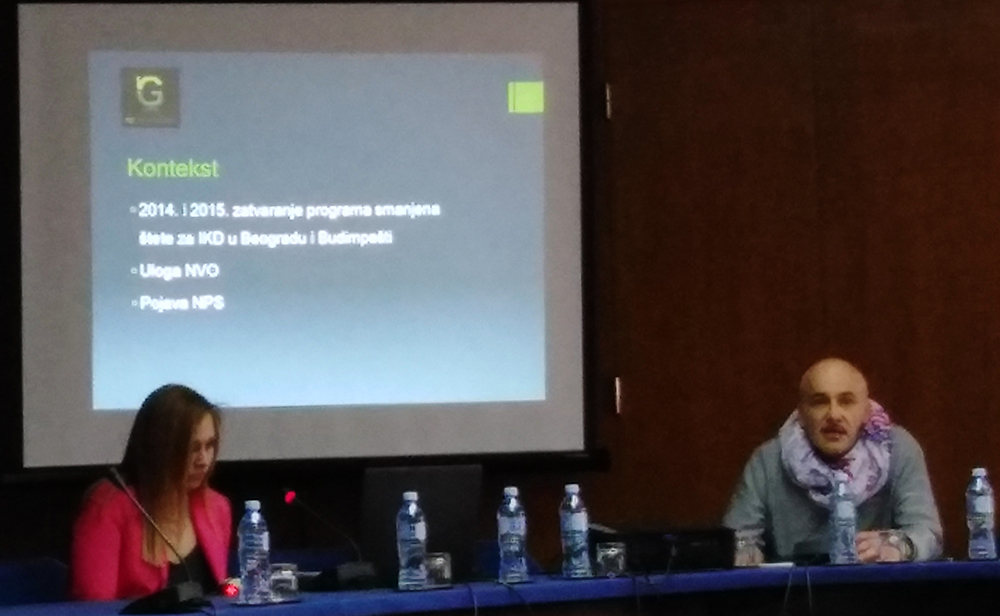
DPNSEE member organisation Re Generacija implemented the survey “Access to services of ex-users of the needle and syringe programme closed in Belgrade and Budapest” with the support of the Rights Reporter Foundation. Aim of the survey, implemented in 2018, was to analyse the consequences of closing the services and the effects that it has on risks and daily life of injecting drug users. Objectives included to reach out to the service users and learning about their current use of substances, mapping their access to services, sterile injecting equipment and analysing their perception of the closure of services and most important currently missing service. The conference was also an opportunity to discuss the current situation with recently established outreach programmes, as well as opioid substitution therapy and early warning system for new psychoactive substances.

The results of the survey were presented today at the conference organised together with the Office for Combating Drugs of the Government of Republic of Serbia. The conference was held in the Palace of Serbia, with participants coming from both governmental and civil society sectors.

Two major groups of users were approached by the survey: drug users which were using the services for a long time and Roma people. A typical drug user both in Belgrade and Budapest is male, in mid-forties, with low education and income. In Budapest, users mainly use new psychoactive substances (synthetic cathinones), while in Belgrade they mainly use opioids (heroine). One of the main conclusion from the survey is that closing the services caused even more difficulties to reach out to drug users who are usually very suspicious.

To get more information and results of the survey, please contact Re Generacija following this link>>>>.

Serbia completed project application to the Global Fund

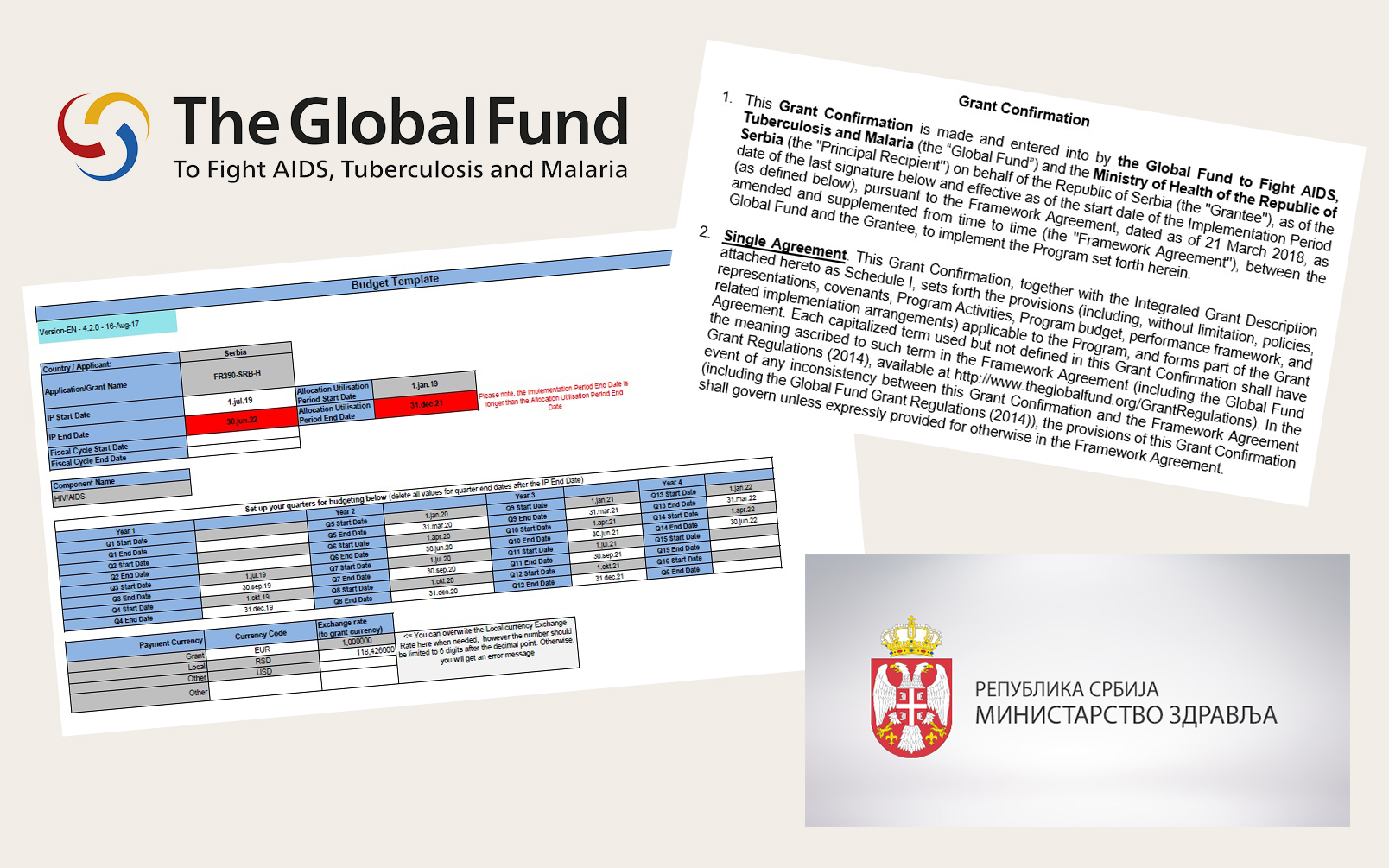
The National Committee for fighting HIV/AIDS and Tuberculosis, which performs the role of the Country Coordinating Mechanism in Serbia, adopted today the documents which will be submitted to the Global Fund to fight AIDS, Tuberculosis and Malaria. The project is expected to run from July 2019 to June 2022.

Back in 2016, the Global Fund allocated €1,098,351 for HIV and building resilient and sustainable systems for health. The allocation have been determined primarily based on disease burden and income level. Serbia is classified as an upper-middle-income country. Serbia committed to encourage additional domestic investment of 25%. The first amount agreed during the application in already included in the national budget for 2019.

The project seeks to scale-up HIV testing services for all key affected populations (KPs), preventive programs for men who have sex with men and sex workers and needles and syringes program (NSP) and other preventive programs for people who inject drugs. In addition, the project seeks to maintain and extend support provided by organizations of people living with HIV to people on antiretroviral treatment. The project will fund services provided by civil society organisations and will contribute to community system strengthening. In order to reach the maximum impact the majority of prevention and support interventions will be implemented at least in the two regions (Belgrade and Vojvodina) in which majority of KPs are concentrated based on surveillance data..

The civil society organisations, including DPNSEE and our three member organisations from Serbia Prevent, Duga and Timok Youth Centre, actively participated in creating the new national HIV strategy, in the work of the National Committee and the Working group for negotiations with the Global Fund.

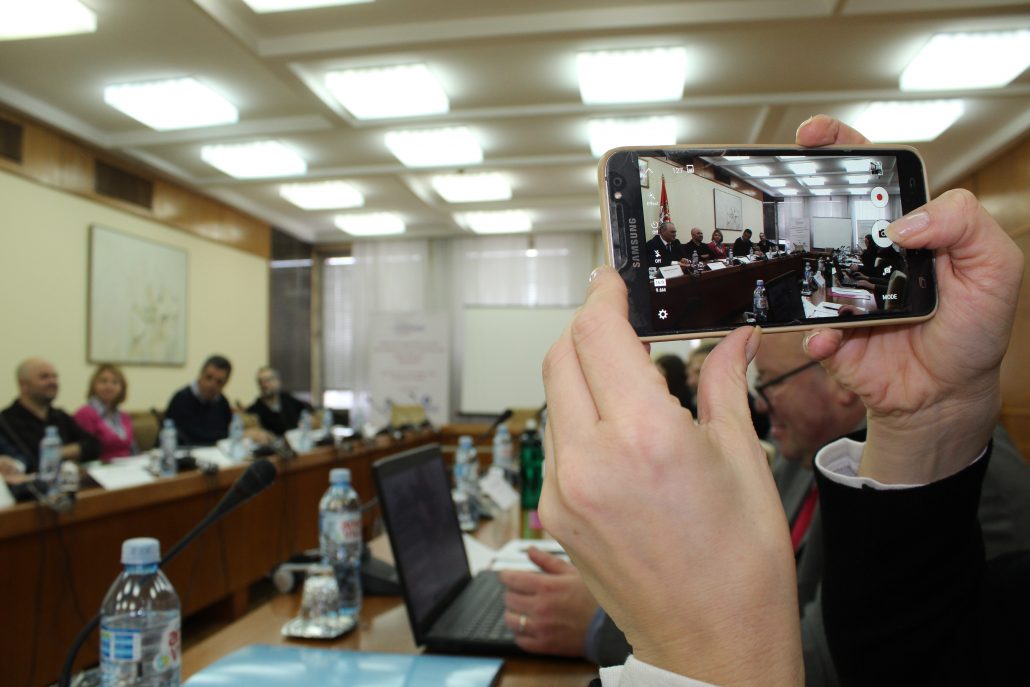
Meeting of the Working group for negotiations with the representatives of the Global Fund

Global Fund eligibility list 2019

The Global Fund to Fight AIDS, Tuberculosis and Malaria has recently published its updated country eligibility list for 2019. The list reflects the eligibility determinations for the year 2019 (a non-allocation year) and is for information purposes only. Allocations are made once every three years following the outcomes of the Global Fund’s replenishment The 2020 Eligibility List will determine which country components are eligible for an allocation for the 2020-2022 allocation period.

SEE countries affected by changes are Bulgaria, Kosovo*, North Macedonia and Romania. Montenegro and Serbia remain eligible for HIV disease component due to high disease burden.

Bulgaria and Romania may be eligible for an allocation for HIV/AIDS for non-governmental or civil society organizations if there are demonstrated barriers to providing funding for interventions for key populations, as supported by the country’s epidemiology for the 2020-2022 allocation period.

Kosovo is newly classified as an Upper-Middle Income country based on the latest three-year average of GNI per capita data. As Kosovo’s HIV/AIDS and TB burden are ‘Not High’, both the HIV/AIDS and TB components are now eligible for Transition Funding for the 20202022 allocation period.

North Macedonia‘s HIV/AIDS disease burden classification changed to ‘Low’ in 2018 to ‘High’ in the 2019 Eligibility List, resulting in one determination of eligibility. Country components must be eligible for two consecutive eligibility determinations to be classified as eligible on the Eligibility List.

According to the GF Eligibility Policy “Upper-middle income countries meeting the disease burden criteria, but some may be eligible for an allocation for HIV/AIDS to directly finance non-governmental and civil society organizations, if there are demonstrated barriers to providing funding for interventions for key populations, as supported by the country’s epidemiology. Eligibility for funding under this provision will be assessed by the Secretariat as part of the decision-making process for allocations. As part of its assessment, the Secretariat, in consultation with UN and other partners as appropriate, will look at the overall human rights environment of the context with respect to key populations and specifically whether there are laws or policies which influence practices and seriously limit and/or restrict the provision of evidence-informed interventions for such populations”.

To read full document with the eligibility list follow this link>>>>

Serbian Justice Ministry releases draft Action plan for Chapter 23

The Serbian Justice Ministry has published a draft of its revised Action plan for Chapter 23 – Judiciary and Fundamental Rights – in the country’s pre-accession negotiations with the European Union. The draft was published on the ministry’s web site along with an invitation for comments. The deadline for comments is 8 February.

EU Justice - Support for Chapter 23".The first draft of the revised Action Plan for Chapter 23 was presented at the round table held on 6 February 2019 in Belgrade. Representatives of judicial institutions, civil society organizations and international institutions attended.

The round table was organized with the support of the European Union, which financed the project “EU Justice – Support for Chapter 23”.

The DPNSEE Executive Director participated in the round table. It was an opportunity to meet and exchange with colleagues, especially with those from the Office for Gender equality and Association of Judges and Prosecutors of Serbia.


Two member organisations joined DPNSEE

At the DPNSEE General Assembly, held on 10th December 2018, in The Palace of Serbia, in Belgrade, Serbia, two new member organizations were accepted into the DPNSEE Network: Timok Youth Center (TOC) from Serbia and Center of Human Policy, from Bulgaria.

Both organizations were accepted by a unanimous decision of all present member organisations representatives.

Timok Youth Center (TOC) is a non-profit organization registered in Zaječar 2004. and operating on the territory of Zaječar, Timok region and the South -East Serbia. TOC agrees with the mission and vision of the DPNSEE and wants to actively promote the objective and open debate on the effectiveness, direction and maintenance of national, regional and international political drugs, and to promote constructive policy recommendations that lead to the adoption of human and effective drug policies in SEE.

Timočki Omladinski Centar

TOC is ready to actively engage with the creators of political and decision-making bodies in Serbia and in the region of Southeast Europe.

Timok Youth Center is an organization that is recognized at the local as well as at the national level when it comes to the fight against addiction, and above all the fight against drug abuse. Preventive programs that are implemented, and which concern addiction diseases, are mostly oriented towards young people, especially with youth at risk. TOC think that the young people from 15 to 30, as a sensitive category of the population, are especially affected by the problem of drug abuse. The research that we have conducted on the territory of Zaječar district, in the last few years has shown that young people in most of these years most often try one of the drugs. Also, in the period from 2007 to 2014, TOC is an organization that worked within the Global Fund for Reducing HIV/AIDS in South East Serbia and developed a volunteer program dealing with this issue. They believe that intersectoral and partner cooperation in prevention programs and harm reduction programs are very important and we have good cooperation with local municipalities and ministries. TOC’s work has been recognized by the The Office against drugs of Republic Serbia, with which we have signed a Memorandum of Cooperation.

Center for Humane Policy was created in 2016 by leading experts in drug addictions and drug policy field in Bulgaria. The main goals of the organization are to promote, facilitate and support development of effective, evidence based methods and policies in the field of public health, social care and education.

The organization is a member of the Eurasian Harm Reduction Association (EHRA) and the chair of the Center is also co-chair of the Steering committee of the network. Center for Human Policy is very good in understanding the importance of working together with organizations from different countries to improve the drug policy situation in the region.

During the last year the organization focused their efforts on the implementation of “Preventure” in the country. It is a school-based intervention aimed at reducing adolescent drug and alcohol use in high-risk teenagers.

Nowadays Center for Humane policy relies on two experts, trained in Canada by the inventor of the Preventure methodology – Patricia J Conrod from the University of Montreal. Also the organization has personal support of professor Conrod to implement the intervention system in the country.

Center for Humane policy also builds networks with the authorities to ensure the sustainability for fereb=nt implementation of good practices, and they have the support of the Secretary of National Council on Narcotic Substances and the Vice-Minister of Ministry of Health.

Together with these activities, the organization prepares statements, reports and analyses regarding the efficiency of Harm reduction, Opioid Substitution therapy, HIV and drug treatment policies.

Sustainable Services for PLHIV and HIV Prevention Conference

The Union of Organizations of Persons Living with HIV/AIDS in Serbia (USOP) hosted the international conference on Sustainable Services for PLHIV and HIV Prevention in Belgrade on November 28, 2018. This one-day conference supported by UNDP Programme in Serbia gathered 110 relevant stakeholders from Serbia, Bosnia and Herzegovina, Croatia, and Montenegro in an attempt to move the PLHIV service agenda forward through co-thinking and cross-sectorial experience exchange.

The Conference Sustainable Services for PLHIV and HIV Prevention contributed an important piece to the puzzle of PLHIV’s health, social, economic, and overall well-being in Serbia and the region by opening up a dialogue on the cost of services for PLHIV. Through active interactions between practitioners in key sectors, public officials, service providers and service users, the conference shed a new light on prevention of HIV infection and, specifically the role of PLHIV organizations in community resilience building.

Participants agreed that investments in development of standards and services, training of service providers, piloting and testing should be respected, recognized and more readily considered by the welfare systems through urgent development of formal standards that will lead to effective service mainstreaming and access to regular service funding. In the meantime, project funding remains an interim solution but one that clearly threatens sustainability and quality of services.

Several DPNSEE member organisations representatives participated in the Conference

The situation that calls for – an alarm

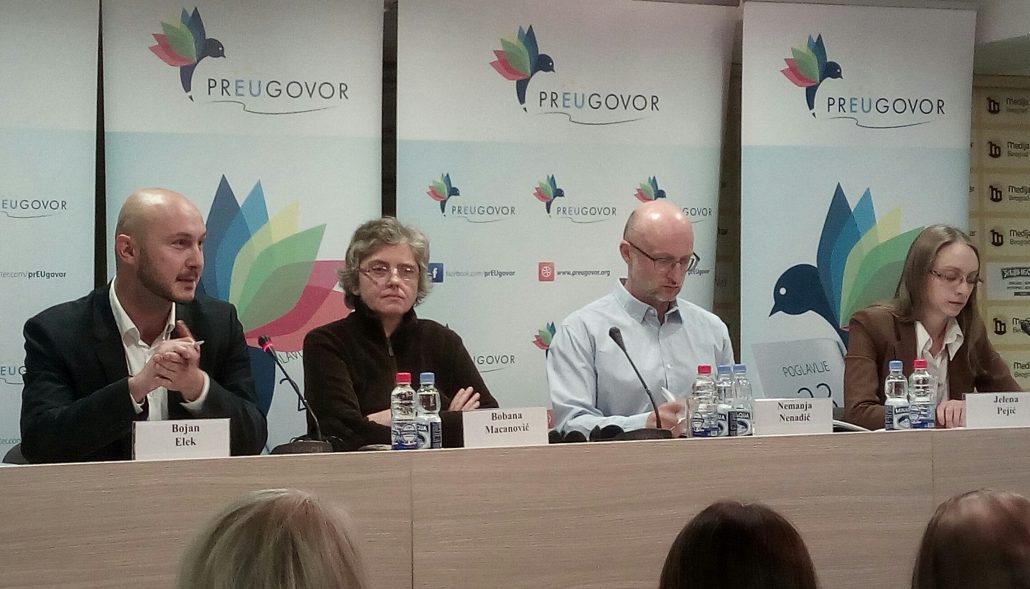
A coalition of seven NGOs entitled prEUgovor, which monitors Serbia’s EU accession process, presented a new report that contains the coalition’s assessment of the political criteria for the EU accession process, as well as the fulfilment of criteria for chapters 23 and 24 which include the judiciary, fundamental rights, justice, freedom and security for the period April – September 2018.

The central finding of the report is that key reforms stagnate or even marks a downturn and that much of stagnation happens under the justification of accession process. During that period, the Serbian authorities adopted a series of laws “that are worse than the current ones”, said the NGO coalition made of ASTRA – Anti-Trafficking Action, the Autonomous Women’s Centre, the Belgrade Centre for Security Policy, the Centre for Applied European Studies, the Centre for Investigative Journalism, Group 484 and Transparency Serbia. The report said that the democratic civil control over defence and security institutions is weak in practice.

Commenting at the presentation, DPNSEE Executive Director remarked that the report has no reference to the segment on drugs which is integral part of the Chapter 24 and presented some warning facts about the issue. DPNSEE and the coalition have working relations which both sides hope to be improved in the future.

The report is available following this link>>>>

(photo: prEUgovor)

UN Global standards for business to tackle LGBTI discrimination launched in Belgrade

Violence and discrimination against lesbian, gay, bi, trans and intersex (LGBTI) people cannot be ended by governments alone. Businesses can foster diversity and promote a culture of respect and equality both in the workplace and in the communities where they and their business partners operate.

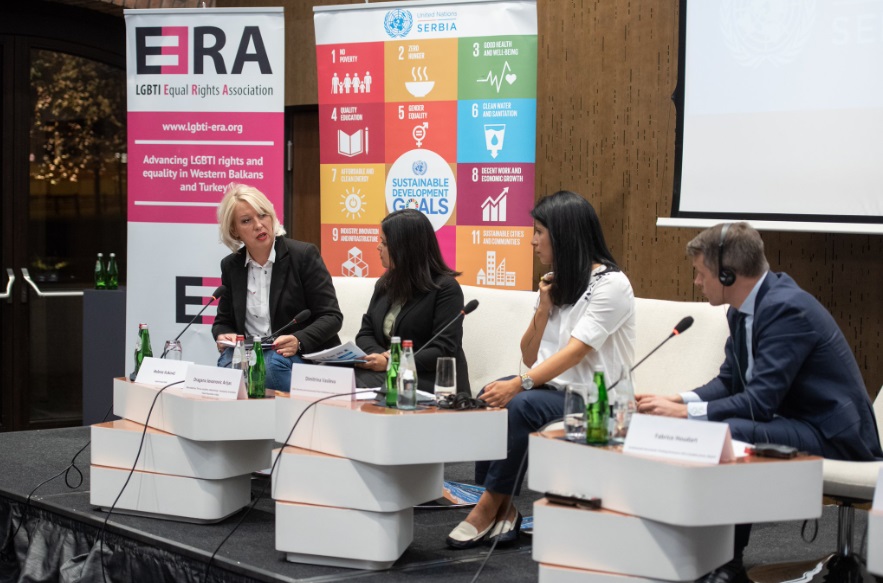
The global LGBTI equality standards for the business community have been launched today by the UN Country Team in Serbia and the LGBTI Equal Rights Association for Western Balkans and Turkey (ERA) in partnership with the UN Global Compact in Serbia and the Commissioner for Protection of Equality at the special event with government officials, business representatives, and civil sector.

Launching of the UN Standards in the Republic of Serbia is the first in South-East Europe, after the Standards had been launched in other parts of the World. Serbian is the seventh language in which the Standards are available globally.

© UNCT Serbia/Marko Rupena

In Serbia, Hemofarm AD, Ernst & Young DOO and Erste Bank AD (all members of the UN Global Compact network in Serbia) join the growing list of early adopters.

The Standards of Conduct build on the UN Guiding Principles on Business and Human Rights, adopted by the UN Human Rights Council in 2011. They are the product of a year-long process of consultations facilitated by the UN Human Rights Office and the Institute for Human Rights and Business, including regional meetings with leading business representatives and activists in Asia, Africa, Europe and the Americas.

Drawing on good practices from around the world, these standards set out actions companies can take to protect the rights of LGBTI individuals. These include eliminating workplace discrimination, making sure business operations do not contribute to discrimination against customers, suppliers or members of the public, and working with business partners to address discriminatory practices up and down the supply chain. They also encourage companies to stand up for the rights of LGBTI people in the countries where they operate – including through advocacy and support for local organizations.

The five standards:

  • RESPECT the human rights of their LGBTI workers, customers and members of the public
  • ELIMINATE workplace discrimination against LGBTI employees
  • SUPPORT LGBTI employees at work
  • PREVENT discrimination and related abuses against LGBTI customers, suppliers and distributors – and insist that suppliers do the same
  • STAND UP for the human rights of LGBTI people in the communities where companies do business

UN encourages businesses to no longer be silent in the face of discriminatory treatment of LGBTI people. The power of corporations to shape what the public thinks and wants should be harnessed and used responsibly.

The Standards are available following this link>>>

Training for the civil society organisations in Serbia

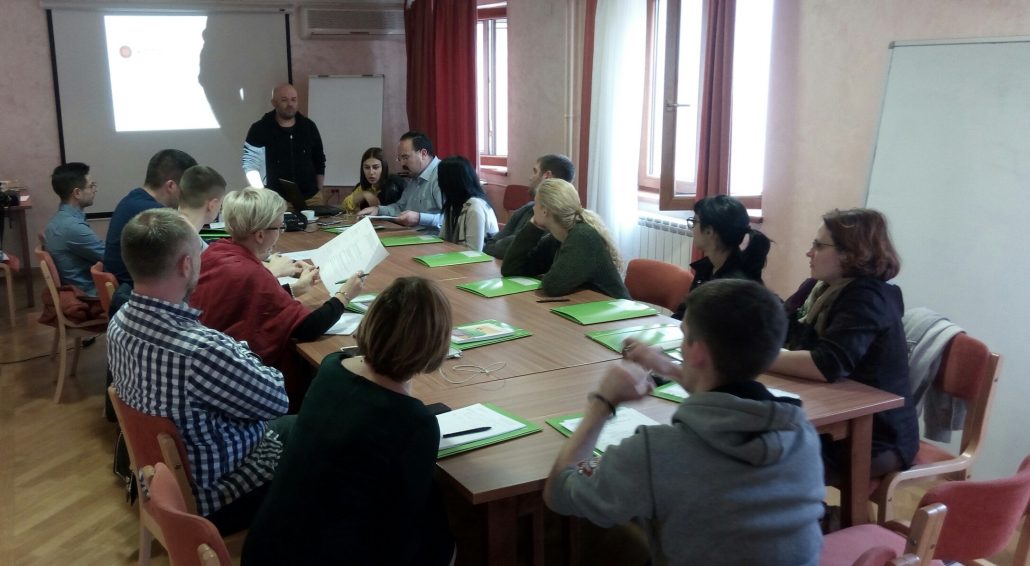
Association Prevent and Drug Policy Network SEE organized a three-day training “Advocacy of Budgetary Financing of the Harm Reduction Programs in Serbia” from 25 to 27 September at Mt. Avala, near Belgrade. The training was attended by 16 representatives of organizations: Bečej Youth Association, Timok Youth Center, Policy Analysis and Policy Creation Group, Association Remiks, Association Prevent and DPNSEE. The training was led by experts from Macedonia’s Healthy Options Project Skopje and ESE.

The training included general information and practical steps in the advocacy and monitoring process. In addition, Dr Jasmina Tanasić from the Standing Conference of Cities and Municipalities presented the Budget programming model used in the country.

A one-year budget support plan for harm reduction program in Serbia was prepared. According to the plan, in the forthcoming period an analysis of the budget of the Republic of Serbia (Ministry of Health, alcohol and tobacco excise, income from games of chance and opportunity) will be carried out and 4 projects by 4 organizations on the following topics:

  1. Cost-benefit analysis
  2. Analysis of open calls of the Ministry of Health
  3. Political parties and harm reduction
  4. Promotion of the project and results in the public