Global Fund Replenishment Conference FAQ

The Global Fund Replenishment Conference that takes place every 3 years. The aim of the conference is to raise funds and mobilize partners in the fight to end AIDS, TB and malaria.

The sixth Replenishment conference will take place on October 10 in Lyon, France at Palais des congrès de Lyon. This is the first time France (the second largest donor to the Fund) is playing host.

The target for the Sixth Replenishment Conference is to collect 14 billion USD over the next 3 years. This is an ambitious target, but the funds would save 16 million lives and prevent 234 million new infections between 2021 and 2023.

If you want to know more, read the FAQ webpage created by RED following this link>>>.

The International Overdose Day marked around SEE

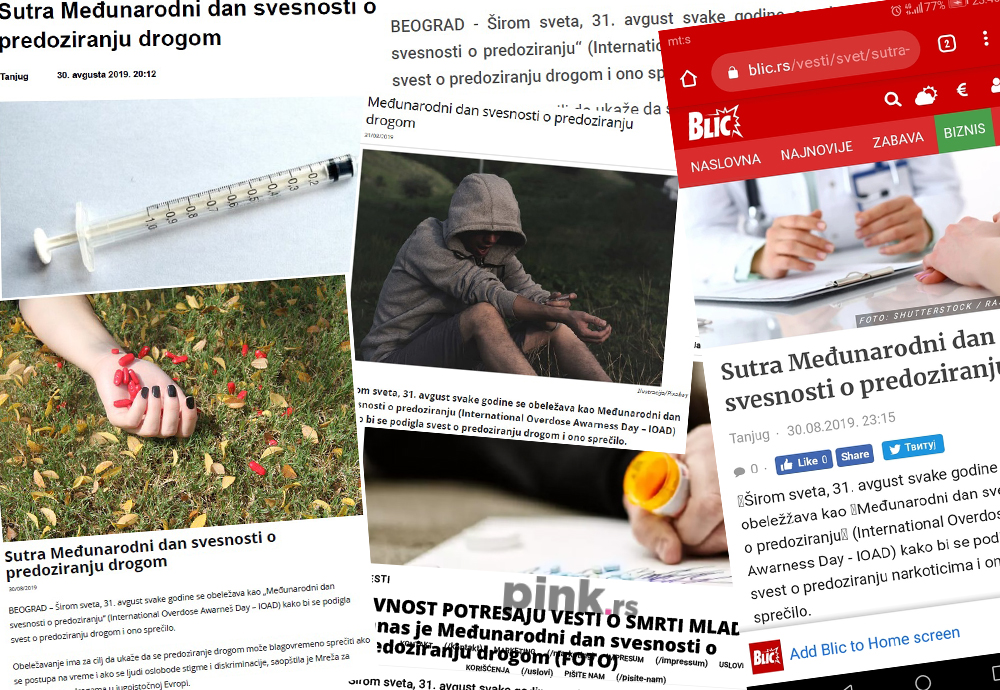
On the occasion of the International Overdose Awareness Day (IOAD), DPNSEE issued a press release underlining the importance of awareness and fighting stigma on overdose and presenting data about the issue worldwide and especially in Serbia. The release was published by the national Press agency Tanjug and several other media and portals.

The press release is downloadable following this link>>>

In Montenegro, NGO Juventas also issued a press release (supported by the NGO 4 Life) and held a press conference where Marija Mijović, coordinator of Programme of direct assistance to the people in risk of social exclusion presented situation in the country. A movie “Overdose”, directed by Mladen Vujović, outreach worker at the Drop-in Centre of NGO Juventas, Montenegro in cooperation with the Hungarian Drug reporters, was screened at the Green Montenegro International Film Festval.

Our colleagues from the Romanian Harm Reduction Network created a special video for this year’s IOAD campaign. Have a look at “Voices of the drug users. Episode 1”

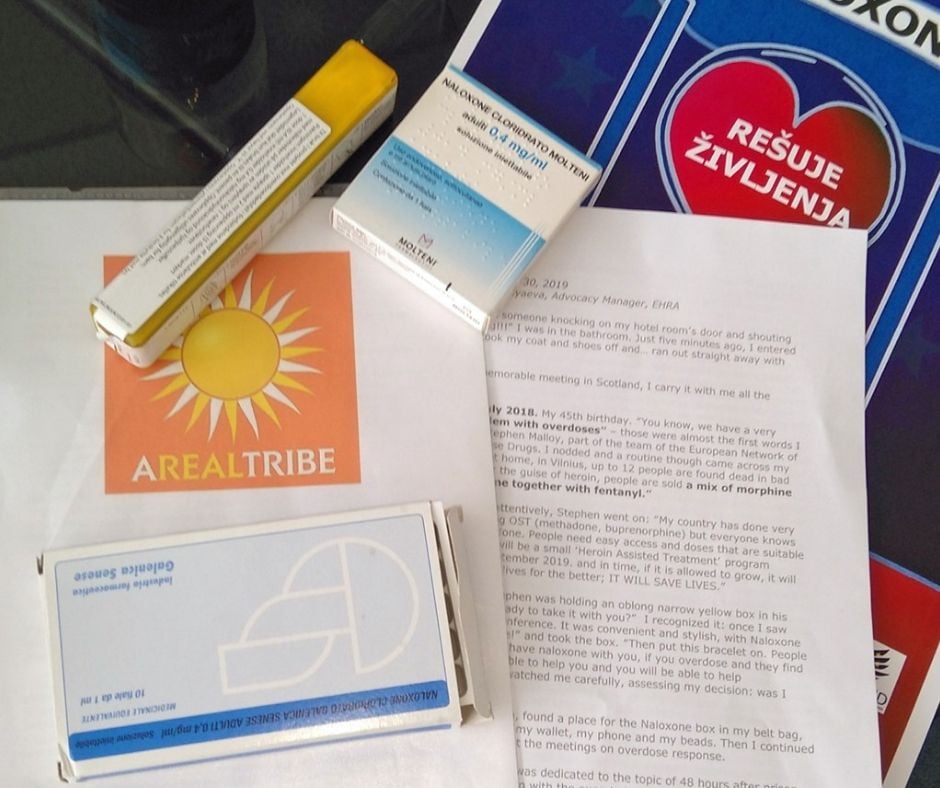
Association AREAL and AREALTRIBE group from Slovenia organized a workshop dedicated to the International overdose awareness day on 1 September 2019 in Ljubljana, Slovenia. Participants were educated how to respond if an individual finds himself or herself in that position.

Our colleagues from the Healthy Options Skopje (HOPS) promoted widely their webpages related to overdose and drugs

Thousands of people die each year from drug overdose and the fact is, overdose is an increasing global problem. Spreading the message that the tragedy of overdose and injury is preventable, International Overdose Awareness Day raise awareness of overdose and reduces the stigma associated with the drug-related death. Also, the day of awareness is providing support to families and loved ones of overdose victims, so that no one is forgotten.

Time to remember – time to act.

Countries increase their support to the Global Fund

During the G7 Summit in Biarritz, France, Chancellor Angela Merkel announced a pledge of €1 billion for the upcoming three-year period, representing a 17.6% increase.

Germany is the fourth-largest donor to the Global Fund. Germany’s investments have helped the Global Fund partnership save more than 27 million lives and reduce deaths from AIDS, TB and malaria by one-third. As a leading voice in global health and development, Germany has advocated the need for international cooperation around global health security, health systems strengthening and antimicrobial resistance. It strongly endorses the need to reduce inequalities in accessing health care, overcoming human rights and gender barriers.

The Global Fund welcomed the government of Italy’s announcement that it will contribute €161 million to the Global Fund over the next three years, as also announced in Biarritz by Prime Minister Giuseppe Conte. This pledge – representing a 15% increase from Italy’s previous contribution – is a clear demonstration of the country’s commitment to end the epidemics of HIV, tuberculosis and malaria.

Italy has been a strong supporter of the Global Fund since it was established in 2002. Italy hosted the first meeting of donors to replenish the Global Fund’s resources in Rome in 2005. It has also played a key role in shaping Global Fund’s policies, including advancing human rights, building stronger systems of health and investing in challenging operating environments.

The Swiss Federal Council approved a contribution of CHF64 million to the Global Fund’s Sixth Replenishment. This is the highest contribution ever granted by Switzerland to the Global Fund.

Switzerland shares a seat with Canada and Australia on the Global Fund Board. With this representation, Switzerland plays a key role in initiating and shaping discussions on issues such as embedding the fight against the three diseases in the broader universal health coverage agenda, strengthening Country Coordinating Mechanisms, and promoting the role of civil society and the provision of health services to vulnerable and marginalized populations.

***

France will host the Global Fund’s Sixth Replenishment pledging conference in Lyon 9 – 10 October 2019. The Global Fund seeks to raise at least US$14 billion for the next three years to help save 16 million lives, cut the mortality rate from HIV, TB and malaria in half, and build stronger health systems by 2023.

The Global Fund Replenishment Conference aims to further mobilize efforts to end the epidemics of three of the world’s most devastating diseases by 2030, in line with the Sustainable Development Goals.

EPALE’s thematic focus on social inclusion of vulnerable groups

EPALE (Electronic Platform for Adult Learning in Europe) is a European, multilingual, open membership community of adult learning professionals, including adult educators and trainers, guidance and support staff, researchers and academics, and policymakers. EPALE is funded by the Erasmus+ programme. It is part of the European Union’s strategy to promote more and better learning opportunities for all adults.

Over the last decade, social exclusion and disengagement of adults have been among the most significant concerns faced by EU countries. There is a growing number of people suffering from the various effects of the unstable social, economic and political situations affecting Europe and its neighbouring countries. Some adults are particularly at risk of being excluded and marginalised, for example those with health or learning difficulties, early school leavers, members of ethnic minority groups, homeless people, or refugees and migrants.

EPALE believes that the European adult education systems have the potential to meet these adults’ specific educational needs and change people’s lives for the better. They opened two thematic pages dedicated to social inclusion of vulnerable groups: Social inclusion and Barriers to learning where the community and the national teams have gathered interesting articles, useful resources and case studies on the topic (content varies based on your language preference).

Our new website

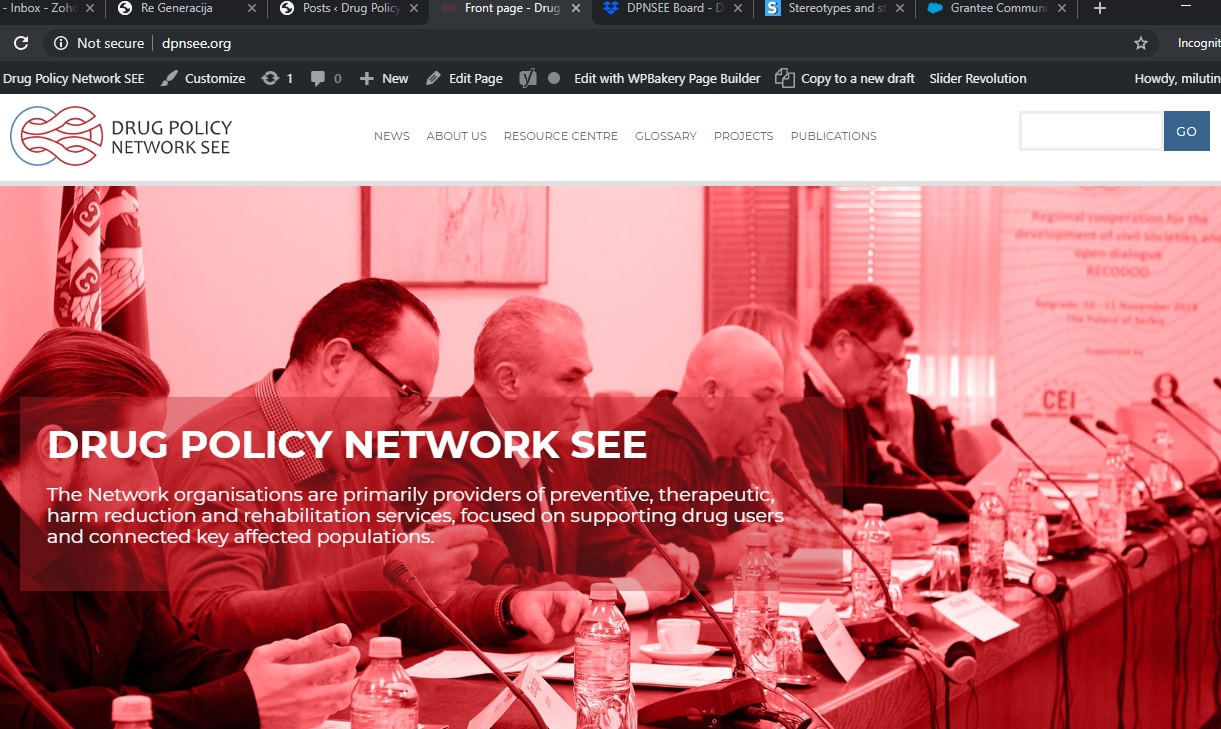
DPNSEE Office team is proud to present our new website. This is a result of a great work of our colleagues Snežana and Nenad and expert work from Vuk Ninić from STANDARD-E.

Besides visual and improvements in organisation of the site, we updated two important services and made them easily available.

At the Resource Centre, you can currently search through more than 360 documents classified in 7 categories, from 12 countries of the region (including even Turkey) and international, on 11 languages. Thank you once again to our recent volunteer Marija Spasić and Staff members Irena Molnar and Nenad Maletin for compiling such a comprehensive collection of documents and Nenad again for making it available for web search and download.

The pages for the Glossary of terms used in drug policy currently provide you with the on-line versions of the Glossary in English and Serbian. We are in process of uploading the versions in Spanish, Bosnian and Montenegrin and connecting them to establish relations between terms in different languages. PDF versions are already available from the website. Thank you to our recent volunteer Vladana Stepanović for collecting most of the terms and many other colleagues who helped with additions and translations.

Two more new pages are also in the current version – those for DPNSEE Projects and Publications.

We hope that you shall like, use, link and promote our website. Also, we welcome all your comments which can be of help to making this website useful.

We would very much appreciate your suggestions for new terms for the Glossary (or improved texts for existing terms) and documents for the Resource Centre (or information about new versions of the existing documents).

Most of SEE countries are not in risk of money laundering and terrorist financing

Published by the Basel Institute on Governance since 2012, the Basel AML Index is an independent annual ranking that assesses the risk of money laundering and terrorist financing around the world. It measures the risk using data from publicly available sources such as the Financial Action Task Force (FATF), Transparency International, the World Bank and the World Economic Forum.

A total of 15 indicators of countries’ adherence to anti-money laundering and countering the financing of terrorism regulations, levels of corruption, financial standards, political disclosure and the rule of law are aggregated into one overall risk score. By combining these data sources, the overall risk score represents a holistic assessment addressing structural as well as functional elements of the country’s resilience.

The scores are aggregated as a composite index using a qualitative and expert-based assessment in order to form the final country ranking. They should be read in conjunction with the analysis and descriptions of the methodology and indicators in the rest of the report. Without this background, the results may easily be misunderstood or misrepresented, and this may have unwanted consequences for any policy or compliance decision that is taken as a result.

The Basel AML Index does not measure the actual amount of money laundering or terrorist financing activity, but rather is designed to assess the risk of such activity. The risk is understood as a broad risk area in relation to a country’s vulnerability to money laundering and terrorist financing and its capacities to counter it.

The Basel AML Index ranks countries based on their overall scores, capturing the complex global nature of risks and providing useful data for comparative purposes. However, the primary objective is not to rank countries superficially in comparison with each other, but to provide an overall picture of different countries’ risk levels and serve as a solid basis for examining progress over time.

More countries showed slight improvements in their risk scores in 2019 than last year, but there have been no substantial changes indicating significant progress in tackling money laundering and terrorist financing. This confirms the general trend visible over the eight years since the Basel AML Index was first calculated: most countries are slow to improve their resilience against these risks. Improvements are minor – between 2018 and 2019, 27% of countries listed in the Public Edition (34/125) improved their scores by more than 0.1 point.

60% of countries in the 2019 Public Edition ranking (74/125) have a risk score of 5.0 or above and can be loosely classified as having a significant risk. This compares with 64% in 2018. The mean average level of risk, though marginally better than 2018, remains above this (5.39 in 2019 compared to 5.63 in 2018).

Most countries of South East Europe fall into the category of countries with low risk. North Macedonia holds high 3rd place with risk of only 3,22, followed by 5th Bulgaria with 3,51, 6th Slovenia, 7th Croatia and 10th Montenegro with 3,7, 3,82 and 3,94. Greece with 4,56 and Romania with 4,76 experience moderate risk, while the countries with significant risk of money laundering and terrorist financing include Bosnia Herzegovina with 4,76, Albania with 6, Turkey with 6,19 and Serbia with 6,33 which is the highest risk of all countries of Europe and Central Asia!

EU announces record €550 million contribution to Global Fund

The EU announced a €550 million pledge to The Global Fund during the G7 summit in Biarritz. European Council President Tusk, representing the EU at this year’s G7, made the announcement. It comes ahead of the Global Fund donors’ conference that will take place in October in Lyon, as more support is needed so that developing countries can improve their health systems, reach universal health coverage and help end the 3 epidemics by 2030.

The Global Fund seeks to raise at least €12.6 billion (US$14 billion) for the period 2020-2022. By 2023, these funds should help save an additional 16 million lives, avert 234 million infections, cut the mortality rate from AIDS, tuberculosis and malaria in half, and build stronger health systems.

Today’s pledge is made under the assumption that the EU’s new Multiannual Financial Framework for the period from 2021-2027 and the new external action instrument, which would provide the budget for today’s pledge, are adopted broadly along the lines proposed by the European Commission.

On top of the overall €1.3 billion contributions made to global initiatives such as the Global Fund, the Global Vaccination Alliance (GAVI) or the WHO’s universal health coverage partnership, the EU’s development cooperation supports with additional €1.3 billion the health sector in 17 countries (mostly in Africa) during the period 2014-2020.

In global health, the EU focuses on equitable and accessible health care, sustainability of health systems, human rights, women and girls, and private sector engagement.

For more Information about the EU and the Global Fund to fight AIDS, tuberculosis and malaria partnership, follow this link>>>

Alarming situation in Bosnia Herzegovina

With delay in establishing political structures in the country and reduced international donor support, the situation with harm reduction services in Bosnia Herzegovina became alarming. Here is what we heard from Denis Dedajić, Chairman of the Association Margina and DPNSEE Board member:

The current situation is as follows: the Margin Association is the only survivor with the services and we provide them now and on a larger scale because no other service provided by other NGOs is active, so all clients have turned to us. We are taking over users and equipment from Sarajevo and we shall organise distribution with support of few gatekeepers who used to work for us recently.

I estimate that we will endure until the end of October and after that we shall have no more materials for distribution. The salaries of our staff need not be talked about, as of May we are all volunteers and the funds we had are already spent on transportation and rents of the space we use.

The situation is further complicated by a few things. What concerns us most are the indolence of the authorities and the large waves of migrants coming to Bosnia and Herzegovina. Yesterday, I was in contact with asylum officers and they informed me that about 1.000 immigrants a day enter northern Bosnia and in different ways move west to the border with Croatia and the EU respectively. They aim at Western Europe, but their psycho-physical condition is very poor. There is an increasing number of fatalities, both as a result of illness (quite a large number of TB and Hepatitis C), which is due to conflicts between groups from different countries (Afghanistan Pakistan, Algeria Morocco, Syria, Bangladesh). These conflicts generally end with very serious injuries by knives or other cold weapons. We have had about 100 contacts so far and have been using sterile injection supplies. According to asylum officers, many drug users have been around for several years.

NO one is doing anything on this issue, and we are simply waiting for when a major incident will occur so that everything will surface.

We sincerely hope that a solution will be found soon to revitalize the harm reduction services and ensure health support needed.

Canada announces increased commitment to Global Fund

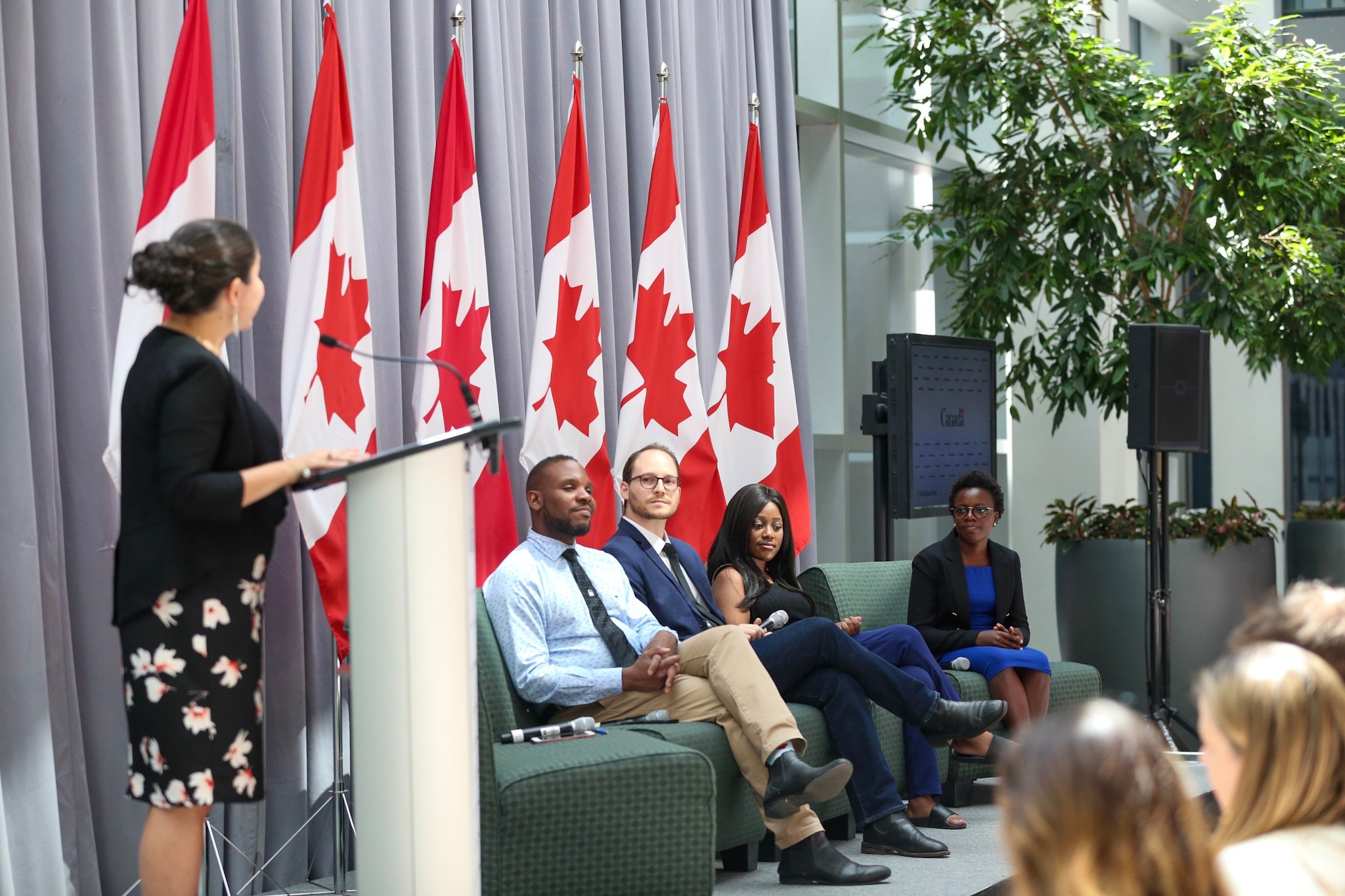
Maryam Monsef, Minister of International Development and Minister for Women and Gender Equality, announced that Canada will pledge $930.4 million to the Global Fund for 2020 to 2022, an increase of close to 16% from 2016. Tackling these infectious disease epidemics is key to protecting global health and addressing the health needs of the most vulnerable, including women and girls, around the world. The Minister made this announcement on 22 August 2019 while participating in an armchair discussion with prominent Canadian and international academic and civil-society representatives. This announcement is made ahead of the Global Fund’s Sixth Replenishment Conference, which will be held in France in the fall.

This pledge follows the Government of Canada’s historic commitment to increase global health funding to $1.4 billion annually on average by 2023. Canada’s approach to global health includes maternal, new-born and child health and comprehensive sexual and reproductive health and rights and services.

Canada is at the forefront of international efforts to improve the health of the poorest and most vulnerable, especially women, girls and adolescent girls. This is why Canada is joining forces with the Global Fund to Fight AIDS, Tuberculosis and Malaria to end these epidemics for good by increasing its contribution to the Fund.

2019 Fiscal Transparency Report

The U.S. Department of State presented their 2019 Fiscal Transparency Report. This report describes the minimum requirements of fiscal transparency developed, updated, and strengthened by the Department in consultation with other relevant federal agencies. For the purpose of this report, the minimum requirements of fiscal transparency include having key budget documents that are publicly available, substantially complete, and generally reliable.

Fiscal transparency fosters greater government accountability by providing a window into government budgets for citizens, helping citizens hold their leadership accountable and facilitating better-informed public debate.

The report includes a description of how governments fell short of the minimum requirements.  It outlines any significant progress being made to disclose publicly national budget documentation, contracts and licenses.  It also provides specific recommendations of short- and long-term steps governments should take to improve fiscal transparency.  Finally, the report outlines the process the Department followed in completing the assessments and describes how U.S. foreign assistance resources have been used to support fiscal transparency.

The Department concluded that, of the 140 governments evaluated pursuant to the Act plus Equatorial Guinea, 67 did not meet the minimum requirements of fiscal transparency.  Of these 67, however, 13 governments made significant progress toward meeting the minimum requirements of fiscal transparency. Among those who meet the minimum requirements are all South East European countries!

To read more about the Report, follow this link>>>