HIV prevention services for key populations started in Sofia after two years of interruption

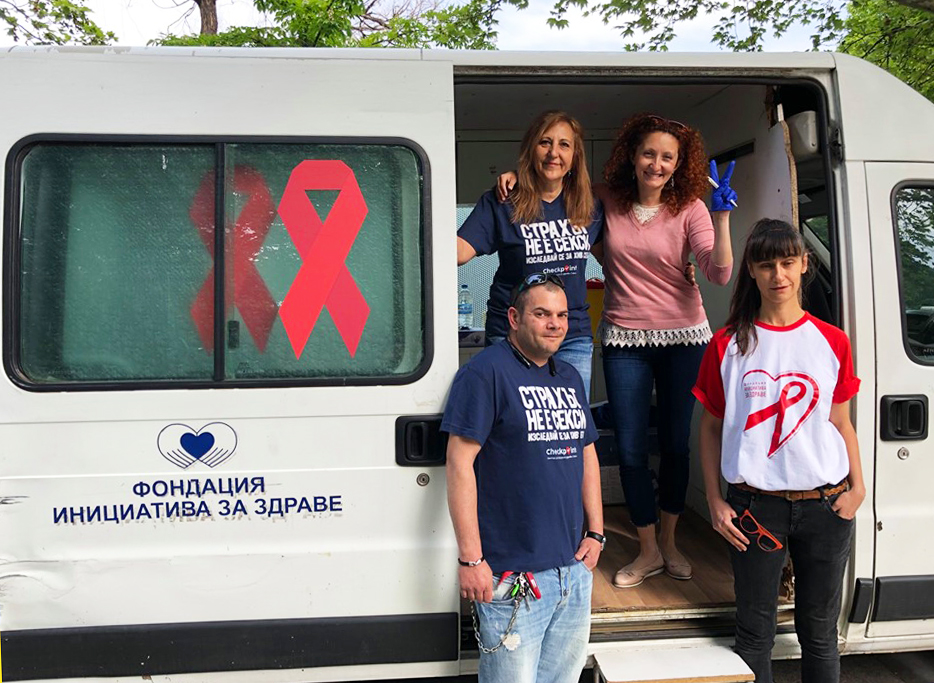
Two years after the end of the HIV prevention programs for key populations funded by the Global Fund to Fight AIDS, Tuberculosis and Malaria, the services started again with governmental funding. This long awaited moment will re-establish the contacts between the non-governmental organizations and the most vulnerable communities among which the epidemic was kept at low levels for many years thanks to the daily hard work.

The new activity is possible thanks to the implementation of a public procurement tender of the Ministry of Health announced at the end of 2018. In Sofia the tender winner is Consortium I.Z.I.  – a union of three non-governmental organization with extensive experience in working with key populations – Association “Health without Borders”, Initiative for Health Foundation and I Foundation.

It is envisaged that for a period of 12 months 800 people who inject drugs will receive safer injecting services (clean injecting equipment); 2100 MSM and 400 women and men sex workers will be reached with condoms and safer sex consultations. It is planned that 3.300 free and anonymous HIV tests will be provided in the three groups through outreach mobile services and in the Center for Sexual Health CheckPoint Sofia. The program includes also testing for syphilis and hepatitis C as well as specialized counselling and support for 100 people living with HIV. The contract amount is 166,310 BGN without VAT.

The renewal of the HIV prevention programs for key populations in Sofia is a very positive fact for several reasons. On one hand, without specialized services these populations stay outside of the health system and for some of them the outreach teams are the only connection with the health and social services helping them to receive counselling, referrals and support for many other health and social problems. In the last two years thanks to private funding it was possible to maintain the testing and indoor prevention services for men who have sex with men in CheckPoint Sofia, as well as support for people living with HIV. But due to the lacking outreach work for people who inject drugs and sex workers the spread of HIV in these groups is unknown at the moment. On the other hand, after the long years of solely international funding which made these programs possible, the starting of prevention services with governmental finances is an essential precedent bringing hope for the sustainability of the results achieved with the GFATM support.

The representatives of Consortium I.Z.I. evaluate positively the state support for HIV prevention in key populations, although they believe that the way to sustainability hasn’t been found yet. The period for which the services will be covered is short and the funding for Sofia is approximately ¼ of what was provided before by the GFATM. The deepest concern is related to the lack of a real sustainable mechanism for social contracting. The public procurement tender as a form of funding is a temporary decision which cannot ensure continuity of the services and turns the social work into a business service which brings substantial risks for its quality.

During the first day of operation, 35 people obtained a safe injection equipment from the service.

***

Association “Health without Borders” was established in 2004. It is specialized in counseling and testing services for HIV, hepatitis and sexually transmitted infections in key populations. It maintains a low-threshold medical center CheckPoint Sofia – Center for Sexual Health.

Initiative for Health Foundation was established in 1997. It is specialized in the provision of services for reduction of the harms of injecting drug use.

I Foundation was established in 2004. It is specialized in the provision of counseling and support services for people living with HIV.
Advocacy for a cantonal institution for drug diseases

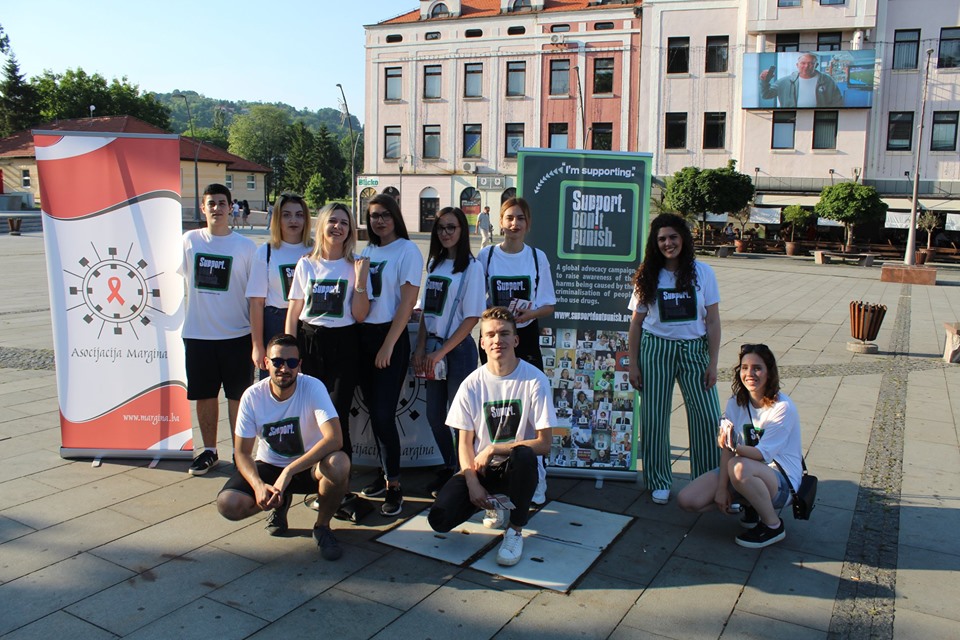
For this year Association Margina once again organised street action disseminating promotional materials, meeting people and spreading information about the campaign and work of the association.

By sharing an educational brochure (What to do when someone overdoes you, etc.) to several locations in the city by volunteers, Margina wanted to raise people’s awareness of a problem that doesn’t affect only individuals, but whole community. Passers-by had the opportunity to get acquainted with the organization’s work and campaign goals, and also to take pictures with campaign Logo in order to support those who need it the most. Organisers are very pleased with the community response to the messages that the campaign provides, as more and more people are aware that changes must be introduced to the entire system.

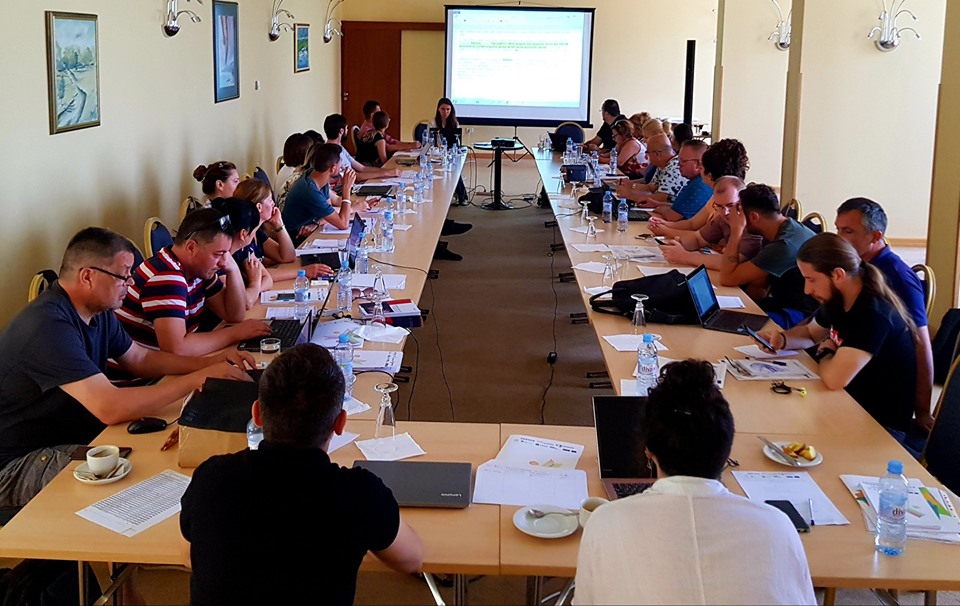
A special feature this year is the public debateDo We Need The Office of Addiction Diseases” with 40 representatives from institutions and civil society present, as well as active users of “suboxone” therapy and active users of harm reduction services provided by our organization.

The opposite views are expressed about how to fund a part of the health system, and insufficient systemic support for people using drugs. Also, for the first time data from the regional project “Budget advocacy and monitoring” were presented and representatives of the Ministry of Health and the Health Insurance Fund had mild panic outbursts, with the information provided and recommendations.

The conclusion of all the attendees is that this Department of Addiction Diseases, as urgently needed, will be one of our goals in the advocacy campaign that will follow in early September.

Public quiz on Drugs and Politics

Association Terra held a presentation of the poster ONLY VARIETY CAN RESPOND TO VARIETY which was promoted at the Harm Reduction Conference held Porto recently this year. Activities related to the poster were organised in their Drop in Centre during the Support. Don’t Punish campaign.

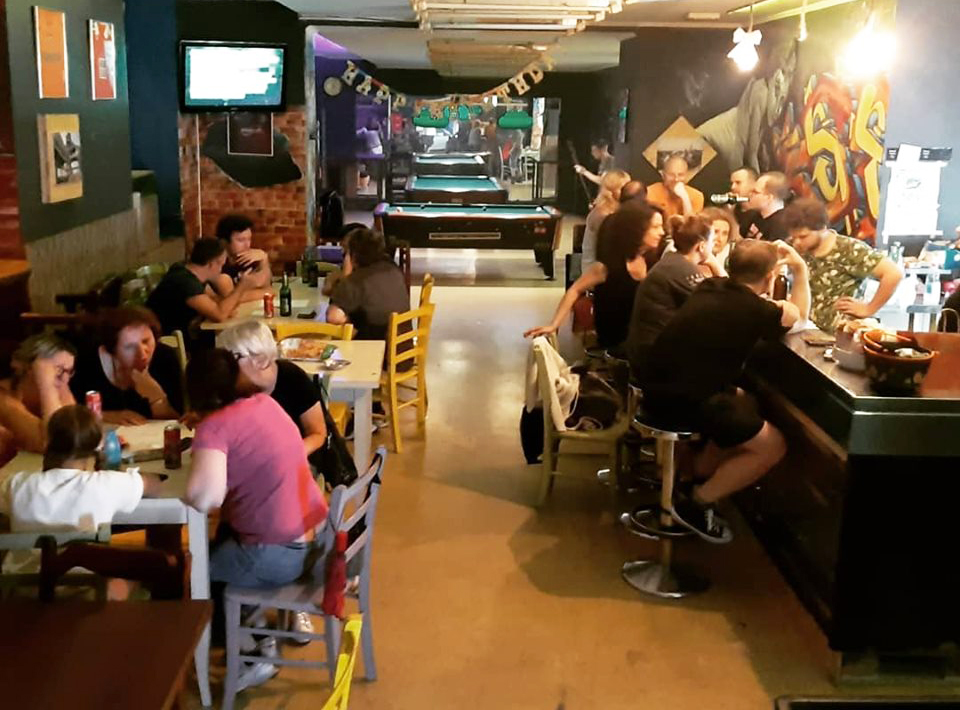
On 7 July, they organised a public quiz on Drugs and Politics (questions related to drug consumption, from different domains like geography, history, film, etc.) in the Rijeka Youth Club.

Romanian Support Don’t Punish YouTube channel launched

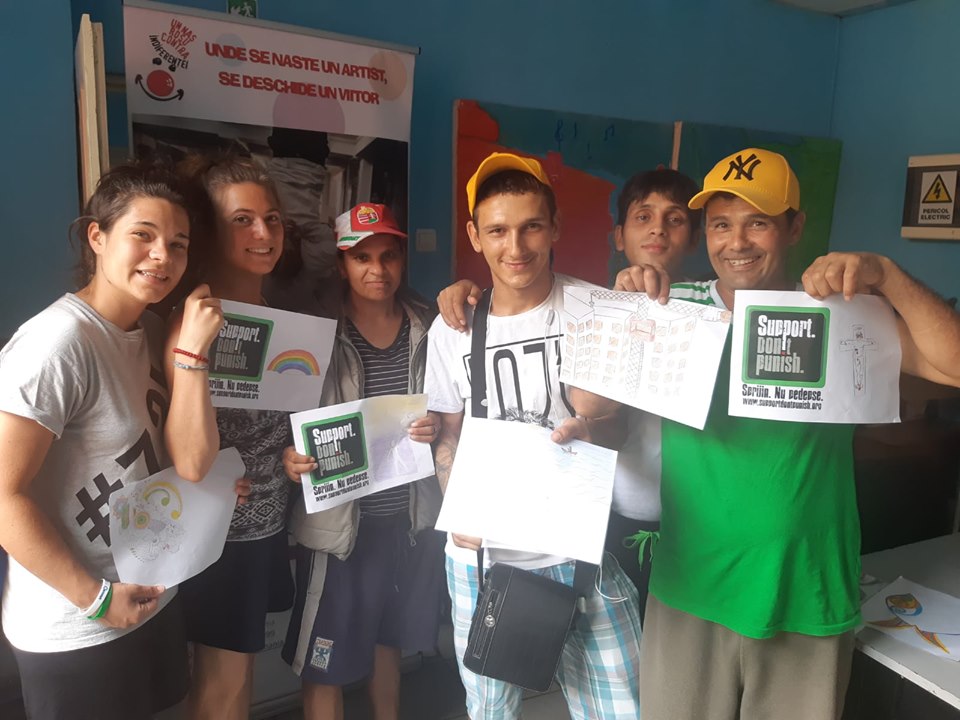
The Romanian Harm Reduction Network (RHRN) launched a YouTube channel with videos from users and professionals presenting the Support. Don’t Punish campaign messages “Sprijin. Nu pedepse“. A long-term video campaign started on the Global Day of Action 26 June under the S.DP umbrella.

A special campaign promotional video was prepared and posted at the channel

One of the first clips include a specific message which Professor Michel Kazatchkine, member of Global Commission on Drug Policy, sent to Romania.

A public event was held where activists from various organisations gathered to express their positions on discrimination and stigmatisation of drug users.

The stating videos at the channel will be followed by periodic episodes with practical harm reduction advices.

There are still several videos to be finished and released each couple of weeks, so stay tuned!

To see more photos from the public event, follow this link>>>. Follow the Romanian campaign Facebook page here>>>.


Czech drug policy model preserved

A week ago, we posted a news with an urgent call to support the Open letter to the Prime Minister of the Czech Republic to preserve its successful drug policy model, as our colleagues from the Czech Republic informed the international community that the Prime Minister is intending to move the Secretariat of the Council for Drug Coordination and its monitoring centre from the Office of the Government to the Ministry of Health.

DPNSEE was among 407 signatures to support the Open letter. And it worked!!!

As a result of expert pressure, the Czech government decided to desist from the intended move which we all feared would threaten the interdisciplinary model of Czech drug policy and endanger the funding of harm reduction and social services.

The support from international as well as domestic experts and professionals has been overwhelming and, apparently, has (once again) helped to preserve the Czech drug policy model.

For more details, please see a press release of the Czech government announcing that they desist from the move. The English translation is below:

THE OFFICE OF GOVERNMENT DESISTS FROM MOVING THE DRUG AGENDA UNDER THE MINISTRY OF HEALTH
4. 7. 2019 16:43

Regarding the fact that according to the Competence Act, the Office of Government should perform tasks related to the expert, organisational and technical aspects of the work done by the Government of the Czech Republic and its bodies, it has been considered that as a part of making the Office of Government more effective, the Secretariat of the Government Council for Drug Policy Coordination would be moved under the Ministry of Health with the prime minister continuing to preside the Council.

This wasn’t an isolated step. During the last year, the Governmental Council for Coordination of the Fight Against Corruption was moved under the Ministry of Justice and the agenda of social inclusion will move under the Ministry of Regional Development. In line with this, moving the drug agenda was being considered.

Due to the expert opinion that the move could diminish the importance of the drug agenda and that the discussion about moving was still undergoing, the Office of Government has decided to desist from this step. Secretariat of the Government Council for Drug Policy Coordination, currently lead by the National Drug Coordinator, will stay under the Office of Government.

BAM coordination meeting

A meeting with national coordinators of the Budget Advocacy and Monitoring in countries of South East Europe project was held during the regional training of the ARYSE (At-Risk Youth Social Empowerment) Network for advocacy for the promotion of children and young people at risk held from 5 to 7 July in Bar, Montenegro.

The main topic was implementation of the project in the next few months. Besides, a concrete agreements were made on finalising the budget analysis in the three involved countries.

Regional training for the ARYSE Advocacy Network

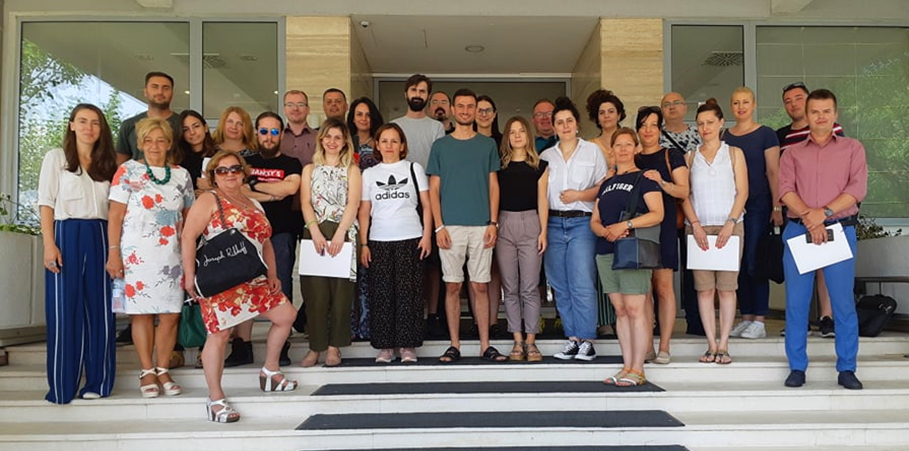
Within the project “Strengthening young people at risk of social exclusion“, a regional training of the ARYSE (At-Risk Youth Social Empowerment) Network for advocacy for the promotion of children and young people at risk was held from 5 to 7 July in Bar, Montenegro.

The project is being implemented in six countries from the Western Balkans (Albania, Bosnia and Herzegovina, Montenegro, Kosovo*, Northern Macedonia and Serbia) and aims to contribute to the social inclusion of the larger part of the young people at risk at the regional level, by strengthening the capacities of civil society organizations, regional/national cooperation and advocacy activities.

This training was intended for representatives of the implementing organizations and representatives of the national working groups established within the project. The idea of ​​the training was that the members of the working group and representatives of the organizations form a regional advocacy body which will continue to function after the completion of the project.

During the training, the participants worked to develop a common platform on which they would base their future work on young people at risk. During the training, the participants worked to develop an advocacy plan for all target groups covered by the project: Street youth, Youth who use drugs, Youth in conflict with law, Youth without parental care, Young Roma and Youth from families with history of drug use and/or conflict with law.

The regional body would aim to continue to promote the results of the ARYSE project and to advocate for appropriate guidance created through this project. In addition, the regional body would continuously work on the exchange of information and good practices and the improvement of policies related to young people at risk and the availability of the services designed for them.

The project is implemented by the NGO Juventas (Montenegro), the Association “Prevent” (Serbia), the Association Margina (BiH), ARSIS (Albania), HOPS (Macedonia), Labyrinth (Kosovo) and the Foundation CHL (Germany).

The network of the mentioned organizations that implements activities are aimed at contributing to active participation in the social and social processes of young people from the Western Balkan countries who are at the highest risk of social exclusion.

Support. Don’t Punish finally in Kosovo

Kosovo* finally joined the Support. Don’t Punish campaign in 2019. Activities were organised on the Global Day of Action in Pristina by Qendra për Informim dhe Përmirësim Social – QIPS (The Centre for Information and Social Improvement), a Kosovo-based NGO, working to improve the wellbeing of people in need and raising awareness for problems hidden by stigma. DPNSEE member organisation Labyrinth joined the campaign.

During the day, a march in the city centre was organised, all the way to the government building. It was followed by marketing on social media for the event, printing and designing banners and making props to place in front of the government building.

Posters were designed and posted around the city during the early morning, while leaflets were distributed during the day.

In the evening, the documentary „How to make money selling drugs“ was projected in the Termokiss, a community-run centre in Prishtina with the mission of urban and civil exchange, reflection and change making.


Public event at the city beach of Novi Sad


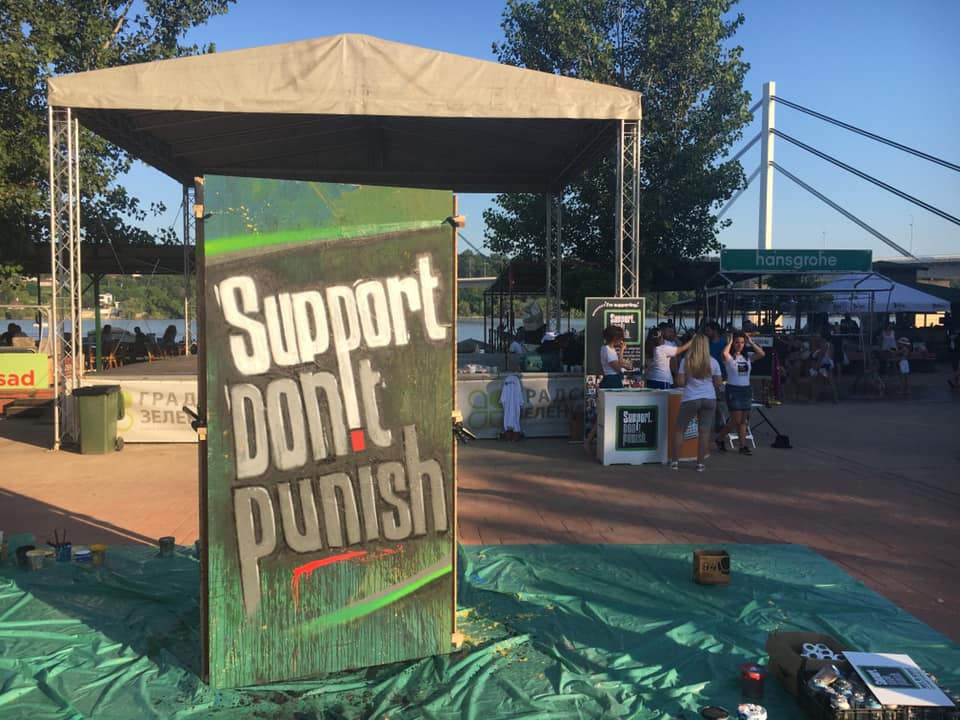
On the Global Day of Action 26 June, Association Prevent held a public event at the main plateau of the city beach “Štrand” in Novi Sad. The event was supported by the City Health Administration, International drug Policy Consortium and OPENS 2019 – The Youth Capital of Europe.

People visiting had an opportunity to get their photos from a photo booth, get information about the campaign, discuss and get advice from the Prevent activists. Children enjoyed the original game “Ne radi se čoveče”. Members of the New Point of Culture drew graffiti with the campaign messages and also messages which visitors gave.

Prevent also prepared a Facebook frames for profile photos and published infographics with campaign messages and other educational materials.

Watch videos made during the event in Novi Sad …

https://www.facebook.com/preventns/videos/618936851942845/

… and

https://www.facebook.com/preventns/videos/682856735471841/

Drug users are discriminated and without a proper treatment program

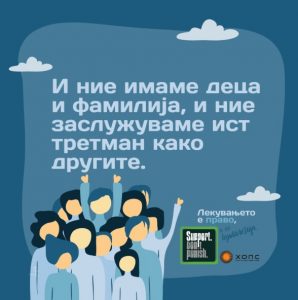
HOPS – Healthy Options Skopje hosted the “Support. Don’t Punish” campaign activities for the fifth time. The focus of HOPS campaign in 2019 is on the quality of treatment programs in Macedonia. The situation in Kisela Voda community is currently critical, with the Daily Centre for Prevention and Treatment of Addictions.

The campaign Support. Don’t Punish was launched on Facebook and HOPS’s website. They designed and made 5 illustrated messages. Focus groups with drug users took place previously, sharing messages for quality treatment from the discussion. Short videos were posted on Facebook and HOPS’s website. Previously, two videos were shot on sharing the weakness of the drug users’ treatment programs.

press conference during which the key findings from the research on the quality of treatment programs were presented.

At the event in the City Park on 26 June, artist Dreadpen painted graphite. At the same time citizens discussed and delivered messages of support and equal treatment for all. Also, appeals were addressed to the authorities to find a solution for psychosocial support which, besides the medical therapy that now exists, is very important in the treatment process.

Through the research “Quality of addiction treatment programs in Macedonia“, HOPS among other things found out that about 1.1% of the citizens in Macedonia tried opioid drugs and the number of people who use them by injection is estimated at around 6,800. “Only 27% of people who inject drugs in Macedonia are included in treatment programs for addicts, which is below the European average of 50%” states the analysis.

Apart from the dominant substitution therapy with methadone and buprenorphine, other treatment approaches are not available within the public health facilities and there are no programs for the treatment of non-opiate addictions except for alcohol.

There is also a serious deficit of staff with adequate training, especially psychiatrists, in treatment programs throughout the country.

Have a look at the video taken during the campaign

https://www.facebook.com/vidivakamedia/videos/886600725037527/