United Nations & world leaders condemned for failure on drug policy, health and human rights

329 NGOs call for global leadership to halt global public health emergency and to end egregious human rights violations against people who use drugs.

As the 26th International Harm Reduction Conference comes to a close, hundreds of health professionals, academics, drug policy and human rights experts, frontline workers and people who use drugs released a statement calling on world leaders to urgently address the health and human rights crisis among people who use drugs.

Signatory NGOs shed light on the alarming public health emergency faced by people who use drugs. Between 2009 and 2015, the number of drug-related deaths rose by a worrying 60%. In 2015 alone, this culminated in a total of 450,000 deaths – an estimated 50 deaths every hour. The target to halve the incidence of HIV among people who inject drugs by 2015, set eight years ago, was spectacularly missed by 80%, and HIV prevalence increased by one third among people who inject drugs over the same period. Furthermore, globally, six in ten people who use drugs are living with hepatitis C, while 168,000 people who use drugs were reported to have died of an overdose in 2015 alone.

These health harms are preventable. The evidence, presented at the Conference this week, shows that harm reduction and human rights-centred drug policies can save lives, prevent the spread of HIV and hepatitis C, and promote the dignity and empowerment of people who use drugs. But this requires leadership from both governments and the UN.

Naomi Burke-Shyne, Executive Director of Harm Reduction International (HRI), said: ‘The evidence for harm reduction is indisputable. It is nothing short of disgraceful that governments continue to fail to support and invest in health services for some of the most marginalised people’.

The joint NGO statement also expresses serious concerns over the ability of the UN Office of Drugs and Crime (UNODC) to adequately lead the UN response on this issue. By its very mandate and construction, the UNODC remains more attuned to the law enforcement response to drugs. As a result, UNODC leadership has consistently failed to unequivocally champion harm reduction, human rights and decriminalisation, and has lost further creditability with repeated silence in face of egregious human rights violations. Today, people who use drugs continue to be victims of incarceration, compulsory detention, denial of access to healthcare, corporal punishment, institutionalised violence, stigma and discriminations, and – in the most extreme cases – extrajudicial killings.

In response to the vacuum of political leadership, NGOs conveying in Porto have called for global leadership to protect the human rights of a ‘population under attack’ and demanded that these unacceptable human rights abuses to come to an end.

Ann Fordham, Executive Director of the International Drug Policy Consortium (IDPC), stated: ‘just over ten years left for countries to meet their global commitment to champion health, reduce inequalities, and provide access to justice for all, as enshrined in the UN’s Sustainable Development Goals, there has never been a more urgent need to strengthen political leadership at all levels. Faced with the current crisis, complacency can no longer be tolerated’.

New accreditation for Margina

The Board of the Agency for Healthcare Quality and Accreditation in the Federation of Bosnia Herzegovina (AKAZ), at the meeting held on 29 April 2019, accredited the drop-in centres of the Association Margina in Tuzla and Zenica.

AKAZ performs a variety of services including standards for healthcare institutions, indicators for healthcare institutions, certification, accreditation, facilitation, clinical guidelines, education for healthcare professionals and support healthcare institutions in clinical revision. With Margina, they implemented a project Quality improvement for drop-in centres on back in 2014 whose objectives were:

  • Development of tailor-made training
  • Development of specialized standards
  • Development of risk-based indicators
  • Facilitation during accreditation preparation
  • External assessment of the centres
  • Granting accreditation status for 3 drop-in centres – in Tuzla, Zenica and Mostar

Margina benefited from the project gaining accreditation for the three drop-in centres in 2015 and became the first civil society organisation in South East Europe. The accreditation includes 13 standards and 89 criteria and 15 politics and procedures.

External assessment in the Association Margina

This accreditation status for NGO Margina expired on 23 November 2018 and they passed through the process of re-accreditation which was successfully completed. Margina is now accredited, now for the period of 4 years.

Congratulations!

NGO sign-on letter

On the occasion of the 26th International Harm Reduction Conference, the International Drug Policy Consortium (IDPC) has worked with various partners to draft a sign-on letter, calling on the United Nations and governments worldwide to take urgent action to address the ongoing health and human rights crisis among people who use drugs.

IDPC are seeking as many NGO sign-ons as possible until Friday 26th April. The letter will then be shared with governments, UN officials and the media when the Conference starts on Sunday.
The letter is currently being translated in French, Spanish and Russian. The translated versions will be shared as soon as they are ready.

To read full the draft letter follow this link>>>

If you would like to sign on to the letter, please send the name of your organisation to Marie Nougier (mnougier@idpc.net) by Friday 26th April, noon (UK time).

Please, share this information very widely with your NGO colleagues so that we can get as much support as possible to put pressure on our governments!

DPNSEE Quarterly published

We published first issue of our newsletter in 2019 – DPNSEE Quarterly. It newsletter present the news from the Network, the news from the region and around the world in the field of drug policy.

In the DPNSEE Quarterly January – March issue, you can read about:

  • The meeting of the Board of the Drug Policy Network South East Europe, held from 25 to 27 February 2019 in DPNSEE Office in Belgrade, Serbia
  • The 62 Session of the Commission on Narcotic Drugs, held in March 2019
  • The multi-country project ‘Sustainability of services for key populations in Eastern Europe and Central Asia region’
  • The International Narcotics Control Strategy Report (INCSR) – an annual report by the US Department of State to Congress
  • News from the member organisations of the Network
  • And find about upcoming events

Read or download the DPNSEE Quarterly following this link>>>

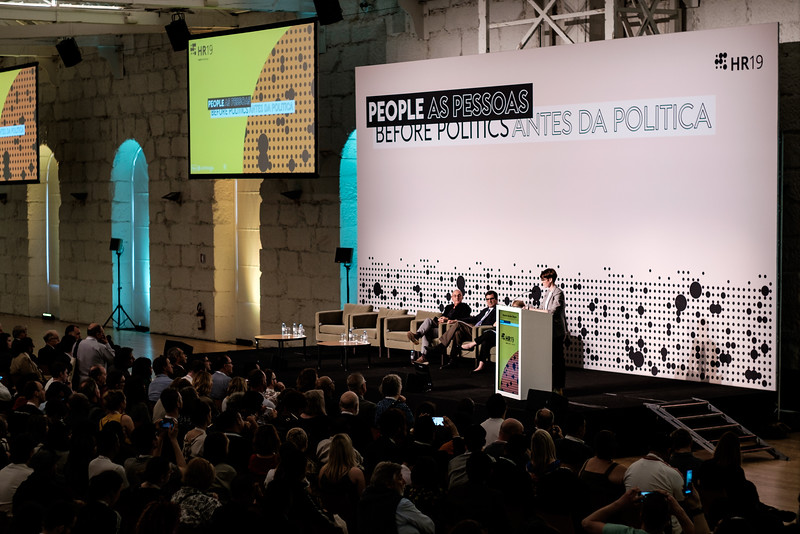
Porto welcomes the 26th Harm Reduction International Conference

The 26th Harm Reduction International Conference (HR19) will be held in Porto, Portugal from 28 April to 1 May 2019. The Conference is organised by the Harm Reduction International and Agência Piaget para o Desenvolvimento (APDES) – a Portuguese non-profit association promoting sustainable development.


Held once every two years in a different country around the world, the Harm Reduction International Conference is the only global meeting for knowledge-sharing, networking, and discussion of best practices in the field of harm reduction. The last conference in Montreal in 2017 was attended by more than 1000 delegates from over 70 countries, including medical and policy experts, harm reduction practitioners, campaigners, and people who use drugs.

On Tuesday 30 April, at the Concurrent 16: Lost in Transition: Harm Reduction in Central and Eastern Europe, our Yuliya Georgieva from the Center for Humane Policy will speak about, Lost in Transition-Bulgaria struggling to ensure harm reduction activities after Global Fund withdraw while Nebojša Đurasović will present The only one harm reduction program that survived in Serbia – Experience of the Association Prevent.

Those who shall participate in the Conference are very much welcome to join this session.

The programme of the Conference is available following this link>>>
EHRA representatives visit

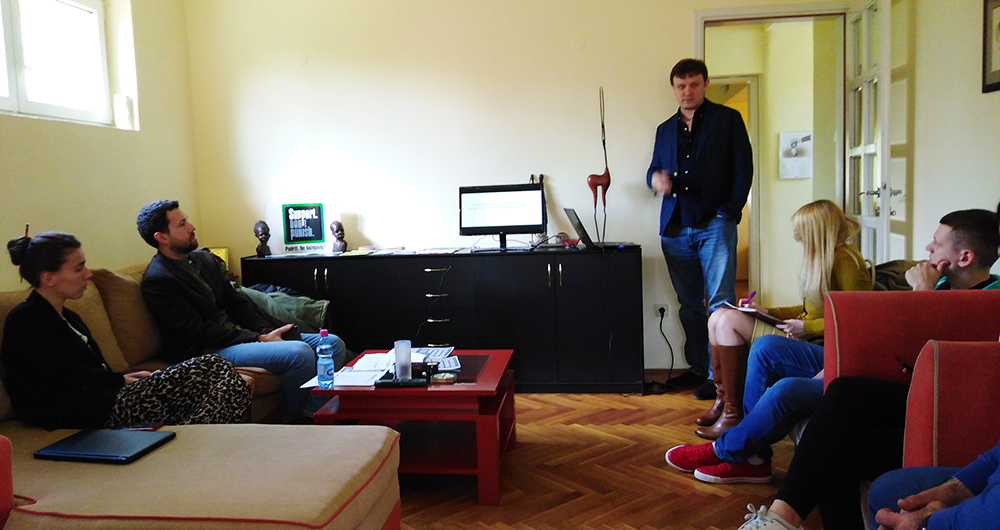
As the DPNSEE project Budget Advocacy and Monitoring in countries of South East Europe funded by Open Society Foundations (OSF) through Eurasian Harm Reduction Association (EHRA) is about to come to an end in April this year, EHRA Financial Director Tatiana Fomicheva and Sustainability and Transition Adviser Ivan Varentsov visited DPNSEE on 17 and 18 April 2019. The purposes of the visit were to make an oversight of the project related documents and provide support with regard to the development of the final financial report.

EHRA representatives had an opportunity to meet with representatives of the national coordinator organisations MarginaJuventas and Prevent and get to know better their achievements and challenges while implementing the project. It was also interesting to discuss lessons learnt, possible next steps and follow up actions. All three indicated that the main issue they faced was lack of information or very slow response to provide them by the authorities. Understanding this obstacle, an agreement was made that DPNSEE and partner organisations will propose to extend the project by September 2019.

Our guests presented us the EHRA activities in the scope of the Global Fund HIV multi-country project, content of the workshop on human rights issues for the Balkan region planned for autumn this year and the Global Fund Community, Rights and Gender Technical Assistance Program. For this occasion, we also invited our colleagues from Serbian partner and member organisations DugaGAJPTimok Youth Centre and Čovekoljublje.

For our guests, we also arranged meetings with Dr Jasmina Tanasić, Head of the Department for Social Affairs at the Standing Conference of Towns and Municipalities and Primarius Dr Danijela Simić, Head of Department for HIV infection, STI, viral hepatitis and tuberculosis, Centre for Prevention and Control of Diseases, at the Institute of Public Health of Serbia “Dr Milan Jovanović Batut”.

The visit will help to better document the approach, process and results of our project as well as the lessons learnt. Documenting this our joint experience as a regional best practice and example of small grants to NGOs in recently transitioned of transitioning countries to support their sustainability and transition related advocacy activities can be of benefit to the Sustainability Bridge Funding that is about to be created by a group of international donors led by the OSF.

Recent developments can hardly be assessed as positive

Coalition prEUgovor published a new edition of their Alarm Report on Progress of Serbia in Chapters 23 and 24. This report contains the prEUgovor coalition’s assessment of the political criteria for the EU accession process and the fulfilment of criteria for selected policy areas from Chapters 23 and 24 for the period October 2018 – March 2019. The presentation was held on 16 April at the Media Centre in Belgrade.

The report states that the government continued the practice of abuse of public resources during the election periods, while the executive and the ruling majority continuously deprived the Parliament of its legitimate functions. Another worrying fact is the increasing number of laws that are being passed by urgent procedure and in most cases without any public debate. These practices have led to an alarming consequence – namely, the opposition has left the Parliament.

Besides the above, the authorities keep undermining the work of independent control institutions by systematically ignoring their recommendations. Once again, we have an atmosphere in which non-governmental organisations are declared enemies and traitors; they are left out of all the dialogues and are not welcome in the solving of social problems. At the same time, the government is creating its own NGOs (GONGOs).

The fight against corruption is at a very low level, threatening to become a mere simulation that is activated only periodically so that the authorities can easily score some cheap political points. Furthermore, there is a real danger that the very same mechanism (Law on Investigation of Property Origin) could be used against the opposition. Also, there are enormous problems with the potential consequences of the proposed constitutional amendments related to the judiciary, as well as a series of laws that are about to enter parliamentary procedure.

Generally speaking, the commitments made in the existing Action Plans for Chapters 23 and 24 are fulfilled inconsistently, while the deadlines are postponed on a regular basis. Well-known problems with the non-implementation of the existing acts and laws are still present. Having in mind the fact that two crucial EU issues to be addressed are the Rule of Law and the fight against corruption, lack of concrete results in these two areas is still a major alarming obstacle in Serbia’s process of integration.

The majority of the key findings expressed in this report coincide with the lowered ratings that were given to Serbia by various international actors (Freedom House, for instance), thus confirming the alarming developments in the areas covered by Chapters 23 and 24.

To download full report follow this link>>>

Coalition prEUgovor is a network of civil society organisations formed in order to monitor the implementation of policies relating to the accession negotiations between Serbia and the EU, with an emphasis on Chapters 23 and 24 of the Acquis. In doing so, the coalition aims to use the EU integration process to help accomplish substantial progress in the further democratisation of the Serbian society.

Members of the prEUgovor are: ASTRA – Anti Trafficking Action, Autonomous Women’s Center (AWC), Belgrade Centre for Security Policy (BCSP), Center for Investigative Journalism of Serbia (CINS), Center for Applied European Studies (CPES), Group 484 and Transparency Serbia (TS).

HIV/AIDS situation in Greece

The National Public Health Organisation (Εθνικό Οργανισμό Δημόσιας Υγείας) publishes annually the HIV/AIDS Surveillance Report in Greece. This annual edition includes data that have been reported by 31 December 2018. Data were reported by Infectious Disease Units, Outpatients clinics for HIV infected patients, HIV/AIDS Reference and Control Centres and Hospitals.

In 2018, 687 new HIV cases were diagnosed and reported. Totally, 90 cases (13.1%), who were diagnosed with HIV in 2018, had already developed AIDS or progressed to AIDS during that year. Sex between men accounted for 40.0% of HIV diagnoses in 2018 followed by heterosexual transmissions (22.4%) and infections attributed to injecting drug use (15.4%). The predominant age group in both males (34.0%) and females (44.4%) was that of 30-39 years old.

The cumulative number of HIV diagnoses since the outbreak of the epidemics (including AIDS cases) reported in Greece by 31/12/2018 was 17,389. Of these, 14,397 (82.79%) were males and 2,951 (16.97%) were females. Sex was not reported for 41 (0.24%) HIV diagnoses.

Unprotected male-to-male sexual contact is the most frequently reported mode of HIV transmission in Greece. In total, 48.2% of HIV diagnoses, that were reported in Greece were Men who have Sex with Men (MSM) (table 9). After excluding cases with undocumented mode of HIV transmission, the aforementioned percentage comes up to 57.6%.

An outbreak of HIV occurred among PWID; 319 infections were diagnosed in 2011 and 525 in 2012. However, HIV diagnoses attributed to injecting drug use have been decreasing since 2013 and increasing by 2018 [2013 (n=270), 2014 (n=120), 2015 (n=95), 2016 (n=100), 2017 (n=93) and 2018 (n=106)].

Of 3,754 cases infected through heterosexual contact, the majority (53.3%) were females (tables 10, 11). After 2010, however, the percentage of males among heterosexually-infected cases increased (2015; males 54.7%), whilst in 2016 we notice the inverse pattern emerging women in higher levels (58.9%). Similar was the trend for 2017 and 2018.

AIDS case reporting started in Greece in 1984 while HIV case reporting started in 1998. Both are anonymous, confidential and mandatory by Ministerial Decisions.

To read the full report, follow this link>>>

Training for a safe night environment

DPNSEE member organizations Re Generation and Udruga Terra joined in two days training activity, held in Rijeka, Croatia on 11 and 12 April 2019. The training “New psychoactive substances and outreach for a safe night environment” was held by Irena Molnar i Bojan Arsenijević from Serbian NGO Re Generation.

The purpose of the training was raising the capacity of young people and work with their peers in order to have a safer night environment. Re Generacija’s Training of peer educators for volunteering in nightlife setting and on festivals includes following topics:

  • Drugs – tradition – illness or crime
  • Harm Reduction Programs. Nightlife outreach and peer education (may include good examples of practice around the globe)
  • Prevention of the final negative outcome (overdose) and basic First AID for nightlife setting
  • New psychoactive substances (may include different examples of drug checking services)

Young activists of the Association Terra team, employees and volunteers, engaged in harm reduction program, visited the clubs of youth gathering in Rijeka with Re Generation representatives, evaluated the information and reports from training in practice.

Conference: Challenges and perspectives in the field of addiction prevention

Association for addiction prevention NARKO-NE, within the RIPPO network and in cooperation with the Ministry of civil affairs BiH, Ministry of human rights and refugees BiH and Ministry of security BiH, organises the first expert conference in the field of addiction prevention on 26 and 27 June 2019 in Sarajevo.

The conference wants to focus on the importance of an inter-sectoral approach, to sensitize the general public to problems of addictive and risky behaviours and to contribute to the professionalization and multidisciplinary development of the respective field in Bosnia Herzegovina.

Participants of the conference will have the opportunity to learn about different approaches of addiction prevention in Europe, to exchange good practices, and to learn about mechanisms which ensure the efficiency and quality of interventions themselves.

All information about this event including the process of participant’s registration is available on the website konferencija.prevencija.ba

Registration deadline is 31 May 2019.