London adopts new approaches to reduce drug-induced deaths

The London Assembly’s health committee released a new report on 17 March 17 urging Mayor Sadiq Khan to cooperate with the government and police to develop a new strategy to combat drug fatalities in the city. The report argues that drug checking services should be provided in London, including at clubs and music events.

Given the increase in drug-related deaths over the last decade there have been growing calls for the adoption of new approaches focusing on harm-reduction methods. The report states that harm-reduction approaches would “not only benefit those who are using drugs but reduce harm to and the costs for their wider communities.

The Committee’s investigation focuses on three harm-reduction interventions – drug-checking services, naloxone and drug-consumption rooms – to understand whether these could reduce drug-related deaths in London; the barriers that may be faced in rolling these out; and the solutions to address these barriers. These interventions were chosen because they have an existing evidence base, having been trialled or implemented in other parts of the world or the UK.

Recommendations also include practical advices to authorities:

  • The Government should introduce a national naloxone programme in England
  • Thee Mayor’s Drugs Commission should work with partners and service providers to assess the availability of naloxone in relevant settings in London, as well as the education and training levels of staff; and identify barriers and solutions to ensure adequate and consistent access across the capital.
  • The Mayor should lead a public awareness campaign on naloxone and how it is used to save lives in the event of an overdose.
  • The Mayor should run a campaign with partners to educate Londoners about how to reduce drug harm and deaths.


To read report, follow this link>>>.


How to prevent marijuana industry monopolies?

With many U.S. cannabis executives arguing that federal legalization is only a matter of time, industry insiders and politicians are increasingly focused on how to structure a national marijuana marketplace that is both vibrant and diverse.

To that end, former Massachusetts cannabis regulator Shaleen Title published a white paper last month laying out proposals for how Congress can help ensure the marijuana industry won’t be dominated by multistate operators and national brands. The paper is titled, “Bigger is not better: Preventing monopolies in the national cannabis market”.

It is a crucial and vulnerable moment for the future of the cannabis market. While states are making historic progress creating paths for small businesses and disenfranchised groups, larger companies are expanding, consolidating, and lobbying for licensing rules to create or maintain oligopolies. Federal legalization will only accelerate the power grab already happening with new, larger conglomerates openly expressing interest. Left unchecked, this scramble for market share threatens to undermine public health and safety and undo bold state-level efforts to build an equitable cannabis marketplace.

This paper argues for intentionally applying well-developed antitrust principles to federal cannabis reform now, before monopolization of the market takes place, and offers eight concrete policy recommendations:

  1. Allow people to grow a reasonable number of marijuana plants for personal use.
  2. Prohibit vertical integration.
  3. Do not cap the number of business licenses available in total, but limit how much of a market any one person or entity may control.
  4. Create incentives for states to license small or disadvantaged businesses.
  5. Enforce ownership limits and review mergers based on existing evidence of predatory and anticompetitive tactics in state marijuana markets.
  6. Disqualify corporations from the cannabis industry if they have engaged in corporate crimes, defrauded the public, or caused significant public health damage.
  7. Create a multi-agency task force to enforce anti-monopoly limits.
  8. Authorize states to ban or delay interstate commerce in order to preserve state-level advantages to local businesses.


The document is available following this link>>>.


UN Commission on Narcotic Drugs listens to youth voices

UNODC’s Youth Forum, held from 28 February to 4 March 2022, welcomed its highest-ever number of participants in 2022. 74 young people connecting in from 43 countries were enthusiastic to learn about evidence-based substance use prevention and share each other’s different perspectives and experiences. Two representatives of our member organisations participated in the Forum this year: Sara Vukelić from Re Generation and Tedi Jaho from Aksion Plus.

Throughout the week, participants embraced take-home messages on evidence-based drug use prevention and imagined how they would like to see positive change reflected in their communities. Youth alumni (participants of previous Youth Fora) warmly welcomed the youth of 2022 and inspired the participants by describing the actions they took after their own experience of the Youth Forum. The young leaders also worked together actively to create a statement of the key messages they wished to convey to the global policymakers attending this week’s 65th session of the Commission on Narcotic Drugs (CND) (14-18 March).

The youth were invited to deliver their Youth Statement 2022 to delegates attending the Plenary session of the CND on Thursday 17 March. Speaking on behalf of all Youth Forum 2022 participants, Ms. Ingrid Engene Gøranson (Norway) and Mr. Carlos Araujo (El Salvador) urged Member States to continue to invest in evidence-based substance use prevention, and in doing so, to “recognize the tremendous competency, capacity, and motivation of youth by creating opportunities for involvement in policy and decision-making.”

We have a specific goal: for all people to be healthy,” they said. “In pursuing this goal, we must be committed to prevention now, for the success of future generations,” they added. In their joint statement, the youth requested that young people are engaged “not only as instruments, but as the driving force behind the global implementation of evidence-based prevention programs for youth.”

UNODC commends the young leaders on taking interest in and action towards drug use prevention amidst the continuing challenges presented by COVID-19. As the Youth Initiative steps forth into a new decade of action after marking ten years of its launch in 2012, UNODC reaffirms its commitment to support meaningful youth engagement in addressing the world drug problem, in particular through empowering youth voices in the field of substance use prevention.

The Youth Statement is available following this link>>>.


Sexual violence when out at night

From the Sexism Free Night project website

The research activities of Sexism Free Night were based in a Europe-wide websurvey aimed at collect information on the prevalence of sexism and sexual violence among over-18s in Europe, and to analyse its intersections with specific key factors such as patterns of drug use, participation in nightlife and party environments, nightlife mobility and beliefs about sexual violence.

We have asked questions about people’s nightlife experiences, acknowledging the COVID19 pandemic happening at the time of survey launching. The time frame included going out before the covid-19 outbreak and also going out in the context of social isolation (e.g. small parties or meetings at home, in nature or public spaces with friends, informal parties in hidden locations or video calls and live streaming events).

The survey was developed and translated into eight different languages: English, Spanish, French, Portuguese, Serbian, German, Latvian and Slovenian, while data collection was implemented from 25.11.2020 until 31.12.2020.

Total number of web survey respondents from European countries was 10.148, while 4534 people completed the survey in full and were considered for the analysis. Results of the survey also served for later design of our European Campaign and Training.

To read full report follow this link>>>.


CND side events organised by CSFD members

Member organisations of the Civil Society Forum on Drugs (CSFD) have prepared an impressive list of 24 side events for the UN Committee on Drugs and Narcotics (CND) that will take place the next week. The list of the side events is available following this link>>>.

One of the side events is organised by the CSFD: “Driving change from a shrinking space: Challenges to effective civil society participation in drug policy making“, which will take place on Wednesday 16 March, at 9am Vienna time. It is prepared by the Brussels Federation of Institutions for Drug Addicts with the support of Czechia, the Civil Society Forum on Drugs in the EU, the Council of Europe – Pompidou Group, the

European Union and the French NGO Platform on Drug Policy.

The event will take stock of the main challenges to effective civil society and community participation in both international and national-level drug policy making, with a particular focus on the shrinking space for civil society in certain contexts and on the impact of COVID19-related restrictions, and it will seek to provide concrete and actionable recommendations to decision-makers.

The 65th session of the CND will take place on 14-18 March 2022 via hybrid format with most participation taking place remotely. A final Programme for the session is available here>>>.


Why DPNSEE is not accredited by ECOSOC?

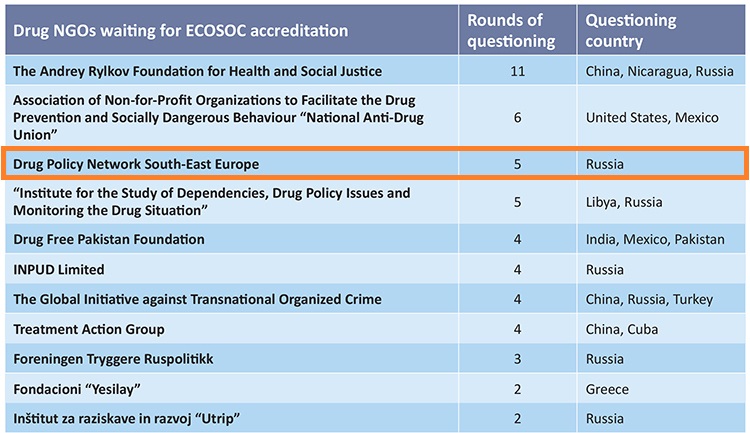
The Drug Policy Network South East Europe applied for the ECOSOC membership in 2018. Since then, our application was 5 times differed with occasional questions of not a great importance, on which we provided accurate answers. Why this happens? The recent study prepared by the International Drug Policy Consortium explains.


Here is the extract from the IDPC webpage presenting the analysis of this phenomenon:

“Decision-making across the board, on development, on security, on social affairs, is more effective and legitimate when people from different backgrounds are able to contribute. Meaningful participation of civil society in international processes and bodies, including in the UN, relies on free and vibrant democratic spaces with effective participation channels for diverse groups at the national level. This, in turn, requires respect for freedom of expression and access to information online and offline, freedom of association and physical security for those who speak up and assemble peacefully”.

 The United Nations (UN) has long recognised the role of civil society as a key component of effective decision-making at all levels of governance. Yet, civil society continues to face significant barriers in accessing the decision-making table, including at the UN itself. One of these obstacles is the inability for many NGOs to obtain accreditation from the Economic and Social Council (ECOSOC), which would enable them to attend and engage in key UN policy-making fora such as the UN General Assembly, the UN Human Rights Council, and the UN Commission on Narcotic Drugs.

 According to the International Service for Human Rights (ISHR), no less than 41 NGOs have seen their application for ECOSOC status deferred for over four years. Similarly, research by the International Drug Policy Consortium (IDPC), which will be presented here, has shown that NGOs working on drug-related issues are facing increasing difficulties in obtaining ECOSOC status. This is mainly due to obstructive practices within the UN Committee on Non-Governmental Organizations (thereafter called ‘Committee on NGOs’ or ‘Committee’), which is used by some countries as a tool to limit NGO participation in UN policymaking processes.

 In this advocacy note, IDPC presents key research on how the Committee on NGOs has effectively restricted civic space for drug NGOs wishing to engage in UN proceedings, and offers key recommendations for member states as they are preparing to elect new members of the Committee on NGOs in April 2022.

You can access the report following this link>>>.


Humanitarian corridor for Ukraine

The EHRA Statement

45 civil society organizations from different European countries including Ukraine requested relevant UN, EU structures and humanitarian institutions to urgently support and set up of an uninterrupted supply chain of humanitarian assistance to the affected populations within the country, and to establish safe humanitarian corridors to evacuate civilians from Ukraine.

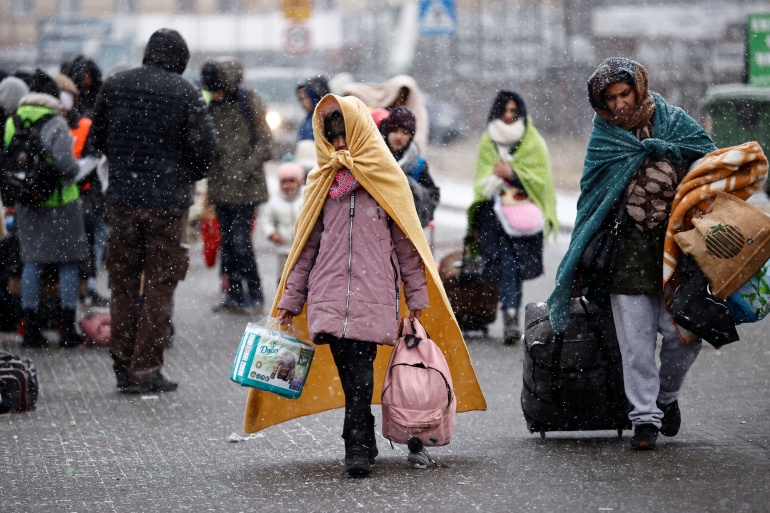
On 24 February 2022, the Russian Federation launched a large-scale invasion of Ukraine, targeting several large cities including Kyiv, Kharkiv, Kherson, Mariupol and Zhitomyr, and bombing neighbourhoods within those areas, inevitably resulting in countless civilian deaths. The escalating war actions are causing tremendous humanitarian crises affecting millions of people. Those staying in cities and villages in Ukraine are in urgent need of warm shelter, food, water, basic medicine and other essential supplies. Additionally, more than 100,000 people have been internally displaced since the invasion began, and the number of displaced people will continue to grow. At the moment, meeting the essential needs of internally displaced people is extremely difficult in Ukraine due to martial law, curfews and threats to the lives of volunteers.

What is now urgently needed is the provision of basic, essential health supplies and medication for people in Ukraine, including those internally displaced, by means of revised importation rules and distribution networks. People who belong to vulnerable and discriminated groups — such as people who use drugs, people in prison, gay and other men who have sex with other men, sex workers and trans people — must not be overlooked in these efforts. Notably, Ukraine has the second largest population of people living with HIV, people with tuberculosis and drug-resistant tuberculosis and opioid dependency in Eastern Europe and Central Asia, and the country has developed successful and progressive harm reduction and treatment programmes, supported by the global community. To sustain those achievements and preserve human life, we ask you to ensure essential provisions including opioid agonist therapy, ARV therapy, and tuberculosis diagnostics and treatments.

Following negotiations between the two sides on 3 March, Ukraine and Russia have agreed tentatively to create humanitarian corridors in the worst-affected areas of Ukraine, where civilians are most at risk from the war. But in reality, there is no clarity on how these passages could be implemented.

Ukraine urgently needs humanitarian corridors supported by intergovernmental and multilateral organizations.


Police and Drug Treatment Together

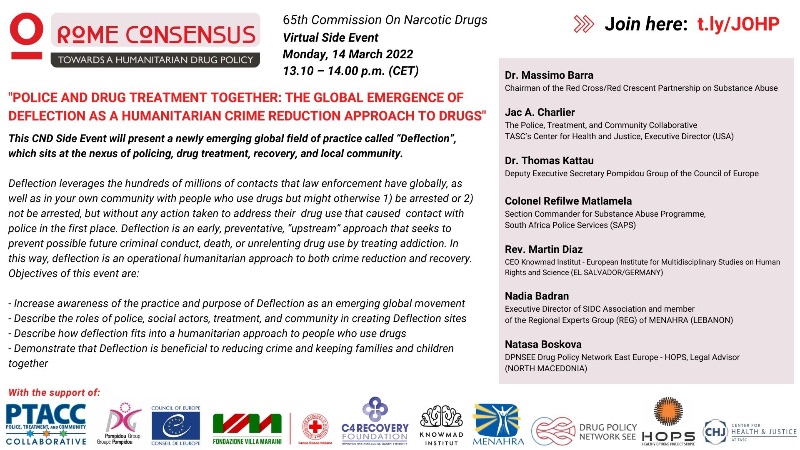
The Rome Consensus 2.0, together with Chicago Treatment Alternatives for Safe Communities TASC. and The Police, Treatment, and Community Collaborative PTACC, organise the side event “Police and Drug Treatment Together: the Global Emergence of Deflection as a Humanitarian Crime Reduction Approach to Drugs” during the 65th UN Commission on Narcotic Drugs.

The event is designed to bring together CSOs, professionals, leaders and public authorities from across the world to explore ways to effectively combine humanitarian attitude in health, criminal justice, prevention and community responses to addiction problems. The aim of the event is to focus and share on a new emerging health-based practice called “Deflection”, which sits at the nexus of policing, drug treatment, housing, services, recovery, and local community.

Deflection leverages the hundreds of millions of contacts that police and law enforcement have globally with people who use drugs for personal use but might otherwise 1) be arrested or 2) not be arrested without any action taken to address their personal drug use that causes, often repeatedly, contact with police and law enforcement. Yet, regardless of which of the two options is applicable, the person would do better from engagement in community-based drug treatment, housing, services, and recovery at that very point-in-time encounter. In other words, Deflection is an early, preventative, “upstream” approach that seeks to prevent possible future criminal conduct, death, or unrelenting drug use by addressing the problems associated with drug use for the person, their family and children, and for the community itself.

The side event will be held on March 14th at 1:10 PM (CET). It is co-sponsored by:

  • Red Cross and Red Crescent Partnership on Substance Abuse IFRC, The Villa Maraini Foundation, Italian Red Cross (Italy)
  • Pompidou Group – Council of Europe
  • Knowmad Institut (El Salvador/Germany)
  • Section Commander for Substance Abuse Program of SAPS South Africa Police Services (South Africa).
  • MENAHRA Middle East and North Africa Harm Reduction Association (Lebanon)
  • DPNSEE – Drug Policy Network of South East Europe, HOPS – Healthy Options Project Skopje (North Macedonia)

Our colleague Nataša Boškova, Legal adviser at HOPS and Coalition “Margini”, will present the model of cooperation with the police and the development of the module for training on ethical conduct of the police toward people who use drugs.

Register here to join the event on Zoom:

https://us02web.zoom.us/webinar/register/WN_G8us9PT9R8GOJsbIRKX7xA

Rome Consensus 2.0 is a Humanitarian Drug Policy alliance, a call from professionals to governments to make urgent moves towards health and human rights based approaches. The Humanitarian Drug Policy’s primary objective is to save lives, alleviate suffering and maintain human dignity by fighting social, legal and cultural criminalization of people who use drugs.

 

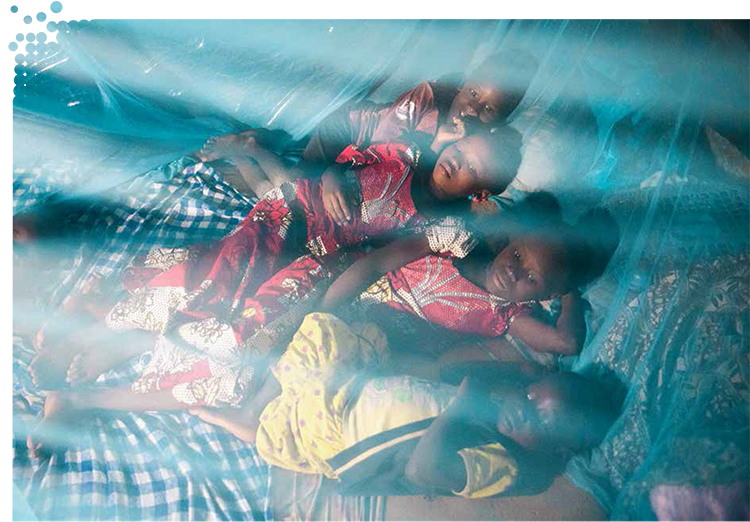
The Global Fund 7th Replenishment

The Global Fund raises funds in three-year cycles known as Replenishments. This year, the Global Fund are entering into Seventh Replenishment cycle, covering the period 2023-2025.

The Global Fund’s Seventh Replenishment is the world’s opportunity to rise to the challenge and take bold action. We can turbocharge progress in the fight against HIV, TB and malaria, regaining ground lost during the pandemic and getting back on track toward finally ending these three pandemics by 2030. We can also deliver a step change in pandemic preparedness, strengthening the overall resilience of systems for health by investing in their capacities to prevent, detect and respond to new health threats. By taking an integrated approach to the pursuit of these two complementary objectives, we can maximize the impact of every dollar.

(From the Investment Case for the Seventh Replenishment)


The Global Fund’s target for the Seventh Replenishment is to raise at least 18 billion USD to fight HIV, TB and malaria and build stronger systems for health. It is estimated that one-third (6 billion USD) will be investments in health systems that both support the ongoing fight against HIV, TB and malaria and reinforce pandemic preparedness.

These funds will be used to:

  • Help the world #GetBackOnTrack to end AIDS, TB and malaria as epidemics, and save 20 million lives between 2024 and 2026.
  • Reduce the death toll across the three diseases to 950,000 in 2026, down from 25 million in 2020.
  • Avert more than 450 million infections through reducing the incidence rate by 58% across the three diseases by 2026.

The civil society is coming together to celebrate The Global Week of Action.  It is co-organised by the Civil Society for Malaria Elimination (CS4ME), Global Fund Advocates Network (GFAN), GFAN Africa, and GFAN Asia-Pacific (GFAN AP), and follows the #LoveMoreGiveMore campaign carried out with partners during the Sixth Replenishment in 2019.

This Global Week of Action is hoping to mobilise communities and civil society collectively to:

  • Create momentum around the Seventh Replenishment of the Global Fund at the national, regional, and global levels through gathering communities and civil society to come together collectively through action.
  • Raise awareness through the diplomatic channels of donor embassies of the Global Fund for the Seventh Replenishment using key messages of the Investment Case presented at the Preparatory Meeting.
  • Build and/or strengthen partnerships nationally, including with donor embassies.


An important DPNSEE Board meeting

The DPNSEE Board held online meeting on 3 March 2002. The meeting agnda included some very important points.

The Board discussed current Network situation. With reduced funding, DPNSEE is now working in a “safe mode” with 50% staff working time and limitted expenses. We are safe in this mode for the first half of 2022 and expect that with some new projects we shall return to regular work soon.

The Board decided to organise the DPNSEE General Assembly online on Tuesday 29 March. The Assembly will have three thematic sessions: 1) Formal meeting to adopt reports and plans; 2) Elections (at least three Board members are not eligible for re-election) and 3) Strategic planning (finalising the DPNSEE Strategy).

The Board in length discussed the situation with key affected populations caused by the recent war in Ukraine. Several actions have already been taken by UN agencies, Global Fund community delegations, EHRA and various civil society organisations to ensure that provision of necessary harm reduction services and HIV prevention programs, both in Ukraine and Russia but also in countries which welcomed refugees from the two countries. The Board invites member organisations to open their services for the refugees and help them settle in the unpleasant situation. The Board will follow the situation and take necessary further steps if needed.