EU announces record €550 million contribution to Global Fund

The EU announced a €550 million pledge to The Global Fund during the G7 summit in Biarritz. European Council President Tusk, representing the EU at this year’s G7, made the announcement. It comes ahead of the Global Fund donors’ conference that will take place in October in Lyon, as more support is needed so that developing countries can improve their health systems, reach universal health coverage and help end the 3 epidemics by 2030.

The Global Fund seeks to raise at least €12.6 billion (US$14 billion) for the period 2020-2022. By 2023, these funds should help save an additional 16 million lives, avert 234 million infections, cut the mortality rate from AIDS, tuberculosis and malaria in half, and build stronger health systems.

Today’s pledge is made under the assumption that the EU’s new Multiannual Financial Framework for the period from 2021-2027 and the new external action instrument, which would provide the budget for today’s pledge, are adopted broadly along the lines proposed by the European Commission.

On top of the overall €1.3 billion contributions made to global initiatives such as the Global Fund, the Global Vaccination Alliance (GAVI) or the WHO’s universal health coverage partnership, the EU’s development cooperation supports with additional €1.3 billion the health sector in 17 countries (mostly in Africa) during the period 2014-2020.

In global health, the EU focuses on equitable and accessible health care, sustainability of health systems, human rights, women and girls, and private sector engagement.

For more Information about the EU and the Global Fund to fight AIDS, tuberculosis and malaria partnership, follow this link>>>

Canada announces increased commitment to Global Fund

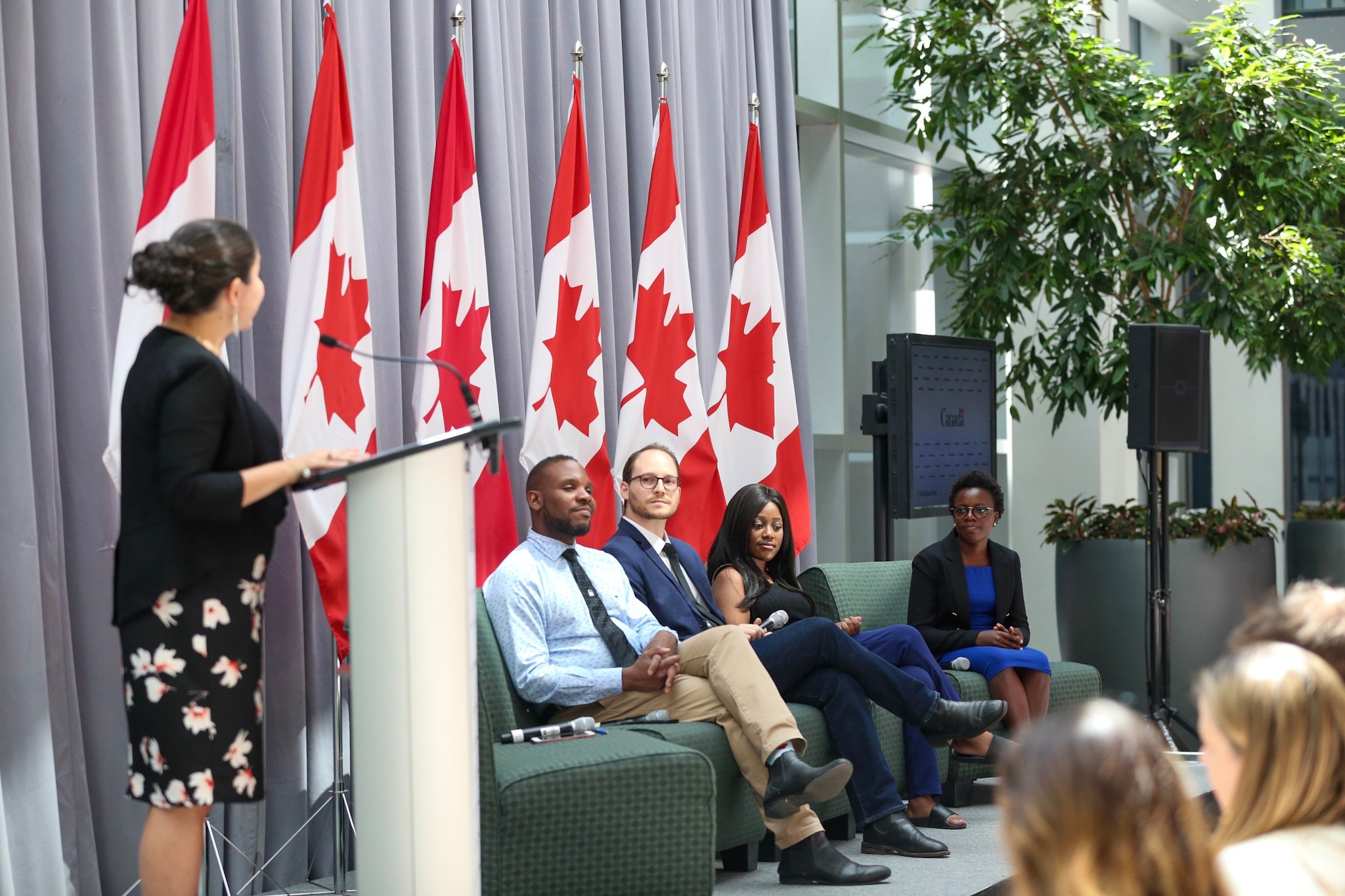
Maryam Monsef, Minister of International Development and Minister for Women and Gender Equality, announced that Canada will pledge $930.4 million to the Global Fund for 2020 to 2022, an increase of close to 16% from 2016. Tackling these infectious disease epidemics is key to protecting global health and addressing the health needs of the most vulnerable, including women and girls, around the world. The Minister made this announcement on 22 August 2019 while participating in an armchair discussion with prominent Canadian and international academic and civil-society representatives. This announcement is made ahead of the Global Fund’s Sixth Replenishment Conference, which will be held in France in the fall.

This pledge follows the Government of Canada’s historic commitment to increase global health funding to $1.4 billion annually on average by 2023. Canada’s approach to global health includes maternal, new-born and child health and comprehensive sexual and reproductive health and rights and services.

Canada is at the forefront of international efforts to improve the health of the poorest and most vulnerable, especially women, girls and adolescent girls. This is why Canada is joining forces with the Global Fund to Fight AIDS, Tuberculosis and Malaria to end these epidemics for good by increasing its contribution to the Fund.

2019 Fiscal Transparency Report

The U.S. Department of State presented their 2019 Fiscal Transparency Report. This report describes the minimum requirements of fiscal transparency developed, updated, and strengthened by the Department in consultation with other relevant federal agencies. For the purpose of this report, the minimum requirements of fiscal transparency include having key budget documents that are publicly available, substantially complete, and generally reliable.

Fiscal transparency fosters greater government accountability by providing a window into government budgets for citizens, helping citizens hold their leadership accountable and facilitating better-informed public debate.

The report includes a description of how governments fell short of the minimum requirements.  It outlines any significant progress being made to disclose publicly national budget documentation, contracts and licenses.  It also provides specific recommendations of short- and long-term steps governments should take to improve fiscal transparency.  Finally, the report outlines the process the Department followed in completing the assessments and describes how U.S. foreign assistance resources have been used to support fiscal transparency.

The Department concluded that, of the 140 governments evaluated pursuant to the Act plus Equatorial Guinea, 67 did not meet the minimum requirements of fiscal transparency.  Of these 67, however, 13 governments made significant progress toward meeting the minimum requirements of fiscal transparency. Among those who meet the minimum requirements are all South East European countries!

To read more about the Report, follow this link>>>

Measuring HIV stigma and discrimination

To better understand the status of HIV-related stigma and discrimination and progress towards their elimination, support advocacy for addressing HIV-related stigma and discrimination and highlight data gaps, UNAIDS is coordinating the development of summary measures of HIV-related stigma and discrimination.

Starting on 19 August 2019 for a period of three weeks, various elements of the draft measures will be discussed. A few key questions will guide the moderated discussion each week. Inputs and recommendations from each week will be shared at the start of the following week and used to inform the next element of the measures to be discussed.

The virtual consultation is open to everyone. They aim to encourage broad participation, particularly of people living with and affected by HIV, gay men and other men who have sex with men, transgender people, young people, sex workers, people who use drugs and women, from all regions. Contributions through this consultation will be used to inform the development of the measure(s) and ensure they are people-centred, reflecting the lived experiences and realities of people, and meaningful to inform programmatic action.

To get more information and participate in the consultation follow this link>>>

Time to remember loved ones and end overdose

Globally, there is an estimated minimum of 190,900 premature deaths caused by drugs (range: 115,900 to 230,100). It is estimated that there were more than 70,000 deaths caused by to drug overdose in European Union countries in the first decade of the 21st Century. Opioids account for the majority of drug-related deaths and in most cases such deaths are avoidable.

Local communities around the world are coming together every year at the end of August to remember those who have died or suffered permanent injury due to drug overdose.

Observed on the 31st of August every year, International Overdose Awareness Day (IOAD) seeks to create better understanding of overdose, reduce the stigma of drug-related deaths, and create change that reduces the harms associated with drug use.

People and communities came together to raise awareness of one of the world’s most urgent public health crises – one that, unfortunately, is only getting worse.

In 2018, there were 747 IOAD events of all kinds, held in 38 countries.

A full list of the IOAD 2019 events currently planned around the world can be found at: https://www.overdoseday.com/activities-2019/

International Overdose Awareness Day is convened by Penington Institute, an Australian not-for-profit.

Consultancy needed!

The Harm Reduction Consortium is a global coalition of seven independent organisations which exists to end the global war on drugs and promote services instead that protect the health and human rights of people who use drugs. The Consortium want to upskill their members and selected partners in communicating more effectively and proactively, as well as engaging with the media confidently. In order to achieve that, they are seeking to appoint an experienced individual or organisation to provide training and coaching in communications, crisis management and media engagement.

The Harm Reduction Consortium members have a compelling message and story to tell: the global war on drugs is having disastrous consequences all around the world. But they are not doing this as effectively and proactively as they would like. They are therefore seeking to build confidence and capacity among the Consortium members and selected key partners in the areas of communication best practices, public speaking, media engagement, crisis management and communications, effective social media presence and message framing for different audiences.

They are looking for individuals or organisations that can provide high quality communications, messaging and media coaching to the Consortium members in order to deliver our messages convincingly and impactfully.

For more information about their needs, requirements for applicants and how to apply, please visit their website here>>>. The deadline is Sunday 11th August.

Stigmatizing Attitudes – Online Consultation

In 2018 the Commission on Narcotic Drugs adopted Resolution 61/11 ‘Promoting non-stigmatizing attitudes to ensure the availability of, access to and delivery of health, care and social services for drug users’. With the support of the Government of Canada, the UNODC Prevention, Treatment and Rehabilitation Section (PTRS) is now coordinating an informal consultative process with the aim of developing a handbook of best practices worldwide on this crucial issue.

The first phase of this informal consultative process consists of an online questionnaire, where experts nominated by Member States as well as civil society organisation and other experts that have been identified by UNODC have the opportunity to participate. The aim of the online questionnaire is to collect as much information as possible about stigmatising attitudes and about practices addressing them. Specifically the online consultation seeks to identify:

  • Increasing awareness of the negative effects of stigmatizing attitudes on the availability of, access to and delivery of health, care and social services for persons who engage in the non-medical use of substances; and
  • Promoting non-stigmatizing attitudes in the development and implementation of scientific evidence-based policies related to the availability of, access to and delivery of health, care and social services for persons who engage in the non-medical use of substances.

PTRS is calling on civil society organisations and experts to answers the questionnaire. The information provided will inform the development of a handbook documenting successful experiences which promote non-stigmatizing attitudes, particularly as they relate to non-medical use of substances, that could provide inspiration for innovative policies and practices.

PTRS is asking for the questionnaire to be filled in personal capacity. Individual responses will be kept confidential and reported in aggregated form, unless quoting a document that is available in the public domain anyway. The survey will take 50 to 60 minutes to complete and is in English only.

To participate, please click on the following link>>> and submit your response by 15 September 2019.

If participants have any questions, concerns or difficulties please contact Ms. Elizabeth Mattfeld (elizabeth.mattfeld@un.org), Ms. Heeyoung Park (heeyoung.park@un.org) or Ms. Giovanna Campello (giovanna.campello@un.org) from the UNODC PTRS team.

European Citizens Initiative on Cannabis

A group of drug policy reformers from Italy, France and possibly Belgium is working on the text of a European Citizens Initiative concerning a comprehensive reform of cannabis regulations at the EU level. The Initiative aims at making the EU adopt a common policy on the control and legal regulation of cannabis production, adult use and sale.

There is currently a heterogeneous legal map as regards cannabis policies in the EU. The question of coherence and discrimination is primordial. A common policy on the control and legal regulation of cannabis production, adult use and sale would: (a) ensure equality before the law and non-discrimination of all EU citizens; (b) protect consumers and monitor health security; (c) end cannabis illicit trafficking. Let’s leap toward the legalization of cannabis and the harmonization of national legislation across the EU.

The target at this stage is to ensure the participation of organisations that will collect 1 million signatures among European citizens reached in at least 7 counties (here’s the minimum number of signatories per member state).

Should you be interested in contributing to the text first and, eventually, to join the campaign in 2020, please write to Lorenzo Mineo who is coordinating the exercise.

STAR-STAR and HERA are winners of the ViiV Healthcare’s Positive Action Challenge

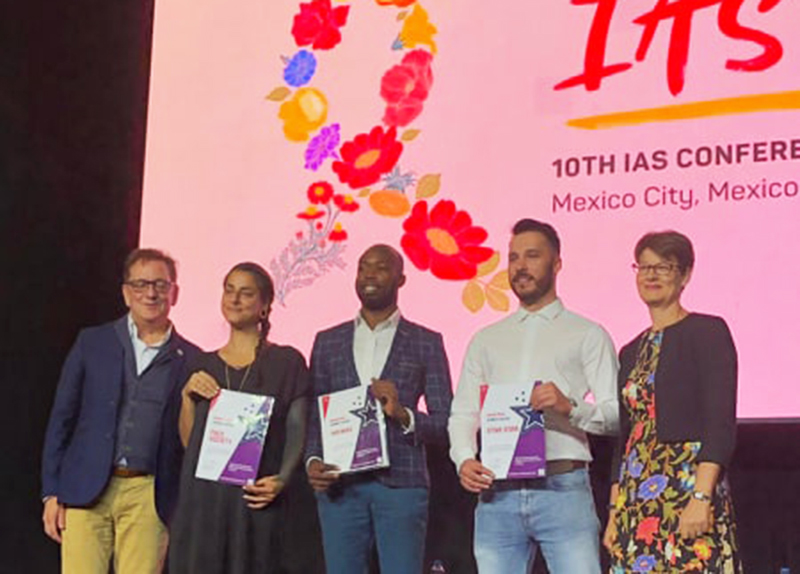
At this year’s 10th IAS Conference on HIV Science (IAS 2019), held in the capital of Mexico from 21 to 24 July, ViiV Healthcare, in collaboration with the International Association for Aids (IAS) on July 23, announced the award winners of the ViiV Healthcare’s Positive Action Challenge: Stigma-Free Services for Sex Workers. This Challenge seeks brand-new ideas or current existing projects that enable sex worker communities and healthcare providers to work together to provide comprehensive stigma and discrimination-free HIV prevention services.

STAR-STAR – The First Collective of Sex Workers in the Balkans and HERA – Association for Health Education and Research are among the three winners of the $ 75,000 Prize, besides Kenya’s HOYMAS Associations and the PACE Society from Canada. Sex worker associations from Serbia, Vietnam and Mexico are winners of the SEED Prize of $ 25,000.

STAR-STAR aims to use this money prize to strengthen programs aimed at the community of male sex workers and transgender sex workers in Northern Macedonia. STAR-STAR, in cooperation with HERA, plans to expand existing services related to HIV and sexual reproductive health for sex workers and advocates introducing new, currently inaccessible preventive methods such as the PrEP (pre-exposure prophylaxis, i.e. protection against exposure to HIV) in male and transgender sex workers.

DPNSEE congratulates our colleagues from North Macedonia and Serbia.

UNAIDS calls for greater urgency as global gains slow and countries show mixed results towards 2020 HIV targets

Taken from a UNAIDS press release

The pace of progress in reducing new HIV infections, increasing access to treatment and ending AIDS-related deaths is slowing down according to a new report released on 16 July 2018 by UNAIDS. UNAIDS’ Global AIDS Update, Communities at the centre, shows a mixed picture, with some countries making impressive gains while others are experiencing rises in new HIV infections and AIDS-related deaths

We urgently need increased political leadership to end AIDS,” said Gunilla Carlsson, UNAIDS Executive Director, a.i., “This starts with investing adequately and smartly and by looking at what’s making some countries so successful. Ending AIDS is possible if we focus on people, not diseases, create road maps for the people and locations being left behind, and take a human rights-based approach to reach people most affected by HIV.”

The report shows that key populations and their sexual partners now account for more than half (54%) of new HIV infections globally. In 2018, key populations – including people who inject drugs, gay men and other men who have sex with men, transgender people, sex workers and prisoners – accounted for around 95% of new HIV infections in eastern Europe and central Asia and in the Middle East and North Africa.

However, the report also shows that less than 50% of key populations were reached with combination HIV prevention services in more than half of the countries that reported. This highlights that key populations are still being marginalized and being left behind in the response to HIV.

Globally, around 1.7 million people became newly infected with HIV in 2018, a 16% decline since 2010, driven mostly by steady progress across most of eastern and southern Africa. South Africa, for example, has made huge advances and has successfully reduced new HIV infections by more than 40% and AIDS-related deaths by around 40% since 2010.

However, there is still a long way to go in eastern and southern Africa, the region most affected by HIV, and there have been worrying increases in new HIV infections in Eastern Europe and Central Asia (29%), in the Middle East and North Africa (10%) and in Latin America (7%).

Disconcertingly, the report shows that the gap between resource needs and resource availability is widening. For the first time, the global resources available for the AIDS response declined significantly, by nearly US$ 1 billion, as donors disbursed less and domestic investments did not grow fast enough to compensate for inflation. In 2018, US$ 19 billion (in constant 2016 dollars) was available for the AIDS response, US$ 7.2 billion short of the estimated US$ 26.2 billion needed by 2020.

To continue progress towards ending AIDS, UNAIDS urges all partners to step up action and invest in the response, including by fully funding the Global Fund to Fight AIDS, Tuberculosis and Malaria with at least US$ 14 billion at its replenishment in October and through increasing bilateral and domestic funding for HIV.

Progress is continuing towards the 90–90–90 targets. Some 79% of people living with HIV knew their HIV status in 2018, 78% who knew their HIV status were accessing treatment and 86% of people living with HIV who were accessing treatment were virally suppressed, keeping them alive and well and preventing transmission of the virus.

Communities at the centre shows however that progress towards the 90–90–90 targets varies greatly by region and by country. In Eastern Europe and Central Asia for example, 72% of people living with HIV knew their HIV status in 2018, but just 53% of the people who knew their HIV status had access to treatment.

AIDS-related deaths continue to decline as access to treatment continues to expand and more progress is made in improving the delivery of HIV/tuberculosis services. Since 2010, AIDS-related deaths have fallen by 33%, to 770 000 in 2018.

Progress varies across regions. Global declines in AIDS-related deaths have largely been driven by progress in eastern and southern Africa. In Eastern Europe and Central Asia however, AIDS-related deaths have risen by 5% and in the Middle East and North Africa by 9% since 2010.

Communities at the centre shows that the full range of options available to prevent new HIV infections are not being used for optimal impact. For example, pre-exposure prophylaxis (PrEP), medicine to prevent HIV, was only being used by an estimated 300 000 people in 2018, 130 000 of whom were in the United States of America. In Kenya, one of the first countries in sub-Saharan Africa to roll out PrEP as a national programme in the public sector, around 30 000 people accessed the preventative medicines in 2018.

The report shows that although harm reduction is a clear solution for people who inject drugs, change has been slow. People who inject drugs accounted for 41% of new HIV infections in Eastern Europe and Central Asia and 27% of new HIV infections in the Middle East and North Africa, both regions that are lacking adequate harm reduction programmes.

Gains have been made against HIV-related stigma and discrimination in many countries but discriminatory attitudes towards people living with HIV remain extremely high. There is an urgency to tackle the underlying structural drivers of inequalities and barriers to HIV prevention and treatment, especially with regard to harmful social norms and laws, stigma and discrimination and gender-based violence.

Criminal laws, aggressive law enforcement, harassment and violence continue to push key populations to the margins of society and deny them access to basic health and social services. Discriminatory attitudes towards people living with HIV remain extremely high in far too many countries. Across 26 countries, more than half of respondents expressed discriminatory attitudes towards people living with HIV.

The report highlights how communities are central to ending AIDS. Across all sectors of the AIDS response, community empowerment and ownership has resulted in a greater uptake of HIV prevention and treatment services, a reduction in stigma and discrimination and the protection of human rights. However, insufficient funding for community-led responses and negative policy environments impede these successes reaching full scale and generating maximum impact.

UNAIDS urges countries to live up to the commitment made in the 2016 United Nations Political Declaration on Ending AIDS for community-led service delivery to be expanded to cover at least 30% of all service delivery by 2030. Adequate investments must be made in building the capacity of civil society organizations to deliver non-discriminatory, human rights-based, people-centred HIV prevention and treatment services in the communities most affected by HIV.

To read full report follow this link>>>

DPNSEE have made an excerpt with the country data for 10 countries of the region, which you can download following this link>>>