DPNSEE Executive Director Milutin Milošević was invited to speak today at the K1TV about the appearance of the captagon drug in Kosovo and potential treat to the region.
Here is the video from the interview (in Serbian)

DPNSEE Executive Director Milutin Milošević was invited to speak today at the K1TV about the appearance of the captagon drug in Kosovo and potential treat to the region.
Here is the video from the interview (in Serbian)
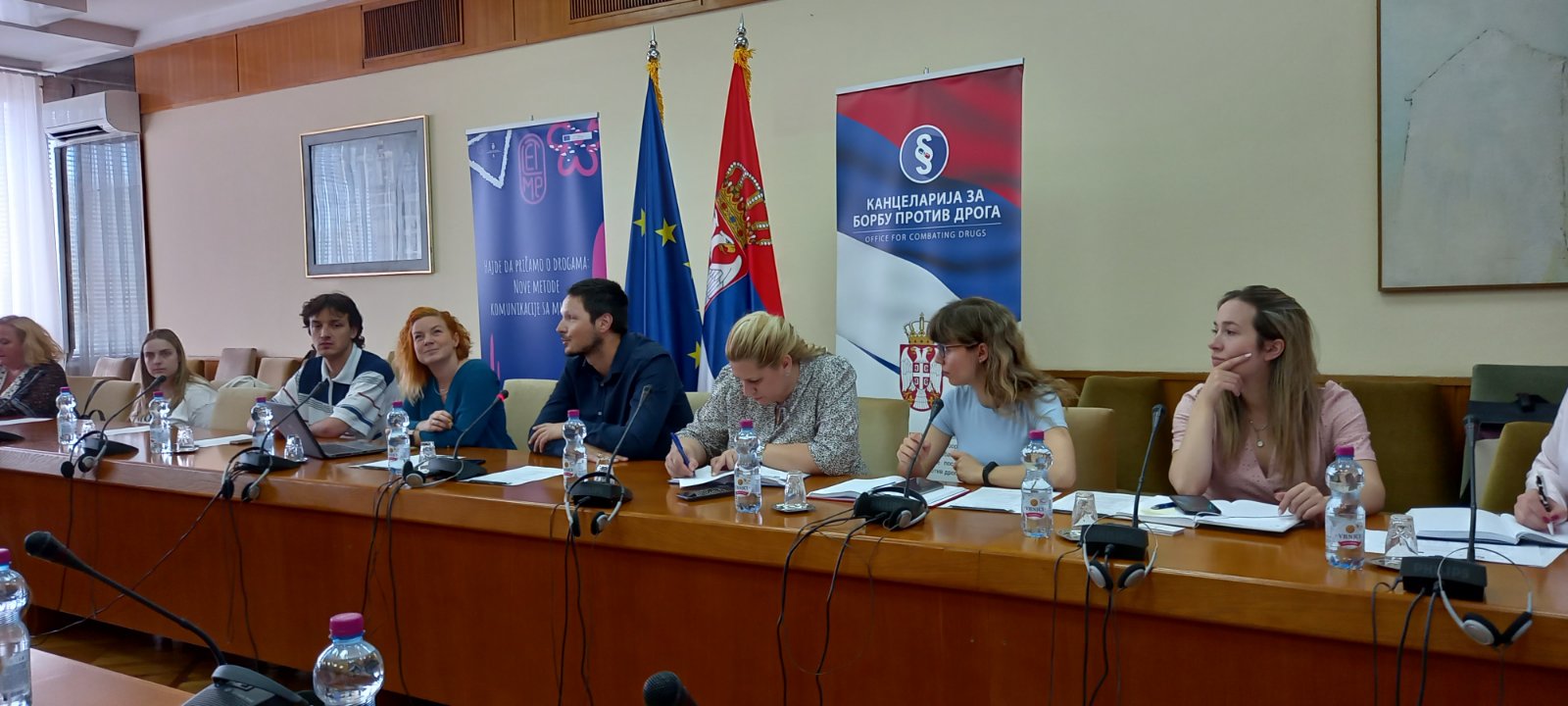
On 26 May, our member organisation Re Generacija organized the Closing Event of the project “LEt’s Talk about drugs – new MEthods of communication with youth” (LET ME) at the Palace of Serbia, in Belgrade.
The event was attended by representatives of the Office for Combating Drugs of the Government of the Republic of Serbia, representatives of ministries, civil society organizations, young people directly affected by drug education and policies and high school teachers.
The aim of the project was to support youth workers, educators (peer educators), street workers, harm reduction specialists working directly with youth who can potentially start using drugs or already use them with the innovative approaches and methods on drug education. The main target group of the project were youth workers, youth educators, peer educators and outreach workers who will be able to influence the young people who use drugs, directly within the outputs of the project.
According to the data of the research in which 124 young people participated in Serbia, they most often have a lecture on drugs at school (85.8%) in the form of a one-time formal lecture (83%), which was mostly focused on the effects and risks of use (89.36%) as well as drug treatment (43.62%). As many as 78% of the respondents who participated in this research believe that drug education should be conducted by specialised drug counselors, psychologists, youth workers, peer consultants and health experts. Respondents assessed the acquired formal education on drugs as unsatisfactory. They stated that they mostly turn to the Internet, friends and the media in search of information.

During the final event, the activities and results of the project, research results, as well as the Manual on “How to communicate with young people about drugs” were presented. The guide is divided into three modules, and is a comprehensive resource for all who work with young people. The first module is dedicated to basic concepts and policies towards drugs, harm reduction and prevention; while the second contains information on peer work, theoretical frameworks but also program planning as well as skills that educators need to develop. The third module is fully dedicated to the ways in which young people could be informed about the risks of drug use through the production of short and interesting video content and offered the necessary information in an easier and more understandable way.
The manuals in English and in the languages of the partner organizations can be found on the project website.

In addition to these project results, the film “Teach Me“, made during the project, was presented. Young people participated in preparing the film.
From the Positive Voice webpage
The Association of HIV-positive people of Greece Positive Voice, DPNSEE member organisation, warmly welcomes the opening of the Supervised Use Area (XEX) “STEKI 46” by The Organisation Against Drugs OKANA. After more than ten years from the epidemic of HIV in people who use substances in the center of Athens and after the cessation of the operation of “Odysseus” – the first site that operated as a pilot for some time (2013) on the initiative of the then President of OKANA, Professor of Psychiatry Mr. Mallioris – finally a permanent claim of the Civil Society professionals in the field, but also of the involved community that has been affected by the absence of such structures.
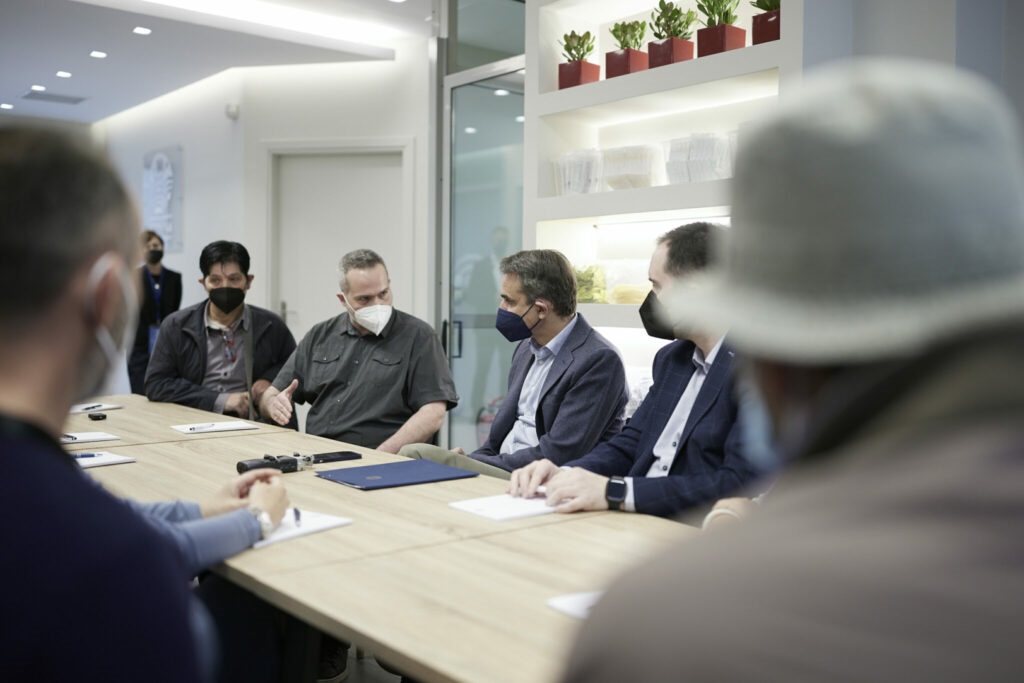
In a meeting held on 18 April 2020, in the presence of the Prime Minister Mr. Kyriakos Mitsotakis, the President of OKANA Athanasios Theocharis and the representative of the Positive Voice, responsible for Harm Reduction issues, Marios Atzemis, presented a number of urgent issues.
Positive Voice hopes that the site can provide both smooth operation of the space and full utilization of the multidimensional to the population of the most vulnerable people who use substances.
According to the European Monitoring Center for Drugs and Drug Addiction, the safe consumption areas provide a safe framework for the use of substances in hygienic conditions under the supervision and the possibility of immediate intervention by qualified personnel. They are harm reduction services, the usefulness and effectiveness of which have been proven many times over.
XEXs function essentially as prevention sites for opiate overdose and as centers for preventing the transmission of blood-borne infections, such as HIV and hepatitis. They are also often a gateway for a multi-excluded, heavily stigmatized and marginalized population to various services that would not otherwise be accessible to them.
From Positive Voice’s experience in the field, any structure, strategy and practice of harm reduction not only saves lives, but can be the bridge to reintegration and facilitate access to any form of treatment.
“In order for all this to happen, one must first stay alive. Every year in Greece we mourn deaths that could have been prevented by simple means. “Every death from overdose is a manifestation of the failure of the drug policies in our country so far.”
This was pointed out, among others, by the person in charge of harm reduction of Positive Voice, Marios Atzemis, in a joint speech with the President of OKANA, Mr. Athanasios Theocharis, within the 2nd European Symposium of Controlled Uses (2nd European Symposium of Drug Consumption Rooms) organized by the Pompidou Group of the Council of Europe and took place at the latter’s premises in Strasbourg on 1 July last year.
There is still much to be done to improve the conditions under which substances are used in the center of Athens. This is undoubtedly a step in the right direction, always centered on the common and unified strategy followed by the European Union on Drugs and the Joint European Action Plan. If the guidelines of the Commission and the Council of Europe are consistently followed, Greece can see significant improvements in the conditions of use and quality of life of people who use substances, as they have shown examples of cities such as Lisbon, Rome and Amsterdam where the European directives were implemented.
“Drug policies are not judged by intentions but by the result and the existence of such places brings tangible, measurable results“, concludes Marios Atzemis.
Based on the requests we made to the National Committee for Drugs, the requests that arise from the field and the developments in it, but also based on the constant and timeless requests, the Positive Voice claims:
Drug use is a manifestation of the complexity of human behavior and existence, and addiction – according to modern views – is often the result of a complex and divisive trauma.
The full information note on the visit of Prime Minister Kyriakos Mitsotakis to the Supervised Use Area “STEKI 46” of OKANA is available (in Greek) following this link>>>.
Watch the entire discussion here
https://youtu.be/D9Pxpjx-n5k
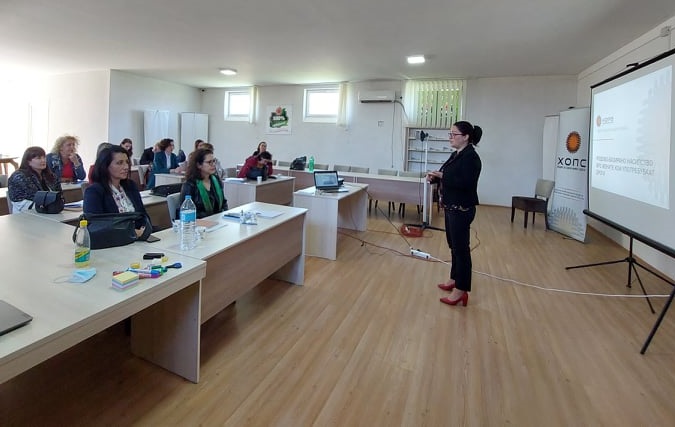
Our member organisation HOPS – Options for Healthy Life Skopje, in the period from the 13th to the 15th April 2022, realized three one-day trainings in three different cities: Strumica, Bitola and Skopje on the topic: “Treatment of women victims of gender-based violence who use drugs“, intended for professionals working with victims of gender-based violence.
On April 13, the training was held in the Therapeutic Community “Pokrov” – Strumica, which was attended by a total of 13 representatives: 8 representatives from the Centers for Social Work in Sveti Nikole, Strumica, Kočani and Štip and 5 representatives from other non-governmental organizations: Educational – humanitarian organization “EHO” – Štip, Youth Club of the Red Cross Strumica, Women’s Action Radoviš, Sky Plus Strumica and the therapeutic community Pokrov Strumica.
On April 14, the training was held at the hotel “Millennium Palace” Bitola, which was attended by a total of 12 representatives, of which: 3 representatives from the Centers for Social Work in Prilep and Resen, 2 representatives from PHI Health Center Bitola and PHI General Hospital Prilep, 1 representative from PHI Psychomedica Bitola and 6 representatives from non-governmental organizations: Center for Human Rights AMOS – Bitola, Via Vita – Bitola, Station 5 – Prilep and Association for Social Action, Prevention Education EASP Prilep.
On April 15, the training was held in the hotel “City Park” Skopje, which was attended by a total of 13 representatives, as follows: 4 representatives from the Centers for Social Work in Skopje, Veles and Tetovo, 2 representatives from PHI General Hospital Kumanovo and 7 representatives by non-governmental organizations: Macedonian Young Lawyers Association, Association for Health Education and Research HERA Skopje, Civic Initiative for Women Sveti Nikole, National Network against Violence against Women and Domestic Violence and the Red Cross of the Republic of Northern Macedonia.
The trainings were led by prof. Dr. Liljana Ignjatova from the Medical Faculty Skopje, Department of Psychiatry and Hajdi Sterjova Simonovic – Executive Director of the Association HOPS. The purpose of these trainings is to sensitize the professionals who work with women who use drugs in cases when they are victims of gender-based violence.
The participants evaluated all three trainings extremely positively, both from the aspect of high quality and level of theoretical and practical knowledge of the trainers, as well as from the aspect of interaction established between the participants and the trainers and the possibility for exchange of information and experiences.
The experience from the held trainings showed us that there is a huge interest in this topic and the need to conduct such trainings in the future.
The trainings are organized by the Association HOPS, supported by the Eurasian Harm Reduction Association (EHRA), as part of the project “Access to comprehensive care for women who use drugs in cases of violence” funded by COVID-19 Response Mechanism (C19RM) of the Global Fund to Fight AIDS, Tuberculosis and Malaria as part of the regional project “Sustainability of services for key populations in Eastern Europe and Central Asia region” (#SoS_project) implemented by the Alliance for Public Health.

From the HOPS webpage and the Radio MOF news
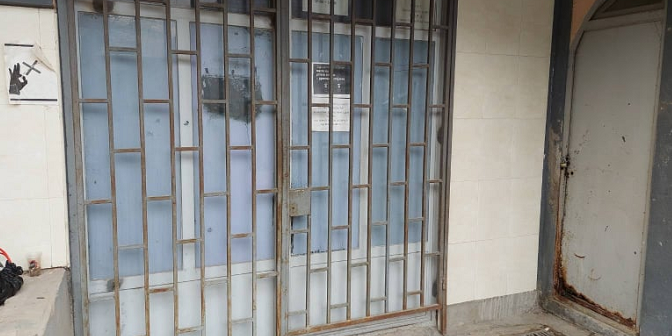
The Association HOPS – Options for Healthy Life Skopje announced that yesterday, on World Health Day, and in just a day before today’s International Roma Day, after 15 years of existence, they had to close the daily harm reduction center Šuto Orizari – a Skopje suburban municipality with a Muslim Romani people majority.
They point out that the reason for closing the day center is the reduction of funds for HIV prevention programs from the national budget.
 “This center opened in 2007, with funds from the Global Fund, and from then until yesterday was the only place where Roma who use drugs and their families had easy access to all services that provide HIV prevention, but also harm reduction from drug use. In this center our customers received basic (and often unique) medical care, received information and support for their social and legal problems, could wash their clothes, warm themselves in winter, eat when they are hungry, drink coffee or tea in a friendly, non-stigmatizing and non-discriminatory atmosphere,” said HOPS.
During the coronavirus pandemic, HOPS managed harm reduction centre was one only contact with the system drug users and their families in Šuto Orizari had.
“When they were isolated and had no therapy, when they had health problems, when they survived all forms of violence, including gender-based violence, when they were given criminal warrants for violating curfew because they went out to find food, goods or therapy – they only received help from our team,” states HOPS. In addition, they say that access to health services, which has already been difficult for these people, has multiplied during the pandemic.
The association says that although in 2017 with the transition of funding from the Global Fund of the Government they merged two other centers, just to keep the center in Šuto Orizari. Now, as they say, they have been put in a position to close the busiest and most visited center in Kisela Voda or to close the “much needed” center in Šuto Orizari.
“From today, the lives of people who use drugs in Šuto Orizari and the surrounding area will not be the same, but HOPS will do its best within its financial means to continue its activities for prevention of HIV and other infectious diseases.” said HOPS.
At the same time, they announced that three times a week, their field team consisting of a social worker and a field worker will visit the users in their homes, dwellings or temporary residences, and that twice a week a medical person will visit them with their vehicle.
Our member organisation Coalition “Margini” from North Macedonia published a very useful guide for guide for drug users in situations when they are contacted by police.
What if I get caught with drugs? Can the police call me for an interview and do I have to show up? How can I exercise my right to a lawyer? – These are just some of the questions that can be answered in this handbook, primarily intended for drug users when contacting the police.
The guide, in Macedonian, is available following this link>>>.
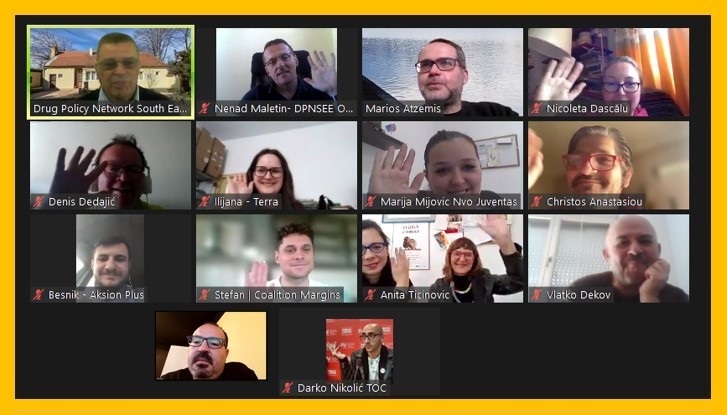
The Drug Policy Network South East Europe held its regular annual General Assembly on 29 March 2022. The Assembly was again held online.
The Assembly performed regular annual duties: discussed and adopted the narrative and financial reports for 2021. The report states that 2021 was a challenging year, but that DPNSEE and our member organisations managed to operate in a solid way, although the space for our work is more and more shrinking.
DPNSEE have managed last year to reach the new horizons. We have been welcomed to the EU Civil Society Forum on Drugs. Our representatives spoke on important events, our colleagues elected to other important positions. We joined Correlation, EHRA and other organisations and networks in joint advocacy to fight harm reduction crisis in our region and preparing project proposal for project submitted to the EU for Health programe.
Most of our work in 2021 was dedicated to young people. We implemented the “No risk, no borders for young people” project with our 5 member organisations. We already have a large group of engaged young people, many of whom takes important roles in their organisations and internationally. We hope that they bring a new spirit and engage their peers.
You can find more about the work of DPNSEE in 2021 in the report following this link>>>.
Unfortunately, the Assembly acknowledged that Centre for Life from Greece stopped operating so we had to take them off the list of our member organisations. On the other side, the Assembly recognised the LINK – Montenegrin Harm Reduction Network as the ordinary member organisation. The Assembly also changed the status of organisation PROI from Bosnia Herzegovina from ordinary to associate.

Members of the new Board are
• Nebojša Đurasović, President, President of Prevent, Serbia
• Nicoleta Dascălu, Vice-President, Advocacy manager, ARAS, Romania
• Marios Atzemis, Harm reduction worker, Positive Voice, Greece and Consultant at European AIDS Treatment Group and Steering Committee member of AIDS Action Europe
• Besnik Hohxa, Clinical psychologist, Aksion Plus, Albania
• Berina Bahić, Project coordinator and head of regional office Tuzla, Margina, Bosnia Herzegovina
• Marija Mijović, Deputy Coordinator of the Direct Assistance Program, Juventas, Montenegro
• Zharin Simrin, User Activist, Coordinator and Assistant for Needle Exchange, HOPS, North Macedonia
We are assured that the combinations of experience and youth, men and women, people from communities and those supporting them and geographic spread around the region we have now in the Board will be efficient and effective in the challenging period ahead.
In the second session, the Assembly completed the strategy review process with the support of our consultant Nenad Čelarević. The new Board will consolidate the results of the process and propose Action plan to implement the strategy.

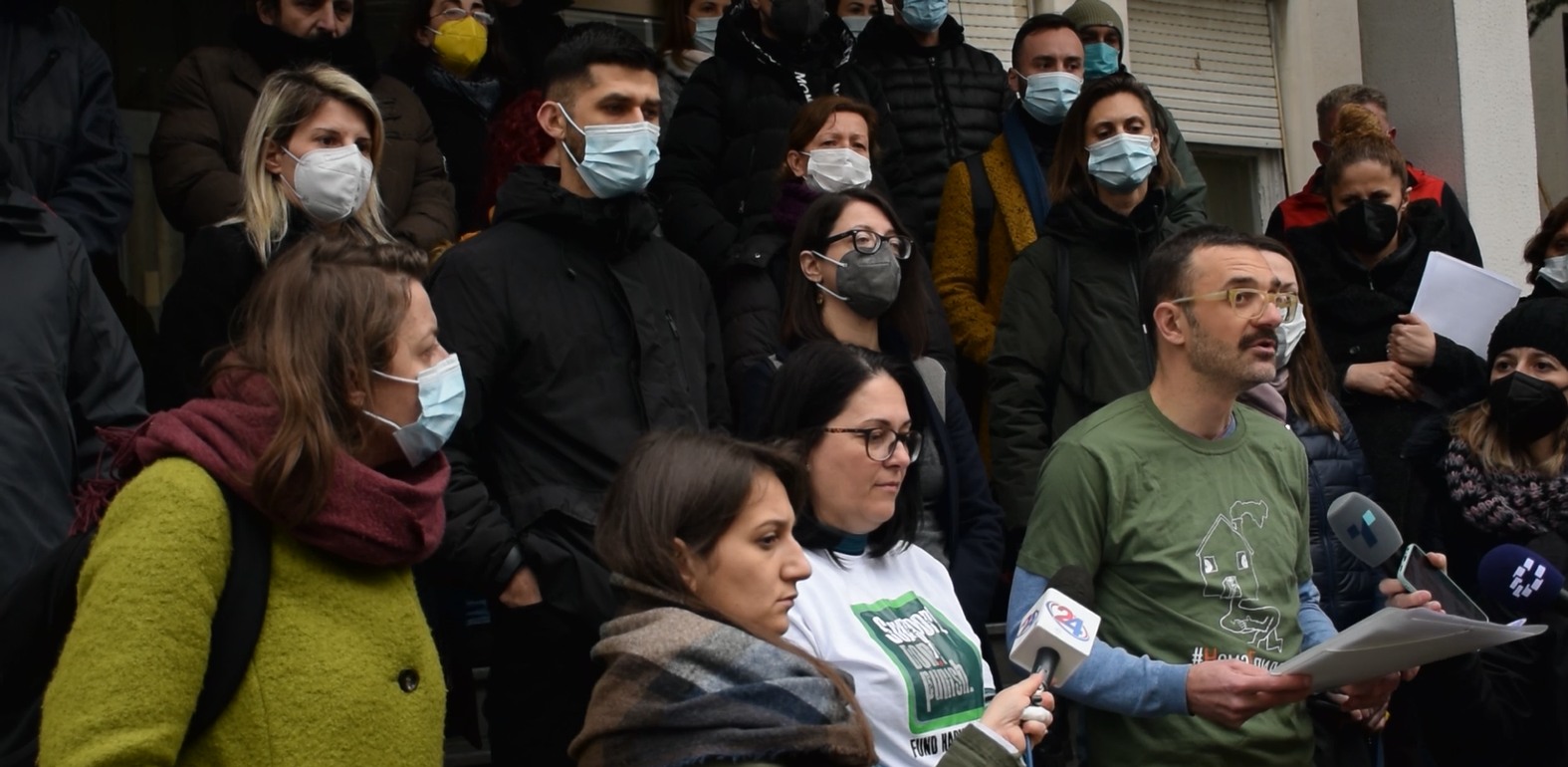
Three civil society organisations from North Macedonia, our member HOPS (Healthy Options Project Skopje), Stronger together (Association for Support of People Living with HIV) and HERA (Health Education and Research Association) protested today because of the budget cuts for HIV prevention program.
Here are some extracts from their statement:
By cutting the budget for HIV prevention by 40%, the Ministry of Health puts the health of at least 10,000 affected citizens at stack. In a scandalous and flat way, without any expert discussion, the Ministry of Health cut as much as 40% of the funds provided for HIV prevention in the Program for protection of the population from HIV-infection for 2022, which the Government adopted only a month ago. Thus, the state puts at risk the closure of the established capacities for control of HIV infection in the country and endangers the health of at least 10,000 citizens from the marginalized communities.

Instead of the envisaged 46.5 million denars in the Program for protection of the population from HIV infection intended for HIV prevention services implemented by about 14 associations in 12 cities in the country, the Ministry of Health yesterday announced a public call for associations with an amount reduced by even 19 million denars. The decision was not consulted by the National Commission on HIV.
Thanks to these programs, the Republic of Northern Macedonia in the past 15 years has maintained full control of the HIV epidemic in populations of people injecting drugs and sex workers and one of the lowest infection rates in the region. In the past 3 months, the entire national response to this epidemic is literally at the expense of 14 civil society organizations, which continue to work without any compensation for their work.
Discontinuation of services for vulnerable groups will mean an increase in new infections and an increase in deaths due to HIV, and on the other hand increased pressure on key health institutions, such as the Infectious Diseases Clinic and addiction treatment centers. Even a small increase in the HIV epidemic will lead to a multiplier increase in the cost of treatment and health care. Hence, the decision to arbitrarily cut is simply a bad public health policy.
In Macedonia, young people are still dying from HIV, and according to the methodology of the European Center for Disease Control, it is estimated that even one third (34%) of the total number of people living with HIV in the country are not aware that they have the virus. With this, Macedonia lags significantly behind the world average, which for 2020 was only 16%. The global goal by 2025 is to reduce the percentage of people who are not aware that they have HIV to less than 5%, which will lead to a drastic decline in the transmission of infection and will allow to put an end to the HIV epidemic by 2030.
Given the alarming situation and citing the country’s commitments under the United Nations Policy Declaration on HIV and AIDS of June 2021, including the obligation to end the HIV epidemic, as well as the commitments made by the Government to ensure the continuity of HIV programs, we require:
Our member organisation Re Generation hosted today the Round table on the occasion of the #BezbedanParty (SafeParty) project.
During the Round Table, the results of four months of this project were presented. Within the event, proposals for the amendments of local and national Action Plans were presented in order to increase the safety of young people in nightlife, created by the joint work of NGOs Re Generation and experts, based on data obtained through community research.

Every day we encounter various situations in the night life, in which young people who go out to nightclubs and attend festivals can potentially be exposed to dangers related to the use of psychoactive substances (drugs and alcohol), but also other health, social and legal risks. This is partly because the public is not familiar with harm reduction programs, and an honest and fact-based conversation about drugs remains taboo.

That is why the goal of this project was to initiate a dialogue on risk issues in the night life, and encourage and introduce the community to harm reduction programs in Belgrade, and educate those who work and those who work to survive clubbing more safely.
Activities of the project included:

The #BezbedanParty project was implemented as part of the “Explore – Empower” public advocacy support program funded by the UK Government and implemented by the Trag Foundation. The implementation of this project was strategically supported by the Office for Combating Drugs of the Government of the Republic of Serbia.
To get more information about the project (in Serbian), follow this link>>>.
The wave of refugees fleeing Ukraine after the start of the war came also to neighbouring Romania. So far, 500.000 of them entered Romania – most of them transiting to other destinations, while 50.000 stayed in the country.
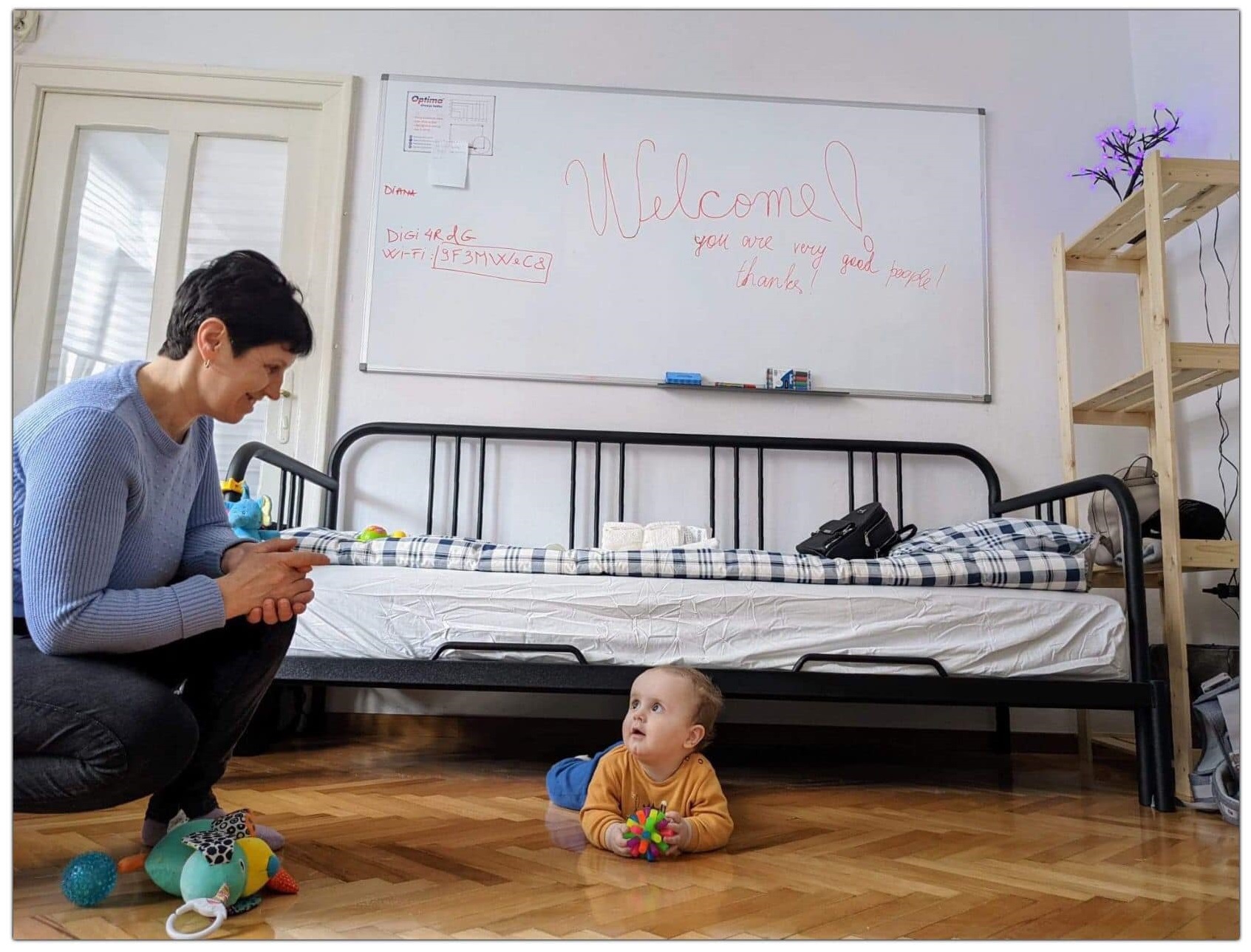
Our member organisation ARAS from Romania immediately got organised to provide them help and continues to be with those who were forced to leave their families, homes and friends because of the war in Ukraine!
The ARAS apartment became a house, for a week, for 4 people: three women and a 9-year-old girl, followed another 4 ariving later. Company MODELiER provides a hot meal to the refugees accommodated by ARAS.
The ARAS team facilitated access to ARV treatment in Bucharest for a woman living with HIV from Ukraine. This was possible due to a joint effort of ARAS and the National Institute of Infectious Diseases “Prof. Dr. Matei Balş”, which responded promptly to the request, so that treatment is not interrupted. It was the first situation of this kind; ARAS are sure, unfortunately, that it is not the last. In 2020, according to UNAIDS estimates, 250.000 people were living with HIV in Ukraine.
In order to continue offering these services, ARAS invited for donations. The information about this is available on the ARAS website (https://arasnet.ro/donatie-paypal/) or directly in the bank accounts available at the image below with the mention UKRAINE.