Drug policy evaluation models presented

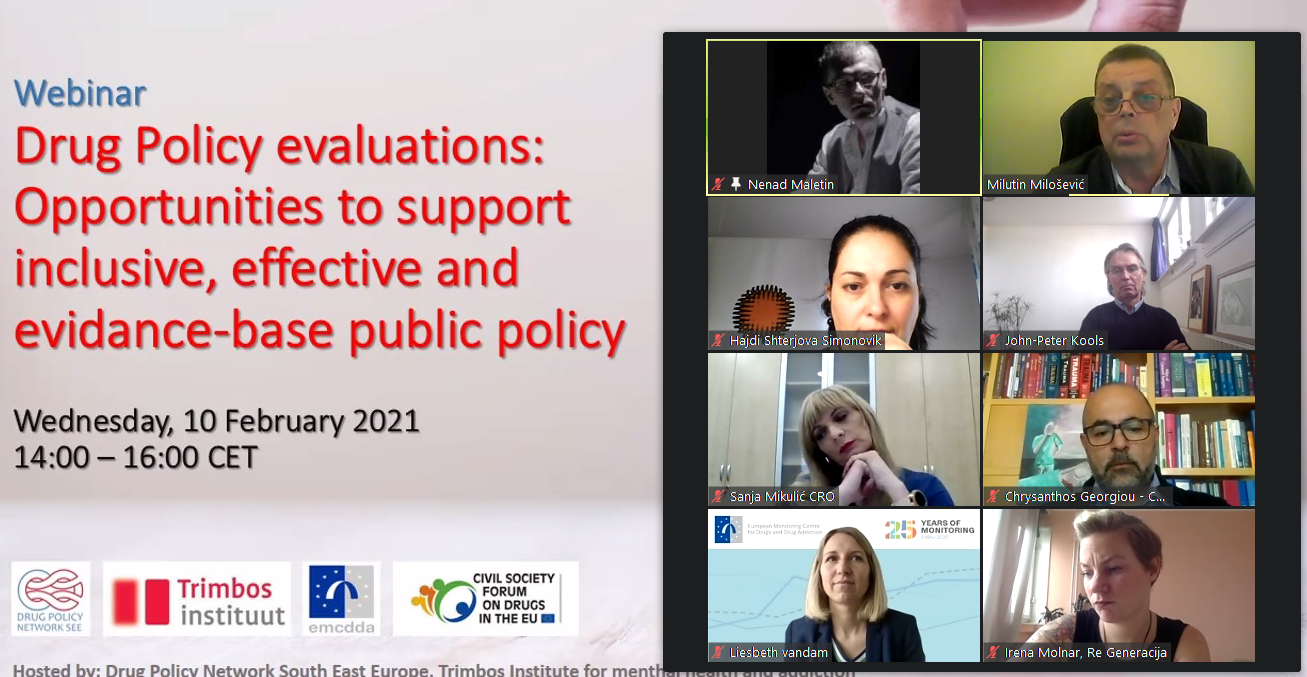
DPNSEE and Trimbos Institute hosted the Webinar “Drug Policy evaluations: opportunities to support inclusive, effective and evidence-based public policy” on Wednesday 10 February 2021. The aim of the Webinar was to provide information on drug policy evaluation as an effective instrument to guide, manage and support effective policies and services.

The Webinar included an introduction on drug policy evaluations and presentations on approach and methods and experiences from the evaluations performed in Croatia and Cyprus. Discussions in three separate discussion rooms followed on different segments of a policy/strategy cycle.

More than 90 representatives of governmental organisations, both on national and local level, academia, civil society organisations, coming from 31 countries, and international organisations participated.

The presentations from the Conference are ready to download:

  • Introduction to drug policy evaluation: Liesbeth Vandam, European Monitoring Centre for Drugs and Drug Addiction following this link>>>
  • Drug Policy evaluations: approach and methods: John-Peter Kools, Trimbos Institute following this link>>>
  • Drugs policy evaluation – experience and benefits: Sanja Mikulić, Head, Service for combating drugs abuse, Croatian Institute of Public Health, Croatia following this link>>>
  • Online opportunities: Daan van der Gouwe, Trimbos Institute following this link>>>
  • Experiences from online/hybrid evaluation: Chrysantos Georgiou, Cyprus following this link>>>.
 

New Global Fund’s Technical Assistance Program

From the EECA Regional Platform established by the Global Fund

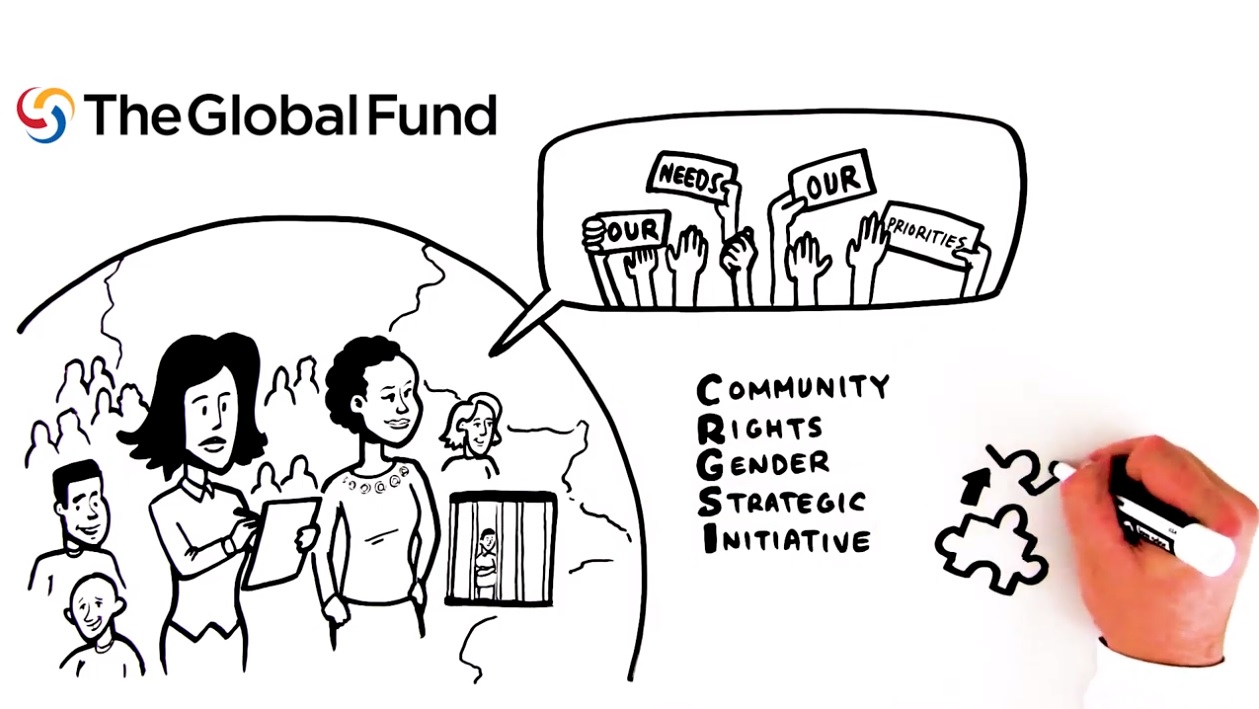
The Global Fund’s Community, Rights and Gender (CRG) Technical Assistance (TA) Program started it’s new phase of the implementation as a part of the Global Fund’s CRG Strategic Initiative.

You may find all relevant information about this short-term technical assistance program available at the new page at the Global Fund’s website following this link>>>.

Please, be informed that the CRG Department updated the list of CRG technical assistance providers for the 2021-2023 implementation period. Also, new CRG TA Request Form is available (the old one is not applicable anymore) as well as an example of the High-quality TA Request.

The CRG technical assistance is available in 3 main areas of work:

  • Situational analysis and needs assessments
  • Country dialogue
  • Supporting design and implementation arrangements.

For more details please see the CRG Technical Assistance Guidance Note.

CRG Technical Assistance does NOT support:

  • CCM strengthening (e.g. training of CCM members in their roles and responsibilities);
  • Long-term capacity development of civil society networks and organizations (e.g. organizational development, support to become a Global Fund recipient);
  • Development of stand-alone tools that lack a focus on community engagement;
  • Funding request writing.

The short-term nature of technical assistance foresees that community experts can be deployed for approximately 30 days over a period of up to three months.
Also, if you have any questions regarding the CRG TA Program or you need any assistance with development of the request – please feel free to contact Ivan Varentsov at ivan@harmreductioneurasia.org as the coordinator of the EECA Regional Platform for Communication and Coordination supported by the Global Fund.


Cannabis – narcotic drug or/and medicine

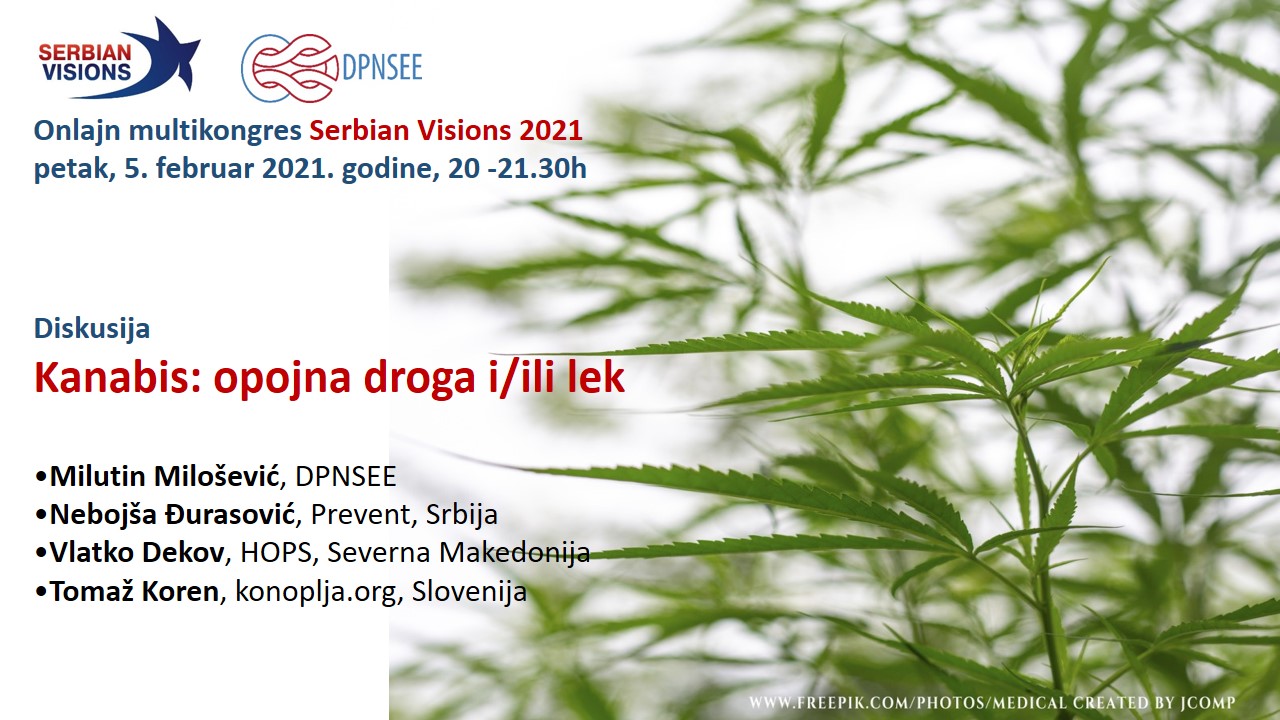
As part of the Serbian Visions Multicongress, organised by the German-Serbian Chamber of Commerce (AHK) from 1 to 5 February 2021, DPNSEE will hosted an online discussion “Cannabis – narcotic drug or/and medicine” on Friday 5 February.

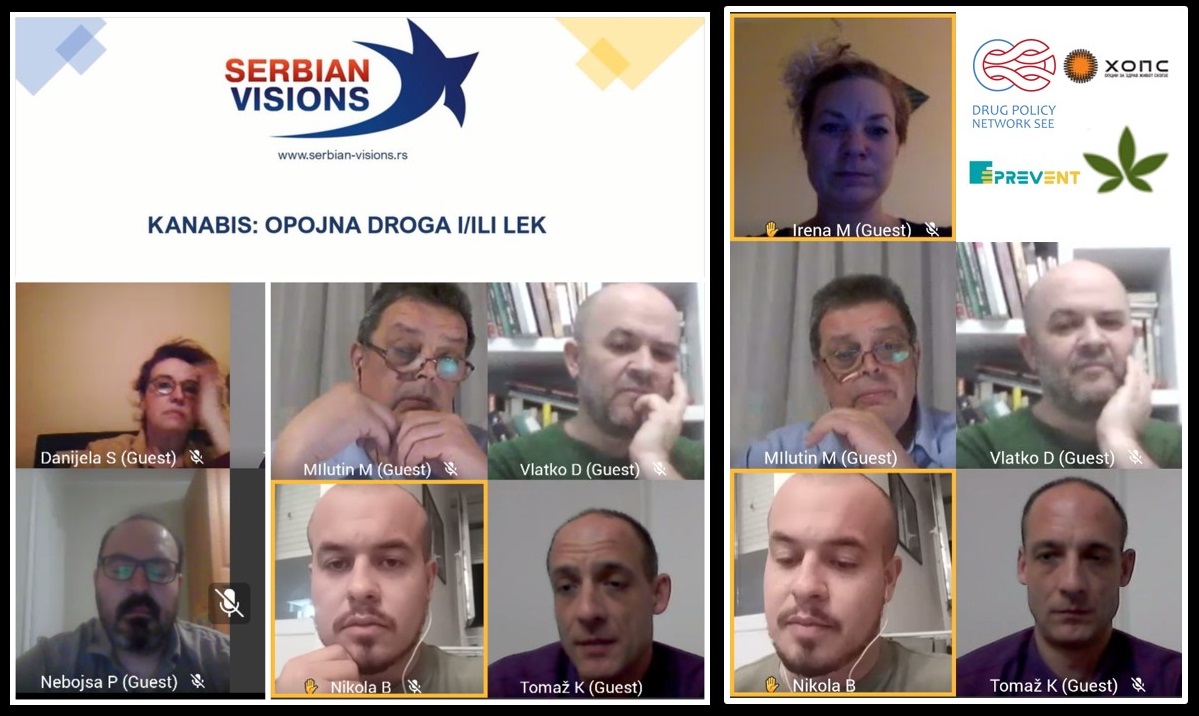
Despite a very unfavourable time (Friday evening), 18 participants from Serbia, Croatia, North Macedonia, Montenegro and Slovenia joined. Most of them were from civil society organisations, but also we had those from the Office for Combating Drugs of the Government of Serbia and the Institute for Public Health in Serbia.

List of speakers included:

  • Milutin Milošević, DPNSEE
  • Nebojša Đurasović, Prevent, Serbia
  • Vlatko Dekov, HOPS, North Macedonia
  • Tomaž Koren, konoplja.org, Slovenia

The discussion was led around three main topics: how to regulate cannabis, medical value of cannabis (in the light of the new decision of the UN Committee on Drugs and Narcotics) and the latest developments in the region. Participants actively contributed with their positions and questions.

Recording of the discussion is available at the Serbian Visions Youtube channel.


Webinar on Drug Policy Evaluations

The Drug Policy Network South East Europe and Trimbos Institute invite you to participate in the webinar that will provide information on drug policy evaluation as an effective instrument to guide, manage and support effective policies and services. The Webinar is supported by the European Monitoring Centre for Drugs and Drug Addiction and the European Civil Society Forum on Drugs.

The Webinar will present an insight on how various actors can contribute to a process of monitoring and evaluation of drug policies and can benefit from. It will:

  • showcase the benefits of drug policy evaluations
  • provide examples of recent regional drug policy (e.g. Croatia, Cyprus)
  • provide opportunities of online evaluations

The webinar may serve as a source of inspiration to support all those involved process of building better drug policies. It is especially suitable for regional drug policy makers, regional civil society groups, European and other interested participants.

The Plenary introductions will include:

  • Introduction on drug policy evaluations
  • Drug Policy evaluations: approach and methods
  • Benefits from independent evaluation
  • Online opportunities
  • Experiences from online/hybrid evaluation.

Three parallel breakout sessions will follow on What is needed to prepare a national drug policy?, How to monitor progress? and How to learn from and improve policies?

The Webinar will be held via Zoom at the following link https://us02web.zoom.us/j/86598224178 on Wednesday 10 February 2021 starting at 14:00 CET. The Webinar will last for 120 minutes.

As the number of participants is limited, please register by Monday 8 February using the form attached here>>>.


DPNSEE again at the Serbia Visions multicongress

As part of the Serbia Visions Multicongress, organised by the German-Serbian Chamber of Commerce from 1 to 5 February 2021, DPNSEE will organise online discussion “Cannabis – narcotic drug or/and medicine“.

The discussion will be held in Serbian via Microsoft Teams application on Friday 5 February from 20:00 to 21:30 PM. You may join the event following this link>>>.

List of speakers include:

  • Milutin Milošević, DPNSEE
  • Nebojša Đurasović, Prevent, Serbia
  • Vlatko Dekov, HOPS, North Macedonia
  • Tomaž Koren, konoplja.org, Slovenia

Programme of the event is as follows


Request For Proposals for EECA HIV multi-country grant

The Eastern Europe and Central Asia (EECA) is one of the three regions globally where the HIV epidemic is increasing. In 2019, the incidence/prevalence ratio was higher than in any other part of the world: 10.1. The number of people living with HIV in the region was 1.7 million; the number of new HIV infections was 170,000 and the number of AIDS-related deaths – 35,000. In 2019, according to the data for testing and treatment cascade, 70% of people living with HIV knew their status, 44% of people living with HIV were on treatment, and 41% of people living with HIV were virally suppressed.

The HIV epidemic remains concentrated in key populations in EECA countries. Key populations and their sexual partners are disproportionately impacted, accounting for 99% of new HIV infections in 2019. Addressing the HIV epidemic would require an interlinked set of measures focused on improving sustainable access of key populations to quality prevention, diagnostics, treatment and care; improving efficiency and quality of HIV service delivery models; and building financial sustainability of provision of services tailored to the needs of key populations

The Global Fund to Fight AIDS, Tuberculosis and Malaria (the “Global Fund”) is seeking proposals from regional stakeholders to implement a multicountry program under Catalytic Investments for the 2020-2022 allocation period.
The multi-country grant should contribute to sustainable and significant reduction of infections, illness and death by HIV/AIDS in EECA, with a clearly described theory of change and proposed specific actions and performance metrics.

Of the US$ 50,000,000 made available for this strategic priority area, this RFP refers to the US$ 13,000,000 made available under the multicountry priority area “Sustainability of services for key populations in Eastern Europe and Central Asia region”.

To read applicants guidelines for this request, please follow this link>>>.


First Board meeting in 2021

The DPNSEE Board held its first meeting in 2021 on Tuesday 12 January. The Agenda of the meeting included DPNSEE Reports for 2020, Membership organisations situation, Current projects and Plans for 2021.

The Board adopted draft versions of the narrative and financial report for 2020. A decision was taken that the General Assembly will be called for early March so that the annual financial statement would then be presented along with these draft documents for adoption by the member organisations.

The Board discussed situation with member organisations, including about two of them which stopped working, membership fee payments and member organisations participation in Network’s activities.

Information that our project proposal is currently on the Regional Youth Cooperation Office Preliminary List of 12 Best Evaluated Project Proposals was welcomed. We hope that other two applications submitted in 2020 will also be successful, as well as those we plan to develop in the next few months.

The Board decided to hold Consultations on Sustainability of the Network. Aim is to exchange about the way we shall position us in the future so that our profile is improved and clearer for potential partners and donors, our communication is tailored and focused and our sources of funding are diversified.

Participation in the 5th European Harm Reduction Conference, webinar we plan with Trimbos Institute and participation in the Serbian visions multikongres was also discussed.


Let’s talk about drugs

Taken from the IDPC webpage

In June-July 2020 Rights Reporter Foundation, YODA, Re Generation, Young Wave and Center for Humane Policy conducted an assessment of drug education in Bulgaria, Hungary, Lithuania, Poland, and Serbia based on the methodology developed by EHRA within the LEt’s Talk about drugs – new MEthods of communication with youth – LET ME project funded by the European Commission (ERASMUS+ program). The goal of the study was to assess existing drug education and its effectiveness, look at what information on drugs is available and how it is perceived by young people, examine the methods and tools used by different actors to talk about drugs with youth, and gather best practices.

The stakeholders interviewed—young people and representatives of harm reduction, prevention, and youth organizations—all agree that existing drug education is ineffective and fails to address the needs and patterns of drug use among young people.

The report will be used to design and create the manual, but also for the advocacy activities related to the promotion of prevention and harm reduction services in the youth work.

The reports are available in English and all national languages following this link>>>.


Human rights at the heart of drug policies

The Co-operation Group to Combat Drug Abuse and Illicit Trafficking in Drugs (Pompidou Group) is an inter-governmental body formed in 1971 at the initiative of the late French President Georges Pompidou. The Group’s core mission is to contribute to the development of effective and evidence-based drug policies in its member states.

This year, the Pompidou Group celebrates its 50th anniversary. It grew from 7 founding states to 41 members today, including 3 non-European countries. Under the motto “Human rights at the heart of drug policies“, the Anniversary will be celebrated throughout the year, in a series of events taking place in Europe and beyond.

The Portuguese Presidency of the Group issued a statement highlighting the main features of the Anniversary programme. The organisation’s President João Castel-Branco Goulão emphasized that “The most important feature of the Anniversary is the expected adoption of a revised statute by the Committee of Ministers of the Council of Europe. By strenghtening the identity of the Pompidou Group as a Council of Europe entity, including a strong focus on human rights, extending its mandate beyond the field of illicit drugs, fostering synergies with other international organisations and Council of Europe bodies, the new statute will give a fresh political impetus and open new legal avenues to the Pompidou Group.

A commemorative event will be held at the Centre Pompidou in Paris on 28 October 2021. The commemoration will provide an opportunity to highlight the main achievements as well as contributions of some eminent personalities in the history of the Pompidou Group. A travelling exhibition and a publication on the history of the Pompidou Group will also be produced and presented during the events organized as part of the 50th anniversary celebrations.

To read more about the celebration and see the full list of events, please visit the webpage dedicated to the 50th anniversary>>>.