Drug user representation in United Nations drug policy settings

Recent commitments to greater involvement of people who use drugs in UN drug policy processes is a positive development but little research attention has been paid to ‘drug user representation’ in this context.

Authors Annie Madden, Kari Lancaster and Carla Treloara from Centre for Social Research in Health and Alison Ritterb from Social Policy Research Centre, University of New South Wales, Sydney, Australia produced the paper Making legitimacy: Drug user representation in United Nations drug policy settings. This paper examines ‘drug user representation’ in the UNGASS on drugs and associated CND processes over three decades.

Findings show that dominant UN drug policy discourses and other practices can have delimiting effects for the political legitimacy of drug user representatives.

The importance of engaging people who use drugs in drug policy development is increasingly acknowledged including in recent UN documents. Little scholarly attention has been paid to ‘drug user representation’ in the global drug policy setting of the UN such as the Commission on Narcotic Drugs (CND). This paper examines ‘drug user representation’ in key UN drug policy processes over three decades.

The mapping process was undertaken using a corpus of publicly available documents from the UNGASS on Drugs and associated CND processes to identify relevant policy processes from 1987 to 2019.

The analysis shows that despite calls for greater involvement, dominant UN drug policy discourses and other practices delimit both the political subjectivities available to people who use/have used drugs and their capacity to bring their voices to bear in this context. The analysis also highlights that human rights-based discourses, employed by ‘drug user representatives’, have emerged as an important practice of resistance against the problematic and delimiting power effects of existing UN discourses, governing practices and modes of engagement.

In addition to the practices of resistance being undertaken by ‘drug user representatives’, authors suggest there is a need to improve how ‘drug user representation’ is being made possible and done in the sites of UN drug policy deliberation and, that these sites should be opened for questioning. This will not only have a positive impact on political legitimacy for ‘drug user representation’, but on the health and human rights of people who use/have used drugs.

The document is available following this link>>>.


Global Fund COVID-19 Response Mechanism allocations in SEE

The Global Fund is providing immediate funding to help countries fight COVID-19, mitigate the impacts on lifesaving HIV, TB and malaria programs, and prevent fragile health systems from being overwhelmed, through grant flexibilities and the COVID-19 Response Mechanism.

Grant flexibilities allow countries with current grants to use up to 5% of their current grant value if there are savings, and/ reprogram up to 5% of the value of a grant to meet immediate COVID-19 response requirements. The COVID-19 Response Mechanism (C19RM) can be used across the three diseases and the health system, even if a country only has a single Global Fund grant for one component.

The Global Fund published the information about allocations so far on 27 October 2020. From the COVID-19 Response Mechanism a total of 592,493,744 USD was allocated for mitigating COVID-19 impact on HIV, TB and malaria programs, reinforcing national COVID-19 response (other response and COVID-19 diagnostic tests) and urgent improvements in health and community systems.

Out of this amount, four SEE countries and the Multi-country HIV East Europe and Central Asia #SOS_project received

In addition, from the Grant Flexibilities 216,092,754 USD was approved to 107 countries and multicountries out of which three countries and the Multi-country project received:


See better in the document we created following this link>>>.


Global State of Harm Reduction 2020

Harm Reduction International, an NGO dedicated to reducing the negative health, social and legal impacts of drug use and drug policy, publishes report that provides an independent analysis of harm reduction in the world. Now in it’s the seventh edition, the Global State of Harm Reduction 2020 is the most comprehensive global mapping of harm reduction responses to drug use, HIV and viral hepatitis.

The 2020 report includes:

  • A chapter which looks at the impact of the COVID-19 pandemic and related lockdowns on the provision of harm reduction services worldwide
  • Additional thematic chapters on hepatitis C and tuberculosis
  • Examples of progress in harm reduction from across the world
  • Examples of legal and policy changes which impact harm reduction service provision
  • Foreword by Dr Tlaleng Mofokeng, United Nations Special Rapporteur on the right of everyone to the enjoyment of the highest attainable standard of physical and mental health
  • Data on the number of people who inject drugs and the number of people in prison for drug use globally

The report can be downloaded and read in full or by chapter following this link>>>.

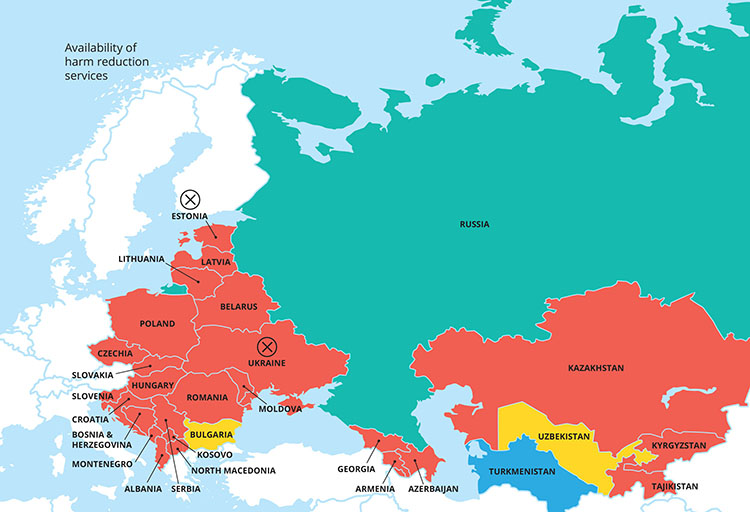
DPNSEE have prepared a table with information on Epidemiology of HIV and viral hepatitis, and harm reduction response in South East Europe.

The document is available in PDF format following this link>>>.


ECOM is looking for consultants

Eurasian Coalition on Male Health (ECOM) is one of the pre-qualified providers of the Global Fund’s CRG program and provides technical assistance to communities and key populations of Albania for conducting budget advocacy, and cost–effectiveness and efficiency analyses of HIV and STI services for gay men, men who have sex with men and trans* people in Albania. More details are available following this link>>>.

Additionally, ECOM is looking for the consultant to conduct mapping of HIV and STI services for MSM and trans* people and organizing local meetings with stakeholders in the Republic of Albania>>>.

Application deadline: November 1, 2020, 23:59 (GMT +3).

All these activities are to be implemented as a part of the technical assistance within the Global Fund’s CRG TA Program.

North Macedonia readopted the Anti-Discrimination Law

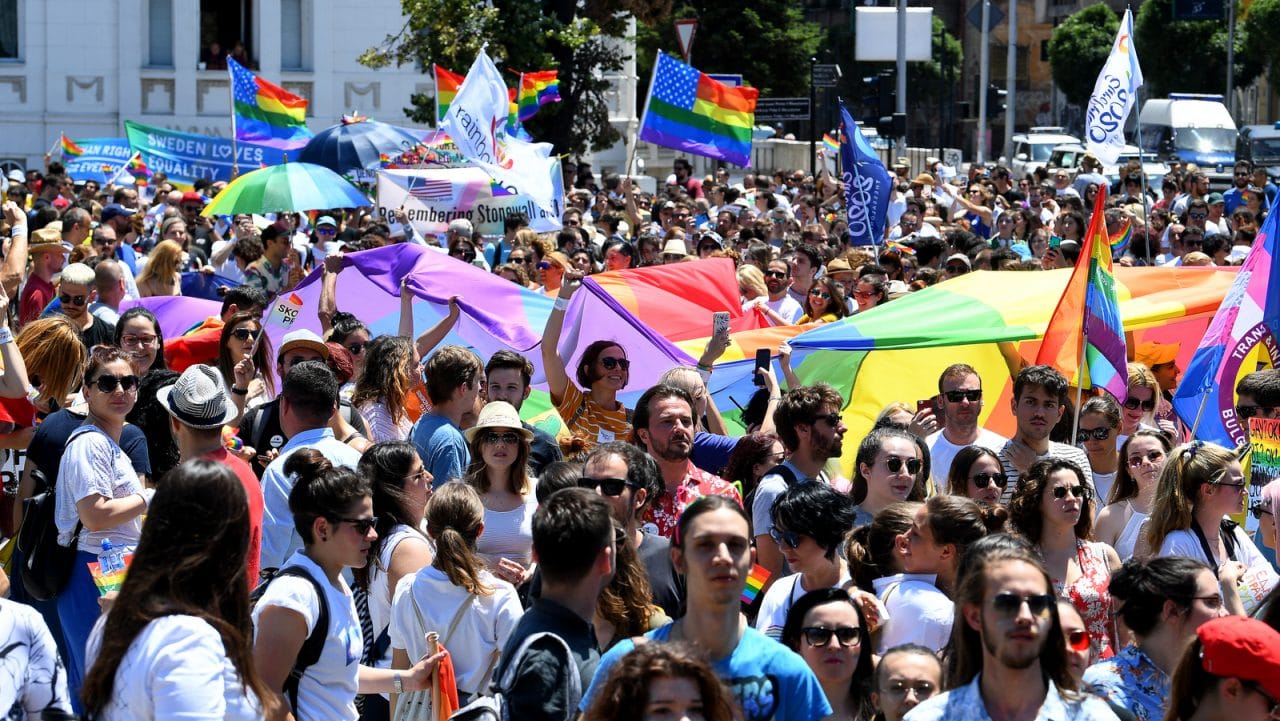
North Macedonia’s parliament adopted the Anti-Discrimination Law, which among other things guarantees protection from gender-based discrimination.

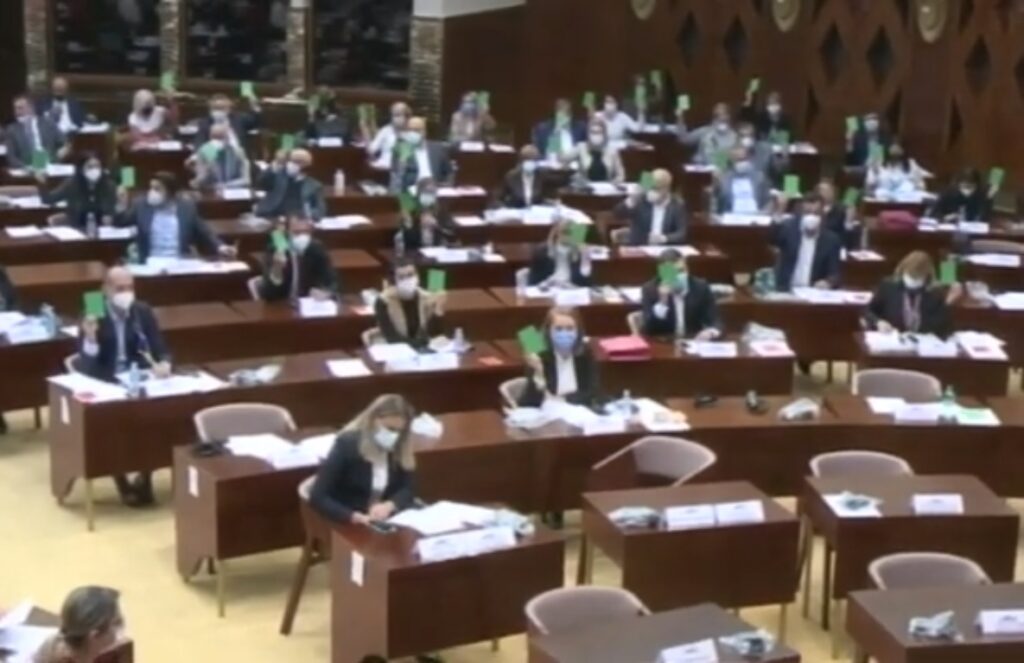
The previous governments led by the conservative right-wing VMRO DPMNE from 2006 to 2017 refused to include sexual orientation in the law. It was then originally passed by the Social Democrat-led majority in 2019. However, the Constitutional Court struck down the law in May this year, to the dismay of LGBT organisations and human rights groups, ruling that it was not passed with a proper quorum in parliament. The Law now passed in parliament with 69 out of 120 members of the parliament supporting it, from both ruling and opposition parties. No MPs voted against it.

Prior to the vote in parliament, the Network Against Discrimination, which comprises many prominent North Macedonian NGOs, criticised the government’s recent decision to dismiss its proposal to add stricter rules for a more transparent and inclusive procedure to elect members of the Anti-Discrimination Commission, which the government said is already part of the law.

Registration opens for European Drugs Winter and Summer Schools 2021

From the EMCDDA news

The EMCDDA and the University Institute of Lisbon (ISCTE-IUL) opened registration for two upcoming joint events in 2021: the European Drugs Winter School (EDWS) and the European Drugs Summer School (EDSS).

EDWS 1–12 March 2021 (online): Following the success of the EDSS in 2020, taught remotely due to the COVID-19 pandemic, the organisers have decided to deliver the first virtual EDWS in 2021. The theme of the event will be Responses to, and preparedness for, health-related threats (COVID-19 lessons learned). Following a similar structure to the 2020 edition, the two-week course will feature live lunchtime lectures with experts and practitioners, followed by afternoon exercises. Virtual fieldwork tours will also be offered. Completion of exercises and an exam are compulsory for those wishing to obtain credits. The sessions will be recorded and available for subsequent viewing. Increasing the offer of online training is in line with the EMCDDA’s digital transformation objectives. Registration EDWS Phase 1: 19 October 2020–8 February 2021 (notification of acceptance on 12 February 2021).

EDSS 28 June–9 July 2021 (Lisbon): This year, the two-week course will focus on Vulnerable groups. Sessions will include lectures on the prevention of drug-related problems; social determinants of drug use and interventions for vulnerable groups (homeless, prisoners, migrants). Study visits will be organised to one of the Portuguese commissions for dissuasion as well as a local harm reduction centre. During the course, students will participate in interactive workshops to discuss their own projects and views. The course will conclude with an open debate with guest speakers, followed by an exam for those wishing to obtain credits. All recommended COVID-19 safety measures will be put in place, if applicable. Deposits and fees will be reimbursed if the summer school is cancelled in case of force majeure, such as the COVID-19 pandemic. Registration EDSS Phase 1: 19 October 2020–28 February 2021 (notification of acceptance on 5 March 2021). Phase 2: 1 March 2021–7 June 2021 (notification of acceptance on 11 June 2021).

The target audiences for the two events are: university students, researchers, professionals and administrators interested in working on drug issues. The previous rounds of the EDSS brought together students from the EU Member States as well as from Africa, Asia, Australia and the Americas. Profiles of former alumni and their testimonials can be found on the official summer school website and their statements viewed in a promotional video.

The courses prepare professionals and students to meet the complex policy challenges that face Europe in the field of drugs. Involving scientific experts from the EMCDDA, university professors and policymakers, they provide a multi-disciplinary and inclusive approach to the study of the drugs problem in Europe and beyond.

In 2021, students will again be able to apply for scholarships. Agreements with the IPA7 and EU4MD projects will also be sought for bursaries targeting key national experts. ‘Early-bird’ reductions will be available. The EDSS will be run in English.

For more on the EDWS and EDSS, see here >>.

Contacts:
Catherine Moury, EDSS Scientific Director – drugsummerschool.cies@iscte.pt.
Marica Ferri, Scientific programme – Marica.Ferri@emcdda.europa.eu.


A glossary of contested terms in substance use

The Scottish Drugs Forum (SDF) has launched a new resource entitled ‘Moving Beyond ‘People-First’ Language: A glossary of contested terms in substance use.

This resource describes the issues around some language and key concepts that often cause contention and some that evolve from or perpetuate stigma and the prejudice it fosters.

The glossary offers a resource that makes explicit the connection between language and power. The resource will hopefully raise awareness of how power and language can contribute to problem substance use and can also help Scotland and wider improve its response to problem substance use.

To access this useful publication, follow this link>>>.


130 project proposals for the RYCO Call

The Regional Youth Cooperation Office (RYCO) opened its Fourth Open Call intended to support and empower partnerships between civil society organizations, secondary schools and other actors in implementing activities in the areas of regional youth cooperation, mobility and exchange; and enabling environment for regional youth cooperation. The general objective of this call for proposals is to support the civil society in the Western Balkans to foster reconciliation and regional youth cooperation during COVID-19 pandemic by providing young people with opportunities that create space for dialogue, mutual learning and increased understanding across communities and RYCO Contracting Parties, as well as contribute to increasing capacities of CSOs in offering meaningful opportunities to young people in a changed reality caused by the COVID-19 pandemic.

The Call was closed at midnight on 12 October 2020.

DPNSEE and its member organisations Aksion Plus (Albania), Margina (Bosnia Herzegovina), Juventas (Montenegro), Prevent and Re Generacija (Serbia) prepared the project proposal No Risk, no borders for young people. Our project will strive to contribute to the efforts of the reconciliation processes in the WB countries and stronger youth participation in CSOs by developing and supporting regional youth cooperation focused on youth at risk, as its desirable overall impact/change. The project is strongly focused on marginalized youth groups that are in our context defined as youth at risk consisting of young people who use drugs, sex workers, LGBTI population, youth in conflict with the law and others addressed as “youth with alternative lifestyles and identities”.

We are awaiting December 2020 and some good news from RYCO!

Global Fund Regional Platforms’ Community Engagement Toolbox

Regional Communication and Coordination Platforms to support civil society and community engagement in Global Fund-related processes developed the Community Engagement Toolbox. It contains a variety of useful resources.

In particular:

  • This Toolbox contains more than 60 action-oriented resources, in 14 different languages, that help strengthen and support community engagement in Global Fund-related processes
  • These tools were developed by the 6 Regional Communication and Coordination Platforms, as part of the Global Fund’s Community, Right and Gender Strategic Initiative (CRG SI)
  • The tools are designed for use by civil society organizations and community groups who want to engage more meaningfully in Global Fund-related processes at country level e.g. civil society members of Country Coordinating Mechanisms (CCMs)
  • Some of the tools are region-specific, but many have global application

You can download the Toolbox following this link>>>.


A New EU Drug Strategy is Being Prepared by the German Presidency

The 2021-25 EU Drugs Agenda recently published by the European Commission was criticised by civil society and member states. We have already posted comments from Péter Sárosi, the executive director of the Rights Reporter Foundation and an article about the sign-on letter of the International Drug Policy Consortium’s (IDPC) members, raising our very serious concerns regarding the new 2021-25 EU Agenda and Action Plan on Drugs.

The Civil Society Forum on Drugs (CSFD) also criticised the Agenda in its position paper for its stigmatising language and framework, lack of balanced approach, reduced role for harm reduction, decreased relevance of human rights and several other reasons.

Member States did not accept the new EU Drugs Agenda proposed by the EU Commission. The Horizontal Working Party on Drugs (HDG) decided that a new EU strategy will be prepared by the German presidency.

To read more about the positions of the CSFD, follow this link>>> to the article on the Rights Reporter Foundation website.