We are all POSITIVE!

On the occasion of World AIDS Day 2018, the Greek Association of People Living with HIV Positive Voice and the Onassis Foundation organized a series of interpersonal activities “I am Positive” promoting human stories related to HIV/AIDS on 21 and 22 November 2018 at The Onassis Stegi Cultural Centre in Athens.

Children and adolescents had the opportunity to chat with representatives of the seropositive community on sexual health, but also about the challenges and prejudices they face and the stigma that accompanies these groups through their stories, hopes and fears, the reality that HIV-positive people in Greece face and the medical and social dimension of the disease. A serodifferent couple, a mother whose son lives with HIV and a gay claiming his right to prophylactic treatment PrEP shared with the public their thoughts and experiences.

The debate was co-ordinated by journalist Elena Akrita.

To view the original article, including video recordings of personal testimonies, follow this link>>>>

Regional cooperation for the development of civil societies and open dialogue

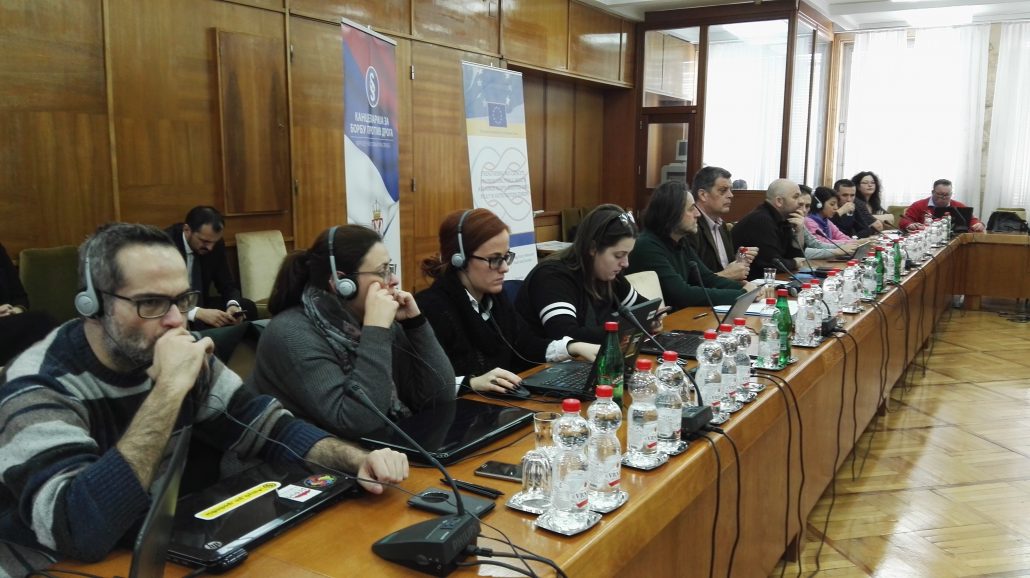
Drug Policy Network South East Europe organizes the conference Regional cooperation for the development of civil societies and open dialogue on Monday 10 and Tuesday 11 December 2018, in The  Palace of Serbia, Belgrade, Serbia. The Conference is supported by the Central European Initiative, from their CEI Cooperation Activities programme and the Office of combating drugs of the Government of Serbia.

The first day of the Conference will be dedicated to the DPNSEE General Assembly. The member organisations will discuss operational and financial report for 2018 and plans for the next year, candidatures for new members and elect the Board. A strategic workshop will help establishing priorities, aims, objectives and activities to achieve them in the next three years.

The thematic RECODOD Conference will be also held in The Palace of Serbia, Belgrade, Serbia, on the second working day. The aim of the conference is to bring together member organisations and other civil society organisations, policy makers and researchers active in the drugs field in South East Europe, in order to discuss drug policy developments and trends, exchange experiences and best practices in the region.

The agenda of the Conference will focus on drug policy developments and trends and exchanging experiences and best practices in the region on:

  • Drugs and immigrants
  • Legislation and procedures in cases of arrest and judiciary process for drug users
  • Accreditation of services by national health institutions

Participation of other peer organisations, governments, experts and keynote speakers from countries of South East Europe and wider is expected.


Sustainable Services for PLHIV and HIV Prevention Conference

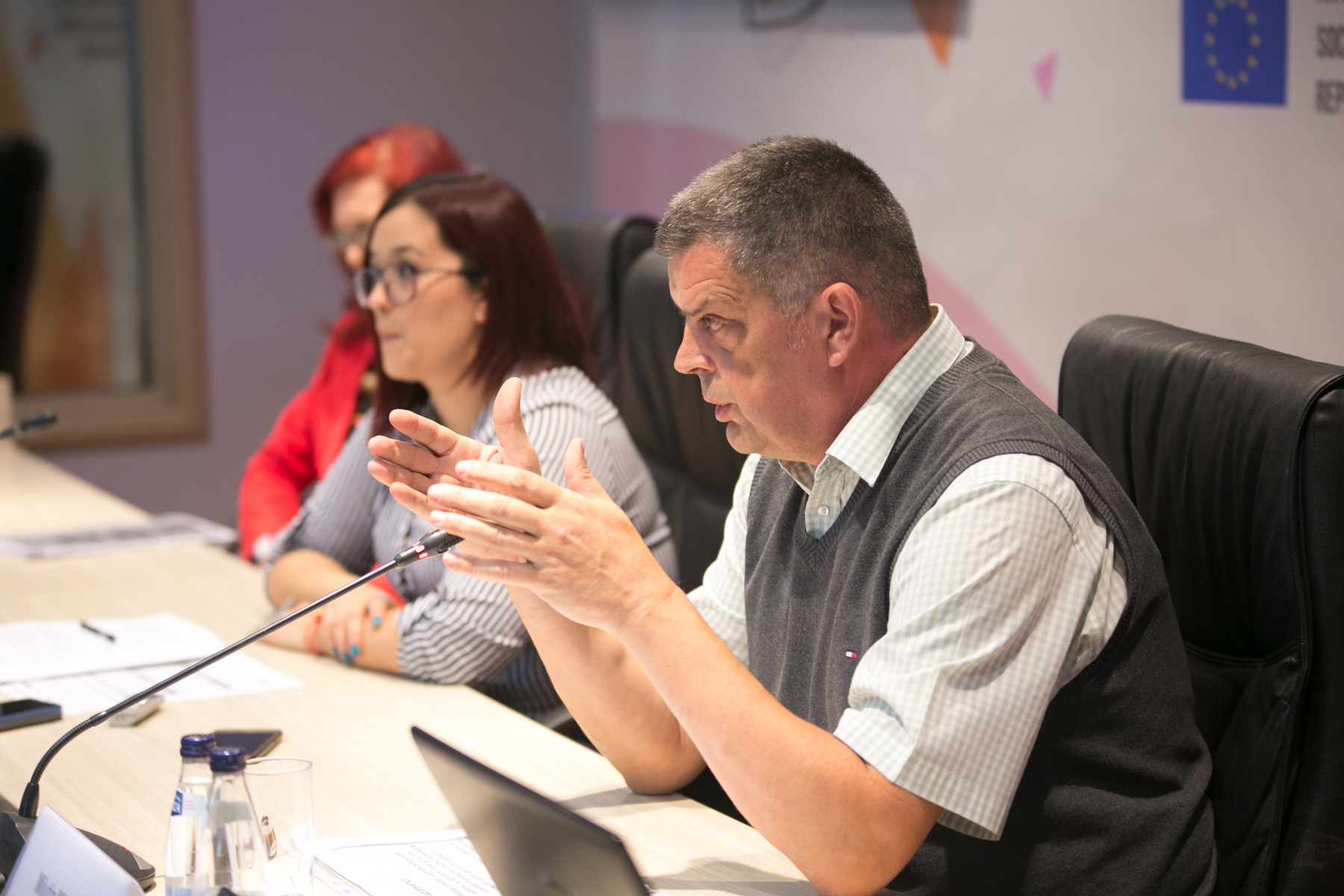
The Union of Organizations of Persons Living with HIV/AIDS in Serbia (USOP) hosted the international conference on Sustainable Services for PLHIV and HIV Prevention in Belgrade on November 28, 2018. This one-day conference supported by UNDP Programme in Serbia gathered 110 relevant stakeholders from Serbia, Bosnia and Herzegovina, Croatia, and Montenegro in an attempt to move the PLHIV service agenda forward through co-thinking and cross-sectorial experience exchange.

The Conference Sustainable Services for PLHIV and HIV Prevention contributed an important piece to the puzzle of PLHIV’s health, social, economic, and overall well-being in Serbia and the region by opening up a dialogue on the cost of services for PLHIV. Through active interactions between practitioners in key sectors, public officials, service providers and service users, the conference shed a new light on prevention of HIV infection and, specifically the role of PLHIV organizations in community resilience building.

Participants agreed that investments in development of standards and services, training of service providers, piloting and testing should be respected, recognized and more readily considered by the welfare systems through urgent development of formal standards that will lead to effective service mainstreaming and access to regular service funding. In the meantime, project funding remains an interim solution but one that clearly threatens sustainability and quality of services.

Several DPNSEE member organisations representatives participated in the Conference

The South East Europe pre-Conference Meeting held in Bucharest

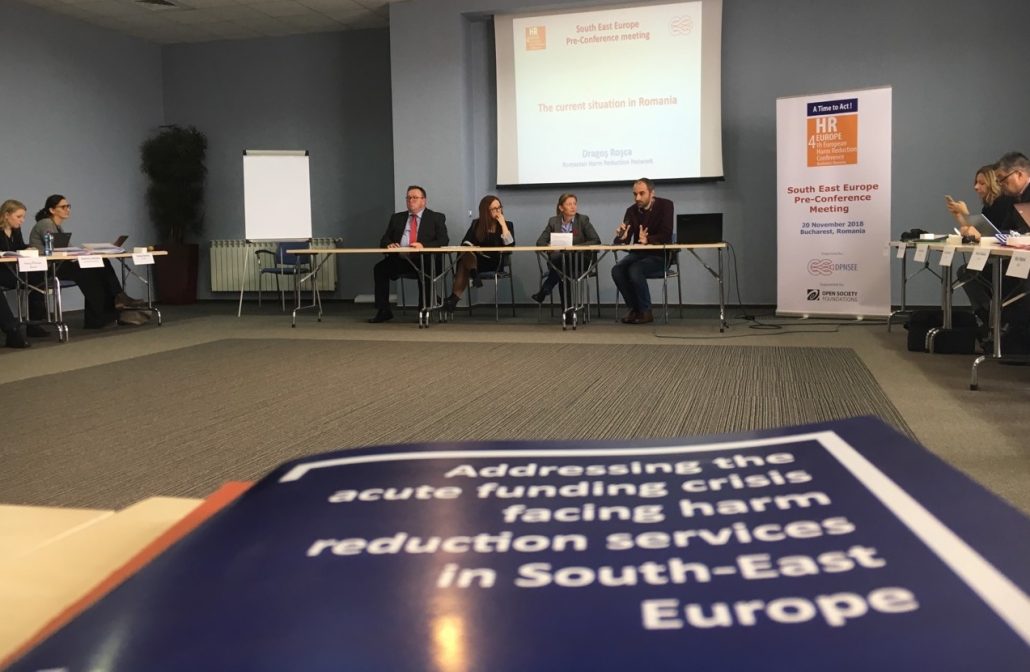
With the support from the Open Society Foundations, the Drug Policy Network South East Europe organised the South East Europe Meeting on 20 November in Bucharest, Romania, prior to the 4th European Harm Reduction Conference. The event aimed to get together activists working on harm reduction services, exchange experiences and promising ideas for the future, meet with international partners and discuss future opportunities for collaboration. 36 representatives of harm reduction organisations and institutions from countries of the region and from various international organisations attended this meeting: Albania, Bosnia and Herzegovina, Bulgaria, Greece, Kosovo*, Macedonia, Montenegro, Romania, Serbia and Slovenia.

Nebojša Đurasović, Vice-President of the DPNSEE Board opened the Meeting with welcome note and agenda review and announced first session Where is South East Europe now? Sofia Galinaki from Diogenis, the member of the IDPC Members’ Advisory Council, moderated this session. She presented the results of the Harm Reduction Survey. Dragoş Roşca, Romanian Harm Reduction Network, continued this session and spoke about current situation in Romania, Denis Dadajić, from Margina, explained situation in Bosnia and Herzegovina and Silvana Naumova from HOPS, presented current situation in Macedonia.

Facilitating the second session What do we actually do?, DPNSEE Executive Director Milutin Milošević, reminded on some dilemmas, including those of quality in the times of transition and integrated services for all vs. those specific for key sub-populations. Ivica Cekovski from HOPS spoke about the concept of quality in Macedonia. The session continued with Dr Vera Kerleta-Tuzović, Agency for Healthcare Quality and Accreditation in FBiH who presented accreditation of drop-in centres Bosnia and Herzegovina and session was closed with Tomaž Koren, from Alliance of NGOs for Drugs and Addictions, from Slovenia, who talked about quality of services in Slovenia, with special view on harm reduction in nightlife and festival settings.

The pre-conference meeting continued with third session that was moderated by Jelena Čolaković, from the DPNSEE member organisation Juventas, Montenegro. The speakers crossed over specific topic Where do we go from here? and was centred around opportunities for collaboration, including a regional program on sustainability supported by the Global Fund. Vladan Golubovic, from Chairman sent a presentation about the Regional Coordinating Mechanism. Tetyana Deshko, from Alliance for Public Health presented upcoming Global Fund supported regional project “Sustainability of services for key populations in Eastern Europe and Central Asia region”. Then, Mišo Pejković from Cazas spoke about experiences in cooperation in the region. The session was closed by Amarildo Fecanji, from ERA, who talked about potential cooperation between the networks and organisations.

At the last session What else we need to talk about? Ganna Dovbakh from Eurasian Harm Reduction Association emphasized potentials for advocacy in the process of EU Enlargement on national level.

Closing the Meeting, Nebojša Đurasović thanked all for contributing to the Meeting which he found successful. He noted a very friendly and open atmosphere and hoped that the experiences and ideas presented will be a good basis for future cooperation and partnerships.

Photos: Snežana Šundić – Vardić and Sanja Đurasović

Situation in Romania full of challenges

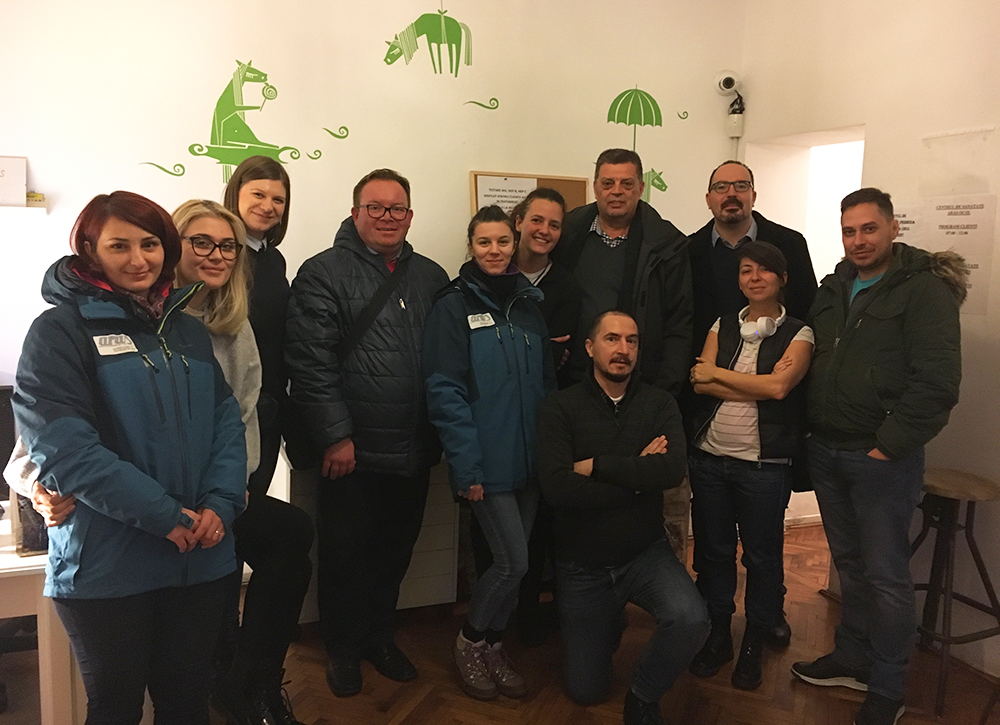
Delegation of the Drug Policy Network South East Europe with Nebojša Đurasović, Vice-President, Denis Dedajić, Secretary of the Board, and Milutin Milošević, Executive Director, visited Romania on 19 November 2018. It was one of the two remaining in the serial of visits aimed to present DPNSEE to the society, build strong relationships with the authorities, institutions and services and explore opportunities for partnerships.

The situation in the country is far from good with no harm reduction services available outside Bucharest, no support for MSM services and no HIV strategy and strategic plan (a proposed document is in the Ministry of Health for one year but not approved). Opioid Substitution Therapy funding is a nightmare (procedurally), therefore hospitals do not want to engage in that, and Harm Reduction is in a survival mode. State institutions and civil society organisations have different data on key populations, with number of drug users ranging from 9.000 to 19.000.

At the meeting with Sorin Oprea, Director of the Agency for Combating Drugs, in a friendly atmosphere created through recent contacts, we discussed about the potential to raise drug policy higher on political agenda during the Romanian presidency over EU starting in January. We were informed about forthcoming purchase of 900.000 syringes for harm reduction services, the data collecting system that operates well in Romania and will be offered to Turkey, a 3 Million Euro programme that is planned for civil society organisations and plans to develop a system of alternative sanctions. Our interest in protection of personal data of drug users was replied with assurance that the problem was solved and that anonymity is guaranteed. The optimistic situation presented by the Agency was questioned by our civil society colleagues during the next meetings.

Discussion with our colleague Dragoş Roşca, director of the Romanian Harm Reduction Network, presented a bit different and challenging situation in the country. Among others, Dragoş gave us a good insight in functioning of country coordinating mechanism after departure of Global Fund. RHRN mainly functions as a watchdog for state institutions. He informed us that out of 15.500 people living with HIV, 14.000 are on treatment.

Dan Popescu from our member organisation ARAS took us to two methadone centres where they serve almost 500 people. The most vulnerable 100 of them get the service for free, while other can choose to pay 3 Euro for a daily service or 120 Euro for monthly package. We instantly commented that the country should provide the services for free – otherwise people’s basic right for health is not respected! In the centre situated in a large hospital, 11 committed activists work from 7:00 AM to 6:00 PM, supported by a doctor, nurse and social worker. This service operates for 12 years already.

We also had an opportunity to see one of two their outreach team and their van which cruises the streets of Bucharest and provides service on the spot.

The visit was really good opportunity to learn about a variety of issues related to drug policy in this complex and segmented country.

A tool presenting the situation in South East Europe

The Drug Policy Network South East Europe published the document  Addressing the acute funding crisis facing harm reduction services in South-East Europe with the aim to emphasize the acute funding crisis facing harm reduction services in Balkan states and South-East Europe, to influence the policies and actions of the Global Fund to Fight AIDS, Tuberculosis and Malaria  and other donors. It is a complementary part of a larger body of work being done by a wide range of partners – including the Open Society Foundation and the International Drug Policy Consortium – to document the consequences of changes in donor eligibility policies, and to urgently try and influence donor policy away from a withdrawal from middle-income countries in South East Europe.

DPNSEE worked with their partners and members across the region to gather case studies of Opioid Substitution Therapy stock-outs or shortages, service closures or reductions in coverage, and other critical issues experienced by civil society partners in South East Europe related to transitions away from Global Fund support. Through interviews with key stakeholders and desk-based research, DPNSEE gathered information, experiences, feedback and recommendations from Albania, Bosnia and Herzegovina, Bulgaria, Croatia, Kosovo*, Macedonia, Montenegro, Romania and Serbia.

The material was collected in November – December 2017. Since then, it was used only internally. The document was published and shared with the participants of the South East Europe pre-Conference meeting, held in November 2018 in Bucharest, Romania.

Click here to download the document >>>

The 4th European Harm Reduction Conference in Bucharest

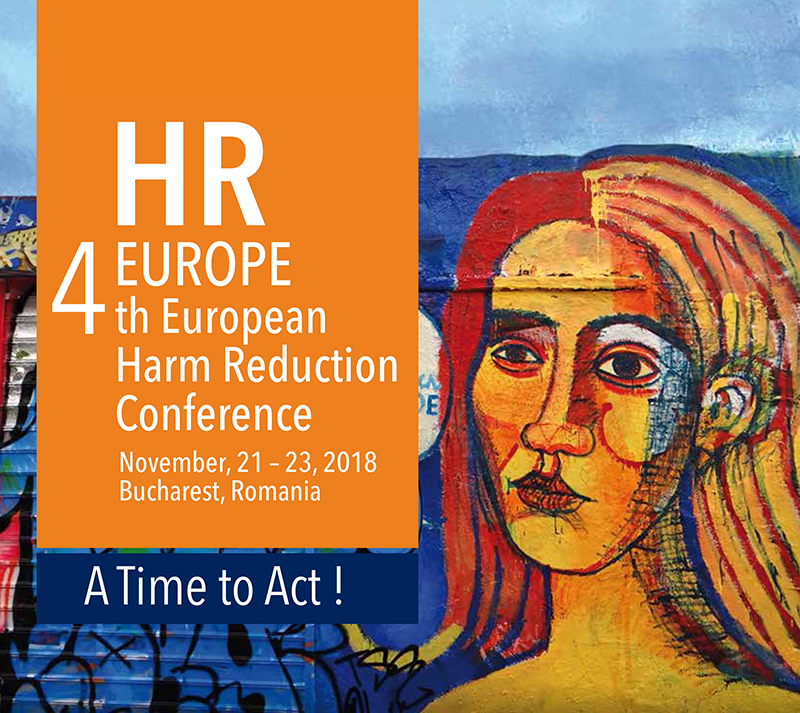
The 4th European Harm Reduction Conference, called for 21 to 23 November 2018 in Bucharest, Romania is organised by the Correlation Network in cooperation with Romanian partners and different European Networks and partners, such as Infodrug Switzerland, the European Network of People Who Use Drugs, the Eurasian Harm Reduction Association and the European Joint Action HA-REACT.

The conference will present the latest harm reduction research results, innovative and next best-thing practices, discuss drug policy including the need to scale up harm reduction services and provide an appropriate platform to create a link between national and European developments in drug policies and harm reduction.

The European Harm Reduction Conference is aimed at professionals that work in the areas of harm reduction, treatment, prevention, medicine, research, law enforcement and politics and, finally but importantly, drug user and community organisations.

With the support from the Open Society Foundations, the Drug Policy Network South East Europe will coordinate participation of South East Europe in the 4th European Harm Reduction Conference. Specific objectives of this project include:


  • Improve and extend partnerships in South East Europe
  • Provide organizational and logistic support to SEE representatives at the Conference
  • Organize a SEE side-event before EuroHRC
  • Support linking of the SEE participants with various networks, EU agencies etc.
  • Envisage and agree on models of long term co-operation in the region

The pre-conference South East Europe meeting will be held on 20 November. Aim of the event is to get together, exchange experiences and promising ideas for the future, meet with international partners and discuss future opportunities for collaboration. So far, 36 representatives of harm reduction organisations and institutions from all countries of the region and from various international organisations applied for the event.

More about the Conference is available at the website following this link>>>

The need for an organized system for drug policy in Montenegro

Within the framework of the project ARYSE (At-Risk Youth Social Empowerment), funded by the European Union through the European Commission, NGO Juventas organised the round table „Young people who use drugs in Montenegro“ on 12 November 2018 in Podgorica. The hosts emphasised that there is no systematic commitment in solving the problem of dependence on psychoactive substances in Montenegro and that clarifying the government responsibility is very important. Improving support programs, developing preventive work, in order to help young people who use drugs, must be in coordination with many institutions.

The speakers at the round table were: Marija Milić, Coordinator of the Programme of direct assistance for people who use drugs, NVO Juventas, Milutin Milošević, Executive Director of the Drug Policy Network South East Europe, Ivana Vujović, Executive Director of NGO Juventas, Nebojša Kavarić, Director of the Health Centre in Podgorica, Dr Ljiljana Golubović, the Public Health Institute representative and psychologist, Dijana Milošević, representative of the Institution for Resocialization and Rehabilitation of Drug Addicts Kakaricka gora.

The representatives of local communities from Nikšić, Podgorica, Budva, Bijelo polje, Tivat and Kolašin also took part in the discussion.

It was pointed out that cooperation with official institutions is at an unsatisfactory level. Also, the discussion conclude that there is no systematic plan for dependence on psychoactive substances problem.

The Executive Director of DPNSEE Milutin Milošević gave introductory presentation about models and standards of prevention of psychoactive substances use in Europe and presented concrete examples of drug policy approaches in Croatia, Spain, The Netherlands, Serbia, Sweden and Turkey.

ARYSE project also includes the partner organizations: ARSIS (Albania), Association Margina (Bosnia Herzegovina), HOPS (Macedonia), Labirint (Kosovo), Prevent (Serbia) and Foundation SHL (Germany).
At-Risk Youth Social Emprovement open table

The situation that calls for – an alarm

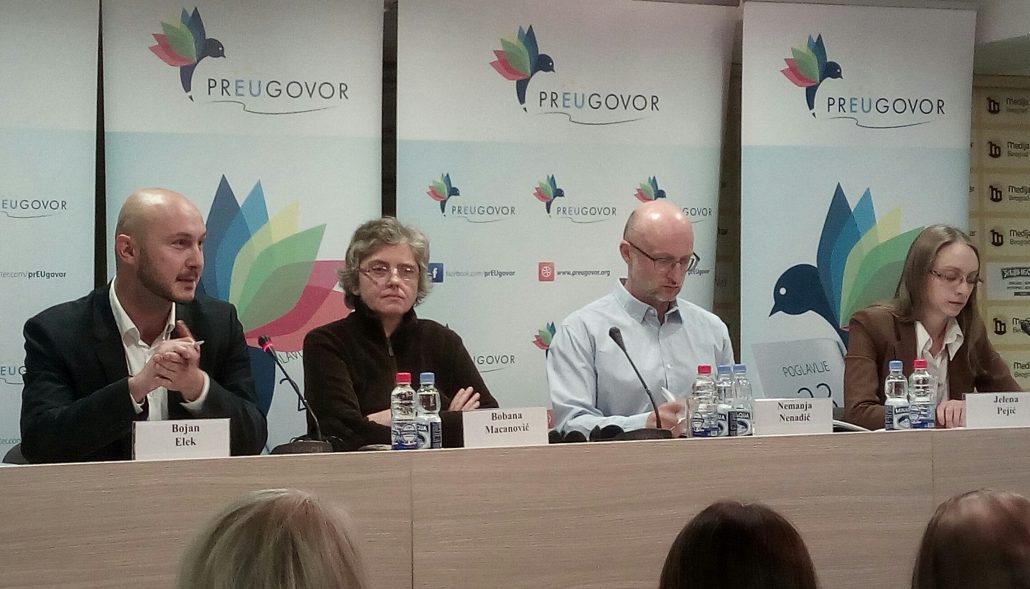
A coalition of seven NGOs entitled prEUgovor, which monitors Serbia’s EU accession process, presented a new report that contains the coalition’s assessment of the political criteria for the EU accession process, as well as the fulfilment of criteria for chapters 23 and 24 which include the judiciary, fundamental rights, justice, freedom and security for the period April – September 2018.

The central finding of the report is that key reforms stagnate or even marks a downturn and that much of stagnation happens under the justification of accession process. During that period, the Serbian authorities adopted a series of laws “that are worse than the current ones”, said the NGO coalition made of ASTRA – Anti-Trafficking Action, the Autonomous Women’s Centre, the Belgrade Centre for Security Policy, the Centre for Applied European Studies, the Centre for Investigative Journalism, Group 484 and Transparency Serbia. The report said that the democratic civil control over defence and security institutions is weak in practice.

Commenting at the presentation, DPNSEE Executive Director remarked that the report has no reference to the segment on drugs which is integral part of the Chapter 24 and presented some warning facts about the issue. DPNSEE and the coalition have working relations which both sides hope to be improved in the future.

The report is available following this link>>>>

(photo: prEUgovor)