The lost decade in the global war on drugs

For the last three months, the IDPC Secretariat (with the invaluable support of the network), has been preparing a landmark report in advance of the 2019 UN Ministerial Segment. “Taking stock: A decade of drug policy” is launched on 22 October 2018.

This shadow report is, and will probably remain, the only comprehensive evaluation of the soon-to-expire 10-year UN Political Declaration and Plan of Action on drugs, which was adopted in 2009. The report unpacks the lack of progress towards the achievement of the so-called “drug-free world” targets – and sheds light on the catastrophic impacts on human rights, public health, security and development.

The report, Taking stock: A decade of drug policy – A civil society shadow report is a response by IDPC and its 174 NGO network to the failure by governments and the United Nations Office of Drug and Crime to comprehensively evaluate the 10-year plan based on a discredited ‘war on drugs’ approach that continues to generate a catastrophic impact on health, human rights, security and development, while not even remotely reducing the global supply of illegal drugs.

Using wide-ranging data from UN, government, academic and civil society sources, the report from the International Drug Policy Consortium (IDPC) shows that this UN goal has been spectacularly missed.

Helen Clark, former Prime Minister of New Zealand and a member of the Global Commission on Drug Policy, states in the report: “What we learn from the shadow report is compelling. Since governments started collecting data on drugs in the 1990s, the cultivation, consumption and illegal trafficking of drugs have reached record levels. Moreover, current drug policies are a serious obstacle to other social and economic objectives… and the “war on drugs” has resulted in millions of people murdered, disappeared, or internally displaced.

  • A 145% increase in drug-related deaths over the last decade, totalling a harrowing 450,000 deaths per year in 2015.
  • At least 3,940 people executed for a drug offence over the last decade, with 33 jurisdictions retaining the death penalty for drug offences in violation of international standards.
  • Around 27,000 extrajudicial killings in drug crackdowns in the Philippines.
  • More than 71,000 overdose deaths in the United States in 2017 alone.
  • A global pain epidemic, resulting from restrictions in access to controlled medicines, which have left 75% of the world’s population without proper access to pain relief.
  • Mass incarceration fuelled by the criminalisation of people who use drugs – with 1 in 5 prisoners incarcerated for drug offences, mostly for possession for personal use.

To read full report follow this link>>>>

Preparations for the 2019 Ministerial Segment of the UN Commission on Narcotic Drugs

UN member states have agreed to hold a Ministerial Segment immediately prior to the 62nd Session of the Commission on Narcotic Drugs (CND) ‘to take stock of the implementation of the commitments made to jointly address and counter the world drug problem, in particular in the light of the 2019 target date’ set out to eradicate or significantly reduce the overall scale of the illegal drug market. Tentative dates are 18 – 22 March 2019 for the CND and 14 – 15 March 2019 for the high-level segment.

Building on the successful experience of the Civil Society Task Force (CSTF) consultation organised in the run-up to the UNGASS of 2016 (which reached over 800 organisations from all over the world), a Global Civil Society Consultation has been launched in preparation for the 2019 Ministerial Segment of the CND. The CSTF’s Consultation asks respondents to consider the progress made towards achieving the goals enshrined in the 2009 Political Declaration, and whether these goals should be extended for the next decade. This is a crucial opportunity for civil society to provide input into the 2019 process.

The survey is available following this link>>>. The deadline for submissions is 31 October 2018.

The International Drug Policy Consortium’s (IDPC) latest publications provide valuable information for civil society organisations.

On the road towards the 2019 Ministerial Segment
IDPC outlines key issues for consideration as member states reflect on what has been achieved since 2009, and the implications for the next phase of the international drug policy regime.

In a new publication Taking stock: A decade of drug policy – A civil society shadow report (to be published on 22 October), IDPC evaluates the impacts of drug policies implemented across the world over the past decade, assessing progress made towards the 2019 goals and concluding on the need to move away from punitive approaches.

Scotland’s first essay competition on addiction open to students from all over the world

We are glad to recommend the first international essay competition about addiction in Scotland and invite students of medicine, nursing, psychology and social work from South East Europe and from all over the world to submit academic essays on addiction.

The competition was launched by Castle Craig Hospital, located near Edinburgh, one of the most respected addiction treatment (rehab) clinics in Europe. Patients come from all over the world for residential addiction treatment at Castle Craig, which is celebrating its 30th anniversary this year.

We’re marking our 30th anniversary by creating this competition,” said Dominic McCann, Castle Craig’s Director of Development.

essey competition


We want to reach-out to the next generation of addiction treatment professionals,” he continued, “and to raise awareness of this critical subject with students globally. Addiction is one of the biggest health and social challenges of our time and this is our way of preparing for the next 30 years.

Students can choose from three essay titles and the deadline is 30th December 2018. Postgraduate students are also welcome to apply.

The top prize is £1,000 (USD 1,300). Five prizes of £250 (USD 325) will also be awarded.

For full details about the essay competition click here.

UN Global standards for business to tackle LGBTI discrimination launched in Belgrade

Violence and discrimination against lesbian, gay, bi, trans and intersex (LGBTI) people cannot be ended by governments alone. Businesses can foster diversity and promote a culture of respect and equality both in the workplace and in the communities where they and their business partners operate.

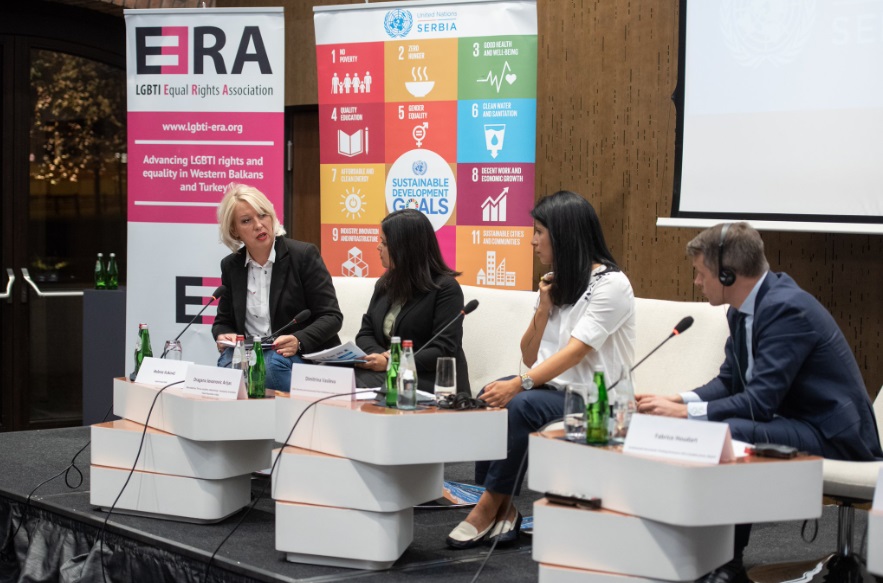
The global LGBTI equality standards for the business community have been launched today by the UN Country Team in Serbia and the LGBTI Equal Rights Association for Western Balkans and Turkey (ERA) in partnership with the UN Global Compact in Serbia and the Commissioner for Protection of Equality at the special event with government officials, business representatives, and civil sector.

Launching of the UN Standards in the Republic of Serbia is the first in South-East Europe, after the Standards had been launched in other parts of the World. Serbian is the seventh language in which the Standards are available globally.

© UNCT Serbia/Marko Rupena

In Serbia, Hemofarm AD, Ernst & Young DOO and Erste Bank AD (all members of the UN Global Compact network in Serbia) join the growing list of early adopters.

The Standards of Conduct build on the UN Guiding Principles on Business and Human Rights, adopted by the UN Human Rights Council in 2011. They are the product of a year-long process of consultations facilitated by the UN Human Rights Office and the Institute for Human Rights and Business, including regional meetings with leading business representatives and activists in Asia, Africa, Europe and the Americas.

Drawing on good practices from around the world, these standards set out actions companies can take to protect the rights of LGBTI individuals. These include eliminating workplace discrimination, making sure business operations do not contribute to discrimination against customers, suppliers or members of the public, and working with business partners to address discriminatory practices up and down the supply chain. They also encourage companies to stand up for the rights of LGBTI people in the countries where they operate – including through advocacy and support for local organizations.

The five standards:

  • RESPECT the human rights of their LGBTI workers, customers and members of the public
  • ELIMINATE workplace discrimination against LGBTI employees
  • SUPPORT LGBTI employees at work
  • PREVENT discrimination and related abuses against LGBTI customers, suppliers and distributors – and insist that suppliers do the same
  • STAND UP for the human rights of LGBTI people in the communities where companies do business

UN encourages businesses to no longer be silent in the face of discriminatory treatment of LGBTI people. The power of corporations to shape what the public thinks and wants should be harnessed and used responsibly.

The Standards are available following this link>>>

Implementing Different Harm Reduction Policies in Macedonia

Janaki Mitrovski, lawyer and co-founder of the Cannabis and Green Policies Association “BILKA” from Skopje, author of articles in the legal magazines “Pravnik” and “Pravomatika”, wrote about different harm reduction policies in Republic of Macedonia for the Drugs – Politics and Practices magazine published by HOPS – Healthy options project Skopje.

Mitrovski spoke about differences in European countries, and he underline the most important thing – urgent implementing program for safe drug use facilities in Republic of Macedonia.

In order to apply some of the existing models practiced or to establish a hybrid and an entirely different model of addressing this issue in the Republic of Macedonia, there are legal obstacles to be considered. Making possible drug use facilities, safe or not, is prohibited and is penalized with Article 216 from the Criminal Code of the Republic of Macedonia, according to which a person who shall provide spaces for the enjoyment of narcotic drugs and psychotropic substances shall be punished with imprisonment from 1 to 5 years. A qualified (more severe) form of this act is considered extant if the same is done with respect to a minor person or with respect to a larger group of people or if the deed has caused serious consequences, in which case the doer will be punished with 1 to 10 years of imprisonment. If, however, the act is perpetrated by a legal person, the same will be punished with a fine, and the narcotic drugs, as well as all moveable properties or any real estate used for their transport or distribution, or if they are especially intended for or meant for use, will be confiscated.

He drew attention for legal circumstances in criminal legal system and the result of international legal obligations Republic of Macedonia agreed to with the 1961 Single Convention on Narcotic Drugs, as well as the 1988 Convention against the Illicit Traffic in Narcotic Drugs and Psychotropic Substances, decreed by the United Nations, which go as far as providing legal framework for the signatory countries to even confiscate such spaces.

Unfortunately, the Republic of Macedonia does not allocate even approximately enough funding and has no political will to introduce such programs towards helping drug addicts with harm reduction, as well as protect the very users, but also society, from spread of unwanted diseases”, said Mitrovski.

He concluded that the Republic of Macedonia has to implement one program providing safe drug use spaces in the future, which will provide health benefit for users and also for the citizens.

The entire article “Implementing Different Harm Reduction Policies in the Republic of Macedonia – Safe Drug Use Facilities” is available following this link>>>

Life on the Margins

The biggest LGBTI survey ever conducted in the Western Balkans region is finally out and they reveal a collective experience of discrimination, harassment, exclusion and violence. The report analyses the responses of more than 2.300 LGBTI persons across seven countries in the Western Balkans region: Albania, Bosnia and Herzegovina, Kosovo, Macedonia and Montenegro as well as two European Union member states Croatia and Slovenia. This is the largest data set ever collected on LGBTI rights in our region.

The report “Life on the Margins: Survey Results of the Experience of LGBTI people in South Eastern Europe” was published by the World Bank in partnership with IPSOS Strategic Marketing, ERA – LGBTI Equal Rights Association for the Western Balkans and Turkey, and the Williams Institute at UCLA.

The collective experiences of LGBTI people in the countries surveyed paint a distressing picture of the harmful effects of discrimination, harassment, exclusion and violence. One-third (32%) of all respondents (and 54% of transgender respondents) report having been victims of physical violence in the past five years. Of those cases of violence, only 17% have been reported to the police and action was taken against the perpetrator in only 16% of the most serious cases of violence reported to the police. Discrimination, is even more widespread, considering that 92% of respondents report that discrimination based on sexual orientation is common, 90% because a person is transgender and 67% because a person is intersex.

Among the most important recommendations of this reports are to:

  • Increase and expand the evidence base: researchers, advocates and policymakers should delve further into the available data to inform interventions in each country.
  • The LGBTI data gap remains large, and further research and data collection is necessary to better understand the lived experience of LGBTI people and the challenges they face.
  • Work on awareness raising needs to continue: Sensitization and capacity building programs for public servants should be expanded and strengthened. More needs to be done to increase the rights awareness of LGBTI people. The capacities of LGBTI organizations across the region should be strengthened.
  • A lot more work needs to be done to close the implementation gap: Governments should use the survey findings to identify implementation gaps related to the EU accession process, especially for Chapter 23: judiciary and fundamental rights and chapter 24: justice, freedom and security.
  • Governments should improve the criminal justice response to violence against LGBTI people;
  • Safe spaces should be created for LGBTI persons where they can receive services and support.

To read full report follow this link>>>>

The impact of legalization and regulation of marijuana for adults in USA

The legalization and regulation of marijuana for adults is associated with a drastic reduction in overall arrests, increased tax revenue, and is not adversely impacting public health or safety, according to a comprehensive report issued by the Drug Policy Alliance.

Among the report’s highlights:

  • Marijuana arrests are down. Arrests for marijuana in all legal marijuana states and Washington, D.C. have plummeted, saving states hundreds of millions of dollars and sparing thousands of people from being branded with lifelong criminal records.
  • Youth marijuana use is stable. Youth marijuana use rates have remained stable in states that have legalized marijuana for adults age 21 and older.
  • Marijuana legalization is linked to lower rates of opioid-related harm. Increased access to legal marijuana has been associated with reductions in some of the most troubling harms associated with opioids, including opioid overdose deaths and untreated opioid use disorders.
  • Calls to poison control centres and visits to emergency departments for marijuana exposure remain relatively uncommon.
  • Legalization has not made the roads less safe. DUI arrests are down in Colorado and Washington. The total number of arrests for driving under the influence, of alcohol and other drugs, has declined in Colorado and Washington, the first two states to regulate marijuana for adult use. There is no correlation between marijuana legalization and crash rates. The crash rates in both states are statistically similar to comparable states without legal marijuana laws.
  • Marijuana tax revenues are exceeding initial estimates.
  • The marijuana industry is creating jobs. Preliminary estimates suggest that the legal marijuana industry employs between 165,000 to 230,000 full and part-time workers across the country.

The full report is available online following this link>>>.

The report proposes several recommendations for the future, including the one that the tax revenues collected from marijuana sales must be reinvested in the communities most harmed by marijuana criminalization. These monies are essential to help rebuild communities most devastated by mass incarceration and the decades-long drug war by investing in programs that offer people a new start.

Montenegro closed the circle

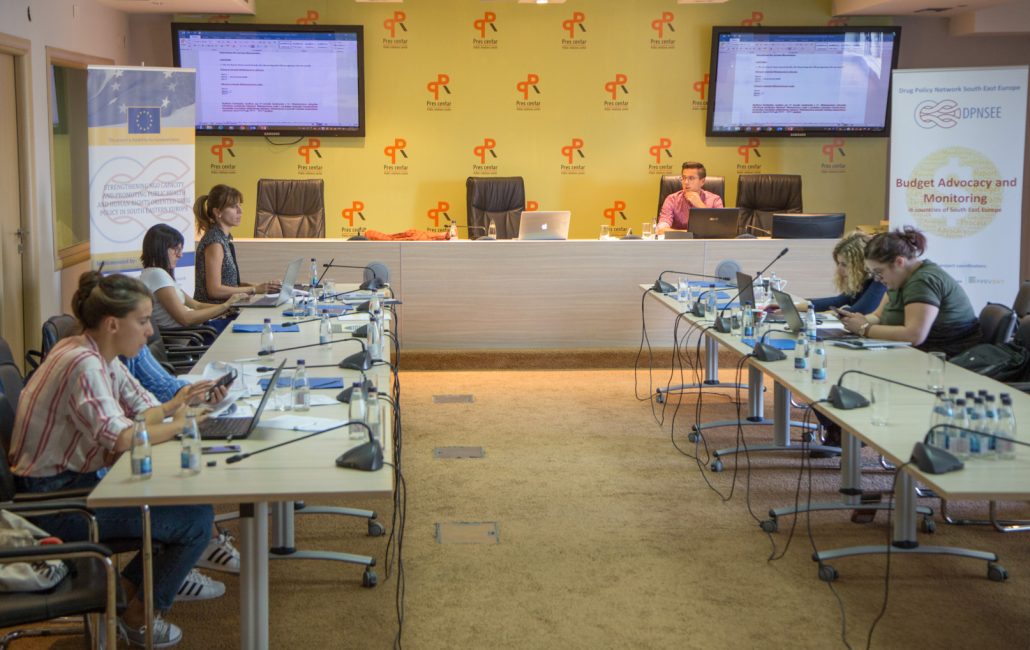
The training for civil society organisations in Montenegro was the third in raw, to complete the serial of trainings organised in the project countries. It was held in Podgorica from 3 to 5 October 2018.

More info coming soon!

Media coverage from the PR Centre is available following this link>>>

Global Fund Results Report

The Global Fund to Fight AIDS, Tuberculosis and Malaria released a report today demonstrating that 27 million lives have been saved by the Global Fund partnership through the efforts of the Global Fund and its partners. This is proof of the effectiveness of the global commitment to tackle the world’s deadliest infectious diseases.

The Results Report 2018 includes key annual results achieved in countries where the Global Fund invests:

  • 17.5 million people received antiretroviral therapy for HIV.
  • 5 million people tested and treated for TB.
  • 197 million mosquito nets distributed to prevent malaria.

The progress comes against the backdrop of new threats to global health. Having reduced sharply since the peak of the epidemic, global HIV infection rates are now declining more slowly, and remain extremely high among key populations in some countries. Tuberculosis is now the leading cause of death from infectious diseases, with 1.7 million deaths per year, and the world is missing 4.1 million cases of TB every year – cases that go undiagnosed, untreated and unreported. In addition, progress against malaria has stalled. In 2016, there were 5 million more cases of malaria than 2015. With growing resistance in drugs to treat malaria and in insecticides for mosquito nets, efforts to control malaria are at stake.

Independent opinions state that if the world only maintains current levels of investments and programming against the three epidemics, internationally agreed targets for 2025 and 2030 will be unattainable.

The world risks losing control of all three epidemics. A resurgence will cost countless lives, undermine economic and human development, and threaten the health security for all people on the planet.

As the leading multilateral organization that invests in ending the 3 epidemics, funding for the Global Fund to Fight AIDS, Tuberculosis and Malaria in its Sixth Replenishment needs to increase by more than 20% to ensure a fund of between $16.8 and $18 billion for 2020 to 2022.

The Results Report 2018 is available from the Global Fund webpage following this link>>>

European Harm Reduction Conference

Following recent conferences held in Marseille 2011, Basel and Amsterdam in 2014, the 4th European Harm Reduction Conference is called for 21 to 23 November 2018. The Conference will be held in Bucharest, Romania, in the National Library. It will be organised by the Correlation Network in cooperation with Romanian partners and different European Networks and partners, such as Infodrug Switzerland, the European Network of People Who Use Drugs, the Eurasian Harm Reduction Association and the European Joint Action HA-REACT.

The conference will present the latest harm reduction research results, innovative and next best-thing practices and discuss drug policy including the need to scale up harm reduction services. Last but not least, the conference provides an appropriate platform to create a link between national and European developments in drug policies and harm reduction.

The European Harm Reduction Conference is aimed at professionals that work in the areas of harm reduction, treatment, prevention, medicine, research, law enforcement, and politics and finally but importantly drug user and community organisations.

More about the Conference is available following this link>>>

DPNSEE is negotiating with the Open Society Foundations a project to ensure stronger participation of SEE representatives at the Conference.