The right to privacy of using cannabis

At the beginning of the year, The European Monitoring Centre for Drugs and Drug Addiction (EMCDDA) published the news about the right to privacy of using cannabis. The news indicate that in 2018 the highest courts in countries across three continents have asserted that state intervention in the private life of their citizens who wish to (grow and) use cannabis is not always justified. EMCDDA reports about three countries: Georgia, South Africa and Mexico.

Georgia

In Georgia, on 30 July, the Constitutional Court decided that punishment of use of cannabis in private without a doctor’s prescription was in breach of Article 12 of the Constitution, which states ‘Everyone has the right to the free development of their personality’. The court found that the aims of protecting public health or public security could not justify state punishment of cannabis use in private. Penalising cultivation and possession for personal use were not contested in this case and therefore not considered.

South Africa

In South Africa, on 18 September, 10 judges of the Constitutional Court ruled that it was not reasonable to penalise an adult who cultivates, or uses, or possesses cannabis for personal consumption in private. The laws were incompatible with Article 14 of the Constitution, which states that ‘Everyone has the right to privacy which includes the right not to have […] their possessions seized’.

Mexico

In Mexico, on 31 October, the Supreme Court gave its fifth judgement since 2015 stating that penalising private cultivation, possession and use of cannabis (and tetrahydrocannabinol) was unconstitutional, against the principle of free development of the personality. Other courts are obliged to follow Supreme Court judgments once five similar rulings have been delivered.

All three courts emphasised that any private use of cannabis should not be in the presence of children.

The courts also commented on trends in international developments in cannabis policy and use. The Georgian court noted the increasing application of human rights law in modern legal standards, and the South African court ruled that such state interference is not justified ‘in open and democratic societies’.

In the 1988 UN Convention against Illicit Traffic in Narcotic Drugs and Psychotropic Substances, Article 3(2) states that a country should criminalise possession and cultivation for personal use ‘subject to its constitutional principles’. The court in Mexico stated that it upheld the constitutional principle of free development of personality and considered it was still in line with the Convention.

The European Convention on Human Rights, Article 8(1), states that “Everyone has the right to respect for his private and family life, his home and his correspondence’, with limits, and the ‘private life’ has been interpreted to include the right to develop one’s own personality.”

Bosnian version of the Glossary

With the support of our member organisation Margina, DPNSEE produced the Glossary of terms used in drug policy in Bosnian.

The Glossary is prepared with the aim to contribute to better understanding the drug problem in more emphatic manner. Glossary is an alphabetical list of terms with definitions.

This is the fourth language in which the Glossary is published, after the original version in English and those in Spanish and Serbian.

To download the Glossary in Bosnian, follow this link>>>>

Council of Europe’s recommendation on protection and promotion of the civil society space

At their 1330th meeting, the Council of Europe Committee of Ministers adopted a Recommendation CM/Rec(2018)11 on the need to strengthen the protection and promotion of the civil society space in Europe and encouraged member States to continue their efforts in this respect.

The Recommendation calls on CoE member states to comply with the principles that it sets out, to ensure its wide dissemination among competent authorities and stakeholders and to examine its implementation five years after its adoption, within the Council of Ministers.

In particular, it sets out recommendations in four sections:

  1. National legal framework and political and public environment to protect and promote civil society space
  2. National measures to protect civil society space
  3. National measures to promote civil society space
  4. Support from Council of Europe bodies and institutions

The Council of Europe Recommends that the governments of member States:

  1. Ensure that the principles set out in the appendix to this Recommendation are complied with in relevant national legislation and practice, and evaluate the effectiveness of the measures taken;
  2. Ensure, by appropriate means and action – including, where appropriate, translation – a wide dissemination of this Recommendation among competent authorities and stakeholders;
  3. Examine, within the Committee of Ministers, the implementation of this Recommendation five years after its adoption.

To download the Recommendation, follow this link>>>>

Potency and price of cannabis in Europe doubled in last 11 years

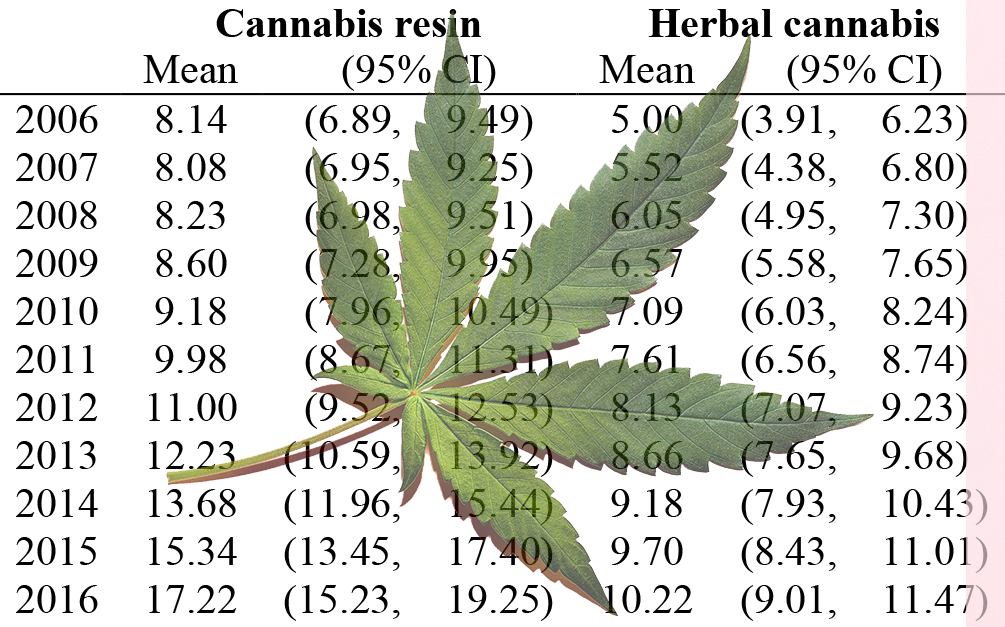
The first study to investigate changes in cannabis across Europe showed that cannabis resin and herbal cannabis have significantly increased in potency and in price. The study was published on 30 December 2018 in the journal Addiction by researchers from the University of Bath and King’s College London. It draws on data collected from across 28 EU Member states, as well as Norway and Turkey by the European Monitoring Centre for Drugs and Drug Addiction.

The findings show that for herbal cannabis, concentrations of Δ9-tetrahydrocannabinol (‘THC’ – the main psychoactive constituent of cannabis) increased by a similar amount each year, from 5% in 2006 to 10% in 2016.

For cannabis resin, THC concentrations were relatively stable from 2006 to 2011 (from 8% to 10%) but then increased rapidly from 2011 to 2016 (from 10% to 17%). The price of cannabis resin also increased, but to a lesser extent than for herbal cannabis.

Cannabis resin typically contains cannabidiol (CBD) in addition to THC. CBD has recently attracted considerable interest due to its potential to treat several medical conditions including childhood epilepsy syndromes, psychosis and anxiety. But, when present in cannabis, CBD may offset some of the harmful effects of THC such as paranoia and memory impairment.

Cannabis-containing higher levels of THC and/or lower levels of CBD has been linked to greater long-term harms such as the development of cannabis dependence, and an increased risk of psychotic illness. New resin production techniques in Morocco and Europe have increased levels of THC, but not CBD.

Leader of the research team Dr Tom Freeman indicates that “CBD has the potential to make cannabis safer, without limiting the positive effects users seek. What we are seeing in Europe is an increase in THC and either stable or decreasing levels of CBD, potentially making cannabis more harmful. These changes in the illicit market are largely hidden from scientific investigation and are difficult to target by policy-makers. An alternative option could be to attempt to control THC and CBD content through regulation.”

The research is available following this link>>>>

Glossary of terms translated into Serbian

Drug Policy Network South East Europe prepared the Serbian version of their Glossary of terms used in drug policy with the support of the Office for combating drugs of the Republic of Serbia.

The Glossary of terms was first published in English version and then in Spanish at the beginning of 2018.

This publication aims to contribute to better understanding the drug problem in more emphatic manner. Glossary is an alphabetical list of terms used in a domain of drug policy, with the definitions for those terms. It contains explanations of concepts and terms related to the field of drugs and relevant related matters.

The glossary should serve firstly to member organisations in a way that will help in process of harmonization of opinions and attitudes. This material will also serve a wider range of groups of people including policy makers, stakeholders, activists, the media, police, judiciary and others to understand drug problem and drug policy in a better way.

DPNSEE also plans to prepare versions in various local SEE languages. The Glossary will be updated from time to time. If you find difficulties in understanding some other terms used in drug policy, please don’t hesitate to contact DPNSEE and we shall be more than happy to find a definition and add it to the Glossary.

To download PDF version of the Glossary of terms on Serbian follow this link >>>

Reducing the problems of the dependency

The annual Press Conference “Activities on the field of reducing the problems of the dependency” was held on 20 December 2018 in the EU info Centre in Belgrade. Speakers at the Conference were Nebojša Đurasović, President of the Association Prevent, Milan Pekić, Director of the Office for Combating Drugs of the Government of the Republic of Serbia and Milutin Milošević, Executive Director of the Drug Policy Network South East Europe. Representatives of the institutions and organisations with whom Prevent and DPNSEE cooperate participated in the Conference.

Nebojša Đurasović presented activities which Association Prevent conducted in scope of the project “At Risk Youth Social Empowerment” and other projects realised in 2018. For a good work, Prevent deserved the award “Responsible attitude and work with vulnerable young people” offered by the city of Novi Sad. Đurasović also spoke about extending the programme of needle exchange to Belgrade and draw attention to the issues of drugs in Serbia including raising number of overdose deaths in young population.

Milan Pekić presented the co-operation between the Office for Combating Drugs and civil society organisations in Serbia as an example of good practice, especially in the process of designing the new Action Plan for implementation of the Strategy for drug prevention.

Milutin Milošević presented a situation in the region of South East Europe, activities in 2018 and plans of the Drug Policy Network South East Europe for the future. His comments on new psychoactive substances and change of culture of drug use raised a special attention.

Representatives of institutions and organisations that co-operate with Prevent and Drug Policy Network SEE were attended the Conference and took discussion on several topics, especially about discrimination.

The open discussion that followed was mainly focused on the issue of discrimination of drug users.

Two news publications were presented at the Conference: Prevent published the one on “Empowering against the discrimination of youth at risk“, while DPNSEE prepared the Serbian version of their Glossary of terms used in drug policy with the support of the Office for combating drugs.

Videos from the Conference are available in following this link >>>

Two member organisations joined DPNSEE

At the DPNSEE General Assembly, held on 10th December 2018, in The Palace of Serbia, in Belgrade, Serbia, two new member organizations were accepted into the DPNSEE Network: Timok Youth Center (TOC) from Serbia and Center of Human Policy, from Bulgaria.

Both organizations were accepted by a unanimous decision of all present member organisations representatives.

Timok Youth Center (TOC) is a non-profit organization registered in Zaječar 2004. and operating on the territory of Zaječar, Timok region and the South -East Serbia. TOC agrees with the mission and vision of the DPNSEE and wants to actively promote the objective and open debate on the effectiveness, direction and maintenance of national, regional and international political drugs, and to promote constructive policy recommendations that lead to the adoption of human and effective drug policies in SEE.

Timočki Omladinski Centar

TOC is ready to actively engage with the creators of political and decision-making bodies in Serbia and in the region of Southeast Europe.

Timok Youth Center is an organization that is recognized at the local as well as at the national level when it comes to the fight against addiction, and above all the fight against drug abuse. Preventive programs that are implemented, and which concern addiction diseases, are mostly oriented towards young people, especially with youth at risk. TOC think that the young people from 15 to 30, as a sensitive category of the population, are especially affected by the problem of drug abuse. The research that we have conducted on the territory of Zaječar district, in the last few years has shown that young people in most of these years most often try one of the drugs. Also, in the period from 2007 to 2014, TOC is an organization that worked within the Global Fund for Reducing HIV/AIDS in South East Serbia and developed a volunteer program dealing with this issue. They believe that intersectoral and partner cooperation in prevention programs and harm reduction programs are very important and we have good cooperation with local municipalities and ministries. TOC’s work has been recognized by the The Office against drugs of Republic Serbia, with which we have signed a Memorandum of Cooperation.

Center for Humane Policy was created in 2016 by leading experts in drug addictions and drug policy field in Bulgaria. The main goals of the organization are to promote, facilitate and support development of effective, evidence based methods and policies in the field of public health, social care and education.

The organization is a member of the Eurasian Harm Reduction Association (EHRA) and the chair of the Center is also co-chair of the Steering committee of the network. Center for Human Policy is very good in understanding the importance of working together with organizations from different countries to improve the drug policy situation in the region.

During the last year the organization focused their efforts on the implementation of “Preventure” in the country. It is a school-based intervention aimed at reducing adolescent drug and alcohol use in high-risk teenagers.

Nowadays Center for Humane policy relies on two experts, trained in Canada by the inventor of the Preventure methodology – Patricia J Conrod from the University of Montreal. Also the organization has personal support of professor Conrod to implement the intervention system in the country.

Center for Humane policy also builds networks with the authorities to ensure the sustainability for fereb=nt implementation of good practices, and they have the support of the Secretary of National Council on Narcotic Substances and the Vice-Minister of Ministry of Health.

Together with these activities, the organization prepares statements, reports and analyses regarding the efficiency of Harm reduction, Opioid Substitution therapy, HIV and drug treatment policies.

New DPNSEE Board elected at the General Assembly

The new DPNSEE Board was elected at the General Assembly, held on 10th December 2018, in The Palace of Serbia, in Belgrade, Serbia.

The Chairman reminded the representatives of the member organisations that there is no clear procedure for this election in the Statute and proposed the following procedure:

  • Select three persons for the commission (persons who are neither nominated nor a member of organisations whose members are nominated)
  • Nominate candidates for the Board
  • Vote anonymously for seven Board members
  • Commission to count votes and declare the results

The proposed procedure was adopted by a unanimous decision.

Commission members that fulfill the criteria were selected:

  1. Olga Pateraki from Diogenis, Greece,
  2. Nataša Boškova from Coalition ‘Sexual and Health Rights of Marginalized Communities’, Macedonia and
  3. Marjana Krsmanović from Juventas Montenegro.

There were 9 candidates proposed for for the Board. Elected members of the DPNSEE Board are:

  1. Anna Lyubenova from Initiative for Health Foundation
  2. Denis Dedajić from Margina
  3. Marios Atzemis from Positive Voice
  4. Nebojša Đurasović from Prevent
  5. Safet Blakaj from Labyrinth
  6. Sanja Šišović from Cazas
  7. Vlatko Dekov from HOPS

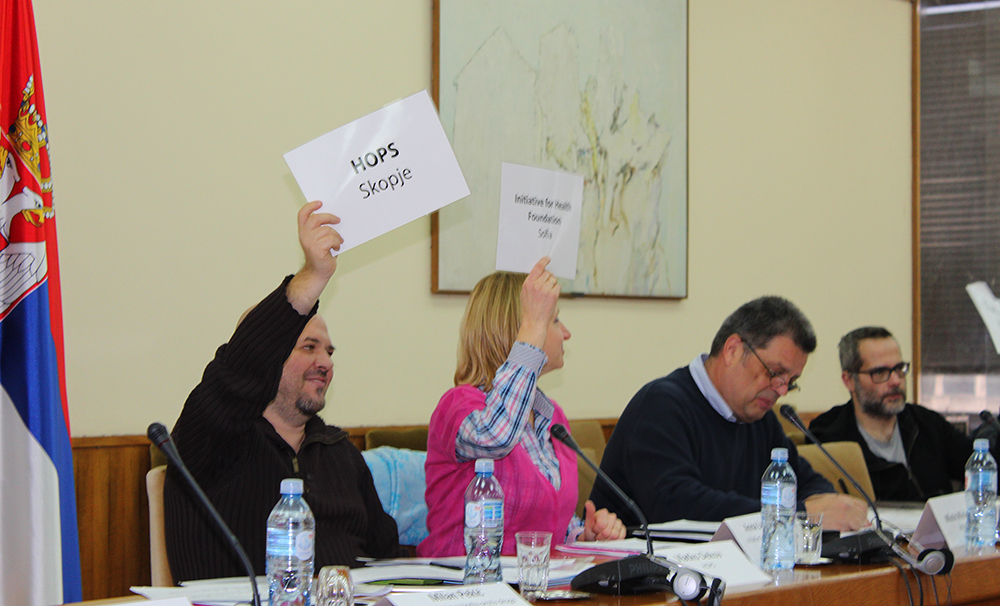
The proposal to choose Vlatko Dekov as the President and Nebojša Đurasović as the Vice-President of the Board was adopted by a unanimous decision of all 16 member organisations representatives.

During the discussion about the elections, the proposals were made to change the Statute so that all functions other than president and vice-president become just „member“ and to extend the duration of the mandate of the Board members from two years to three. The Assembly at this meeting had 2/3 majority needed for the change of Statute. The proposed changes of the Statute were adopted by a unanimous decision.

Nebojša Đurasović proposed the new co-opting procedure – if somebody resigns from the Board during their mandate to be replaced with the first person below the line from the list of nominated but not elected persons if that person agrees. This proposal brought about a short discussion of possible issues in proposed case. On this proposed change of the Statute 14 member organisations representatives voted for and 2 against which was not sufficient majority for the Statute change, so it was not adopted.

Drug Policy Network South East Europe General Assembly 2018

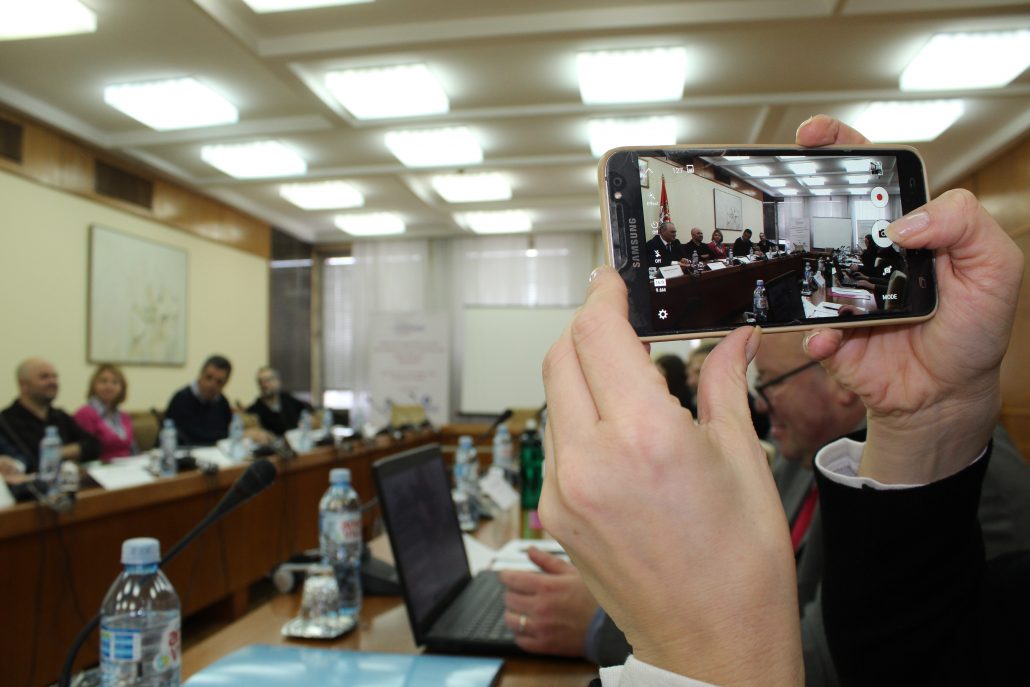
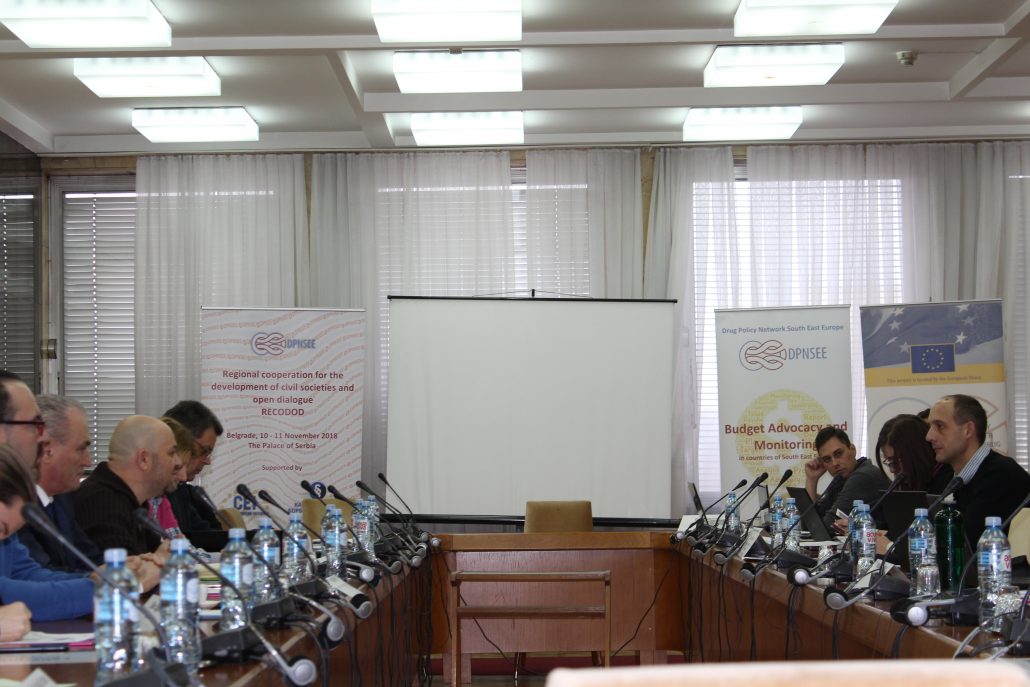
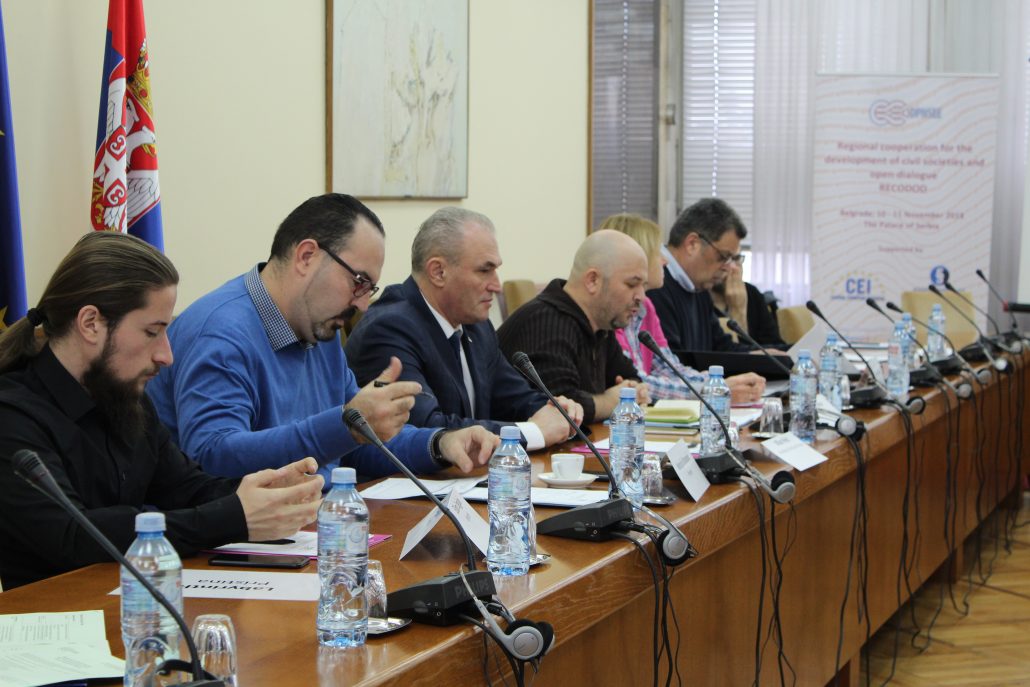
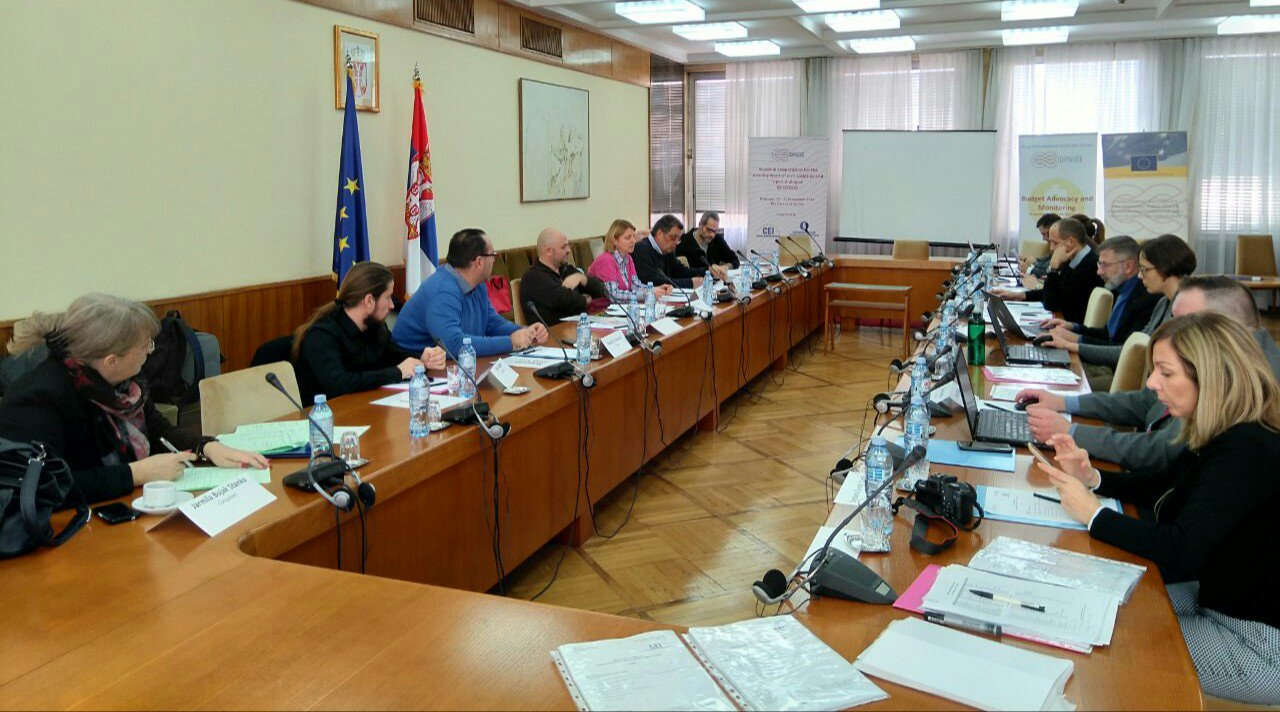
With the support from the Central European Initiative (CEI) and funded through the European Union project, The Drug Policy Network South East Europe organised regular annual General Assembly on 10 December 2018 in The Palace of Serbia, in Belgrade, Serbia.

The participants at the Assembly were welcomed by Milan Pekić, Director of the Office for Combating Drugs of the Government of the Republic of Serbia. In their short opening speeches, Mr Pekić and the President of the Board of the Network Vlatko Dekov emphasized the importance of partnership in achieving the aim of effective drug policies.

The participants held voting rights from 16 out of 22 ordinary member organisations. That provided the Assembly with the right to make qualified decisions, even those related to the amendments to the Statute.

The Assembly was chaired by Anna Lyubenova, representative of the member organisation Initiative for Health Foundation from Bulgaria.

During the agenda point on membership issues, candidatures for membership from two organisations were discussed. The Assembly unanimously recognised as ordinary members Timok Youth Center from Zaječar, Serbia and Center for Human Policy from Sofia, Bulgaria. The Network now has 24 ordinary and 2 associate member organisations.

The General Assembly discussed the Operational and financial report for 2018 and elements for the Action plan and the Financial plan for 2019. The General Assembly welcomed the reports. They will be completed with the activities in December and then be adopted. The Assembly analysed the donor and funding trends and issues and concluded that, based on donor research, negotiation and exchange, no funding from EU for the Network can be expected for 2019 and some amounts can be obtained for year 2020, more project based. Funding plans and activities and possible issues that might be funded in 2019 include budget advocacy, the Network being the leader on the issue of quality of services in the region, redefining harm reduction and human rights element of the approach in work. The need for greater participation in relevant international events and DPNSEE taking role in organizing regional events were emphasized.

Nine candidates applied for elections to the DPNSEE Board. The new Board includes Anna Lyubenova from Initiative for Health Foundation, Denis Dedajić from Margina, Marios Atzemis from Positive Voice, Nebojša Đurasović from Prevent, Safet Blakaj from Labyrinth, Sanja Šišović from Cazas and Vlatko Dekov from HOPS.

The Assembly decided to keep at the current positions Vlatko Dekov as the President, and Nebojša Đurasović as Vice-President.

More information about the elections are available following this link >>>

An external consultant Jarmila Bujak Stanko facilitated the strategic workshop through which participants analysed achievement of aims and objectives of the strategic plan adopted in 2016 and indicated in which way and by which activities the priorities will be followed in the next two years.

The General Assembly ended in a positive and friendly atmosphere with an improved sense of belonging to the Network.

EU drugs agency publishes its first report on the medical use of cannabis

What is the evidence base for the medical use of cannabis and cannabinoids? What is the difference between cannabis preparations and medicinal products and why is this important? How is this issue regulated in the EU? These and other questions are explored in a new report published today by the EU drugs agency (EMCDDA): Medical use of cannabis and cannabinoids: questions and answers for policymaking. The report responds to growing interest in this topic as more European countries develop policies and practice in this area.

ʻMany EU countries now allow, or are considering allowing, the medical use of cannabis or cannabinoids in some formʼ, states the report. But approaches vary widely between countries, both in terms of the products permitted and the regulatory frameworks governing their provision. Understanding this variety of national approaches is important for an informed policy debate in this area in the EU.

The report aims to explore current practice in the EU regarding the provision of these substances for medical purposes and clarify some of the complex issues in this area in order to support science, policy and practice. The report notes that the terms ʻmedical use of cannabis and cannabinoidsʼ can refer to a wide variety of products and preparations that may contain different active ingredients and use different routes of administration.

The publication provides a state-of-the-art overview of evidence for the medical use of cannabis and cannabinoids. It concludes that more research and clinical studies are needed to fill ʻimportant gaps in the evidenceʼ.

The report highlights the challenges of decision-making in this area and summarises the multiple issues that governments may consider when deciding whether to make cannabis or cannabinoids available for medical use. These include: the types of product that patients will be allowed to use; the medical conditions for which such products can be used; and the type of medical and regulatory supervision under which patients are allowed to use them.

EMCDDA Director Alexis Goosdeel says: ‘In most countries, the provision of cannabis and cannabinoid products and preparations for medical purposes has evolved over time, often in response to patient demand or product development. This report seeks to provide an objective look at current evidence, practice and experience in this very fast-moving field and describe the complex patchwork of approaches adopted in the EU and beyond. Lastly, it points to the importance of developing a common language on this issue to help build a base for evaluation and assessmentʼ.

To read the report, follow this link>>>>