Building a new HIV Strategy in Serbia

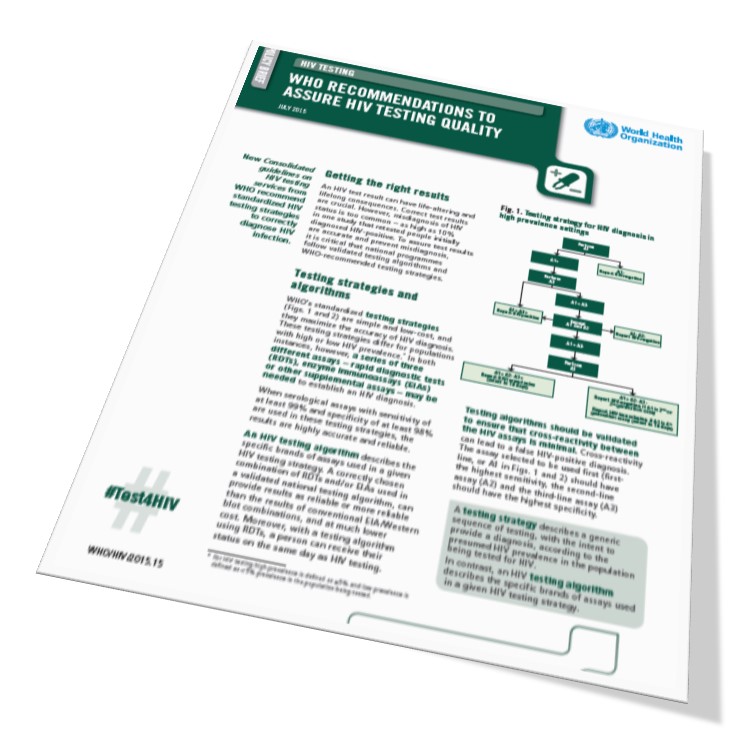
Recent National HIV in Serbia expired in 2015 and since then there were no initiatives to design a new one. Finally, this autumn, with revival of the activities around potential Global Fund project support, the Ministry of Health started a process of building a new HIV Strategy.

The process is quite fast – it started in early November with the deadline for the draft set at the end of 2017. A working group of five people was appointed, including one representative of the civil society. Each of the working group members was leading the process of producing the text in one of the priority areas: 1) Prevention, 2) Medical treatment and support to people living with HIV, 3) Stigma and discrimination, 4) Quality standards and 5) Strategic information.

In each of the subgroups, a dialogue between various stakeholders, governmental, civil society, academia and people living with HIV, was productive in analysing the situation and proposing new aims, measures and activities. DPNSEE and member organisations representatives participated actively in this endeavour. And success was achieved: the final meeting of the expert group, held on 25 December 2017, resulted in producing the final draft of the Strategy and the Action plan 2018 – 2021 for implementing it!

Even though the process short and the task challenging, we hope that the result will lay ground for a comprehensive and effective respond to HIV in Serbia.
DPNSEE General Assembly

The Drug Policy Network South East Europe held its 2nd regular annual General Assembly in Belgrade, Serbia from 3rd to 5th December 2017. It was the opportunity to meet, analyse the work looking back on the year that almost ended and decide about the future work.

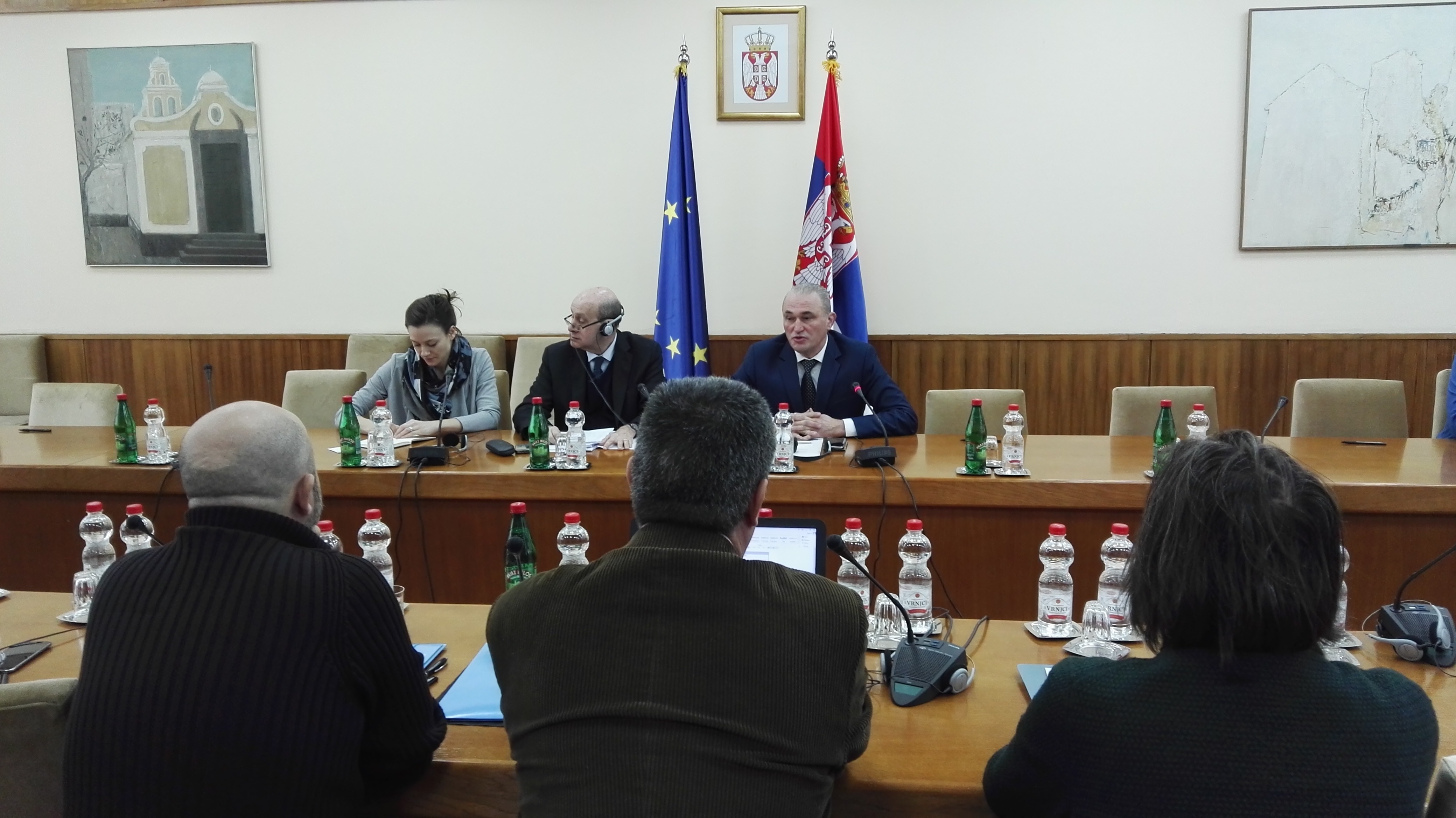
Thanks to the generous support from the Office for combating drugs of the Republic of Serbia, the Assembly was held in the Palace Serbia, the governmental representative building. Representatives of 15 out of 22 member organisations participated, including 2 newly recognised members.

Our distinguished guests at the Assembly were His Excellency Ambassador of Portugal Augusto Saraiva Peixoto and Director of the Office for Combating Drugs of the Government of Serbia Milan Pekić.

The Assembly adopted the report about the work in 2017 and financial report presenting the Network’s main activities. The plans for 2018 were also adopted, based on the strategic priorities proposed by the Board and ideas for possible projects and partnership building.

Changes in the Board were introduced to ensure that this governing body is active in implementing the action plan. Vlatko Dekov (HOPS, FYRO Macedonia) is elected new Chairperson and Nebojša Đurasović (Prevent, Serbia) new Vice-Chair. While Denis Dedajić (Margina, Bosnia Herzegovina), Marios Atzemis (Positive Voice, Greece) and Saša Mijović (4 Life, Montenegro) remain members of the Board as Secretary, Treasurer and Member, newly elected Board member Anna Lyubenova (Initiative for Health Foundation,IHF, Bulgaria) will serve as Deputy Secretary, and Erlind Plaku (Aksion Plus, Albania) as Deputy Treasurer.

In order to establish common positions, small group work was organised on key issues for which DPNSEE will issue statements in the future. Cannabis and Drug checking were specific topics for sharing and generating ideas.

Community Based Services for People Living with HIV and AIDS

The National Conference on Innovative Community Based Services for People Living with HIV and AIDS, held in Belgrade, Serbia on 1 December 2017, was also the final activity of two-year project “Towards standardization of community based social service provision for people living with HIV in Serbia”, implemented by the Union of Organizations of Serbia dealing with the protection of people living with HIV and AIDS (USOP) with partners: Žena plus, AID +, Centre AS, Sunce, Crvena linija, Stav + and Nova + (PLHIV associations from Belgrade, Novi Sad, Niš, Subotica and Pančevo). The project is part of the “European Union Support to an Inclusive Society” program, funded and implemented by the Delegation of the European Union to the Republic of Serbia in cooperation with the Ministry of Labor, Employment, Veterans’ Affairs and Social Affairs through the IPA Program (The Instrument for Pre-Accession Assistance).

The conference addressed the activities of both civil and government sectors in response to the HIV epidemic, especially when it comes to social care, health care and legal assistance to people living with HIV and AIDS (PLHIV), but also prevention and the possibility of stopping the spread of infection, as well as reducing stigma and discrimination against this population.

The services are the basic means of achieving the goals of social protection. The Law on Social Protection recognizes five groups of services for which the standards were developed by the project or are in phase of development. In addition to these, other community-based innovative services have been developed in the community to respond to a wide range of people’s needs. One of the innovative services is peer support service for people living with HIV and AIDS offered by activists living with HIV and AIDS.

The fifth days of public policies

Policy Analysis and Policy Creation Group (GAJP), Center for Public Administration, Local Self-Government and Public Policy of Faculty of Political Sciences with the support of the Konrad Adenauer Foundation and PERFORM, organised The Fifth Days of Public Policy at the University of Belgrade, Faculty of Political Sciences.

The topics of the event were: construction policy, public advocacy as a science and art, the role of citizens in changing public policies, privacy on the Internet, circular economy, public administration reform and drug policy of Republic of Serbia. Creators, decision-makers and politicians, academics, private sector, state institutions and civil society organizations spoke about these topics. During Friday and Saturday, workshops were organized to bring participants closer to the process of creating public policies.

Drug Policy Network South East Europe participated in the panel devoted to drug policies, alongside with Director of The Office for combating drugs, Milan Pekić and Miroslav Savković farmacologist, Professor at the University of Belgrade, Faculty of Pharmacy.

Panel discussion included topics like: The current state of affairs when a drug policy is in question and how is the system of drug control in Serbia regulated? What are the possible alternatives when policies in this field are concerned? While Irena Molnar, Communication officer of the Network drove attention to harm reduction programs and culture change of substance use in Serbia, Milutin Milošević, Executive director spoke about process of defining amendments to Laws and work on it at institutional Level included but not limited to process, public debates, working groups, engagement of NGOs. He was also briefly explaining processes of evaluation of Strategy and Action plan and what has been done so far.

Around 100 participants voted the panel on drug policies as the most interesting at the event.

RYCO Open Call for projects

Six countries of Western Balkans: Albania, Bosnia and Herzegovina, Kosovo*, Montenegro, Macedonia and Serbia founded the Regional Youth Cooperation Office (RYCO) in July 2016 aiming to promote the spirit of reconciliation and cooperation between the youth in the region through youth exchange programs.

RYCO’s main objectives are:

  • Exchange and mobility: Increased mobility and exchange of young people and their key workers in the Western Balkans, which is fully representative of the diversity of the Western Balkan region.
  • Sectorial development: Greater competence among voluntary and/or professionals/youth workers accompanying young people in youth, education, sport, culture activities, dealing with reconciliation, intercultural learning and other regional topics through exchange and mobility.

RYCO launched its first Open Call for project proposals of civil society organizations and high schools in the field of promoting reconciliation in the region through increasing youth mobility, cooperation and activism. RYCO wants to empower youth for setting the road to better cooperation in the Western Balkans and ensure further progress towards European integration of the region.

The overall financial envelope for this call is EUR 900, 000. Requested budget should be between 10.000 and 35.000 Euros. Deadline for applications is 15 November 2017.

Full information about the Call is available from the RYCO webpage following this LINK>>>

Info sessions are organised in each of the Western Balkans countries. You can find the schedule of the sessions following this LINK>>>

Peti dani javnih politika

Grupa za analizu i kreiranje javnih politika, Centar za javnu upravu, lokalnu samoupravu i javne politike Fakulteta političkih nauka uz podršku Konrad Adenauer fondacije i PERFORM-a objavljuju konkurs za učesnike/ce petih Dana javnih politika koji će biti održani na Fakultetu političkih nauka Univerziteta u Beogradu, od 27. do 29. oktobra 2017. godine.

Teme petih Dana javnih politika biće: građevinska politika, javno zagovaranje kao nauka i umetnost, uloga građana u promeni javnih politika, privatnost na internetu, cirkularna ekonomija, reforma javne uprave, politika RS prema psihoaktivnim supstancama na kome između ostalih učestvuje i Mreža za politike prema drogama u jugoistočnoj Evropi. O temama će govoriti kreatori i donosioci odluka i politika, predstavnici akademske javnosti, privatnog sektora, državnih institucija i organizacija civilnog društva. U toku petka i subote biće organizovane i radionice sa ciljem da učesnicima približi proces kreiranja javnih politika.

Pravo da se prijave na konkurs imaju diplomci i studenti/studentkinje svih akreditovanih fakulteta u Republici Srbiji, predstavnici organizacija civilnog društva, donosioci odluka i aktivisti/kinje političkih partija.

Za prijavu na konkurs potrebno je da pošaljete Vaš CV na adresu: konkurs@gajp.org

Učešće na Danima javnih politika je besplatno. Učesnici će po završetku dobiti sertifikat. Broj učesnika je ograničen.
Rok za prijave je 20. oktobar, u 23:59 časova. Naknadne i nepotpune prijave neće biti razmatrane.

Za sva dodatna pitanja u vezi sa konkursom i Danima javnih politika kontaktirajte GAJP na:

konkurs@gajp.org
www.gajp.org
www.danijavnihpolitika.rs

ili preko društvenih mreža:
Facebook/nvoGAJP
Twitter: @nvoGAJP
#DJP2017

Više o prethodnim Danima javnih politika možete pogledati na sajtu:
www.danijavnihpolitika.rs

Long way to make good changes in the Law

Ministry of Health of Serbia proposed changes to the Law on psychoactive controlled substances at the end of 2016. Very limited proposal and the public debate which was organised during 4 weeks of festive days caused serious concern among civil society organisations in Serbia. DPNSEE with two member organisations Prevent and Re Generacija, along with three other partner organisations, made large number of comments and proposals to improve the draft.

Unfortunately, there were no reply from the Ministry for more than 9 months. Finally, with the support of the Office for Cooperation with Civil Society, a meeting was organised on 4 October to discuss our contribution. Representatives from the Ministry of Health, Office for Cooperation with Civil Society, Office for combating drug abuse and Ministry of Interior met with the aim to present civil society organisations comments and proposals and exchange about which of them should be incorporated into the next version of the draft.

Although we were prepared for qualified discussion about our proposals, it turned out that the Working group in the Ministry of Health already prepared the next draft and that some of our proposals were accepted. Despite the requests to specify which proposals were accepted and which not and why, the representatives of the Ministry remained on the position that it will be possible only when this new version will be sent for the next round of consultations.

The meeting had a limited success because we presented comprehensive and qualified approach to dealing with legislation and stayed on our positions regarding very important issues related to drugs: need to ensure involvement of civil society organisations in all issues related to drug use, wider set of services of the early warning system that is to be established (including field work and consulting), right to bring samples of substances for checking, wider distribution of naloxone around the country, use of language that will not stigmatise people who use drugs, respecting the right to information and protection of sensitive information, better coordination of all the stakeholders, especially reporting about drugs, etc. The proposed amendments to the Law still have to pass a few levels to come to the Parliament and we are ready to keep advocating for a better Law.

International Narcotics Control Strategy Report

The Department of State’s International Narcotics Control Strategy Report (INCSR) is an annual report by the US Department of State to Congress prepared in accordance with the Foreign Assistance Act. The report for 2016 was published in March this year.

The INCSR is the United States Government’s country-by-country two volume report that describes the efforts to attack all aspects of the international drug trade, chemical control, money laundering and financial crimes. It describes the efforts of key countries to attack all aspects of the international drug trade in Calendar Year 2016. Volume I covers drug and chemical control activities. Volume II covers money laundering and financial crimes.

INSCR is a valuable tool when assessing the risks relating to geography and jurisdiction. It highlights the most significant steps countries and jurisdictions categorized as “Major Money Laundering Countries”, defined by statute as one “whose financial institutions engage in currency transactions involving significant amounts of proceeds from international narcotics trafficking”. Countries of South East Europe which were categorise as such in 2016 are Albania, Bosnia and Herzegovina, Serbia and Turkey.

The report also includes country files for most of the SEE countries.

The report may be downloaded from the US Department of State website following this LINK>>>

Treatment Systems in Prisons in Eastern and Southeastern Europe

Pompidou Group – Council of Europe Co-operation Group to Combat Drug Abuse and Illicit Trafficking in Drugs, published a new publication “Drug Treatment Systems in Prisons in Eastern and Southeastern Europe”. The publication sheds light into the situation of drug users among criminal justice populations and corresponding health care responses in ten countries in Eastern and Southeastern Europe: Albania, Bosnia-Herzegovina, Georgia, Kosovo*, Macedonia, Moldova, Montenegro, Russia, Serbia, and Ukraine.

Prisons differ across different countries, as do prisoner populations. In some of the countries in the study there is an almost complete unavailability of effective drug dependence treatment (e.g. Opiate Agonist Treatment), or the potential of these treatment has not been exploited yet to its full. But also models of good practice exist in a few of the researched countries.

The publication is a product of the Pompidou Group of the Council of Europe project “Improving Drug Treatment Systems in prisons” which was financed by Luxembourg.

DPNSEE Chairperson Tijana Žegura and Secretary of the Board Denis Dedajić contributed to the publication.

Those interested in downloading the publication should follow this LINK>>>

Move. Link. Engage.

The Belgrade Open School, together with the Office for Cooperation with Civil Society of Government of Serbia, organized the Third Annual Regional Conference ’’Move. Link. Engage – Rethinking Europe and Western Balkans’, on 18th and 19th of September in Belgrade. The Conference was supported by ’Europe for Citizens’ Program and Kingdom of Sweden. The goal of the Conference was to promote and encourage regional approach in solving shared problems and better cooperation among citizens and civil society in the European Integration Process.

At the main panel of the Conference, titled ’Western Balkans in Motion: Berlin Process Aftermath’, prominent speakers and participants stressed out the importance of the Berlin Process, which is recognized through shifting focus towards economic and social questions and contribution to European Integration Process of all states in the region. Participants of the session dedicated to the Civil Society Participation in European Integration Process came to the conclusion that civil society is the bridge between decision makers and the citizens, and that it is important to build alliances founded in European values and closely watch and follow the decisions that authorities make on behalf of citizens. Civil society organizations agreed that there would be no progress in the European Integration process without strong institutions and common values, and pointed out that European Integration Process should be founded in citizens’ participation in developing public policies, transparency and accountability.

During the conference, a regional workshop was organized, dedicated to project preparation within ’Europe for Citizens’ Program, as well as official diploma awarding ceremony for 24th generation of students of the ’Future studies’ Program of Belgrade Open School.

The Conference gathered more than 200 participants, numerous representatives of organizations from Serbia and the region, representatives of institutions and foundations, as well as representatives of the media, researches, activists and students. Milutin Milošević, the Executive Director, represented DPNSEE at the conference. That was a good opportunity to meet with peers from the civil society sector and representatives of authorities.