BAM coordination meeting

A meeting with national coordinators of the Budget Advocacy and Monitoring in countries of South East Europe project was held during the regional training of the ARYSE (At-Risk Youth Social Empowerment) Network for advocacy for the promotion of children and young people at risk held from 5 to 7 July in Bar, Montenegro.

The main topic was implementation of the project in the next few months. Besides, a concrete agreements were made on finalising the budget analysis in the three involved countries.

INCB mission to Kosovo

From 23 to 27 June 2019, The International Narcotics Control Board (INCB) conducted a mission to Pristina, Kosovo to review the drug control situation there with a view of facilitating access to controlled substances while preventing their diversion.

INCB is an independent, quasi-judicial expert body established by the Single Convention on Narcotic Drugs of 1961 for monitoring member states’ implementation of the UN drug control treaties. It has 13 members, each elected by the Economic and Social Council for a period of five years.

The mission was led by Ambassador (ret.) David Johnson, Member of the Board, supported by Mr. Nodirjon Ibragimov of the INCB secretariat. The mission was facilitated by the United Nations Interim Administration Mission in Kosovo (UNMiK).

The delegation met with the representatives of Kosovo agencies involved in pharmaceutical regulation; the administration of justice, including prosecutorial services and the judiciary; law-enforcement, customs and forensics; and public health, addiction treatment and rehabilitation.

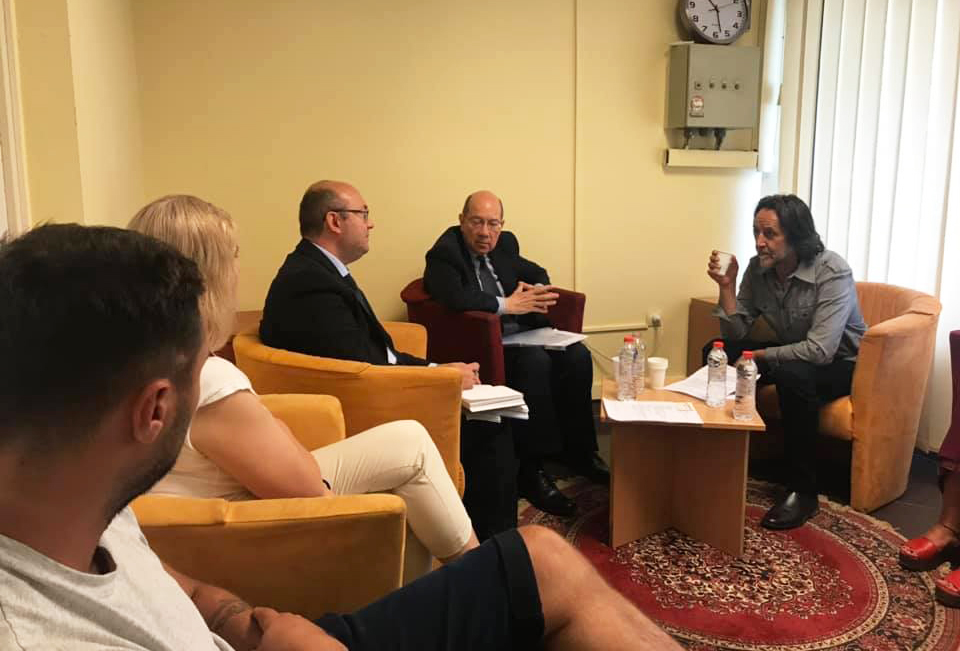
The INCB delegation also met with leaders of the international community supporting local institutions, including the EU Office in Pristina, EULEX, the OSCE Mission, UNDP, UNODC, and UNMiK. In addition, meetings were held with officials from the NGO “Labyrinth”, a DPNSEE member organisation, which provides opioid substitution treatment and other elements of a comprehensive treatment and reintegration programme and with the leader of the NGO Community Development Fund, which supports “Labyrinth”.

INCB Board Member delegation meets Mr. Safet Blakaj, Executive Director, and other representatives of the NGO Labyrinth

The Trust Team established in Montenegro

One of the goals and tasks of the Strategy for Improving the Quality of Life of the LGBT Community in Montenegro, adopted in 2013, was the creation of a Trust Team consisting of members of the Police Administration and the LGBT community. The main tasks of the team include timely and constructive communication between the LGBT community and the Police Administration, constant monitoring of LGBT people’s safety, finding the best models to address their problems, monitoring the development of a contact network of the police officers working with LGBT community, supporting all activities related to police capacity reinforcement and cooperation with international partners monitoring the LGBT inclusion process.

The new team, formed by the decision of the Minister of the Interior, held its first meeting on 1 July 2019. The Team consists of officers of the Police Directorate, the Ministry of Interior and representatives of non-governmental organizations dealing with the protection of LGBTI persons – LGBT Forum Progress, LGBTIQ Social Centre, Juventas, Queer Montenegro and SPECTRA.

The team noted that non-governmental organizations dealing with the protection of LGBTI rights and the Police Directorate have a continuing quality cooperation and that Tim will ensure that the cooperation in the future period is further enhanced. The previous Action plan needs to be innovated in order to make the activities of the Team more concrete, which will further contribute to continuous monitoring of the issues of LGBTI security, confidence building and solving specific cases of relevance to the LGBTI community.

How have closing of services affected drug users?

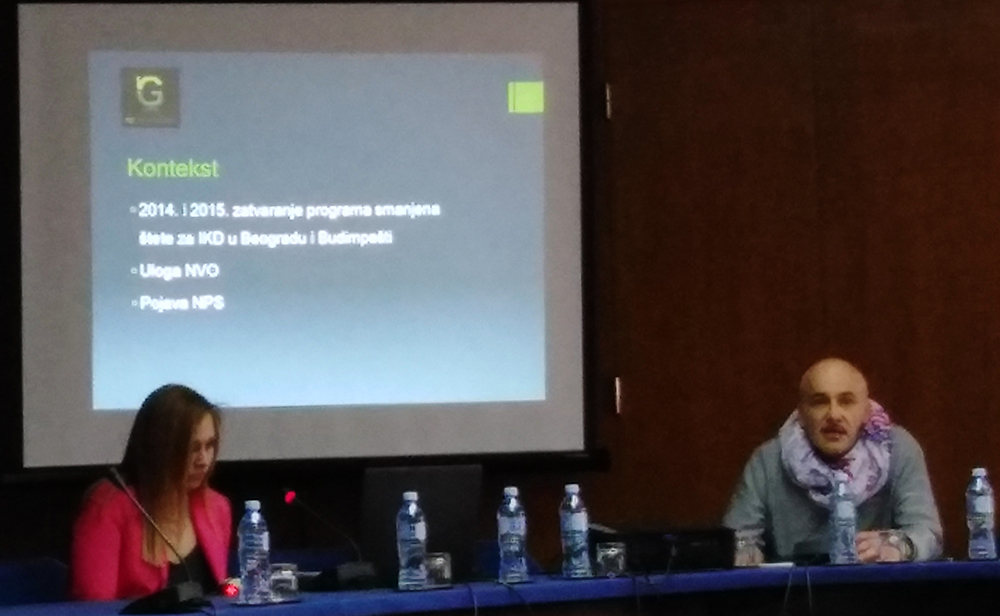
DPNSEE member organisation Re Generacija implemented the survey “Access to services of ex-users of the needle and syringe programme closed in Belgrade and Budapest” with the support of the Rights Reporter Foundation. Aim of the survey, implemented in 2018, was to analyse the consequences of closing the services and the effects that it has on risks and daily life of injecting drug users. Objectives included to reach out to the service users and learning about their current use of substances, mapping their access to services, sterile injecting equipment and analysing their perception of the closure of services and most important currently missing service. The conference was also an opportunity to discuss the current situation with recently established outreach programmes, as well as opioid substitution therapy and early warning system for new psychoactive substances.

The results of the survey were presented today at the conference organised together with the Office for Combating Drugs of the Government of Republic of Serbia. The conference was held in the Palace of Serbia, with participants coming from both governmental and civil society sectors.

Two major groups of users were approached by the survey: drug users which were using the services for a long time and Roma people. A typical drug user both in Belgrade and Budapest is male, in mid-forties, with low education and income. In Budapest, users mainly use new psychoactive substances (synthetic cathinones), while in Belgrade they mainly use opioids (heroine). One of the main conclusion from the survey is that closing the services caused even more difficulties to reach out to drug users who are usually very suspicious.

To get more information and results of the survey, please contact Re Generacija following this link>>>>.

Legal needs and access to justice for people who inject drugs and sex workers in Macedonia

Our member organisation HOPS published the Research report: Legal needs and access to justice for people who inject drugs and sex workers in Macedonia.

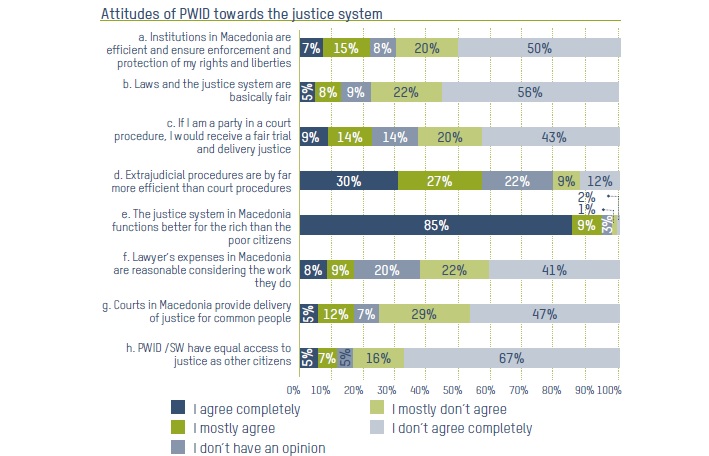
This research represents the first effort to assess the legal needs and paths to justice for people who inject drugs and sex workers in Macedonia. It was conducted at the end of 2016 and the beginning of 2017 using a mixed-methods research approach. The quantitative phase included 250 respondents chosen through stratified random sampling, out of which 169 inject/injected drugs, and 107 are/were engaged in sex work over the last three and a half years. The qualitative research phase, on the other hand, was comprised of focus group discussions with 69 respondents from both communities, as well as individual or group interviews with 7 representatives from competent institutions.

The research results showed that people who inject drugs and sex workers in Macedonia experience ten times more non-trivial justiciable problems in comparison to the general population in the country. In addition, low level of legal literacy, lack of trust in institutions and systemic discrimination, among other factors, prevent citizens from these communities to seek protection of their rights and delivery of justice through institutional mechanisms. Such circumstances confirm the communities’ high vulnerability and underline the need for advancement of their access to information, legal advice and protection.

The findings pinpoint the necessity to educate people who inject drugs and sex workers on existing institutional mechanisms for protection of rights and delivery of justice, and motivate them to take actions towards legal resolution. Since citizens from these groups trust civil society organizations the most, CSOs are the first instance where they seek free legal advice and aid. Hence, services offered to these communities by civil society organizations need to be developed further, while also advancing the cooperation between the organizations and the competent institutions, including introduction of functional referral mechanisms.

Recommendations of the report also include that overcoming prejudices against people who inject drugs and sex workers in institutions responsible for ensuring the legal order, such as the police, Legal Needs and Access to Justice for People Who Inject Drugs and Sex Workers in Macedonia prosecutors, courts and prisons is crucial. This could be achieved with temporary measures, such as trainings, field and study visits, but also through more sustainable systemic changes in the process of professional training of employees in the aforementioned institutions. Similar measures could be useful for health and social workers

To read full report follow this link>>>>. Version of the report in Macedonian is available following this link >>>>.

Serbia completed project application to the Global Fund

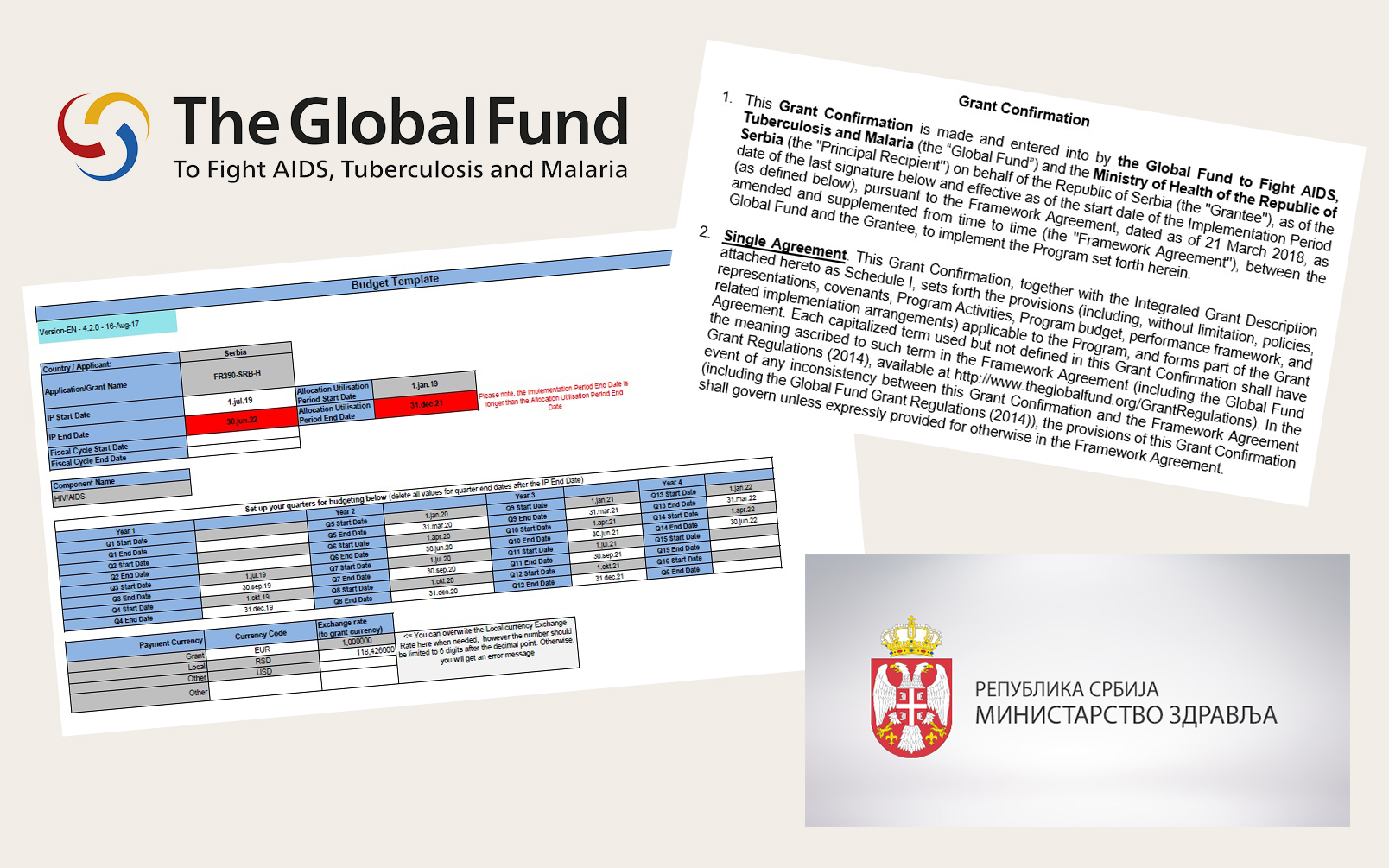
The National Committee for fighting HIV/AIDS and Tuberculosis, which performs the role of the Country Coordinating Mechanism in Serbia, adopted today the documents which will be submitted to the Global Fund to fight AIDS, Tuberculosis and Malaria. The project is expected to run from July 2019 to June 2022.

Back in 2016, the Global Fund allocated €1,098,351 for HIV and building resilient and sustainable systems for health. The allocation have been determined primarily based on disease burden and income level. Serbia is classified as an upper-middle-income country. Serbia committed to encourage additional domestic investment of 25%. The first amount agreed during the application in already included in the national budget for 2019.

The project seeks to scale-up HIV testing services for all key affected populations (KPs), preventive programs for men who have sex with men and sex workers and needles and syringes program (NSP) and other preventive programs for people who inject drugs. In addition, the project seeks to maintain and extend support provided by organizations of people living with HIV to people on antiretroviral treatment. The project will fund services provided by civil society organisations and will contribute to community system strengthening. In order to reach the maximum impact the majority of prevention and support interventions will be implemented at least in the two regions (Belgrade and Vojvodina) in which majority of KPs are concentrated based on surveillance data..

The civil society organisations, including DPNSEE and our three member organisations from Serbia Prevent, Duga and Timok Youth Centre, actively participated in creating the new national HIV strategy, in the work of the National Committee and the Working group for negotiations with the Global Fund.

Meeting of the Working group for negotiations with the representatives of the Global Fund

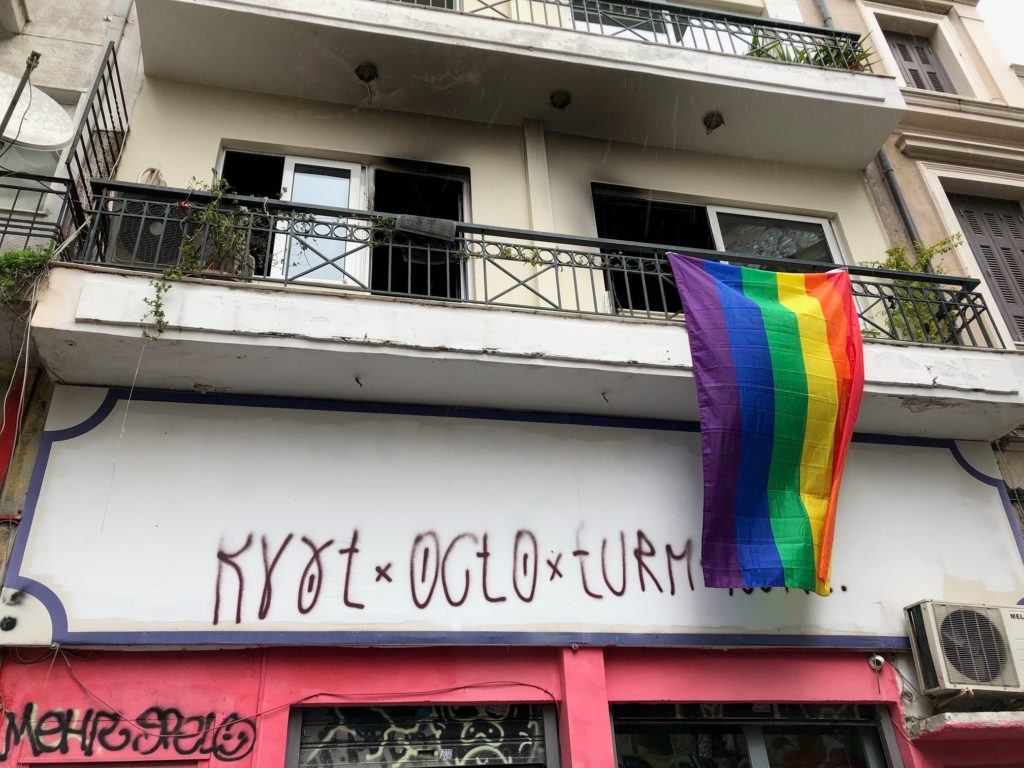
Homophobic attack at Checkpoint in Athens

The building that houses checkpoint managed by our member organisation Positive Voice in the centre of Athens was the target of an attack with obvious homophobic motives at dawn on Monday, 11 March. The fire broke out on the first floor of the structure located in Monastiraki quarter and caused extensive material damage. However, the early intervention of the fire brigade prevented its spread to the upper floors, as well as to adjacent buildings in an extremely densely populated area.

Luckily, there were no people in the structure because volunteers of Positive Voice had left the building at 12:30 in the evening to implement the club’s external action and the attack took place about an hour and a half later.

According to the fire service, the attackers came from the balcony on the first floor and caused the fire by throwing gasoline. They threw the rainbow flag from the façade, revealing so the homophobic characteristics of the attack.

The Checkpoint as a Positive Voice initiative and AHF Europe, have conducted over 100,000 free tests and diagnosed about 30% of new HIV cases each year in Greece. The confidence of society and vulnerable groups in this effort and the international recognition of its success is due to the fact that it is as high as the value of health, dignity, equality and respect for human rights.

Through the operation of Checkpoint, Positive Voice are leading the elimination of discrimination, stereotypes and prejudices that push entire social groups into the margins and threaten social cohesion. In this way, they serve health by focusing on human beings, regardless of gender expression, identity, gender, race, age, sexual orientation, social status, religion and financial status.

The attack will not prevent Positive Voice from fulfilling their Mission nor stop its operation for a moment. Recipients of our services will be temporarily admitted to the mobile unit that is parked outside the building.

Positive Voice calls on all social partners, public bodies, institutions, civil society organizations, businesses and every citizen to raise their rainbow flag on their buildings as a symbolic response against such intimidation.

DPNSEE and it members fully support our colleagues and stand with them!

Consultations in the Office for Combating Drugs

The Office for Combating Drugs of the Government of the Republic of Serbia held a meeting with civil society organisations on 25 February 2019. Besides 11 organisations which signed the Memorandum of Understanding with the Office in 2018 (including DPNSEE and 3 of its member organisations), 4 new organisations which established formal cooperation with the Office also joined the meeting.

Most of the meeting was dedicated to the proposals for amendments to the Criminal Law related to drug-related offenses. DPNSEE sent a formal proposal to the Ministry of Justice, the Working group for changes of the Criminal Law it created, The Office for Combating Drugs and the Office for support to the civil society organisations proposing decriminalisation of drug use and possession for personal use and protection of civil society organisations providing services to drug users. The proposal is available in Serbian following this link>>>.

The proposal was appraised as a very good, clear, concise and evidence based, but concerns were expressed that it may not be supported due to current situation in the country and increased conservatism in relation to the drug use. The participants emphasized the need to establish a system of accreditation of civil society organisations services. It should include all elements of their work, from prevention, harm reduction, treatment to social services and rehabilitation.

The Office will, through their representative, present civil society proposals to the Working group for changes of the Criminal Law.

The participation of civil society organisations representatives in the Working group to prepare the new Action plan for implementing the National Drug Strategy was appraised as a very good example of partnership. The Office will propose full involvement of the civil society in designing the new Strategy.

The participants at the meeting also got acquainted with the current activities of the Office on Drugs Policy, exchanged experiences on the previous cooperation defined in the Memorandum and made suggestions for improving it.

Greek Parliament set to vote on new bill establishing Supervised Drug Consumption Sites

A hearing meeting of the Standing Committee on Social Affairs of the Hellenic Parliament took place on 20 February 2019 to discuss draft law submitted by the Health Ministry. Among others, it includes various amendments of the Law 4139/2013 on drugs as well as a specific provision for the legal establishment of supervised drug consumption sites in Greece. The debate over the recent draft law is entitled “Private Clinics Statutory Framework, Modernization and Reformative recommendations, The National Public Health Organization establishment, the National Institute of Neoplasms and the other provisions establishment”.

Sofia GalinakiSofia Galinaki, Advocacy Officer of Diogenis and representative of the Greek organizations’ Platform for psychoactive substances, participated in the hearing, during which in cooperation with other Platform’s member organizations presented a series of proposals aiming to improve this legislative initiative.

Α relevant proposals’ memorandum was submitted on behalf of the Platform to the Committee and the Minister of Health, Mr A. Xanthos.

The second reading of the draft law by the Committee scheduled for 26 February 2019.

The current Law (in Greek) is available following this link>>>>

Public debate on legalization of cannabis held in Republic of Northern Macedonia

“Decriminalization of the use of cannabis can have economic benefits for citizens, for agriculture and for the state,” is the general conclusion of the hearing “The economic and health benefits of legalization of cannabis in the Republic of Macedonia”. The debate was organised in the Economic Affairs Committee of the Assembly of the Republic of Northern Macedonia on 22 February 2019..

legalisation of cannabisVarious opinions on the economic and health benefits of cannabis, its use in agriculture and industry, the need for appropriate legal changes for better regulation of this matter, recommendations and appropriate education of the necessary personnel were highlighted at the public debate.

John Ilija Apelgrin and Janaki Mitrovski, founders of the NGO Bilka addressed the public debate. Representatives of Neuromedica Medical Center, Clinic for Pediatric Diseases, civil sector, Clinic for Toxicology, Faculty of Agricultural Sciences and Food, Faculty of Pharmacy, NGO Bivium and several parliamentarians participated in the debate.