More notifications from the Slovenian Early Warning System

Our colleagues from the Alliance of Non Governmental Organisations for Drugs and Addictions from Slovenia forwarded us more information from the Early Warning System on new psychoactive substances (NPS).

Four different ecstasy pills with a very high MDMA content were detected in Maribor, namely blue Punisher (284 mg MDMA), pink Red Bull (213 mg), brown Pharoh (197 mg) and green Shell (171 mg) pills. Punisher’s blue ecstasy was also detected in Ljubljana and appeared in Slovenj Gradec.

Also, pink ecstasy pills and three other strong ecstasy pills with a very high content of MDMA have recently been detected in Ljubljana.

Literature indicates that the “acceptable” dose of MDMA is 1 – 1.5 mg/kg of body weight. That means that for a person who weighs 60 kg the dose is 60 – 90 mg. In quantities greater than 120 mg, the possibility of complications due to MDMA ingestion is increased (nausea, vomiting, cramping, restlessness and paranoia, severe motor disorders, headache, panic attack, high blood pressure, increased sweating, loss of consciousness, overheating of the body, etc.). 200 or more mg for many people means at least twice the dose in which the adverse effects are greatly increased.

At doses higher than 400 mg, the possibility of death overdose is greatly increased.

Besides MDMA pills, a fake LSD pill was also offered in Maribor. It actually contains synthetic pseudelic 25B-NBOMe, for which little information is available. Users describe that 25B-NBOMe has a hallucinogenic effect already in very small quantities and is very difficult to use safely. They also present a number of side effects, such as: tongue and mouth, nausea, increased heart rate, high blood pressure, agitation, confusion, seizures, fever. A lot of cases of poisoning and fatalities are associated with substances from the group 25-NBOMe. Therefore, extra prudence and compliance with the recommendations for harm reduction are recommended.

Due to the likelihood that these pills will occur in other places around Slovenia and in neighbouring countries, users are advised to use them caution and contact anonymous testing service wherever available.

The samples were collected at the info points of the DrogArt Association in Maribor and Ljubljana within the service of anonymous testing of psychoactive substances. The samples was analysed at the National Laboratory for Health, Environment and Food.

Drogart advices 6 ways to decrease the possibility of complications when using pills:

  • Always check which pill you have.
  • Try to find as much information as possible about the content of the pill and effects (for example, people who know this pill read current user reports and alerts on the Internet). But be careful – the same look does not necessarily mean the same content.
  • Test the tablet before testing.
  • Start with a quarter or at least a half and wait two hours to see what the effects are.
  • If you decide to redisplay, be careful. This puts more and more burdens on the body, as well as negative effects.
  • Do not mix with other drugs (including alcohol), as this increases the likelihood of complications and overdoses.
  • Drink enough liquid (but not more than 0.5 l per hour), soak enough rest and fresh air.
Survey of drug users mapping in the centre of Athens

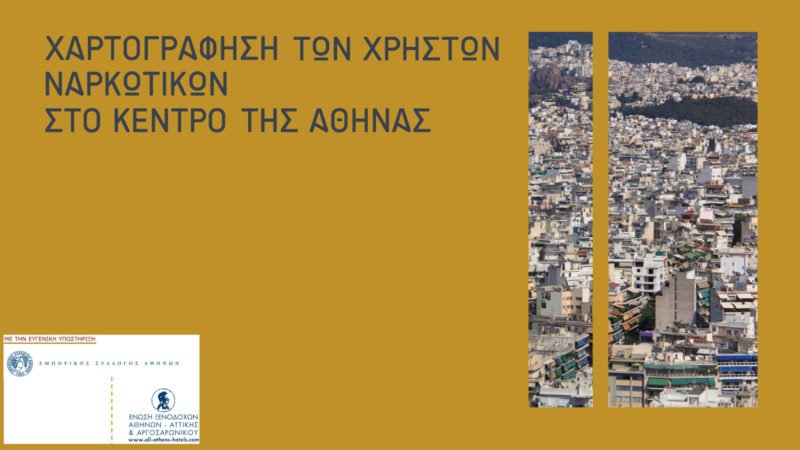
DPNSEE member organisations from Greece Prometheus and Positive Voice have developed a study on the anthropogeography of users of psychoactive substances in the centre of Athens in September 2018 using a sample of 200 people. The survey collected information on demographics and living conditions of users, type of psychoactive substance they use and whether or not they joined the retirement or substitution program.

According to the findings of the study, 80% of users are male. The average age is on an upward trend compared to 2010 (33.7) and 2012 (37) – currently it is 38 years. 53% of the sample are primary school graduates, while in terms of nationality there is an increase in the number of foreigners (from 13% in 2012 to 34.5%).

In the residence area in the centre of Athens, the largest concentration of population is located in the areas of Vathis Square, Karaiskakis Square the Theatre Square and the University campus. Regarding the type of psychoactive substance, the highest rate is 63.5% heroin use, while cocaine use accounts for 44.5% of the sample, 14% for Tai, 16% for benzodiazepines and 15% for shisha.

Out of the 200 people, 116 have been included, even once during their lifetime, in a drug rehabilitation or substitution program. However, at the time of the survey, only 49 people were enrolled in a program. The majority of the sample (130 persons) is not in a program or have applied for it.

In conclusion, it is noted that the population of psychoactive drug users in the centre of Athens is “aging“, while the association of the particular population with a high risk of premature death is questioned. Also, high users’ time in the centre of Athens, coupled with the increased rate of homelessness, raises serious issues of personal and public health and user safety. The findings of this study are consistent with the results of the Aristotel’s HCV/HIV study and demonstrate the need for harm reduction policies such as the re-opening of the medically supervised areas and the immediate increase in free distribution of safe use in cooperation with organizations active in the field.

To summarize, the findings of the study highlight the issue by demonstrating that the problems associated with the drug use in the centre of Athens are perpetuated, increased and differentiated at rates that require immediate and effective action.

The study was conducted in collaboration with a working group under the scientific responsibility of Mr. Giorgos Kalamitsis, President of Hellenic Patients’ Association Prometheus, Minerva Melpomeni Malliori, Professor of Psychiatry, First Psychiatric Clinic of Athens University, Eginiteio Hospital and Vana Sypsa, Professor of Epidemiology and Preventive Medicine, Laboratory of Epidemiology and Medical Statistics of the Medical School of the University of Athens and courtesy of the Athens Trade Association and the Union of Hoteliers of Attica and Argos Oasaronic.

To view the original article follow this link>>>>

Bosnian version of the Glossary

With the support of our member organisation Margina, DPNSEE produced the Glossary of terms used in drug policy in Bosnian.

The Glossary is prepared with the aim to contribute to better understanding the drug problem in more emphatic manner. Glossary is an alphabetical list of terms with definitions.

This is the fourth language in which the Glossary is published, after the original version in English and those in Spanish and Serbian.

To download the Glossary in Bosnian, follow this link>>>>

Fake xanax pill and cocaine with a high content of levamisole

Several civil society organisations in Slovenia are involved in the Early Warning System, mainly through anonymous drug testing – in Ljubljana: DrogArt and Stigma, in Kranj: Labirint, in Koper: Društvo Svit, in Nova Gorica: Šent, in Celje: JZ Socio, in Maribor: DrogArt and Zdrava pot, in Ptuj: ArsVitae. The new DPNSEE member organisation Alliance of Non Governmental Organisations for Drugs and Addictions from Slovenia sent us an information about drugs. We shall keep publishing these information. South East Europe is very connected region. We invite other our member organisations to share such information because they can be of use for others.

Within the framework of the Early Warning System on new psychoactive substances (NPS) in Slovenia, fake xanax pills and cocaine with high levamisol content were detected in Ljubljana and Maribor.

The results of the analysis, made in the National Laboratory for Health, Environment and Food, showed that the white rectangular tablet with a xanax sign (the one discovered in Maribor is shown at the photo) contains a substance called etizolam instead of alprazolam, while the one found in Maribor contains prometazin and ciproheptadin, medicines used for curing respiratory diseases.

Etizolam belongs to the group of benzodiazepines and is used as an anti-insomnia and anxiety agent. Etisolam causes euphoria, relaxation, carelessness, and side effects are drowsiness, weakness and fatigue, poorer thinking ability and judgment, and loss of control of the body. Especially dangerous is the use of etizolam with other drugs that act depressive on the central nervous system, such as, for example, alcohol, opiates and GHB/GBL. When mixing with other drugs, the effects of the drug are exacerbated and the user can lose consciousness very quickly and stop breathing.

This is the second known case of a false xanax pill – for the first time it detected in October this year.

A sample of cocaine, collected in Ljubljana, contained 22% of levamisole, which is higher than commonly used in cocaine.

Levamisol is a veterinary drug used to treat parasitic infections. For humans, however, it can cause a decrease in the number of white blood cells and a bruising of the immune system, causing an individual to be at greater risk of developing dangerous infections.

Both fake xanax and cocaine pills were purchased in November in Ljubljana from re-sellers. According to users, both substances are to be sold to a wider circle of people.

Both samples were collected the info point of the Association DrogArt in Ljubljana and Maribor, through the anonymous drug testing programme. Due to the likelihood that such samples will occur in other places throughout Slovenia, caution of users is recommended and use the anonymous testing service.

As the Xanax tablets are purchased on Dark net, this information may be of use to drug users and stakeholders in drug policy throughout the region.

Several civil society organisations in Slovenia are involved in the Early Warning System, mainly through anonymous drug testing – in Ljubljana: DrogArt and Stigma, in Kranj: Labirint, in Koper: Društvo Svit, in Nova Gorica: Šent, in Celje: JZ Socio, in Maribor: DrogArt and Zdrava pot, in Ptuj: ArsVitae.

The original communication from the Early Warning System (in Slovenian) is available following this link>>>>

Reducing the problems of the dependency

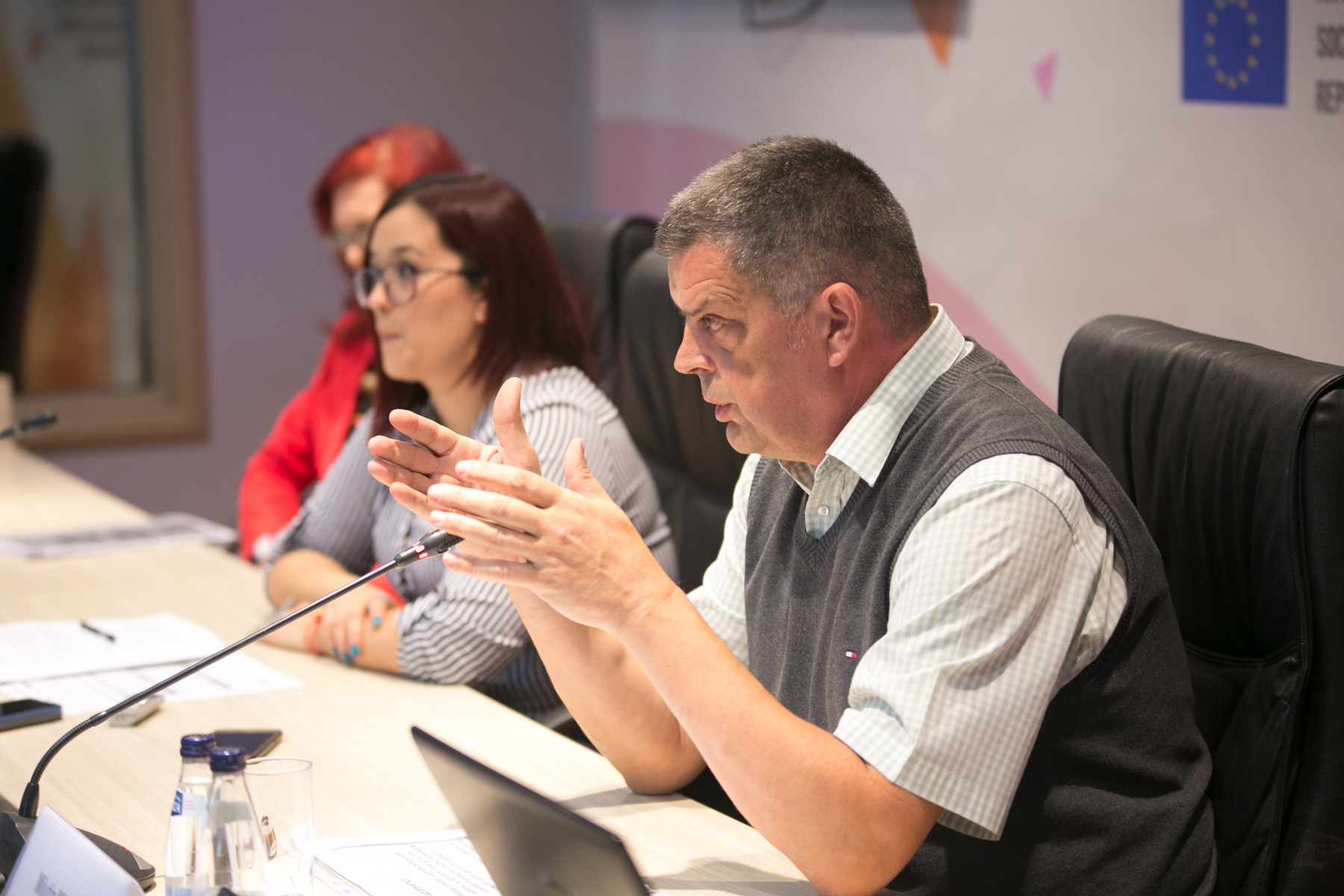
The annual Press Conference “Activities on the field of reducing the problems of the dependency” was held on 20 December 2018 in the EU info Centre in Belgrade. Speakers at the Conference were Nebojša Đurasović, President of the Association Prevent, Milan Pekić, Director of the Office for Combating Drugs of the Government of the Republic of Serbia and Milutin Milošević, Executive Director of the Drug Policy Network South East Europe. Representatives of the institutions and organisations with whom Prevent and DPNSEE cooperate participated in the Conference.

Nebojša Đurasović presented activities which Association Prevent conducted in scope of the project “At Risk Youth Social Empowerment” and other projects realised in 2018. For a good work, Prevent deserved the award “Responsible attitude and work with vulnerable young people” offered by the city of Novi Sad. Đurasović also spoke about extending the programme of needle exchange to Belgrade and draw attention to the issues of drugs in Serbia including raising number of overdose deaths in young population.

Milan Pekić presented the co-operation between the Office for Combating Drugs and civil society organisations in Serbia as an example of good practice, especially in the process of designing the new Action Plan for implementation of the Strategy for drug prevention.

Milutin Milošević presented a situation in the region of South East Europe, activities in 2018 and plans of the Drug Policy Network South East Europe for the future. His comments on new psychoactive substances and change of culture of drug use raised a special attention.

Representatives of institutions and organisations that co-operate with Prevent and Drug Policy Network SEE were attended the Conference and took discussion on several topics, especially about discrimination.

The open discussion that followed was mainly focused on the issue of discrimination of drug users.

Two news publications were presented at the Conference: Prevent published the one on “Empowering against the discrimination of youth at risk“, while DPNSEE prepared the Serbian version of their Glossary of terms used in drug policy with the support of the Office for combating drugs.

Videos from the Conference are available in following this link >>>

Project partners meeting

The meeting of the partners in the EU Funded project “Strengthening NGO capacity and promoting public health and human rights oriented drug policy in South Eastern Europe” was held in Belgrade, Serbia, on Monday, 10 December 2018. This was the last meeting of the project which lasted for 4 years, supported by the European Commission DG Near.

The partners approved the minutes from the recent meeting, held on 12 September by Skype, and partners informed about the recent activities.

Margina has finished with the activities of the programme. Prevent has yet to implement a press conference, most probably in Belgrade by the end of the year. Diogenis has finished with the activities of the programme, except from the last newsletter. Olga Pateraki informed the partners of the reallocation regarding the budget of Diogenis, in order to translate in Greek and print the booklet “Drug Policy reform, The UNGASS 2016 a catalyst for change”.

DPNSEE Executive Director Milutin Milosevic informed the partners about the activities that has been implemented during this period: the country visits in Romania and in Greece, the General Assembly that took place in Belgrade, the capacity building that was held during September, the Resource Centre and the Glossary. The Glossary has been printed and there is in English, Spanish and Serbo-Croatian, with the intention to be translated also in other languages. The discrimination paper has been started but not reached yet the desired recorded cases.

The partners have agreed to send all their final financial reports by the 10th of January to Diogenis in order to prepare the final financial report, who is collecting and preparing the reports. The financial report will be also in a format of detailed breakdown that the EC asks along with the final report. The reports of the activities will be also sent to Diogenis in order to compile them for the final report in January.

Two member organisations joined DPNSEE

At the DPNSEE General Assembly, held on 10th December 2018, in The Palace of Serbia, in Belgrade, Serbia, two new member organizations were accepted into the DPNSEE Network: Timok Youth Center (TOC) from Serbia and Center of Human Policy, from Bulgaria.

Both organizations were accepted by a unanimous decision of all present member organisations representatives.

Timok Youth Center (TOC) is a non-profit organization registered in Zaječar 2004. and operating on the territory of Zaječar, Timok region and the South -East Serbia. TOC agrees with the mission and vision of the DPNSEE and wants to actively promote the objective and open debate on the effectiveness, direction and maintenance of national, regional and international political drugs, and to promote constructive policy recommendations that lead to the adoption of human and effective drug policies in SEE.

Timočki Omladinski Centar

TOC is ready to actively engage with the creators of political and decision-making bodies in Serbia and in the region of Southeast Europe.

Timok Youth Center is an organization that is recognized at the local as well as at the national level when it comes to the fight against addiction, and above all the fight against drug abuse. Preventive programs that are implemented, and which concern addiction diseases, are mostly oriented towards young people, especially with youth at risk. TOC think that the young people from 15 to 30, as a sensitive category of the population, are especially affected by the problem of drug abuse. The research that we have conducted on the territory of Zaječar district, in the last few years has shown that young people in most of these years most often try one of the drugs. Also, in the period from 2007 to 2014, TOC is an organization that worked within the Global Fund for Reducing HIV/AIDS in South East Serbia and developed a volunteer program dealing with this issue. They believe that intersectoral and partner cooperation in prevention programs and harm reduction programs are very important and we have good cooperation with local municipalities and ministries. TOC’s work has been recognized by the The Office against drugs of Republic Serbia, with which we have signed a Memorandum of Cooperation.

Center for Humane Policy was created in 2016 by leading experts in drug addictions and drug policy field in Bulgaria. The main goals of the organization are to promote, facilitate and support development of effective, evidence based methods and policies in the field of public health, social care and education.

The organization is a member of the Eurasian Harm Reduction Association (EHRA) and the chair of the Center is also co-chair of the Steering committee of the network. Center for Human Policy is very good in understanding the importance of working together with organizations from different countries to improve the drug policy situation in the region.

During the last year the organization focused their efforts on the implementation of “Preventure” in the country. It is a school-based intervention aimed at reducing adolescent drug and alcohol use in high-risk teenagers.

Nowadays Center for Humane policy relies on two experts, trained in Canada by the inventor of the Preventure methodology – Patricia J Conrod from the University of Montreal. Also the organization has personal support of professor Conrod to implement the intervention system in the country.

Center for Humane policy also builds networks with the authorities to ensure the sustainability for fereb=nt implementation of good practices, and they have the support of the Secretary of National Council on Narcotic Substances and the Vice-Minister of Ministry of Health.

Together with these activities, the organization prepares statements, reports and analyses regarding the efficiency of Harm reduction, Opioid Substitution therapy, HIV and drug treatment policies.

We are all POSITIVE!

On the occasion of World AIDS Day 2018, the Greek Association of People Living with HIV Positive Voice and the Onassis Foundation organized a series of interpersonal activities “I am Positive” promoting human stories related to HIV/AIDS on 21 and 22 November 2018 at The Onassis Stegi Cultural Centre in Athens.

Children and adolescents had the opportunity to chat with representatives of the seropositive community on sexual health, but also about the challenges and prejudices they face and the stigma that accompanies these groups through their stories, hopes and fears, the reality that HIV-positive people in Greece face and the medical and social dimension of the disease. A serodifferent couple, a mother whose son lives with HIV and a gay claiming his right to prophylactic treatment PrEP shared with the public their thoughts and experiences.

The debate was co-ordinated by journalist Elena Akrita.

To view the original article, including video recordings of personal testimonies, follow this link>>>>

The need for an organized system for drug policy in Montenegro

Within the framework of the project ARYSE (At-Risk Youth Social Empowerment), funded by the European Union through the European Commission, NGO Juventas organised the round table „Young people who use drugs in Montenegro“ on 12 November 2018 in Podgorica. The hosts emphasised that there is no systematic commitment in solving the problem of dependence on psychoactive substances in Montenegro and that clarifying the government responsibility is very important. Improving support programs, developing preventive work, in order to help young people who use drugs, must be in coordination with many institutions.

The speakers at the round table were: Marija Milić, Coordinator of the Programme of direct assistance for people who use drugs, NVO Juventas, Milutin Milošević, Executive Director of the Drug Policy Network South East Europe, Ivana Vujović, Executive Director of NGO Juventas, Nebojša Kavarić, Director of the Health Centre in Podgorica, Dr Ljiljana Golubović, the Public Health Institute representative and psychologist, Dijana Milošević, representative of the Institution for Resocialization and Rehabilitation of Drug Addicts Kakaricka gora.

The representatives of local communities from Nikšić, Podgorica, Budva, Bijelo polje, Tivat and Kolašin also took part in the discussion.

It was pointed out that cooperation with official institutions is at an unsatisfactory level. Also, the discussion conclude that there is no systematic plan for dependence on psychoactive substances problem.

The Executive Director of DPNSEE Milutin Milošević gave introductory presentation about models and standards of prevention of psychoactive substances use in Europe and presented concrete examples of drug policy approaches in Croatia, Spain, The Netherlands, Serbia, Sweden and Turkey.

ARYSE project also includes the partner organizations: ARSIS (Albania), Association Margina (Bosnia Herzegovina), HOPS (Macedonia), Labirint (Kosovo), Prevent (Serbia) and Foundation SHL (Germany).
At-Risk Youth Social Emprovement open table

Implementing Different Harm Reduction Policies in Macedonia

Janaki Mitrovski, lawyer and co-founder of the Cannabis and Green Policies Association “BILKA” from Skopje, author of articles in the legal magazines “Pravnik” and “Pravomatika”, wrote about different harm reduction policies in Republic of Macedonia for the Drugs – Politics and Practices magazine published by HOPS – Healthy options project Skopje.

Mitrovski spoke about differences in European countries, and he underline the most important thing – urgent implementing program for safe drug use facilities in Republic of Macedonia.

In order to apply some of the existing models practiced or to establish a hybrid and an entirely different model of addressing this issue in the Republic of Macedonia, there are legal obstacles to be considered. Making possible drug use facilities, safe or not, is prohibited and is penalized with Article 216 from the Criminal Code of the Republic of Macedonia, according to which a person who shall provide spaces for the enjoyment of narcotic drugs and psychotropic substances shall be punished with imprisonment from 1 to 5 years. A qualified (more severe) form of this act is considered extant if the same is done with respect to a minor person or with respect to a larger group of people or if the deed has caused serious consequences, in which case the doer will be punished with 1 to 10 years of imprisonment. If, however, the act is perpetrated by a legal person, the same will be punished with a fine, and the narcotic drugs, as well as all moveable properties or any real estate used for their transport or distribution, or if they are especially intended for or meant for use, will be confiscated.

He drew attention for legal circumstances in criminal legal system and the result of international legal obligations Republic of Macedonia agreed to with the 1961 Single Convention on Narcotic Drugs, as well as the 1988 Convention against the Illicit Traffic in Narcotic Drugs and Psychotropic Substances, decreed by the United Nations, which go as far as providing legal framework for the signatory countries to even confiscate such spaces.

Unfortunately, the Republic of Macedonia does not allocate even approximately enough funding and has no political will to introduce such programs towards helping drug addicts with harm reduction, as well as protect the very users, but also society, from spread of unwanted diseases”, said Mitrovski.

He concluded that the Republic of Macedonia has to implement one program providing safe drug use spaces in the future, which will provide health benefit for users and also for the citizens.

The entire article “Implementing Different Harm Reduction Policies in the Republic of Macedonia – Safe Drug Use Facilities” is available following this link>>>