Sexism Free Night aims to reduce sexual violence and sexism in nightlife scenes by raising awareness among party goers and promoting safer and more egalitarian nightlife environments. You can read more about this project in the Manifest available following this link>>>.
The Sexism Free Night Survey was designed to research the intersections between sexual violence, nightlife environments (e.g. party spaces, going out at night) and drug use in Europe. We believe that this study will increase knowledge about sexism and the rape culture in different European regions, and inform policies and practices in nightlife.
In this web survey, we will ask some questions about your nightlife experiences. This time frame includes going out before the covid-19 outbreak and also going out during the current context of social isolation (e.g. small parties or meetings at home, in nature or public spaces with your friends, informal parties in hidden locations or video calls and live streaming events).
This study is funded by the European Union’s Rights, Equality and Citizenship Programme (2014-2020) and is promoted Health and Community Foundation (ES); Faculty of Education and Psychology of the Universidade Católica Portuguesa (PT); Clubcommission (DE); Kanepes Cultural Center (LV); European Network NEWNET and ReGeneration (RS).
The participation in this study is voluntary. All the answers are anonymous and confidential.
To participate in the survey, follow this link>>>. The survey is available in English, Slovenian, Serbian, Latvian, Portuguese, French, German and Spanish.
Correlation – European Harm Reduction Network we held a day-long webinar of four major sessions in lieu of the 5th European Harm Reduction Conference which is recently postponed to 2021 due to COVID-19 pandemic.
Here are the links to all the session recordings
What can we learn from the COVID-19 pandemic?
COVID-19 and the impact on harm reduction in Europe
The full length of the film “Putting UK Drug Policy into Focus” is available here>>>.
The next Harm Reduction Session Challenges and opportunities to monitor new drug trends by civil society organisations (CSOs) will be held on 16 December, 15:00 – 16:30 CET,
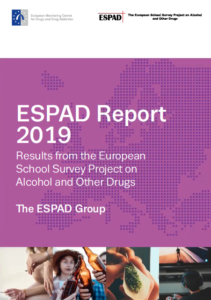
The latest European School Survey Project on Alcohol and Other Drugs (ESPAD) report, published in collaboration with the EU drugs agency (EMCDDA), was presented on 12 November 2020. ESPAD is a collaborative network of independent research teams in over 40 European countries and the largest cross-national research project on adolescent substance use in the world. It is coordinated by the ESPAD Italian team at the National Research Council of Italy (CNR-IFC).
This report presents the results from the seventh wave of data collection, conducted in 35 countries during the spring and autumn of 2019. That includes nine out of 11 South East European countries – all except Albania and Bosnia Herzegovina. A total of 99 647 pupils participated in the latest survey round, responding to an anonymous questionnaire.
It gives a comprehensive picture of the present situation among European young people as regards the use of cigarettes, alcohol, illicit drugs, inhalants, new psychoactive substances and pharmaceuticals, but also insights into gambling, social media use and gaming. The report also presents an overview of trends over the time period 1995-2019.
The latest survey shows that, on average, one in six school pupils (17 per cent) reported having used an illicit drug at least once in their life, with levels varying considerably across the ESPAD countries (range: 4.2 per cent–29 per cent). Lifetime prevalence of illicit drug use in this group has been declining slightly since 2011, although has been generally stable over the past two decades. The non-medical use of prescription drugs among adolescents remains a concern, the statement said.
Cannabis is still the illicit drug most used by school pupils in ESPAD countries. On average, 16 per cent of respondents reported using cannabis at least once in their lifetime (11 per cent in 1995), while 7.1 per cent reported last-month use (4.1 per cent in 1995).
Alcohol use remains high among adolescents in Europe, with an average of over three-quarters (79 per cent) of school pupils having used alcohol in their lifetime and almost half (47 per cent) having used it in the last month. The prevalence of “heavy episodic drinking” reached its lowest level in the 2019 survey (35 per cent), following a peak in 2007 (43 per cent). Changes in drinking regulations at national level may have contributed to the decline in alcohol use among young people, the statement said.
Positive developments are also seen with regard to teenage smoking, against a backdrop of tobacco policy measures introduced over the last two decades. Between 1995 and 2019, ESPAD averages for cigarette use declined for lifetime use (68 per cent to 42 per cent); current use (33 per cent to 20 per cent) and daily use (20 per cent to 10 per cent). New data reveal high prevalence of e-cigarette smoking — 40 per cent for lifetime use and 14 per cent for last-month use — with those who have never smoked cigarettes (‘never smokers’) reporting higher rates of this behaviour than ‘occasional smokers’ and ‘regular smokers’.
The 2019 ESPAD results show that gambling for money has become a popular activity among school pupils in Europe, with 22 per cent of respondents reporting gambling on at least one game in the past 12 months (predominantly lotteries). Around 60 per cent of respondents reported having played digital games on a typical school day within the last month (69 per cent on a non-school day). In most countries, boys spend twice as much time gaming as girls.
Around 94 per cent of respondents reported use of social media in the past week. On average, users spent two to three hours on social media on a typical school day, rising to six or more hours on non-school days. In most countries, girls reported using social media on non-school days more frequently than boys.
Source data in Excel format has been split into two separate archives: (1) data used to generate graphics and tables in the main report and (2) additional tables with more results not presented in the main report.
The Scottish Drugs Forum published “Moving beyond ‘people first’ language: a glossary of contested terms in substance use“. This project sought to identify terms that are contested or commonly misunderstood.
The aim has been to explain the nature of contention and, where terms may be misunderstood, account for this. Where appropriate, SDF’s own preferred use of language is given and explained. The drugs field contains a lot of language that is offensive to some people. This is because drug use is a stigmatised activity. People who use drugs; people who have a drug problem; people in treatment and people who may be regarded as being in recovery all suffer stigma as do their families and communities. Self-stigma means that people may use stigmatising terms to describe themselves and their situation. The issue is delicate and complex.
This resource allows people to understand contested terms and understand how language can result from and perpetuate stigma. In Scotland, there is an emerging consensus on the use of people-first language – using ‘people who use drugs’ rather than ‘drug users’ or ‘drug misusers’ or ‘addicts’, for example. There has also been a commitment in the latest drug strategy to use acceptable terms. However, there is a long way to go.
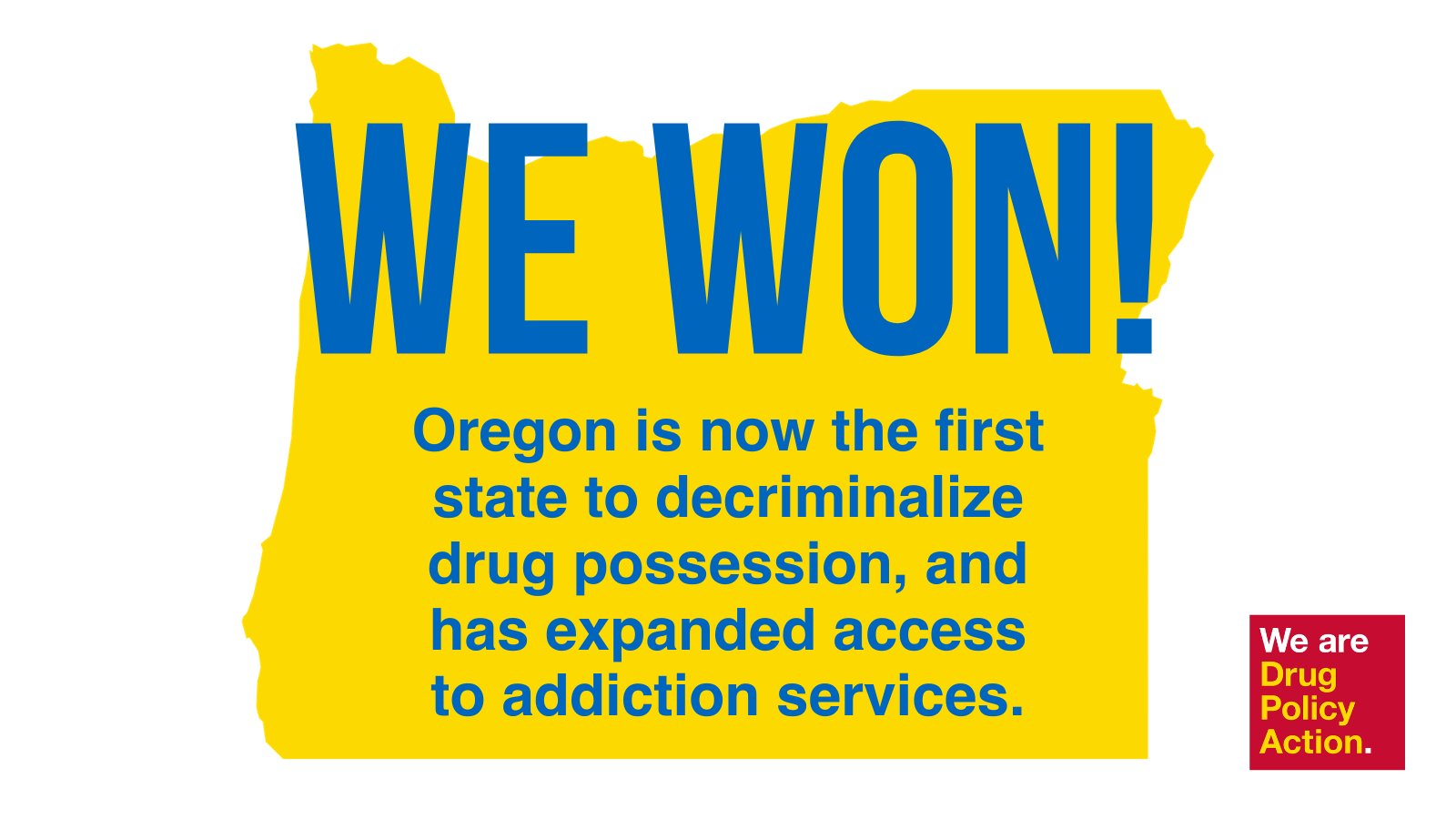
Tuesday 3 November 2020 was the Election Day in the United States of America. The tensions of this important election threw into a shade some important decisions that were at the vote in several federal states. Important state-level votes took place on decriminalising all drugs, legalising cannabis and decriminalising psychedelics.
ALL of the key votes have passed, including:
Oregon decriminalisation of all drugs. The measures outlined would see people found in possession of small amounts of drugs for personal use given the option of paying a $100 fine or attending a free “drug addiction treatment and recovery program”, which would be funded in part out of the state’s cannabis tax revenue fund.
Arizona, South Dakota, Montana, New Jersey legalising cannabis. Cannabis is already legally regulated for non-medical purposes in 11 US states, although it remains illegal at a federal level.
Mississippi, South Dakota legalising medical cannabis. Medical cannabis is already legal in 33 US states, with many medical markets now well established.
Oregon legalising medical use of psilocybin. The measure allow Oregonians over the age of 21 to purchase and consume psilocybin at a ‘psilocybin service centre’ under the supervision and guidance of trained facilitators. It would be the first-of-its-kind in the US, and hopefully move the debate forward on psychedelic treatment worldwide.
Washington, DC decriminalising psychedelics. While not technically fully decriminalising psychedelics, the measure would clearly drastically reduce the scope for the criminal law to intervene in personal activities. Criminal laws would nominally remain on the books, but be unlikely to be used, effectively a form of de facto decriminalisation.
These developments are part of a broader effort to scale back the war on drugs. The new measures may be the beginning of a broader push in the next few years, similar to what the US has already seen with marijuana.
Recent commitments to greater involvement of people who use drugs in UN drug policy processes is a positive development but little research attention has been paid to ‘drug user representation’ in this context.
Authors Annie Madden, Kari Lancaster and Carla Treloara from Centre for Social Research in Health and Alison Ritterb from Social Policy Research Centre, University of New South Wales, Sydney, Australia produced the paper Making legitimacy: Drug user representation in United Nations drug policy settings. This paper examines ‘drug user representation’ in the UNGASS on drugs and associated CND processes over three decades.
Findings show that dominant UN drug policy discourses and other practices can have delimiting effects for the political legitimacy of drug user representatives.
The importance of engaging people who use drugs in drug policy development is increasingly acknowledged including in recent UN documents. Little scholarly attention has been paid to ‘drug user representation’ in the global drug policy setting of the UN such as the Commission on Narcotic Drugs (CND). This paper examines ‘drug user representation’ in key UN drug policy processes over three decades.
The mapping process was undertaken using a corpus of publicly available documents from the UNGASS on Drugs and associated CND processes to identify relevant policy processes from 1987 to 2019.
The analysis shows that despite calls for greater involvement, dominant UN drug policy discourses and other practices delimit both the political subjectivities available to people who use/have used drugs and their capacity to bring their voices to bear in this context. The analysis also highlights that human rights-based discourses, employed by ‘drug user representatives’, have emerged as an important practice of resistance against the problematic and delimiting power effects of existing UN discourses, governing practices and modes of engagement.
In addition to the practices of resistance being undertaken by ‘drug user representatives’, authors suggest there is a need to improve how ‘drug user representation’ is being made possible and done in the sites of UN drug policy deliberation and, that these sites should be opened for questioning. This will not only have a positive impact on political legitimacy for ‘drug user representation’, but on the health and human rights of people who use/have used drugs.
The Global Fund is providing immediate funding to help countries fight COVID-19, mitigate the impacts on lifesaving HIV, TB and malaria programs, and prevent fragile health systems from being overwhelmed, through grant flexibilities and the COVID-19 Response Mechanism.
Grant flexibilities allow countries with current grants to use up to 5% of their current grant value if there are savings, and/ reprogram up to 5% of the value of a grant to meet immediate COVID-19 response requirements. The COVID-19 Response Mechanism (C19RM) can be used across the three diseases and the health system, even if a country only has a single Global Fund grant for one component.
The Global Fund published the information about allocations so far on 27 October 2020. From the COVID-19 Response Mechanism a total of 592,493,744 USD was allocated for mitigating COVID-19 impact on HIV, TB and malaria programs, reinforcing national COVID-19 response (other response and COVID-19 diagnostic tests) and urgent improvements in health and community systems.
Out of this amount, four SEE countries and the Multi-country HIV East Europe and Central Asia #SOS_project received
In addition, from the Grant Flexibilities 216,092,754 USD was approved to 107 countries and multicountries out of which three countries and the Multi-country project received:
Harm Reduction International, an NGO dedicated to reducing the negative health, social and legal impacts of drug use and drug policy, publishes report that provides an independent analysis of harm reduction in the world. Now in it’s the seventh edition, the Global State of Harm Reduction 2020 is the most comprehensive global mapping of harm reduction responses to drug use, HIV and viral hepatitis.
The 2020 report includes:
A chapter which looks at the impact of the COVID-19 pandemic and related lockdowns on the provision of harm reduction services worldwide
Additional thematic chapters on hepatitis C and tuberculosis
Examples of progress in harm reduction from across the world
Examples of legal and policy changes which impact harm reduction service provision
Foreword by Dr Tlaleng Mofokeng, United Nations Special Rapporteur on the right of everyone to the enjoyment of the highest attainable standard of physical and mental health
Data on the number of people who inject drugs and the number of people in prison for drug use globally
Eurasian Coalition on Male Health (ECOM) is one of the pre-qualified providers of the Global Fund’s CRG program and provides technical assistance to communities and key populations of Albania for conducting budget advocacy, and cost–effectiveness and efficiency analyses of HIV and STI services for gay men, men who have sex with men and trans* people in Albania. More details are available following this link>>>.
Additionally, ECOM is looking for the consultant to conduct mapping of HIV and STI services for MSM and trans* people and organizing local meetings with stakeholders in the Republic of Albania>>>.
Application deadline: November 1, 2020, 23:59 (GMT +3).
All these activities are to be implemented as a part of the technical assistance within the Global Fund’s CRG TA Program.
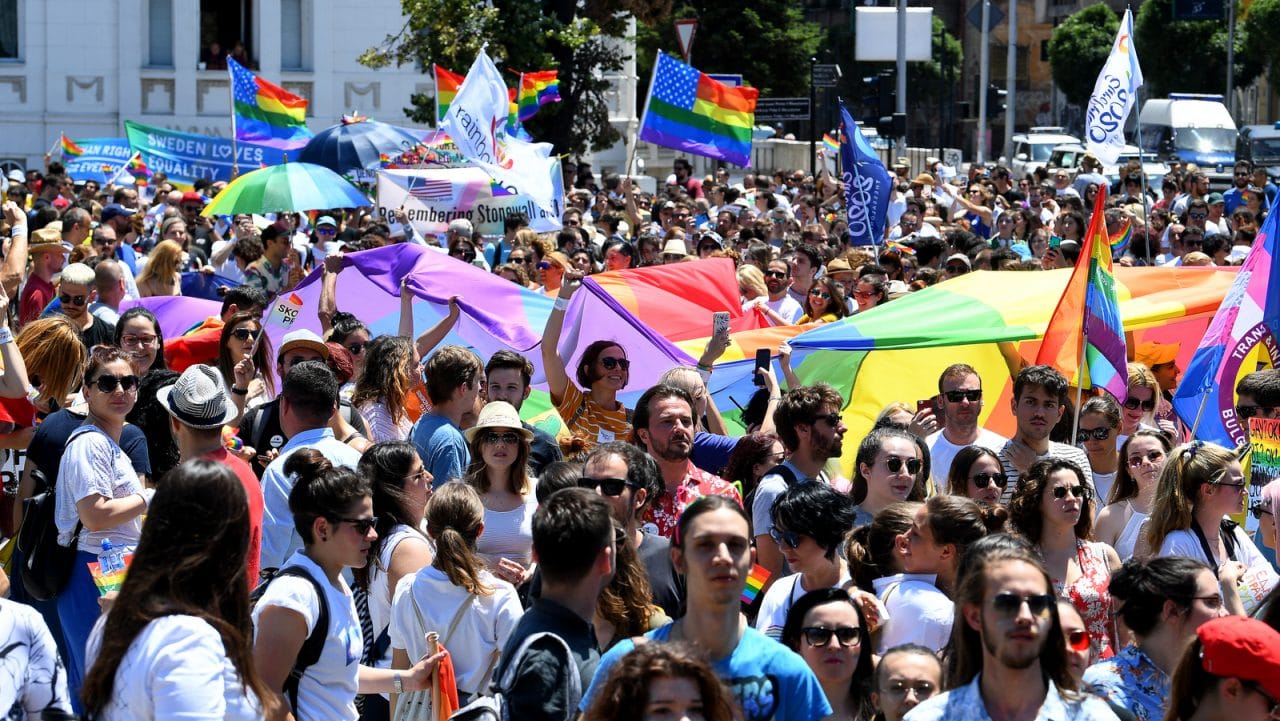
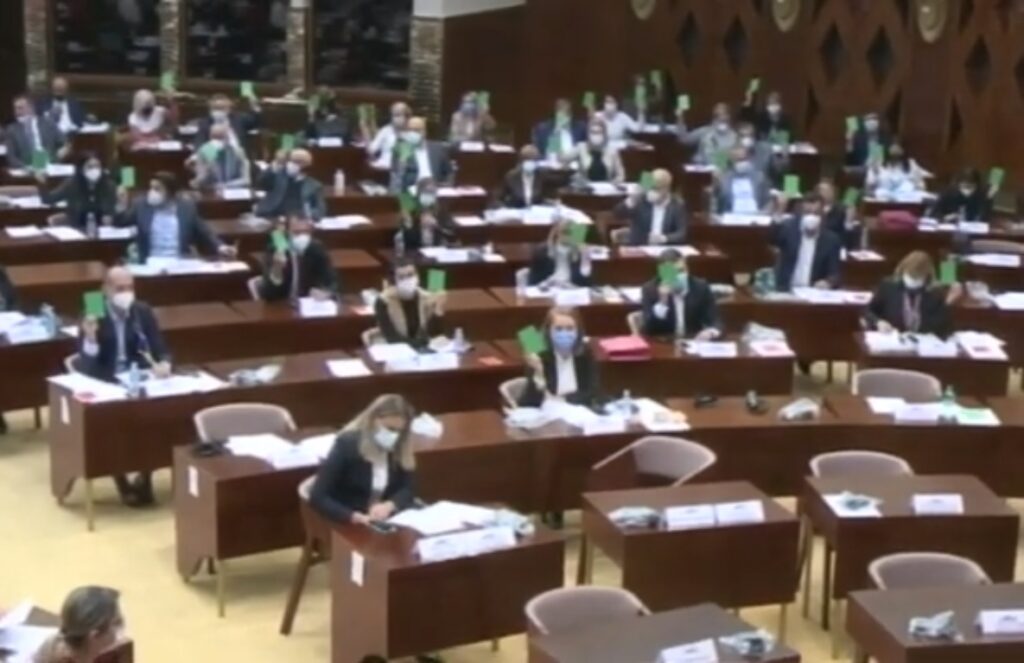
North Macedonia’s parliament adopted the Anti-Discrimination Law, which among other things guarantees protection from gender-based discrimination.
The previous governments led by the conservative right-wing VMRO DPMNE from 2006 to 2017 refused to include sexual orientation in the law. It was then originally passed by the Social Democrat-led majority in 2019. However, the Constitutional Court struck down the law in May this year, to the dismay of LGBT organisations and human rights groups, ruling that it was not passed with a proper quorum in parliament. The Law now passed in parliament with 69 out of 120 members of the parliament supporting it, from both ruling and opposition parties. No MPs voted against it.
Prior to the vote in parliament, the Network Against Discrimination, which comprises many prominent North Macedonian NGOs, criticised the government’s recent decision to dismiss its proposal to add stricter rules for a more transparent and inclusive procedure to elect members of the Anti-Discrimination Commission, which the government said is already part of the law.

 aims to reduce sexual violence and sexism in nightlife scenes by raising awareness among party goers and promoting safer and more egalitarian nightlife environments. You can read more about this project in the Manifest available following this link>>>.
 What can we learn from the COVID-19 pandemic?
 Special edition launch of the Harm Reduction Journal
 Different approaches for decriminalisation – what works?
 Engaging with policymakers and the public to promote ethical drug policy
 The latest European School Survey Project on Alcohol and Other Drugs (
 You can download the report and access all of the source data

 The document is available


 See better in the document we created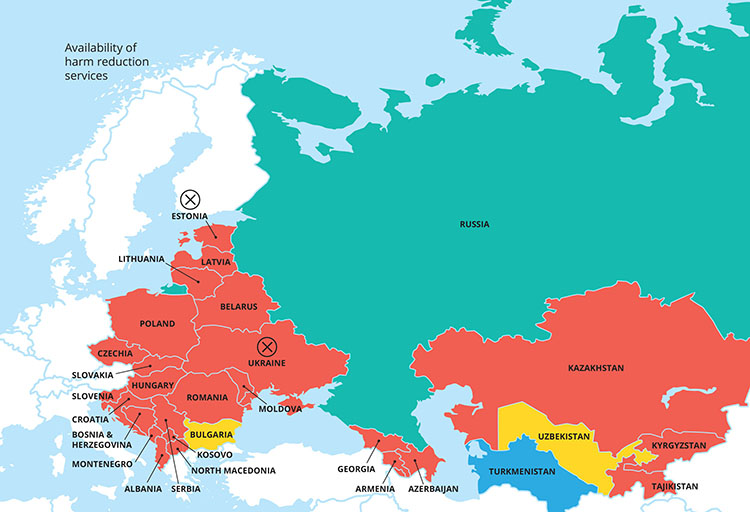



 Eurasian Coalition on Male Health (