Senior Level Policy Dialogue

The Senior Level Policy Dialogue “Addressing HIV and TB Challenges: from Donor Support to Sustainable Health Systems” was organised in Tallinn, Estonia on 12 and 13 December 2017 as an official event in the programme of the Estonian Presidency of the Council of the European Union.

The event, organised by the Ministry of Social Affairs and National Institute for Health Development from Estonia, WHO European Region, UNAIDS, and the Global Fund, brought together representatives of the health and financial ministries of Europe, the Balkan and Eastern Partnership countries, representatives of the European Commission, international organisations, as well as community representatives and institutions involved in funding programmes and offering services to tackle HIV and TB.

In Eastern Europe the fight against HIV and tuberculosis has largely been funded through international organisations (such as the Global Fund to Fight AIDS, Tuberculosis and Malaria). However, this kind of funding is not sustainable in the long term.

The participants searched for ways to smoothly transition from funding through foreign aid programmes to sustainable state funding. They outlined the best practices, challenges, opportunities and risks related to integrating HIV and TB programmes into a national health system. The discussions included the role and responsibility of various institutions and organisations in stopping the HIV and TB epidemics.

DPNSEE and 4 participating member organisations representatives (Cazas, Juventas, Margina and Viktorija) actively contributed to the meeting, including two panellists who gave a specific insight in the situation of the region. Both the experiences from South East Europe and challenges we face were presented, emphasized and mentioned by many participants. The meeting was also a good opportunity to establish contacts and generate ideas for future cooperation.

Participation of the SEE representatives was made possible by generous support from the Open Society Foundation.
EECA Civil Society Meeting

Preparing for the regional meeting “Addressing HIV and TB Challenges: from Donor Support to Sustainable Health Systems”, civil society organisations from Eastern Europe and Central Asia met on 11 December in Tallinn. Aim of the meeting was to consolidate and build opportunities for cooperation in advocacy efforts of civil society representatives during and after the meeting.

The pre-meeting gathered 14 representatives from civil society and community organisations mainly from South East European countries and regional community networks. Unfortunately because of heavy snow in the departure airports and delayed flights a lot of participants could not join.

There were two main issues of the meeting which of great importance for civil society and communities: transitioning of services to domestic funding and integration of it into the health and social care system.

The structure of the outcome document was presented and discussed. Next week key points from the document could be used for the plenary meeting of the Civil Society Forum of HIV, Hepatitis and Tuberculosis.

DPNSEE General Assembly

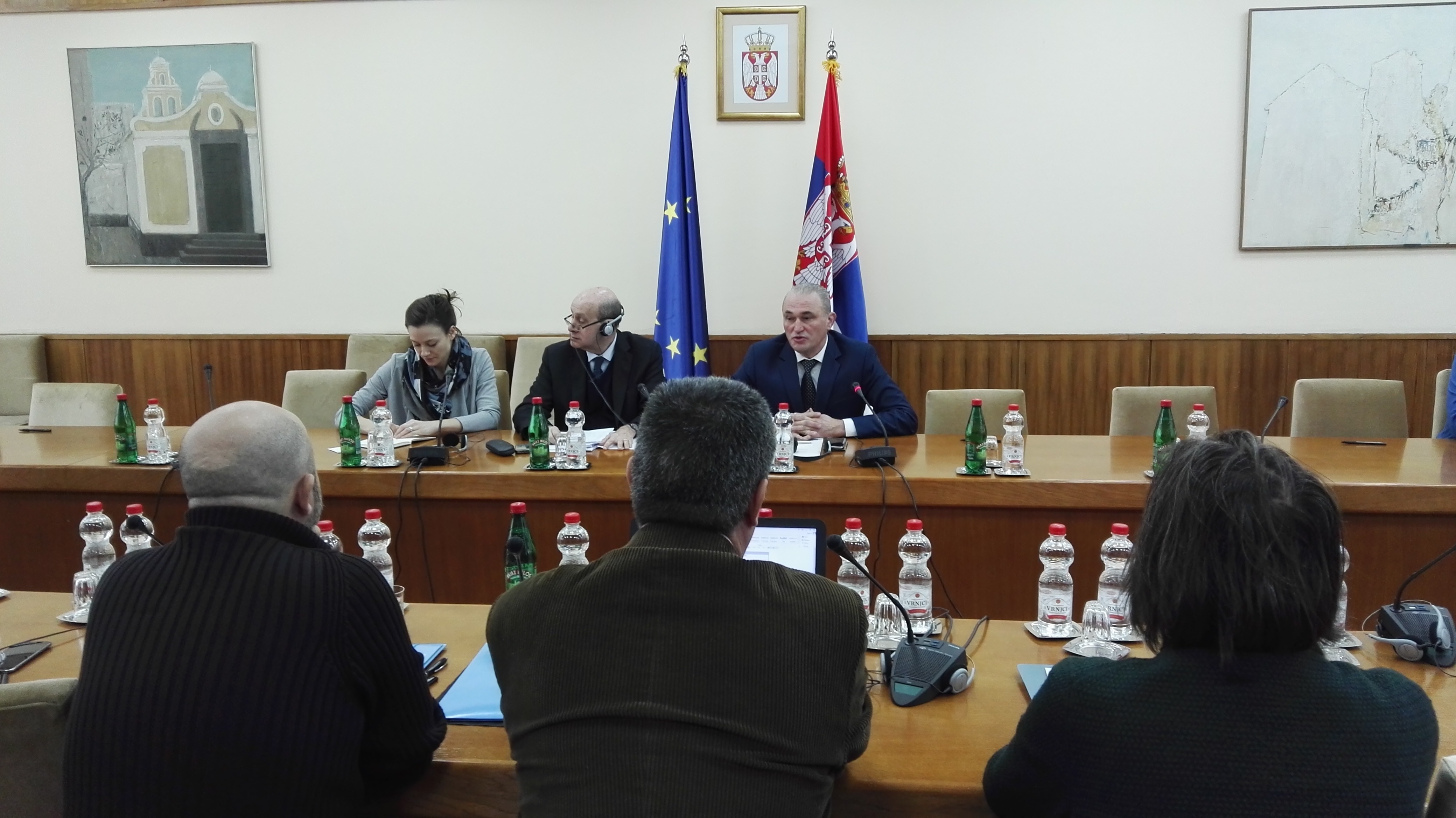
The Drug Policy Network South East Europe held its 2nd regular annual General Assembly in Belgrade, Serbia from 3rd to 5th December 2017. It was the opportunity to meet, analyse the work looking back on the year that almost ended and decide about the future work.

Thanks to the generous support from the Office for combating drugs of the Republic of Serbia, the Assembly was held in the Palace Serbia, the governmental representative building. Representatives of 15 out of 22 member organisations participated, including 2 newly recognised members.

Our distinguished guests at the Assembly were His Excellency Ambassador of Portugal Augusto Saraiva Peixoto and Director of the Office for Combating Drugs of the Government of Serbia Milan Pekić.

The Assembly adopted the report about the work in 2017 and financial report presenting the Network’s main activities. The plans for 2018 were also adopted, based on the strategic priorities proposed by the Board and ideas for possible projects and partnership building.

Changes in the Board were introduced to ensure that this governing body is active in implementing the action plan. Vlatko Dekov (HOPS, FYRO Macedonia) is elected new Chairperson and Nebojša Đurasović (Prevent, Serbia) new Vice-Chair. While Denis Dedajić (Margina, Bosnia Herzegovina), Marios Atzemis (Positive Voice, Greece) and Saša Mijović (4 Life, Montenegro) remain members of the Board as Secretary, Treasurer and Member, newly elected Board member Anna Lyubenova (Initiative for Health Foundation,IHF, Bulgaria) will serve as Deputy Secretary, and Erlind Plaku (Aksion Plus, Albania) as Deputy Treasurer.

In order to establish common positions, small group work was organised on key issues for which DPNSEE will issue statements in the future. Cannabis and Drug checking were specific topics for sharing and generating ideas.

Community Based Services for People Living with HIV and AIDS

The National Conference on Innovative Community Based Services for People Living with HIV and AIDS, held in Belgrade, Serbia on 1 December 2017, was also the final activity of two-year project “Towards standardization of community based social service provision for people living with HIV in Serbia”, implemented by the Union of Organizations of Serbia dealing with the protection of people living with HIV and AIDS (USOP) with partners: Žena plus, AID +, Centre AS, Sunce, Crvena linija, Stav + and Nova + (PLHIV associations from Belgrade, Novi Sad, Niš, Subotica and Pančevo). The project is part of the “European Union Support to an Inclusive Society” program, funded and implemented by the Delegation of the European Union to the Republic of Serbia in cooperation with the Ministry of Labor, Employment, Veterans’ Affairs and Social Affairs through the IPA Program (The Instrument for Pre-Accession Assistance).

The conference addressed the activities of both civil and government sectors in response to the HIV epidemic, especially when it comes to social care, health care and legal assistance to people living with HIV and AIDS (PLHIV), but also prevention and the possibility of stopping the spread of infection, as well as reducing stigma and discrimination against this population.

The services are the basic means of achieving the goals of social protection. The Law on Social Protection recognizes five groups of services for which the standards were developed by the project or are in phase of development. In addition to these, other community-based innovative services have been developed in the community to respond to a wide range of people’s needs. One of the innovative services is peer support service for people living with HIV and AIDS offered by activists living with HIV and AIDS.

Cooperation with Portugal – the leading country in drug policy

During several events which happened in October, DPNSEE have deepened existing and established new relations with Portugal.

APDES outreach team in action

Our staff member Irena Molnar had an unofficial visit to APDES (Agência Piaget para o Desenvolvimento), a non-governmental which promotes integrated development in their headquarters in Vila de nova Gaia, near Porto. APDES main goal is to intervene with vulnerable communities and people, in order to improve their access to healthcare services, employment and education, working for the empowerment of institutions and individuals, as well as for the reinforcement of social cohesion. They developed several activities in this municipality and cities like Porto, Barcelos, Guarda, Viseu, Setúbal and Lisbon. The services they deliver are related to health, harm reduction and human rights, among others. Irena had a special opportunity to spend a day with the outreach team of GIRUGaia project, inter-disciplinary outreach team that works with drug users. Guided by principles related to harm reduction, it promotes the use of aseptic material and the adoption of lower risk use practices. It also provides services that promote citizenship, health and social inclusion. During several days, with good help of Joana Francisca Canedo, Advocacy and Policy officer in APDES, Irena got introduced to the Portuguese policies and functioning of the system itself, but most important also situation on the ground.

As a part of the TWIST project at Lisbon Addiction 2017 conference, several days later, member organisations representatives and Staff members had an opportunity to meet with various officials and activists from Portugal and learn about their policy and activities. We got an opportunity to informally meet with executive director of APDES, Jose Queiros, with whom we discussed future cooperation of APDES and DPNSEE. We presenting the DPNSEE work and discussed various issues and potential future cooperation. That included support which APDES could offer to DPNSEE member organisations through study visits, know-how exchange and other activities. Lisbon Addictions 2017 and the TWIST project haven’t served only as a great opportunity for learning from academia, but also to reconnect with old and make new connections with wider European specialist in areas related to substance use.

Irena and Milutin with Jose Queiros, executive director of APDES

Just after returning to Serbia, DPNSEE staff members had a meeting with the Ambassador of Portugal His Excellency Augusto Saravia Peixoto and the Deputy Head of Mission Ms Graça Costa Macedo. The meeting was scheduled on the DPNSEE initiative for cooperation.

We had an interesting exchange about the Portuguese drug policy, which is usually seen as one of the most effective in the European Union, agreeing easily that a comprehensive approach involving all stakeholders is necessary for obtaining good results. DPNSEE representatives presented their recent cooperation with their peers in Portugal, especially APDES. The Ambassador and his colleagues offered support in ensuring a wide array of contacts for the visit to Portugal, where a delegation consisting of governmental and NGO representatives from Serbia would have the opportunity to get a full insight into the policy and field activities. Following that visit and on the basis of the priorities established by the new Action Plan Against drugs in Serbia 2018 – 2020, the Embassy will assist with finding most suitable experts that would come to Serbia and bring their experiences to local stakeholders.

His Excellency is also interested to extend cooperation to other countries of the region where he represents Portugal: Bosnia Herzegovina, FYRO Macedonia and Montenegro.

The fifth days of public policies

Policy Analysis and Policy Creation Group (GAJP), Center for Public Administration, Local Self-Government and Public Policy of Faculty of Political Sciences with the support of the Konrad Adenauer Foundation and PERFORM, organised The Fifth Days of Public Policy at the University of Belgrade, Faculty of Political Sciences.

The topics of the event were: construction policy, public advocacy as a science and art, the role of citizens in changing public policies, privacy on the Internet, circular economy, public administration reform and drug policy of Republic of Serbia. Creators, decision-makers and politicians, academics, private sector, state institutions and civil society organizations spoke about these topics. During Friday and Saturday, workshops were organized to bring participants closer to the process of creating public policies.

Drug Policy Network South East Europe participated in the panel devoted to drug policies, alongside with Director of The Office for combating drugs, Milan Pekić and Miroslav Savković farmacologist, Professor at the University of Belgrade, Faculty of Pharmacy.

Panel discussion included topics like: The current state of affairs when a drug policy is in question and how is the system of drug control in Serbia regulated? What are the possible alternatives when policies in this field are concerned? While Irena Molnar, Communication officer of the Network drove attention to harm reduction programs and culture change of substance use in Serbia, Milutin Milošević, Executive director spoke about process of defining amendments to Laws and work on it at institutional Level included but not limited to process, public debates, working groups, engagement of NGOs. He was also briefly explaining processes of evaluation of Strategy and Action plan and what has been done so far.

Around 100 participants voted the panel on drug policies as the most interesting at the event.

Lisbon Addictions 2017

The second European Conference on Addictive Behaviours and Dependencies – Lisbon Addictions 2017 – was held from 24 to 26 October 2017 building on the success of the first Lisbon Addictions, which took place in September 2015. That conference was originally planned as a small, one-off event to support networking across European addiction professionals. But, organisers were taken by surprise by the enthusiasm that the Conference generated. Participants’ evaluation showed that it provided a unique and valuable opportunity for discourse and networking across the different disciplines involved in this challenging and dynamic area. Lisbon Addictions was therefore made a biennial event.

Vision for Lisbon Addictions 2017 was to provide a European focused Conference but with an international perspective. Therefore, more than 1 200 participants from over 71 countries came to Lisbon, including policy actors, researchers, academia, practitioners, health professionals, governmental and non-governmental representatives, patient organisations, health economists and others. The conference spanned all aspects of the addictions field with wide diversity of the submissions made. Participants had the opportunity to select from over 500 oral presentations, view over 200 posters and hear from over 20 keynote speakers representing some of the most eminent scientists and practitioners working in the addiction field today.

The evaluation of the first conference also indicated a demand to go beyond the usual conference communication formats and complement the programme with an integrated training event to explore a selection of “hot” drug and addiction topics in-depth and build capacity among different stakeholders, using novel interactive dynamic learning formats, knowledge and experience exchange, and multi-sector networking environments. The TWIST project (Training WIth STakeholders – Applying EU drug and addiction research) was prepared as a training strand, with the participation of the target audience (early stage professionals) and other stakeholders. Aim was to meet this need through a two-day training programme embedded within the scope and programme of LxAddictions17. Most of the participants from South East Europe, especially from the civil society sector, were supported by TWIST. The topics, contents and delivery formats of the TWIST training programme were conceptualised and designed through a participatory process with selected EU representatives of the stakeholder groups.

The conference was held in the excellent facilities of Lisbon’s Congress Centre which provides the opportunity to hold large major sessions as well as smaller venues for more intensive and participatory discussions.

Sharing at the conference, either at scheduled sessions or in informal setting, helped build future collaborations between professionals both within Europe and beyond.

The next conference is already scheduled for 23 – 25 October 2019, again in Lisbon.

RYCO Open Call for projects

Six countries of Western Balkans: Albania, Bosnia and Herzegovina, Kosovo*, Montenegro, Macedonia and Serbia founded the Regional Youth Cooperation Office (RYCO) in July 2016 aiming to promote the spirit of reconciliation and cooperation between the youth in the region through youth exchange programs.

RYCO’s main objectives are:

  • Exchange and mobility: Increased mobility and exchange of young people and their key workers in the Western Balkans, which is fully representative of the diversity of the Western Balkan region.
  • Sectorial development: Greater competence among voluntary and/or professionals/youth workers accompanying young people in youth, education, sport, culture activities, dealing with reconciliation, intercultural learning and other regional topics through exchange and mobility.

RYCO launched its first Open Call for project proposals of civil society organizations and high schools in the field of promoting reconciliation in the region through increasing youth mobility, cooperation and activism. RYCO wants to empower youth for setting the road to better cooperation in the Western Balkans and ensure further progress towards European integration of the region.

The overall financial envelope for this call is EUR 900, 000. Requested budget should be between 10.000 and 35.000 Euros. Deadline for applications is 15 November 2017.

Full information about the Call is available from the RYCO webpage following this LINK>>>

Info sessions are organised in each of the Western Balkans countries. You can find the schedule of the sessions following this LINK>>>

Treatment and Harm reduction services in the context of the economic crisis

DPNSEE member organisations Diogenis organised conference “Treatment and Harm reduction services in the context of the economic crisis, developments and challenges” from 19 to 21 October 2017 in Nicosia, Cyprus. The conference aimed to provide knowledge about the developments and challenges concerning
treatment and harm reduction services in the context of the economic crisis in countries of South
and South East Europe and to discuss possibilities which can guarantee the continuity, quality and
further development of services.

This conference is part of the project “New Approaches in harm reduction policies and practices”, financially supported by the European Commission. Transnational Institute from The Netherlands is the lead organisation of the project and partners are Diogenis, Drug Policy Dialogue from Greece, Forum Droghe from Italy and the International Centre for Ethnobotanical Education from Belgium.

Issues discussed at the conference included:

  • The way in which the competent authorities and the responsible service providers reacted to the economic crisis; the role of Civil Society Organisations in this respect and the lessons learned for securing the continuation of harm reduction and treatment services to drug users.
  • Strategies and action plans for effective harm reduction advocacy at the national level.
  • Developments on cannabis policy in South and South East Europe countries. Regulation of cannabis for medical purposes.
  • Decriminalisation of drug possession for personal use.
  • Supervised consumption sites.
  • Recent developments in countries of South and South East Europe.

The conference also paid attention to the new EU Action plan on drugs 2017-2020 and the developments in drug policy on the international level.

Diogenis cooperated with researchers from different countries, who were responsible to conduct interviews based on a research questionnaire and summarize the outcomes of these interviews in a related short report. All reports were collected and presented in a paper which was the background of the discussion at the conference.

Participants were representatives of civil society, national agencies and experts from 12 European countries. They had the opportunity to exchange information, good practices and policies on drugs in their countries as well as Europe-wide, amid economic difficulties and social challenges in Europe.

Peti dani javnih politika

Grupa za analizu i kreiranje javnih politika, Centar za javnu upravu, lokalnu samoupravu i javne politike Fakulteta političkih nauka uz podršku Konrad Adenauer fondacije i PERFORM-a objavljuju konkurs za učesnike/ce petih Dana javnih politika koji će biti održani na Fakultetu političkih nauka Univerziteta u Beogradu, od 27. do 29. oktobra 2017. godine.

Teme petih Dana javnih politika biće: građevinska politika, javno zagovaranje kao nauka i umetnost, uloga građana u promeni javnih politika, privatnost na internetu, cirkularna ekonomija, reforma javne uprave, politika RS prema psihoaktivnim supstancama na kome između ostalih učestvuje i Mreža za politike prema drogama u jugoistočnoj Evropi. O temama će govoriti kreatori i donosioci odluka i politika, predstavnici akademske javnosti, privatnog sektora, državnih institucija i organizacija civilnog društva. U toku petka i subote biće organizovane i radionice sa ciljem da učesnicima približi proces kreiranja javnih politika.

Pravo da se prijave na konkurs imaju diplomci i studenti/studentkinje svih akreditovanih fakulteta u Republici Srbiji, predstavnici organizacija civilnog društva, donosioci odluka i aktivisti/kinje političkih partija.

Za prijavu na konkurs potrebno je da pošaljete Vaš CV na adresu: konkurs@gajp.org

Učešće na Danima javnih politika je besplatno. Učesnici će po završetku dobiti sertifikat. Broj učesnika je ograničen.
Rok za prijave je 20. oktobar, u 23:59 časova. Naknadne i nepotpune prijave neće biti razmatrane.

Za sva dodatna pitanja u vezi sa konkursom i Danima javnih politika kontaktirajte GAJP na:

konkurs@gajp.org
www.gajp.org
www.danijavnihpolitika.rs

ili preko društvenih mreža:
Facebook/nvoGAJP
Twitter: @nvoGAJP
#DJP2017

Više o prethodnim Danima javnih politika možete pogledati na sajtu:
www.danijavnihpolitika.rs