Harm Reduction @Work

Correlation – European Harm Reduction Network announced that the Fifth European Harm Reduction Conference will be held from 4 to 6 November 2020 in Prague, Czechia.

The Conference Motto is

Harm Reduction @Work

innovation, community & political leadership

The Conference will be organised by the Correlation European Harm Reduction Network in close cooperation with the Eurasian Harm Reduction Association and the Czech organization Sananim. DPNSEE supports and endorses the Conference.

The 5th European Harm Reduction Conference targets professionals from the community working in the broader area of harm reduction, policy-makers and politicians, researchers, and media representatives. Registrations are already open.

The conference will present the latest harm reduction developments and good innovative practices. It will discuss drug policy and its implications on people who use drugs and other groups, including not only sex workers but also people living with HIV.

The meeting intends to broaden the view on harm reduction while addressing related issues such as social inclusion and homelessness. Finally, the conference provides an appropriate platform to create links and synergies between national and European stakeholders.

The conference programme is currently under development. The European Network of People Who Use Drugs, the World Health Organization Regional Office for Europe, the European Monitoring Centre Drugs and Drug Addiction and other vital stakeholders from Europe are joining us in this effort.

Follow all developments about the Conference following this link>>>
DPNSEE General Assembly and SEE dialogue on drugs 2020

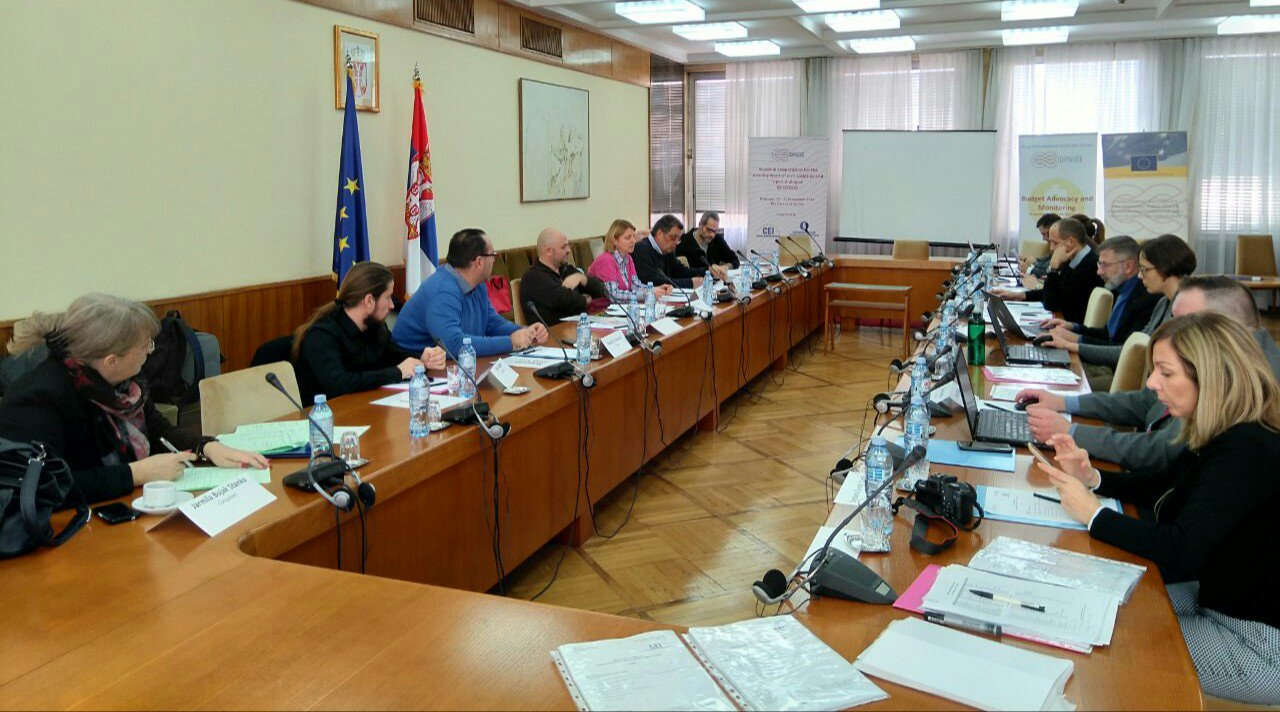
The regular annual DPNSEE General Assembly will be held on 20 February 2020 in Belgrade. The key topic of the Assembly will be finalising the strategic plan of the Network. The Assembly will include usual agenda point on reporting and planning the work in 2020.

Following the success of the first dialogue between national authorities and civil society organisations held in 2018, the Office for Combating Drugs of the Government of the Republic of Serbia and Drug Policy Network South East Europe organize the second meeting of national authorities responsible for drug policy and civil society organisations from South East Europe. The meeting will be held on Friday 21 February 2020 in Belgrade, in the Palace of Serbia.

The aim of the meeting is to discuss about issues of importance for drug policy and reflect on the cooperation between authorities and civil society organisations at the national and regional level and perspectives of future cooperation.

The key topics for this meeting will be:

  1. Decriminalisation of drug consumption and possession for personal use – challenges and experiences
  2. Role of civil society in drug policy

Governmental representatives and civil society organisations from Albania, Bosnia Herzegovina, Bulgaria, Croatia, Greece, Kosovo*, Montenegro, North Macedonia, Romania, Serbia and Slovenia will have an opportunity to hear results from decriminalisation processes in Italy, Portugal and The Netherlands, discuss pros and cons for drug decriminalisation in countries of the South East Europe region, share their experiences and examples of successful inter-sectorial cooperation and propose recommendations for improvements.

Representatives of ministries of health, justice, social services and interior of the Government of Serbia, Directorate of Police, Republic Public Prosecutor, Office for Supporting Civil Society, other civil society organisations, embassies, and international organisations are also invited to the meeting.


Drug misconceptions in Serbia and in the world

DPNSEE Executive Director Milutin Milošević had a long interview for Talas – Serbia based media portal “about politics, economy and ideas”. That was an exceptional opportunity for a long and comprehensive presentation of an open and active approach the Network has on drug policy.

The issues involved included:

  • What are the biggest misconceptions about drugs that exist in public?
  • How do laws regulate drugs in Serbia? Which changes are needed?
  • Does the current “War on drugs” produce results and what are the alternative approaches?
  • What does the application of the law look like in this field?
  • What is the principle of opportunity and how often is it used?
  • What is the principle of harm reduction?
  • How dangerous is the stigmatization of users and how do we deal with it?
  • What does rehabilitation look like in Serbia?
  • Is marijuana legalization an economic opportunity for Serbia?

The interview, unfortunately only in Serbia, is available here

Strategic planning to improve sustainability of HIV prevention services

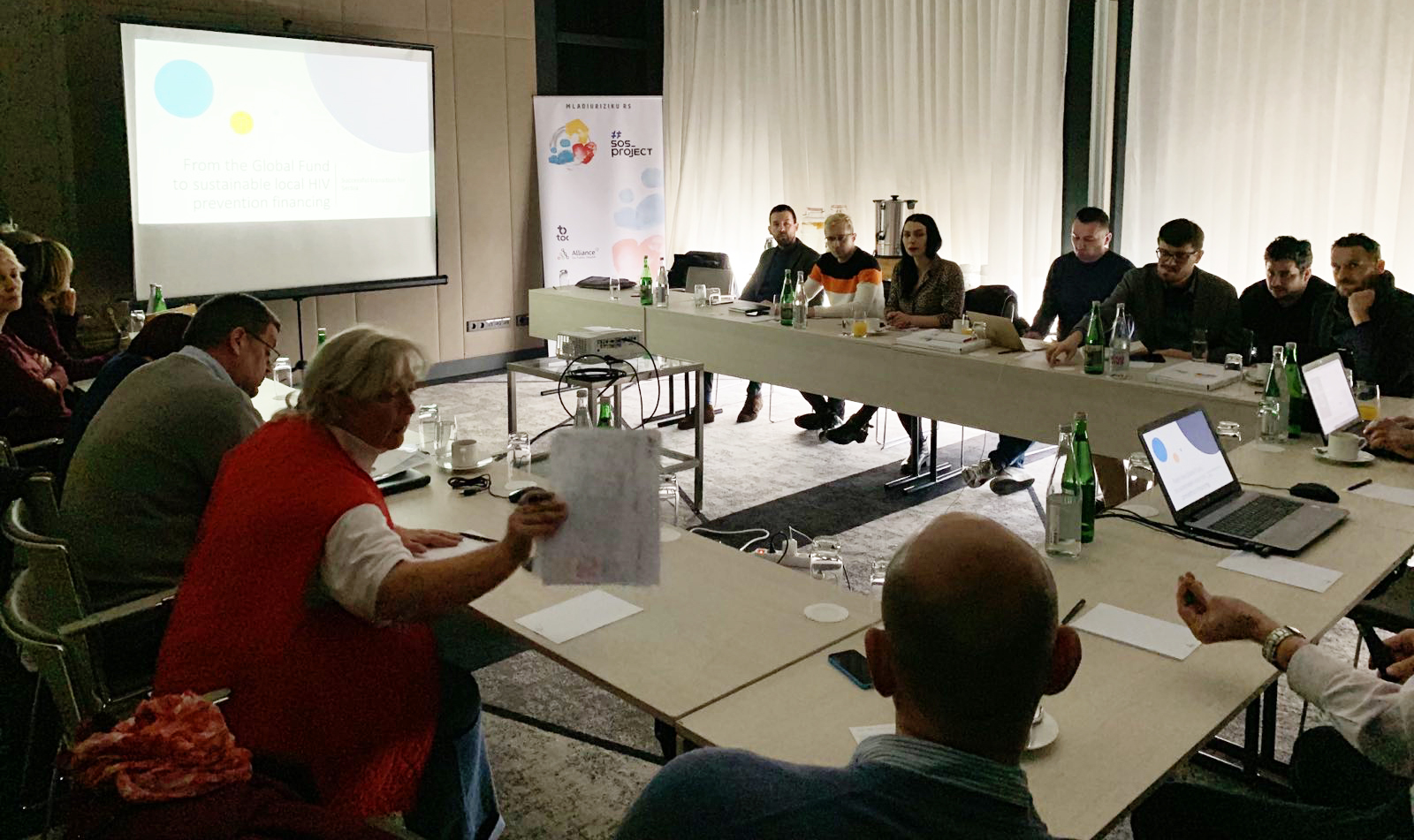
The Alliance for Public Health engaged a group of experts to perform a brief assessment of the latest experiences in the Serbia on financing civil society organisations with national funds, including the Global Fund national grant, and to plan on the national level for the sustainability strategy and concrete steps.

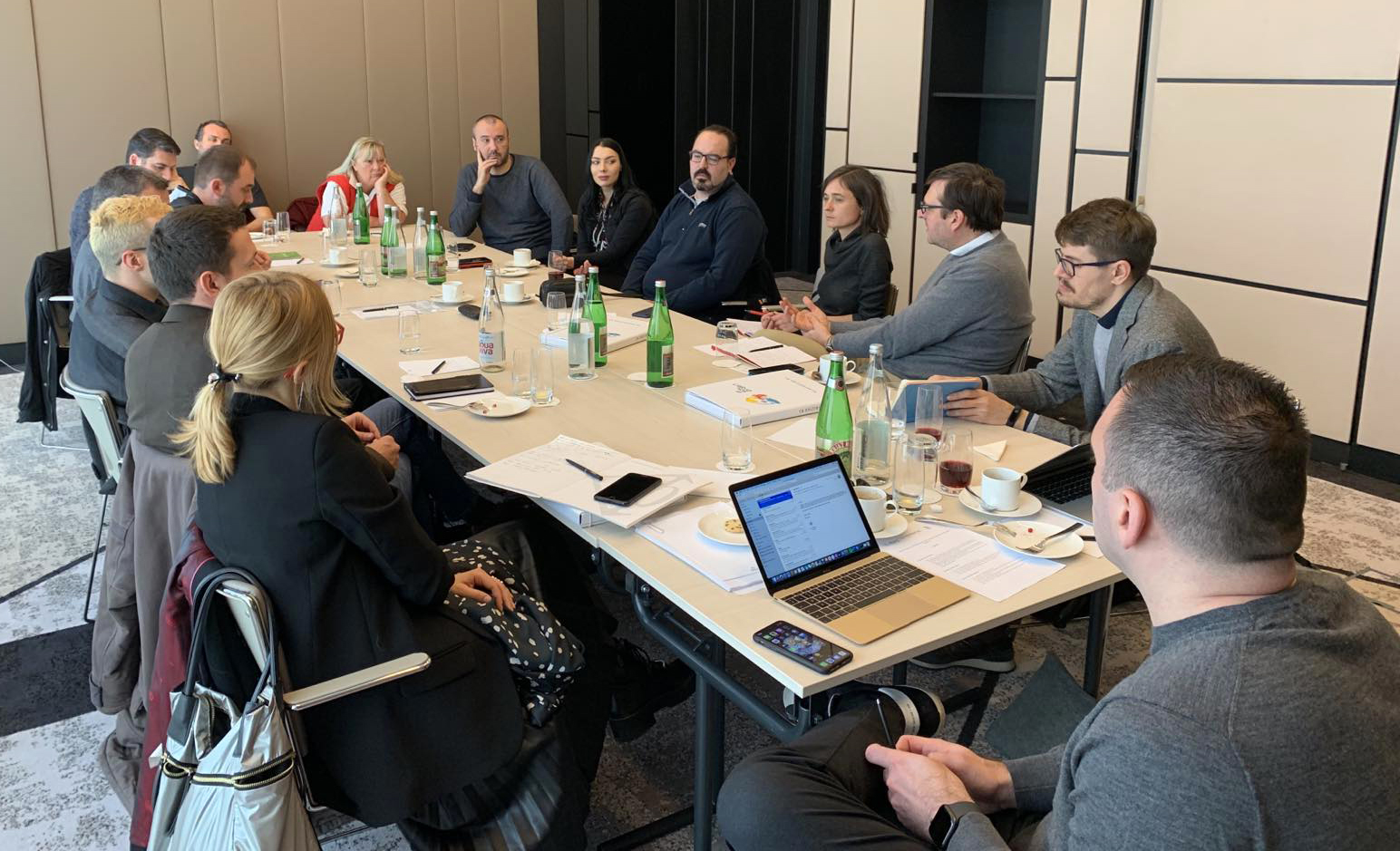
The experts visited Serbia from 16 to 20 December and held a serial of meetings with the Ministry of Health, Ministry of Youth and Sports, Health Insurance Fund, CSOs and other stakeholders. At the last day of the mission, the concluding stakeholder consultation with presentation of preliminary findings was conducted.

The visit was organized by DPNSEE member organization Timočki omladinski centar, who is the national lead of the multi-country project implemented by the consortium led by the Alliance. Representatives of DPNSEE and our other member organisations Prevent and Duga also contributed at the meetings.

Our initiative presented at the Global Fund Board meeting

The Developing Country NGO Delegation at the Global Fund published a statement with the 42nd Board Meeting highlights, including 8 important matters they pushed for at the meeting, with ways that civil society can move them forward. The statement is available following this link>>>

The initiative of the three regional networks: Correlation – European Harm Reduction Network, Eurasian Harm reduction Network and Drug Policy Network South East Europe to respond to the critical situation concerning the sustainability of harm reduction services in Albania, Bosnia and Herzegovina, Bulgaria and Romania was among the issues that the Delegation raised at the Global Fund Board meeting. It is mentioned in the point 4 of the statement:

Addressing civil society concerns: The Developing Country NGO brought to the Board and bilateral meetings concerns raised by civil society organisations including those by nearly 100 NGOs about the ending of multi-country grants in West Africa; cases of the failed transitions and interruption of services for key populations, including the lack of funding for harm reduction programs in Albania, Bosnia and Herzegovina , Romania and Bulgaria; and exploring next steps to ensure access to health services, treatment and care in Venezuela.

We hope that the Global Fund will make some concrete steps in helping us find a quick response to the urgent needs and building a sustainable solution in these countries.


New issues for monitoring

Every year in autumn, The European Monitoring Centre for Drugs and Drug Addiction (EMCDDA) organises Reitox meeting – the European information network on drugs and drug addiction. The 8th Extended Reitox network meeting was held on 12 November in the EMCDDA premises in Lisbon, Portugal. It brought together representatives from circa 50 countries, including: the Heads of the 30 Reitox national focal points from the 28 EU Member States, Norway and Turkey; representatives from the 6 Western Balkan countries covered by the European Instrument for Pre-Accession Technical assistance project (IPA7) and representatives from 15 European Neighbouring Policy area countries.

This year’s meeting will be dedicated to the topic ‘New issues for monitoring’. The agenda included issues like Drug policy debates: how routine monitoring data used?, Introduction on new proposal of the UNODC Annual Reports Questionnaire (ARQ) and Cannabis: latest developments.

During the session on Prevention of infectious diseases, DPNSEE Executive Director Milutin Milošević presented Situation in the Western Balkan countries. Besides presenting the Network and briefly describing the type of data that are available to us, a detailed view on the situation in the Western Balkan countries was given including prevalence of HIV, HCV, HBV among people who inject drugs, provision of harm reduction services and access to treatment, barriers and challenges and relevant policies in the region.
Participation in the Reitox meeting was an excellent opportunity to present the potential of the Network for partnership and discuss modalities for further cooperation with EMCDDA and national drug agencies

A publication about our project

In the last decade, an increasing number of donors are withdrawing their support for healthcare. This has been especially true for middle-income countries, where the growth of domestic resources was one of the triggers for donor funding reduction. The Global Fund to Fight AIDS, Tuberculosis and Malaria (the Global Fund) has termed this process as “transition”.

In 2018 the Open Society Foundations, through the Eurasian Harm Reduction Association (EHRA), initiated the project Budget Advocacy and Monitoring in countries of South East Europe. It provided funding to three transitioning countries in the Balkan region – Bosnia and Herzegovina, Montenegro, and Serbia – through the sub-regional network organization, Drug Policy Network South East Europe (DPNSEE), to support budget advocacy for harm reduction services. The local coordinating organisations are Margina, Juventas and Prevent.

The case study looks at the implementation of this project as one of the demonstrations of the SBF mechanism, with the objectives to:

  • Document the pilot in 3 Balkan countries and to analyse the strengths and weaknesses of this approach and to develop suggestions for improvement; and,
  • Document the results, successes, and challenges of the budget advocacy projects supported through this approach.

Our project serves as a pilot for the Sustainability Bridge Funding (SBF), an idea that has been discussed among donors and civil society organizations as a way of mitigating the negative effects of transition and in providing support for key essential services for communities and key populations. As a safety net mechanism, it should respond to gaps in funding and mitigate adverse effects of donor funding withdrawal.

Please find the document following this link>>>

Budget analysis presented in Serbia

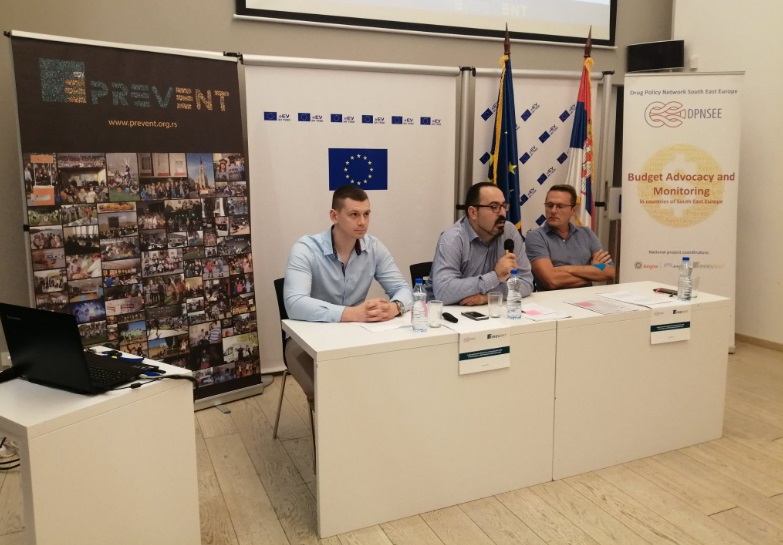
The budget analysis in Serbia was completed and presented on an event organised jointly by Prevent and DPNSEE in the EU Info Centre in Belgrade on 1 October 2019. The analysis was prepared in scope of the project Budget Advocacy and Monitoring in countries of South East Europe by the team of consultants engaged by Prevent.

The surveys were of a meta-analytic nature, conducted on data and information obtained on the basis of publicly available documents published by state bodies: the Ministry of Health, the Ministry of Finance, the Parliament of the Republic of Serbia, the Customs Administration and the Agency for Business Registers.

The aim of the research was to explore the status and trends of program financing in order to find opportunities and solutions for securing funds for their sustainability.

The analysis clearly shows a continuous decrease in the allocation of funds for preventive health care, regardless of whether the total budget of the Ministry is increased or decreased and whether the budget of the Ministry of Health occupies a higher or lower percentage in the national budget for a given year. The most significant finding is the constantly present difference in the planned and executed budget – the allocated/spent funds are continuously reduced compared to those planned.

The Analysis of the budgets in Serbia is available following this link>>>

Besides the analysis of the budget of the Ministry of Health which was produced, DPNSEE has prepared and presented an analysis of the public calls for prevention of the Ministry of Health. This analysis is available following this link>>>.
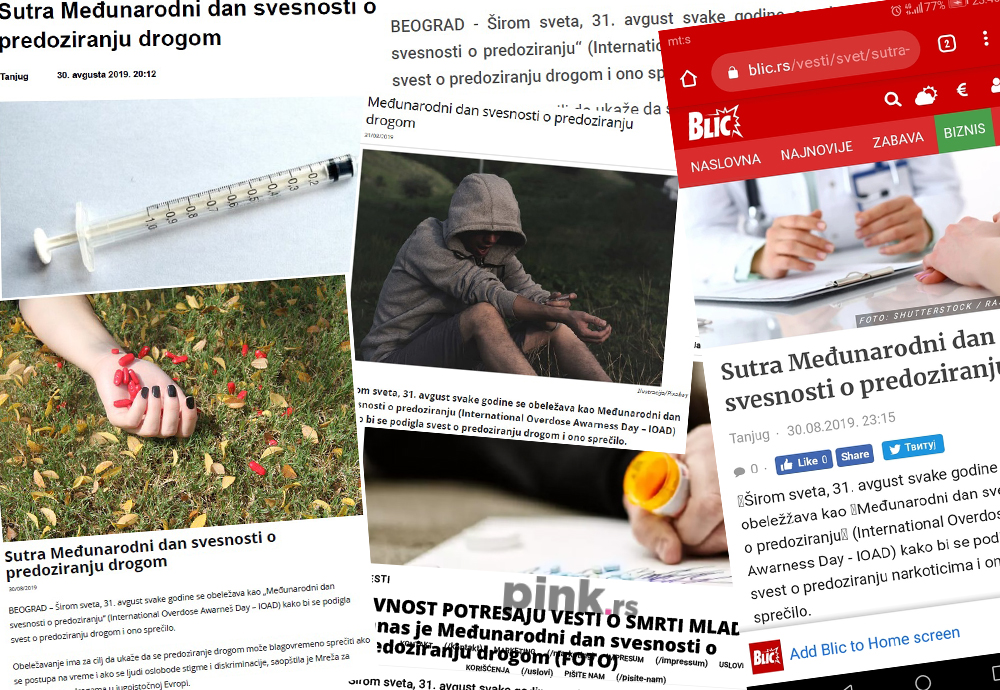
 

The International Overdose Day marked around SEE

On the occasion of the International Overdose Awareness Day (IOAD), DPNSEE issued a press release underlining the importance of awareness and fighting stigma on overdose and presenting data about the issue worldwide and especially in Serbia. The release was published by the national Press agency Tanjug and several other media and portals.

The press release is downloadable following this link>>>

In Montenegro, NGO Juventas also issued a press release (supported by the NGO 4 Life) and held a press conference where Marija Mijović, coordinator of Programme of direct assistance to the people in risk of social exclusion presented situation in the country. A movie “Overdose”, directed by Mladen Vujović, outreach worker at the Drop-in Centre of NGO Juventas, Montenegro in cooperation with the Hungarian Drug reporters, was screened at the Green Montenegro International Film Festval.

Our colleagues from the Romanian Harm Reduction Network created a special video for this year’s IOAD campaign. Have a look at “Voices of the drug users. Episode 1”

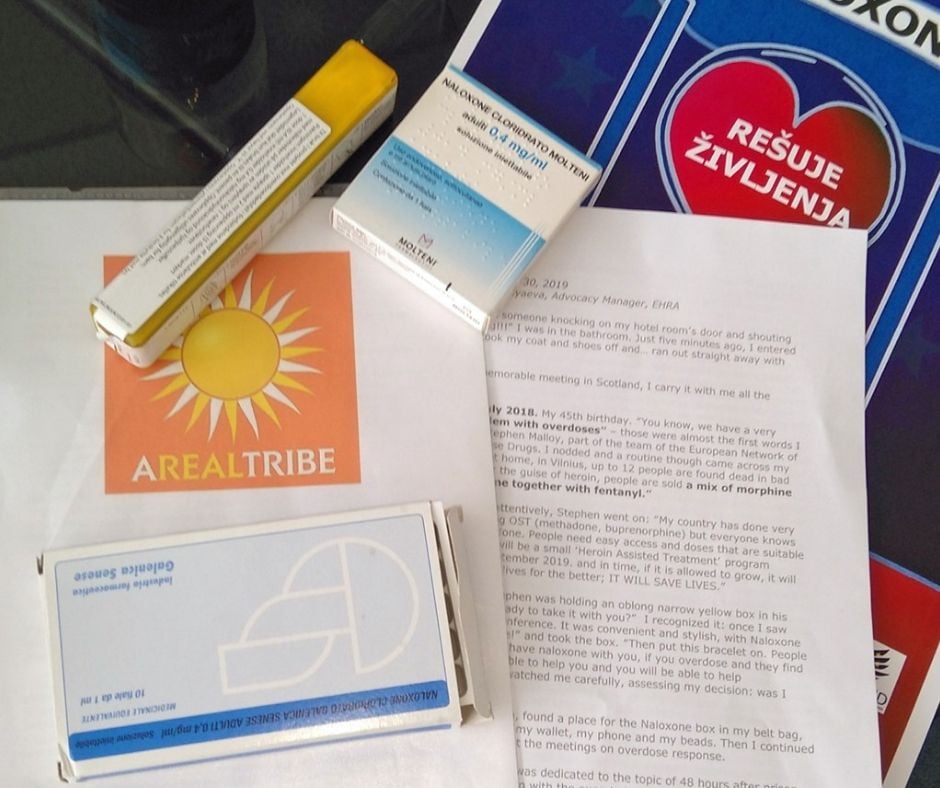
Association AREAL and AREALTRIBE group from Slovenia organized a workshop dedicated to the International overdose awareness day on 1 September 2019 in Ljubljana, Slovenia. Participants were educated how to respond if an individual finds himself or herself in that position.

Our colleagues from the Healthy Options Skopje (HOPS) promoted widely their webpages related to overdose and drugs

Thousands of people die each year from drug overdose and the fact is, overdose is an increasing global problem. Spreading the message that the tragedy of overdose and injury is preventable, International Overdose Awareness Day raise awareness of overdose and reduces the stigma associated with the drug-related death. Also, the day of awareness is providing support to families and loved ones of overdose victims, so that no one is forgotten.

Time to remember – time to act.

Our new website

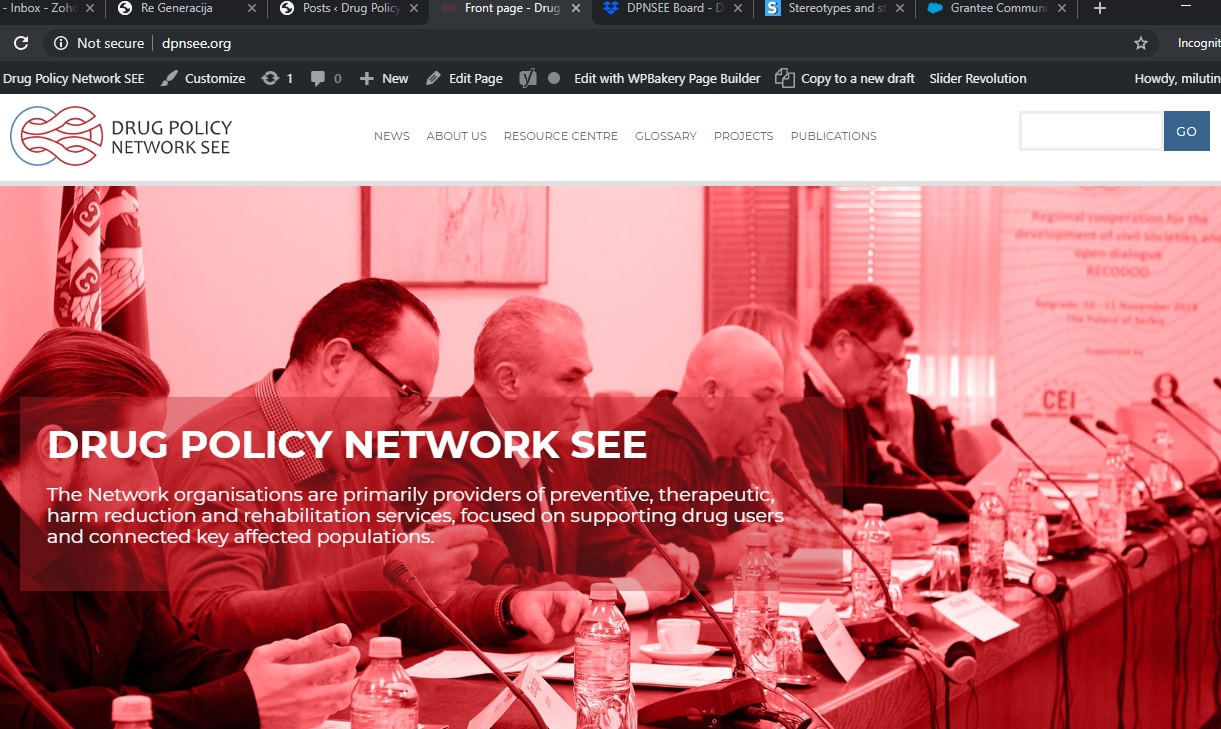
DPNSEE Office team is proud to present our new website. This is a result of a great work of our colleagues Snežana and Nenad and expert work from Vuk Ninić from STANDARD-E.

Besides visual and improvements in organisation of the site, we updated two important services and made them easily available.

At the Resource Centre, you can currently search through more than 360 documents classified in 7 categories, from 12 countries of the region (including even Turkey) and international, on 11 languages. Thank you once again to our recent volunteer Marija Spasić and Staff members Irena Molnar and Nenad Maletin for compiling such a comprehensive collection of documents and Nenad again for making it available for web search and download.

The pages for the Glossary of terms used in drug policy currently provide you with the on-line versions of the Glossary in English and Serbian. We are in process of uploading the versions in Spanish, Bosnian and Montenegrin and connecting them to establish relations between terms in different languages. PDF versions are already available from the website. Thank you to our recent volunteer Vladana Stepanović for collecting most of the terms and many other colleagues who helped with additions and translations.

Two more new pages are also in the current version – those for DPNSEE Projects and Publications.

We hope that you shall like, use, link and promote our website. Also, we welcome all your comments which can be of help to making this website useful.

We would very much appreciate your suggestions for new terms for the Glossary (or improved texts for existing terms) and documents for the Resource Centre (or information about new versions of the existing documents).