Reducing the problems of the dependency

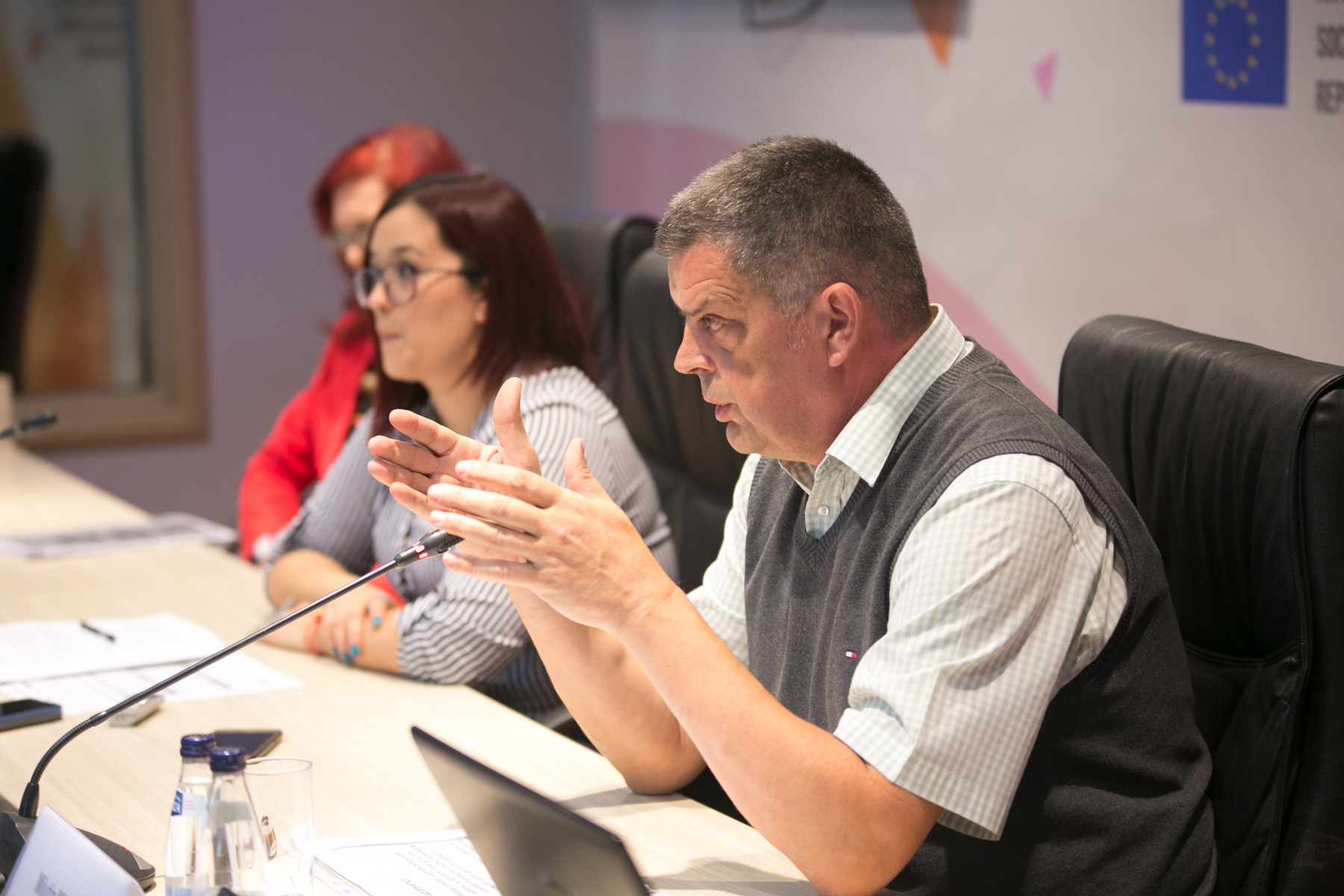
The annual Press Conference “Activities on the field of reducing the problems of the dependency” was held on 20 December 2018 in the EU info Centre in Belgrade. Speakers at the Conference were Nebojša Đurasović, President of the Association Prevent, Milan Pekić, Director of the Office for Combating Drugs of the Government of the Republic of Serbia and Milutin Milošević, Executive Director of the Drug Policy Network South East Europe. Representatives of the institutions and organisations with whom Prevent and DPNSEE cooperate participated in the Conference.

Nebojša Đurasović presented activities which Association Prevent conducted in scope of the project “At Risk Youth Social Empowerment” and other projects realised in 2018. For a good work, Prevent deserved the award “Responsible attitude and work with vulnerable young people” offered by the city of Novi Sad. Đurasović also spoke about extending the programme of needle exchange to Belgrade and draw attention to the issues of drugs in Serbia including raising number of overdose deaths in young population.

Milan Pekić presented the co-operation between the Office for Combating Drugs and civil society organisations in Serbia as an example of good practice, especially in the process of designing the new Action Plan for implementation of the Strategy for drug prevention.

Milutin Milošević presented a situation in the region of South East Europe, activities in 2018 and plans of the Drug Policy Network South East Europe for the future. His comments on new psychoactive substances and change of culture of drug use raised a special attention.

Representatives of institutions and organisations that co-operate with Prevent and Drug Policy Network SEE were attended the Conference and took discussion on several topics, especially about discrimination.

The open discussion that followed was mainly focused on the issue of discrimination of drug users.

Two news publications were presented at the Conference: Prevent published the one on “Empowering against the discrimination of youth at risk“, while DPNSEE prepared the Serbian version of their Glossary of terms used in drug policy with the support of the Office for combating drugs.

Videos from the Conference are available in following this link >>>

Project partners meeting

The meeting of the partners in the EU Funded project “Strengthening NGO capacity and promoting public health and human rights oriented drug policy in South Eastern Europe” was held in Belgrade, Serbia, on Monday, 10 December 2018. This was the last meeting of the project which lasted for 4 years, supported by the European Commission DG Near.

The partners approved the minutes from the recent meeting, held on 12 September by Skype, and partners informed about the recent activities.

Margina has finished with the activities of the programme. Prevent has yet to implement a press conference, most probably in Belgrade by the end of the year. Diogenis has finished with the activities of the programme, except from the last newsletter. Olga Pateraki informed the partners of the reallocation regarding the budget of Diogenis, in order to translate in Greek and print the booklet “Drug Policy reform, The UNGASS 2016 a catalyst for change”.

DPNSEE Executive Director Milutin Milosevic informed the partners about the activities that has been implemented during this period: the country visits in Romania and in Greece, the General Assembly that took place in Belgrade, the capacity building that was held during September, the Resource Centre and the Glossary. The Glossary has been printed and there is in English, Spanish and Serbo-Croatian, with the intention to be translated also in other languages. The discrimination paper has been started but not reached yet the desired recorded cases.

The partners have agreed to send all their final financial reports by the 10th of January to Diogenis in order to prepare the final financial report, who is collecting and preparing the reports. The financial report will be also in a format of detailed breakdown that the EC asks along with the final report. The reports of the activities will be also sent to Diogenis in order to compile them for the final report in January.

The need for an organized system for drug policy in Montenegro

Within the framework of the project ARYSE (At-Risk Youth Social Empowerment), funded by the European Union through the European Commission, NGO Juventas organised the round table „Young people who use drugs in Montenegro“ on 12 November 2018 in Podgorica. The hosts emphasised that there is no systematic commitment in solving the problem of dependence on psychoactive substances in Montenegro and that clarifying the government responsibility is very important. Improving support programs, developing preventive work, in order to help young people who use drugs, must be in coordination with many institutions.

The speakers at the round table were: Marija Milić, Coordinator of the Programme of direct assistance for people who use drugs, NVO Juventas, Milutin Milošević, Executive Director of the Drug Policy Network South East Europe, Ivana Vujović, Executive Director of NGO Juventas, Nebojša Kavarić, Director of the Health Centre in Podgorica, Dr Ljiljana Golubović, the Public Health Institute representative and psychologist, Dijana Milošević, representative of the Institution for Resocialization and Rehabilitation of Drug Addicts Kakaricka gora.

The representatives of local communities from Nikšić, Podgorica, Budva, Bijelo polje, Tivat and Kolašin also took part in the discussion.

It was pointed out that cooperation with official institutions is at an unsatisfactory level. Also, the discussion conclude that there is no systematic plan for dependence on psychoactive substances problem.

The Executive Director of DPNSEE Milutin Milošević gave introductory presentation about models and standards of prevention of psychoactive substances use in Europe and presented concrete examples of drug policy approaches in Croatia, Spain, The Netherlands, Serbia, Sweden and Turkey.

ARYSE project also includes the partner organizations: ARSIS (Albania), Association Margina (Bosnia Herzegovina), HOPS (Macedonia), Labirint (Kosovo), Prevent (Serbia) and Foundation SHL (Germany).
At-Risk Youth Social Emprovement open table

The situation that calls for – an alarm

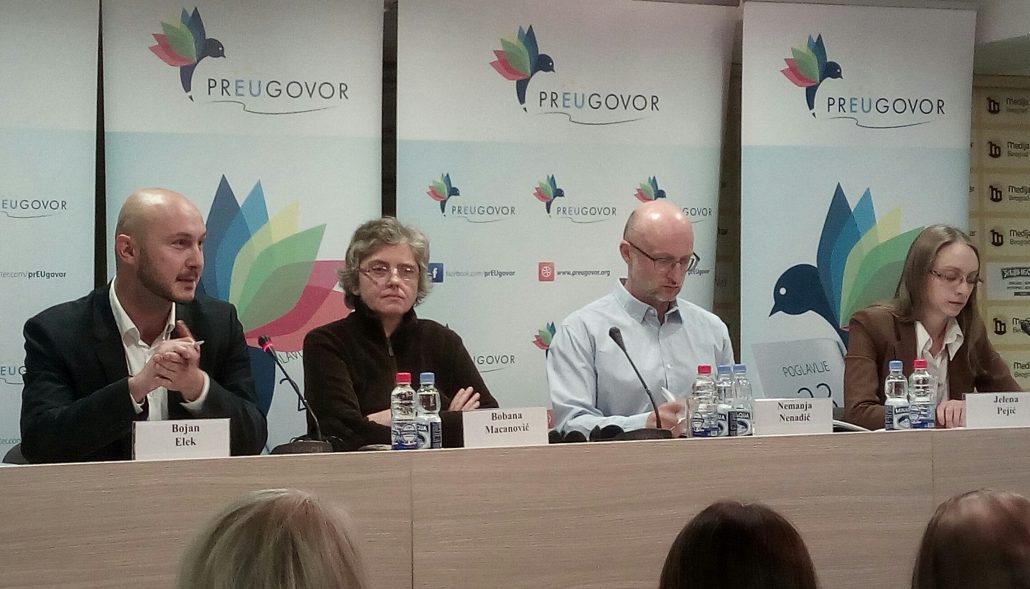
A coalition of seven NGOs entitled prEUgovor, which monitors Serbia’s EU accession process, presented a new report that contains the coalition’s assessment of the political criteria for the EU accession process, as well as the fulfilment of criteria for chapters 23 and 24 which include the judiciary, fundamental rights, justice, freedom and security for the period April – September 2018.

The central finding of the report is that key reforms stagnate or even marks a downturn and that much of stagnation happens under the justification of accession process. During that period, the Serbian authorities adopted a series of laws “that are worse than the current ones”, said the NGO coalition made of ASTRA – Anti-Trafficking Action, the Autonomous Women’s Centre, the Belgrade Centre for Security Policy, the Centre for Applied European Studies, the Centre for Investigative Journalism, Group 484 and Transparency Serbia. The report said that the democratic civil control over defence and security institutions is weak in practice.

Commenting at the presentation, DPNSEE Executive Director remarked that the report has no reference to the segment on drugs which is integral part of the Chapter 24 and presented some warning facts about the issue. DPNSEE and the coalition have working relations which both sides hope to be improved in the future.

The report is available following this link>>>>

(photo: prEUgovor)

Montenegro closed the circle

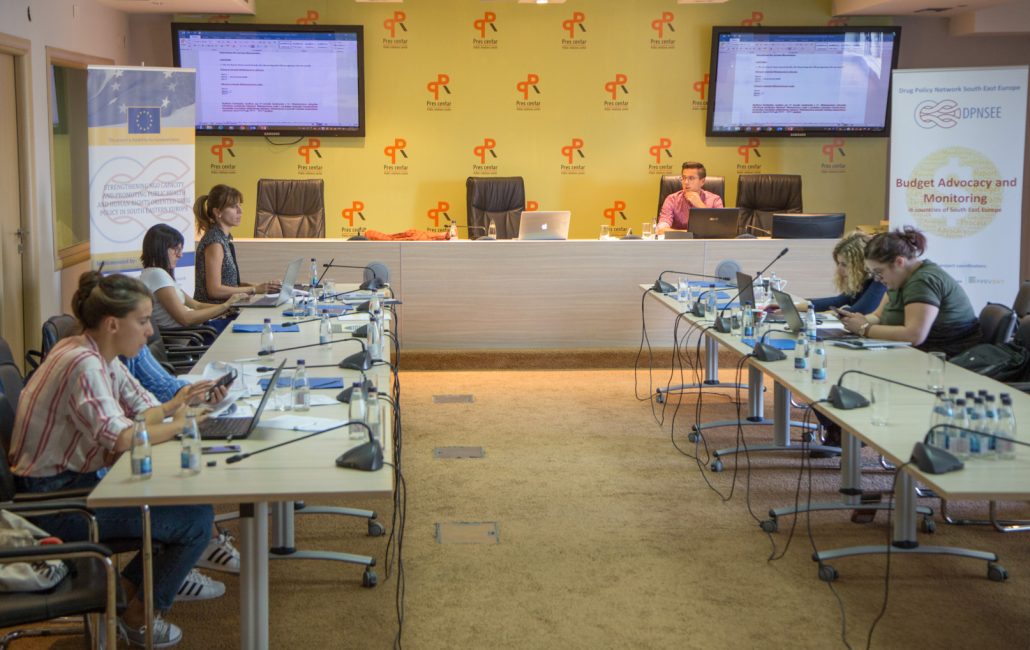
The training for civil society organisations in Montenegro was the third in raw, to complete the serial of trainings organised in the project countries. It was held in Podgorica from 3 to 5 October 2018.

More info coming soon!

Media coverage from the PR Centre is available following this link>>>

Training for the civil society organisations in Serbia

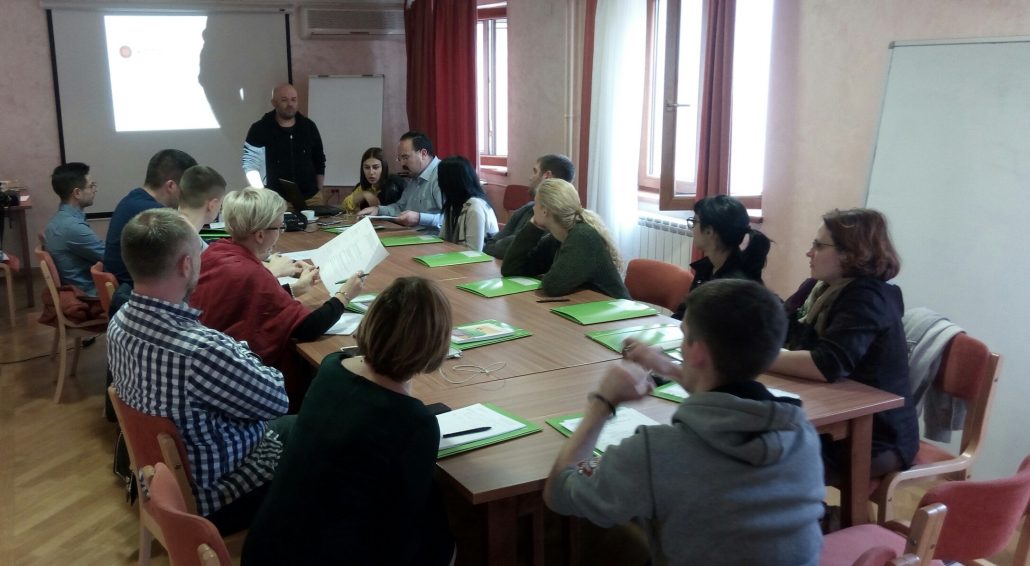
Association Prevent and Drug Policy Network SEE organized a three-day training “Advocacy of Budgetary Financing of the Harm Reduction Programs in Serbia” from 25 to 27 September at Mt. Avala, near Belgrade. The training was attended by 16 representatives of organizations: Bečej Youth Association, Timok Youth Center, Policy Analysis and Policy Creation Group, Association Remiks, Association Prevent and DPNSEE. The training was led by experts from Macedonia’s Healthy Options Project Skopje and ESE.

The training included general information and practical steps in the advocacy and monitoring process. In addition, Dr Jasmina Tanasić from the Standing Conference of Cities and Municipalities presented the Budget programming model used in the country.

A one-year budget support plan for harm reduction program in Serbia was prepared. According to the plan, in the forthcoming period an analysis of the budget of the Republic of Serbia (Ministry of Health, alcohol and tobacco excise, income from games of chance and opportunity) will be carried out and 4 projects by 4 organizations on the following topics:

  1. Cost-benefit analysis
  2. Analysis of open calls of the Ministry of Health
  3. Political parties and harm reduction
  4. Promotion of the project and results in the public

Training for national consultancy teams

The training for national consultancy teams was organised from 3 to 5 September 2018 in Sarajevo, Bosnia Herzegovina. It was the first in a serial of training opportunities offered by the Budget Advocacy and Monitoring in countries of South East Europe project.

The aim of the training was to gain mutual understanding of the project, the budget advocacy and monitoring model and role of the consultancy teams in implementing the national plans of actions. 15 participants came from the three involved countries.

The training will be delivered by Darko Antikj from ESE and Vlatko Dekov from HOPS who have developed the model and successfully implemented it in Macedonia.

The agenda included issues of:

  • Introduction to Budget cycle on national and local level
  • Budget research and analysis
  • Stakeholders and advocacy models
  • Planning and implementation of the budget advocacy process and
  • Country group work on national budget advocacy plan

The training have helped to clarify various issues related to the topic and the way the project will be implemented and agree on basis for designing the national plans. Also, it was specific team building exercise for the national consultancy teams.

We are hiring!

At the meeting held on 22 June, the DPNSEE Board decided to restructure the Office. To improve efficiency of its work, besides the Executive Director the Staff will now include:
• Financial and Administrative Officer expected to work 80% of working time
• Communications officer, a contract based position or consultancy contract, with a total of six working days a month

The Staff members will be engaged for the period September – December 2018, with a potential to continue working in the next year(s).

If you are interested to join a small and aupportive team of a growing network working for a cause, have a look at the Calls bellow and send your CV indicating the work experience and qualifications and a description of the motives for applying by 27 August, at 12:00 CET.

DPNSEE encourages people who use drugs and members of other vulnerable populations to apply for jobs.

Call for the Financial and Administrative Officer

Call for the Communications Officer