Training for the civil society organisations in Serbia

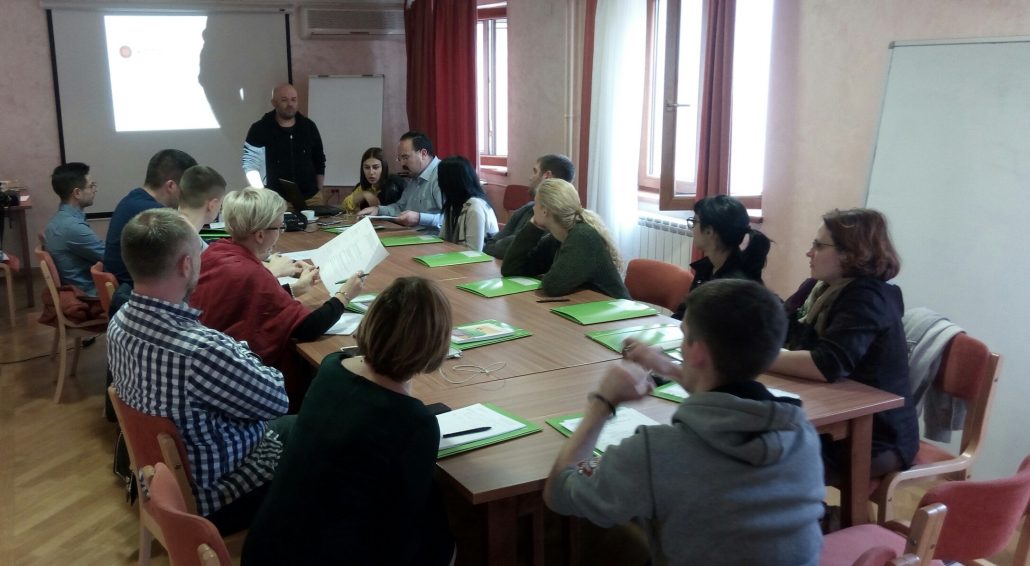
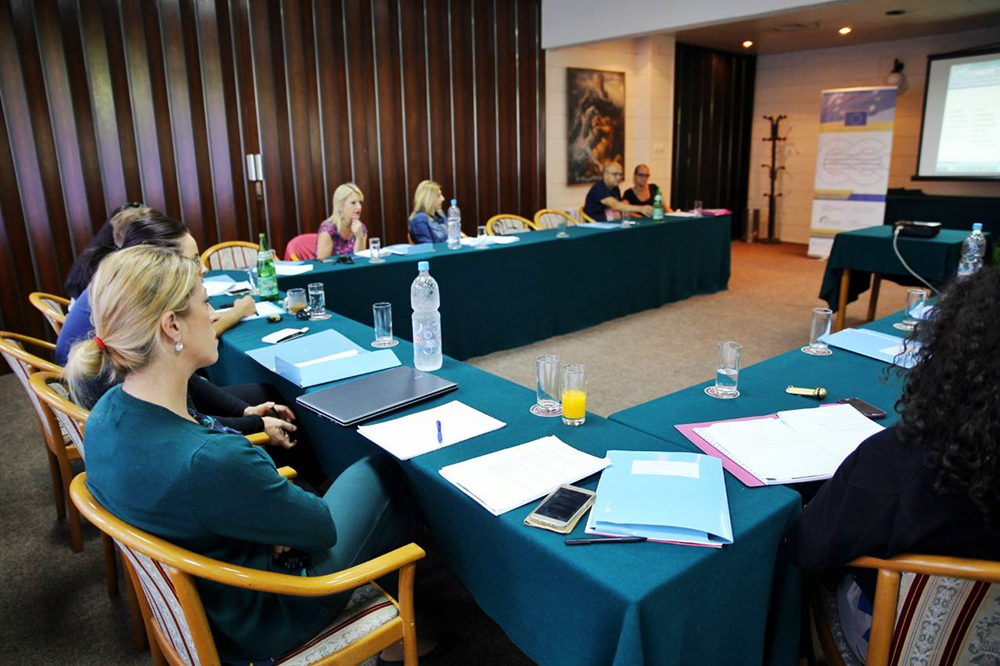
Association Prevent and Drug Policy Network SEE organized a three-day training “Advocacy of Budgetary Financing of the Harm Reduction Programs in Serbia” from 25 to 27 September at Mt. Avala, near Belgrade. The training was attended by 16 representatives of organizations: Bečej Youth Association, Timok Youth Center, Policy Analysis and Policy Creation Group, Association Remiks, Association Prevent and DPNSEE. The training was led by experts from Macedonia’s Healthy Options Project Skopje and ESE.

The training included general information and practical steps in the advocacy and monitoring process. In addition, Dr Jasmina Tanasić from the Standing Conference of Cities and Municipalities presented the Budget programming model used in the country.

A one-year budget support plan for harm reduction program in Serbia was prepared. According to the plan, in the forthcoming period an analysis of the budget of the Republic of Serbia (Ministry of Health, alcohol and tobacco excise, income from games of chance and opportunity) will be carried out and 4 projects by 4 organizations on the following topics:

  1. Cost-benefit analysis
  2. Analysis of open calls of the Ministry of Health
  3. Political parties and harm reduction
  4. Promotion of the project and results in the public

A long list of meetings, partners and contacts

The cooperation between organizations active in the drug policy in South East Europe dates back to autumn 2009. In March 2010, an informal network of NGOs was created to continue the cooperation with the relevant authorities responsible for drug policy. Good experience of partnership and joint projects resulted in formal creation of the Drug Policy Network South East Europe in October 2015.

Throughout the three years of existence, we have had dozens of meetings, partnerships and contacts with decision makers at the national level. Here is an overview of some of them.

Country visits

During the visit to Montenegro, from 28 June to 1 July 2016, we met with Minister for Labour and Social Wellfare, National Committee for Drugs, Public Health Institute, Sektor za suzbijanje krijumčarenja droga u Upravi policije (Drug abuse prevention department in the Ministry of interior), KPZ Spuž (largest state prison), Special psychiatric hospital Dobrota, Metadonski program održavanja opijatskih zavisnika (methadone centre), Terapijska zajednica Kakaricka gora (therapeutic community), Kamp raseljenih lica sa Kosova na Koniku (Kosovo refugees centre).

At Kosovo, visited from 29 to 30 August 2016, we met with Deputy Minister of Internal Affairs and other members of the coordinating body on drugs.

Delegation of the Drug Policy Network South East Europe visited Serbia from 31 August to 2 September 2016 where we met with Ministry of Health and newly established Office for combating drugs, Special hospital „Drajzerova“ and Institute for public Health „Dr Milаn Јоvаnоvić Bаtut”, Vojvodina Secretary for Health and the Clinic for Addiction in the Clinical Centre of Vojvodina.

With the Office for combating drugs of the Government of Serbia we signed a Memorandum of Understanding.

During the visit to Bosnia Herzegovina, from 3 to 6 October 2016 contacts were established with Psychiatric Clinic of the University Clinical Centre in Tuzla, the Methadone centre and Psychiatric Clinic of Banja Luka Clinic Centre, Tunjice prison, representatives of the Commission for the Prevention of Drug Abuse of the Republic of Srpska, Federal Ministry of Security, Institute for Alcoholism and Drug Addiction in the Canton of Sarajevo, Institute for the Prevention of addictions of the Zenica Doboj Canton, the Zenica Prison and participated in the meeting of the Country Coordinating Mechanism for Global Fund project.

In Albania, from 11 to 14 October 2016, the delegation met with Mr Ulsi Manja, Member of the Parliament, officials from the Ministry of Interior, Institute for Public Health and the Drug issues coordinator in the Ministry of Health.

Delegation of the Drug Policy Network South East Europe visited Macedonia on 21 to 22 December 2016. We visited the Methadone centre in the Karpoš municipality, Office of the Ombudsman, the Coordinator of Office for Health, Social and Child protection of the city of Skopje and the the National drug coordinator.

During the visit to Turkey, from 28 to 30 December 2016, we visited the Green Crescent of Turkey, Alcohol-Substance Addiction Research, Therapy and Education Centre and The Counselling centre (YEDAM).

Representatives of the Drug Policy Network in South East Europe visited Croatia from 22 to 24 March 2017 and met with the representatives from the Office for Combating Drugs Abuse of the Republic of Croatia, Mr. Ranko Ostojić – recent vice Prime minister and Minister of Interior, currently Member of Parliament and Chairman of the Parliamentary Committee for Domestic Policy and National Security and representatives from the Educational Institute for Public Health of the Split – Dalmatia county.

In Bulgaria, from 29 to 30 May 2017, we met with the Chief Expert in the Ministry of Health for the programmes financed by the Global Fund to fight AIDS, Tuberculosis and Malaria and Consultant for the program Prevention and Control of HIV/AIDS, National Centre for Addiction and the Centre for the Study of Democracy.

During the visit to Slovenia which took place on 26 – 28 of September 2017, DPNSEE delegation met with the Senior Adviser I, Directorate for Public Health, Ministry of Health.

We co-organised a meeting between representatives from the countries in the region of South East Europe and representatives of non-governmental organisations (LINK TO http://www.dpnsee.org/governments-ngo-dialogue/).

For two years we run workshops at the Serbian Vision multi-congress, organised by the German – Serbian Chamber of commerce and Serbian Chamber of commerce.

DPNSEE coordinated the “Support. Don’t Punish” campaign in South East Europe in 2017 and 2018.

International contacts

  • Dr. Doina Bologa, UNFPA Representative for Bosnia and Herzegovina, Greece, Kosovo*, FYRO Macedonia and Serbia, Dr Jennifer Butler, UNFPA regional HIV expert, and Marija Raković, Programme Coordinator in Serbia
  • Daniel Wolfe, director of International Harm Reduction Development, Julia Greenberg, director of Governance and Financing, and Ekaterina Lukicheva, program officer for the International Harm Reduction Development Program of the Open Society Foundations
  • Gyongyver Jakab, Portfolio Manager, S&T Focal Point for Balkan Countries, the Global Fund
  • Pavel Trantina, President of the Section for Employment, Social Affairs and Citizenship, European Economic and Social Committee
  • Ugo Poli, Project Manager, Capacity Building and Focal Point, Migrations, Central European Initiative
  • Michel Kazatchkine, UN Secretary-General’s Special Envoy on HIV/AIDS in Eastern Europe and Central Asia
  • Vinay Saldanha, Director of the Regional Support Team for Eastern Europe and Central Asia, Joint United Nations Programme on HIV/AIDS (UNAIDS)
  • Jindrich Voboril, National Anti-Drug Coordinator, Director of the Secretariat of the Government Council for Anti-Drug Policy Coordination, Czech
  • Kirsten Horsburgh, National Naloxone Coordinator, Scotland
  • Miloš Stojanović, Regional Project Officer, UNOD
  • Ivana Goranić, the Expert on Governance for Growth working on justice issues at the Regional Cooperation Council (RCC)
  • Commissioner for Information of Public Importance and Personal Data Protection in Serbia and the Serbian Ombudsman
  • Sorin Oprea, Director, Romanian Antidrug Agency
  • Željko Petković, Head of the Drug Prevention Office, Croatia
  • Anna Dovbah, the Executive Director of the Eurasian Harm Reduction Association
  • Dr Maja Vučković Krčmar, Programme Manager, EU policies in the Delegation of the European Union to the Republic of Serbia
  • Ambassador of Portugal to Serbia, Bosnia Herzegovina, Montenegro and Macedonia His Excellency Augusto Saravia Peixoto and the Deputy Head of Mission Ms Graça Vosta Macedo

Drug Policy Network South East Europe was formally recognised as the member organisation of the Member of The International Drug Policy Consortium (IDPC).

International events

We participated in

  • South East Europe High Level HIV Regional Meetings and SEE Regional Coordinating Mechanism
    Paris Pact Expert Working Group on Integrating Drug Dependence and Care in the Public Health
  • Reitox – the European information network on drugs and drug addiction
  • Annual meetings of the UN Commission on Narcotic Drugs
  • Regional Harm Reduction Conference for Central Eastern Europe and Central Asia
  • Third Annual Regional Conference ’’Move. Link. Engage – Rethinking Europe and Western Balkans”
  • Multi-stakeholder workshop on UN Convention against Corruption in Southeast Europe
  • Conference on Rational Drug Regulation
  • Conference “Treatment and Harm reduction services in the context of the economic crisis, developments and challenges”
  • The Second European Conference on Addictive Behaviours and Dependencies – Lisbon Addictions 2017
  • UNAIDS and Global Fund regional consultations with regional stakeholders on terms of reference for next round of Multi-country HIV projects to be financed by the Global Fund
  • The Regional meeting “Addressing HIV and TB Challenges: from Donor Support to Sustainable Health Systems” of the civil society organisations from Eastern Europe and Central Asia
  • The Senior Level Policy Dialogue “Addressing HIV and TB Challenges: from Donor Support to Sustainable Health Systems” – an official event in the programme of the Estonian Presidency of the Council of the European Union
  • A dialogue between civil society, donors, and technical partners on Building Partnerships to Sustain HIV Prevention Services for Key Populations in South Eastern Europe
  • The 2nd European ChemSex Forum
  • South-Eastern European Ministerial Meeting on Sustainable Responses to HIV and TB
  • 22nd International AIDS Conference (AIDS 2018) – Breaking Barriers, Building Bridges


Open Call for the Award of Small Grants

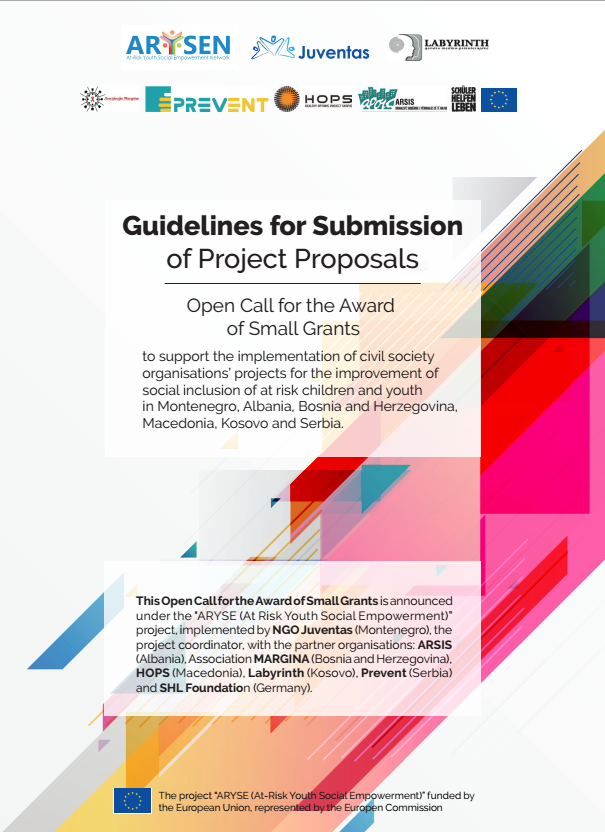
DPNSEE member organisation Juventas opened a Call for small grants to support the implementation of civil society organisations’ projects for the improvement of social inclusion of at risk children and youth in Montenegro, Albania, Bosnia and Herzegovina, Macedonia, Kosovo and Serbia.

The Call is announced under the “ARYSE (At Risk Youth Social Empowerment)” project, supported by the European Union and implemented by NGO Juventas (Montenegro), the project coordinator, with the partner organisations: ARSIS (Albania), Association MARGINA (Bosnia and Herzegovina), HOPS (Macedonia), Labyrinth (Kosovo), Prevent (Serbia) and SHL Foundation (Germany). The project beneficiaries are children and youth, especially at risk youth (children and youth who use drugs, who are in conflict with the law, who come from families who use drugs and/or are in conflict with the law, who are without parental care, as well as street and Roma children and youth). The project is being implemented under the Civil Society Facility and Media Programme 2014-2015.

The specific objectives of the open call for small grants are:

  • To raise capacities of relevant actors/stakeholders and CSOs in the work with at risk children and youth;
  • To establish, maintain, improve or scale up services for at risk children and youth regarding social inclusion and protection, education, employment, health, security, equality, rights and access to justice;
  • To improve availability of evidence, and advance awareness, policies and practices for the purpose of enchasing social inclusion of at risk children and youth at local or national level.

To be eligible for this Small Grant Call the applicant must fulfil the following requirements:

  • Is registered as non-profit/civil society organisation or network, in accordance with the respective national legislation, in their home country (i.e. Albania, Bosnia and Herzegovina, Kosovo, Macedonia, Montenegro or Serbia), at least one year before the announcement of this Call;
  • Has its headquarters in its home country (i.e. Albania, Bosnia and Herzegovina, Kosovo, Macedonia, Montenegro or Serbia);
  • Had an annual budget of EUR 10,000.00 to EUR 100,000.00 in the previous year.

Full information about the Call is available following this link>>>> while the application package is available here>>>>

IDPC recommendations: On the road towards the 2019 Ministerial Segment

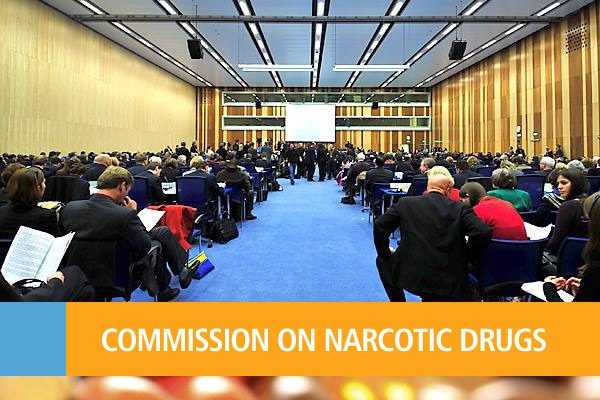
In preparation for the third intersessional meeting of the Commission on Narcotic Drugs to be held on 25th to 28th September in Vienna, the International Drug Policy Consortium has drafted an advocacy note to contribute to these international drug policy discussions.

The advocacy note outlines key issues for consideration as member states reflect on what has been achieved since the adoption of the 2009 Political Declaration and Plan of Action, including in light of UNGASS implementation, and the implications for the next phase of international drug policy. In addition, we analyse issues likely to come up in negotiations of the annual drugs ‘omnibus resolution’ at the UN General Assembly, and offer suggestions for approaching these negotiations. Finally, we provide recommendations to address some of the outstanding procedural questions related to the 2019 Ministerial Segment.

The advocacy note is available as a PDF in the attached, as well as online following this link>>>

Shall Romania become eligible for Global Fund HIV allocation again?

Today, Romania spends about 70 million euros for HIV treatment, care and support towards reaching universal access, covering 12,247 people with HIV out of 15,212 as of 2017. However, “the Romanian authorities invest practically no money in HIV prevention”, says Nicoleta Dascalu, project manager from the Romanian Association Against AIDS – ARAS. That is why becoming ineligible for the Global Fund’s support of HIV became yet another dramatic episode in Romania’s HIV history.

The Global Fund’s Revised Eligibility Policy was approved at the 39th Board Meeting. In the revised version, the OECD DAC ODA requirement unfortunately was left as it was – but the term “political barriers” in the same provision was replaced with just “barriers,” with a note that eligibility for funding under this provision will be assessed by the Secretariat as part of the decision-making process for allocations. In addition, the Secretariat will look specifically at whether there are laws or policies that influence practices and seriously limit and/or restrict the provision of evidence-informed interventions for key populations.

It is not clear yet if the replacement of the term “political barriers” with just “barriers” will somehow influence Romania’s chance to receive an allocation for its HIV component within the next allocation period; speculation suggests probably not. The only chance for the Romanian HIV component to become eligible again for Global Fund funding is the elimination of the relevant requirement in the Eligibility Policy, says Dragos Rosca, the Executive Director of the Romanian Harm Reduction Network.

Read more in the analysis Ivan Varentsov prepared for the Aidspan website following this link>>>>

The first national training held for organisations in Bosnia Herzegovina

Just after the Training for national consultancy teams, Grand hotel in Sarajevo hosted the Training for civil society organisations in Bosnia Herzegovina from 5 to 7 September 2018. This was the first of three national trainings for civil society organisations as part of the Budget Advocacy and Monitoring in countries of South East Europe project.

The training included general information and practical steps in the advocacy process: identifying the issue and causes of the problem, research and budget analysis, stakeholders and advocacy targets, influencing budgets at national and municipal levels, mapping budget information and documents, planning, taking actions, monitoring, anti-corruption, reviewing, evaluation and learning.

Participants came from organisations working in both entities of the country – The Federation of Bosnia Herzegovina and Republic of Srpska: Margina from Tuzla and Zenica, Viktorija from Banja Luka, Proi, Partnership for Health and Asocijacija XY from Sarajevo.

The training was delivered by Darko Antikj from ESE and Vlatko Dekov from HOPS who have developed the model and successfully implemented it in Macedonia.

The training resulted in producing a national plan of action to be implemented by the end of 2019. It includes creating a platform of NGOs for sustainability of harm reduction services, ensuring political support, creation of a budget line in the health budget of the entities of the country, establishing a social contracting mechanism and agreeing on criteria and standards for the services.

Bosnia and Herzegovina must continue the fight against HIV/AIDS and tuberculosis

Professor Michel Kazatchkine, the Special Advisor to the Joint UN Programme on HIV/AIDS for East Europe and Central Asia, visited Bosnia Herzegovina from 3 to 6 September 2018.

Bosnia and Herzegovina can remain a country with the lowest HIV rate in Europe and sustained reduction of tuberculosis levels only if full implementation of the transition from international funding towards sustainable domestically owned HIV and TB responses is ensured. But, international funding from the Global Fund to Fight HIV/ AIDS, Tuberculosis (TB) and Malaria is ending this year.

During the visit, professor Kazatchkine has highlighted the importance of coordinated efforts of relevant domestic health, drug control, justice, legislation and other institutions and CSOs in all meetings including the State Minister of Civil Affairs, entity and cantonal ministers of Health, and representatives of civil society organisations involved in HIV and tuberculosis response policies. Professor Kazatchkine also emphasised that full implementation of domestically-owned transition plans is an imperative to sustain the current low rates of HIV patients and sustained reduction of tuberculosis levels as international funding from the Global Fund will no longer be available to Bosnia and Herzegovina. He added that the commitment expressed by domestic partners assures him that the country is able to achieve the (pre)set goals. However, it is urgent to sustain current results and services and make sure they move forward.

Professor Kazatchkine and his colleagues from UN agencies and the Global Fund participated in the meeting of the Country Coordinating Mechanism. Our colleagues from Margina and Viktorija presented the view of civil society organisations about the situation in the country.

As it was announced in the UNDP press release, the UN system and UNDP remains committed to supporting the transition to more domestic funding sources for continued access to equitable HIV and TB-related services especially for key populations at higher risk of being infected with HIV or those living with HIV / AIDS.

International funding from the Global Fund to Fight AIDS, Tuberculosis and Malaria is ending this year. A good sing is that the Ministry of Civil Affairs of Bosnia Herzegovina has, for the first time, introduced a budget line in the 2019 budget to support civil society organisations projects on prevention of HIV and tuberculosis.

Training for national consultancy teams

The training for national consultancy teams was organised from 3 to 5 September 2018 in Sarajevo, Bosnia Herzegovina. It was the first in a serial of training opportunities offered by the Budget Advocacy and Monitoring in countries of South East Europe project.

The aim of the training was to gain mutual understanding of the project, the budget advocacy and monitoring model and role of the consultancy teams in implementing the national plans of actions. 15 participants came from the three involved countries.

The training will be delivered by Darko Antikj from ESE and Vlatko Dekov from HOPS who have developed the model and successfully implemented it in Macedonia.

The agenda included issues of:

  • Introduction to Budget cycle on national and local level
  • Budget research and analysis
  • Stakeholders and advocacy models
  • Planning and implementation of the budget advocacy process and
  • Country group work on national budget advocacy plan

The training have helped to clarify various issues related to the topic and the way the project will be implemented and agree on basis for designing the national plans. Also, it was specific team building exercise for the national consultancy teams.

Kofi Annan died

The former UN secretary general Kofi Annan, has died at the age of 80 after a short illness, his family and foundation announced today. The Global Commission on Drug Policy issued a press release emphasizing that “A former Secretary-General of the United Nations and Nobel Peace Prize Laureate, Commissioner Annan worked tirelessly for peace throughout his life, and addressed the many challenges confronting the world with wisdom and pragmatism. He initiated the move towards eradicating extreme poverty with the Millennium Development Goals and contributed considerably to the global response to HIV.”

Mr Annan was a great man and hugely important advocate for drug law reform. He will be missed.

Here is a selection of his quotes and an important speech he made in December 2016.

Misguided attempts to prevent the use of drugs by only punitive measures have not worked; instead they have resulted in mass incarceration.

Drug policies should be grounded in scientific evidence and a deep concern for health and human rights.
That is why we strongly believe the time is right for a smarter, health-based approach to drug policy.
Kofi Annan speech at the 68th World Health Assembly on 21 May 2015.

Leadership means finding ways to reach out to all groups, and devising approaches for prevention and treatment suited to their needs – whether young people, sex workers, injecting drug users, or men who have sex with men.
Kofi Annan at AIDS Conference 2004.

When I first moved to the idea of a Global Fund, in fact I called it a war chest, quite a lot of people laughed it off saying “There he goes again, dreaming.” I love dreams. It always starts with a dream.

You are never too young to lead, and we are never too old to learn
Kofi Annan, addressing Global Citizen Live in London, April 2018.

***

The preamble of the 1961 United Nations single convention on narcotic drugs states that the “health and welfare of mankind”, and I repeat “health and welfare of mankind”, is the main objective of that convention. Unfortunately, current drug policies in many countries will not lead to the achievement of that objective. To the contrary, those policies have resulted in what the United Nations Office on Drugs and Crime has called ‘unintended consequences’. Those unintended consequences include the creation of a huge, international criminal black market that fuels corruption and spreads violence.

Misguided attempts in some countries to prevent the use of drugs by only punitive measures have not worked; instead they have resulted in mass incarceration. And some countries spent more on prisons than education. In other countries, the so called “war on drugs” has led to massive insecurity. As I have said before and I repeat here tonight: I believe that drugs have destroyed many lives, but wrong government policies have destroyed many more. A criminal record for a young person for a minor drug offence can be a far greater threat to his or her well-being than occasional drug use.

In many parts of the world, drug users are stigmatized, live under constant threat of arrest and are prevented from seeking treatment and support. So I am convinced that current drug policies have to be reformed to ensure that they encourage prevention and treatment based on evidence of what works. Sadly, drug policy has never been an area where evidence and effectiveness of policies have led the way. Obviously, we all want to protect our families from the potential harms of drugs. But if they do develop a drug problem – that is a chronic relapsing illness as the WHO has defined it – they should be viewed as patients in need of treatment and not as criminals. In what other areas of public health do we criminalise patients in need of help? Surely it cannot be the job of the criminal justice system to prescribe remedies to deal with public health concerns. This is the job of public health professionals.

And the UNODC Executive Director Yury Fedotov has said, “the conventions are not about waging a “war on drugs” but about protecting the “health and welfare of mankind”. We should focus on that objective. The current drug policies are not achieving that goal. So the key question is: what policies would enable governments and health authorities to counter and reduce the social and health harms that drug use can cause?

If I may, I would like to make three suggestions. First, strengthen treatment services, especially in middle and low-income countries. Second, decriminalize drug use. Punitive measures do not work and put lots of people in prison where their drug use may actually get worse. Third, we need to learn how to live with drugs so they cause the least possible harm. Even though we would like a “drug-free world”, this is not a realistic ambition. Tobacco is a good example of how a dangerous and addictive product is being regulated because we know that it cannot simply be outlawed. As a result, the number of people who are addicted to cigarettes and tobacco has gone down in a large number of countries. And this happened without anyone being arrested or put in jail or sent to a “treatment program” by a prosecutor or a judge. It was achieved through higher taxes, restrictions on sale and use, and effective anti-smoking campaigns. It was regulation and education that led to this result. And the smokers in the room are probably working to turn this education into practice.

We need to regulate drugs because they are risky. Drugs are infinitely more dangerous when produced and sold by criminals who do not worry about any safety measures. Legal regulation protects health. Consumers need to be aware of what they are taking and have clear information on health risks and how to minimize them. Governments need to be able to regulate vendors and outlets according to how much harm a drug can cause. The most risky drugs should never be available “over the counter” but only via medical prescription for people registered as dependent users, as is already happening here in Switzerland. Drug policies should be grounded in scientific evidence and a deep concern for health and human rights. That is why we strongly believe the time is right for a smarter, health-based approach to drug policy.

15 December 2016