Greece adopted the law on medicinal cannabis

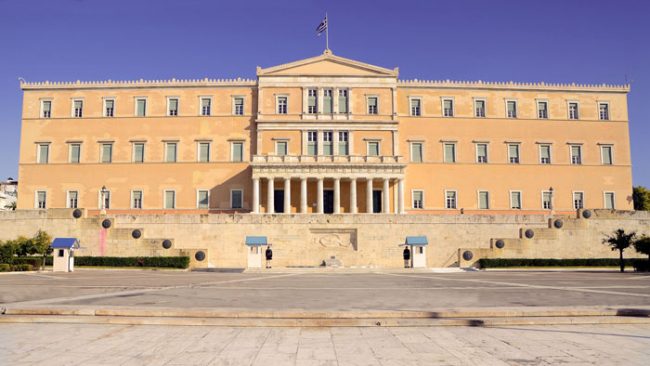
On March 1st 2018, the Greek Parliament adopted the bill “Provisions for the Production of end products of medicinal cannabis”. The Standing Committee on Social Affairs discussed the draft law at two meetings of the committee and organized a hearing in the Greek Parliament with participation of patient organizations, drug service providers, representatives of the scientific community, agricultural trade unions and civil society organizations. An extensive debate took place in Parliament’s plenary, which ended with the adoption of the bill. The majority of the Parliament voted in favour of the bill.

Thanasis Apostolou, General Director of Diogenis – Drug Policy Dialogue, writes about this important development in a document you can find here.

HIV and TB Prevention in Sofia and Bulgaria

“HIV and TB Prevention in Sofia and Bulgaria – Assessment of the Situation” is a report that was created under the project “Fast-track TB/HIV responses for key populations in EECA cities”. It is a regional project funded by the Global Fund, which unites the efforts of five EECA cities (Almaty, Beltsi, Odesa, Sofia and Tbilisi) to achieve sustainable city-level policies for prevention of HIV and TB. The project is coordinated by the Ukraine Alliance for Public Health. In Sofia, Bulgaria, the local coordinators are Initiative for Heath Foundation and Association “Health without Borders”.

The main objective of the report is to bring together all the available information regarding the prevention of HIV and TB in Sofia and Bulgaria and to provide it to the decision makers. The report should be used as a base for the development of a Sofia city strategy on HIV and TB, which has not been developed so far.

The evaluation was conducted in the period July – September 2017 through: analysis of data provided by the Ministry of Health and experts of the Sofia Municipality and the National Centre for Addictions; analysis of documents and previous reports; qualitative methods (interviews and focus groups with vulnerable communities and professionals); mapping of services. The results outline the gaps in service provision related to the withdrawal of the Global Fund and confirm the need of an adequate national and city responses. The book is an author’s interpretation of the data gathered through the common assessment methodology of the project.

Full report in Bulgarian and a summary in English can be found at:
http://www.initiativeforhealth.org/blog/2017/12/12/nov-doklad-s-otsenka-na-nuzhdite/

Another good news from Bulgaria is that on 21 December 2017 the City Council of Sofia adopted the new members of the Municipal Committee on prevention and control of HIV/AIDS. With this act the municipality practically re-established the Committee and gave it a new start, after few years of inaction. The Committee will consist of representatives of the City Council of Sofia, municipal administration, other relevant state and municipal institutions and NGOs.

The first meeting of the new Committee is planned for January when it is expected to give start to the development of a city HIV strategy.

The act of the re-establishment of the Committee was intensively supported through the partnerships within the project Fast-track TB/HIV responses for key populations in EECA cities, involving coordinating NGOs in Sofia and the representatives of the key populations networks.

The LADDER project was concluded, and Diogenis was part of it!

The final conference of project LADDER was held in Strasbourg on 21 – 22 November 2017, and constituted a key opportunity to create new bonds and strengthen existing partnerships for the localisation of SDGs in the next years.

The conference marked three years of joint work within an extremely ambitious project, co-funded by the European Union and led by ALDA, gathering 27 partners and 19 associates from 19 EU and 17 non EU-countries. The unanimous commitment to continue the great work done so far in the field of development education is a great satisfaction for all of us, as well as the sign of LADDER’s sustainability.

The event, hosted by the Council of Europe and by the Region Grand Est, was opened by the welcome speech of Antonella Valmorbida, Secretary General of ALDA, and Alina Tatarenko, Head of the Centre of Expertise for Local Government Reform of the Council of Europe.

Diogenis actively participated in both the program and its final meeting. The project that was implemented in Athens and Thessaloniki by Diogenis last May, entitled “Drugs & SDGs: Development and Harm Reduction Policies”, under the auspices of the municipalities of Agios Dimitrios, Athens and Thessaloniki, accounted for the highest graduation rate during the evaluation of proposals due to its innovative approach.

The Strasbourg meeting, in addition to the project review, included work in groups, aimed at demonstrating and making proposals to local governments, on new actions to implement SDGs at the local level with the active involvement of civil society organizations.

Treatment and Harm reduction services in the context of the economic crisis

DPNSEE member organisations Diogenis organised conference “Treatment and Harm reduction services in the context of the economic crisis, developments and challenges” from 19 to 21 October 2017 in Nicosia, Cyprus. The conference aimed to provide knowledge about the developments and challenges concerning
treatment and harm reduction services in the context of the economic crisis in countries of South
and South East Europe and to discuss possibilities which can guarantee the continuity, quality and
further development of services.

This conference is part of the project “New Approaches in harm reduction policies and practices”, financially supported by the European Commission. Transnational Institute from The Netherlands is the lead organisation of the project and partners are Diogenis, Drug Policy Dialogue from Greece, Forum Droghe from Italy and the International Centre for Ethnobotanical Education from Belgium.

Issues discussed at the conference included:

  • The way in which the competent authorities and the responsible service providers reacted to the economic crisis; the role of Civil Society Organisations in this respect and the lessons learned for securing the continuation of harm reduction and treatment services to drug users.
  • Strategies and action plans for effective harm reduction advocacy at the national level.
  • Developments on cannabis policy in South and South East Europe countries. Regulation of cannabis for medical purposes.
  • Decriminalisation of drug possession for personal use.
  • Supervised consumption sites.
  • Recent developments in countries of South and South East Europe.

The conference also paid attention to the new EU Action plan on drugs 2017-2020 and the developments in drug policy on the international level.

Diogenis cooperated with researchers from different countries, who were responsible to conduct interviews based on a research questionnaire and summarize the outcomes of these interviews in a related short report. All reports were collected and presented in a paper which was the background of the discussion at the conference.

Participants were representatives of civil society, national agencies and experts from 12 European countries. They had the opportunity to exchange information, good practices and policies on drugs in their countries as well as Europe-wide, amid economic difficulties and social challenges in Europe.

Social inclusion of most at-risk youth in the Western Balkans Region

The EU funded project ARYSE (At-Risk Youth Social Empowerment), implemented in 6 Western Balkans countries aims to contribute to achievement of social inclusion of most At-Risk Youth at the regional level, by strengthening CSOs capacities, regional/national cooperation and advocacy actions. The specific objective of the action is to support equal access to education, employment, justice and other related fields to most At-Risk Youth in the Balkan countries, by fostering the level of active participation and inclusion of CSOs representing young people in decision making and reform processes.

The project partners are ARSIS (Albania), Association Margina (Bosnia and Herzegovina), HOPS (Macedonia), Juventas (Montenegro), NGO Labyrinth (Kosovo), Prevent (Serbia) and SHL Foundation from Germany that has a role of consultant.

Topics that the project addresses include

    • Youth from families with history of drug use and/or conflict with law
    • Street youth
    • Youth who use drugs
    • Youth in conflict with law
    • Youth without parental care
    • Young Roma

    The training mainly organised to provide material for future procedures and guidelines is being held in Skopje, Macedonia, from 15 to 18 October 2017. Experts – Nevena Nikolić, Vlatko Dekov, Dardan Berisha, Jarmila Bujak Stanko, Violeta Kola, dr Meliha Bijedić, dr Anita Burgund and Katarina Mitić – prepared draft standards for specific topics of the project.


    More about the project is available at the website HERE>>>

Long way to make good changes in the Law

Ministry of Health of Serbia proposed changes to the Law on psychoactive controlled substances at the end of 2016. Very limited proposal and the public debate which was organised during 4 weeks of festive days caused serious concern among civil society organisations in Serbia. DPNSEE with two member organisations Prevent and Re Generacija, along with three other partner organisations, made large number of comments and proposals to improve the draft.

Unfortunately, there were no reply from the Ministry for more than 9 months. Finally, with the support of the Office for Cooperation with Civil Society, a meeting was organised on 4 October to discuss our contribution. Representatives from the Ministry of Health, Office for Cooperation with Civil Society, Office for combating drug abuse and Ministry of Interior met with the aim to present civil society organisations comments and proposals and exchange about which of them should be incorporated into the next version of the draft.

Although we were prepared for qualified discussion about our proposals, it turned out that the Working group in the Ministry of Health already prepared the next draft and that some of our proposals were accepted. Despite the requests to specify which proposals were accepted and which not and why, the representatives of the Ministry remained on the position that it will be possible only when this new version will be sent for the next round of consultations.

The meeting had a limited success because we presented comprehensive and qualified approach to dealing with legislation and stayed on our positions regarding very important issues related to drugs: need to ensure involvement of civil society organisations in all issues related to drug use, wider set of services of the early warning system that is to be established (including field work and consulting), right to bring samples of substances for checking, wider distribution of naloxone around the country, use of language that will not stigmatise people who use drugs, respecting the right to information and protection of sensitive information, better coordination of all the stakeholders, especially reporting about drugs, etc. The proposed amendments to the Law still have to pass a few levels to come to the Parliament and we are ready to keep advocating for a better Law.

Call for an international expert

The DPNSEE member organisation Labyrinth requires international Expert on Human Rights to conduct 2 days training for “Enhancing Drug Users rights and Entitlements” project, financed by the European Union office in Kosovo. The training work should be conducted between October 17th to October 18 in Kosovo, Prishtina.

The expert, under the guidance of the project manager, and in collaboration with rest of the project team will:

Review Kosovo and International legislation on HR and compiles two days training agenda with the aim of delivering key concepts on HR, non-violent approach toward the drug users and sensitization of public workers dealing with drug users.

Specific objectives to be delivered:

  • HR of drug users in in respect to treatment
  • HR of drug users in respect to Harm Reduction
  • HR of underage drug users
  • HR of female drug users
  • Interested applicants are invited to submit their CV and Cover letter and financial offer by: October 2, 2017, at 16:00 PM.

The candidates are requested to submit their financial offer consisting of fee for the service to be provided.

Travel and accommodation will be covered by Labyrinth.

More details on background of the project, job descriptions and requirements, you can find in the Terms of Reference.

For additional information and inquiries, please contact the organisation.

We are growing – three new DPNSEE member organisations!

During the country visits to FYRO Macedonia (December 2016), Croatia (March 2017) and Bulgaria (2017), DPNSEE membership was promoted as the potential for exchange, partnerships and joint work. Following these promotions, application for membership came from:

  • Coalition ‘Sexual and Health Rights of Marginalized Communities’, Skopje, FYRO Macedonia
  • Terra, Rijeka, Croatia
  • Initiative for Health Foundation, Sofia, Bulgaria

In accordance with the Statutes, the DPNSEE Board supported the applications and called the Extraordinary Electronic General Assembly of the Network to vote about the applications.

The Assembly was held from 19 July at 14:00 to 20 July 2017 at 14:00. 12 out of 19 member organisations participated in the extraordinary General Assembly, all voting in favour of the proposals. The three organisations are now ordinary members of the Network which now has 22 member organisations in 11 countries.

The Coalition “Sexual and Health Rights of Marginalized Communities” promotes protection and respect of the fundamental human rights of marginalized communities, with focus on LGBTI persons, drug users, people living with HIV, sex workers and marginalized women. The Coalition focuses on advocacy, research and analysis, inclusion of the marginalized communities in the creation and implementation of the policies, education of all the relevant actors, promotion of the cultural practices of the marginalized communities, as well as networking and building alliances with the civil society.

Terra association is a non-profit, non-governmental organization established in 1998. on the initiative of a group of experts (medical doctors, pedagogue, psychologist, social workers) involved in work of several local institutions (Red cross, Clinic Hospital Centre in Rijeka) and foreign organizations (IFRC, UNHCR). At the end of 2000, the association initiated “Reduction of the health and social effect of drug abuse Program”) with the great emphasis on proactive education, field work and including different target groups, wider population and community on account of omnipresent problem of drug abuse. The program has been launched as an answer to the growing epidemic of addiction and a real threat of spreading HIV/AIDS among the addicts, that comes as a result of sharing used needles and cookers, and accordingly, by sexual intercourse, on wider population.

Initiative for Health Foundation is a non-governmental, non-profit organization, registered under the Bulgarian law. The mission of the foundation is to improve public health by supporting people in health and social risk to be better informed, more responsible and independent. Our goal is to prevent the spread of HIV through the development of evidence-based social and health services. We aim to be an autonomic, stable and recognizable organization with a highly competent team. We work for legislation change and for public and political support of our cause.

Good results of the „Support. Don’t Punish” campaign in Montenegro

NGO Juventas, together with NGOs 4 Life and Montenegrin High School Students Union, implemented “Support don’t punish” campaign for the third time in Montenegro. This year campaign was dedicated to the burning issues in the country:

  • Lack of sustainable support to Harm Reduction services,
  • Lack of treatment for underage people who use drugs,
  • Youth and drug use.

NGO Juventas and NGO 4 Life made a public statement on the 26 June, in which they requested urgent enabling on:

  1. Provision of free of charge residence in the Public institution for accommodation, rehabilitation and re-socialization of drug users for all persons in need of this treatment.
  2. Provision of payment of treatment costs to the Public Institution for accommodation, rehabilitation and re-socialization of Persons who use drugs who are members of families already been entitled to social protection benefits.
  3. Introduction of Non-Interferon Therapy for the Treatment of Hepatitis C Viral Infection and Issuance of Non-Interferon Therapy Generic Medication Purchase Permission.


At the other hand, NGO Juventas in partnership with Montenegrin Union of High school Students implemented online survey among young people in Montenegro from 16th to 26th June. 590 persons from most of municipalities of Montenegro, younger than 30 participated in survey, which gave an overview on the state of Youth and drugs in our country. 1/3 of respondents were underage.

After public presentation of survey results, Public Debate on the topic of “Legalisation of marihuana in Montenegro – Pros and Contras” was organised in Youth Centre of Podgorica and team of “Slobodan Škerovic” High school Pro and team of Political Science Faculty Contra.

At the end, a short video form was created in order to rise questions on the state of people who use drugs and available health and social care support in Montenegro, which was seen by 7800 people.

At the other hand, Juventas supported activities of NGO Link, first association of persons who use drugs in Montenegro during “Self-Support, don’t punish Us” campaign, during which a public statement on stigma and discrimination as one of main problems of people who use/inject drugs was made.

In order to improve the quality of life of drug addicts, but also to influence positive changes in our community, participating organisations proposed a series of measures:

  1. Establishment of the Clinic for the treatment of drug addiction and strengthening the role of the psychiatrists and the personal doctor in the treatment of this disease in all health centres in Montenegro.
  2. Increase the capacity of substitution programs in health canters, in particular in Podgorica, to reduce existing waiting lists for starting treatment in the capitol.
  3. Introduce free distribution of Naloxone
  4. Enabling conditions for adequate treatment of persons who use drugs within the Institution for Execution of Criminal Sanctions
  5. Opening the safe injection room


Juventas supported implementation of drug-addicted persons activity related to painting „Support. Don’t Punish” logo in the center of Podgorica.

The main result of this year „Support don’t punish” campaign in Montenegro is decision of Ministry of Health to support development of substitution treatment in Podgorica and ensure opening another centre of this kind in 2018. The latest. NGO Juventas succeeded to make this agreement, just at the end of July, after whole month of very demanding negotiations.