The Balkans’ response to COVID-19

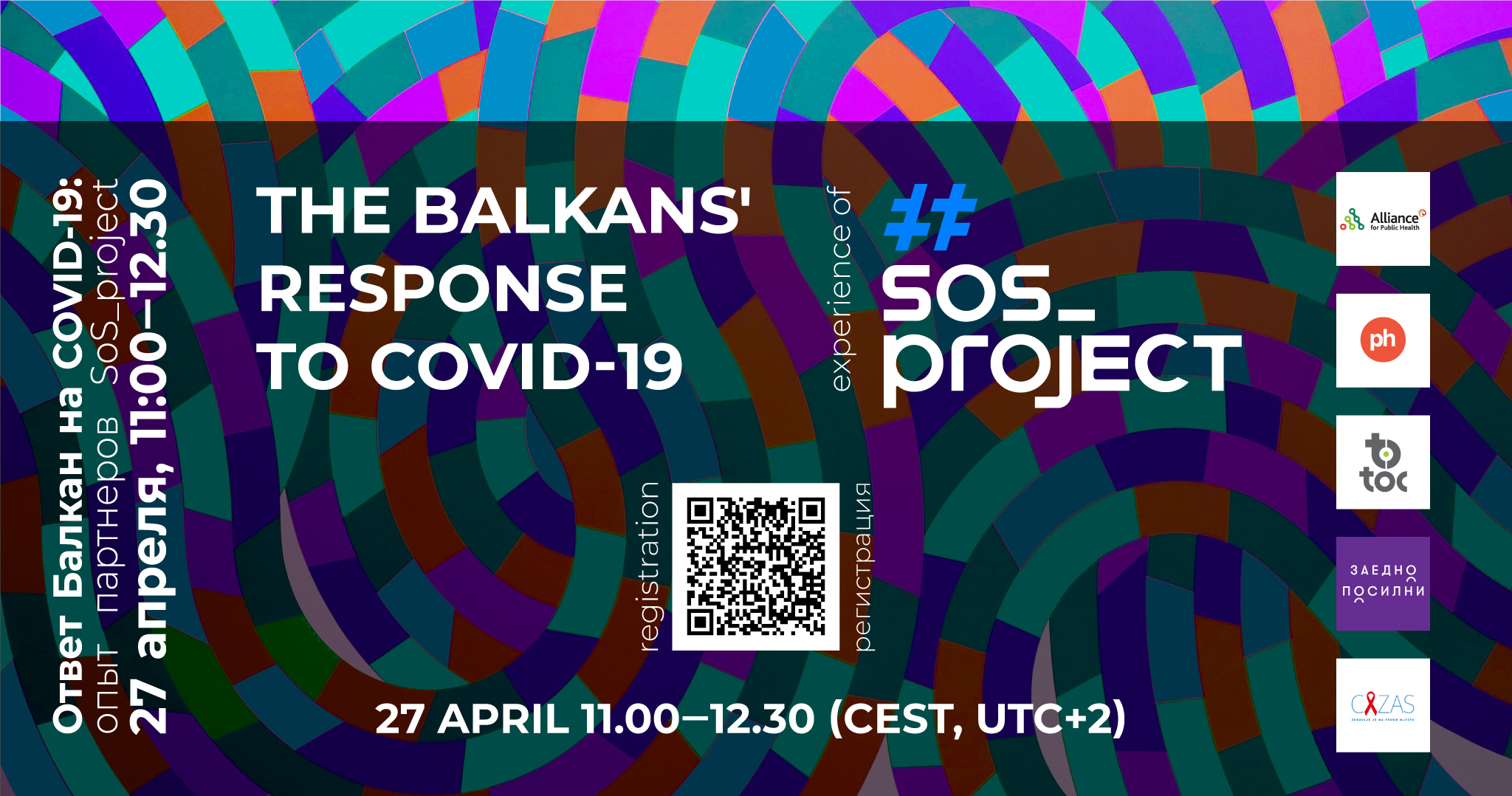
The #‎SoS_project offers the second in a series of “Response to COVID-19” events. On 27 April 27 2021, from 11:00 to 13:30 (CEST, UTC +2) or 12:00-14:30 (EEST, UTC +3), an online discussion will take place “The Balkans’ response to COVID-19: experience of #SoS_project partners”.

The Agenda includes following items:

  • Maintaining essential HIV services and introducing new ones in Covid-19 time – Andrej Senih, Executive Director Заедно посилни (North Macedonia)
  • Innovation in Covid-19 response – Aida Kurtović , LLB, MA, Executive Director of Partnerstvo za zdravlje / Partnerships in Health (Bosnia and Herzegovina)
  • COVID-19 case detection and vaccination – implementation strategy and challenges – Goran Radisavljević, CEO, Timočki Omladinski Centar (Serbia)
  • Access to HIV prevention, testing and treatment during COVID 19 epidemic – Sanja Šišovic, program director of NGO CAZAS (Montenegro)
  • Results of the study on the impact of COVID-19 on the sustainability of HIV and TB services (accent on Balkan) – Dr. Fifa_Rahman, principal researcher of the Matahari Global Solutions (United Kingdom)

To register for the COVID-19 online discussion follow this link>>>.


Innovation and resilience in times of crisis

From the IDPC website

In March 2020, the World Health Organization (WHO) characterised COVID-19 as a pandemic, prompting governments around the globe to declare a state of emergency and/or implement a wide variety of policies and programmes in order to curb outbreaks, minimise mortality rates, and maintain public safety and order. These include, but are not limited to, different forms of travel and/or movement restrictions (such as lockdowns and quarantine), closure of premises deemed non-essential, and restrictions on gatherings and/or events. Such measures have caused significant changes in public life, public services, governance, democracy and policymaking processes around the world – as well as having serious short- and long-term economic implications.

One additional impact of these measures is the disruption of various channels and dynamics of advocacy conducted by civil society organisations. Prior to the global pandemic, civil society organisations were already facing increasing constraints and shrinking space for advocacy. The COVID-19 pandemic has certainly accelerated this downward trend of intensifying repression, in some cases combined with various forms of disinformation, abuse of power and violence. Meanwhile, some civil society actors have been pushed to adapt their ways of working while remaining resilient as they face impacts such as increased workload and/or pressure (amid having less in-person interactions, working from home, and growing demand for services), uncertainty around financial and organisational sustainability, and health concerns, among others.

Aiming to better understand and support the network to respond to these emerging challenges, especially with regard to advocacy for drug policy reform centred on human rights and public health, the IDPC Secretariat initiated a process of documenting and analysing the experiences of civil society and governmental actors working in the context of the COVID-19 pandemic.

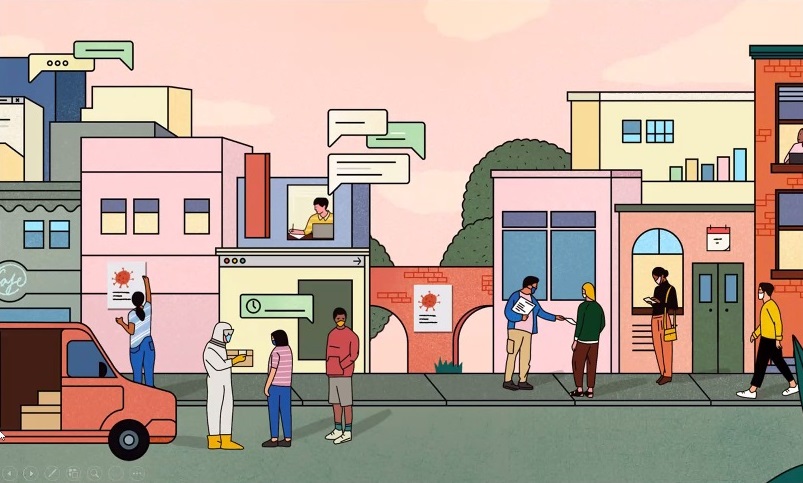
The result of this process is report “Innovation and resilience in times of crisis – Civil society advocacy for drug policy reform under the COVID-19 pandemic” available following this link>>>.


Portugal’s Approach to Drug Policy – what works and what does not?

From Movendi’s website

The Swedish Drug Policy Centre (NPC) has published a new report Decriminalisation of Drugs: What can we learn from Portugal?, written by Pierre Andersson, about Portugal’s approach to drug policy and the lessons that can be learned from the country’s decriminalization of drugs.

In drug policy debates reference is often made to Portugal as an example of a country with a successful approach to drug policy. Often, the country’s good results in reducing the drug problem are attributed to the decriminalisation policy instituted in 2001. But knowledge and understanding of the exact policy and its results is not always accurate and well-informed. Therefore, Pierre Andersson has conducted a series of interviews on the ground in Lisbon and studied the reports on Portugal’s drugs policy published in scientific journals in recent years.

The report makes it clear that Portugal’s reforms in 2001 were more far-reaching than the abolition of penalties for using and possessing small quantities of drugs. Above all, they included major efforts to improve services for rapid and effective treatment, and good coordination between various healthcare interventions. This is likely to have contributed to the development that fewer people developed drug dependency, and, as a result, to a reduction in the number of drug-related deaths.

But, the report also shows that the drug-related death rate fell after the reform, when major efforts were made to expand healthcare, only to then increase again to almost the same level as before decriminalisation.

The Swedish drug policy debate often compares the figures for drug-related deaths between Portugal and Sweden. As the new report shows, these comparisons are flawed because the measurement methods differ from between countries. For example, over 75% of all deaths in Sweden that screened positive for drugs are ultimately classified as “drug-related” according to the definition by the European Monitoring Centre for Drugs and Drug Addiction (EMCDDA).

But the corresponding figure in Portugal is below 5%. The report also shows that Sweden undertakes twice as many post-mortem examinations and three times as many forensic analyses as Portugal. Comparisons between the figures make little sense when the methods differ as much as they do.

Concerning drug consumption trends in Portugal, the new report shows that cannabis use has increased among schoolchildren and is now at a higher level than that of the corresponding age group in Sweden.

Countries still have a lot to learn from Portugal’s drug policy, especially with regard to the short waiting time for treatment and the coordination between the various healthcare services. For example, Portugal’s Commissions for the Dissuasion of Drug Abuse (CDT), which people charged with possession or use have to appear before, is quick to make referrals to addiction specialists. The quick and effective response and follow-up increase in all likelihood people’s chances of overcoming – or avoiding – drug use disorders and addiction.

The report also highlights the risk of overlooking some really good lessons from both Portugal and other countries, overshadowed by the framing that decriminalisation in itself is the solution to all drug problems.

The purpose of the report is therefore to contribute to a focused and informed drug policy debate taking into view the initiatives that hold substantial potential to reduce and prevent harm, provide adequate services to all who need it and help prevent drug use and harm among children and youth.

The analysis of Portugal’s drug policy is complemented with a broader overview of ten more European countries which have decriminalised drugs. You can read the additional report “Decriminalization in Europehere>>>.

Comparison of the developments following decriminalisation in these eleven European countries shows that drug-related deaths increased in some countries and decreased in others. It therefore does not seem to be decriminalisation in itself that is the decisive factor in the developments.

To read the report, please follow this link>>>.


Drug Decriminalisation: Progress or Political Red Herring?

From the INPUD website

Over the past decade there have been increasing claims that the world is moving towards a critical turning point in international drug policy, based on a growing recognition that governments must consider alternative approaches to drug policy which include decriminalisation. While this shift has been hailed as a sign of progress by many, INPUD believes there are still important and overlooked questions regarding the extent to which the needs and rights of people who use drugs are being prioritised in countries that have decriminalised drug use. In 2018, INPUD published a ground-breaking analysis of the Portuguese decriminalisation model – Is Decriminalisation Enough? Drug User Community Voices from Portugal – which for the first time assessed the impact of decriminalisation of Portugal from the perspectives of people who use drugs. The report noted how “interactions with the state and the police, and issues of violence, social exclusion, stigmatisation, and discrimination, are often entirely omitted from discussion and analysis of decriminalisation”.

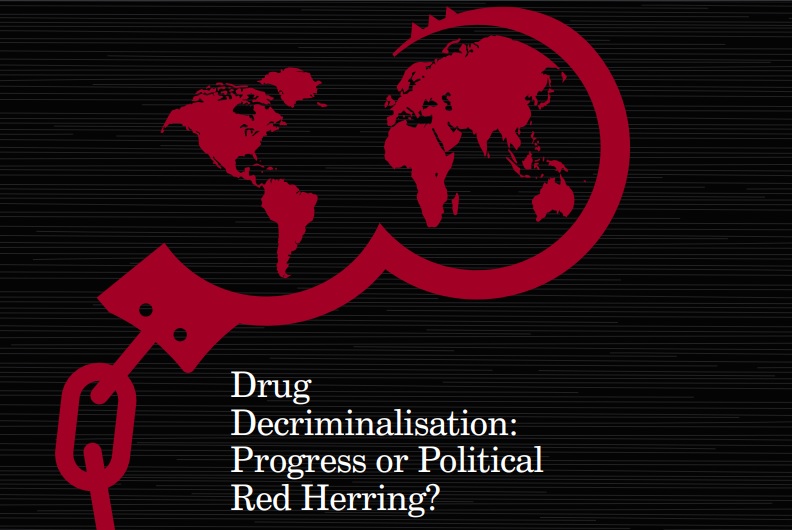
INPUD is excited to present Drug Decriminalisation: Progress or Political Red Herring? This report, like our previous report on Portugal, is intended to open up the debate on decriminalisation and make clear the expectations people who use drugs have for future action on drug policy reform. Most importantly, it includes a call for full decriminalisation without sanctions as the new baseline for measuring progress on decriminalisation in the future.

Decriminalisation is often discussed as if there is only one model, leading to a view that decriminalisation anywhere equals progress. However, there are many different models of decriminalisation in operation, all with different impacts. This report was published because we believe current reforms have not gone far enough. This situation means that in the overwhelming majority of countries, people who use drugs continue to be criminalised, punished, and stigmatised despite decriminalisation. Furthermore, no existing reviews of decriminalisation models have specifically included the perspective of people who use drugs in their analysis, a glaring oversight which reflects the historical exclusion of the voices of people who use drugs within policy discussions.

INPUD believes it is time to disrupt the misconception that decriminalisation efforts unquestionably represent progress when they have been developed with little or no consultation with people who use drugs. This report amplifies the voices of people who use drugs through a series of interviews conducted with members of the community and their representatives in countries that have implemented various approaches to decriminalisation. Our hope is that this report can support peer-led advocacy efforts towards more inclusive, progressive, participatory and transparent drug policies which fully recognise the human dignity of all people who use drugs.

To read the report, please follow this link>>>.


Jamie Bridge re-elected as the VNGOC Chairperson

Jamie Bridge from the IDPC was re-elected as the Chairperson of the Vienna NGO Committee on Drugs (VNGOC) through the electronic voting held 12 – 13 April 2021. Jamie has been on the VNGOC Board since March 2017, and the Chair since March 2018.

Out of 174 members in good standing 150 registered to vote and in the end 147 voters cast their ballots electronically. Jamie won 88 votes.

In his candidature, Jamie said that:

I started my career working in further education and drugs services in the UK, having graduated in psychology in 2002. I went on to gain a Masters in drug policy, and have also worked with Harm Reduction International (HRI) and the Global Fund in Geneva, before returning to the UK to join the International Drug Policy Consortium (IDPC). In addition to my roles at VNGOC, I have previously served on the Boards of Harm Reduction International and the UK National Needle Exchange Forum (NNEF). Throughout my career, I have gained invaluable experience at the UN level as well as in networking and diplomacy.

Despite the breadth of views that are represented within the VNGOC membership, we have worked hard to emphasise our commonalities and work together. The Board has demonstrated its commitment to balance and transparency, and I would like to thank all VNGOC members for their support and engagement over the past few years. I hope that I can continue to deliver all of these things as your Chair for the next two years as well.

Congratulations to our colleague Jamie!


CND 64 started today

H.E. Ambassador Dominika Krois from the Permanent Mission of the Republic of Poland to the UNODC opened the 64th Meeting of the Commission on Narcotic Drugs (CND) today in Vienna. In the next five days, the CND will consider and adopt a range of decisions and resolutions in a hybrid format (online/offline).

At the Opening of the General Debate, the CND64 adopted joint statement on the impact of COVID-19 on addressing and countering all aspects of the world drug problem.

The UN Secretary-General António Guterres underlined that “COVID-19 crisis has shown us how much the world needs solidarity, shared responsibility and international cooperation to improve health coverage, protect our societies and recover better”.

The Vienna NGO Committee (VNGOC) has drafted a Guide for NGOs participating in the CND, available here>>>. VNGOC has also compiled a list of recommendations aimed at protecting the role of civil society engagement in the CND, available here>>>.

To follow the session, you can use the CND Blog>>> which provides near real-time updates on the plenary session, Committee of the Whole and selected side events. The CND Blog is a project of the International Drug Policy Consortium, in collaboration with NGO partners, which aims to ensure transparency and provide live records of the discussions taking place at the meeting. The CND Blog also covered UNGASS negotiations and proceedings.

You can also follow the CND webcast at YouTube following this link>>>. There, the formal sessions of the meeting will be streamed.


Taking stock of half a decade of drug policy

From the IDPC press release

Today, the International Drug Policy Consortium (IDPC) released a new report Taking stock of half a decade of drug policy – An evaluation of UNGASS implementation revealing the widening chasm between UN commitments on health and human rights, and the devastation brought about by punitive drug policies on the ground.

As the annual meeting of the UN CND opens with a commemoration of the 60th anniversary of the 1961 Single Convention on Narcotic Drugs, the legal foundation of the international drug control regime, IDPC’s report shows that there is little cause for celebration. Using wide-ranging data from UN, academic and civil society sources, the report illustrates the horrific human toll of the ‘war on drugs’ over the past five years, made worse by the COVID-19 pandemic:

  • 585,000 preventable drug use related deaths were recorded in 2017, the highest figure on record.
  • A staggering 2.5 million people worldwide are in prison for a drug offence, of which at least 475,000 are incarcerated for personal drug use only. Hundreds of thousands more are detained against their will in forced ‘treatment’.
  • From ‘stop and search’ and mass incarceration to the death penalty, drug law enforcement disproportionately targets women, racial and ethnic minorities, and other marginalised communities, fuelling poverty and inequality.
  • Globally, only 1 in 8 people living with drug dependence have access to treatment, while the availability of life-saving harm reduction services is severely restricted.
  • Subsistence farmers of crops like cannabis or coca leaf continue to be subject to violent forced eradication campaigns that deprive them and their families of their livelihoods.
  • 5 billion people worldwide live with limited or no access to pain relief and palliative care due to repressive drug laws.


April 2021 also marks the 5th anniversary of the 2016 UN General Assembly Special Session (UNGASS) on drugs, where all countries in the world committed to adopt a public health, rights-based, and development-oriented approach to drug policy. By comparing these commitments with evidence from the ground, the new IDPC report reveals a widening gap between rhetoric and reality.

The 60th anniversary of the global drug regime gives us little cause for celebration’ said Ann Fordham, Executive Director at IDPC. ‘In the past five years, some progress has been made, as countries moved to adopt welcome initiatives on the decriminalisation of people who use drugs, and the legal regulation of cannabis. However, in most parts of the world, governments remain wedded to draconian policies that have had a catastrophic impact on communities, and have resoundingly failed in their stated purpose of eradicating drug markets, or reducing illegal drug use.

Marie Nougier, Head of Research and Communications at IDPC, said: ‘With this report, we wanted to give a voice to those most affected by punitive drug policies. What communities tell us through our research is that they continue to face criminalisation, extrajudicial killings, the death penalty, acts of torture and ill-treatment, stigma and discrimination, and are systematically denied access to life-saving health services. We cannot wait for another 60 years to align drug policies with health, human rights and development.

The report is available following this link>>>.


EU crime threat assessment

From the Europol webpage

The EU Serious and organised crime threat assessment (SOCTA) 2021 is the outcome of a detailed analysis of the threat of serious and organised crime facing the EU, providing information for practitioners, decision-makers and the wider public. As a threat assessment, the SOCTA is a forward-looking document that assesses shifts in the serious and organised crime landscape.

The SOCTA 2021 sets out current and anticipated developments across the spectrum of serious and organised crime, identifies the key criminal groups and individuals involved in criminal activities across the EU and describes the factors in the wider environment that shape serious and organised crime in the EU.

The SOCTA 2021 provides an overview of the current state of knowledge on criminal networks and their operations based on data provided to Europol by Member States and partners and data collected specifically for the SOCTA 2021. In trying to overcome the established, and limiting, conceptualisation of organised crime groups, this assessment focuses on the roles of criminals within criminal processes and outlines how a better understanding of those roles allows for a more targeted operational approach in the fight against serious and organised crime.

Key findings of the report include:

  • Close to 40% of the criminal networks active in the EU are involved in the trade in illegal drugs.
  • Around 60 % of the criminal networks active in the EU use violence as part of their criminal businesses.
  • The use of corruption and the abuse of legal business structures are key features of serious and organised crime in Europe. Two thirds of criminals use corruption on a regular basis. More than 80 % of the criminal networks use legal business structures.

A whole section of the report is dedicated to The trade in illegal drugs in the EU.

Europol is the EU’s law enforcement agency and it assists the Member States in their fight against serious international crime and terrorism. Established in 2000, Europol is at the heart of the European security architecture and offers a unique range of services. Europol is a support centre for law enforcement operations, a hub for information on criminal activities, and a focal point for law enforcement expertise. Analysis is central to Europol’s activities. To give its partners deeper insights into the crimes they are tackling, Europol produces regular assessments offering comprehensive, forward-looking analyses of crime and terrorism in the EU.

To read the report, follow this link>>>.


Civil Society Observatory’s Risk Bulletin

The Global Initiative Against Transnational Organised Crime (GI-TOC) published Issue 5 of the Risk Bulletin produced by the Civil Society Observatory to Counter Organized Crime in South Eastern Europe.

Among other stories, you can read some related to drugs:

A renaissance of crime in Novi Pazar?

A spate of violent incidents has put Novi Pazar in southern Serbia back on the map as a hotspot of organized crime. The city, situated along key trafficking routes, once had the reputation of being the main heroin warehouse in Europe. We look at its past and present links to illicit economies.

Synthetic drugs in the Western Balkans

The Western Balkans is well known as a transit region for the trafficking of drugs, like cannabis, cocaine and heroin. But, as examined in this article, there are signs that the region is also a producer of synthetic drugs, as well as a growing consumer market.

Lessons learned from cannabis legalization in North Macedonia

In March 2016, North Macedonia legalized the cultivation and export of cannabis for medicinal use. We look at lessons learned from North Macedonia’s experience over the past five years, particularly related to regulation, and the dangers of legally-grown cannabis landing on the black market.

To read full the Bulletin, follow this link>>>.


GI TOC is a network of more than 500 experts on organised crime drawn from law enforcement, academia, conservation, technology, media, the private sector and development agencies. It publishes research and analysis on emerging criminal threats and works to develop innovative strategies to counter organised crime globally. To receive monthly Risk Bulletin updates an read more interesting stories and analysis from the region, please sign up following this link>>>.