Drug use in prisons – practices, consequences and responses

Since the late 1980s, the issue of drugs in prison has been an important social topic. The new issue of Théma – magazine of the French monitoring centre for drugs and drug addictions (OFDT) offers a summary of existing work on the subject in order to document the extent and nature of uses, their consequences and the responses to them. This work adopts a double approach: a review of narrative literature allowing a retrospective over 20 years and the promotion of the last work of the OFDT produced on the question.

The inventory drawn up by this publication Théma is an opportunity to recall that, if the uses are much higher among incarcerated people than in the rest of the population, the answers provided come up against contradictions between the prison logic of one side and the healing logic on the other.

The 2019 strategy for the health of people under judicial care provides for the implementation of new epidemiological surveys and innovative responses with regard to users.

The document is currently available only in French. To read it, follow this link>>>

Drug misconceptions in Serbia and in the world

DPNSEE Executive Director Milutin Milošević had a long interview for Talas – Serbia based media portal “about politics, economy and ideas”. That was an exceptional opportunity for a long and comprehensive presentation of an open and active approach the Network has on drug policy.

The issues involved included:

  • What are the biggest misconceptions about drugs that exist in public?
  • How do laws regulate drugs in Serbia? Which changes are needed?
  • Does the current “War on drugs” produce results and what are the alternative approaches?
  • What does the application of the law look like in this field?
  • What is the principle of opportunity and how often is it used?
  • What is the principle of harm reduction?
  • How dangerous is the stigmatization of users and how do we deal with it?
  • What does rehabilitation look like in Serbia?
  • Is marijuana legalization an economic opportunity for Serbia?

The interview, unfortunately only in Serbia, is available here

Changes in cannabis policies: insights from the Americas

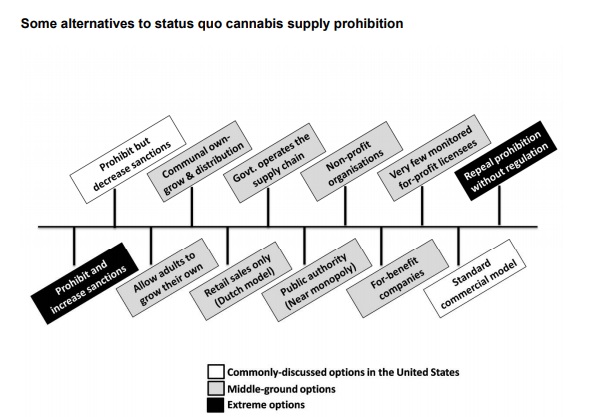
The European Monitoring Centre for Drugs and Drug Addiction (EMCDDA) just published a new report “Monitoring and evaluating changes in cannabis policies: insights from the Americas“. This report provides an overview of the changes in cannabis policies in the Americas and the evidence emerging from evaluations of their impact. The focus of the report is shifted to recent changes to regulatory systems in the Americas that permit the consumption of cannabis by adults for non-medical, recreational purposes.

Over the past 50 years, several jurisdictions in Europe, Australia and the Americas have reduced the penalties associated with using or possessing small amounts of cannabis. As of December 2019, Canada, Uruguay and 10 US states have gone further and passed laws that license the production and retail sale of cannabis, mostly by private companies, to adults for non-medical – sometimes referred to as recreational – purposes. With discussions about alternatives to cannabis prohibition becoming more common in some parts of the world, there is a growing interest in learning from the cannabis policy changes in the Americas.

To learn more about these new cannabis regimes and their consequences, the European Monitoring Centre for Drugs and Drug Addiction (EMCDDA) commissioned a review of the changes governing recreational cannabis policies in the Americas and an overview of preliminary evaluations. Findings from this research are intended to inform discussions about the development of a framework for monitoring and evaluating policy developments related to cannabis regulatory reform.

To download the report, follow this link>>>

First Civil Society Monitoring Report

Taken from the Correlation website

The Correlation – European Harm Reduction Network (C-EHRN) published the first monitoring report covering certain areas of drug policy and practice. The purpose of this report is to enrich the information and knowledge base of harm reduction interventions in Europe from the viewpoint of civil society organisations, meaning organisations that directly work for, and with, people who use drugs. Correlation believe that this approach is a necessary, and useful, contribution to the development of drug policy in the region.

Correlation plan to repeat this reporting on an annual basis to identify developments and changes over time. A lot is being learned in this first pilot phase and adaptations to the focus and questions will be made, accordingly, as well as a recognition of certain limitations with regards to coverage and validation which we cannot easily overcome. Consequently, the information provided in this report is sometimes anecdotal and represents the situation in a particular city or region and informs us as to the experiences of a specific organisation in the field. Such ‘real life’ information can contribute significantly to an understanding of the advantages, barriers and challenges of drug policy.

Correlation will use the insights and information collected in this report within their advocate efforts to strengthen harm reduction policies in Europe and, hopefully, their partners and contributors will do the same in their environment at a regional and national level.

More than one hundred organisations and individuals from 35 European countries have contributed to the collection of data with an amazingly high response rate. All contributors deserve tanks for their great work and commitment. Without their engagement, this work would never have been undertaken at all.

To read the report, follow this link>>>


Drug decriminalisation interactive map

TalkingDrugs, an online platforms dedicated to providing unique news and analysis on drug policy, harm reduction and related issues around the world, published an interactive map which provides an overview of decriminalisation models, offering insights into decriminalisation laws, their implementation and impact.

The criminalisation of people who use drugs compounds drug-related challenges and worsens health and welfare outcomes. The gold standard of decriminalisation is the removal of all punishment for drug use, and the availability and accessibility of evidence- and human rights-based harm reduction, health and social services on a voluntary basis.

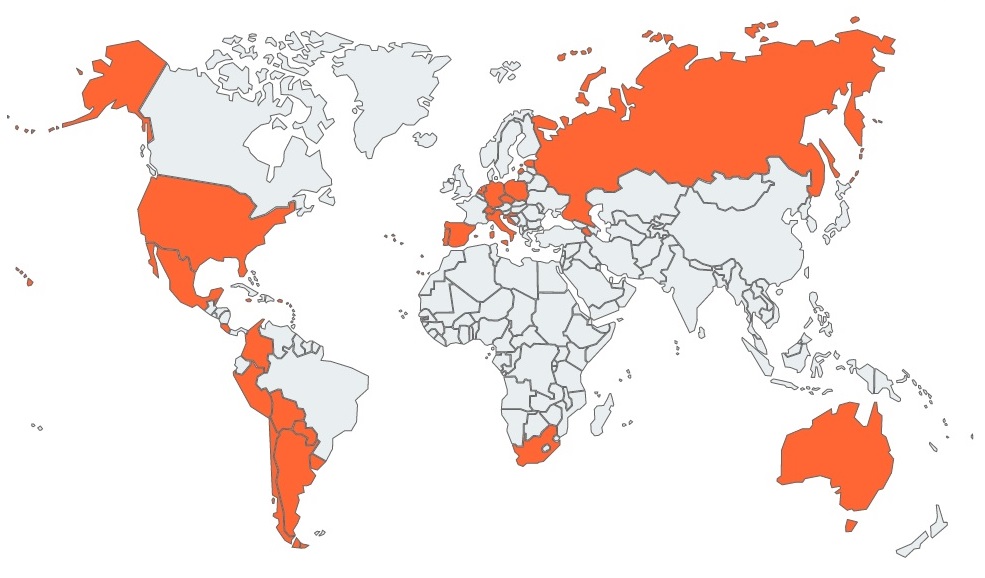
Across the world, there is a growing number of jurisdictions where the possession of scheduled drugs for personal use has been decriminalised. Some form of decriminalisation has been adopted in 30 countries – with significant differences and levels of effectiveness. This interactive map provides an overview of these models, offering insights into decriminalisation laws, their implementation and impact. In some countries and federal states, this has been extended to the cultivation of cannabis for personal use or the sharing of substances where there is no financial gain (also known as ‘social sharing’).

The following elements are included in the map:

  • Threshold quantities used to determine whether the activity is decriminalised (if there are no thresholds other considerations used are outlined);
  • The agency responsible for determining the activity is decriminalised;
  • The activities that are decriminalised, and for which substances;
  • The applicable administrative / civil sanctions or whether no sanctions are applied.

In South East Europe, only Croatia adopted decriminalisation of possession a ‘small quantity’ of any drug. The decriminalisation of drug consumption and possession for personal use means that the person no longer has a criminal record, so the stigma associated with people who use and/or are dependent on drugs is reduced. The law also gives more flexible treatment options. Croatia’s model of decriminalisation is codified in the country’s laws through statutory reforms and was introduced in 2013.

This map has been developed in partnership with Release, the International Drug Policy Consortium, and Accountability International, thanks to the financial support of the Robert Carr Fund and Open Society Foundations. This map will be updated regularly. If you do have any comments or feedback please contact Talking Drugs.

To see the map and all data it contains, follow this link>>>

Cannabis legalisation in the United States – Towards a regulated market?

The French Monitoring Centre for Drugs and Drug Addiction (OFDT) published a memo which describes the regulatory models that have been implemented since 2014 in the American states that have legalised cannabis, highlighting their differences and similarities. It also discusses the reform processes and common features of states that have legalised cannabis for medical and recreational use.

Author of the memorandum is Ivana Obradovic, OFDT Deputy Director.

After five full years of reform in Colorado and Washington State (2014 – 2018), first outcomes can be reported – although it is not clear whether they are directly attributable to cannabis being legalised. The most significant effects relate to the quick and large-scale industrial expansion of the cannabis supply chain. However, this economic boom has also seen the emergence of three public health concerns:

  • The substance is now aimed at all population profiles, from people who have never tried it to regular users and from young people to seniors. The increase in supply and its diversification have increased the incentives to use it, which is only made worse by marketing strategies emphasising cannabis’ “therapeutic virtues” or its dimension of socialisation.
  • The increase in the number of emergency calls and hospitalisations following acute intoxication highlights the difficulty of effectively regulating substances put on the market (particularly in terms of the concentration of active ingredients). At the same time, cannabis-related treatment demands have declined.
  • The decline in both the perceived dangerousness of cannabis and retail prices have led to it becoming more accessible and the substance being “normalised” which, according to public health stakeholders, could ultimately increase the risks and harm associated with its use (particularly among the younger generation).

To read the memo, follow this link>>>

Glossary of terms used in drug policy in Montenegrin

With the support of our member organisation Juventas, DPNSEE produced the Glossary of terms used in drug policy in Montenegrin.

The Glossary is prepared with the aim to contribute to better understanding the drug problem in more emphatic manner. Glossary is an alphabetical list of terms with definitions.

This is the fifth language in which the Glossary is published, after the original version in English and those in Spanish, Serbian and Bosnian.

To download the Glossary in Montenegrin, follow this link>>>
Opioid Atlas

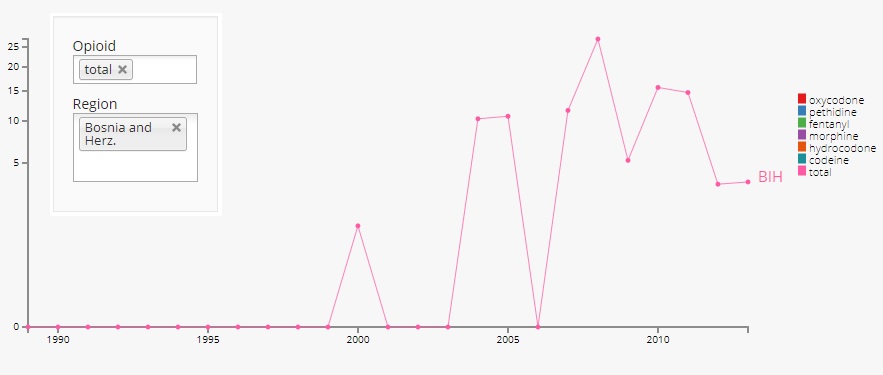
Statistics for Social Good partnered with Global Oncology to gain access to opioid consumption data and to visualize it – the result was the Opioid Atlas. Their idea is that expressive visualizations of this data can both facilitate analysis by palliative care researchers and educate the broader public on the state of opiate access.

Opiates are some of the most effective pain relief medications; and some of the most widely abused. The Opioid Atlas is an interactive tool for exploring and visualizing opioid consumption around the world from 1989-2013, based on data from the International Narcotics Control Board (INCB).

Statistics for Social Good is an interdisciplinary club with members from diverse academic and professional backgrounds. Their mission is to identify the concrete social problems that can benefit from improved data analysis and the statistical and computational techniques needed to achieve these improvements. They are motivated by a variety of social issues but are especially focused on problems stemming from economic inequities, like poverty, hunger, human trafficking, and unequal access to education. Many of their findings are documented on the collaborative social good hub maintained by Stats for Change at collaborative portal intended to document ongoing social data analysis efforts, summarize relevant resources and knowledge and connect those with technical skills and a passion for social change to organizations and individuals with pressing needs.

You can explore the Opioid map following this link>>>

Summer School in Human Rights Litigation

The Open Society Justice Initiative and Central European University invite applicants for the 2020 Summer School in Human Rights Litigation, to be held in Berlin from June 8 to 12.
The summer school provides a unique opportunity for human rights professionals to build on their experience and to develop their skills to successfully bring cases to the regional human rights systems and the UN treaty bodies, and to use those cases to achieve practical change. The curriculum will combine presentations, case studies, exercises, and discussion groups with preparatory work and further reading to ensure full maximum benefit for those attending the course. Participants will be invited to provide information on their work and those concrete examples will help shape discussion.

The program is co-organised by the Hertie School’s Centre for Fundamental Rights

To get full information about the Summer school follow this link>>>

Training Material on addressing gay men and other MSM

The Training Programme for Community Health Workers (CHW) engaged in work with men who have sex with men (MSM) in Europe was developed in the frame of the EU-funded ESTICOM project. Its aim is to help increasing the quality of the services CHW provide.

The training programme addresses a wide range of topics CHW are working with and covers all main areas CHW address in their work. It consists of Face-to-Face training material for interactive workshops as well as E-Learning modules that are more knowledge based.

The Face-to-Face material is published in: English, German, French, Spanish, Italian, Polish, Greek, Romanian, Portuguese and Russian.

The material is also suitable to be used for training CHW that work with other target groups than MSM.

To download the training material, follow this link>>>

To use the training material on-line, visit this website>>>