Coming soon “Support. Don’t Punish.”

The harms being caused by the war on drugs can no longer be ignored. It is time to leave behind harmful politics, ideology, and prejudice. It is time to prioritize the health and welfare of the affected populations, their families, and communities.

Support. Don’t Punish is a global advocacy campaign calling for better drug policies that prioritize public health and human rights. The campaign aims to promote drug policy reform and to change laws and policies which impede access to harm reduction interventions.

The Support. Don’t Punish campaign aligns with the following key messages:

The drug control system is broken and in need of reform
People who use drugs should no longer be criminalized
People involved in the drug trade at low levels, especially those involved for reasons of subsistence or coercion, should not face harsh or disproportionate punishments
The death penalty should never be imposed for drug offenses
Drug policy in the next decade should focus on health and harm reduction
By 2020, 10% of global resources expended on drug policies should be invested in public health and harm reduction
To launch the Global Day of Action for the “Support. Don’t Punish” campaign in South East Europe, DPNSEE organizes “Kick-off event”. The event will be held in the EU Info Centre in Belgrade, Kralja Milana 7, on 20 of June 2017 at 13:00.

Representatives of the Network will present the objectives of the campaign “Do not Punish Support” as well as activities within the project “Strengthening the capacity of civil society organizations in South-East Europe and promoting public health and human rights oriented drug policy in South East Europe ” supported by the European Commission. The network has prepared a Glossary of terms used in areas related to drug policy and related topics that will also be presented.

The representative of the EU Delegation in Serbia Dr Maja Vučkovic – Krčmar will present the latest European Monitoring Centre for Drugs and Drug Addiction (EMCDDA) report on drugs in 2017. Director of the Office for Combating Drug Abuse of the Republic of Serbia Milan Pekić will talk about the work and plans of the Office and reflect on the situation in Serbia.


Stay tuned for the announcement of the activities in each SEE country!

Annual Drug Policy Conference

The Annual Regional Conference in South East Europe was organised in Thessaloniki from 8 to 10 June 2017. The conference aimed to bring together NGOs, policy makers and researchers active in the drugs field in the region of South East Europe, in order to discuss drug policy developments and trends, exchange experiences and best practices in the region, Europe and the United Nations.

The conference is part of the regional project “Strengthening NGO capacity and promoting public health and human rights oriented drug policy in South East Europe”, supported financially by the European Commission and the Open Society Foundations. The organiser was Diogenis, Drug Policy Dialogue.

National drug coordinators from Romania and Croatia

The Conference agenda included a large number of interesting issues:

  • The Sustainable Development Goals 2030 and drug policy. Priority issues, the role of UN agencies, expected commitments from the member states and role of NGOs. Presenter was Jo Dedeyne-Amann, Chief Secretariat to the Governing Bodies, Division for Treaty Affairs, UNODC. Nikos Stergiou, Communication and public relations Officer, Diogenis, presented experience of two local meetings.
  • Initiatives undertaken in the countries of our region related to implementation of the outcomes of the UNGASS and the role of NGOs. National drug coordinators presented work in their countries: drug co-ordinators: Sorin Oprea (Romania), Milan Pekić (Serbia), Željko Petković (Croatia) and Manina Terzidou, head of the Greek Monitoring Centre for Drugs (EKTEPN) (Greece)
  • Women and Drugs. Facts and Special Characteristics for Girls and Women who use drugs was the presentation from Meni Malliori, Professor of Psychiatry at the University of Athens, while Georgia Aslanidou, Psychologist, OKANA Thessaloniki presented about Addicted mothers and the journey of therapy
  • Drugs and internet: experiences, opportunities and concerns in the use of online counselling tools presented by Ilias Paraskevopoulos, Consultant for addictions at KETHEA ITHAKI
  • The Harm reduction project in South East Europe. Developments and next steps presented by Sofia Galinaki, Advocacy Officer, Diogenis and Peers’ involvement in harm reduction, with introduction from Christos Anastasiou, Peer Network of Users of Psychoactive Substances (PENUPS).
  • Irena Molnar and Bojan Arsenijević from the NGO Re Generation, Serbia provided valuable insight into Changing culture in drug use including new psychoactive substances
  • Developments in the discussion about cannabis policy in countries of SEE
Irena Molnar presenting about Changing culture in drug use including new psychoactive substances

Representatives from 14 DPNSEE member organisations, 3 Board members and all 5 Staff were at the Conference. We presented the Network, strategic priorities and plans for the future. Our two volunteers talked about their work on the Glossary and Resource Pool.

Marios Atzemis, DPNSEE Board member, making an intervention

The Conference was a very good opportunity to share and learn about interesting ideas and make plans for the future.

Partners Coordination Meeting

Representatives of all 6 partners in the EU funded project “Strengthening NGO capacity and promoting public health and human rights oriented drug policy in South Eastern Europe” met in Thessaloniki, Greece, on 8 June 2017.

Partners adopted the Minutes of the Project Partners Skype meeting  held on Friday 10 February 2017 with some additions proposed by DPNSEE. Diogenis informed about successful audit for 2016 and announced  the EC initiated Audit of the Financial report 2015.

Partner organisations presented their short reports about the implementation of the Action plan 2017. Reports from visits to Croatia (written) and Bulgaria (oral, the visit happened just before the meeting) were received, with the comment that more information are needed about the work of civil society organisations. The visit to Slovenia is planned for September.

Agreements were made for preparations of the interim report and action plan 2018 (if possible, they will be done on partners meeting at the end of August/beginning of September). Partners are invited to send their proposals by 20 July.

Focus on transition

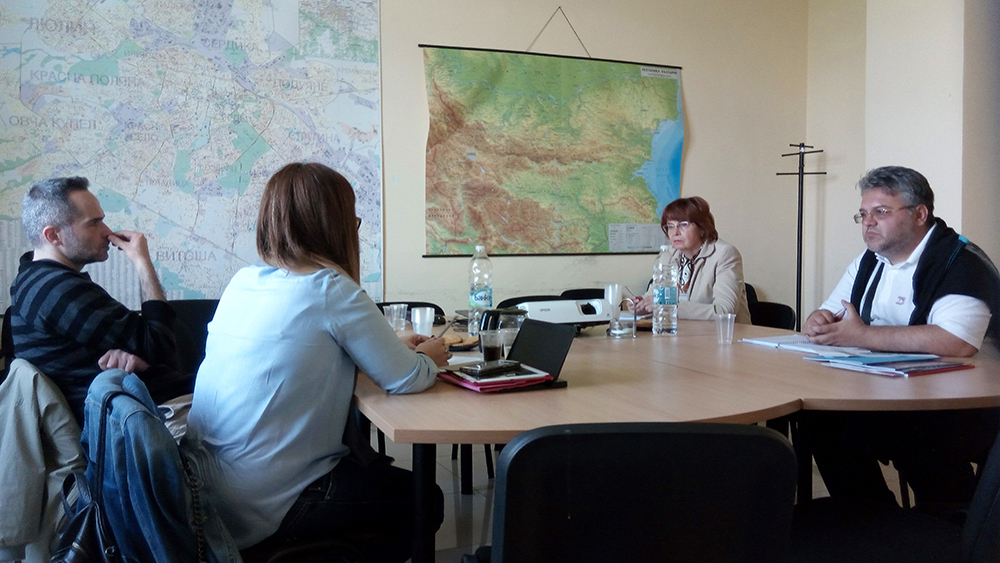
Delegation of the project “Strengthening NGO capacity and promoting public Health and human rights oriented Drug Policy in South East Europe ” visits Bulgaria from 29 to 30 May. The visit is part of the efforts for the enlargement of the Network as an essential prerequisite for making it a strong and reliable partner.

The main aims of the visit are to: (a) present DPNSEE to the Bulgarian society, (b) build strong relationships, enhance contacts and improve drug policy dialogue with the relevant authorities, state institutions, policy makers and NGOs, (c) explore opportunities for partnerships and collaboration and (d) discuss possible applications of local civil society organizations for membership in DPNSEE. The experiences from Bulgaria, country that is in transition from communist to EU member state, are of interest, especially because it will hold the EU presidency in the first half of 2018.

The delegation consists of 3 people: Marios Atzemis, DPNSEE Board member, Milutin Milošević, Executive director and Sofia Galinaki, Advocacy Officer, Diogenis (DPNSEE member organisation).

The first day of the visit, the delegation had an interesting exchange with Dr Vyara Georgieva, the Chief Expert in the Ministry of Health for the programmes financed by the Global Fund to fight AIDS, Tuberculosis and Malaria and Petar Tsintsarski, Consultant for the program Prevention and Control of HIV/AIDS. The key learning points from this meeting are that the HIV/AIDS problem should be seen from various angles besides medical: cultural, social etc. and that financing services should be concentrated on the level of local communities.

During the meeting in the National Centre for Addiction with Momtchil Vassilev, Director of the National Focal Point on Drugs and Drug Addictions and Nikolay Butorin, Expert on Training Programmes, the delegation got a lot of data about drugs in the country. Improvement of Early Warning System for new psychoactive substances was an issue of joint interest.

Meeting in the National Centre for Addiction

For the second day of the visit, meetings were first scheduled with two civil society organisations: Initiative for Health Foundation and Centre for humane policy. Our colleagues gave us a realistic and open vies on the situation in the country, especially in the light of termination of the Global Fund support that will cause closing of services to drug users.

Dr Tsvetelina Raicheva, who recently directed the National Addiction Centre provided more statistics about the situation. At the Centre for the Study of Democracy the representatives of the network had a meeting with Mr. Dimitar Markov (Senior Analyst and Project Director, Law Program) and Mr. Atanas Rusev (Senior Analyst, Security Program). The Security program implements criminology research, actively contributes to the Bulgaria’s policy debate on organized crime and participates in projects on crime and security issues. The issues of inadequate funding and bureaucracy in the field of drugs were highlighted in this meeting as one of the biggest barriers at policy level. Moreover, the need for more action in the issue of immigration and its connection to drug use through several routes has to be identified and addressed.

With our friends from Initiative for Health Foundation and Centre for humane policy

A potential for regional project

Representatives of Bosnia Herzegovina, Bulgaria, FYRO Macedonia, Kosovo*, Montenegro, Romania and
Serbia, which constitute the South East Europe Regional Coordinating Mechanism (RCM), are meeting in
Skopje on 25 and 26 May 2017. The aim of the meeting is to determine key activities and stakeholders that
will implement a multi-country grant and opportunities for the RCM to develop its work through the end of
2017.

The RCM would like to develop a joint understanding of scope and limitations of Global Fund multi-country
grants, as they apply to South East Europe and to achieve consensus on a working project design for a
potential multi-country grant from the Global Fund. Also, complementary steps for the RCM for the coming
year should be determined.

DPNSEE member organisations are present in many national country coordinating mechanisms. As the
network, we expect involvement in regional projects and see them as a good potential to maximise results.

YODA Workshop for young activists in Europe

Last week (15 – 22 May) around 30 young people from 12 countries gathered in Belgrade for another round of workshops organised by Youth Organisations For Drug Action in Europe. This time the workshops, funded by European Youth Foundation and Open Society Initiatives, focused on “Promotion of social inclusion and protection of human rights among young drug users “.  Young people came from Serbia, UK, Belgium, Slovakia, Poland, Romania, Bosnia, Montenegro, Albania, Hungary, Bulgaria and Macedonia and representative of the Council of Europe. 5 of them were representatives of DPNSEE member organisations Juventas, Re-Generation, Aksion Plus, HOPS and Margina.

The aim of the workshop was to analyse different aspects of human rights violations regarding young people and drugs through mentioned topics, so that official document can be drafted, addressing policy change in order to overcome different problems and prevent human rights violation in the future. Within 7-day long workshop participants were showcasing examples of human rights violations of young people protected under the European Convention on Human Rights and also compared the criminal penalties for drug offences in their countries, compared cases of young people receiving drug treatment and discussed access to drug treatment for young people who use drugs.

DPNSEE joined the International Drug Policy Consortium

A great news – Drug Policy Network South East Europe was formally recognised as the member organisation of the Member of The International Drug Policy Consortium (IDPC)!

The IDPC membership opens opportunities for participating in a variety of projects. We have already been discussing assisting the IDPC to coordinate the “Support.Don’t Punish” campaign in South East Europe, having a training supported by the IDPC and working together on documenting the situation in the region related to transition from the Global Fund funded projects to local funding of the services. We hope that in the future there will be a lot of new chances for collaboration.

Successful charity auction for the kids of HOPS

HOPS and “Move with your finger “  (Mrdni so prst), together with Macedonian well-known actor Sasko Kocev and a huge number of Macedonian artists have organised a successful charity auction for the kids that are visiting HOPS.

The charity auction was held on 11th April at 19 o’clock in “Public Room” for the kids whose parents are\were drug users and sex workers.

“As a lack of finances we had a great need to make a move with our fingers and to organize a charity auction in order, for the children whose parent are using our services, to continue visiting our daily center for rehabilitation and re-socialization, where they can visit their psychologist, pedagogue, social workers, where they can be creative and their creative mind will be developed, and at the same time we will give them the opportunity to participate in more social activities and visit more cultural events – said Irena Mila from HOPS, now we can organize many birthdays, workshops and events together.

Smiling faces, beautiful atmosphere, “Public Room” was full with beautiful people, Sasko Kocev in element and generous known and famous Macedonian artists, designers and writers were part of this auction. This was the picture on Tuesday evening when we all were moving with our fingers for kids that are visiting our daily center for rehabilitation and re-socialization. The goal is achieved!

We sold all the artworks and we gathered 295.692 Macedonian denars. – Irena Mila from HOPS.


“If we want to do something to the society and raise awareness about many things, we need to move just with one finger! Just imagine if we give so much effort for something and moving with our finger is just the beginning and I truly hope that we will “open” everyone eyes about a lot of marginalised groups! We have a lot of artworks that have been donated from our artists, designers, writers, also we have a jersey from our famous footballer Goran Pandev, get prepared to bid because kids from HOPS need our help!” – said Sasko Kovec in the crowded “ Public Room “ at the beginning of the auction.


The event was opened by DJ Cako, who is a proud Macedonian ambassador to the United Nation, representing people with Down syndrome, he heated up the atmosphere and made everyone to dance from the very beginning. After a short speech by Hristijan Jankulovski, CEO of HOPS, who thanked all present guests because they moved their finger and decided to help to solve the problem, which on the other hand would leave these kids without the necessary care. Besides the loud auction, there was a silent auction, where people bided on the sheet of paper for all the artworks that were donated.

After a successful auction, the evening continued with DJ Goce Saf, when literally everyone in “Public Room” was dancing. This charity auction, supported by famous Macedonian artists was meant for the children whose parents are drug users or sex workers.

SPEED DATING: youth organisations and EU grants

The EU Info Point in Belgrade hosted representatives of 37 youth organisations and organisations for youth from 7 cities in Serbia on 28 March for the “Speed dating” event on EU funds. 9 different EU programmes and 2 national were present. The CU Delegation in Serbia, Ministry of Youth and Sports and the National Youth Council supported the event.

Participants got interesting information from EIDHR, The European Instrument for Democracy and Human Rights, Civil Society Facility (CSF) , COSME (Programme for the Competitiveness of Enterprises and SME), Horizon 2020 (EU programme supports research projects, The Office for Cooperation with Civil Society supports projects (in scope of the programme Europe for Citizens), Creative Europe, Erasmus+, TACSO – Technical Assistance for Civil Society Organisations, Ministry of Youth and Sports, Media programme and EU Info Point.


Learning about the good experiences and challenges in Croatia

Representatives of the Drug Policy Network in South East Europe (DPNSEE) visited Croatia from 22 to 24 March 2017. This activity is part of a series of country visits within the framework of the project “Strengthening NGO capacity and promoting public Health and human rights oriented Drug Policy in South East Europe” as described within the work plan for 2017 and it was undertaken by NGO “Diogenis Drug Policy Dialogue” – the lead organization of the project – in close cooperation with DPNSEE. The delegation – consisting of Nebojša Đurasović, Deputy Treasurer and DPNSEE Board member, Milutin Milošević, DPNSEE Executive director and Sofia Galinaki, Diogenis Advocacy Officer – visited local authorities, institutions and NGOs working in the field of drugs based in the capital Zagreb and the cities of Split and Rijeka.

With Nena from the NGO Help

The visit was part of the efforts for the enlargement of the Network as an essential prerequisite for making it a strong and reliable partner. The main aims of the visit were to: (a) present DPNSEE to the Croatian society, (b) build strong relationships, enhance contacts and improve drug policy dialogue with the relevant authorities, state institutions, policy makers and NGOs, (c) explore opportunities for partnerships and collaboration and (d) discuss possible applications of local civil society organizations for membership in DPNSEE. More specifically, the delegation came in contact, discussed and exchange important information and experiences with: representatives from the Office for Combating Drugs Abuse of the Republic of Croatia,  Mr. Ranko Ostojić  – recent vice Prime minister and Minister of Interior, currently Member of Parliament and Chairman of the Parliamentary Committee for Domestic Policy and National Security,  representatives from the NGOs ‘LET’ – based in Zagreb, ‘HELP’ – based in Split, ‘TERRA’, ‘VIDA’, and ‘OASA’ – based in Rijeka and representatives from the Educational Institute for Public Health of the Split – Dalmatia county.

Ilinka and Dejan hosted us in Terra

The most important observation the delegation gained was that the governmental institutions operate in a very effective way, using an interdisciplinary approach. There is a well-organized and structured system in place, which covers the entire range of needs related to drug use. The system is decentralised, so that each of the 21 counties (županije) has its own tasks and responsibilities. Further on, local authorities and institutions take their own part and that is usually very well coordinated at county level. Moreover, the strong and ongoing cooperation between the competent state agencies and local Civil Society organizations significantly contributes in the overall implementation of the Croatian drug policy in a consistent way.

More detailed information regarding the: programme and preparation of the visit, structure of the Croatian drug policy system, important projects implemented within the 10-year Croatian Drug Strategy (2007-2017), harm reduction field, drug law reform, role of civil society in the implementation of drug policy, areas of improvement and the potential of future cooperation can be found in the full report available on request from the DPNSEE Office.

A warm welcome in NGO Vida