Documenting drug related cases of discrimination in South East Europe

The basic human rights of marginalised groups in South East Europe are violated and they are marginalised and discriminated. Stigmatisation in the society is strong and incorporated in cultural patterns. DPNSEE, with the support of its member organisations, is launching a survey to document cases of discrimination of drug users and connected vulnerable and marginalised groups and produce an analysis of the findings. The survey shall indicate different forms of discrimination and will serve as basis for additional actions on safeguarding human rights of affected groups.

The most frequent cases of discrimination are related to stigmatization in various respects, the relationship between the police and the judicial system (including the right to information in criminal proceedings), the protection of personal data, basic and specific health care, social protection, the right to education, employment and many other areas of life which should be available to every person.

The questionnaire is not intended to be filled by beneficiaries, but by organisation’s activists, preferably those who already have established relation with persons from key populations. Before filling in the document by interviewing people, their task is to explain them the aim, process and content of the document, give them the information about the research and approve their participation. Only then, they should go through the questionnaire with the key population member.

For the country contexts, you are free to adjust it to your own country, as we are just mapping the situation. The questionnaire should serve more like a guideline to you, as we repeat that it is not research per se, but rather initial mapping.

DPNSEE would very much appreciate if an organisation would join this effort and help us to document the case of discrimination. Please, use the tool which is available for downloading following this link>>>

Should you need any help on this issue, please don’t hesitate to contact us at office@dpnsee.org.

The deadline we set is 6 June 2018! Please, use the above-mentioned e-mail address.

Governments – NGO dialogue

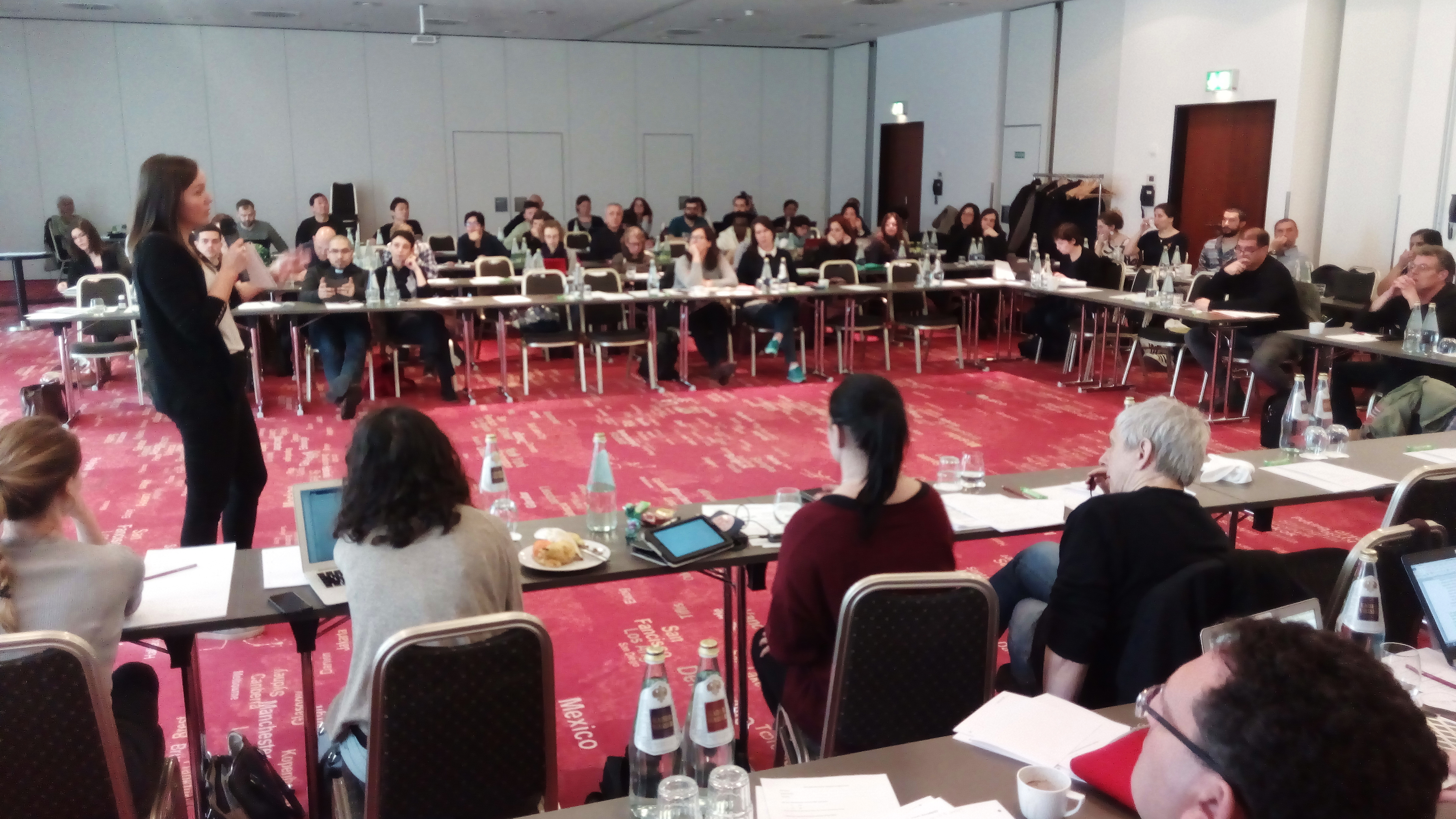
In scope of the project Strengthening NGO capacity and promoting public health and human rights oriented drug policy in South Eastern Europe, Diogenis – Drug Policy Dialogue, in co-operation with the Drug policy Network in SEE (DPNSEE) and the Office for Combating Drugs of Serbia, organised a meeting between representatives from the countries in the region of South East Europe and representatives of non-governmental organisations (NGOs). The meeting was held on 10 May in Belgrade, at the representative governmental building Klub poslanika.

The aim of the meeting was to bring together representatives responsible for the coordination of drug policy in the countries of South East Europe and representatives from NGOs working in the field of drugs to discuss about the cooperation between authorities and NGOs at the national level. The meeting was an opportunity to exchange information and experiences of good practices and to reflect on possibilities of future cooperation on the national and regional level. Exchange of information, experiences and good practices leads to ideas of setting up co-operation structures, which can be profitable for both national authorities and NGOs.

At the first part of the meeting, participants discussed the current situation of cooperation, existing models and conditions that need to be fulfilled for good cooperation. The second part of the programme focused on areas of cooperation between National Authorities and NGOs in the field of drugs related to the UN Sustainable Development Goals 2030 and the recommendations of the UNGASS 2016.

The meeting showed that the relation between governmental and civil society sectors in the area of drug policy is improving. Ideas produced can bring better cooperation for a mutual benefit and, first of all, for the benefit of key affected populations and the societies as whole.

SEE HIV Ministerial Meeting

The Prime Minister and Minister of Health of the Former Yugoslav Republic of Macedonia hosted a South-Eastern European Ministerial Meeting on Sustainable Responses to HIV and TB in Skopje on 7 May 2018. The aim of the Ministerial Meeting was to discuss the progress, challenges and opportunities towards reaching sustainable responses to HIV and TB in South-Eastern Europe. Civil society representatives had an opportunity to join the high level representatives from all SEE countries, donors and global development partners and exchange about progress made and what remains to be done to meet the goal of ending the AIDS and tuberculosis epidemics in the region as part of the 2030 Agenda for Sustainable Development.

The ministers recognized increasing ownership of the national responses to the diseases, as external financial support including from the Global Fund is transitioning to support countries with the highest global burdens of disease and least economic capacity. The ministers expressed commitment to allocating domestic funding for and ensuring access to HIV and tuberculosis treatment for all, guided by governance structures that involve civil society and affected communities along with health professionals and technical partners. Still, a few comments from the civil organisations warned that the situation is far from satisfying and that “behind numbers are people about whom we need to care” – as underlined by the DPNSEE Board member Denis Dedajić.

DPNSEE representatives Vlatko Dekov, Chairman of the Board, Denis Dedajić, Secretary of the Board and Milutin Milošević, Executive Director, met with several Global Fund Board members, country representatives, donors and civil society colleagues. An important meeting was the one with Ekaterina Lukicheva from the Open Society Foundations International Harm Reduction Development Program and Raminta Štuikyte, consultant about the budget advocacy and implementation project and other ideas for future cooperation.

Photo with Peter Sands, the Executive Director of the Global Fund

The Board of the Global Fund to Fight AIDS, Tuberculosis and Malaria, at its 39th Board meeting, highlighted the importance of strengthening sustainability and supporting successful transition to domestic financing to build long-term solutions and achieve greater health security.

The Global Fund is committed to being a good partner in working toward sustainability, acting as a catalyst to additional investment, filling short-term gaps, and addressing bottlenecks to successful transition to more domestic funding. While shifting financing often includes challenges, including how to effectively fund civil society, transition increases country ownership and is necessary to end epidemics.

An important news for the region is that the Board approved an approach to ineligible upper-middle income countries in crisis where economic and epidemiological metrics are collapsing and where spill overs threaten regional progress against HIV, TB and malaria.

More about the Board meeting is available at the Global Fund website following this link >>>

Volunteer opportunities in DPNSEE

The Drug Policy Network South East Europe is opening volunteer positions within the project “Strengthening NGO capacity and promoting public health and human rights oriented drug policy in South Eastern Europe”, funded by the EU. This voluntary work is an opportunity to acquire knowledge, skills and experiences in the field of drug policy based on the principles of human rights and public health, not only in Serbia but in the region of South East Europe.

DPNSEE will engage volunteers for the short term two positions:

  • Glossary of terms used in drug policy
  • Resource Centre

Duration of the volunteer engagement will not be longer than 3 months, with 10 to 12 working hours per week. The beginning of the engagement is planned for mid-April 2018.

The call is open until we engage successful candidates.

If interested, please download the Call following this link>>>

Pre-CND events

Sunday 11 March was full of preparatory events for the 61st Session of the UN Commission on Narcotic Drugs. Here is an information about a few of them where DPNSEE participated.

IDPC pre-meeting with member organisations

The International Drug Policy Consortium held a day-long meeting with member organisations representatives to help them oriented to the CND participation and agree on approach and actions.

In the morning, two separate sessions were held. One was the orientation session for new CSO representatives. They also had an opportunity to learn about the CND through a webinar which is available at the IDPC website.

The other session was intended to those who already had experience with CND. It was a strategy discussion, focused on the substantive details of tabled resolutions, with overview of member states dynamics at the CND, detailed review of CND resolutions and discussion on other key issues for CND 2018.

In the afternoon session, participants from the second morning session informed others about their discussion on resolutions (and resolutions themselves) to inform collective thinking on advocacy, strategy and the work of the network during CND and beyond. This session also included presentation of the IDPC 5-year Strategy and opportunities for collaboration, a report from the civil society meeting held at the end of 2017 in Berlin and presentation of the IDPC Members Survey results.

There are a few interesting things from this event.

An interesting proposed resolution is the one from the CND Chairperson addressing the Preparations for the sixty-second session of the Commission on Narcotic Drugs, in 2019. The resolution already includes various positive elements, but should be strengthened my emphasising the role of the UN Secretary-General, references to civil society participation, active participation of all UN member states (not only 53 CND countries) and mentioning harm reduction in country presentations at the CND debate. This is very important because it is obvious that unrealistic targets of a “drug-free world” declared in 2009 Plan of Action will not be achieved. The world now have two possible ways forward: either continue with same policies that have proven insufficient (promoted by countries with rigid and conservative approach) or promote an active approach which bring public health and human rights to core of drug policy.

WHO proposes 12 substances for control – 6 of them are fentanyl based.

There will be 95 side events at CND – an invitation was shared to go to those which are critical. The same goes for some of the exhibitions of “usual suspects” (Russia, Singapore, Bahrain, Turkey… and especially Iran).

IDPC Asks from the Strategy include:

  • Move away from drug-free world targets
  • Reflect the UN goals of promoting health, human rights, development, peace and security
  • Reflect the realities of drug policies on the ground, both positive and negative – the elephant in the room
  • End punitive approaches and put people and communities first

Deadline for comments to the IDPC Strategic Plan is end of April.

SSDP Rally

Students for Sensible Drug Policy Austria organised a rally in the Vienna’s Sigmund Freud Park in the afternoon and evening. It was the first local CSOs event related to UN Commission on Narcotic Drugs held annually in this city. Besides stands which promoted new approach to drug policy and abandoning the “drug war”, several speakers addressed the public, including representatives of Anyone’s Child: Families for Safer Drug Control, INPUD, Global Drug Survey, Veterans for Medical Marijuana, ENCOD — European Coalition for Just and Effective Drug Policies, ARGE CANNA and LISTE PILZ.

Regular DPNSEE Board meeting

The Drug Policy Network South East Europe Board held a regular meeting in Skopje from 28 February to 2 March 2018. 5 of 7 Board members and Staff participated.

Significant part of the meeting was dedicated to reviewing the results of the work in the previous year and evaluating the growth of the Networks activities and actions on national, regional and the global scene. The Board sees 2017 as a year full of activities with DPNSEE international recognition and improved profile.

At the General Assembly in 2016, DPNSEE made first step in developing DPNSEE strategic plan. Following the discussion at the 2017 General Assembly, Board took steps to continue strategic discussion to identify priorities for the work in 2018 and beyond. Analysis of the DPNSEE Code of Conduct concentrated on the Board dynamics and improving relations with member organisations.

The Operational plan for 2018 includes more actions and activities for the upcoming year: capacity building, resource centre, additional translations of the Glossary of term used in drug policy, documenting cases of discrimination of vulnerable populations and international developments.

The Board accepted the information about the move of the Office and potential restructuring of the Staff.

Developing a multi-country application for the Global Fund

The South East Europe Regional Coordinating Mechanism (RCM) held the third meeting on 27 February 2018 in Skopje, Macedonia. The aim of the meeting was to agree on elements of the project for the Global Fund’s Multi-country Grant Request for Proposals – HIV: Sustainability of Services for Key Populations in Eastern Europe and Central Asia Region.

The eight countries of South East Europe that are transitioning from Global Fund support to national sources of financing services (Albania, Bosnia and Herzegovina, Bulgaria, Kosovo, Macedonia, Montenegro, Romania and Serbia) welcome Moldova to the RCM.

Participants of the meeting were welcomed by Dr Venko Filipče, Macedonian Minister of Health and Aida Kurtović, Chairperson of the Global Fund Board.

To ensure meaningful consultations within key population, community organizations representatives coming from the key population which RCM would like to cover in the application were invited to a consultative meeting a day before the RCM meeting. Asocijacija Duga from Serbia (working with MSM and Roma community), LGBT Youth Organization DEYSTVIE from Bulgaria (MSM community organization, STAR-STAR from Macedonia (sex workers community) and Asocijacija Doverba from Macedonia (community based organizations of people using drugs) joined the meeting. Two regional networks DPNSEE and ERA participated to. Representatives of our member organisations Margina, Cazas, Juventas and HOPS were among participants.

Specific Objectives of this meeting included:
1. Identify key regional advocacy priorities for 2018 for increasing domestic funds towards sustainability of HIV and tuberculosis programs.
2. Review resource availability and needs, including possibilities for donor-funded initiatives.
3. Map out a regional advocacy plan, for further finalization and adoption by the RCM.

RCM opened discussion if community organisations and networks would take over some of the activities of the project proposed to the Global Fund.

Meeting of two SEE civil society organisations networks

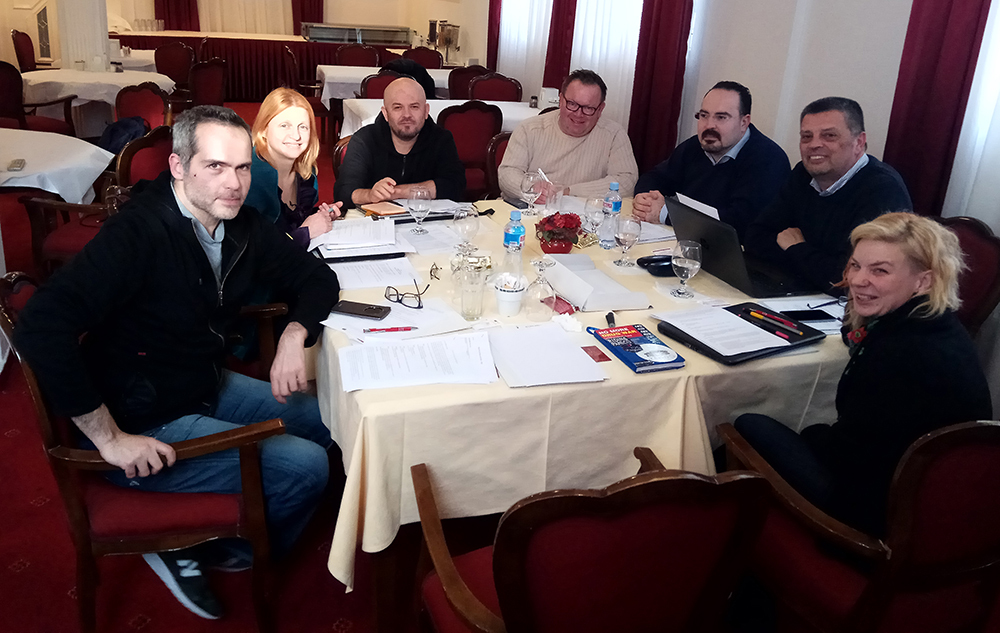
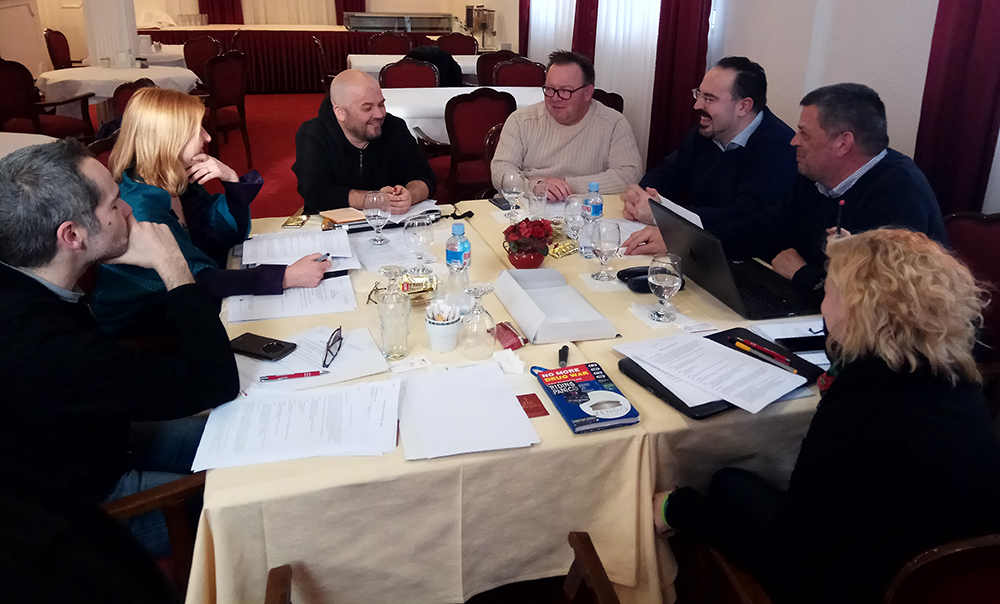
On 5 February 2018, DPNSEE welcomed in our office Amarildo Fecanji, the Executive co-director of the LGBTI Equal Rights Association ERA for an introductory meeting of the two civil society organisations networks of in South East Europe. Vice-President Nebojša Đurasović, Executive Director Milutin Milošević and Communication officer and office manager Irena Molnar represented DPNSEE.

The first contact of two networks happened during the Dialogue between civil society and donors „Averting a health and rights crisis in South Eastern Europe, Building partnership to sustain HIV prevention Services for Key populations“, organised by OSF, where both directors of the networks were presenting their views on possibilities for cooperation at the panel „Bridging the HIV and human rights; how LGBT, sex worker, drug user and PLHIV communities work together to strengthen national and regional advocacy?“. Recognition of the potential for cooperation between the two networks initiated second meeting where we used opportunity to inform each other about activities of both networks and identify areas of common action.

During a pleasant and informative meeting, several areas of join interest were identified as potential for collaboration, including but not limited:

  • Respecting the human rights of the key populations and services offered to vulnerable and discriminated groups
  • Advocating for improving state of access to health of key populations
  • Approaching, together with other SEE COS networks, the DG Near to convince them to extend support to cooperation building in SEE
  • Research and mapping the state of drug use related issues within the LGBTQI communities
  • Advocating for specific programmes related to LGBTQI and drugs such as harm reduction, including chemsex and other.


A dialogue between civil society and donors

The Open Society Foundations convened civil society activists from HIV, harm reduction, sex worker and LGBT communities from South Eastern Europe and health and human rights donors to discuss opportunities for strategic collaboration to sustain HIV prevention services for key populations and facilitate transition to domestic financing of these programs. The half-day meeting was held on 18 January 2018 in Belgrade, Serbia.

The aims of the meeting were:

  • Share examples of civil society advocacy towards domestic financing of HIV services, including efforts to push national governments to commit to provision and financing of services for key populations;
  • Discuss current challenges sustaining programming for key populations in the region with a specific focus on the threats to the human rights movements, programs, and advocates that were directly and indirectly supported by the Global Fund when it was still active in the region;
  • Present examples of how targeted donor support for civil society engagement in transition and sustainability process can bolster government ownership of the HIV response;
  • Discuss strategies and opportunities to address the service gap and enable civil society to navigate the transition process, as well as roles that donors, regional networks and technical agencies can play.

DPNSEE member organisations representatives were panellists: Denis from Margina and Dragos from RHRN presenting situation in Bosnia Herzegovina and Romania, Ivana from Juventas presenting the promising case study of Montenegro and Milutin, together with two other networks (ERA – LGBTI Equal Rights Association for Western Balkans and Turkey and SWAN – Sex Workers’ Rights Advocacy Network) on possibilities for work together to strengthen national and regional advocacy.

Many organisations were at the list of potential invitees. Finally, around 35 CSO participated. Besides DPNSEE, 9 member organisations were present: Aksion Plus, Margina, Viktorija, Labyrinth, Cazas, Juventas, ARAS, RHRN and Prevent.

The meeting was mainly about presenting situation and needs, with not many questions and comments from the floor. Most of the results were achieved in informal exchanges with other participants. Besides OSF and Global Fund representatives, donors included Embassy of France in Serbia, Mama Cash and Reconstruction Women’s Fund (Serbia). Representatives of other Networks included Eurasian Harm Reduction Network and Eurasian coalition on male Health.

Just after the main meeting of the dialogue, an Informal dialogue on LGBTI and HIV in South-Eastern Europe was organised by the ERA – LGBTI Equal Rights Association for Western Balkans and Turkey. Most of the DPNSEE member organisations participated in the meeting that addressed the current work done, gaps and challenges in collaborating towards protecting LGBTI rights and addressing HIV and needs and opportunities for a regional approach and support of this work.

Representatives of the DPNSEE member organisations at the Dialogue

SEE civil society organisations consultations

Preparing for the regional dialogue with donors, civil society organisations from South East Europe met in Belgrade, Serbia on 17 January 2018. The aim of the meeting is to discuss current developments regarding the work of the South East Europe Regional Coordinating Mechanism (RCM) and preparation process of the multi-country application, possible cooperation with EECA regional networks as well as opportunities for advocacy funding initiatives sustaining HIV prevention services in South East Europe. Around 30 representatives of the civil society organisations (CSOs) from all SEE countries participated.

Ana Filipovska, the RCM Coordinator and Milutin Milošević, DPNSEE Executive Director, presented recent work of the RCM and the call for multi-country application to the Global Fund to fight HIV, tuberculosis and malaria. The presentations and discussions following then helped to clarify some misunderstandings. Two regional initiatives for the project to the Global Fund were presented – Alliance and EHRA, ECOM, SWAN.

Milutin Milošević, DPNSEE Executive Director, delivering presentation

CSOs were invited to actively contribute to the work of Country Coordinating Mechanisms in expressing the country needs and designing a regional project.

The meeting was organised by HERA and Zaedno Posilni, supported by the Open Society Foundations.