Facebook: Allow For Life-saving Harm Reduction “Instructions for Non-Medical Drugs”

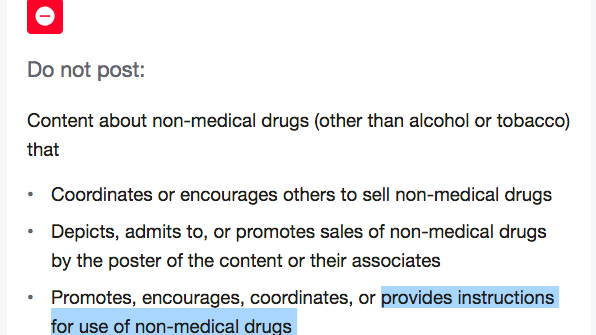
Facebook banned harm reduction information, in an effort to mitigate drug profiteering hurting educators and self-help communities. Banned are “instructions for use of non-medical drugs” and talk about “use of non-medical drugs unless posted in a recovery context”, which constitute the foundation of a pragmatic life-saving approach called harm reduction, designed for people who have not reached recovery but want to improve their safety already.

Polish-based network of research groups at universities Społeczna Inicjatywa Narkopolityki (Social Drug Policy Initiative – SIN), which brings together young people, students and academic staff of universities, who want to change the functioning in Poland and the world drug policy based on prohibition, launched a petition inviting Facebook to restore the removed content and secure valuable harm reduction profiles from the mercy of algorithms by changing the Community Standards and ensuring harm reduction will never be censored again. Their Facebook page https://www.facebook.com/SinPL is one of those banned.

DPNSEE and several our member organisations and partners have signed the petition which you can find here>>>>

At the moment when we posted this news, 936 have signed the petition. We hope it is already over 1.000!

Socio-political developments and drug policy in SEE

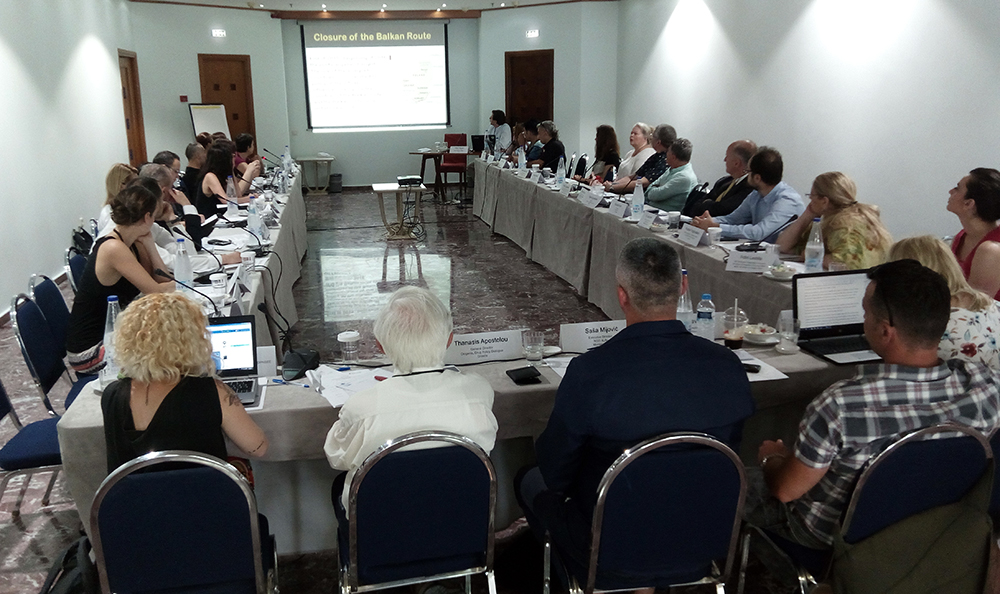
The annual drug policy Regional Conference in South East Europe, “Socio-political developments and drug policy in SEE” was organised from 7 to 9 June 2017 in Thessaloniki, Greece. The conference is part of the regional project “Strengthening NGO capacity and promoting public health and human rights oriented drug policy in South East Europe”, supported financially by the European Commission and the Open Society Foundations. The organiser was Diogenis – Drug Policy Dialogue.

The conference aimed to bring together civil society organisations, policy makers, researchers and lawyers working on the drug issue in the region of South East Europe, but also people active in the field related to cultural change and young people. The meeting was organized in order to discuss drug policy developments and trends, exchange experiences and best practices in the region, Europe and the United Nations.

This year, topics covered recent emerging situations, reflecting the most important areas at the moment, including:

  • Refugees, migrants and Drugs, the policy of the competent authorities and the involvement of NGOs. How do the competent authorities address the issue? Which are problematic aspects and how NGOs can contribute to a fair and effective policy? Harm reduction services and Refugees and migrants in countries of South East Europe.
  • Youth culture, festivals, drug use and harm reduction in South East Europe: Policy implications for authorities, the festival and party organisers and harm reduction services. Difficulties and legal barriers to implementing harm reduction services. Suggestions for measures to prevent unintended risks. Policy aspects of Youth and festivals and Health protection.
  • The evaluation of the Political Declaration 2009 – 2019 and its relation to the UNGASS outcome document. Main issues of discussion and the contribution of NGOs.
  • The Follow up of the Harm reduction project in South East Europe. Latest data analysis from the research. Cost-effectiveness analysis of harm reduction services. Approaching local authorities and increase their engagement in the area of HR, including funding opportunities. Budget advocacy and monitoring for harm reduction. Accreditation of the services provided by the civil society organisations.
  • Information about Current topics of importance – the regional project “Strengthening NGO capacity and promoting public health and human rights oriented drug policy in South Eastern Europe”, DPNSEE developments, activities of importance for drug policy in the region of SEE.

The general conclusion from the conference is that a new definition of harm reduction is needed to reflect the current situation and change in drug use, including type and the patterns of drug use.

Other conclusions were proposed on specific issues such as drug checking as potential integrated harm reduction measure in nightlife, which needs to be supported and systematically implemented from the side of the all stakeholders (as the Slovenian case showed its success), designing and implementing specific harm reduction services for immigrants and refugees, etc.

Sustainability of the project on the table

The second partners meeting of the project “Strengthening NGO capacity and promoting public health and human rights oriented drug policy in South Eastern Europe” in 2018 was held on 7 of June in Thessaloniki. Greece.

The discussion of the meeting was oriented around the topics that included reporting from the partner organisation about the implementation of the Action plan 2018 and partners activities. This was of special importance since this is the last year of the project implementation.

The partners used the opportunity to discuss the situation of drug policy and harm reduction in their respective countries, as well as development over the course of last 4 years when the project was implemented. The project partners also internally evaluated the project activities so far and discussed about the way forward regarding the content and the funding of the future actions to be undertaken.

We have a new Office!

Drug Policy Network South East Europe moved to new Offices. We are now in a quiet part of Belgrade called Zemun, which was for ages a separate town, even border city of the Austro-Hungarian Empire until it collapsed a hundred years ago, at the end of the World War I.

Our new Office is in a house with very nice garden and enough space for work and even socialising. Welcome!

Pregrevica 35
11080 Zemun
Serbia
Landline: +381 (0)11 2642301

An interesting new publication

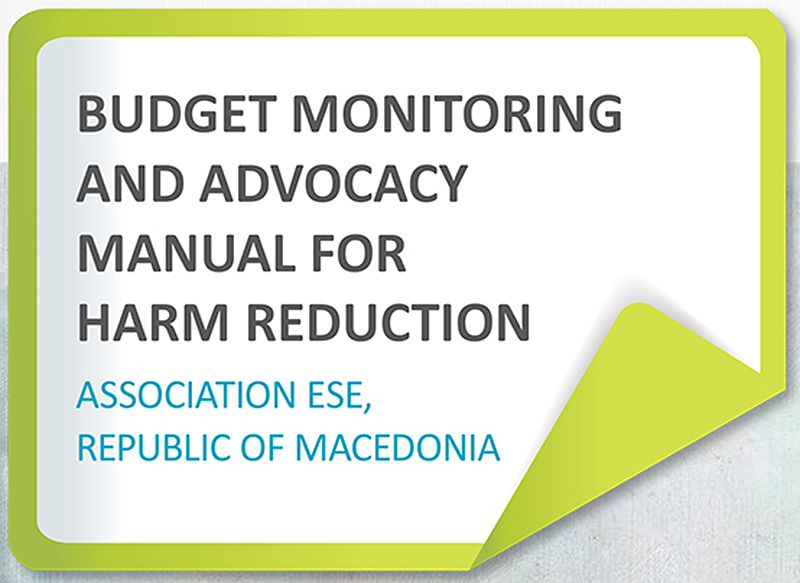
The Association for Emancipation, Solidarity and Equality of Women – ESE published a very useful publication “Budget monitoring and advocacy manual for harm reduction”. The manual provides detailed information for each of the stages in the process of budget monitoring and advocacy. Those who want to analyse and monitor budgets and advocate for more funds for harm reduction, can learn a lot from it.

ESE worked in partnerships with DPNSEE member organisation HOPS for several years to achieve an excellent success with ensuring that harm reduction services are supported from the national budget. The two organisations organised the training for organisations in Bosnia Herzegovina, Montenegro and Serbia in December 2017. DPNSEE is currently planning a project in the three countries on budget advocacy and monitoring.

The manual is available from the ESE webpage following this link>>>

Documenting drug related cases of discrimination in South East Europe

The basic human rights of marginalised groups in South East Europe are violated and they are marginalised and discriminated. Stigmatisation in the society is strong and incorporated in cultural patterns. DPNSEE, with the support of its member organisations, is launching a survey to document cases of discrimination of drug users and connected vulnerable and marginalised groups and produce an analysis of the findings. The survey shall indicate different forms of discrimination and will serve as basis for additional actions on safeguarding human rights of affected groups.

The most frequent cases of discrimination are related to stigmatization in various respects, the relationship between the police and the judicial system (including the right to information in criminal proceedings), the protection of personal data, basic and specific health care, social protection, the right to education, employment and many other areas of life which should be available to every person.

The questionnaire is not intended to be filled by beneficiaries, but by organisation’s activists, preferably those who already have established relation with persons from key populations. Before filling in the document by interviewing people, their task is to explain them the aim, process and content of the document, give them the information about the research and approve their participation. Only then, they should go through the questionnaire with the key population member.

For the country contexts, you are free to adjust it to your own country, as we are just mapping the situation. The questionnaire should serve more like a guideline to you, as we repeat that it is not research per se, but rather initial mapping.

DPNSEE would very much appreciate if an organisation would join this effort and help us to document the case of discrimination. Please, use the tool which is available for downloading following this link>>>

Should you need any help on this issue, please don’t hesitate to contact us at office@dpnsee.org.

The deadline we set is 6 June 2018! Please, use the above-mentioned e-mail address.

Global Prison Trends 2018

Penal Reform International published today the fourth edition of the Global Prison Trends 2018 at the UN Commission on Crime Prevention and Criminal Justice. The Report is prepared in collaboration with the Thailand Institute of Justice. It includes a foreword by the Rt Hon Helen Clark, Member of the Global Commission on Drug Policy, Former Prime Minister of New Zealand and Former Administrator of the United Nations Development Programme.

The Report explores Trends in the use of imprisonment, Prison populations, Developments and challenges in prison management, The role of technology in criminal justice and prison systems and The expansion of prison alternatives. A Special Focus section looks at the rehabilitation and reintegration of offenders in the era of sustainable development.

The Report clearly states that harsh criminal justice responses to drugs are a major contributor to prison overcrowding, and the ‘war on drugs’ persists in some countries with disastrous consequences. According to available UN data, 83 per cent of drug offences recorded by law enforcement and criminal justice systems are possession offences. However, more promisingly, UN bodies and an increasing number of states are rejecting this approach. Reforms include the decriminalisation of cannabis and reducing sentences for minor offences.

Recommendation 8 of the Report, based on the Sustainable Development Goals 3, 5 and 16, proposes that “States should review their drug policies in order to adopt evidence-based policies that include decriminalisation of minor offences, proportionality of sentencing, and non-custodial alternatives to imprisonment. Treatment as an alternative to imprisonment must be voluntary and human-rights compliant. Metrics to measure the outcomes of drug policies should include their impact on human rights, health and development”.

Also, Recommendation 25 proposes that “States should develop and implement alternatives to imprisonment, including restorative justice processes. A focus should be on addressing root causes of crime, including poverty and inequality, to support efforts to achieving the Sustainable Development Goals. Non-custodial sanctions should replace the use of prison, rather than widening the net of criminal justice control”.

The section on Health indicated that the rates for HIV, tuberculosis and other infectious diseases among prisoners remain much higher than in the general community. The Joint United Nations Programme on HIV/AIDS (UNAIDS) estimates that people in prison are on average five times more likely to be living with HIV compared with adults outside prisons,263 although a higher estimate of 15 per cent is given by the World Health Organization. The Rapport recommends that “Drug prevention and treatment and HIV prevention, treatment and care should be available to people in prison at the same level is that provided in the community. Efforts to recruit sufficient healthcare staff in prisons should be doubled”.

To download the Report click on the photo of the front page>>>

Governments – NGO dialogue

In scope of the project Strengthening NGO capacity and promoting public health and human rights oriented drug policy in South Eastern Europe, Diogenis – Drug Policy Dialogue, in co-operation with the Drug policy Network in SEE (DPNSEE) and the Office for Combating Drugs of Serbia, organised a meeting between representatives from the countries in the region of South East Europe and representatives of non-governmental organisations (NGOs). The meeting was held on 10 May in Belgrade, at the representative governmental building Klub poslanika.

The aim of the meeting was to bring together representatives responsible for the coordination of drug policy in the countries of South East Europe and representatives from NGOs working in the field of drugs to discuss about the cooperation between authorities and NGOs at the national level. The meeting was an opportunity to exchange information and experiences of good practices and to reflect on possibilities of future cooperation on the national and regional level. Exchange of information, experiences and good practices leads to ideas of setting up co-operation structures, which can be profitable for both national authorities and NGOs.

At the first part of the meeting, participants discussed the current situation of cooperation, existing models and conditions that need to be fulfilled for good cooperation. The second part of the programme focused on areas of cooperation between National Authorities and NGOs in the field of drugs related to the UN Sustainable Development Goals 2030 and the recommendations of the UNGASS 2016.

The meeting showed that the relation between governmental and civil society sectors in the area of drug policy is improving. Ideas produced can bring better cooperation for a mutual benefit and, first of all, for the benefit of key affected populations and the societies as whole.

SEE HIV Ministerial Meeting

The Prime Minister and Minister of Health of the Former Yugoslav Republic of Macedonia hosted a South-Eastern European Ministerial Meeting on Sustainable Responses to HIV and TB in Skopje on 7 May 2018. The aim of the Ministerial Meeting was to discuss the progress, challenges and opportunities towards reaching sustainable responses to HIV and TB in South-Eastern Europe. Civil society representatives had an opportunity to join the high level representatives from all SEE countries, donors and global development partners and exchange about progress made and what remains to be done to meet the goal of ending the AIDS and tuberculosis epidemics in the region as part of the 2030 Agenda for Sustainable Development.

The ministers recognized increasing ownership of the national responses to the diseases, as external financial support including from the Global Fund is transitioning to support countries with the highest global burdens of disease and least economic capacity. The ministers expressed commitment to allocating domestic funding for and ensuring access to HIV and tuberculosis treatment for all, guided by governance structures that involve civil society and affected communities along with health professionals and technical partners. Still, a few comments from the civil organisations warned that the situation is far from satisfying and that “behind numbers are people about whom we need to care” – as underlined by the DPNSEE Board member Denis Dedajić.

DPNSEE representatives Vlatko Dekov, Chairman of the Board, Denis Dedajić, Secretary of the Board and Milutin Milošević, Executive Director, met with several Global Fund Board members, country representatives, donors and civil society colleagues. An important meeting was the one with Ekaterina Lukicheva from the Open Society Foundations International Harm Reduction Development Program and Raminta Štuikyte, consultant about the budget advocacy and implementation project and other ideas for future cooperation.

Photo with Peter Sands, the Executive Director of the Global Fund

The Board of the Global Fund to Fight AIDS, Tuberculosis and Malaria, at its 39th Board meeting, highlighted the importance of strengthening sustainability and supporting successful transition to domestic financing to build long-term solutions and achieve greater health security.

The Global Fund is committed to being a good partner in working toward sustainability, acting as a catalyst to additional investment, filling short-term gaps, and addressing bottlenecks to successful transition to more domestic funding. While shifting financing often includes challenges, including how to effectively fund civil society, transition increases country ownership and is necessary to end epidemics.

An important news for the region is that the Board approved an approach to ineligible upper-middle income countries in crisis where economic and epidemiological metrics are collapsing and where spill overs threaten regional progress against HIV, TB and malaria.

More about the Board meeting is available at the Global Fund website following this link >>>

International Narcotics Control Strategy Report 2017

The U.S. State Department has published its annual two volume report consisting of Volume 1, Drugs and Chemical Control and Volume 2, Money Laundering. The report identifies countries which are either major illicit drug producers, drug-transit countries, sources of precursor chemicals used in illicit drug production, or where drug controls are an important part of the national policy. These countries are evaluated to determine the extent to which they are fulfilling the objectives of the 1988 UN Drug Convention. The report also identifies countries at the nexus of the illicit drug trade and money laundering activities, present within the countries’ financial institutions. The report discusses synthetic drug trends which are of significant concern for the U.S.

The impact of synthetic opioids is described by the report’s findings, “Specifically in the United States, fentanyl-related overdose deaths in the first half of 2017 jumped 70 percent over the same six-month period in 2016.

INSCR is a valuable tool when assessing the risks relating to geography and jurisdiction. It highlights the most significant steps countries and jurisdictions categorized as “Major Money Laundering Countries”, defined by statute as one “whose financial institutions engage in currency transactions involving significant amounts of proceeds from international narcotics trafficking”. Countries of South East Europe which were categorised as such in 2017 are Albania, Bosnia and Herzegovina, Serbia and Turkey.

The report also includes country files for most of the SEE countries.

The report may be downloaded from the US Department of State website following this LINK>>>